Railways Bill 2024-26
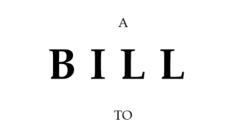
make provision about railways and railway services; and for connected purposes.
Government Bill
(Department for Transport)The Railways Bill is a Government Bill tabled by a Minister of the Crown.
Is this Bill currently before Parliament?Yes. This Bill was introduced on 05 November 2025 and is currently before Parliament.
Whose idea is this Bill?Government Bills implement the legislative agenda of the Government. This agenda, and the Bills that will implement it, are outlined in the Queen's Speech at the Session's State Opening of Parliament.
What type of Bill is this?Government Bills are technically Presentation Bills, but the Government can use its legislative time to ensure the schedule of debates to scrutinise the Bill.
So is this going to become a law?Though the Bill can be amended from its original form, the Bill will almost certainly be enacted in law before the end of the Session, or will be carried over to the subsequent Session.
How can I find out exactly what this Bill does?The most straightforward information is contained in the initial Explanatory Notes for the Bill.
Would you like to know more?See these Glossary articles for more information: Government Bills, Process of a Bill
Official Bill Page Initial Explanatory Notes Initial Briefing papers Ministerial Extracts from Debates All Bill Debates
Next Event: Wednesday 21st October 2026 - Committee stage
Last Event: Monday 19th October 2026 - Committee stage (Lords)
2048 Amendments have been proposed for this Bill
View AmendmentsBill Progession through Parliament
Latest Key documents
Timeline of Bill Documents and Stages
Tabled: 20 Oct 2026
HL Bill 25-VI Sixth marshalled list for Grand Committee
This amendment was No Decision
Baroness Jones of Moulsecoomb gives notice of her intention to oppose the Question that Clause 95 stand part of the Bill.
Explanatory Text
This removes the power to make regulations to implement the Luxembourg Rail Protocol to the Cape Town Convention.
None 291A
Lord Dixon of Jericho (LD)Tabled: 19 Oct 2026
HL Bill 25-VI Sixth marshalled list for Grand Committee
This amendment was No Decision
Clause 74, page 44, line 9, at end insert- "(d) whether costs, revenues and public funds are allocated between Great British Railways' online retail activities and its other activities in a manner which secures that its online retail activities do not receive any cross-subsidy which distorts competition in the sale of tickets, and whether Great British Railways is contributing a proportionate amount towards retail systems used by all persons selling tickets. (2A) Great British Railways must provide the Office of Rail and Road with such information as it may require for the purposes of subsection (2)(d), including the methodology used to allocate costs, assets and revenues to its online retail activities. (2B) The Office of Rail and Road must, in respect of each financial year, publish its conclusions on the matters in subsection (2)(d)."
None 291B
Lord Dixon of Jericho (LD)Tabled: 19 Oct 2026
HL Bill 25-VI Sixth marshalled list for Grand Committee
This amendment was No Decision
Clause 74, page 44, line 15, at end insert - "“online retail activities” means the sale, fulfilment, amendment, refund and support of tickets through online channels."
None 330JB
Lord Dixon of Jericho (LD)Tabled: 19 Oct 2026
HL Bill 25-VI Sixth marshalled list for Grand Committee
This amendment was No Decision
After Clause 95, insert the following new Clause- "Great British Railways: open railway data (1) Great British Railways must make the specified railway data available— (a) publicly, (b) free of charge and without any restriction on its use and further disclosure, (c) in machine-readable format and open format, (d) by means of documented application programming interfaces conforming to open standards published by Great British Railways, and (e) in the case of data which changes in real time, within 60 seconds of the change. (2) The “specified railway data” is data held by, or available to, Great British Railways relating to— (a) timetables and train running, including platform allocations, (b) fares, including ticket restrictions, validity and routeing, (c) ticket and seat availability, (d) planned and unplanned disruption, (e) train loading and crowding, (f) the accessibility of stations, rolling stock and passenger services, (g) the availability of cycle reservations, and (h) eligibility for compensation for delay. (3) Where Great British Railways has not published a standard for any category of data in subsection (2), it must do so within 12 months of the day on which this section comes into force, and must thereafter— (a) secure that the data is made available in accordance with the standard, including by means of any public service contract or other arrangement under which the data is provided to it, and (b) consult the Office of Rail and Road and persons who use the data before making any material change to a standard. (4) Great British Railways must not withdraw an application programming interface, or change it in a way which prevents existing uses, without giving at least six months’ public notice, during which the previous version must remain available. (5) Great British Railways may require registration for access under subsection (1) only for the purposes of identifying users and managing fair use, and may not impose any other condition. (6) The Office of Rail and Road must monitor compliance with this section and must, in each financial year, publish an assessment of the extent to which data made available under it is complete, accurate, timely and capable of being used to develop software without assistance from Great British Railways. (7) In this section— “machine-readable format” and “open format” have the meanings given by regulation 2 of the Re-use of Public Sector Information Regulations 2015; “application programming interface” has the meaning given by section 25(1) of the Data (Use and Access) Act 2025."
None 330JC
Lord Dixon of Jericho (LD)Tabled: 19 Oct 2026
HL Bill 25-VI Sixth marshalled list for Grand Committee
This amendment was No Decision
After Clause 95, insert the following new Clause- "Great British Railways: annual statement of online retail costs (1) Great British Railways must, as soon as practicable after the end of each financial year, publish a statement of the costs of its online retail activities in that year. (2) The statement must set out, with the basis on which each amount has been calculated— (a) the share of the cost of retail systems used by all persons selling tickets which is attributable to its online retail activities, (b) the cost of converting data from those systems into a form usable by its websites and applications, (c) the cost of its websites and applications, including marketing, (d) the cost of fulfilment and payment processing, (e) the cost of customer service relating to tickets sold online, (f) the total of those costs expressed as a proportion of the value of tickets sold through its online channels, and (g) a comparison of that proportion with the standard rate of commission payable to persons authorised to sell tickets for travel on railway passenger services. (3) The Office of Rail and Road must review each statement and publish its opinion on— (a) whether the statement fairly represents the costs of Great British Railways’ online retail activities, and (b) whether those activities are being supported by public funds, or by income from other activities, in a manner which distorts competition in the sale of tickets. (4) The Secretary of State must lay before each House of Parliament the statement and the opinion of the Office of Rail and Road. (5) In this section “online retail activities” means the sale, fulfilment, amendment, refund and support of tickets through online channels."
None 330JD
Lord Dixon of Jericho (LD)Tabled: 19 Oct 2026
HL Bill 25-VI Sixth marshalled list for Grand Committee
This amendment was No Decision
After Clause 95, insert the following new Clause- "Great British Railways: retail interfaces (1) Great British Railways must make retail interfaces available to any person on the same timescales, terms and conditions (including those relating to price and service levels) as apply to its own online retail activities. (2) Great British Railways must not obtain any retail data or retail functionality for its own online retail activities other than by means of the retail interfaces. (3) The retail interfaces must— (a) be application programming interfaces, (b) be accompanied by open documentation sufficient to enable a competent person to use them without assistance from Great British Railways, (c) conform to open standards published by Great British Railways, and (d) be accompanied by a test environment available to any person free of charge. (4) Great British Railways must, at least once in every three months, publish measures of the availability, response times and timeliness of data updates of— (a) the retail interfaces, and (b) any systems used by its own online retail activities, measured on the same basis. (5) Great British Railways may restrict access to the functionality mentioned in subsection (6)(b) to persons authorised to sell tickets for travel on railway passenger services, provided that the conditions of authorisation are published and are applied equally to its own online retail activities. (6) In this section “retail interfaces” means the interfaces through which Great British Railways provides— (a) retail data, including fares, ticket restrictions and validity, availability, reservations, timetables and real-time running information, and (b) retail functionality, including the sale, fulfilment, amendment and refund of tickets and the making of claims for compensation for delay."
None 306A
Lord Sikka (Lab)Tabled: 16 Oct 2026
HL Bill 25-VI Sixth marshalled list for Grand Committee
This amendment was No Decision
Clause 94, Page 58, line 40, after “fees” insert “, payable by GBR, a GBR company or a railway undertaking licence holder;”
None 220S
Baroness Grey-Thompson (XB)Baroness Brinton (LD) - Liberal Democrat Lords Spokesperson (Home Affairs) (Victims and Abuse)
Tabled: 15 Oct 2026
HL Bill 25-VI Sixth marshalled list for Grand Committee
This amendment was Not Called
View the speech made in the House
After Clause 58, insert the following new Clause—
“Accessibility standards: delivery
Great British Railways, and passenger service operators, must each appoint—
(a) a senior accountable accessibility lead,
(b) a board-level accessibility champion, and
(c) a named executive,
who are jointly responsible for delivery of accessibility standards set by the accessible rail transport standards commission under section (Accessible rail transport standards commission)(2)(a).”
None 220T
Baroness Grey-Thompson (XB)Baroness Brinton (LD) - Liberal Democrat Lords Spokesperson (Home Affairs) (Victims and Abuse)
Tabled: 15 Oct 2026
HL Bill 25-VI Sixth marshalled list for Grand Committee
This amendment was Not Called
View the speech made in the House
After Clause 58, insert the following new Clause—
“Accessibility enforcement and financial penalties
(1) Within the period of 12 months beginning on the day on which this Act is passed, the Secretary of State must establish a penalty framework for railways stations operated by Great British Railways that are found to be non-compliant with accessibility standards set by the body established by section (Accessible rail transport standards commission).
(2) A railway station found to be non-compliant with accessibility standards will be subject to fines in line with the penalty framework specified under subsection (1).
(3) Funds from these fines must be invested in improving accessibility across Great British Railways.”
None 280A
Lord Berkeley (Lab)Tabled: 15 Oct 2026
HL Bill 25-VI Sixth marshalled list for Grand Committee
This amendment was No Decision
Clause 72, page 43, line 6, leave out from “means” to end of line 7 and insert “railway infrastructure, as defined in the 2016 Regulations, that is not operated by or on behalf of Great British Railways.”
None 183A
Baroness Jones of Moulsecoomb (Green)Tabled: 15 Oct 2026
HL Bill 25-V Fifth marshalled list for Grand Committee
This amendment was Not Moved
View the speech made in the House
Clause 36, page 20, line 16, leave out paragraph (a) and insert- "(a) must protect and promote the rights and interests of users and potential users of railway passenger services and station services, (aa) must have particular regard to the need to protect and promote the rights and interests of disabled persons, and"
None 184A
Baroness Jones of Moulsecoomb (Green)Tabled: 15 Oct 2026
HL Bill 25-V Fifth marshalled list for Grand Committee
This amendment was Not Moved
View the speech made in the House
Clause 36, page 20, line 18, leave out paragraph (b)
None 188B
Baroness Jones of Moulsecoomb (Green)Tabled: 15 Oct 2026
HL Bill 25-V Fifth marshalled list for Grand Committee
This amendment was Not Moved
View the speech made in the House
Clause 40, page 22, line 13, leave out subsection (1) and insert- "(1) The Passengers' Council may request a person who provides or operates railway passenger services or station services to provide any information which the Council considers necessary or appropriate for the purposes of, or in connection with, the exercise of any of its functions."
None 201A
Baroness Jones of Moulsecoomb (Green)Tabled: 15 Oct 2026
HL Bill 25-V Fifth marshalled list for Grand Committee
This amendment was Not Moved
View the speech made in the House
Clause 47, page 26, line 6, at end insert- "(2A) If the Council has reason to believe that a contravention, or likely contravention, mentioned in subsection (1) concerns - (a) the operation of railway passenger services or station services, including the movement of trains, the use of railway infrastructure, or the operation of stations, (b) the safety of persons using, working on or otherwise affected by railway passenger services or station services, or (c) the accessibility of railway passenger services or station services for disabled persons, the Council must refer the matter directly to the ORR as soon as reasonably practicable and must not exercise any function under subsection (1) in relation to that matter."
None 202A
Baroness Jones of Moulsecoomb (Green)Tabled: 15 Oct 2026
HL Bill 25-V Fifth marshalled list for Grand Committee
This amendment was Not Moved
View the speech made in the House
Clause 48, page 26, line 31, at end insert- "(3) The Passengers' Council must publish any substantive written advice given under this section as soon as reasonably practicable after giving the advice to the person concerned. (4) Publication may be deferred only to the extent that the Passengers' Council reasonably considers that publication would be likely to cause substantial prejudice to the effective conduct of its functions or those of the person to whom the advice is given, and that the public interest in deferral outweighs that in publication; and any advice so deferred must be published as soon as that prejudice is no longer likely to arise."
None 202B
Baroness Jones of Moulsecoomb (Green)Tabled: 15 Oct 2026
HL Bill 25-V Fifth marshalled list for Grand Committee
This amendment was Not Moved
View the speech made in the House
Clause 49, page 26, line 36, leave out paragraph (b) and insert- "(b) the development or change would reasonably be expected to have a significant effect on the interests of the public in relation to railway passenger services or station services."
None 204A
Baroness Jones of Moulsecoomb (Green)Tabled: 15 Oct 2026
HL Bill 25-V Fifth marshalled list for Grand Committee
This amendment was Not Moved
View the speech made in the House
After Clause 50, insert the following new Clause- "Public engagement and participation (1) The Passengers' Council must establish and maintain arrangements for engaging with users and potential users of railway passenger services and station services. (2) The arrangements must enable users and potential users to- (a) contribute to the Council's priorities, work programme and advice, (b) contribute to the development of national policies, strategies and proposals relating to railway passenger services and station services, (c) share their experiences, needs and priorities in relation to railway passenger services and station services, and (d) receive information about the Council's activities and the outcomes of its work. (3) In making arrangements under this section, the Passengers' Council must take particular steps to engage with disabled persons and organisations representing disabled persons, persons who share a protected characteristic within the meaning of section 4 of the Equality Act 2010, persons living in rural, coastal and other geographically isolated communities, and persons whose use of railway passenger services or station services is affected by financial constraints. (4) The Council must publish annually a report on its engagement under this section, including an account of how the views received have influenced its priorities, advice, standards and recommendations."
None 204B
Baroness Jones of Moulsecoomb (Green)Tabled: 15 Oct 2026
HL Bill 25-V Fifth marshalled list for Grand Committee
This amendment was Not Moved
View the speech made in the House
Clause 53, page 28, leave out lines line 29 and 30 and insert- "(a) must protect and promote the rights and interests of users and potential users of railway passenger services and station services, (aa) must have particular regard to the need to protect and promote the rights and interests of disabled persons, and"
None 204C
Baroness Jones of Moulsecoomb (Green)Tabled: 15 Oct 2026
HL Bill 25-V Fifth marshalled list for Grand Committee
This amendment was Not Moved
View the speech made in the House
Clause 53, page 28, leave out lines 31 and 32
None 330JA
Baroness Jones of Moulsecoomb (Green)Tabled: 15 Oct 2026
HL Bill 25-VI Sixth marshalled list for Grand Committee
This amendment was Not Called
View the speech made in the House
After Clause 95, insert the following new Clause— “Disabled Persons Transport Advisory Committee: advice to Secretary of State and Great British Railways In section 125 of the Transport Act 1985, after subsection (5) insert— “(5A) The Committee - (a) must provide advice to the Secretary of State or Great British Railways about such matters relating to the needs of disabled persons in connection with public passenger transport on the railways as the Secretary of State or Great British Railways may refer to it, and (b) may otherwise provide advice to the Secretary of State or Great British Railways about such matters relating to the needs of disabled persons in connection with public passenger transport on the railways as it thinks appropriate (whether or not those matters are referred to it).”””
None 161A
LORD ΜOYLAN
Lord Moylan (Con) - Shadow Minister (Transport)Tabled: 9 Oct 2026
HL Bill 25-V Fifth marshalled list for Grand Committee
This amendment was Not Moved
View the speech made in the House
Clause 33, page 18, line 37, at end insert- “(4) Great British Railways must obtain the approval of the Secretary of State before introducing or altering the general level and structure of fares for travel on railway passenger services designated under section 25. (5) Subsection (4) applies to a GBR company exercising Great British Railways' function under section 3(1)(c) as it applies to Great British Railways.”
None 259
Lord Lansley (Con)Lord Moylan (Con) - Shadow Minister (Transport)
Tabled: 8 Oct 2026
HL Bill 25-V Fifth marshalled list for Grand Committee
This amendment was No Decision
Clause 68, page 39, line 7, leave out from “may” to “67,” in line 11
None 101A
Baroness Grey-Thompson (XB)Tabled: 8 Oct 2026
HL Bill 25-IV Fourth marshalled list for Grand Committee
This amendment was Not Moved
View the speech made in the House
After Clause 15, insert the following new Clause—
“Railway accessibility strategy
(1) Within 12 months beginning on the day on which this Act is passed, the Secretary of State must publish a railway accessibility strategy.
(2) The strategy must cover a period of not less than 10 years.
(3) Great British Railways must exercise its functions in accordance with the strategy.
(4) The strategy must include—
(a) a programme and timetable for achieving permanent step-free access at railway stations and to all platforms,
(b) measures for improving the accessibility of railway rolling stock,
(c) measures for improving accessibility at stations and station facilities,
(d) measures for accessible interchange between railway passenger services and other forms of public transport,
(e) measures for the carriage of wheelchairs, powered wheelchairs, mobility scooters and other mobility aids,
(f) measures for ensuring the accessibility of rail replacement and other alternative transport,
(g) measurable targets and milestones,
(h) an assessment of the funding required to meet those targets,
(i) arrangements for monitoring and reporting progress, and
(j) arrangements for involving disabled persons and organisations representing disabled persons in the development and implementation of the strategy.
(5) The strategy must include details of how the programme and measures listed in subsection (4) will be funded.
(6) The strategy must include a timetable for the progressive elimination of—
(a) stations without step-free access to all platforms, and
(b) barriers preventing independent travel by disabled persons.
(7) The provision of reasonable adjustments or passenger assistance must not be treated as a substitute for permanent step-free access where permanent step-free access is reasonably practicable.
(8) The Secretary of State must review the strategy at least once every five years.
(9) Before publishing or revising the strategy, the Secretary of State must consult—
(a) the Passengers’ Council,
(b) the Office of Rail and Road,
(c) such organisations representing disabled persons as the Secretary of State considers appropriate,
(d) Great British Railways, and
(e) such other persons as the Secretary of State considers appropriate.
(10) The Secretary of State must lay the strategy, and each subsequent revised strategy, before Parliament.
(11) The Secretary of State must publish an annual report on progress against the strategy.”
Explanatory Text
This new clause requires a 10-year railway accessibility strategy, including a funded programme for permanent step-free access, accessible rolling stock, mobility-aid carriage, accessible interchange and accessible rail replacement services. It also requires measurable targets, annual reporting and the involvement of disabled people in the development of the strategy.
None 121A
Baroness Grey-Thompson (XB)Tabled: 8 Oct 2026
HL Bill 25-IV Fourth marshalled list for Grand Committee
This amendment was Not Moved
View the speech made in the House
Clause 18, page 11, line 10,
at end insert—
“(2A) In exercising functions to which this section applies, the persons mentioned in subsection (1) must—
(a) promote equality of access to railway passenger services and station services,
(b) make continuous improvements to the accessibility of those services and facilities, and
(c) seek to ensure that disabled persons and persons with reduced mobility are able to travel safely, independently and with dignity.”
Explanatory Text
This amendment seeks to strengthen the existing general duty by requiring continuous improvement in accessibility and by establishing an objective of safe, independent and dignified travel for disabled persons and persons with reduced mobility.
None 122A
Baroness Laing of Elderslie (Con)Tabled: 8 Oct 2026
HL Bill 25-IV Fourth marshalled list for Grand Committee
This amendment was Not Moved
Clause 18, page 11, line 23, at end insert—
““value for money” means the optimal balance between whole-life cost, opportunity cost, quality risk management of procurement projects, passenger operations costs and the use of public funds.”
Explanatory Text
This amendment, and another in the name of Baroness Laing of Elderslie, widen the duty on GBR to make efficient use of public funds by adding a “value for money” duty which requires GBR to consider wider cost and benefit factors.
None 144A
Baroness Grey-Thompson (XB)Tabled: 8 Oct 2026
HL Bill 25-IV Fourth marshalled list for Grand Committee
This amendment was Not Moved
View the speech made in the House
After Clause 22, insert the following new Clause—
“Accessibility duty
(1) When exercising their functions, Great British Railways and the ORR must seek to—
(a) protect and advance the rights of disabled passengers,
(b) reduce accessibility barriers, and
(c) promote independent travel for disabled passengers.
(2) Great British Railways and the ORR must each report annually on progress made on meeting the duty under subsection (1).”
None 186A
Baroness Grey-Thompson (XB)Tabled: 8 Oct 2026
HL Bill 25-V Fifth marshalled list for Grand Committee
This amendment was Not Moved
View the speech made in the House
Clause 36, page 20, line 19, at end insert—
(2) In fulfilling its duty under subsection (1)(a), the Passengers’ Council must seek to—
(a) protect and advance the rights of disabled passengers,
(b) reduce accessibility barriers, and
(c) promote independent travel for disabled passengers.”
None 198A
Baroness Grey-Thompson (XB)Tabled: 8 Oct 2026
HL Bill 25-V Fifth marshalled list for Grand Committee
This amendment was Withdrawn After Debate
View the speech made in the House
Clause 46, page 25, line 17, at end insert—
“(e) permanent step-free access to stations, platforms and trains,
(f) accessibility of station entrances, exits, platforms and interchanges,
(g) the carriage of wheelchairs, powered wheelchairs, mobility scooters and other mobility aids,
(h) accessibility of rail replacement services and alternative transport,
(i) provision of accessible transport where a rail replacement service cannot accommodate a passenger’s mobility aid,
(j) provision and reliability of lifts, ramps and other accessibility equipment,
(k) accessible passenger information,
(l) passenger assistance, including assistance during disruption,
(m) accessible ticketing facilities, and
(n) the involvement of disabled persons and organisations representing disabled persons in the development and review of accessibility standards.”
Explanatory Text
This amendment makes explicit that accessibility standards may cover permanent step-free access, mobility aids, rail replacement services, alternative transport, accessibility equipment, passenger information, passenger assistance and ticketing.
None 220A
Baroness Grey-Thompson (XB)Baroness Brinton (LD) - Liberal Democrat Lords Spokesperson (Home Affairs) (Victims and Abuse)
Tabled: 8 Oct 2026
HL Bill 25-VI Sixth marshalled list for Grand Committee
This amendment was Not Called
After Clause 58, insert the following new Clause—
“Duty to engage in co-production regarding accessibility
(1) Great British Railways, train operating companies, Network Rail and station operators must—
(a) establish permanent accessibility advisory panels within one year of the day on which this Act is passed,
(b) demonstrate how they have involved disabled people and disabled people's organisations in decision-making,
(c) demonstrate how disabled people's views have influenced final decisions, and
(d) publish annual reports on co-production activity.
(2) In this section, “co-production” has the same meaning as in the care and support statutory guidance issued under the Care Act 2014, in which it means ways of working that involve people who use health and care services, carers and communities in equal partnership.”
None 220B
Baroness Grey-Thompson (XB)Baroness Brinton (LD) - Liberal Democrat Lords Spokesperson (Home Affairs) (Victims and Abuse)
Tabled: 8 Oct 2026
HL Bill 25-VI Sixth marshalled list for Grand Committee
This amendment was Not Called
View the speech made in the House
After Clause 58, insert the following new Clause—
“Accessible rail transport standards commission
(1) Within 12 months beginning on the day on which this Act is passed, the Secretary of State must establish an independent accessible rail transport standards commission.
(2) The powers and functions of the commission are—
(a) to set rail accessibility standards;
(b) to review those standards every five years;
(c) to issue binding guidance to rail operators on complying with accessibility standards.
(3) The commission must involve disabled people directly in the governance of the commission.”
None 220C
Baroness Grey-Thompson (XB)Baroness Brinton (LD) - Liberal Democrat Lords Spokesperson (Home Affairs) (Victims and Abuse)
Tabled: 8 Oct 2026
HL Bill 25-VI Sixth marshalled list for Grand Committee
This amendment was Not Called
After Clause 58, insert the following new Clause—
“Duty to consider accessibility evidence
Before making a decision relating to the design, operation, funding, management or modification of rail infrastructure or services, Great British Railways and other passenger service operators must—
(a) consider relevant accessibility evidence,
(b) consult disabled passengers and disabled people’s organisations,
(c) publish a statement explaining how that evidence informed the final decision taken, and
(d) provide reasons for not adopting any recommendations arising from the consultation.”
None 220D
Baroness Grey-Thompson (XB)Baroness Brinton (LD) - Liberal Democrat Lords Spokesperson (Home Affairs) (Victims and Abuse)
Tabled: 8 Oct 2026
HL Bill 25-VI Sixth marshalled list for Grand Committee
This amendment was No Decision
After Clause 58, insert the following new Clause—
“Passenger assistance guarantee
(1) Within 12 months of the day on which this Act is passed, the Secretary of State must by regulations set out the passenger assistance guarantee.
(2) The passenger assistance guarantee must require passenger rail operators to—
(a) deliver booked assistance to disabled passengers,
(b) provide alternative arrangements where assistance is unavailable,
(c) compensate passengers automatically when assistance is not provided, and
(d) record and publish assistance failure rates.”
None 220E
Baroness Grey-Thompson (XB)Baroness Brinton (LD) - Liberal Democrat Lords Spokesperson (Home Affairs) (Victims and Abuse)
Tabled: 8 Oct 2026
HL Bill 25-VI Sixth marshalled list for Grand Committee
This amendment was Not Called
View the speech made in the House
After Clause 58, insert the following new Clause—
“Accessibility data and transparency
Great British Railways, passenger service operators and operators of stations must publish real-time accessibility information including—
(a) lift availability,
(b) accessible toilet availability,
(c) staffing levels,
(d) assistance availability,
(e) platform accessibility, and
(f) disruption impacts on disabled passengers.”
None 220F
Baroness Grey-Thompson (XB)Baroness Brinton (LD) - Liberal Democrat Lords Spokesperson (Home Affairs) (Victims and Abuse)
Tabled: 8 Oct 2026
HL Bill 25-VI Sixth marshalled list for Grand Committee
This amendment was Not Called
View the speech made in the House
After Clause 58, insert the following new Clause—
“Accessible railway stations duty
Great British Railways must ensure that any station accessibility assessments include evaluation of—
(a) streets and pavements directly outside of railway stations,
(b) dropped kerbs directly outside of railway stations,
(c) crossings directly outside of railway stations,
(d) wayfinding around railway stations,
(e) taxi access and connections directly outside of railway stations, and
(f) bus interchange directly outside of railway stations.”
None 220G
Baroness Grey-Thompson (XB)Baroness Brinton (LD) - Liberal Democrat Lords Spokesperson (Home Affairs) (Victims and Abuse)
Tabled: 8 Oct 2026
HL Bill 25-VI Sixth marshalled list for Grand Committee
This amendment was Not Called
View the speech made in the House
After Clause 58, insert the following new Clause—
“Review of accessibility enforcement powers
(1) Within 12 months beginning on the day on which this Act is passed, the Secretary of State must publish a review of the Office of Rail and Road’s accessibility enforcement powers relating to railways.
(2) The review must consider the ORR’s powers to—
(a) investigate accessibility failures,
(b) issue improvement notices,
(c) impose financial penalties, and
(d) publish annual accessibility enforcement reports,
as they relate to the railways.
(3) The review must include recommendations for improving the ORR’s railways accessibility enforcement powers.
(4) The Secretary of State must lay a report under this section before both Houses of Parliament.”
None 220H
Baroness Grey-Thompson (XB)Baroness Brinton (LD) - Liberal Democrat Lords Spokesperson (Home Affairs) (Victims and Abuse)
Tabled: 8 Oct 2026
HL Bill 25-VI Sixth marshalled list for Grand Committee
This amendment was No Decision
After Clause 58, insert the following new Clause—
“Accessibility training of relevant staff
(1) Great British Railways must require mandatory disability inclusion training for—
(a) board members;
(b) senior managers;
(c) station managers;
(d) planners and designers;
(e) frontline personnel.
(2) The training required under subsection (1) must be co-produced and co-delivered with disabled people.”
None 220J
Baroness Grey-Thompson (XB)Baroness Brinton (LD) - Liberal Democrat Lords Spokesperson (Home Affairs) (Victims and Abuse)
Tabled: 8 Oct 2026
HL Bill 25-VI Sixth marshalled list for Grand Committee
This amendment was Not Called
View the speech made in the House
After Clause 58, insert the following new Clause—
“Wheelchairs, mobility scooters and other mobility aids
(1) Great British Railways and other passenger service operators must make provision for the carriage of wheelchairs, powered wheelchairs, mobility scooters and other mobility aids.
(2) A passenger must not be refused carriage solely because the passenger uses a wheelchair, powered wheelchair, mobility scooter or other mobility aid.
(3) Great British Railways must establish nationally consistent standards concerning—
(a) the dimensions and characteristics of mobility aids capable of being carried,
(b) designated wheelchair and mobility scooter spaces,
(c) boarding and alighting arrangements,
(d) the securing of mobility aids where necessary,
(e) assistance for passengers using mobility aids, and
(f) circumstances in which carriage may be refused on objective safety or physical-capacity grounds.
(4) A restriction on the carriage of a mobility aid must be—
(a) objectively justified and proportionate,
(b) published in advance in an accessible form, and
(c) accompanied by arrangements for suitable accessible alternative transport.
(5) Great British Railways must seek to ensure that passengers are not required to use a different mobility aid as a condition of travelling by railway.
(6) The Secretary of State may by regulations prescribe minimum standards for the carriage of mobility aids.”
Explanatory Text
This amendment establishes explicit statutory protection for wheelchair and mobility scooter users using railway services and requires Great British Railways to establish nationally consistent carriage standards. It also requires Great British Railways to provide accessible alternative transport where a mobility aid cannot safely be accommodated.
None 220K
Baroness Grey-Thompson (XB)Baroness Brinton (LD) - Liberal Democrat Lords Spokesperson (Home Affairs) (Victims and Abuse)
Tabled: 8 Oct 2026
HL Bill 25-VI Sixth marshalled list for Grand Committee
This amendment was No Decision
After Clause 58, insert the following new Clause—
“Accessibility of rail replacement services
(1) Great British Railways and other passenger service operators must ensure that, so far as reasonably practicable, a rail replacement service enables disabled persons and persons with reduced mobility to complete their journey safely, independently and with dignity.
(2) A rail replacement service must, so far as reasonably practicable, be capable of carrying—
(a) passengers using manual wheelchairs,
(b) passengers using powered wheelchairs,
(c) passengers using mobility scooters, and
(d) passengers using other mobility aids reasonably required by those passengers.
(3) Where a rail replacement service cannot accommodate a passenger’s wheelchair, powered wheelchair, mobility scooter or other mobility aid, Great British Railways or the relevant passenger service operator must provide suitable accessible alternative transport.
(4) Alternative transport provided under subsection (3) must—
(a) be provided without additional cost to the passenger,
(b) enable the passenger and their mobility aid to travel together, and
(c) so far as reasonably practicable, enable the passenger to complete the journey within a reasonable time.
(5) A passenger must not be required, solely because a rail replacement service is inaccessible, to—
(a) abandon or leave behind a mobility aid,
(b) pay an additional fare or other charge,
(c) make an unreasonable additional journey, or
(d) wait for a later railway service.
(6) Where a planned closure or engineering work is reasonably likely to require rail replacement services, the operator must publish in advance, in accessible formats—
(a) details of the replacement service,
(b) whether the service is accessible to wheelchair and mobility scooter users,
(c) the arrangements for boarding and alighting,
(d) the arrangements for carrying mobility aids, and
(e) the arrangements for obtaining alternative accessible transport.
(7) Where rail replacement services are required as a result of unplanned disruption, the information required by subsection (6) must be provided as soon as reasonably practicable.
(8) The Secretary of State may by regulations prescribe minimum accessibility standards for rail replacement services.”
Explanatory Text
This amendment seeks to ensure that accessibility rights for disabled passengers continue when a train service is replaced by a bus, coach, taxi or other form of transport. It requires suitable accessible alternative transport where a rail replacement service cannot accommodate a passenger’s wheelchair or mobility aid and prevents the passenger incurring additional cost as a result.
None 220L
Baroness Grey-Thompson (XB)Baroness Brinton (LD) - Liberal Democrat Lords Spokesperson (Home Affairs) (Victims and Abuse)
Tabled: 8 Oct 2026
HL Bill 25-VI Sixth marshalled list for Grand Committee
This amendment was No Decision
After Clause 58, insert the following new Clause—
“Accessible disruption arrangements
(1) Great British Railways and other passenger service operators must maintain arrangements for preserving accessibility for disabled passengers during disruption.
(2) The arrangements must include provision for—
(a) accessible rail replacement services,
(b) accessible alternative transport,
(c) assistance with boarding, alighting and interchange,
(d) accessible information about disruption,
(e) notification of failures of lifts, ramps and other accessibility equipment,
(f) the carriage of wheelchairs, powered wheelchairs, mobility scooters and other mobility aids, and
(g) assistance for passengers whose planned accessible route becomes unavailable.
(3) Where disruption causes an otherwise accessible journey to become inaccessible, Great British Railways or the relevant passenger service operator must take all reasonable steps to provide an alternative accessible journey without additional cost to the passenger.
(4) The arrangements required by this section must form part of the operator's accessible travel policy.
(5) The Passengers’ Council must set standards concerning the arrangements required by this section.”
Explanatory Text
This amendment requires accessibility to be maintained during disruption to railway services and requires accessible alternatives to be provided where a passenger's planned accessible journey becomes unavailable.
None 220M
Baroness Grey-Thompson (XB)Baroness Brinton (LD) - Liberal Democrat Lords Spokesperson (Home Affairs) (Victims and Abuse)
Tabled: 8 Oct 2026
HL Bill 25-VI Sixth marshalled list for Grand Committee
This amendment was Not Called
View the speech made in the House
After Clause 58, insert the following new Clause—
“Passenger assistance
(1) A disabled person or person with reduced mobility is entitled to reasonable assistance to enable them to make a railway journey.
(2) Assistance under subsection (1) must, where reasonably required, include assistance—
(a) at station entrances and exits,
(b) in reaching and leaving platforms,
(c) with boarding and alighting,
(d) during interchange,
(e) during disruption,
(f) with accessible alternative transport, and
(g) relating to wheelchairs, mobility scooters and other mobility aids.
(3) The provision of assistance must not be conditional upon excessive advance notice.
(4) Great British Railways and other passenger service operators must make provision for assistance to passengers who have not made an advance booking.
(5) Where booked assistance is not provided, the operator must provide appropriate alternative assistance and arrangements for redress.
(6) The Passengers’ Council must set standards concerning the availability, reliability and quality of passenger assistance.”
Explanatory Text
This amendment seeks to ensure that passenger assistance is a statutory entitlement, and requires standards for assistance during normal journeys, interchange and disruption, including for passengers who have not booked assistance in advance.
None 220N
Baroness Grey-Thompson (XB)Baroness Brinton (LD) - Liberal Democrat Lords Spokesperson (Home Affairs) (Victims and Abuse)
Tabled: 8 Oct 2026
HL Bill 25-VI Sixth marshalled list for Grand Committee
This amendment was Not Called
View the speech made in the House
After Clause 58, insert the following new Clause—
“Accessible passenger information
(1) Great British Railways and other passenger service operators must ensure that information provided to passengers is accessible to disabled persons and persons with reduced mobility.
(2) Information under subsection (1) must include, where relevant—
(a) train and platform information,
(b) changes to services,
(c) cancellations and delays,
(d) station accessibility,
(e) failures of lifts and other accessibility equipment,
(f) rail replacement arrangements,
(g) the accessibility of replacement vehicles,
(h) arrangements for mobility aids, and
(i) safety information.
(3) Information must, so far as reasonably practicable, be provided in accessible visual, audible and digital formats.
(4) Information about accessibility must be accurate and must be updated as soon as reasonably practicable when circumstances change.”
Explanatory Text
This amendment seeks to require passenger information to be provided in accessible formats and to include information relevant to disabled passengers, including station accessibility, lift failures and the accessibility of rail replacement services.
None 220P
Baroness Grey-Thompson (XB)Baroness Brinton (LD) - Liberal Democrat Lords Spokesperson (Home Affairs) (Victims and Abuse)
Tabled: 8 Oct 2026
HL Bill 25-VI Sixth marshalled list for Grand Committee
This amendment was Not Called
After Clause 58, insert the following new Clause—
“Involvement of disabled persons in accessibility decisions
(1) Great British Railways must establish arrangements for the involvement of disabled persons and organisations representing disabled persons in decisions concerning the accessibility of railway services and infrastructure.
(2) The arrangements must apply to—
(a) the design and refurbishment of stations,
(b) procurement and refurbishment of rolling stock,
(c) development of accessibility standards,
(d) passenger assistance,
(e) rail replacement arrangements,
(f) the railway accessibility strategy required under section (Railway accessibility strategy), and
(g) significant changes to passenger services which may affect accessibility.
(3) Great British Railways must publish a statement explaining how representations made under this section have been taken into account.
(4) The Secretary of State may by regulations prescribe minimum requirements for consultation and involvement under this section.”
Explanatory Text
This amendment requires Great British Railways to involve disabled people and organisations representing disabled people in the design and delivery of measures affecting railway accessibility.
None 220Q
Baroness Grey-Thompson (XB)Baroness Brinton (LD) - Liberal Democrat Lords Spokesperson (Home Affairs) (Victims and Abuse)
Tabled: 8 Oct 2026
HL Bill 25-VI Sixth marshalled list for Grand Committee
This amendment was Not Called
View the speech made in the House
After Clause 58, insert the following new Clause—
“Access for all programme
(1) The Secretary of State must establish and maintain a programme, to be known as the access for all programme, for the provision of permanent step-free access at railway stations and platforms.
(2) The programme must identify—
(a) each station and platform requiring accessibility improvements,
(b) the works required to provide permanent step-free access,
(c) the anticipated timetable for completion,
(d) the estimated cost of each programme of works, and
(e) the source of funding for the works.
(3) The Secretary of State must publish the programme and keep it under review.
(4) The Secretary of State must report annually to Parliament on progress against the programme.
(5) In preparing or revising the programme, the Secretary of State must consult—
(a) Great British Railways,
(b) the Passengers’ Council,
(c) the Office of Rail and Road, and
(d) organisations representing disabled persons.
(6) The programme must prioritise stations according to—
(a) the level of passenger demand,
(b) the absence of existing step-free access,
(c) the availability of alternative accessible routes,
(d) the importance of the station as an interchange,
(e) the needs of local disabled communities, and
(f) such other criteria as the Secretary of State considers appropriate.
(7) Nothing in this section prevents the Secretary of State from providing for permanent step-free access at a station or platform before the date specified in the programme.”
Explanatory Text
This amendment establishes “Access for All” as a statutory programme, requiring a published station-by-station programme for permanent step-free access, annual reporting to Parliament and consultation with disabled people.
None 342A
Baroness Grey-Thompson (XB)Tabled: 8 Oct 2026
HL Bill 25-IV Fourth marshalled list for Grand Committee
This amendment was No Decision
Clause 98, page 61, line 19, at end insert—
“(aa) regulations under section (Passenger assistance guarantee);”
Explanatory Text
This amendment is consequential on the amendment in the name of Baroness Grey-Thompson to insert a new Clause (Passenger assistance guarantee).
None 220R
Baroness Grey-Thompson (XB)Baroness Brinton (LD) - Liberal Democrat Lords Spokesperson (Home Affairs) (Victims and Abuse)
Tabled: 8 Oct 2026
HL Bill 25-VI Sixth marshalled list for Grand Committee
This amendment was No Decision
After Clause 58, insert the following new Clause—
“No additional cost arising from inaccessibility
(1) A disabled person must not incur additional cost as a result of the failure of a railway passenger service, station service or rail replacement service to provide the accessibility conditions required by this Act.
(2) Where an accessible railway passenger service is unavailable, Great British Railways or the relevant passenger railway service operator must, where necessary, provide suitable accessible alternative transport without additional charge to the passenger.
(3) The alternative transport required by subsection (2) may include an accessible taxi or other suitable vehicle.”
Explanatory Text
This amendment seeks to ensure that disabled passengers should not bear additional costs where a railway passenger service fails to provide an accessible service, including where accessible alternative transport is required.
None 153A
Lord Grayling (Con)Tabled: 8 Oct 2026
HL Bill 25-V Fifth marshalled list for Grand Committee
This amendment was No Decision
Clause 31, page 17, line 14, at end insert—
“(aa) to an employee-owned company, or”
Explanatory Text
This amendment enables the Secretary of State to directly award a public service contract for the provision of passenger rail services to a private employee-owned company or mutual enterprise.
None 154A
Lord Grayling (Con)Tabled: 8 Oct 2026
HL Bill 25-V Fifth marshalled list for Grand Committee
This amendment was No Decision
Clause 31, page 17, line 24, at end insert—
“(ii) an employee-owned company.”
Explanatory Text
This amendment enables the Scottish Ministers to directly award a public service contract for the provision of passenger rail services to a private employee-owned company or mutual enterprise.
None 155A
Lord Grayling (Con)Tabled: 8 Oct 2026
HL Bill 25-V Fifth marshalled list for Grand Committee
This amendment was Not Moved
View the speech made in the House
Clause 31, page 17, line 30, at end insert—
“(ii) an employee-owned company.”
Explanatory Text
This amendment enables the Welsh Ministers to directly award a public service contract for the provision of passenger rail services to a private employee-owned company or mutual enterprise.
None 155B
Lord Grayling (Con)Tabled: 8 Oct 2026
HL Bill 25-V Fifth marshalled list for Grand Committee
This amendment was Not Moved
View the speech made in the House
Clause 31, page 18, line 4, at end insert—
“(7) In this section, “employee-owned company” means a private company limited by shares or by guarantee in which—
(a) more than 50% of the ordinary share capital or voting rights are held by or on behalf of the employees of the company, or
(b) the governance structure secures employee control or significant employee participation through an employee ownership trust or similar arrangement.”
Explanatory Text
This amendment defines “employee-owned company” for the purposes of other amendments to clause 31 in the name of Lord Grayling.
Opposition Amendment 333A
Lord Moylan (Con) - Shadow Minister (Transport)Tabled: 8 Oct 2026
HL Bill 25-VI Sixth marshalled list for Grand Committee
This amendment was Not Called
View the speech made in the House
Schedule 4, page 93, line 25, at end insert—
“50A In section 19 ( The Passengers’ Council), after subsection (2) insert—
“(2A) The Secretary of State may not appoint a person as chairman until the Transport Committee of the House of Commons has completed pre-appointment scrutiny of the preferred candidate.””
Explanatory Text
This amendment would enact a recommendation of the House of Commons Transport Select Committee by precluding the appointment of a Chair of the Passengers’ Council before the Committee has undertaken pre-appointment scrutiny of the preferred candidate.
None 280A
LORD BERKELEY
Tabled: 8 Oct 2026HL Bill 25-IV Fourth marshalled list for Grand Committee
This amendment was No Decision
Clause 72, page 43, line 6, leave out from "means" to end of line 7 and insert "railway infrastructure, as defined in the 2016 Regulations, that is not operated by or on behalf of Great British Railways."
None 305ZA
Lord Young of Cookham (Con)Tabled: 8 Oct 2026
HL Bill 25-VI Sixth marshalled list for Grand Committee
This amendment was No Decision
Clause 88, page 55, line 5, at end insert- "(1A) The Secretary of State must make a scheme for the transfer of the Historical Railways Estate from the Secretary of State to - (a) Great British Railways, (b) a company wholly owned by Great British Railways, (c) a proposed GBR, (d) a company wholly owned by a proposed GBR, or (e) a company jointly owned by two or more of the Secretary of State, the Scottish Ministers, the Welsh Ministers, Great British Railways and a proposed GBR."
Tabled: 2 Oct 2026
HL Bill 25-IV Fourth marshalled list for Grand Committee
This amendment was No Decision
Clause 17, page 10, line 10, at end insert- "(1A) The target set under subsection (1) must provide for an increase of at least 40% in the use of the railway network in Great Britain for the carriage of goods, measured in net tonne kilometres, by 2040. (1B) The increase under subsection (1A) is to be measured against the same baseline as that used for the rail freight growth target announced by the Secretary of State on 8 September 2026."
LORD ΜOYLAN
Tabled: 2 Oct 2026HL Bill 25-III(c) Amendments for Grand Committee (Supplementary to the Third Marshalled List)
This amendment was No Decision
Schedule 4, page 93, line 25, at end insert – "50A In section 19 ( The Passengers' Council), after subsection (2) insert- "(2A) The Secretary of State may not appoint a person as chairman until the Transport Committee of the House of Commons has completed pre-appointment scrutiny of the preferred candidate.”
Tabled: 16 Sep 2026
HL Bill 25-IV Fourth marshalled list for Grand Committee
This amendment was No Decision
Clause 31, page 17, line 14, at end insert- "(aa) to an employee-owned company, or”
Tabled: 16 Sep 2026
HL Bill 25-IV Fourth marshalled list for Grand Committee
This amendment was No Decision
Clause 31, page 17, line 24, at end insert- “(ii) an employee-owned company.”
Tabled: 16 Sep 2026
HL Bill 25-IV Fourth marshalled list for Grand Committee
This amendment was No Decision
Clause 31, page 17, line 30, at end insert- “(ii) an employee-owned company.”
Tabled: 16 Sep 2026
HL Bill 25-IV Fourth marshalled list for Grand Committee
This amendment was No Decision
Clause 31, page 18, line 4, at end insert – “(7) In this section, “employee-owned company” means a private company limited by shares or by guarantee in which- (a) more than 50% of the ordinary share capital or voting rights are held by or on behalf of the employees of the company, or (b) the governance structure secures employee control or significant employee participation through an employee ownership trust or similar arrangement."
Tabled: 16 Sep 2026
HL Bill 25-IV Fourth marshalled list for Grand Committee
This amendment was No Decision
After Clause 58, insert the following new Clause– "Accessibility standards: delivery Great British Railways, and passenger service operators, must each appoint- (a) a senior accountable accessibility lead, (b) a board-level accessibility champion, and (c) a named executive, who are jointly responsible for delivery of accessibility standards set by the accessible rail transport standards commission under section (Accessible rail transport standards commission)(2)(a).”
Tabled: 16 Sep 2026
HL Bill 25-IV Fourth marshalled list for Grand Committee
This amendment was No Decision
After Clause 58, insert the following new Clause– "Accessibility enforcement and financial penalties (1) Within the period of 12 months beginning on the day on which this Act is passed, the Secretary of State must establish a penalty framework for railways stations operated by Great British Railways that are found to be non-compliant with accessibility standards set by the body established by section (Accessible rail transport standards commission). (2) A railway station found to be non-compliant with accessibility standards will be subject to fines in line with the penalty framework specified under subsection (1). (3) Funds from these fines must be invested in improving accessibility across Great British Railways."
LORD BERKELEY
Tabled: 16 Sep 2026HL Bill 25-III(b) Amendments for Grand Committee (Supplementary to the Third Marshalled List)
This amendment was No Decision
Clause 72, page 43, line 6, leave out from “means” to end of line 7 and insert “railway infrastructure, as defined in the 2016 Regulations, that is not operated by or on behalf of Great British Railways."
None 78A
Baroness Jones of Moulsecoomb (Green)Tabled: 15 Sep 2026
HL Bill 25-III(a) Amendments for Grand Committee (Supplementary to the Third Marshalled List)
This amendment was Withdrawn After Debate
View the speech made in the House
Schedule 2, page 79, line 2, at end insert- "(b) protect or improve the environment or mitigating or adapting to climate change, or (c) secure, maintain or improve the accessibility of railway passenger services, station services, railway infrastructure or rolling stock for disabled persons."
None 89A
LORD ΜOYLAN
Lord Moylan (Con) - Shadow Minister (Transport)Tabled: 15 Sep 2026
HL Bill 25-III(a) Amendments for Grand Committee (Supplementary to the Third Marshalled List)
This amendment was Not Moved
View the speech made in the House
After Clause 14, insert the following new Clause – "Steel products for railway infrastructure (1) Steel products imported for use in works carried out by or on behalf of Great British Railways in the exercise of its function under section 3(1)(a) are to be treated, for the purposes of any tariff-rate quota applying to steel products under the Taxation (Cross-border Trade) Act 2018, as falling within the applicable tariff-free quota. (2) Steel products falling within subsection (1) are not to count towards the amount of steel available under that quota."
None 96A
LORD ΜOYLAN
Lord Moylan (Con) - Shadow Minister (Transport)Tabled: 15 Sep 2026
HL Bill 25-IV Fourth marshalled list for Grand Committee
This amendment was Not Moved
View the speech made in the House
Clause 15, page 9, line 17, leave out from “strategy” to end of line 18 and insert “, the revised or replacement strategy may not be brought into force unless a draft has been laid before, and approved by a resolution of, each House of Parliament."
None 97A
LORD ΜOYLAN
Lord Moylan (Con) - Shadow Minister (Transport)Tabled: 15 Sep 2026
HL Bill 25-IV Fourth marshalled list for Grand Committee
This amendment was Not Moved
Clause 15, page 9, line 20, after “Ministers” insert “, the Scottish Ministers, the Mayor of London, the mayors of mayoral combined authorities and mayoral combined county authorities,"
None 114A
Baroness Jones of Moulsecoomb (Green)Tabled: 15 Sep 2026
HL Bill 25-IV Fourth marshalled list for Grand Committee
This amendment was Withdrawn After Debate
View the speech made in the House
After Clause 17, insert the following new Clause- "Passenger modal shift target (1) The Secretary of State must, after consulting the Scottish Ministers and the Welsh Ministers, set and publish a target, specifying a date by which it is to be achieved, to increase the overall distance travelled by passengers by railway. (2) In setting the target, the Secretary of State must have particular regard to- (a) increasing the distance travelled by passengers by railway relative to travel by private car and domestic air services, and (b) increasing the distance travelled by passengers by railway where railway travel forms part of a journey involving active travel, bus, tram, metro, coach, ferry or other public transport services. (3) The Secretary of State must, in respect of each year, prepare, lay before Parliament and publish a report setting out progress towards meeting the target, the steps taken to meet it and the steps proposed to be taken in the following year. (4) The Secretary of State must review the target at least once in every period of five years. (5) The Secretary of State may revise or replace the target only if the revised or replacement target is no less ambitious than the target it revises or replaces. (6) Before revising or replacing the target, the Secretary of State must consult the Scottish Ministers and the Welsh Ministers. (7) Great British Railways must, when exercising its statutory functions, have regard to the target set by the Secretary of State under this section.”
None 118B
Baroness Jones of Moulsecoomb (Green)Tabled: 15 Sep 2026
HL Bill 25-IV Fourth marshalled list for Grand Committee
This amendment was Not Moved
View the speech made in the House
Clause 18, page 11, line 5, at end insert - "(da) in the manner best calculated to secure the affordability of fares, (db) in the manner best calculated to improve connectivity between rail and other forms of transport, (dc) in the manner best calculated to protect and improve the environment and to mitigate and adapt to climate change, (dd) in the manner best calculated to increase the use of rail relative to the use of private cars and domestic flights,"
None 188A
LORD ΜOYLAN
Lord Moylan (Con) - Shadow Minister (Transport)Tabled: 15 Sep 2026
HL Bill 25-V Fifth marshalled list for Grand Committee
This amendment was Withdrawn After Debate
View the speech made in the House
After Clause 38, insert the following new Clause – "Passengers' Council board (1) The Secretary of State must appoint a board of the Passengers' Council. (2) The persons appointed to the board by the Secretary of State must include a minimum of two disabled persons.”
None 330K
Baroness Jones of Moulsecoomb (Green)Tabled: 15 Sep 2026
HL Bill 25-VI Sixth marshalled list for Grand Committee
This amendment was Not Called
View the speech made in the House
Schedule 4, page 87, line 2, leave out from “(1),” to end of line and insert “for “section 4 above" substitute “section 18 of the Railways Act 2026"."
None 334A
Baroness Jones of Moulsecoomb (Green)Tabled: 15 Sep 2026
HL Bill 25-VI Sixth marshalled list for Grand Committee
This amendment was Not Called
View the speech made in the House
Schedule 4, page 96, line 17, leave out from “(1),” to end of line and insert “for the words from “section 4” to the end substitute “section 18 of the Railways Act 2026.”
None 189
Lord Evans of Guisborough (Con)Lord Moylan (Con) - Shadow Minister (Transport)
Tabled: 14 Sep 2026
HL Bill 25-III Third marshalled list for Grand Committee
This amendment was Not Moved
View the speech made in the House
Clause 40, page 22, line 31, leave out subsections (a) and (b) and insert “the Passengers’ Council may take such action (if any) as it thinks appropriate.”
Explanatory Text
This amendment would give the Passengers’ Council enforcement powers where its requests for information are not met.
None 101A
Baroness Grey-Thompson (XB)Baroness Brinton (LD) - Liberal Democrat Lords Spokesperson (Home Affairs) (Victims and Abuse)
Tabled: 14 Sep 2026
HL Bill 25-III Third marshalled list for Grand Committee
This amendment was No Decision
After Clause 15, insert the following new Clause – "Railway accessibility strategy (1) Within 12 months beginning on the day on which this Act is passed, the Secretary of State must publish a railway accessibility strategy. (2) The strategy must cover a period of not less than 10 years. (3) Great British Railways must exercise its functions in accordance with the strategy. (4) The strategy must include- (a) a programme and timetable for achieving permanent step-free access at railway stations and to all platforms, (b) measures for improving the accessibility of railway rolling stock, (c) measures for improving accessibility at stations and station facilities, (d) measures for accessible interchange between railway passenger services and other forms of public transport, (e) measures for the carriage of wheelchairs, powered wheelchairs, mobility scooters and other mobility aids, (f) measures for ensuring the accessibility of rail replacement and other alternative transport, (g) measurable targets and milestones, (h) an assessment of the funding required to meet those targets, (i) arrangements for monitoring and reporting progress, and (j) arrangements for involving disabled persons and organisations representing disabled persons in the development and implementation of the strategy. (5) The strategy must include details of how the programme and measures listed in subsection (4) will be funded. (6) The strategy must include a timetable for the progressive elimination of – (a) stations without step-free access to all platforms, and (b) barriers preventing independent travel by disabled persons. (7) The provision of reasonable adjustments or passenger assistance must not be treated as a substitute for permanent step-free access where permanent step-free access is reasonably practicable. (8) The Secretary of State must review the strategy at least once every five years. (9) Before publishing or revising the strategy, the Secretary of State must consult – (a) the Passengers' Council, (b) the Office of Rail and Road, (c) such organisations representing disabled persons as the Secretary of State considers appropriate, (d) Great British Railways, and (e) such other persons as the Secretary of State considers appropriate. (10) The Secretary of State must lay the strategy, and each subsequent revised strategy, before Parliament. (11) The Secretary of State must publish an annual report on progress against the strategy.”
None 118A
Baroness Jones of Moulsecoomb (Green)Tabled: 14 Sep 2026
HL Bill 25-IV Fourth marshalled list for Grand Committee
This amendment was Withdrawn Before Debate
View the speech made in the House
Clause 18, page 11, line 5, at end insert – "(da) in the manner best calculated to increase the overall distance travelled by passengers - (i) by rail, (ii) by rail relative to private car and domestic flights, and (iii) resulting from the integration of rail services with active travel, bus, tram, metro, coach, ferry and any other public transport services."
None 121A
Baroness Grey-Thompson (XB)Baroness Brinton (LD) - Liberal Democrat Lords Spokesperson (Home Affairs) (Victims and Abuse)
Tabled: 14 Sep 2026
HL Bill 25-III Third marshalled list for Grand Committee
This amendment was No Decision
Clause 18, page 11, line 10, at end insert- “(2A) In exercising functions to which this section applies, the persons mentioned in subsection (1) must- (a) promote equality of access to railway passenger services and station services, (b) make continuous improvements to the accessibility of those services and facilities, and (c) seek to ensure that disabled persons and persons with reduced mobility are able to travel safely, independently and with dignity."
None 130A
Baroness Jones of Moulsecoomb (Green)Tabled: 14 Sep 2026
HL Bill 25-IV Fourth marshalled list for Grand Committee
This amendment was Not Moved
View the speech made in the House
After Clause 18, insert the following new Clause- “Nature recovery and clean energy on railway land (1) Great British Railways must, in exercising its functions and managing land and infrastructure under its ownership, management or control, contribute to the restoration and enhancement of biodiversity and the transition to a zero-carbon railway. (2) Great British Railways must manage its railway land as part of a connected national network for nature recovery. (3) In particular, Great British Railways must- (a) identify and implement measures on railway land which contribute to the objectives of local nature recovery strategies, as set out in the Environment Act 2021 and related legislation, (b) establish and maintain continuous or interconnected wildlife corridors along and between railway land, wherever reasonably practicable, (c) restore, create and enhance habitats of importance for biodiversity on railway land, including native woodland, scrub, grassland, wetlands, ponds and other priority habitats, (d) manage railway land in a manner which supports the recovery of declining species and improves ecological connectivity, (e) reduce the use of pesticides, herbicides and other substances harmful to biodiversity on railway land to the minimum reasonably practicable level, (f) maximise the generation of renewable electricity from railway infrastructure, including through solar photovoltaic generation on station roofs, railway buildings, depots, car parks and other suitable railway land and infrastructure, (g) use renewable electricity generated on railway land, so far as reasonably practicable, to power railway operations, (h) ensure that the disposal, development or change of use of railway land does not result in a net loss of biodiversity or the fragmentation of habitats, and
None 130B
Baroness Jones of Moulsecoomb (Green)Tabled: 14 Sep 2026
HL Bill 25-IV Fourth marshalled list for Grand Committee
This amendment was Not Moved
View the speech made in the House
After Clause 18, insert the following new Clause – “Rights of nature and Great British Railways (1) Great British Railways must exercise its functions in a manner that recognises the intrinsic value of nature and the dependence of human wellbeing and economic activity on healthy ecosystems. (2) In exercising its functions, Great British Railways must– (a) protect, restore and enhance nature and ecological integrity, (b) prevent and minimise harm to nature, including cumulative and indirect harm, (c) take account of the needs of future generations, and (d) prioritise the restoration and regeneration of nature where reasonably practicable. (3) Before making any significant decision relating to railway infrastructure, investment or railway land which may affect nature, Great British Railways must assess its likely impact on nature and consider reasonably practicable alternatives that would avoid or reduce harm. (4) Great British Railways must publish an annual report on its performance in meeting the duties in this section.”
None 305B
LORD ΜOYLAN
Lord Moylan (Con) - Shadow Minister (Transport)Tabled: 14 Sep 2026
HL Bill 25-VI Sixth marshalled list for Grand Committee
This amendment was No Decision
After Clause 88, insert the following new Clause— "Publication of Great British Railways corporate and employer structure before transfer schemes (1) A transfer scheme may not be made under section 88 unless the Secretary of State has, at least 12 months before making the scheme, published a document setting out the proposed corporate and employer structure of Great British Railways. (2) The document under subsection (1) must include details of – (a) any company through which Great British Railways is expected to exercise its statutory functions, (b) the proposed allocation of functions between Great British Railways and any such company, (c) the proposed arrangements for the transfer of employees to Great British Railways or any company within its corporate structure, and (d) the proposed arrangements for the participation of Great British Railways, any company within its corporate structure, and any transferred employees in the Railways Pension Scheme or any other occupational pension scheme for railway employees. (3) Before publishing the document under subsection (1), the Secretary of State must consult- (a) the trustees or managers of the Railways Pension Scheme, (b) The Pensions Regulator, (c) persons providing railway services, and (d) such other persons as the Secretary of State considers appropriate. (4) In this section, “transfer scheme" means a scheme under section 88."
None 330F
Baroness Grey-Thompson (XB)Baroness Brinton (LD) - Liberal Democrat Lords Spokesperson (Home Affairs) (Victims and Abuse)
Tabled: 14 Sep 2026
HL Bill 25-VI Sixth marshalled list for Grand Committee
This amendment was No Decision
After Clause 95, insert the following new Clause- “Annual accessibility reporting duty (1) Within 12 months beginning on the day on which this Act is passed, and each year thereafter, Great British Railways must publish an accessibility report which includes - (a) accessibility performance metrics, (b) complaints concerning accessibility, (c) accessibility assistance failures, (d) accessibility improvement programmes, (e) disabled passenger satisfaction, and (f) progress against accessibility targets. (2) The Secretary of State must lay each accessibility report under this section before both Houses of Parliament.”
None 330G
Baroness Coffey (Con)Tabled: 14 Sep 2026
HL Bill 25-VI Sixth marshalled list for Grand Committee
This amendment was No Decision
After Clause 95, insert the following new Clause- “Office of Rail Regulation (1) Within 12 months beginning on the day on which this Act is passed, the Secretary of State must establish a new executive agency responsible for the regulation of rail. (2) The executive agency must be called “the Office of Rail Regulation”. (3) All functions of the Office of Rail and Road relating to the regulation of rail, including those conferred in this Act, are to be transferred to the Office of Rail Regulation. (4) The Office for Rail Regulation is to be the single regulatory authority for the regulation of rail.”
None 330H
Baroness Jones of Moulsecoomb (Green)Tabled: 14 Sep 2026
HL Bill 25-VI Sixth marshalled list for Grand Committee
This amendment was No Decision
After Clause 95, insert the following new Clause – “Great British Railways electrification programme (1) Within 12 months of the day on which this Act is passed, the Secretary of State must publish a rail electrification programme. (2) The rail electrification programme must- (a) cover a period of at least five financial years, and be published each financial year after its original publication date so as to continually provide a schedule of at least five years, (b) achieve full electrification of the network not later than 2050, and (c) cover both passenger and freight rail. (3) When producing the rail electrification programme, the Secretary of State must have regard to - (a) keeping the unit cost per kilometre as low as possible, and achieving the lowest lifetime cost of the railway network; (b) the need to maintain a suitably trained and skilled domestic workforce. (4) The Secretary of State must take all reasonable steps to ensure that the rail electrification programme is achieved. (5) The Secretary of State may (a) place a requirement on Great British Railways to implement some or all of the rail electrification programme, and (b) consult as they see fit when planning the rail electrification programme. (6) Great British Railways must, when exercising its statutory functions, have regard to the rail electrification programme.”
None 330J
Baroness Jones of Moulsecoomb (Green)Tabled: 14 Sep 2026
HL Bill 25-VI Sixth marshalled list for Grand Committee
This amendment was Not Called
View the speech made in the House
After Clause 95, insert the following new Clause- “Rail climate resilience and decarbonisation (1) The Secretary of State must ensure that the railway network is planned, operated and developed in a manner consistent with the objective of achieving a zero-carbon railway and making the network resilient to the impacts of climate change. (2) Within 12 months beginning on the day on which this Act is passed, the Secretary of State must publish a rail climate resilience and decarbonisation plan. (3) The plan must include - (a) legally binding targets and timescales for reducing greenhouse gas emissions from the railway network, including emissions arising from construction, maintenance, energy use and operation, (b) measures to maximise energy efficiency and the generation and use of renewable electricity across the railway network, (c) a comprehensive assessment of the vulnerability of railway infrastructure to current and projected climate risks, including flooding, coastal erosion, drought, soil moisture deficit, landslides, wildfire, extreme heat and extreme cold, (d) a schedule of infrastructure improvements required to make vulnerable sections of the network resilient to those risks, (e) a prioritised programme for delivering those improvements, including estimated costs and funding arrangements, (f) measures to ensure that new railway infrastructure is designed to withstand projected climatic conditions over its expected operational lifetime, (g) measures to reduce the whole-life carbon emissions of railway infrastructure, including emissions associated with construction, materials, maintenance, operation and decommissioning, and (h) measures to ensure that decisions concerning the closure, alteration, disposal or development of railway infrastructure take account of their consequences for climate resilience and greenhouse gas emissions. (4) Great British Railways must exercise its functions consistently with the plan. (5) Great British Railways must publish a report annually setting out - (a) progress towards each target in the plan, (b) the infrastructure improvements completed during the preceding year, (c) the sections of the network remaining vulnerable to climate risks, and (d) the funding allocated and expenditure incurred in implementing the plan. (6) The Secretary of State must lay the plan and each annual report before Parliament. (7) The Secretary of State must review the plan at least once every five years.”
None 342A
Baroness Grey-Thompson (XB)Baroness Brinton (LD) - Liberal Democrat Lords Spokesperson (Home Affairs) (Victims and Abuse)
Tabled: 14 Sep 2026
HL Bill 25-VI Sixth marshalled list for Grand Committee
This amendment was No Decision
Clause 98, page 61, line 19, at end insert- “(aa) regulations under section (Passenger assistance guarantee);”
Baroness Brinton (LD) - Liberal Democrat Lords Spokesperson (Home Affairs) (Victims and Abuse)
Tabled: 11 Sep 2026
HL Bill 25-III Third marshalled list for Grand Committee
This amendment was No Decision
After Clause 58, insert the following new Clause- "No additional cost arising from inaccessibility (1) A disabled person must not incur additional cost as a result of the failure of a railway passenger service, station service or rail replacement service to provide the accessibility conditions required by this Act. (2) Where an accessible railway passenger service is unavailable, Great British Railways or the relevant passenger railway service operator must, where necessary, provide suitable accessible alternative transport without additional charge to the passenger. (3) The alternative transport required by subsection (2) may include an accessible taxi or other suitable vehicle."
Tabled: 10 Sep 2026
HL Bill 25-II(a) Amendments for Grand Committee (Supplementary to the Second Marshalled List)
This amendment was No Decision
After Clause 15, insert the following new Clause- "Railway accessibility strategy (1) Within 12 months beginning on the day on which this Act is passed, the Secretary of State must publish a railway accessibility strategy. (2) The strategy must cover a period of not less than 10 years. (3) Great British Railways must exercise its functions in accordance with the strategy. (4) The strategy must include- (a) a programme and timetable for achieving permanent step-free access at railway stations and to all platforms, (b) measures for improving the accessibility of railway rolling stock, (c) measures for improving accessibility at stations and station facilities, (d) measures for accessible interchange between railway passenger services and other forms of public transport, (e) measures for the carriage of wheelchairs, powered wheelchairs, mobility scooters and other mobility aids, (f) measures for ensuring the accessibility of rail replacement and other alternative transport, (g) measurable targets and milestones, (h) an assessment of the funding required to meet those targets, (i) arrangements for monitoring and reporting progress, and (j) arrangements for involving disabled persons and organisations representing disabled persons in the development and implementation of the strategy. (5) The strategy must include details of how the programme and measures listed in subsection (4) will be funded. (6) The strategy must include a timetable for the progressive elimination of - (a) stations without step-free access to all platforms, and (b) barriers preventing independent travel by disabled persons. (7) The provision of reasonable adjustments or passenger assistance must not be treated as a substitute for permanent step-free access where permanent step-free access is reasonably practicable. (8) The Secretary of State must review the strategy at least once every five years. (9) Before publishing or revising the strategy, the Secretary of State must consult – (a) the Passengers' Council, (b) the Office of Rail and Road, (c) such organisations representing disabled persons as the Secretary of State considers appropriate, (d) Great British Railways, and (e) such other persons as the Secretary of State considers appropriate. (10) The Secretary of State must lay the strategy, and each subsequent revised strategy, before Parliament. (11) The Secretary of State must publish an annual report on progress against the strategy."
Tabled: 10 Sep 2026
HL Bill 25-II(a) Amendments for Grand Committee (Supplementary to the Second Marshalled List)
This amendment was No Decision
Clause 18, page 11, line 10, at end insert- "(2A) In exercising functions to which this section applies, the persons mentioned in subsection (1) must- (a) promote equality of access to railway passenger services and station services, (b) make continuous improvements to the accessibility of those services and facilities, and (c) seek to ensure that disabled persons and persons with reduced mobility are able to travel safely, independently and with dignity."
Tabled: 10 Sep 2026
HL Bill 25-III Third marshalled list for Grand Committee
This amendment was No Decision
Clause 18, page 11, line 23, at end insert- ““value for money” means the optimal balance between whole-life cost, opportunity cost, quality risk management of procurement projects, passenger operations costs and the use of public funds."
Baroness Brinton (LD) - Liberal Democrat Lords Spokesperson (Home Affairs) (Victims and Abuse)
Tabled: 10 Sep 2026
HL Bill 25-III Third marshalled list for Grand Committee
This amendment was No Decision
After Clause 22, insert the following new Clause- "Accessibility duty (1) When exercising their functions, Great British Railways and the ORR must seek to- (a) protect and advance the rights of disabled passengers, (b) reduce accessibility barriers, and (c) promote independent travel for disabled passengers. (2) Great British Railways and the ORR must each report annually on progress made on meeting the duty under subsection (1).”
Baroness Brinton (LD) - Liberal Democrat Lords Spokesperson (Home Affairs) (Victims and Abuse)
Tabled: 10 Sep 2026
HL Bill 25-III Third marshalled list for Grand Committee
This amendment was No Decision
Clause 36, page 20, line 19, at end insert- (2) In fulfilling its duty under subsection (1)(a), the Passengers' Council must seek to- (a) protect and advance the rights of disabled passengers, (b) reduce accessibility barriers, and (c) promote independent travel for disabled passengers.”
Tabled: 10 Sep 2026
HL Bill 25-II(a) Amendments for Grand Committee (Supplementary to the Second Marshalled List)
This amendment was No Decision
Clause 46, page 25, line 17, at end insert- "(e) permanent step-free access to stations, platforms and trains, (f) accessibility of station entrances, exits, platforms and interchanges, (g) the carriage of wheelchairs, powered wheelchairs, mobility scooters and other mobility aids, (h) accessibility of rail replacement services and alternative transport, (i) provision of accessible transport where a rail replacement service cannot accommodate a passenger's mobility aid, (j) provision and reliability of lifts, ramps and other accessibility equipment, (k) accessible passenger information, (l) passenger assistance, including assistance during disruption, (m) accessible ticketing facilities, and (n) the involvement of disabled persons and organisations representing disabled persons in the development and review of accessibility standards.”
Baroness Brinton (LD) - Liberal Democrat Lords Spokesperson (Home Affairs) (Victims and Abuse)
Tabled: 10 Sep 2026
HL Bill 25-III Third marshalled list for Grand Committee
This amendment was No Decision
After Clause 58, insert the following new Clause- “Duty to engage in co-production regarding accessibility (1) Great British Railways, train operating companies, Network Rail and station operators must- (a) establish permanent accessibility advisory panels within one year of the day on which this Act is passed, (b) demonstrate how they have involved disabled people and disabled people's organisations in decision-making, (c) demonstrate how disabled people's views have influenced final decisions, and (d) publish annual reports on co-production activity. (2) In this section, “co-production” has the same meaning as in the care and support statutory guidance issued under the Care Act 2014, in which it means ways of working that involve people who use health and care services, carers and communities in equal partnership."
Baroness Brinton (LD) - Liberal Democrat Lords Spokesperson (Home Affairs) (Victims and Abuse)
Tabled: 10 Sep 2026
HL Bill 25-III Third marshalled list for Grand Committee
This amendment was No Decision
After Clause 58, insert the following new Clause- "Accessible rail transport standards commission (1) Within 12 months beginning on the day on which this Act is passed, the Secretary of State must establish an independent accessible rail transport standards commission. (2) The powers and functions of the commission are (a) to set rail accessibility standards; (b) to review those standards every five years; (c) to issue binding guidance to rail operators on complying with accessibility standards. (3) The commission must involve disabled people directly in the governance of the commission."
Baroness Brinton (LD) - Liberal Democrat Lords Spokesperson (Home Affairs) (Victims and Abuse)
Tabled: 10 Sep 2026
HL Bill 25-III Third marshalled list for Grand Committee
This amendment was No Decision
After Clause 58, insert the following new Clause- "Duty to consider accessibility evidence Before making a decision relating to the design, operation, funding, management or modification of rail infrastructure or services, Great British Railways and other passenger service operators must- (a) consider relevant accessibility evidence, (b) consult disabled passengers and disabled people's organisations, (c) publish a statement explaining how that evidence informed the final decision taken, and (d) provide reasons for not adopting any recommendations arising from the consultation."
Baroness Brinton (LD) - Liberal Democrat Lords Spokesperson (Home Affairs) (Victims and Abuse)
Tabled: 10 Sep 2026
HL Bill 25-III Third marshalled list for Grand Committee
This amendment was No Decision
After Clause 58, insert the following new Clause – "Passenger assistance guarantee (1) Within 12 months of the day on which this Act is passed, the Secretary of State must by regulations set out the passenger assistance guarantee. (2) The passenger assistance guarantee must require passenger rail operators to– (a) deliver booked assistance to disabled passengers, (b) provide alternative arrangements where assistance is unavailable, (c) compensate passengers automatically when assistance is not provided, and (d) record and publish assistance failure rates.”
Baroness Brinton (LD) - Liberal Democrat Lords Spokesperson (Home Affairs) (Victims and Abuse)
Tabled: 10 Sep 2026
HL Bill 25-III Third marshalled list for Grand Committee
This amendment was No Decision
After Clause 58, insert the following new Clause – "Accessibility data and transparency Great British Railways, passenger service operators and operators of stations must publish real-time accessibility information including- (a) lift availability, (b) accessible toilet availability, (c) staffing levels, (d) assistance availability, (e) platform accessibility, and (f) disruption impacts on disabled passengers.”
Baroness Brinton (LD) - Liberal Democrat Lords Spokesperson (Home Affairs) (Victims and Abuse)
Tabled: 10 Sep 2026
HL Bill 25-III Third marshalled list for Grand Committee
This amendment was No Decision
After Clause 58, insert the following new Clause- "Accessible railway stations duty Great British Railways must ensure that any station accessibility assessments include evaluation of - (a) streets and pavements directly outside of railway stations, (b) dropped kerbs directly outside of railway stations, (c) crossings directly outside of railway stations, (d) wayfinding around railway stations, (e) taxi access and connections directly outside of railway stations, and (f) bus interchange directly outside of railway stations.”
Baroness Brinton (LD) - Liberal Democrat Lords Spokesperson (Home Affairs) (Victims and Abuse)
Tabled: 10 Sep 2026
HL Bill 25-III Third marshalled list for Grand Committee
This amendment was No Decision
After Clause 58, insert the following new Clause – "Review of accessibility enforcement powers (1) Within 12 months beginning on the day on which this Act is passed, the Secretary of State must publish a review of the Office of Rail and Road's accessibility enforcement powers relating to railways. (2) The review must consider the ORR's powers to- (a) investigate accessibility failures, (b) issue improvement notices, (c) impose financial penalties, and (d) publish annual accessibility enforcement reports, as they relate to the railways. (3) The review must include recommendations for improving the ORR's railways accessibility enforcement powers. (4) The Secretary of State must lay a report under this section before both Houses of Parliament."
Baroness Brinton (LD) - Liberal Democrat Lords Spokesperson (Home Affairs) (Victims and Abuse)
Tabled: 10 Sep 2026
HL Bill 25-III Third marshalled list for Grand Committee
This amendment was No Decision
After Clause 58, insert the following new Clause- "Accessibility training of relevant staff (1) Great British Railways must require mandatory disability inclusion training for – (a) board members; (b) senior managers; (c) station managers; (d) planners and designers; (e) frontline personnel. (2) The training required under subsection (1) must be co-produced and co-delivered with disabled people."
Baroness Brinton (LD) - Liberal Democrat Lords Spokesperson (Home Affairs) (Victims and Abuse)
Tabled: 10 Sep 2026
HL Bill 25-III Third marshalled list for Grand Committee
This amendment was No Decision
After Clause 58, insert the following new Clause- "Wheelchairs, mobility scooters and other mobility aids (1) Great British Railways and other passenger service operators must make provision for the carriage of wheelchairs, powered wheelchairs, mobility scooters and other mobility aids. (2) A passenger must not be refused carriage solely because the passenger uses a wheelchair, powered wheelchair, mobility scooter or other mobility aid. (3) Great British Railways must establish nationally consistent standards concerning (a) the dimensions and characteristics of mobility aids capable of being carried, (b) designated wheelchair and mobility scooter spaces, (c) boarding and alighting arrangements, (d) the securing of mobility aids where necessary, (e) assistance for passengers using mobility aids, and (f) circumstances in which carriage may be refused on objective safety or physical-capacity grounds. (4) A restriction on the carriage of a mobility aid must be - (a) objectively justified and proportionate, (b) published in advance in an accessible form, and (c) accompanied by arrangements for suitable accessible alternative transport. (5) Great British Railways must seek to ensure that passengers are not required to use a different mobility aid as a condition of travelling by railway. (6) The Secretary of State may by regulations prescribe minimum standards for the carriage of mobility aids."
Baroness Brinton (LD) - Liberal Democrat Lords Spokesperson (Home Affairs) (Victims and Abuse)
Tabled: 10 Sep 2026
HL Bill 25-III Third marshalled list for Grand Committee
This amendment was No Decision
After Clause 58, insert the following new Clause – "Accessibility of rail replacement services (1) Great British Railways and other passenger service operators must ensure that, so far as reasonably practicable, a rail replacement service enables disabled persons and persons with reduced mobility to complete their journey safely, independently and with dignity. (2) A rail replacement service must, so far as reasonably practicable, be capable of carrying- (a) passengers using manual wheelchairs, (b) passengers using powered wheelchairs, (c) passengers using mobility scooters, and (d) passengers using other mobility aids reasonably required by those passengers. (3) Where a rail replacement service cannot accommodate a passenger's wheelchair, powered wheelchair, mobility scooter or other mobility aid, Great British Railways or the relevant passenger service operator must provide suitable accessible alternative transport. (4) Alternative transport provided under subsection (3) must- (a) be provided without additional cost to the passenger, (b) enable the passenger and their mobility aid to travel together, and (c) so far as reasonably practicable, enable the passenger to complete the journey within a reasonable time. (5) A passenger must not be required, solely because a rail replacement service is inaccessible, to - (a) abandon or leave behind a mobility aid, (b) pay an additional fare or other charge, (c) make an unreasonable additional journey, or (d) wait for a later railway service. (6) Where a planned closure or engineering work is reasonably likely to require rail replacement services, the operator must publish in advance, in accessible formats- (a) details of the replacement service, (b) whether the service is accessible to wheelchair and mobility scooter users, (c) the arrangements for boarding and alighting, (d) the arrangements for carrying mobility aids, and (e) the arrangements for obtaining alternative accessible transport. (7) Where rail replacement services are required as a result of unplanned disruption, the information required by subsection (6) must be provided as soon as reasonably practicable. (8) The Secretary of State may by regulations prescribe minimum accessibility standards for rail replacement services.”
Baroness Brinton (LD) - Liberal Democrat Lords Spokesperson (Home Affairs) (Victims and Abuse)
Tabled: 10 Sep 2026
HL Bill 25-III Third marshalled list for Grand Committee
This amendment was No Decision
After Clause 58, insert the following new Clause- "Accessible disruption arrangements (1) Great British Railways and other passenger service operators must maintain arrangements for preserving accessibility for disabled passengers during disruption. (2) The arrangements must include provision for (a) accessible rail replacement services, (b) accessible alternative transport, (c) assistance with boarding, alighting and interchange, (d) accessible information about disruption, (e) notification of failures of lifts, ramps and other accessibility equipment, (f) the carriage of wheelchairs, powered wheelchairs, mobility scooters and other mobility aids, and (g) assistance for passengers whose planned accessible route becomes unavailable. (3) Where disruption causes an otherwise accessible journey to become inaccessible, Great British Railways or the relevant passenger service operator must take all reasonable steps to provide an alternative accessible journey without additional cost to the passenger. (4) The arrangements required by this section must form part of the operator's accessible travel policy. (5) The Passengers' Council must set standards concerning the arrangements required by this section.”
Baroness Brinton (LD) - Liberal Democrat Lords Spokesperson (Home Affairs) (Victims and Abuse)
Tabled: 10 Sep 2026
HL Bill 25-III Third marshalled list for Grand Committee
This amendment was No Decision
After Clause 58, insert the following new Clause – "Passenger assistance (1) A disabled person or person with reduced mobility is entitled to reasonable assistance to enable them to make a railway journey. (2) Assistance under subsection (1) must, where reasonably required, include assistance- (a) at station entrances and exits, (b) in reaching and leaving platforms, (c) with boarding and alighting, (d) during interchange, (e) during disruption, (f) with accessible alternative transport, and (g) relating to wheelchairs, mobility scooters and other mobility aids. (3) The provision of assistance must not be conditional upon excessive advance notice. (4) Great British Railways and other passenger service operators must make provision for assistance to passengers who have not made an advance booking. (5) Where booked assistance is not provided, the operator must provide appropriate alternative assistance and arrangements for redress. (6) The Passengers' Council must set standards concerning the availability, reliability and quality of passenger assistance.”
Baroness Brinton (LD) - Liberal Democrat Lords Spokesperson (Home Affairs) (Victims and Abuse)
Tabled: 10 Sep 2026
HL Bill 25-III Third marshalled list for Grand Committee
This amendment was No Decision
After Clause 58, insert the following new Clause – "Accessible passenger information (1) Great British Railways and other passenger service operators must ensure that information provided to passengers is accessible to disabled persons and persons with reduced mobility. (2) Information under subsection (1) must include, where relevant- (a) train and platform information, (b) changes to services, (c) cancellations and delays, (d) station accessibility, (e) failures of lifts and other accessibility equipment, (f) rail replacement arrangements, (g) the accessibility of replacement vehicles, (h) arrangements for mobility aids, and (i) safety information. (3) Information must, so far as reasonably practicable, be provided in accessible visual, audible and digital formats. (4) Information about accessibility must be accurate and must be updated as soon as reasonably practicable when circumstances change.”
Baroness Brinton (LD) - Liberal Democrat Lords Spokesperson (Home Affairs) (Victims and Abuse)
Tabled: 10 Sep 2026
HL Bill 25-III Third marshalled list for Grand Committee
This amendment was No Decision
After Clause 58, insert the following new Clause- “Involvement of disabled persons in accessibility decisions (1) Great British Railways must establish arrangements for the involvement of disabled persons and organisations representing disabled persons in decisions concerning the accessibility of railway services and infrastructure. (2) The arrangements must apply to- (a) the design and refurbishment of stations, (b) procurement and refurbishment of rolling stock, (c) development of accessibility standards, (d) passenger assistance, (e) rail replacement arrangements, (f) the railway accessibility strategy required under section (Railway accessibility strategy), and (g) significant changes to passenger services which may affect accessibility. (3) Great British Railways must publish a statement explaining how representations made under this section have been taken into account. (4) The Secretary of State may by regulations prescribe minimum requirements for consultation and involvement under this section."
Baroness Brinton (LD) - Liberal Democrat Lords Spokesperson (Home Affairs) (Victims and Abuse)
Tabled: 10 Sep 2026
HL Bill 25-III Third marshalled list for Grand Committee
This amendment was No Decision
After Clause 58, insert the following new Clause – "Access for all programme (1) The Secretary of State must establish and maintain a programme, to be known as the access for all programme, for the provision of permanent step-free access at railway stations and platforms. (2) The programme must identify (a) each station and platform requiring accessibility improvements, (b) the works required to provide permanent step-free access, (c) the anticipated timetable for completion, (d) the estimated cost of each programme of works, and (e) the source of funding for the works. (3) The Secretary of State must publish the programme and keep it under review. (4) The Secretary of State must report annually to Parliament on progress against the programme. (5) In preparing or revising the programme, the Secretary of State must consult- (a) Great British Railways, (b) the Passengers' Council, (c) the Office of Rail and Road, and (d) organisations representing disabled persons. (6) The programme must prioritise stations according to - (a) the level of passenger demand, (b) the absence of existing step-free access, (c) the availability of alternative accessible routes, (d) the importance of the station as an interchange, (e) the needs of local disabled communities, and (f) such other criteria as the Secretary of State considers appropriate. (7) Nothing in this section prevents the Secretary of State from providing for permanent step-free access at a station or platform before the date specified in the programme."
Tabled: 10 Sep 2026
HL Bill 25-II(a) Amendments for Grand Committee (Supplementary to the Second Marshalled List)
This amendment was No Decision
After Clause 95, insert the following new Clause – "Annual accessibility reporting duty (1) Within 12 months beginning on the day on which this Act is passed, and each year thereafter, Great British Railways must publish an accessibility report which includes - (a) accessibility performance metrics, (b) complaints concerning accessibility, (c) accessibility assistance failures, (d) accessibility improvement programmes, (e) disabled passenger satisfaction, and (f) progress against accessibility targets. (2) The Secretary of State must lay each accessibility report under this section before both Houses of Parliament."
Tabled: 10 Sep 2026
HL Bill 25-II(a) Amendments for Grand Committee (Supplementary to the Second Marshalled List)
This amendment was No Decision
After Clause 95, insert the following new Clause – "Office of Rail Regulation (1) Within 12 months beginning on the day on which this Act is passed, the Secretary of State must establish a new executive agency responsible for the regulation of rail. (2) The executive agency must be called “the Office of Rail Regulation”. (3) All functions of the Office of Rail and Road relating to the regulation of rail, including those conferred in this Act, are to be transferred to the Office of Rail Regulation. (4) The Office for Rail Regulation is to be the single regulatory authority for the regulation of rail."
Tabled: 10 Sep 2026
HL Bill 25-II(a) Amendments for Grand Committee (Supplementary to the Second Marshalled List)
This amendment was No Decision
Clause 98, page 61, line 19, at end insert- “(aa) regulations under section (Passenger assistance guarantee);
None 121
Lord Grayling (Con)Lord Moylan (Con) - Shadow Minister (Transport)
LORD ΜOYLAN
Tabled: 8 Sep 2026HL Bill 25-IV Fourth marshalled list for Grand Committee
This amendment was Not Moved
View the speech made in the House
Clause 18, page 11, line 26, at end insert—
“(5) In this section, Great British Railways must make an assessment of the effect of procuring services from businesses in the private sector in meeting its duties under subsection (2)(f).”
Explanatory Text
This amendment would require GBR to assess whether procuring services from the private sector would help it meet its value for money duty.
Opposition Amendment 213
Lord Moylan (Con) - Shadow Minister (Transport)Tabled: 8 Sep 2026
HL Bill 25-VI Sixth marshalled list for Grand Committee
This amendment was No Decision
After Clause 32, insert the following new Clause—
“Driver-only operation on new GBR passenger services
(1) A new GBR passenger service may be provided only if it is operated on a driver-only basis.
(2) Great British Railways and every GBR company must exercise their functions relating to—
(a) the planning and introduction of GBR passenger services,
(b) the award and performance of public service contracts, and
(c) the preparation of working timetables,
so as to secure compliance with subsection (1).
(3) The ORR may exempt a new GBR passenger service from subsection (1) only where it is satisfied that driver-only operation would create an unacceptable risk to the safe operation of the railway.”
Explanatory Text
This amendment would require all new GBR passenger services to operate on a driver-only basis, subject only to a limited safety exemption granted by the ORR.
None 195
Lord Evans of Guisborough (Con)Lord Moylan (Con) - Shadow Minister (Transport)
LORD ΜOYLAN
Tabled: 8 Sep 2026HL Bill 25-III Third marshalled list for Grand Committee
This amendment was Not Moved
View the speech made in the House
Clause 43, page 24, line 12, at end insert—
“(3A) The report must be published within six months of the completion of the investigation.”
Explanatory Text
This amendment would require the Passengers’ Council to publish its report within six months of completing an investigation.
None 202
Lord Evans of Guisborough (Con)Lord Moylan (Con) - Shadow Minister (Transport)
Tabled: 8 Sep 2026
HL Bill 25-IV Fourth marshalled list for Grand Committee
This amendment was Not Moved
View the speech made in the House
After Clause 47, insert the following new Clause—
“Passengers’ Council: enforcement powers
(1) Within six months beginning on the day on which this Act is passed, the Secretary of State must by regulations make provisions for the enforcement powers of the Passengers’ Council.
(2) Regulations under this section must make provision about—
(a) the making of orders by the Passengers’ Council relating to operator compliance with its purpose,
(b) procedural requirements relating to orders under paragraph (a),
(c) the validity and effect of orders under paragraph (a), and
(d) penalties associated with orders under paragraph (a).
(3) In making regulations under this section, the Secretary of State must have particular regard to sections 55 to 57A of the Railways Act 1993.
(4) Regulations under this section may amend provision made by or under—
(a) the Railways Act 1993;
(b) the Railways Act 2005.
(5) Regulations under this section are to be made by statutory instrument.
(6) A statutory instrument containing regulations under this section may not be made unless a draft of the instrument has been laid before and approved by a resolution of each House of Parliament.”
Explanatory Text
This new clause would require the Secretary of State to provide the Passengers’ Council with enforcement powers broadly equivalent to those of the Office of Rail and Road under the Railways Act 1993.
None 267
Lord Grayling (Con)Tabled: 8 Sep 2026
HL Bill 25-V Fifth marshalled list for Grand Committee
This amendment was No Decision
Clause 71, page 41, line 37, at end insert—
“(2A) Regulations under subsection (1) may only be made if the Secretary of State is satisfied that the modifications to an access agreement are strictly necessary for the sole purpose of facilitating the transfer of infrastructure management functions to Great British Railways.”
Opposition Amendment 243
Lord Moylan (Con) - Shadow Minister (Transport)LORD ΜOYLAN
Tabled: 8 Sep 2026HL Bill 25-V Fifth marshalled list for Grand Committee
This amendment was No Decision
Clause 64, page 36, line 36, leave out subsection (3)
Explanatory Text
This amendment would prevent GBR charging higher amounts under the charging scheme than costs directly incurred as a result of the operation of the train.
Government Amendment 252
Lord Hendy of Richmond Hill (Lab) - Minister of State (Department for Transport)Tabled: 8 Sep 2026
HL Bill 25-V Fifth marshalled list for Grand Committee
This amendment was No Decision
Clause 66, page 38, line 28, at end insert—
“(4) At any time after this section comes into force, Great British Railways may elect to treat any consultation that was carried out by any person before that time as having been carried out by Great British Railways.”
Explanatory Text
This amendment would assist with an orderly transition to the body corporate that is to be designated as GBR, allowing for the efficient progression of documents, timetables or schemes to be consulted on under subsection (3).
Opposition Amendment 63A
Lord Moylan (Con) - Shadow Minister (Transport)Tabled: 8 Sep 2026
HL Bill 25-III Third marshalled list for Grand Committee
This amendment was Withdrawn After Debate
View the speech made in the House
Schedule 2, page 70, line 30, at end insert – “(f) innovation and the adoption of new and improved technology in relation to railways and railway services.”
Opposition Amendment 64A
Lord Moylan (Con) - Shadow Minister (Transport)Tabled: 8 Sep 2026
HL Bill 25-III Third marshalled list for Grand Committee
This amendment was Not Moved
Schedule 2, page 71, line 1, at end insert- “(g) persons providing railway services, (h) persons who supply goods or services to persons providing railway services.”
Opposition Amendment 91A
Lord Moylan (Con) - Shadow Minister (Transport)Tabled: 8 Sep 2026
HL Bill 25-IV Fourth marshalled list for Grand Committee
This amendment was Not Moved
View the speech made in the House
Clause 15, page 9, line 9, at end insert- “(c) encouraging and securing innovation in, and the adoption of new technology across, the rail system including through the publication of a pipeline of planned investment, renewal and procurement.”
Opposition Amendment 116A
Lord Moylan (Con) - Shadow Minister (Transport)Tabled: 8 Sep 2026
HL Bill 25-IV Fourth marshalled list for Grand Committee
This amendment was Not Moved
View the speech made in the House
Clause 18, page 11, line 3, at end insert – "(ca) so as to promote innovation in, and the adoption of new and improved technology across, the provision of railway services and the management, operation, maintenance, renewal and improvement of railway infrastructure,"
None 119A
Baroness Laing of Elderslie (Con)Tabled: 8 Sep 2026
HL Bill 25-IV Fourth marshalled list for Grand Committee
This amendment was Not Moved
Clause 18, page 11, line 8, at end insert “and deliver value for money”
None 283A
Baroness Laing of Elderslie (Con)Tabled: 8 Sep 2026
HL Bill 25-VI Sixth marshalled list for Grand Committee
This amendment was No Decision
Clause 73, page 43, line 11, after “company,” insert “ a service designated by Scottish Ministers under section 26, or a company owned jointly by Great British Railways and Scottish Ministers,”
None 283B
Baroness Laing of Elderslie (Con)Tabled: 8 Sep 2026
HL Bill 25-VI Sixth marshalled list for Grand Committee
This amendment was No Decision
Clause 73, page 43, line 14, after the second “service” insert “designated by Scottish Ministers under section 26, or”
Opposition Amendment 305A
Lord Moylan (Con) - Shadow Minister (Transport)Tabled: 8 Sep 2026
HL Bill 25-VI Sixth marshalled list for Grand Committee
This amendment was No Decision
Clause 88, page 55, line 13 at end insert- “(3) A scheme under this section which makes provision for the transfer of rights and liabilities under, or relating to, a contract of employment must make provision for the orderly transfer of existing employment liabilities from the relevant existing employer to the relevant future employer.”
Opposition Amendment 330D
Lord Moylan (Con) - Shadow Minister (Transport)Tabled: 8 Sep 2026
HL Bill 25-VI Sixth marshalled list for Grand Committee
This amendment was No Decision
After Clause 95, insert the following new Clause- “Great British Railways: publication of railway data (1) Great British Railways must publish railway data without charge and under an open licence. (2) In this section, “railway data" means data held by Great British Railways relating to- (a) timetables and train running, (b) railway service performance, (c) fares and ticket availability, (d) planned and unplanned disruption, and (e) the accessibility of railway passenger services and station services. (3) Data published under subsection (1) must be made available- (a) through the Rail Data Marketplace or any successor arrangement, (b) in real time, where reasonably practicable, (c) in machine-readable and interoperable formats, and (d) on terms that are fair, reasonable and non-discriminatory. (4) The ORR must monitor compliance with this section. (5) In this section, “open licence” means a licence which permits the use, reuse and redistribution of data by any person without charge."
Opposition Amendment 330E
Lord Moylan (Con) - Shadow Minister (Transport)Tabled: 8 Sep 2026
HL Bill 25-VI Sixth marshalled list for Grand Committee
This amendment was Not Called
View the speech made in the House
After Clause 95, insert the following new Clause – "Review of railway data and smart data schemes (1) The Secretary of State must, within 12 months beginning with the day on which this Act is passed, carry out a review of whether data held by Great British Railways in connection with railways and railway services should be subject to regulations made under Part 1 of the Data (Use and Access) Act 2025. (2) The Secretary of State must publish a report setting out the conclusions of the review. (3) The Secretary of State must lay a copy of the report before Parliament.”
None 22A
Lord Blunkett (Lab)Tabled: 7 Sep 2026
HL Bill 25-II Second marshalled list for Grand Committee
This amendment was Withdrawn
View the speech made in the House
Clause 5, page 4, line 5, leave out “may” and insert “must”
None 243A
LORD BERKELEY
Lord Berkeley (Lab)Tabled: 7 Sep 2026
HL Bill 25-VI Sixth marshalled list for Grand Committee
This amendment was No Decision
Clause 64, page 36, line 38, after “efficient” insert “market segment”
None 251A
LORD BERKELEY
Lord Berkeley (Lab)Tabled: 7 Sep 2026
HL Bill 25-VI Sixth marshalled list for Grand Committee
This amendment was No Decision
Clause 66, page 38, line 25, at end insert— "(d) considering an application (in whole or in part) under section 62(2).”
None 268A
LORD BERKELEY
Lord Berkeley (Lab)Lord Harper (Con)
Tabled: 7 Sep 2026
HL Bill 25-VI Sixth marshalled list for Grand Committee
This amendment was No Decision
Clause 71, page 41, line 37, at end insert— "(2A) The Secretary of State must ensure that regulations made under this section do not materially alter (or provide for the material alteration of) – (a) the apportionment of risk, or (b) the nature of the bargain, set out in access agreements.”
None 330A
Lord Hampton (XB)Tabled: 7 Sep 2026
HL Bill 25-VI Sixth marshalled list for Grand Committee
This amendment was No Decision
After Clause 95, insert the following new Clause – "Viability of development and regeneration schemes Within 12 months of the day on which this Act is passed, the Secretary of State must publish a review of the practical viability of all property development and regeneration schemes being undertaken by or on behalf of Platform4 which were ongoing or proposed on the day on which this Act is passed.”
None 330B
Lord Hampton (XB)Tabled: 7 Sep 2026
HL Bill 25-VI Sixth marshalled list for Grand Committee
This amendment was No Decision
After Clause 95, insert the following new Clause– "Network Rail properties: rent review Within 12 months of the day on which this Act is passed, the Secretary of State must carry out a review of the rent payable by tenants on any property owned by Network Rail, or a subsidiary company of Network Rail."
None 330C
Lord Hampton (XB)Tabled: 7 Sep 2026
HL Bill 25-VI Sixth marshalled list for Grand Committee
This amendment was No Decision
After Clause 95, insert the following new Clause – "Apprenticeships (1) Great British Railways and GBR companies must work with Skills England and such other bodies as it considers appropriate in order to expand the number of apprenticeships offered by Great British Railways and GBR companies. (2) The target of the expansion under subsection (1) must be for Great British Railways and GBR companies combined to became the largest provider of apprenticeships in the United Kingdom."
Opposition Amendment 346
Lord Moylan (Con) - Shadow Minister (Transport)LORD ΜOYLAN
Tabled: 4 Sep 2026HL Bill 25-VI Sixth marshalled list for Grand Committee
This amendment was No Decision
Clause 101, page 63, line 9, after “95,” insert “(Conditions for commencement),”
Explanatory Text
This amendment and two others in the name of Lord Moylan seek to place various conditions on the commencement of the principal operational provisions of the Act.
Opposition Amendment 347
Lord Moylan (Con) - Shadow Minister (Transport)LORD ΜOYLAN
Tabled: 4 Sep 2026HL Bill 25-VI Sixth marshalled list for Grand Committee
This amendment was Not Called
Clause 101, page 63, line 10, at end insert—
“(1A) Sections 3 to 14, 16 to 93, 96, and Schedules 1 to 4 of this Act may not come into force until the requirements set out in section (Conditions for commencement) have been met.”
Explanatory Text
This amendment and two others in the name of Lord Moylan seek to place various conditions on the commencement of the principal operational provisions of the Act.
None 105
Lord Beith (LD)Lord Faulkner of Worcester (Lab)
Tabled: 4 Sep 2026
HL Bill 25-IV Fourth marshalled list for Grand Committee
This amendment was Not Moved
View the speech made in the House
Clause 16, page 10, line 7, at end insert—
“(c) the need to secure integration between railway passenger services and local passenger transport services, including bus, coach, light rail, tram and ferry services by improving connections and co-ordinating timetables, ticketing and passenger information.”
None 119
Lord Berkeley (Lab)Lord Moylan (Con) - Shadow Minister (Transport)
Tabled: 4 Sep 2026
HL Bill 25-IV Fourth marshalled list for Grand Committee
This amendment was Not Moved
View the speech made in the House
Clause 18, page 11, line 8, leave out “make efficient use of those” and insert “secure value for money from the use of those public”
None 123
Lord Berkeley (Lab)Tabled: 4 Sep 2026
HL Bill 25-IV Fourth marshalled list for Grand Committee
This amendment was Not Moved
View the speech made in the House
Clause 18, page 11, line 24, leave out subsection (4)
None 127
Baroness Jones of Moulsecoomb (Green)Tabled: 4 Sep 2026
HL Bill 25-IV Fourth marshalled list for Grand Committee
This amendment was Not Moved
View the speech made in the House
After Clause 18, insert the following new Clause—
“Duty to ensure affordable fares
(1) The Secretary of State and Great British Railways must exercise functions under this Act so as to improve the affordability and fairness of rail fares and reduce the financial burden of travel on passengers.
(2) The Secretary of State must prepare, publish and keep under review a policy on affordable and fair fares, setting out the principles to be applied in designing and reviewing fare structures and products.
(3) In preparing and revising the policy under subsection (2), the Secretary of State must have particular regard to the needs of—
(a) passengers in low-income households,
(b) part-time, shift and precarious workers,
(c) disabled passengers and their companions,
(d) passengers in rural, coastal and other areas with limited transport alternatives, and
(e) young people and students.
(4) The Secretary of State must publish an annual report describing the steps taken under the policy published under subsection (2) and assessing progress in improving outcomes for the categories of passengers mentioned in subsection (3).”
None 128
Baroness Jones of Moulsecoomb (Green)Tabled: 4 Sep 2026
HL Bill 25-IV Fourth marshalled list for Grand Committee
This amendment was Not Moved
View the speech made in the House
After Clause 18, insert the following new Clause—
“Duty to integrate across modes of transport
In exercising any of their functions under this Act, the Secretary of State and Great British Railways must seek to promote the integration of railway passenger services with—
(a) bus and coach services,
(b) tram and light rail, and
(c) micromobility.”
None 5
Baroness Jones of Moulsecoomb (Green)Tabled: 4 Sep 2026
HL Bill 25-I Marshalled list for Grand Committee
This amendment was Not Moved
View the speech made in the House
Clause 2, page 2, line 16, at end insert- “(7A) GBR companies are wholly-owned subsidiaries of Great British Railways, within the meaning of section 1159(2) of the Companies Act 2006."
None 15
Lord Davies of Brixton (Lab)Tabled: 4 Sep 2026
HL Bill 25-I Marshalled list for Grand Committee
This amendment was Not Moved
View the speech made in the House
Clause 3, page 2, line 35, at end insert— “(h) acting as the single employer of all persons previously employed by — (i) Network Rail, (ii) franchises operated by DfT Operator Limited, (iii) franchises operated by rail companies under contracts for passenger rail services between those companies and the Department for Transport, and (iv) such other companies operating or facilitating rail services as the Secretary of State may specify, provided that any such specification is made following consultation with, and with the agreement of, relevant trade unions."
None 16
LORD ΜOYLAN
Tabled: 4 Sep 2026HL Bill 25-I Marshalled list for Grand Committee
This amendment was No Decision
Clause 3, page 2, line 37, leave out from “plans” to end of line 40 and insert – "(2A) Decisions about access to, and use of, railway infrastructure for the operation of trains will be made by the Office of Rail and Road."
None 46
Lord Grayling (Con)LORD ΜOYLAN
Tabled: 4 Sep 2026HL Bill 25-I Marshalled list for Grand Committee
This amendment was No Decision
Schedule 1, page 65, leave out lines 6 to 10
None 81
LORD ΜOYLAN
Tabled: 4 Sep 2026HL Bill 25-II Second marshalled list for Grand Committee
This amendment was No Decision
Clause 13, page 8, line 17, at end insert — “(3) A person aggrieved by a charge, or terms and conditions issued under this section, may appeal to the Office of Rail and Road."
None 86
LORD ΜOYLAN
Tabled: 4 Sep 2026HL Bill 25-I Marshalled list for Grand Committee
This amendment was No Decision
After Clause 14, insert the following new Clause “Great British Railways: annual statement of financial performance (1) Great British Railways must publish an annual statement of its financial performance, including – (a) its operating income and expenditure, (b) whether it achieved operating cost self-reliance,
None 89
LORD BERKELEY
Lord Berkeley (Lab)Tabled: 4 Sep 2026
HL Bill 25-III Third marshalled list for Grand Committee
This amendment was Not Moved
View the speech made in the House
After Clause 14, insert the following new Clause—“Costs and cost savingsWithin six months of the day on which this Act is passed, the Secretary of State must publish-(a) the total estimated cost savings expected to be achieved as a result of the implementation of this Act, and(b) estimates of the costs likely to be incurred and revenue (if any) likely to be received, in the period of five years beginning on the day on which this Act is passed, and for each subsequent period of five years, broken down into-(i) existing infrastructure maintenance and renewals,(ii) major projects, and(iii) passenger and other rolling stock."
Opposition Amendment 90
Lord Parkinson of Whitley Bay (Con) - Shadow Minister (Digital, Culture, Media and Sport)Lord Faulkner of Worcester (Lab)
Tabled: 4 Sep 2026
HL Bill 25-III Third marshalled list for Grand Committee
This amendment was Withdrawn After Debate
View the speech made in the House
Clause 15, page 9, line 9, at end insert “, including heritage railway services.”
Opposition Amendment 96
Lord Moylan (Con) - Shadow Minister (Transport)Tabled: 4 Sep 2026
HL Bill 25-IV Fourth marshalled list for Grand Committee
This amendment was Withdrawn After Debate
View the speech made in the House
Clause 15, page 9, line 11, at end insert -“(2A) The rail strategy must include a workforce pay and productivity policy for Great British Railways and GBR companies.(2B) The policy must provide that Great British Railways and a GBR company must not agree to or implement a general pay increase unless the increase is accompanied by material and measurable improvements in productivity or operating efficiency which are proportionate to the cost of the increase.(2C) Great British Railways and each GBR company must act in accordance with the workforce pay and productivity policy."
None 116
Lord Holmes of Richmond (Con)Baroness Brinton (LD) - Liberal Democrat Lords Spokesperson (Home Affairs) (Victims and Abuse)
Tabled: 4 Sep 2026
HL Bill 25-IV Fourth marshalled list for Grand Committee
This amendment was Withdrawn After Debate
View the speech made in the House
Clause 18, page 10, line 37, leave out “including, in particular, the needs of disabled persons," and insert -“(aa) so as to secure and advance the statutory rights of disabled passengers, ensuring access to all rail services, infrastructure, and station environments,"
Opposition Amendment 118
Lord Parkinson of Whitley Bay (Con) - Shadow Minister (Digital, Culture, Media and Sport)Lord Faulkner of Worcester (Lab)
Tabled: 4 Sep 2026
HL Bill 25-IV Fourth marshalled list for Grand Committee
This amendment was Not Moved
View the speech made in the House
Clause 18, page 11, line 5, at end insert –“(da) in the manner best calculated to preserve a sustainable role for heritage rail services,"
Opposition Amendment 124
Lord Moylan (Con) - Shadow Minister (Transport)Tabled: 4 Sep 2026
HL Bill 25-I Marshalled list for Grand Committee
This amendment was No Decision
After Clause 18, insert the following new Clause“Great British Railways: key performance indicators(1) Within six months beginning on the day on which this Act is passed, the Secretary of State must lay before Parliament a framework of key performance indicators for Great British Railways (the “framework").(2) The framework must include targets for each of the following key performance indicators -(a) reliability, including punctuality, cancellations, short-forming, delays and the reliability of key connections,(b) safety and security, including safety incidents, security incidents affecting passengers, staff presence, and delivery of safety-critical maintenance,(c) comfort and on-board experience, including cleanliness, functioning of heating, air-conditioning, and lighting, overcrowding, availability and performance of an internet connection, power sockets and toilet facilities,(d) affordability and value for money, including the level of fares, availability of discounted fares, availability of flexible fares, transparency of information about fares, and passenger perception of value for money,(e) financial sustainability, efficiency and productivity including operating subsidy levels, productivity improvements, delivery of projects on time and on budget, simplification of processes, including an explicit savings target set by the Secretary of State, and(f) freight growth and performance including rail freight volumes, punctuality, reliability, allocation of freight paths and capacity at pinch points.(3) Within three months of the end of each financial year, Great British Railways must publish a report on its performance against each part of the framework under subsection (2) during the previous financial year.(4) The Secretary of State must lay any report required by subsection (3) before Parliament."
None 129
Baroness Willis of Summertown (XB)Earl Russell (LD) - Liberal Democrat Lords Spokesperson (Energy and Climate Change)
Baroness Jones of Moulsecoomb (Green)
Tabled: 4 Sep 2026
HL Bill 25-IV Fourth marshalled list for Grand Committee
This amendment was Not Moved
View the speech made in the House
After Clause 18, insert the following new Clause –“Publication of annual reportGreat British Railways must publish an annual report that includes the effect the provision of railway services has on the environment, including how the railway land which they own has been used to –(a) deliver measures identified in Local Nature Recovery Strategies,(b) produce a network of wildlife corridors throughout the country, and(c) generate clean energy at railway stations through rooftop and car park solar."
None 130
Lord Holmes of Richmond (Con)Tabled: 4 Sep 2026
HL Bill 25-IV Fourth marshalled list for Grand Committee
This amendment was Not Moved
View the speech made in the House
After Clause 18, insert the following new Clause—“Technological innovation duty(1) In exercising its functions, Great British Railways has a general duty to foster, support and actively integrate technological innovation across both infrastructure management and passenger services.(2) In discharging this duty, Great British Railways must establish a commercial pipeline facilitating engagement with, and the procurement of, third-party technology providers and small and medium-sized enterprises."
None 131
Baroness Jones of Moulsecoomb (Green)Tabled: 4 Sep 2026
HL Bill 25-IV Fourth marshalled list for Grand Committee
This amendment was Withdrawn After Debate
View the speech made in the House
Clause 19, page 11, line 31, insert -“(aa) the exercise by Great British Railways of its statutory functions, and”
None 132
Baroness Jones of Moulsecoomb (Green)Tabled: 4 Sep 2026
HL Bill 25-IV Fourth marshalled list for Grand Committee
This amendment was Not Moved
View the speech made in the House
Clause 19, page 11, line 37, leave out sub-paragraph (iii)
Opposition Amendment 133
Lord Parkinson of Whitley Bay (Con) - Shadow Minister (Digital, Culture, Media and Sport)Lord Faulkner of Worcester (Lab)
Tabled: 4 Sep 2026
HL Bill 25-IV Fourth marshalled list for Grand Committee
This amendment was Not Moved
View the speech made in the House
Clause 19, page 11, line 40, at end insert-“(3) When exercising those functions in relation to heritage railways or heritage rail operators, they may convene and take into account recommendations made by the Heritage Rail Safety and Standards Board."
None 141
Lord Holmes of Richmond (Con)Tabled: 4 Sep 2026
HL Bill 25-IV Fourth marshalled list for Grand Committee
This amendment was Not Moved
View the speech made in the House
After Clause 20, insert the following new Clause –“Efficiency, sustainability and innovation duty of ORRThe ORR must exercise its functions relating to railways and railway services in a manner designed to promote-(a) efficiency,(b) sustainable economic growth, and(c) the timely adoption of digital innovation within the railway industry.”
None 142
Lord Boateng (Lab)Tabled: 4 Sep 2026
HL Bill 25-IV Fourth marshalled list for Grand Committee
This amendment was Not Moved
View the speech made in the House
After Clause 20, insert the following new Clause-“Regional economic growth duty of ORR(1) The ORR must, in exercising its functions, take into account the impact of the provision of railway services on regional economic growth.(2) The ORR may issue directions to passenger service and station operators so as to promote regional economic growth.(3) The ORR must prepare an annual report to Parliament on the impact of the exercise of its functions related to the provision of railway services on regional economic growth."
None 144
Baroness Jones of Moulsecoomb (Green)Tabled: 4 Sep 2026
HL Bill 25-IV Fourth marshalled list for Grand Committee
This amendment was Not Moved
View the speech made in the House
After Clause 22, insert the following new Clause –“Priority of safety functions(1) In exercising any function relating to railways or railway services, the Office of Rail and Road must give priority to the exercise of its safety functions.(2) In particular, the Office of Rail and Road must not exercise any function under section 67(3) of the Railways Act 1993 (competition functions of the Office of Rail and Road) in a manner which is inconsistent with the exercise of its safety functions."
None 148
Baroness Jones of Moulsecoomb (Green)Tabled: 4 Sep 2026
HL Bill 25-V Fifth marshalled list for Grand Committee
This amendment was Withdrawn After Debate
View the speech made in the House
Clause 25, page 14, line 27, leave out “may” and insert “must”
None 152
Baroness Jones of Moulsecoomb (Green)Tabled: 4 Sep 2026
HL Bill 25-V Fifth marshalled list for Grand Committee
This amendment was Not Moved
View the speech made in the House
Clause 31, page 17, line 9, leave out “may” and insert “must”
Opposition Amendment 158
Lord Parkinson of Whitley Bay (Con) - Shadow Minister (Digital, Culture, Media and Sport)Lord Faulkner of Worcester (Lab)
Tabled: 4 Sep 2026
HL Bill 25-V Fifth marshalled list for Grand Committee
This amendment was Not Moved
View the speech made in the House
Clause 32, page 18, line 17, after “depot,” insert “but does not include any asset of a preserved or heritage railway,”
None 182
Lord Holmes of Richmond (Con)Tabled: 4 Sep 2026
HL Bill 25-V Fifth marshalled list for Grand Committee
This amendment was Not Moved
View the speech made in the House
After Clause 34, insert the following new Clause- "Separation of oversight and retail duties Great British Railways must- (a) ensure a functional separation between its market oversight duties and its consumer-facing digital retail operations; (b) grant independent ticket retailers access to the underlying national rail fulfilment systems on terms no less favourable than those granted to its own retail arms."
Opposition Amendment 200
Baroness Brinton (LD) - Liberal Democrat Lords Spokesperson (Home Affairs) (Victims and Abuse)Baroness Grey-Thompson (XB)
Tabled: 4 Sep 2026
HL Bill 25-V Fifth marshalled list for Grand Committee
This amendment was Not Moved
View the speech made in the House
After Clause 46, insert the following new Clause- “Minimum staffing of stations to assist disabled persons (1) A person providing station services under a licence, or under a public service contract awarded under section 31, must ensure that each station for which the person is responsible is staffed, throughout the station's advertised opening hours, by a sufficient number of persons trained to assist disabled persons to– (a) travel between the station entrance and the platform, (b) board and alight from a train calling at the station, and (c) use the ticketing, information and other facilities of the station. (2) The Passengers' Council must monitor compliance with this section and may treat a failure to comply with subsection (1) as a matter which may found an investigation under section 39. (3) The ORR may treat a failure to comply with subsection (1) as a contravention of a condition of the licence, or of the public service contract, referred to in subsection (1). (4) In this section “disabled person” means a person who is a disabled person for the purposes of the Equality Act 2010 (see section 6(2) and (4) of, and Schedule 28 to, that Act)."
None 204
Lord Holmes of Richmond (Con)Tabled: 4 Sep 2026
HL Bill 25-V Fifth marshalled list for Grand Committee
This amendment was Not Moved
View the speech made in the House
After Clause 50, insert the following new Clause- "Accessibility improvement notice (1) Where the Passengers' Council finds a systematic failure to provide accessible services or infrastructure, it may issue a notice (an “accessibility improvement notice"), requiring Great British Railways to rectify the failure within a specified timeframe. (2) Great British Railways is subject to civil penalties for non-compliance with an accessibility improvement notice.”
None 214
Lord Holmes of Richmond (Con)Baroness Brinton (LD) - Liberal Democrat Lords Spokesperson (Home Affairs) (Victims and Abuse)
Tabled: 4 Sep 2026
HL Bill 25-VI Sixth marshalled list for Grand Committee
This amendment was Not Called
View the speech made in the House
After Clause 58, insert the following new Clause – "Level boarding Great British Railways must publish a comprehensive strategy to achieve unassisted step-free level boarding across the entirety of the passenger rail network, with full implementation completed no later than 31 December 2036."
None 215
Lord Holmes of Richmond (Con)Baroness Brinton (LD) - Liberal Democrat Lords Spokesperson (Home Affairs) (Victims and Abuse)
Tabled: 4 Sep 2026
HL Bill 25-VI Sixth marshalled list for Grand Committee
This amendment was Not Called
View the speech made in the House
After Clause 58, insert the following new Clause – "Accessible rolling stock No licence can be granted for the operation of passenger rolling stock unless the design provides for disabled passengers to travel alongside companions in the same carriage, incorporating a minimum of two adjacent mobility spaces per designated accessible area, alongside adjoining accessible bathroom facilities."
None 216
Lord Holmes of Richmond (Con)Baroness Brinton (LD) - Liberal Democrat Lords Spokesperson (Home Affairs) (Victims and Abuse)
Tabled: 4 Sep 2026
HL Bill 25-VI Sixth marshalled list for Grand Committee
This amendment was No Decision
After Clause 58, insert the following new Clause – "Station staffing Great British Railways must ensure that all designated stations retain a sufficient physical staffing presence during operating hours to safely facilitate immediate, unbooked "turn up and go" passenger assistance for any passenger requiring mobility, sensory or cognitive support."
Opposition Amendment 217
Baroness Brinton (LD) - Liberal Democrat Lords Spokesperson (Home Affairs) (Victims and Abuse)Baroness Grey-Thompson (XB)
Baroness Pidgeon (LD) - Liberal Democrat Lords Spokesperson (Health)
Tabled: 4 Sep 2026
HL Bill 25-VI Sixth marshalled list for Grand Committee
This amendment was Not Called
View the speech made in the House
After Clause 58, insert the following new Clause- "Report on progress towards level boarding (1) The Secretary of State must publish a report on progress towards level boarding at railway stations in Great Britain, and lay a copy of the report before Parliament, on the first working day following 1 January 2028. (2) The report under subsection (1) must set out – (a) the number and proportion of railway stations, as at the date of the report, at which level boarding is and is not available on all scheduled services, (b) by what date the Secretary of State intends to set a target date by which level boarding is to be available at every railway station in Great Britain, (c) the number of and extent to which railway rolling stocks ordered in the preceding year, or expected to be ordered in the next three years, by or on behalf of Great British Railways are, or will be, capable of level boarding, (d) the estimated cost of achieving level boarding across the network and how it is proposed to be funded, and (e) the role that Great British Railways is expected to play, including through the exercise of its functions under section 3, in delivering level boarding. (3) The Secretary of State must publish a further report under this section, and lay a copy before Parliament, on the first working day following 1 January 2031 and on the first working day following 1 January in every third year after that, until level boarding is available at every railway station in Great Britain. (4) In this section “level boarding” means a boarding arrangement between a platform and a railway rolling stock that allows a passenger to board or alight without a ramp, lift or other boarding device and without the assistance of station or train staff, other than in the case of an unplanned failure of equipment."
Opposition Amendment 218
Baroness Brinton (LD) - Liberal Democrat Lords Spokesperson (Home Affairs) (Victims and Abuse)Baroness Grey-Thompson (XB)
Baroness Pidgeon (LD) - Liberal Democrat Lords Spokesperson (Health)
Tabled: 4 Sep 2026
HL Bill 25-VI Sixth marshalled list for Grand Committee
This amendment was Not Called
View the speech made in the House
After Clause 58, insert the following new Clause – “Accessibility standards for new railway rolling stock (1) This section applies to new railway rolling stock. (2) New railway rolling stock may not be used to provide a railway passenger service unless it is accessible to disabled persons, with particular provision for level boarding. (3) The Secretary of State may, by regulations made by statutory instrument – (a) specify the standards with which new railway rolling stock must comply in order to satisfy subsection (2), (b) make provision about the process for certifying compliance with the standards, and (c) make provision for exemptions from subsection (2), including transitional exemptions. (4) Before making regulations under subsection (3) the Secretary of State must consult- (a) the ORR, (b) Great British Railways, (c) the Passengers' Council, and (d) organisations representing disabled persons. (5) A public service contract awarded under section 31 must require the person to whom it is awarded to procure only new railway rolling stock that complies with subsection (2). (6) A statutory instrument containing regulations under subsection (3) may not be made unless a draft of the instrument has been laid before, and approved by a resolution of, each House of Parliament."
Opposition Amendment 219
Baroness Brinton (LD) - Liberal Democrat Lords Spokesperson (Home Affairs) (Victims and Abuse)Baroness Grey-Thompson (XB)
Baroness Pidgeon (LD) - Liberal Democrat Lords Spokesperson (Health)
Tabled: 4 Sep 2026
HL Bill 25-VI Sixth marshalled list for Grand Committee
This amendment was Not Called
View the speech made in the House
After Clause 58, insert the following new Clause – “Single accessibility digital service (1) Great British Railways must, so far as reasonably practicable, provide, or secure the provision of, a single digital service bringing together, in one place, the online and app-based services needed by disabled persons in connection with travel by rail. (2) The service required by subsection (1) must, so far as reasonably practicable, enable a user to - (a) book, request or cancel passenger assistance for a journey, (b) check, in close to real time, whether lifts, ramps, escalators and other accessibility equipment at a station are in working order, (c) plan an accessible route, including step-free and level-boarding options, between an origin and a destination, (d) locate accessible toilets and seating and other accessible facilities at a station, and (e) report a fault with accessibility equipment, or a failure of assistance, and be told how the report will be handled. (3) Great British Railways must ensure that the service required by subsection (1) meets recognised accessibility standards for digital services, so that it can be used by persons with visual, hearing, cognitive or other impairments. (4) In developing and operating the service required by subsection (1), Great British Railways must consult - (a) the Passengers' Council, and (b) organisations representing disabled persons. (5) Great British Railways must publish, and keep under review, information about how to access the service required by subsection (1), including for a person who does not have access to, or is unable to use, a smartphone or the internet. (6) In this section “disabled person” means a person who is a disabled person for the purposes of the Equality Act 2010."
Opposition Amendment 220
Baroness Brinton (LD) - Liberal Democrat Lords Spokesperson (Home Affairs) (Victims and Abuse)Baroness Grey-Thompson (XB)
Baroness Pidgeon (LD) - Liberal Democrat Lords Spokesperson (Health)
Tabled: 4 Sep 2026
HL Bill 25-VI Sixth marshalled list for Grand Committee
This amendment was Not Called
View the speech made in the House
After Clause 58, insert the following new Clause - "Accessibility condition for new stations (1) Great British Railways may not open a new railway station for use by passengers unless the Secretary of State is satisfied that, from the date on which the station opens - (a) the station provides step-free access from each public entrance to each platform, (b) the station provides level boarding, or boarding assistance available as of right and without prior notice, onto every railway passenger service that calls at the station, and (c) the station otherwise complies with such further accessibility standards as the Secretary of State may specify in regulations under this section. (2) In this section “new railway station” means a station that has not previously been open to passengers, and includes a station reopened after having been closed to passengers for a continuous period of more than five years. (3) The Secretary of State may, by regulations made by statutory instrument, make further provision about the standards to be met for the purposes of subsection (1), including provision about platform design, the interface between platforms and railway rolling stocks, wayfinding, tactile paving, accessible toilets, and the provision of information in accessible formats. (4) Before making regulations under this section the Secretary of State must consult – (a) the Passengers' Council, (b) organisations representing disabled persons, and (c) such other persons as the Secretary of State considers appropriate. (5) A statutory instrument containing regulations under this section may not be made unless a draft of the instrument has been laid before, and approved by a resolution of, each House of Parliament. (6) In this section “disabled person” means a person who is a disabled person for the purposes of the Equality Act 2010."
Opposition Amendment 222
Lord Parkinson of Whitley Bay (Con) - Shadow Minister (Digital, Culture, Media and Sport)Lord Faulkner of Worcester (Lab)
Tabled: 4 Sep 2026
HL Bill 25-VI Sixth marshalled list for Grand Committee
This amendment was No Decision
Clause 59, page 34, line 8, at end insert- “(ea) include provision about the procedure for allowing access to and the use of GBR infrastructure by heritage rail operators,"
Opposition Amendment 225
Lord Parkinson of Whitley Bay (Con) - Shadow Minister (Digital, Culture, Media and Sport)Lord Faulkner of Worcester (Lab)
Tabled: 4 Sep 2026
HL Bill 25-VI Sixth marshalled list for Grand Committee
This amendment was No Decision
Clause 59, page 34, line 11, at end insert- “(2A) The criteria set out under subsection (2)(b) must include consideration of – (a) the period of time a non-GBR operator needs to promote their operation and manage their alterations, (b) the impact of train cancellations and schedule variations on non-GBR operators, (c) working timetable paths which are owned by other operators (including GBR) but which are unused and can be re-purposed for the operators on a particular date, (d) the possibility of amending the working timetable to allow access, (e) permitting access applications by non-GBR operators provided that no significant delay is caused to the working timetable, (f) the commercial interests of non-GBR train operators, (g) the enhancement of rail travel that non-GBR train operators bring to the rail network, and (h) ensuring that there is no discrimination against non-GBR train operators on the basis that they do not contribute to the public farebox other than by access charges."
Opposition Amendment 230
Lord Parkinson of Whitley Bay (Con) - Shadow Minister (Digital, Culture, Media and Sport)Lord Faulkner of Worcester (Lab)
Tabled: 4 Sep 2026
HL Bill 25-VI Sixth marshalled list for Grand Committee
This amendment was No Decision
Clause 60, page 34, line 32, at end insert “including heritage rail services,”
Opposition Amendment 229
Lord Moylan (Con) - Shadow Minister (Transport)Tabled: 4 Sep 2026
HL Bill 25-I Marshalled list for Grand Committee
This amendment was No Decision
After Clause 59, insert the following new Clause – "Open-access rights for passenger services not provided by Great British Railways (1) This section applies where— (a) a person (“the applicant”) applies to Great British Railways for access to and use of GBR infrastructure for the purpose of operating a railway passenger service, and (b) the proposed service, or a substantially similar service, is not being provided as a GBR passenger service. (2) Great British Railways must grant the application on fair and reasonable terms unless— (a) the proposed service cannot reasonably be accommodated within the capacity available on GBR infrastructure, having regard to sections 60 to 63, (b) the ORR certifies that granting the application would create an unacceptable risk to the safe operation of the railway, or (c) the conditions in subsection (3) are met. (3) The conditions are that— (a) Great British Railways has published a declaration that it intends to commence a substantially similar GBR passenger service within 12 months beginning with the date on which the application was made, and (b) the ORR is satisfied that refusing the application is necessary and proportionate for the purpose of enabling that service to commence. (4) A declaration under subsection (3)(a) must specify— (a) the proposed route and principal calling points of the service, (b) the proposed frequency of the service, and (c) the date by which the service is expected to commence. (5) Where Great British Railways makes a declaration under subsection (3)(a) but does not commence the service within the period specified in that subsection – (a) the declaration ceases to have effect, and (b) Great British Railways must reconsider the application without having regard to any intention on its part to provide the service. (6) On reconsidering an application under subsection (5)(b), Great British Railways must grant the application on fair and reasonable terms unless subsection (2)(a) or (b) applies. (7) For the purposes of this section, a service is “substantially similar" if it— (a) serves substantially the same origin and destination stations, (b) serves substantially the same passenger market, and (c) is proposed to operate at substantially similar times of day.”
Opposition Amendment 231
Lord Moylan (Con) - Shadow Minister (Transport)Tabled: 4 Sep 2026
HL Bill 25-I Marshalled list for Grand Committee
This amendment was No Decision
Clause 60, page 34, line 34, at end insert— "(4A) When preparing, revising or replacing the document or documents Great British Railways must consult and have regard to the views of other railway passenger services and services for the carriage of goods by railway.”
None 232
LORD BERKELEY
Tabled: 4 Sep 2026HL Bill 25-I Marshalled list for Grand Committee
This amendment was No Decision
Clause 61, page 35, line 31, at end insert— “(7) Great British Railways must publish a statement setting out the criteria it applies when preparing the working timetable, including how rail freight growth objectives and the rail freight target under section 17 are considered in capacity conflicts.”
None 233
Lord Beith (LD)Tabled: 4 Sep 2026
HL Bill 25-VI Sixth marshalled list for Grand Committee
This amendment was No Decision
After Clause 62, insert the following new Clause – "Great British Railways timetable (1) Great British Railways must prepare and publish a comprehensive national timetable of all passenger railway services for each timetable period. (2) The timetable must include scheduled arrival and departure times, connection information, and key station accessibility features. (3) Great British Railways must make the timetable available to the public free of charge and sufficiently in advance of the relevant travel dates. (4) The timetable must be published in, but is not limited to, the following formats— (a) accessible online formats, and (b) alternative non-digital formats. (5) In this section, “timetable period” means the operational duration designated by Great British Railways for a specific rail schedule."
Opposition Amendment 234
Lord Moylan (Con) - Shadow Minister (Transport)Tabled: 4 Sep 2026
HL Bill 25-I Marshalled list for Grand Committee
This amendment was No Decision
Clause 63, page 36, line 20, leave out from “to” to end of line 23 and insert “be satisfied that it retains sufficient capacity across GBR infrastructure to allow for— (a) the operation of GBR passenger services, passenger services not operated by GBR and services for the carriage of goods by railway, and"
Opposition Amendment 235
Lord Moylan (Con) - Shadow Minister (Transport)Tabled: 4 Sep 2026
HL Bill 25-I Marshalled list for Grand Committee
This amendment was No Decision
Clause 63, page 36, line 20, leave out from “to” to end of line 25 and insert “be satisfied that it will meet its key performance indicators set out in section (Great British Railways: key performance indicators).”
Opposition Amendment 236
Baroness Pidgeon (LD) - Liberal Democrat Lords Spokesperson (Health)Tabled: 4 Sep 2026
HL Bill 25-VI Sixth marshalled list for Grand Committee
This amendment was No Decision
Clause 63, page 36, line 25, at end insert— "(c) the achievement of the rail freight target set out in section 17.”
Opposition Amendment 237
Lord Moylan (Con) - Shadow Minister (Transport)Tabled: 4 Sep 2026
HL Bill 25-I Marshalled list for Grand Committee
This amendment was No Decision
Clause 63, page 36, line 25, at end insert— "(3) In exercising its capacity duty, Great British Railways must take account of the the infrastructure capacity plan set out in section 60 and give due regard to achieving the rail freight target set out in section 17. (4) Great British Railways must identify and publish a list of strategic freight corridors on the railway network. (5) In exercising its capacity allocation functions, Great British Railways must ensure that the availability of network capacity on a strategic freight corridor is not materially reduced unless— (a) the Office of Rail and Road has approved the reduction, and (b) suitable alternative provision has been made to enable the carriage of goods by rail to continue to be facilitated. (6) Before revising the list of strategic freight corridors, Great British Railways must consult— (a) freight operating companies; (b) owners and operators of rail-connected terminals; (c) such other persons as it considers appropriate.”
None 238
LORD BERKELEY
Tabled: 4 Sep 2026HL Bill 25-II Second marshalled list for Grand Committee
This amendment was No Decision
Clause 63, page 36, line 25, at end insert— "(3) Where in the exercise of its functions described in subsection (1)(a) Great British Railways rejects the relevant access application in whole or in part, Great British Railways must publish the specific reasons forming the basis for the relevant decision. (4) The capacity duty set out in subsection (2) is subject to the requirement of any documents issued under section 60."
None 239
LORD BERKELEY
Lord Berkeley (Lab)Tabled: 4 Sep 2026
HL Bill 25-VI Sixth marshalled list for Grand Committee
This amendment was No Decision
Clause 63, page 36, line 25, at end insert— “(3) In exercising its capacity duty, Great British Railways— (a) is subject to the provisions of the infrastructure capacity plan under section 60, and (b) must consider the rail freight growth target under section 17.”
Opposition Amendment 240
Lord Moylan (Con) - Shadow Minister (Transport)LORD BERKELEY
Tabled: 4 Sep 2026HL Bill 25-VI Sixth marshalled list for Grand Committee
This amendment was No Decision
Clause 64, page 36, line 31, leave out paragraph (b)
Opposition Amendment 241
Lord Moylan (Con) - Shadow Minister (Transport)Tabled: 4 Sep 2026
HL Bill 25-VI Sixth marshalled list for Grand Committee
This amendment was No Decision
Clause 64, page 36, line 32, at end insert “, except where the services cannot operate due to a failure of the GBR infrastructure or the need for GBR to take capacity for work on the network."
None 242
LORD BERKELEY
Lord Moylan (Con) - Shadow Minister (Transport)Tabled: 4 Sep 2026
HL Bill 25-VI Sixth marshalled list for Grand Committee
This amendment was No Decision
Clause 64, page 36, line 34, after second “the” insert “efficient short-run marginal"
None 243
LORD ΜOYLAN
Lord Moylan (Con) - Shadow Minister (Transport)Tabled: 4 Sep 2026
HL Bill 25-VI Sixth marshalled list for Grand Committee
This amendment was No Decision
Clause 64, page 36, line 36, leave out subsection (3)
None 244
LORD BERKELEY
Tabled: 4 Sep 2026HL Bill 25-V Fifth marshalled list for Grand Committee
This amendment was No Decision
Clause 64, page 36, line 39, at end insert— "(3A) The effect of subsection (3) must not be to exclude the use of infrastructure by market segments which can pay at least the efficient short-run marginal costs attributed to railway services calculated pursuant to subsection (2), plus a rate of return which the market can bear."
None 245
LORD ΜOYLAN
Tabled: 4 Sep 2026HL Bill 25-VI Sixth marshalled list for Grand Committee
This amendment was No Decision
Clause 64, page 37, line 14, leave out “at any time” and insert “, by giving no less than 12 months' notice,"
Opposition Amendment 246
Lord Moylan (Con) - Shadow Minister (Transport)Tabled: 4 Sep 2026
HL Bill 25-VI Sixth marshalled list for Grand Committee
This amendment was No Decision
Clause 64, page 37, line 15, at end insert— "(6A) When making, revising or replacing a scheme under this section, Great British Railways must have regard to the conclusions and recommendations contained in the report entitled Options for changes to the rail access charging regime, published by the ORR on 2 August 2024. (6B) Great British Railways must publish a statement setting out how it has had regard to the report referred to in subsection (6A).”
None 247
LORD ΜOYLAN
Tabled: 4 Sep 2026HL Bill 25-VI Sixth marshalled list for Grand Committee
This amendment was No Decision
Clause 64, page 37, line 20, at end insert— “(9) Neither the Secretary of State, nor Great British Railways, may take any action to implement any part of the charging scheme until a copy of the scheme has been laid before Parliament for a period of three months.”
Opposition Amendment 248
Lord Moylan (Con) - Shadow Minister (Transport)LORD BERKELEY
Tabled: 4 Sep 2026HL Bill 25-VI Sixth marshalled list for Grand Committee
This amendment was No Decision
Clause 65, page 38, line 1, leave out paragraph (b)
Opposition Amendment 249
Lord Moylan (Con) - Shadow Minister (Transport)Tabled: 4 Sep 2026
HL Bill 25-VI Sixth marshalled list for Grand Committee
This amendment was No Decision
Clause 65, page 38, line 1, after “Railways” insert “or any operator of a train on Great British Railways infrastructure"
None 250
LORD ΜOYLAN
Tabled: 4 Sep 2026HL Bill 25-VI Sixth marshalled list for Grand Committee
This amendment was No Decision
Clause 65, page 38, line 12, at end insert “and lay before Parliament"
None 251
LORD ΜOYLAN
Tabled: 4 Sep 2026HL Bill 25-VI Sixth marshalled list for Grand Committee
This amendment was No Decision
Clause 66, page 38, line 18, after “ORR,” insert “open access operators,”
Government Amendment 252
Lord Hendy of Richmond Hill (Lab) - Minister of State (Department for Transport)Tabled: 4 Sep 2026
HL Bill 25-VI Sixth marshalled list for Grand Committee
This amendment was No Decision
Clause 66, page 38, line 28, at end insert— "(4) At any time after this section comes into force, Great British Railways may elect to treat any consultation that was carried out by any person before that time as having been carried out by Great British Railways.”
Opposition Amendment 253
Lord Moylan (Con) - Shadow Minister (Transport)LORD BERKELEY
Tabled: 4 Sep 2026HL Bill 25-VI Sixth marshalled list for Grand Committee
This amendment was No Decision
Clause 68, page 38, line 36, leave out subsection (1)
None 254
Lord Lansley (Con)Lord Moylan (Con) - Shadow Minister (Transport)
Tabled: 4 Sep 2026
HL Bill 25-VI Sixth marshalled list for Grand Committee
This amendment was No Decision
Clause 68, page 38, line 36, leave out from “ORR” to “by” in line 1 on page 39 and insert "may determine the appeal— "(a) by applying the same principles as would be applied"
Opposition Amendment 255
Lord Moylan (Con) - Shadow Minister (Transport)Tabled: 4 Sep 2026
HL Bill 25-VI Sixth marshalled list for Grand Committee
This amendment was No Decision
Clause 68, page 38, line 36, leave out from “must” to end of line 3 on page 39 and insert “determine the appeal on the facts and the law."
None 256
LORD BERKELEY
Lord Berkeley (Lab)Tabled: 4 Sep 2026
HL Bill 25-VI Sixth marshalled list for Grand Committee
This amendment was No Decision
Clause 68, page 38, line 36, leave out from “must” to end of line 3 on page 39 and insert "decide the appeal on its merits.”
None 257
Lord Lansley (Con)LORD ΜOYLAN
Tabled: 4 Sep 2026HL Bill 25-VI Sixth marshalled list for Grand Committee
This amendment was No Decision
Clause 68, page 39, line 2, at beginning insert “by applying the same principles as would be applied"
None 258
Lord Lansley (Con)LORD ΜOYLAN
Tabled: 4 Sep 2026HL Bill 25-VI Sixth marshalled list for Grand Committee
This amendment was No Decision
Clause 68, page 39, line 3, at end insert— “(c) on the basis that the decision appealed against was wrong on one or more of the following grounds— (i) that the ORR considers that the decision was based, wholly or partly, on an error of fact, (ii) that GBR failed properly to have regard to a relevant matter, (iii) that GBR failed to give appropriate weight to a relevant matter, or (iv) that an error was made in the exercise of a discretion, having regard to the facts and circumstances of the case and the functions, duties, licence conditions and directions or guidance applicable to GBR.”
None 259
Lord Lansley (Con)Lord Moylan (Con) - Shadow Minister (Transport)
Tabled: 4 Sep 2026
HL Bill 25-VI Sixth marshalled list for Grand Committee
This amendment was No Decision
Clause 68, page 39, line 7, leave out from “may” to “quash” in line 11
Opposition Amendment 260
Lord Moylan (Con) - Shadow Minister (Transport)Tabled: 4 Sep 2026
HL Bill 25-VI Sixth marshalled list for Grand Committee
This amendment was No Decision
Clause 68, page 39, line 8, leave out paragraphs (a) and (b) and insert— “(a) remit all or part of the provision appealed against to Great British Railways for reconsideration, or (b) quash all or part of the decision appealed against and substitute its own decision, as, at its discretion, it sees fit."
None 261
Lord Lansley (Con)Lord Moylan (Con) - Shadow Minister (Transport)
Tabled: 4 Sep 2026
HL Bill 25-VI Sixth marshalled list for Grand Committee
This amendment was No Decision
Clause 68, page 39, line 17, leave out paragraph (b)
None 262
Lord Lansley (Con)LORD ΜOYLAN
Tabled: 4 Sep 2026HL Bill 25-VI Sixth marshalled list for Grand Committee
This amendment was No Decision
Clause 68, page 39, line 17, leave out from “question” to end of line 20
None 263
LORD BERKELEY
Tabled: 4 Sep 2026HL Bill 25-III Third marshalled list for Grand Committee
This amendment was No Decision
Clause 68, page 39, line 23, leave out subsections (6) and (7)
None 264
LORD ΜOYLAN
Tabled: 4 Sep 2026HL Bill 25-VI Sixth marshalled list for Grand Committee
This amendment was No Decision
Clause 68, page 39, line 35, at end insert— "(f) open access operators."
None 265
LORD ΜOYLAN
Tabled: 4 Sep 2026HL Bill 25-VI Sixth marshalled list for Grand Committee
This amendment was No Decision
Clause 68, page 40, line 4, at end insert— "(f) open access operators.”
None 266
Lord Lansley (Con)Tabled: 4 Sep 2026
HL Bill 25-VI Sixth marshalled list for Grand Committee
This amendment was No Decision
Clause 70, page 41, line 23, leave out paragraph (b)
None 267
Lord Grayling (Con)Baroness Neville-Rolfe (Con) - Shadow Minister (Treasury)
Tabled: 4 Sep 2026
HL Bill 25-VI Sixth marshalled list for Grand Committee
This amendment was No Decision
Clause 71, page 41, line 30, at end insert— "(1A) Regulations under subsection (1) may only be made if the Secretary of State is satisfied that the modifications to an access agreement are strictly necessary for the sole purpose of facilitating the transfer of infrastructure management functions to Great British Railways."
None 268
LORD BERKELEY
Tabled: 4 Sep 2026HL Bill 25-III Third marshalled list for Grand Committee
This amendment was No Decision
Clause 71, page 41, line 31, leave out from “may” to end of line 37 and insert “provide for the amendment of access agreements and access rights to the extent necessary to facilitate their continued operability following the provisions of this Act coming into effect.”
None 269
LORD BERKELEY
Lord Berkeley (Lab)Lord Harper (Con)
Tabled: 4 Sep 2026
HL Bill 25-VI Sixth marshalled list for Grand Committee
This amendment was No Decision
Clause 71, page 42, line 1, leave out from "after” to end of line 2 and insert "the start of the first funding period as set out under paragraph 1(9) of Part 1 of Schedule 2 to this Act"
Opposition Amendment 270
Baroness Pidgeon (LD) - Liberal Democrat Lords Spokesperson (Health)Tabled: 4 Sep 2026
HL Bill 25-IV Fourth marshalled list for Grand Committee
This amendment was No Decision
Clause 71, page 42, line 2, at end insert – "(4) Regulations under this section may not amend, terminate or otherwise affect an access agreement, access right or related contractual arrangement to which a non-GBR infrastructure manager is a party.”
None 271
LORD BERKELEY
Lord Moylan (Con) - Shadow Minister (Transport)Tabled: 4 Sep 2026
HL Bill 25-IV Fourth marshalled list for Grand Committee
This amendment was No Decision
Clause 71, page 42, line 2, at end insert— "(4) The Secretary of State must consult with all relevant stakeholders (including any train operators that are party to access agreements falling within the scope of proposed regulations) before making regulations under this section. (5) Regulations made under this section must include an obligation on the party that is granted the power to amend access agreements (whether this is Great British Railways, the Secretary of State or another party) to consult with any affected train operators before amending their access agreements pursuant to such regulations."
None 272
Lord Harper (Con)LORD ΜOYLAN
Tabled: 4 Sep 2026HL Bill 25-V Fifth marshalled list for Grand Committee
This amendment was No Decision
Clause 72, page 42, line 5, leave out subsection (1) and insert— “(1) The Secretary of State may by regulations amend, revoke, restate or replace provisions of the 2016 Regulations so far as those provisions relate to – (a) the management and operation of non-GBR infrastructure, (b) rights to operate trains between places using non-GBR infrastructure, (c) co-operation and co-ordination between Great British Railways, GBR companies and persons who manage or operate non-GBR infrastructure, (d) the provision and supply of facilities and services which facilitate the operation of trains, or (e) competition in the market or markets for the provision and supply of such facilities and services. (1A) Regulations under subsection (1) may not make provision except in connection with the amendment, revocation, restatement or replacement of provisions of the 2016 Regulations.”
None 273
Lord Harper (Con)Tabled: 4 Sep 2026
HL Bill 25-IV Fourth marshalled list for Grand Committee
This amendment was No Decision
Clause 72, page 42, line 29, at end insert— "(2A) The power under subsection (1) to amend, restate or replace a provision of the 2016 Regulations may be exercised only once in relation to that provision. (2B) Subsection (2A) does not prevent regulations from– (a) correcting an error or omission in regulations previously made under subsection (1), or (b) making commencement, transitional, transitory or saving provision in connection with regulations previously made under subsection (1). (2C) Regulations under subsection (1) may be made only for the purpose of facilitating the transition from the 2016 Regulations to a replacement regulatory framework. (2D) In subsection (2C), “replacement regulatory framework” means a statutory regime intended to supersede provisions of the 2016 Regulations in governing access to non-GBR infrastructure or the provision and supply of facilities and services which facilitate the operation of trains."
None 274
Lord Harper (Con)Tabled: 4 Sep 2026
HL Bill 25-IV Fourth marshalled list for Grand Committee
This amendment was No Decision
Clause 72, page 42, line 29, at end insert— "(2A) Regulations under subsection (1) must apply consistently and without discrimination as between— (a) railway undertakings, (b) owners, managers and operators of non-GBR infrastructure, (c) operators of service facilities, and (d) geographic locations, where the persons, facilities or locations concerned are in materially comparable circumstances. (2B) Regulations under subsection (1) may make different provision in relation to particular persons, facilities or locations only where the difference in treatment is— (a) objectively justified, and (b) proportionate to the purpose for which the regulations are made. (2C) In this section, “service facility” has the same meaning as in the 2016 Regulations."
None 275
Lord Grayling (Con)Lord Moylan (Con) - Shadow Minister (Transport)
Tabled: 4 Sep 2026
HL Bill 25-V Fifth marshalled list for Grand Committee
This amendment was No Decision
Clause 72, page 42, line 40, at end insert— "(3A) Before making any regulations or orders under subsection (1) which affect a light maintenance depot, freight terminal, port terminal, or airport terminal, the Secretary of State must— (a) consult such persons as appear to the Secretary of State to represent the interests of owners, operators, and users of the affected facilities, and (b) publish a report setting out how those representations have been taken into account. (3B) Power exercised under subsection (1) must not be used in a manner which— (a) discriminates unfairly between public sector operators and private sector operators, or (b) materially compromises the commercial viability of private investment in the affected facilities made prior to the day on which this Act is passed."
None 276
Lord Harper (Con)Tabled: 4 Sep 2026
HL Bill 25-V Fifth marshalled list for Grand Committee
This amendment was No Decision
Clause 72, page 42, line 40, at end insert— "(3A) Regulations under subsection (1) must include provision conferring a right of appeal to the ORR on a person materially affected by a decision made under or by virtue of the regulations, other than a decision made by the ORR. (3B) The regulations must provide that an appeal may be brought on the grounds that the decision is— (a) inconsistent with a statutory duty relating to access, charging or competition in the railway sector, (b) based on an error of fact or law, (c) discriminatory, or (d) disproportionate. (3C) The regulations must provide that, on determining an appeal, the ORR may— (a) confirm the decision, (b) vary the decision, (c) quash the decision in whole or in part, or (d) remit the matter to the person who made the decision with such directions as the ORR considers appropriate."
Opposition Amendment 277
Lord Moylan (Con) - Shadow Minister (Transport)Tabled: 4 Sep 2026
HL Bill 25-I Marshalled list for Grand Committee
This amendment was No Decision
Clause 72, page 43, line 2, leave out “this or any other Act” and insert “this Act or any Act passed before this Act or later in the same session of Parliament as this Act"
None 278
LORD ΜOYLAN
Tabled: 4 Sep 2026HL Bill 25-III Third marshalled list for Grand Committee
This amendment was No Decision
Clause 72, page 43, line 5, leave out “consult such persons as the Secretary of State considered appropriate” and insert “— (a) publish an assessment of the likely impact of the proposed regulations on— (i) non-GBR infrastructure, (ii) the provision and supply of facilities and services which facilitate the operation of trains, and (iii) persons who own, manage, operate or use such infrastructure, facilities or services, and (b) consult— (i) Great British Railways, (ii) the ORR, (iii) the Scottish Ministers, (iv) the Welsh Ministers, (v) Transport for London, (vi) each mayoral strategic authority likely to be affected by the proposed regulations, (vii) each local transport authority within the meaning of section 108(4) of the Transport Act 2000 (local transport plans) likely to be affected by the proposed regulations, and (viii) such persons who own, manage, operate or use non-GBR infrastructure, facilities or services as are likely to be affected by the proposed regulations.”
None 279
Lord Harper (Con)Lord Moylan (Con) - Shadow Minister (Transport)
Tabled: 4 Sep 2026
HL Bill 25-VI Sixth marshalled list for Grand Committee
This amendment was No Decision
Clause 72, page 43, line 5, leave out “consult such persons as the Secretary of State considered appropriate” and insert “— (a) publish a draft of the proposed regulations, and (b) consult— (i) the ORR, (ii) the Scottish Ministers, (iii) the Welsh Ministers, (iv) Transport for London and any relevant local government body whose area is likely to be affected, (v) persons who own, manage or operate non-GBR infrastructure likely to be materially affected, (vi) operators of service facilities likely to be materially affected, (vii) persons appearing to the Secretary of State to represent railway undertakings, infrastructure managers, service facility operators, rail freight operators and passenger railway service operators, and (viii) such other persons as are likely to be materially affected by the proposed regulations. (5A) The Secretary of State must allow a reasonable period for representations to be made on the draft regulations. (5B) Before laying a draft statutory instrument containing the regulations before Parliament, the Secretary of State must publish – (a) a summary of the representations received, and (b) a statement explaining how those representations have been taken into account."
None 280
LORD ΜOYLAN
Tabled: 4 Sep 2026HL Bill 25-III Third marshalled list for Grand Committee
This amendment was No Decision
Clause 72, page 43, line 5, leave out from “consult” to end of line 5 and insert “the Office of Rail and Road and affected facility owners"
None 281
LORD ΜOYLAN
Tabled: 4 Sep 2026HL Bill 25-III Third marshalled list for Grand Committee
This amendment was No Decision
Clause 72, page 43, line 7, at end insert “, but does not include infrastructure, facilities and services not managed by Great British Railways which are used exclusively for the carriage of goods by rail."
Opposition Amendment 282
Lord Parkinson of Whitley Bay (Con) - Shadow Minister (Digital, Culture, Media and Sport)Lord Faulkner of Worcester (Lab)
Tabled: 4 Sep 2026
HL Bill 25-VI Sixth marshalled list for Grand Committee
This amendment was No Decision
Clause 72, page 43, line 7, at end insert “, but does not include any infrastructure or asset of a preserved or heritage railway."
Opposition Amendment 283
Baroness Pidgeon (LD) - Liberal Democrat Lords Spokesperson (Health)Tabled: 4 Sep 2026
HL Bill 25-IV Fourth marshalled list for Grand Committee
This amendment was No Decision
Clause 72, page 43, line 7, at end insert — "(7) Regulations under this section may not amend, replace or otherwise affect the access, charging, capacity allocation, facilities, services or operational arrangements of a non-GBR infrastructure manager unless— (a) the Secretary of State has consulted the non-GBR infrastructure manager, the Office of Rail and Road, affected railway undertakings and any other person likely to be materially affected by the provision, (b) the Secretary of State has assessed and published the likely financial, operational and regulatory impacts of the provision on the non-GBR infrastructure manager and affected users, (c) the provision does not materially alter the economic effect of any concession, access, charging or operational arrangement relating to non-GBR infrastructure, unless that effect has been expressly identified and approved by Parliament, and (d) the provision does not prevent a non-GBR infrastructure manager from levying charges, offering discounts or managing access to facilities and services in accordance with existing statutory, contractual or concession arrangements, except where expressly necessary for the purpose in subsection (7). (8) Regulations under this section may not require the alignment of timetable development, capacity allocation or access processes for international services using non-GBR infrastructure where doing so would create inconsistency with Channel Tunnel or European rail processes, unless the Secretary of State has consulted affected international operators, the non-GBR infrastructure manager and the Office of Rail and Road, and is satisfied that the provision is necessary and proportionate.”
None 284
Baroness Finlay of Llandaff (XB)LORD ΜOYLAN
Tabled: 4 Sep 2026HL Bill 25-VI Sixth marshalled list for Grand Committee
This amendment was No Decision
Clause 73, page 43, line 19, leave out subsection (2)
Opposition Amendment 285
Baroness Pidgeon (LD) - Liberal Democrat Lords Spokesperson (Health)Lord Moylan (Con) - Shadow Minister (Transport)
Tabled: 4 Sep 2026
HL Bill 25-VI Sixth marshalled list for Grand Committee
This amendment was No Decision
Clause 73, page 43, line 20, at end insert— “(3) Regulations under this section may not amend the definition of “GBR infrastructure" to include infrastructure owned, managed or operated by a non-GBR infrastructure manager under a concession, lease, licence or other contractual arrangement with the Secretary of State, unless the Secretary of State has— (a) consulted the relevant non-GBR infrastructure manager, the Office of Rail and Road, affected railway undertakings and any other person likely to be materially affected by the change, and (b) assessed and published the likely financial, operational and regulatory impacts of the change."
Opposition Amendment 286
Lord Moylan (Con) - Shadow Minister (Transport)Tabled: 4 Sep 2026
HL Bill 25-IV Fourth marshalled list for Grand Committee
This amendment was No Decision
Clause 74, page 43, line 29, after “monitor” insert “and audit"
None 287
LORD ΜOYLAN
Tabled: 4 Sep 2026HL Bill 25-IV Fourth marshalled list for Grand Committee
This amendment was No Decision
Clause 74, page 43, line 34, after “monitoring” insert “and auditing"
None 288
LORD ΜOYLAN
Tabled: 4 Sep 2026HL Bill 25-IV Fourth marshalled list for Grand Committee
This amendment was No Decision
Clause 74, page 43, line 35, after “monitoring” insert “and auditing"
None 289
LORD ΜOYLAN
Tabled: 4 Sep 2026HL Bill 25-IV Fourth marshalled list for Grand Committee
This amendment was No Decision
Clause 74, page 44, line 9, at end insert “including, where reasonably practicable, implementation of recommendations of safety improvements and standards developed through relevant industry bodies."
Opposition Amendment 290
Lord Moylan (Con) - Shadow Minister (Transport)Tabled: 4 Sep 2026
HL Bill 25-IV Fourth marshalled list for Grand Committee
This amendment was No Decision
Clause 74, page 44, line 9, at end insert – "(d) whether the procurement of services from the private sector would represent a more efficient use of public funds.”
Opposition Amendment 291
Lord Moylan (Con) - Shadow Minister (Transport)Tabled: 4 Sep 2026
HL Bill 25-IV Fourth marshalled list for Grand Committee
This amendment was No Decision
Clause 74, page 44, line 9, at end insert – "(d) whether, and the extent to which, Great British Railways is achieving its key performance indicators set out in section (Great British Railways: key performance indicators).”
None 292
LORD ΜOYLAN
Lord Moylan (Con) - Shadow Minister (Transport)Tabled: 4 Sep 2026
HL Bill 25-VI Sixth marshalled list for Grand Committee
This amendment was Not Called
View the speech made in the House
Clause 75, page 44, line 32, leave out from “may” to end of line 33 and insert “impose a penalty on— (a) a member of the board, or (b) one or more senior executives, of Great British Railways where the Office is satisfied that a persistent breach of a condition of a licence held by Great British Railways or an obstinate refusal to comply with an enforcement notice is attributable to that person or persons."
Government Amendment 293
Lord Hendy of Richmond Hill (Lab) - Minister of State (Department for Transport)Tabled: 4 Sep 2026
HL Bill 25-IV Fourth marshalled list for Grand Committee
This amendment was No Decision
After Clause 77, insert the following new Clause— “Direct enforcement of consumer protection legislation by the ORR Schedule (Direct enforcement of consumer protection legislation by the ORR) amends Part 3 of the Digital Markets, Competition and Consumers Act 2024 (enforcement of consumer protection law) and Schedule 5 to the Consumer Rights Act 2015 (investigatory powers etc) so as— (a) to confer further powers to enforce consumer protection legislation on the ORR, and (b) to make connected provision.”
None 294
LORD ΜOYLAN
Tabled: 4 Sep 2026HL Bill 25-IV Fourth marshalled list for Grand Committee
This amendment was No Decision
Clause 82, page 50, line 38, leave out subsection (1) and insert – "(1) Great British Railways must inform Scottish Ministers before making a decision within subsection (2), and if, in the view of Scottish Ministers, the decision would significantly affect the interests of Scotland's economy or of persons living in, working in, or visiting Scotland, Great British Railways must consult Scottish Ministers before making that potential decision within subsection (2).”
None 295
LORD ΜOYLAN
Tabled: 4 Sep 2026HL Bill 25-IV Fourth marshalled list for Grand Committee
This amendment was No Decision
Clause 82, page 51, line 7, leave out subsection (3) and insert— "(3) Great British Railways must inform Welsh Ministers before making a decision within subsection (4), and if, in the view of Welsh Ministers, the decision would significantly affect the interests of Wales' economy or of persons living in, working in, or visiting Wales, Great British Railways must consult Welsh Ministers before making that potential decision within subsection (2).”
None 296
LORD BERKELEY
Tabled: 4 Sep 2026HL Bill 25-IV Fourth marshalled list for Grand Committee
This amendment was No Decision
Clause 82, page 51, line 8, after “decision” insert “(including but not limited to any decision in relation to access or access charges)"
Opposition Amendment 297
Lord Moylan (Con) - Shadow Minister (Transport)Tabled: 4 Sep 2026
HL Bill 25-IV Fourth marshalled list for Grand Committee
This amendment was No Decision
Clause 83, page 51, line 21, leave out subsection (1) and insert – "(1) Great British Railways must inform a mayoral combined authority prior to making a decision within subsection (2), and if, in the view of the mayoral combined authority, the decision would significantly affect the economy of the authority's area or of persons living in, working in, or visiting the area, Great British Railways must consult the mayoral combined authority before making that potential decision."
None 298
LORD BERKELEY
Tabled: 4 Sep 2026HL Bill 25-IV Fourth marshalled list for Grand Committee
This amendment was No Decision
Clause 83, page 51, line 22, after “decision” insert “(including but not limited to any decision in relation to access or access charges)"
None 299
LORD BERKELEY
Tabled: 4 Sep 2026HL Bill 25-IV Fourth marshalled list for Grand Committee
This amendment was No Decision
Clause 83, page 51, line 32, after “decision” insert “(including but not limited to any decision in relation to access or access charges)"
None 300
LORD BERKELEY
Tabled: 4 Sep 2026HL Bill 25-IV Fourth marshalled list for Grand Committee
This amendment was No Decision
Clause 83, page 51, line 39, after “decision” insert “(including but not limited to any decision in relation to access or access charges)"
Opposition Amendment 301
Lord Moylan (Con) - Shadow Minister (Transport)Tabled: 4 Sep 2026
HL Bill 25-IV Fourth marshalled list for Grand Committee
This amendment was No Decision
Clause 84, page 52, line 9, leave out subsection (1) and insert – "(1) Great British Railways must inform Transport for London prior to making a decision within subsection (2), and if, in the view of Transport for London, the decision would significantly affect Greater London's economy or persons living in, working in, or visiting Greater London, Great British Railways must consult Transport for London before making that potential decision."
Opposition Amendment 302
Baroness Pidgeon (LD) - Liberal Democrat Lords Spokesperson (Health)LORD ΜOYLAN
Tabled: 4 Sep 2026HL Bill 25-IV Fourth marshalled list for Grand Committee
This amendment was No Decision
Clause 84, page 52, line 9, after “London” insert “and the London Transport Users' Committee"
Opposition Amendment 303
Baroness Pidgeon (LD) - Liberal Democrat Lords Spokesperson (Health)LORD ΜOYLAN
Tabled: 4 Sep 2026HL Bill 25-IV Fourth marshalled list for Grand Committee
This amendment was No Decision
Clause 84, page 52, line 21, after “London” insert “and the London Transport Users' Committee"
None 304
Lord Lansley (Con)Tabled: 4 Sep 2026
HL Bill 25-IV Fourth marshalled list for Grand Committee
This amendment was No Decision
Clause 85, page 53, line 1, leave out paragraphs (a) and (b) and insert— “(a) a strategic authority as defined under section 1 of the English Devolution and Community Empowerment Act 2026, or”
None 305
LORD BERKELEY
Tabled: 4 Sep 2026HL Bill 25-IV Fourth marshalled list for Grand Committee
This amendment was No Decision
Clause 87, page 53, line 36, at end insert— "(1A) Costs incurred by the operator of a network or station in relation to a road vehicle that has damaged any part of the rail network are recoverable by the operator from the person in charge of the road vehicle, including costs of delays to the network and any remedial work."
Opposition Amendment 306
Lord Moylan (Con) - Shadow Minister (Transport)Tabled: 4 Sep 2026
HL Bill 25-IV Fourth marshalled list for Grand Committee
This amendment was No Decision
Clause 94, page 58, line 36, leave out paragraph (b)
None 307
LORD ΜOYLAN
Tabled: 4 Sep 2026HL Bill 25-IV Fourth marshalled list for Grand Committee
This amendment was No Decision
Clause 94, page 59, line 29, at end insert— "(aa) passenger and freight service operators, including, but not limited to – (i) Great British Railways, (ii) groups representing passengers, and (iii) rail safety organisations, and"
None 308
Lord Bradshaw (LD)Tabled: 4 Sep 2026
HL Bill 25-IV Fourth marshalled list for Grand Committee
This amendment was No Decision
Leave out Clause 94 and insert the following new Clause— "Licensing of drivers on intercontinental routes (1) The Secretary of State must by regulations make provision about the licensing or certification of persons who drive trains on intercontinental railway services. (2) Regulations under this section must include provision about the recognition of licences or certificates issued by, or on behalf of, another state.”
Opposition Amendment 309
Baroness Pidgeon (LD) - Liberal Democrat Lords Spokesperson (Health)Tabled: 4 Sep 2026
HL Bill 25-IV Fourth marshalled list for Grand Committee
This amendment was No Decision
After Clause 95, insert the following new Clause— "Fund for future railway improvements (1) The Secretary of State must establish a fund for the purpose of providing improvements to the railway in the long term, including investment in new or reopened railways lines and stations. (2) The fund under this section is to be called the Tomorrow's Railway Fund (“the fund"). (3) The Secretary of State may by regulations provide for monies to be allocated to the fund for each funding period. (4) Local and regional transport authorities may apply to the Secretary of State to receive a grant of monies from the fund, for the purpose of enabling construction of new railways stations and associated infrastructure. (5) A purpose enabling construction under subsection (4) includes a feasibility study for any station or associated infrastructure. (6) In this section “funding period" has the meaning given in paragraph 1(9) of Schedule 2 to this Act."
Opposition Amendment 310
Baroness Pidgeon (LD) - Liberal Democrat Lords Spokesperson (Health)Tabled: 4 Sep 2026
HL Bill 25-IV Fourth marshalled list for Grand Committee
This amendment was No Decision
After Clause 95, insert the following new Clause – "Restoring Your Railway Fund: review (1) Within 12 months beginning on the day on which this Act is passed, the Secretary of State must lay before Parliament a report containing a review of the Restoring Your Railway Fund. (2) The review under subsection (1) must consider the effect of the fund on the reopening of railway lines and stations.”
None 311
Baroness Leaman (LD)Tabled: 4 Sep 2026
HL Bill 25-IV Fourth marshalled list for Grand Committee
This amendment was No Decision
After Clause 95, insert the following new Clause— "Anti-social noise (1) Within the period of six months beginning on the day on which this Act is passed, the Secretary of State must by regulations make provision to prohibit any individual on passenger rail services from purposely playing content with audio from personal electronic devices without the use of headphones in such a way that causes a disturbance to other passengers. (2) The regulations must ensure that any person who contravenes the prohibition set out under subsection (1) is liable to a fine not exceeding level 3 on the standard scale set out in section 122 of the Sentencing Act 2020 (the standard scale of fines for summary offences).”
None 312
Baroness Leaman (LD)Tabled: 4 Sep 2026
HL Bill 25-IV Fourth marshalled list for Grand Committee
This amendment was No Decision
After Clause 95, insert the following new Clause – "Rails to Trails programme (1) The Secretary of State must, within the period of 12 months beginning with the day on which this Act is passed, establish a programme to facilitate the conversion of disused railway lines, sidings and associated land owned by Network Rail, Great British Railways, any operator of a railway or the Historical Railways Estate into active travel routes for— (a) walkers, (b) wheelers, (c) cyclists, and (d) horse riders. (2) The programme must include— (a) a national statutory framework to support community groups and local authorities to acquire and convert the land described in subsection (1), (b) a long-term fund to provide financial incentives and resources for local authorities and public bodies to convert the land for such use, and (c) mechanisms to ensure landowners are fairly compensated for any land that is acquired or converted. (3) The programme is to be referred to as the “Rails to Trails Programme”.”
Opposition Amendment 313
Earl Russell (LD) - Liberal Democrat Lords Spokesperson (Energy and Climate Change)Baroness Jones of Moulsecoomb (Green)
Lord Hampton (XB)
Baroness Willis of Summertown (XB)
Tabled: 4 Sep 2026
HL Bill 25-IV Fourth marshalled list for Grand Committee
This amendment was No Decision
After Clause 95, insert the following new Clause – "Rail climate resilience and decarbonisation framework (1) The Secretary of State must, within 12 months beginning on the day on which this Act is passed, publish a framework that seeks to meet the following objectives – (a) reduce the carbon footprint of the rail network, and (b) identify sections of the network vulnerable to climatic risks including – (i) drought; (ii) soil moisture deficit; (iii) flooding; (iv) heat; (v) cold weather. (2) The framework must include a schedule of required infrastructure improvements to the sections of network identified under subsection (1)(b). (3) Great British Railways must publish a report on the progress of the objectives set out in subsection (1) every two years beginning on the date on which the framework is published. (4) The Secretary of State must lay before Parliament each report as set out in subsection (3).”
None 314
Lord Young of Cookham (Con)Lord Moylan (Con) - Shadow Minister (Transport)
Tabled: 4 Sep 2026
HL Bill 25-IV Fourth marshalled list for Grand Committee
This amendment was No Decision
After Clause 95, insert the following new Clause – "Fiscal impact of railways public ownership (1) The Secretary of State must, within six months of the day on which this Act is passed and after consultation with the Office of National Statistics, prepare and lay before Parliament a report on the fiscal impact of — (a) the establishment and operation of Great British Railways, (b) the transfer of property, rights and liabilities under sections 88 to 91, and (c) the provision of railway passenger services by public sector companies following the Passenger Railway Services (Public Ownership) Act 2024. (2) The report must consider and assess the treatment in the public accounts of the obligations of the formerly private train operating companies to the rolling stock companies. (3) The report must set out the estimated annual and cumulative impact, for each of the ten financial years beginning with the financial year in which the report is laid, on— (a) public sector net borrowing, (b) public sector net debt, and (c) public sector net financial liabilities. (4) The report must, so far as reasonably practicable, separately identify – (a) the costs of establishing and restructuring Great British Railways; (b) operating subsidies and other financial assistance; (c) passenger revenue and other commercial income; (d) capital expenditure on, and liabilities arising from the acquisition, procurement, financing or leasing of, rolling stock and other railway assets; (e) pension and employment liabilities; (f) guarantees, indemnities and other contingent liabilities. (5) The Secretary of State must prepare and lay before Parliament an updated report within six months of the end of each of the first five financial years beginning after Great British Railways is designated."
None 315
Lord Harper (Con)Lord Moylan (Con) - Shadow Minister (Transport)
Tabled: 4 Sep 2026
HL Bill 25-IV Fourth marshalled list for Grand Committee
This amendment was No Decision
After Clause 95, insert the following new Clause— "Industrial action ballots relating to passenger railway services (1) After section 69 of the Employment Rights Act 2025 insert— "69A Passenger railway services (1) The amendments and repeals made by sections 68 and 69 do not have effect in relation to a railway services ballot. (2) In relation to a railway services ballot, the enactments amended or repealed by sections 68 and 69 have effect as if those amendments and repeals had not been made. (3) In this section, “railway services ballot” means a ballot in relation to which section 226(2B) of the Trade Union and Labour Relations (Consolidation) Act 1992 would apply, but for section 69 of this Act, by virtue of regulation 2(1)(b) of the Important Public Services (Transport) Regulations 2017.” (2) The amendment made by subsection (1) applies only in relation to a ballot opened on or after the day on which this section comes into force. (3) For the purposes of subsection (2), a ballot is opened on the first day on which a voting paper is sent to any person entitled to vote in the ballot."
None 316
Lord Harper (Con)Lord Moylan (Con) - Shadow Minister (Transport)
Tabled: 4 Sep 2026
HL Bill 25-IV Fourth marshalled list for Grand Committee
This amendment was No Decision
After Clause 95, insert the following new Clause— "Industrial action involving Great British Railways and GBR companies After section 224 of the Trade Union and Labour Relations (Consolidation) Act 1992 (secondary action) insert – "224A Industrial action involving Great British Railways and GBR companies (1) For the purposes of this Part, Great British Railways and each GBR company are to be treated as separate employers. (2) A GBR employer is not to be treated as a party to a trade dispute between workers and another GBR employer. (3) Industrial action taken by workers employed by one GBR employer in contemplation or furtherance only of a trade dispute between workers and another GBR employer is secondary action for the purposes of section 224. (4) A person is not to be treated as the employer of a worker for the purposes of this section merely because that person– (a) owns or controls the worker's employer, (b) provides funding to the worker's employer, (c) exercises functions through, or on behalf of, the worker's employer, (d) participates in common management or collective bargaining arrangements with the worker's employer, or (e) gives directions or guidance to the worker's employer. (5) In this section – "GBR company" has the same meaning as in section 99(1) of the Railways Act 2026; “GBR employer" means – (a) Great British Railways, or (b) a GBR company.'"""
None 328
Lord Holmes of Richmond (Con)Tabled: 4 Sep 2026
HL Bill 25-VI Sixth marshalled list for Grand Committee
This amendment was No Decision
After Clause 95, insert the following new Clause – "Access to data (1) Great British Railways must provide timely, equal and unrestricted access to all non-sensitive operational, rolling stock condition, scheduling, and ticketing data to third-party innovators and public authorities via open Application Programming Interfaces (APIs). (2) Access under subsection (1) must be provided on a fair, reasonable, and non-discriminatory basis."
None 329
Lord Holmes of Richmond (Con)Tabled: 4 Sep 2026
HL Bill 25-VI Sixth marshalled list for Grand Committee
This amendment was Not Called
View the speech made in the House
After Clause 95, insert the following new Clause- "Cyber security and technology strategy (1) Great British Railways must, within 12 months of its establishment, publish a comprehensive cyber security and technology strategy. (2) The strategy must explicitly detail how Great British Railways will – (a) deploy emerging technologies, including artificial intelligence, to optimize safety and scheduling, (b) guarantee the cyber resilience of automated rolling stock and trackside infrastructure, and (c) maintain digital accessibility frameworks for all passengers including those with accessibility or sensory needs.”
None 330
Lord Davies of Brixton (Lab)Tabled: 4 Sep 2026
HL Bill 25-VI Sixth marshalled list for Grand Committee
This amendment was No Decision
After Clause 95, insert the following new Clause- "Transfer of employees to GBR (1) For the purpose of section 3(1)(h) of this Act, the Secretary of State must make one or more schemes under which persons who hold employment with- (a) Network Rail, (b) any franchise operated by DfT Operator Limited, or (c) any franchise operated by a rail company under a contract with the Department for Transport, become employees of Great British Railways. (2) A scheme made under this section must in particular include provision that is the same as, or similar to, the provision made by the Transfer of Undertakings (Protection of Employment) Regulations 2006 (S.I. 2006/246).”
None 331
Baroness Jones of Moulsecoomb (Green)Tabled: 4 Sep 2026
HL Bill 25-VI Sixth marshalled list for Grand Committee
This amendment was Not Called
View the speech made in the House
Schedule 4, page 88, line 21, at end insert - "21A Omit section 67(3ZA)(b). 21B Omit section 67(3ZA)(d).”
None 332
Baroness Jones of Moulsecoomb (Green)Tabled: 4 Sep 2026
HL Bill 25-VI Sixth marshalled list for Grand Committee
This amendment was Not Called
View the speech made in the House
Schedule 4, page 88, line 22, leave out paragraph 22
None 334
Baroness Jones of Moulsecoomb (Green)Tabled: 4 Sep 2026
HL Bill 25-VI Sixth marshalled list for Grand Committee
This amendment was No Decision
Schedule 4, page 96, line 14, leave out “has the meaning given by section 1159” and insert "means a wholly-owned subsidiary within the meaning given by section 1159(2)”
None 335
Baroness Jones of Moulsecoomb (Green)Tabled: 4 Sep 2026
HL Bill 25-VI Sixth marshalled list for Grand Committee
This amendment was No Decision
Schedule 4, page 97, line 14, leave out “has the meaning given by section 1159” and insert "means a wholly-owned subsidiary within the meaning given by section 1159(2)”
None 336
Baroness Jones of Moulsecoomb (Green)Baroness Brinton (LD) - Liberal Democrat Lords Spokesperson (Home Affairs) (Victims and Abuse)
Tabled: 4 Sep 2026
HL Bill 25-VI Sixth marshalled list for Grand Committee
This amendment was Not Called
Schedule 4, page 98, line 5, after “Railways” insert “and GBR companies"
None 337
Baroness Jones of Moulsecoomb (Green)Tabled: 4 Sep 2026
HL Bill 25-VI Sixth marshalled list for Grand Committee
This amendment was No Decision
Schedule 4, page 98, line 28, leave out “has the meaning given by section 1159” and insert “means a wholly-owned subsidiary within the meaning given by section 1159(2)”
None 338
Baroness Jones of Moulsecoomb (Green)Tabled: 4 Sep 2026
HL Bill 25-VI Sixth marshalled list for Grand Committee
This amendment was Not Called
Schedule 4, page 99, line 1, at end insert- “Economic Growth (Regulatory Functions) Order 2017 (S.I. 2017/267) 95 In the Economic Growth (Regulatory Functions) Order 2017 (S.I. 2017/267), omit the entry for the Office of Rail and Road.”
None 345
Baroness Jones of Moulsecoomb (Green)Tabled: 4 Sep 2026
HL Bill 25-VI Sixth marshalled list for Grand Committee
This amendment was No Decision
Clause 99, page 62, line 4, after “a” insert “wholly-owned"
Opposition Amendment 87
Lord Moylan (Con) - Shadow Minister (Transport)Tabled: 3 Sep 2026
HL Bill 25-III Third marshalled list for Grand Committee
This amendment was Not Moved
View the speech made in the House
After Clause 14, insert the following new Clause—
“Secretary of State: power to dismiss the executive head of Great British Railways
(1) The Secretary of State may dismiss the executive head of Great British Railways.
(2) The Secretary of State must only exercise the power in subsection (1) if—
(a) Great British Railways is not meeting a key performance indicator set out in this Act, or
(b) Great British Railways has failed to act on guidance given by the Secretary of State under section 9 of this Act.”
Explanatory Text
This new clause gives the Secretary of State the power to dismiss the executive head of Great British Railways if the organisation is failing to perform against its statutory duties.
Opposition Amendment 88
Lord Moylan (Con) - Shadow Minister (Transport)Tabled: 3 Sep 2026
HL Bill 25-III Third marshalled list for Grand Committee
This amendment was Not Moved
View the speech made in the House
After Clause 14, insert the following new Clause—
“Great British Railways: financial duties
(1) Great British Railways has a duty to ensure that its operating expenditure does not exceed its operating income in each financial year (“the duty”).
(2) The duty in subsection (1) does not apply to capital expenditure incurred in connection with infrastructure investment or enhancement.
(3) Within 12 months of the day on which this Act is passed, the Secretary of State must provide guidance to Great British Railways about its duty under subsection (1).
(4) This duty must include guidance about—
(a) operational income, including fare revenue, access and charging functions, commercial income, and non-fare revenue streams,
(b) operational expenditure, including staffing, operations, support, maintenance, rolling stock operation, management and renewals, and
(c) the exclusion of capital expenditure aligned with national infrastructure investment and enhancement pipelines.
(5) Great British Railways has a duty to ensure its business plan and operational decisions prioritise its long-term fiscal sustainability within the objectives set out in the rail strategy.
(6) In meeting its duty under subsection (5) Great British Railways must seek to increase its revenue.
(7) For the purposes of subsection (6), “revenue” includes—
(a) fare revenue through passenger growth,
(b) commercial retail income,
(c) income from property, station and land commercialisation, and
(d) freight access revenue.”
Explanatory Text
This new clause puts duties on Great British Railways to ensure its operating expenditure does not exceed its income, and to deliver long-term fiscal sustainability. It makes further provision relating to those duties.
Opposition Amendment 277
Lord Moylan (Con) - Shadow Minister (Transport)Tabled: 3 Sep 2026
HL Bill 25-VI Sixth marshalled list for Grand Committee
This amendment was No Decision
Clause 72, page 43, line 2, leave out “this or any other Act” and insert “this Act or any Act passed before this Act or later in the same session of Parliament as this Act”
Explanatory Text
This amendment implements a recommendation of the Delegated Powers and Regulatory Reform Committee by preventing regulations under this section from amending or repealing provisions contained in Acts passed in future sessions of Parliament.
Government Amendment 293
Lord Hendy of Richmond Hill (Lab) - Minister of State (Department for Transport)Tabled: 3 Sep 2026
HL Bill 25-VI Sixth marshalled list for Grand Committee
This amendment was Not Called
View the speech made in the House
After Clause 77, insert the following new Clause—
“Direct enforcement of consumer protection legislation by the ORR
Schedule (Direct enforcement of consumer protection legislation by the ORR) amends Part 3 of the Digital Markets, Competition and Consumers Act 2024 (enforcement of consumer protection law) and Schedule 5 to the Consumer Rights Act 2015 (investigatory powers etc) so as—
(a) to confer further powers to enforce consumer protection legislation on the ORR, and
(b) to make connected provision.”
Explanatory Text
This new clause would introduce a new Schedule (direct enforcement of consumer protection legislation by the ORR) provided for by my related amendment.
Opposition Amendment 326
Lord Moylan (Con) - Shadow Minister (Transport)LORD ΜOYLAN
Tabled: 3 Sep 2026HL Bill 25-VI Sixth marshalled list for Grand Committee
This amendment was No Decision
After Clause 95, insert the following new Clause—
“Conditions for commencement
(1) Before the end of the period of six months beginning with the day on which this Act is passed the Secretary of State must publish and lay before Parliament—
(a) a consultation document and draft retail code of practice,
(b) a final retail code of practice resulting from the consultation referred to in paragraph (a),
(c) a consultation document and draft access and use policy document or documents proposed under section 59,
(d) a final access and use policy document or documents proposed under section 59 resulting from the consultation referred to in paragraph (c),
(e) a consultation document and draft licence proposed to be granted to Great British Railways,
(f) a consultation document and draft proposals for the charging and performance schemes set out in sections 64 and 65 respectively,
(g) a draft rail strategy required by section 15, and
(h) a document setting out the stages by which Great British Railways is to be established and the target date for the completion of each stage.
(2) Before the end of the period of six months beginning with the day on which this Act is passed—
(a) the ORR must publish a consultation document on the principles, practice and procedure for appeals proposed under Chapter 1 of Part 3, and
(b) the Secretary of State must lay that consultation document before Parliament.”
Explanatory Text
This amendment and two others in the name of Lord Moylan seek to place various conditions on the commencement of the principal operational provisions of the Act.
Government Amendment 79
Lord Hendy of Richmond Hill (Lab) - Minister of State (Department for Transport)Tabled: 3 Sep 2026
HL Bill 25-III Third marshalled list for Grand Committee
This amendment was Withdrawn After Debate
View the speech made in the House
After Schedule 2, insert the following new Schedule— Enactment Extent 1. Acts of Parliament Chapter 4 of Part 1 Part 2 Part 3 of Schedule 5 Chapter 1 of Part 4 2. Secondary legislation and assimilated direct legislation Regulation (EC) No 1371/2007 of the European Parliament and of the Council of 23 October 2007 on rail passengers’ rights and obligations All articles except article 26 All regulations All regulations Consumer Contracts (Information, Cancellation and Additional Charges) Regulations 2013 All regulations 3. Other subordinate legislation Any other subordinate legislation (not otherwise listed in this Schedule) so far as made under an enactment so listed The entirety of the legislation
“Schedule
DIRECT ENFORCEMENT OF CONSUMER PROTECTION LEGISLATION BY THE ORR
Digital Markets, Competition and Consumers Act 2024
1 Part 3 of the Digital Markets, Competition and Consumers Act 2024 (enforcement of consumer protection law) is amended as follows.
2 In section 150 (specified prohibition condition)—
(a) in subsection (2)—
(i) in the opening words, for “both” substitute “more”;
(ii) after paragraph (b) insert—
“(c) the practice—
(i) relates to railways or the provision of railway services, and
(ii) is in breach of an enactment listed in Schedule 16B (to the extent specified).”;
(b) after subsection (2A) insert—
“(2B) In subsection (2)(c) “railway” and “railway services” have the same meanings as in Part 1 of the Railways Act 1993.”
3 In section 179A(1) (meaning of “direct enforcement authority”), after paragraph (b) insert—
“(c) in the case of a commercial practice that meets the specified prohibition condition because paragraph (c) of section 150(2) applies, the Office of Rail and Road.”
4 In section 209 (powers to amend)—
(a) in subsection (1), after paragraph (f) insert—
“(g) Schedule 16B so as to add, remove or vary an entry for an enactment.”;
(b) in subsection (2), for “or (f)” substitute “, (f) or (g)”;
(c) in the heading, for “and 16A” substitute “, 16A and 16B”.
5 After Schedule 16A insert—
“Schedule 16BSection 150
ENACTMENTS DIRECTLY ENFORCEABLE BY THE OFFICE OF RAIL AND ROAD
”
Enactment
Extent
1. Acts of Parliament
Consumer Rights Act 2015
Digital Markets, Competition and Consumers Act 2024
2. Secondary legislation and assimilated direct legislation
Regulation (EC) No 1371/2007 of the European Parliament and of the Council of 23 October 2007 on rail passengers’ rights and obligations
Rail Passengers’ Rights and Obligations Regulations 2010
Consumer Rights (Payment Surcharges) Regulations 2012
Consumer Contracts (Information, Cancellation and Additional Charges) Regulations 2013
3. Other subordinate legislation
Consumer Rights Act 2015
6 In paragraph 8 of Schedule 5 to the Consumer Rights Act 2015 (investigatory powers etc), in the definition of “direct enforcement authority”, after paragraph (b) insert—
“(c) the Office of Rail and Road.””
Explanatory Text
The Schedule would amend the Digital Markets, Competition and Consumers Act 2024 and the Consumer Rights Act 2015, in order to provide the ORR with direct enforcement powers in specified circumstances relating to railways. It would build on provision in clause 5 of and Schedule 1 to the Civil Aviation (Consumer Protection and Regulatory Reform) Bill.
None 11
Lord Berkeley (Lab)Tabled: 3 Sep 2026
HL Bill 25-I Marshalled list for Grand Committee
This amendment was Not Moved
View the speech made in the House
Clause 3, page 2, line 28, at end insert “and promoting a competitive retail market for railway passenger services tickets (including the impartial sale of all passenger rail operators’ tickets),”
Opposition Amendment 8
Lord Moylan (Con) - Shadow Minister (Transport)Tabled: 3 Sep 2026
HL Bill 25-I Marshalled list for Grand Committee
This amendment was Not Moved
View the speech made in the House
Before Clause 3, insert the following new Clause—
“Organisational structure
Before Great British Railways exercises any statutory functions, it must publish and conduct a public consultation on its proposed organisational structure.”
Explanatory Text
This amendment would require Great British Railways to consult publicly on its proposed organisational structure before exercising its statutory functions.
None 126
Lord Berkeley (Lab)Tabled: 3 Sep 2026
HL Bill 25-IV Fourth marshalled list for Grand Committee
This amendment was Not Moved
View the speech made in the House
After Clause 18, insert the following new Clause—
“Duty of Great British Railways to act in a non-discriminatory manner
(1) This section applies in relation to the exercise by Great British Railways of its statutory functions.
(2) Great British Railways must exercise its statutory functions in a fair and non-discriminatory manner in relation to persons, other than Great British Railways and GBR companies, whose interests are materially affected by the exercise of those functions.
(3) In particular, Great British Railways must not exercise its statutory functions so as to give Great British Railways or a GBR company an undue preference over any other person.”
Explanatory Text
This new Clause seeks to put a duty on Great British Railways to act in a fair and non-discriminatory manner in relation to persons or companies whose interests are materially affected by the exercise of GBR’s statutory functions, with the aim of promoting competition.
None 185
Lord Berkeley (Lab)LORD ΜOYLAN
Tabled: 3 Sep 2026HL Bill 25-V Fifth marshalled list for Grand Committee
This amendment was Not Moved
View the speech made in the House
Clause 36, page 20, line 19, leave out “make efficient use of those” and insert “secure value for money from the use of those public”
None 205
Lord Berkeley (Lab)LORD ΜOYLAN
Tabled: 3 Sep 2026HL Bill 25-V Fifth marshalled list for Grand Committee
This amendment was Not Moved
View the speech made in the House
Clause 53, page 28, line 32, leave out “make efficient use of those” and insert “secure value for money from the use of those public”
Opposition Amendment 223
Lord Moylan (Con) - Shadow Minister (Transport)Tabled: 3 Sep 2026
HL Bill 25-VI Sixth marshalled list for Grand Committee
This amendment was No Decision
Clause 59, page 34, line 11, at end insert—
“(g) set out how Great British Railways’ internal governance and organisational structure will ensure compliance with regulations 14(9) and 19(4) of the Railways (Access, Management and Licensing of Railway Undertakings) Regulations 2016 (S.I. 2016/645).”
Explanatory Text
This amendment would require Great British Railways’ access and use policy to explain how its internal governance and organisational structure will comply with regulations 14(9) and 19(4) of the Railways (Access, Management and Licensing of Railway Undertakings) Regulations 2016, which concern the transfer of obligations to charging and allocation bodies.
None 232
Lord Berkeley (Lab)Tabled: 3 Sep 2026
HL Bill 25-VI Sixth marshalled list for Grand Committee
This amendment was No Decision
Clause 61, page 35, line 31, at end insert—
“(7) Great British Railways must publish a statement setting out the criteria it applies when preparing the working timetable, including how rail freight growth objectives and the rail freight target under section 17 are considered in capacity conflicts.”
None 238
Lord Berkeley (Lab)Tabled: 3 Sep 2026
HL Bill 25-VI Sixth marshalled list for Grand Committee
This amendment was No Decision
Clause 63, page 36, line 25, at end insert—
“(3) Where in the exercise of its functions described in subsection (1)(a) Great British Railways rejects the relevant access application in whole or in part, Great British Railways must publish the specific reasons forming the basis for the relevant decision.
(4) The capacity duty set out in subsection (2) is subject to the requirement of any documents issued under section 60.”
None 242
Lord Berkeley (Lab)Tabled: 3 Sep 2026
HL Bill 25 Running list of amendments – 3 September 2026
This amendment was No Decision
Clause 64, page 36, line 34, after second “the” insert “efficient short-run marginal”
None 244
Lord Berkeley (Lab)Tabled: 3 Sep 2026
HL Bill 25-VI Sixth marshalled list for Grand Committee
This amendment was No Decision
Clause 64, page 36, line 39, at end insert—
“(3A) The effect of subsection (3) must not be to exclude the use of infrastructure by market segments which can pay at least the efficient short-run marginal costs attributed to railway services calculated pursuant to subsection (2), plus a rate of return which the market can bear.”
None 263
Lord Berkeley (Lab)Tabled: 3 Sep 2026
HL Bill 25-VI Sixth marshalled list for Grand Committee
This amendment was No Decision
Clause 68, page 39, line 23, leave out subsections (6) and (7)
None 268
Lord Berkeley (Lab)Lord Harper (Con)
Tabled: 3 Sep 2026
HL Bill 25-VI Sixth marshalled list for Grand Committee
This amendment was No Decision
Clause 71, page 41, line 31, leave out from “may” to end of line 37 and insert “provide for the amendment of access agreements and access rights to the extent necessary to facilitate their continued operability following the provisions of this Act coming into effect.”
None 271
Lord Berkeley (Lab)Lord Moylan (Con) - Shadow Minister (Transport)
Tabled: 3 Sep 2026
HL Bill 25-VI Sixth marshalled list for Grand Committee
This amendment was No Decision
Clause 71, page 42, line 2, at end insert—
“(4) The Secretary of State must consult with all relevant stakeholders (including any train operators that are party to access agreements falling within the scope of proposed regulations) before making regulations under this section.
(5) Regulations made under this section must include an obligation on the party that is granted the power to amend access agreements (whether this is Great British Railways, the Secretary of State or another party) to consult with any affected train operators before amending their access agreements pursuant to such regulations.”
None 272
Lord Harper (Con)Lord Moylan (Con) - Shadow Minister (Transport)
Tabled: 3 Sep 2026
HL Bill 25-VI Sixth marshalled list for Grand Committee
This amendment was No Decision
Clause 72, page 42, line 5, leave out subsection (1) and insert—
“(1) The Secretary of State may by regulations amend, revoke, restate or replace provisions of the 2016 Regulations so far as those provisions relate to—
(a) the management and operation of non-GBR infrastructure,
(b) rights to operate trains between places using non-GBR infrastructure,
(c) co-operation and co-ordination between Great British Railways, GBR companies and persons who manage or operate non-GBR infrastructure,
(d) the provision and supply of facilities and services which facilitate the operation of trains, or
(e) competition in the market or markets for the provision and supply of such facilities and services.
(1A) Regulations under subsection (1) may not make provision except in connection with the amendment, revocation, restatement or replacement of provisions of the 2016 Regulations.”
Explanatory Text
This amendment would limit the regulation-making power in Clause 72 to the amendment, revocation, restatement or replacement of provisions of the Railways (Access, Management and Licensing of Railway Undertakings) Regulations 2016 relating to non-GBR infrastructure, facilities and services.
None 273
Lord Harper (Con)Tabled: 3 Sep 2026
HL Bill 25-VI Sixth marshalled list for Grand Committee
This amendment was No Decision
Clause 72, page 42, line 29, at end insert—
“(2A) The power under subsection (1) to amend, restate or replace a provision of the 2016 Regulations may be exercised only once in relation to that provision.
(2B) Subsection (2A) does not prevent regulations from—
(a) correcting an error or omission in regulations previously made under subsection (1), or
(b) making commencement, transitional, transitory or saving provision in connection with regulations previously made under subsection (1).
(2C) Regulations under subsection (1) may be made only for the purpose of facilitating the transition from the 2016 Regulations to a replacement regulatory framework.
(2D) In subsection (2C), “replacement regulatory framework” means a statutory regime intended to supersede provisions of the 2016 Regulations in governing access to non-GBR infrastructure or the provision and supply of facilities and services which facilitate the operation of trains.”
Explanatory Text
This amendment would limit the substantive use of the Clause 72 power to a single exercise in relation to each relevant provision of the 2016 Regulations and require the power to be used only to facilitate the transition to a replacement regulatory framework.
None 274
Lord Harper (Con)Tabled: 3 Sep 2026
HL Bill 25-VI Sixth marshalled list for Grand Committee
This amendment was No Decision
Clause 72, page 42, line 29, at end insert—
“(2A) Regulations under subsection (1) must apply consistently and without discrimination as between—
(a) railway undertakings,
(b) owners, managers and operators of non-GBR infrastructure,
(c) operators of service facilities, and
(d) geographic locations,
where the persons, facilities or locations concerned are in materially comparable circumstances.
(2B) Regulations under subsection (1) may make different provision in relation to particular persons, facilities or locations only where the difference in treatment is—
(a) objectively justified, and
(b) proportionate to the purpose for which the regulations are made.
(2C) In this section, “service facility” has the same meaning as in the 2016 Regulations.”
Explanatory Text
This amendment would require regulations under Clause 72 to apply consistently and without discrimination to persons, service facilities and locations in materially comparable circumstances, while permitting objectively justified and proportionate differences in treatment.
None 276
Lord Harper (Con)Tabled: 3 Sep 2026
HL Bill 25-VI Sixth marshalled list for Grand Committee
This amendment was No Decision
Clause 72, page 42, line 40, at end insert—
“(3A) Regulations under subsection (1) must include provision conferring a right of appeal to the ORR on a person materially affected by a decision made under or by virtue of the regulations, other than a decision made by the ORR.
(3B) The regulations must provide that an appeal may be brought on the grounds that the decision is—
(a) inconsistent with a statutory duty relating to access, charging or competition in the railway sector,
(b) based on an error of fact or law,
(c) discriminatory, or
(d) disproportionate.
(3C) The regulations must provide that, on determining an appeal, the ORR may—
(a) confirm the decision,
(b) vary the decision,
(c) quash the decision in whole or in part, or
(d) remit the matter to the person who made the decision with such directions as the ORR considers appropriate.”
Explanatory Text
This amendment would require regulations made under Clause 72 to provide a right of appeal to the ORR for persons materially affected by decisions made under the regulations. The ORR would be able to review decisions for compliance with statutory access, charging and competition duties and for errors, discrimination or disproportionality.
None 279
Lord Harper (Con)Tabled: 3 Sep 2026
HL Bill 25 Running list of amendments – 3 September 2026
This amendment was No Decision
Clause 72, page 43, line 5, leave out “consult such persons as the Secretary of State considered appropriate” and insert “—
(a) publish a draft of the proposed regulations, and
(b) consult—
(i) the ORR,
(ii) the Scottish Ministers,
(iii) the Welsh Ministers,
(iv) Transport for London and any relevant local government body whose area is likely to be affected,
(v) persons who own, manage or operate non-GBR infrastructure likely to be materially affected,
(vi) operators of service facilities likely to be materially affected,
(vii) persons appearing to the Secretary of State to represent railway undertakings, infrastructure managers, service facility operators, rail freight operators and passenger railway service operators, and
(viii) such other persons as are likely to be materially affected by the proposed regulations.
(5A) The Secretary of State must allow a reasonable period for representations to be made on the draft regulations.
(5B) Before laying a draft statutory instrument containing the regulations before Parliament, the Secretary of State must publish—
(a) a summary of the representations received, and
(b) a statement explaining how those representations have been taken into account.”
Explanatory Text
This amendment would require the Secretary of State to publish draft regulations under Clause 72 and consult the ORR, devolved authorities, affected infrastructure and service facility operators, industry representative bodies and other materially affected persons. It would also require the publication of a consultation response.
None 296
Lord Berkeley (Lab)Tabled: 3 Sep 2026
HL Bill 25-VI Sixth marshalled list for Grand Committee
This amendment was No Decision
Clause 82, page 51, line 8, after “decision” insert “(including but not limited to any decision in relation to access or access charges)”
None 298
Lord Berkeley (Lab)Tabled: 3 Sep 2026
HL Bill 25-VI Sixth marshalled list for Grand Committee
This amendment was No Decision
Clause 83, page 51, line 22, after “decision” insert “(including but not limited to any decision in relation to access or access charges)”
None 299
Lord Berkeley (Lab)Tabled: 3 Sep 2026
HL Bill 25-VI Sixth marshalled list for Grand Committee
This amendment was No Decision
Clause 83, page 51, line 32, after “decision” insert “(including but not limited to any decision in relation to access or access charges)”
None 300
Lord Berkeley (Lab)Tabled: 3 Sep 2026
HL Bill 25-VI Sixth marshalled list for Grand Committee
This amendment was No Decision
Clause 83, page 51, line 39, after “decision” insert “(including but not limited to any decision in relation to access or access charges)”
None 305
Lord Berkeley (Lab)Tabled: 3 Sep 2026
HL Bill 25-VI Sixth marshalled list for Grand Committee
This amendment was No Decision
Clause 87, page 53, line 36, at end insert—
“(1A) Costs incurred by the operator of a network or station in relation to a road vehicle that has damaged any part of the rail network are recoverable by the operator from the person in charge of the road vehicle, including costs of delays to the network and any remedial work.”
None 327
Lord Harper (Con)Tabled: 3 Sep 2026
HL Bill 25-VI Sixth marshalled list for Grand Committee
This amendment was Not Called
After Clause 95, insert the following new Clause—
“Consultation with disabled passengers before railway industrial action
After section 234A of the Trade Union and Labour Relations (Consolidation) Act 1992 (notice to employers of industrial action) insert—
“234AA Consultation with disabled passengers in relation to railway industrial action
(1) Before a trade union gives notice under section 234A in respect of industrial action involving employees providing railway services, the trade union must consult—
(a) the Disabled Persons Transport Advisory Committee, and
(b) such other organisations as appear to the trade union to be representative of disabled passengers who are likely to be affected by the industrial action.
(2) The consultation under subsection (1) must—
(a) provide information about the proposed industrial action and its likely effect on railway services,
(b) allow consultees at least seven days in which to make representations concerning the effect of the proposed industrial action on disabled passengers, and
(c) be completed before notice is given under section 234A.
(3) The trade union must have regard to representations received under subsection (2) and publish a response to those representations.
(4) Industrial action in respect of which the requirements of this section have not been complied with is not protected industrial action.””
Explanatory Text
This amendment would require railway trade unions to consult organisations representing disabled passengers before giving notice of industrial action, and to have regard to any representations received.
None 50
Lord Berkeley (Lab)Lord Young of Cookham (Con)
Tabled: 3 Sep 2026
HL Bill 25-II Second marshalled list for Grand Committee
This amendment was Not Moved
View the speech made in the House
Schedule 1, page 67, line 11, at end insert—
“(2A) An approved document must contain provision that ensures that Great British Railways’ activities in relation to the sale of tickets do not, as a result of their relationship or interaction with its other activities and functions, distort the market for the sale of tickets or gain an unfair competitive advantage.”
Explanatory Text
This amendment seeks to require GBR’s online retail business to compete on the same economic terms as independent retails and prohibit cross-subsidisation by other parts of GBR.
Tabled: 3 Sep 2026
HL Bill 25 Running list of amendments – 3 September 2026
This amendment was No Decision
Clause 2, page 2, line 8, after “Welsh Ministers” insert “, nor any person acting on behalf of the Secretary of State, the Scottish Ministers or the Welsh Ministers,”
Tabled: 3 Sep 2026
HL Bill 25 Running list of amendments – 3 September 2026
This amendment was No Decision
Clause 3, page 2, line 37, leave out from “plans” to end of line 40 and insert – "(2A) Decisions about access to, and use of, railway infrastructure for the operation of trains will be made by the Office of Rail and Road."
Tabled: 3 Sep 2026
HL Bill 25 Running list of amendments – 3 September 2026
This amendment was No Decision
Clause 3, page 3, line 11, leave out from “under” to end of line 12 and insert “Regulations 5 and 6 and Schedule 2 of the 2016 Regulations.”
Tabled: 3 Sep 2026
HL Bill 25 Running list of amendments – 3 September 2026
This amendment was No Decision
Clause 4, page 3, line 29, at end insert- “(aa) the Office of Rail and Road, and”
Tabled: 3 Sep 2026
HL Bill 25 Running list of amendments – 3 September 2026
This amendment was No Decision
Clause 5, page 4, line 20, leave out paragraphs (a) and (b) and insert- "(a) a strategic authority as defined under section 1 of the English Devolution and Community Empowerment Act 2026, or"
Tabled: 3 Sep 2026
HL Bill 25 Running list of amendments – 3 September 2026
This amendment was No Decision
Clause 7, page 5, line 29, leave out from “section” to “in” in line 30
Tabled: 3 Sep 2026
HL Bill 25 Running list of amendments – 3 September 2026
This amendment was No Decision
Clause 7, page 5, line 36, leave out from “section” to “in” in line 37
Tabled: 3 Sep 2026
HL Bill 25 Running list of amendments – 3 September 2026
This amendment was No Decision
Schedule 1, page 64, line 30, after “(4)” insert "and (4A)"
Tabled: 3 Sep 2026
HL Bill 25 Running list of amendments – 3 September 2026
This amendment was No Decision
Schedule 1, page 65, line 2, at end insert- "(4A) This subsection requires consultation with Scottish and Welsh Ministers insofar as the railway assets specified or described in the licence are located in Scotland or Wales respectively.”
Lord Moylan (Con) - Shadow Minister (Transport)
Baroness Harding of Winscombe (Con)
Lord Dixon of Jericho (LD)
Tabled: 3 Sep 2026
HL Bill 25-I Marshalled list for Grand Committee
This amendment was No Decision
Schedule 1, page 67, line 11, at end insert – "(2A) An approved document must contain provision that ensures Great British Railways' activities in relation to the sale of tickets do not, as a result of their relationship or interaction with its other activities and functions, distort the market for the sale of tickets or gain an unfair competitive advantage.”
Lord Moylan (Con) - Shadow Minister (Transport)
Tabled: 3 Sep 2026
HL Bill 25 Running list of amendments – 3 September 2026
This amendment was No Decision
Schedule 2, page 70, line 18, leave out “may” and insert “must”
Tabled: 3 Sep 2026
HL Bill 25 Running list of amendments – 3 September 2026
This amendment was No Decision
Schedule 2, page 70, line 30, at end insert – "(f) any current performance scheme made under section 65;"
Tabled: 3 Sep 2026
HL Bill 25 Running list of amendments – 3 September 2026
This amendment was No Decision
Schedule 2, page 71, line 1, leave out “mayoral"
Tabled: 3 Sep 2026
HL Bill 25 Running list of amendments – 3 September 2026
This amendment was No Decision
Schedule 2, page 71, line 27, at end insert – "(aa) where those activities are to be carried out by a GBR company, the contributions expected to be received from, or provided to, GBR from that company in relation to those activities,"
Tabled: 3 Sep 2026
HL Bill 25 Running list of amendments – 3 September 2026
This amendment was No Decision
Schedule 2, page 71, line 36, at end insert – "(c) which activities are to be undertaken on behalf of any local government body and the costs to be met by that body.”
LORD ΜOYLAN
Tabled: 3 Sep 2026HL Bill 25 Running list of amendments – 3 September 2026
This amendment was No Decision
Schedule 2, page 72, line 7, leave out from “publish” to “and” in line 8 and insert “the approved business plan in full, apart from any sections which it considers to contain commercially sensitive information,”
Tabled: 3 Sep 2026
HL Bill 25 Running list of amendments – 3 September 2026
This amendment was No Decision
Schedule 2, page 72, line 34, after “3(1)(a)” insert “, (b), (c) and (f)”
Tabled: 3 Sep 2026
HL Bill 25 Running list of amendments – 3 September 2026
This amendment was No Decision
Schedule 2, page 73, line 13, at end insert “, save that the Secretary of State may not provide financial assistance under section 6 of the Railways Act 2005 in relation to the same activities in respect of which financial assistance is provided under this paragraph."
Tabled: 3 Sep 2026
HL Bill 25 Running list of amendments – 3 September 2026
This amendment was No Decision
Clause 13, page 8, line 17, at end insert – “(3) A person aggrieved by a charge, or terms and conditions issued under this section, may appeal to the Office of Rail and Road.”
Baroness Jones of Moulsecoomb (Green)
Baroness Willis of Summertown (XB)
Tabled: 3 Sep 2026
HL Bill 25-I Marshalled list for Grand Committee
This amendment was No Decision
Clause 15, page 9, line 9, at end insert- "(1A) The strategy must include measures to reduce the carbon footprint of the rail network and to identify sections of the network vulnerable to extreme weather and related climate risks, including drought, soil moisture deficit, flooding, heat and cold."
Tabled: 3 Sep 2026
HL Bill 25 Running list of amendments – 3 September 2026
This amendment was No Decision
Clause 15, page 9, line 11, at end insert — "(2A) A document may be designated as “the rail strategy" only if the consultation requirements in this section and the parliamentary requirements in section (Rail strategy: parliamentary requirements) have been complied with in relation to it.”
Tabled: 3 Sep 2026
HL Bill 25 Running list of amendments – 3 September 2026
This amendment was No Decision
Clause 15, page 9, line 20, after "Ministers” insert “, the ORR"
LORD ΜOYLAN
Tabled: 3 Sep 2026HL Bill 25 Running list of amendments – 3 September 2026
This amendment was No Decision
Clause 15, page 9, line 20, at end insert “, and the Chief Constable of the British Transport Police Force."
Lord Moylan (Con) - Shadow Minister (Transport)
Tabled: 3 Sep 2026
HL Bill 25 Running list of amendments – 3 September 2026
This amendment was No Decision
After Clause 15, insert the following new Clause "Rail strategy: parliamentary requirements (1) This section sets out the Parliamentary requirements referred to in section 15(2A). (2) The Secretary of State must lay the document to be designated as “the rail strategy" before Parliament. (3) Subsection (4) applies if during the relevant period either House of Parliament makes a resolution with regard to the document. (4) The Secretary of State must lay before Parliament a statement setting out the Secretary of State's response to the resolution. (5) The relevant period is the period specified by the Secretary of State in relation to the document, which may not be less than 21 days after the document is laid before Parliament."
Tabled: 3 Sep 2026
HL Bill 25 Running list of amendments – 3 September 2026
This amendment was No Decision
Clause 16, page 10, line 5, leave out “mayoral"
Tabled: 3 Sep 2026
HL Bill 25 Running list of amendments – 3 September 2026
This amendment was No Decision
Clause 16, page 10, line 6, leave out “mayoral"
LORD BEIΤΗ
Tabled: 3 Sep 2026HL Bill 25 Running list of amendments – 3 September 2026
This amendment was No Decision
Clause 16, page 10, line 7, at end insert – “(c) the need to secure integration between railway passenger services and local passenger transport services, including bus, coach, light rail, tram and ferry services by improving connections and co-ordinating timetables, ticketing and passenger information.”
Tabled: 3 Sep 2026
HL Bill 25 Running list of amendments – 3 September 2026
This amendment was No Decision
Clause 17, page 10, line 10, at end insert- "(1A) The increase to be specified in the target set under subsection (1) must not equate to less than a 2% per annum increase.”
Baroness Jones of Moulsecoomb (Green)
Baroness Willis of Summertown (XB)
Tabled: 3 Sep 2026
HL Bill 25-I Marshalled list for Grand Committee
This amendment was No Decision
After Clause 17, insert the following new Clause- "Great British Railways: environmental targets In the exercise of any of its functions, Great British Railways must take all reasonable steps to contribute to - (a) the achievement of targets in sections 1 to 3 of the Environment Act 2021 (environmental targets), (b) the achievement of targets set under Part 1 of the Climate Change Act 2008 (carbon target and budgeting), (c) the programme for adaptation to climate change under section 58 of the Climate Change Act 2008 (programme for adaptation to climate change), and (d) the achievement of targets set under the Air Quality Standards Regulations 2010 (SI 2010/1001).”
LORD BERKELEY
Tabled: 3 Sep 2026HL Bill 25 Running list of amendments – 3 September 2026
This amendment was No Decision
Clause 18, page 11, line 8, leave out “make efficient use of those” and insert “secure value for money from the use of those public"
Lord Moylan (Con) - Shadow Minister (Transport)
Tabled: 3 Sep 2026
HL Bill 25 Running list of amendments – 3 September 2026
This amendment was No Decision
Clause 18, page 11, line 10, at end insert- "(2A) Great British Railways must make an assessment of the effect of procuring services from businesses in the private sector in meeting its duties under subsection (2)(f).”
LORD BERKELEY
Tabled: 3 Sep 2026HL Bill 25 Running list of amendments – 3 September 2026
This amendment was No Decision
Clause 18, page 11, line 24, leave out subsection (4)
Tabled: 3 Sep 2026
HL Bill 25 Running list of amendments – 3 September 2026
This amendment was No Decision
After Clause 18, insert the following new Clause- “Great British Railways: key performance indicators (1) Within six months beginning on the day on which this Act is passed, the Secretary of State must lay before Parliament a framework of key performance indicators for Great British Railways (the “framework”). (2) The framework must include targets for each of the following key performance indicators - (a) reliability, including punctuality, cancellations, short-forming, delays and the reliability of key connections, (b) safety and security, including safety incidents, security incidents affecting passengers, staff presence, and delivery of safety-critical maintenance, (c) comfort and on-board experience, including cleanliness, functioning of heating, air-conditioning, and lighting, overcrowding, availability and performance of an internet connection, power sockets and toilet facilities, (d) affordability and value for money, including the level of fares, availability of discounted fares, availability of flexible fares, transparency of information about fares, and passenger perception of value for money, (e) financial sustainability, efficiency and productivity including operating subsidy levels, productivity improvements, delivery of projects on time and on budget, simplification of processes, including an explicit savings target set by the Secretary of State, and (f) freight growth and performance including rail freight volumes, punctuality, reliability, allocation of freight paths and capacity at pinch points. (3) Within three months of the end of each financial year, Great British Railways must publish a report on its performance against each part of the framework under subsection (2) during the previous financial year. (4) The Secretary of State must lay any report required by subsection (3) before Parliament."
Tabled: 3 Sep 2026
HL Bill 25 Running list of amendments – 3 September 2026
This amendment was No Decision
After Clause 18, insert the following new Clause- “Duty to ensure affordable fares (1) The Secretary of State and Great British Railways must exercise functions under this Act so as to improve the affordability and fairness of rail fares and reduce the financial burden of travel on passengers. (2) The Secretary of State must prepare, publish and keep under review a policy on affordable and fair fares, setting out the principles to be applied in designing and reviewing fare structures and products. (3) In preparing and revising the policy under subsection (2), the Secretary of State must have particular regard to the needs of – (a) passengers in low-income households, (b) part-time, shift and precarious workers, (c) disabled passengers and their companions, (d) passengers in rural, coastal and other areas with limited transport alternatives, and (e) young people and students. (4) The Secretary of State must publish an annual report describing the steps taken under the policy published under subsection (2) and assessing progress in improving outcomes for the categories of passengers mentioned in subsection (3)."
Tabled: 3 Sep 2026
HL Bill 25 Running list of amendments – 3 September 2026
This amendment was No Decision
After Clause 18, insert the following new Clause- “Duty to integrate across modes of transport In exercising any of their functions under this Act, the Secretary of State and Great British Railways must seek to promote the integration of railway passenger services with- (a) bus and coach services, (b) tram and light rail, and (c) micromobility."
LORD ΜOYLAN
Tabled: 3 Sep 2026HL Bill 25 Running list of amendments – 3 September 2026
This amendment was No Decision
Clause 20, page 12, line 8, leave out paragraph (d)
Lord Moylan (Con) - Shadow Minister (Transport)
Tabled: 3 Sep 2026
HL Bill 25 Running list of amendments – 3 September 2026
This amendment was No Decision
Clause 21, page 12, line 25, at end insert- "(d) its functions under sections 67 and 68 of this Act."
Lord Moylan (Con) - Shadow Minister (Transport)
Tabled: 3 Sep 2026
HL Bill 25-I Marshalled list for Grand Committee
This amendment was No Decision
After Clause 24, insert the following new Clause- “Power of mayoral combined authorities to award concessions (1) A mayoral combined authority may designate any passenger railway service which operates wholly or primarily within its area as a “mayoral concession service". (2) Where a service is designated under subsection (1), the mayoral combined authority may enter into an agreement (a “mayoral concession agreement”) with any person, including a private sector operator, for the provision of that service. (3) Section 25A of the Railways Act 1993 (prohibition on franchise extensions and new franchises) and any equivalent provision in the Passenger Railway Services (Public Ownership) Act 2024 do not apply to – (a) a mayoral concession agreement entered into under this section, or (b) any procurement process conducted by a mayoral combined authority for the purposes of awarding such an agreement. (4) Under a mayoral concession agreement- (a) the mayoral combined authority retains the revenue risk associated with the passenger services, and (b) the operator is compensated via a service fee, which may include performance-related incentives or penalties.”
Tabled: 3 Sep 2026
HL Bill 25-I Marshalled list for Grand Committee
This amendment was No Decision
Clause 26, page 15, line 14, at end insert- “(1A) When designating railway passenger services, the Scottish Ministers must- (a) take account of – (i) the rail freight target under section 17, and (ii) the infrastructure capacity plan under section 60, and (b) demonstrate that designations under this section cause no unreasonable detriment to rail freight capacity or growth.”
Tabled: 3 Sep 2026
HL Bill 25-I Marshalled list for Grand Committee
This amendment was No Decision
Clause 27, page 15, line 37, at end insert- “(1A) When designating railway passenger services, the Welsh Ministers must- (a) take account of - (i) the rail freight target under section 17, and (ii) the infrastructure capacity plan under section 60, and (b) demonstrate that designations under this section cause no unreasonable detriment to rail freight capacity or growth."
LORD ΜOYLAN
Lord Moylan (Con) - Shadow Minister (Transport)Tabled: 3 Sep 2026
HL Bill 25-I Marshalled list for Grand Committee
This amendment was No Decision
Clause 31, page 17, line 11, leave out from “so” to “in” in line 12 and insert "by making a direct award of a contract to Great British Railways, a GBR company, or a private business”
LORD ΜOYLAN
Lord Moylan (Con) - Shadow Minister (Transport)Tabled: 3 Sep 2026
HL Bill 25-I Marshalled list for Grand Committee
This amendment was No Decision
Clause 31, page 17, line 23, after “sector” insert “or private”
LORD ΜOYLAN
Lord Moylan (Con) - Shadow Minister (Transport)Tabled: 3 Sep 2026
HL Bill 25-I Marshalled list for Grand Committee
This amendment was No Decision
Clause 31, page 17, line 29, after “sector” insert “or private"
LORD BERKELEY
Tabled: 3 Sep 2026HL Bill 25 Running list of amendments – 3 September 2026
This amendment was No Decision
Clause 36, page 20, line 19, leave out “make efficient use of those” and insert “secure value for money from the use of those public"
Lord Moylan (Con) - Shadow Minister (Transport)
Tabled: 3 Sep 2026
HL Bill 25 Running list of amendments – 3 September 2026
This amendment was No Decision
Clause 59, page 34, line 13, at end insert- "(3A) Great British Railways' policy about, and procedures for, access to and the use of GBR infrastructure for the operation of trains, must be best calculated – (a) to promote improvements in railway service performance; (b) to protect the interests of users of railway services; (c) to promote the use of the railway network in Great Britain for the carriage of passengers and goods, and the development of that railway network, to the greatest extent that it considers economically practicable; (d) to contribute to the development of an integrated system of transport of passengers and goods; (e) to contribute to the achievement of sustainable development; (f) to promote efficiency and economy on the part of persons providing railway services; (g) to promote competition in the provision of railway services for the benefit of users of railway services; (h) to promote measures designed to facilitate the making by passengers of journeys which involve use of the services of more than one passenger service operator; (i) to impose on the operators of railway services the minimum restrictions which are consistent with the performance of its functions under this Part, or the Railways Act 2005, that are not safety functions; (j) to enable persons providing railway services to plan the future of their businesses with a reasonable degree of assurance. (3B) Without prejudice to the generality of subsection (3A) above, Great British Railways shall have a duty, in particular, to exercise the functions assigned or transferred to it under or by virtue of this Part, or the Railways Act 2005, that are not safety functions in the manner which it considers is best calculated to protect — (a) the interests of users and potential users of services for the carriage of passengers by railway provided by a private sector operator otherwise than under a franchise agreement, in respect of - (i) the prices charged for travel by means of those services, and (ii) the quality of the service provided; and (b) the interests of persons providing services for the carriage of passengers or goods by railway in their use of any railway facilities which are for the time being vested in a private sector operator, in respect of – (i) the prices charged for such use; and (ii) the quality of the service provided."
LORD BERKELEY
Tabled: 3 Sep 2026HL Bill 25 Running list of amendments – 3 September 2026
This amendment was No Decision
Clause 71, page 42, line 1, leave out from “after” to end of line 2 and insert “the start of the first funding period as set out under paragraph 1(9) of Part 1 of Schedule 2 to this Act"
LORD BERKELEY
Tabled: 3 Sep 2026HL Bill 25 Running list of amendments – 3 September 2026
This amendment was No Decision
Clause 71, page 42, line 1, leave out from “after” to end of line 2 and insert “the start of the first funding period as set out under paragraph 1(9) of Part 1 of Schedule 2 to this Act"
None 341
Lord Evans of Guisborough (Con)Lord Moylan (Con) - Shadow Minister (Transport)
Tabled: 1 Sep 2026
HL Bill 25-VI Sixth marshalled list for Grand Committee
This amendment was No Decision
Clause 98, page 61, line 19, at end insert—
“(aa) regulations under section (Enforcement powers);”
Opposition Amendment 78
Lord Moylan (Con) - Shadow Minister (Transport)Tabled: 1 Sep 2026
HL Bill 25-III Third marshalled list for Grand Committee
This amendment was Not Moved
View the speech made in the House
Schedule 2, page 78, line 38, leave out paragraph 15
Explanatory Text
This is to probe the effect of excluding from the Subsidy Control Act 2022 subsidies given to Great British Railways to exercise a function under clause 3(1)(a)
Tabled: 1 Sep 2026
HL Bill 25 Running list of amendments – 1 September 2026
This amendment was No Decision
Clause 7, page 5, line 29, leave out from “section” to “in” in line 30
Tabled: 1 Sep 2026
HL Bill 25 Running list of amendments – 1 September 2026
This amendment was No Decision
Clause 7, page 5, line 36, leave out from “section” to “in” in line 37
LORD ΜOYLAN
Tabled: 1 Sep 2026HL Bill 25-I Marshalled list for Grand Committee
This amendment was No Decision
Clause 10, page 7, line 26, at end insert – “(1A) The Scottish Ministers may only give guidance under this section if — (a) Scottish Ministers have drawn to Great British Railways' attention that Great British Railways is not meeting a key performance indicator set out in section (Great British Railways: key performance indicators), and (b) Great British Railways has not taken action to remedy this failing within the period of two months."
Tabled: 1 Sep 2026
HL Bill 25 Running list of amendments – 1 September 2026
This amendment was No Decision
After Schedule 2, insert the following new Schedule- "SCHEDULE DIRECT ENFORCEMENT OF CONSUMER PROTECTION LEGISLATION BY THE ORR Digital Markets, Competition and Consumers Act 2024 1 Part 3 of the Digital Markets, Competition and Consumers Act 2024 (enforcement of consumer protection law) is amended as follows. 2 In section 150 (specified prohibition condition)- (a) in subsection (2) — (i) in the opening words, for “both” substitute “more”; (ii) after paragraph (b) insert – "(c) the practice- (i) relates to railways or the provision of railway services, and (ii) is in breach of an enactment listed in Schedule 16B (to the extent specified)."; (b) after subsection (2A) insert – "(2B) In subsection (2)(c) “railway” and “railway services” have the same meanings as in Part 1 of the Railways Act 1993.” 3 In section 179A(1) (meaning of “direct enforcement authority"), after paragraph (b) insert- "(c) in the case of a commercial practice that meets the specified prohibition condition because paragraph (c) of section 150(2) applies, the Office of Rail and Road.” 4 In section 209 (powers to amend)- (a) in subsection (1), after paragraph (f) insert- “(g) Schedule 16B so as to add, remove or vary an entry for an enactment."; (b) in subsection (2), for “or (f)” substitute “, (f) or (g)”; (c) in the heading, for “and 16A” substitute “, 16A and 16B". 5 After Schedule 16A insert - "SCHEDULE 16B Section 150 ENACTMENTS DIRECTLY ENFORCEABLE BY THE OFFICE OF RAIL AND ROAD Enactment Extent 1. Acts of Parliament Consumer Rights Act 2015 Chapter 4 of Part 1 Part 2 Part 3 of Schedule 5 Digital Markets, Competition and Consumers Act Chapter 1 of Part 4 2024 2. Secondary legislation and assimilated direct legislation Regulation (EC) No 1371/2007 of the European All articles except article Parliament and of the Council of 23 October 2007 26 on rail passengers' rights and obligations Rail Passengers' Rights and Obligations All regulations Regulations 2010 Consumer Rights (Payment Surcharges) All regulations Regulations 2012 Consumer Contracts (Information, Cancellation All regulations and Additional Charges) Regulations 2013 3. Other subordinate legislation Any other subordinate legislation (not otherwise The entirety of the listed in this Schedule) so far as made under an legislation" enactment so listed Consumer Rights Act 2015 6 In paragraph 8 of Schedule 5 to the Consumer Rights Act 2015 (investigatory powers etc), in the definition of “direct enforcement authority”, after paragraph (b) insert- "(c) the Office of Rail and Road.”
LORD ΜOYLAN
Tabled: 1 Sep 2026HL Bill 25 Running list of amendments – 1 September 2026
This amendment was No Decision
After Clause 14, insert the following new Clause- "Secretary of State: power to dismiss the executive head of Great British Railways (1) The Secretary of State may dismiss the executive head of Great British Railways. (2) The Secretary of State must only exercise the power in subsection (1) if — (a) Great British Railways is not meeting a key performance indicator set out in this Act, or (b) Great British Railways has failed to act on guidance given by the Secretary of State under section 9 of this Act."
Tabled: 1 Sep 2026
HL Bill 25 Running list of amendments – 1 September 2026
This amendment was No Decision
After Clause 14, insert the following new Clause – “Great British Railways: financial duties (1) Great British Railways has a duty to ensure that its operating expenditure does not exceed its operating income in each financial year (“the duty").
LORD ΜOYLAN
Tabled: 1 Sep 2026HL Bill 25 Running list of amendments – 1 September 2026
This amendment was No Decision
After Clause 14, insert the following new Clause- "Secretary of State: power to dismiss the executive head of Great British Railways (1) The Secretary of State may dismiss the executive head of Great British Railways. (2) The Secretary of State must only exercise the power in subsection (1) if — (a) Great British Railways is not meeting a key performance indicator set out in this Act, or (b) Great British Railways has failed to act on guidance given by the Secretary of State under section 9 of this Act."
Tabled: 1 Sep 2026
HL Bill 25 Running list of amendments – 1 September 2026
This amendment was No Decision
After Clause 14, insert the following new Clause – “Great British Railways: financial duties (1) Great British Railways has a duty to ensure that its operating expenditure does not exceed its operating income in each financial year (“the duty"). (2) The duty in subsection (1) does not apply to capital expenditure incurred in connection with infrastructure investment or enhancement. (3) Within 12 months of the day on which this Act is passed, the Secretary of State must provide guidance to Great British Railways about its duty under subsection (1). (4) This duty must include guidance about- (a) operational income, including fare revenue, access and charging functions, commercial income, and non-fare revenue streams, (b) operational expenditure, including staffing, operations, support, maintenance, rolling stock operation, management and renewals, and (c) the exclusion of capital expenditure aligned with national infrastructure investment and enhancement pipelines. (5) Great British Railways has a duty to ensure its business plan and operational decisions prioritise its long-term fiscal sustainability within the objectives set out in the rail strategy. (6) In meeting its duty under subsection (5) Great British Railways must seek to increase its revenue. (7) For the purposes of subsection (6), “revenue” includes – (a) fare revenue through passenger growth, (b) commercial retail income, (c) income from property, station and land commercialisation, and (d) freight access revenue.”
Tabled: 1 Sep 2026
HL Bill 25 Running list of amendments – 1 September 2026
This amendment was No Decision
Clause 15, page 9, line 9, at end insert- "(1A) The document set out in subsection (1) must ensure that Great British Railways is focused on meeting the key performance indicators set out in section (Great British Railways: key performance indicators).”
Tabled: 1 Sep 2026
HL Bill 25-I Marshalled list for Grand Committee
This amendment was No Decision
Clause 15, page 9, line 11, at end insert- “(2A) A document may be designated as “the rail strategy" only if the consultation requirements in this section and the parliamentary requirements in section (Rail strategy: parliamentary requirements) have been complied with in relation to it.”
Tabled: 1 Sep 2026
HL Bill 25 Running list of amendments – 1 September 2026
This amendment was No Decision
Clause 17, page 10, line 10, at end insert- “(1A) The increase to be specified in the target set under subsection (1) must not equate to less than a 2% per annum increase."
Lord Moylan (Con) - Shadow Minister (Transport)
Tabled: 1 Sep 2026
HL Bill 25-III Third marshalled list for Grand Committee
This amendment was No Decision
Clause 18, page 11, line 10, at end insert- "(2A) Great British Railways must make an assessment of the effect of procuring services from businesses in the private sector in meeting its duties under subsection (2)(f).”
Tabled: 1 Sep 2026
HL Bill 25 Running list of amendments – 3 September 2026
This amendment was No Decision
Clause 66, page 38, line 28, at end insert- “(4) At any time after this section comes into force, Great British Railways may elect to treat any consultation that was carried out by any person before that time as having been carried out by Great British Railways.”
LORD ΜOYLAN
Tabled: 1 Sep 2026HL Bill 25 Running list of amendments – 1 September 2026
This amendment was No Decision
Clause 72, page 43, line 2, leave out “this or any other Act” and insert “this Act or any Act passed before this Act or later in the same session of Parliament as this Act"
Tabled: 1 Sep 2026
HL Bill 25 Running list of amendments – 1 September 2026
This amendment was No Decision
After Clause 77, insert the following new Clause – "Direct enforcement of consumer protection legislation by the ORR Schedule (Direct enforcement of consumer protection legislation by the ORR) amends Part 3 of the Digital Markets, Competition and Consumers Act 2024 (enforcement of consumer protection law) and Schedule 5 to the Consumer Rights Act 2015 (investigatory powers etc) so as – (a) to confer further powers to enforce consumer protection legislation on the ORR, and (b) to make connected provision.”
Tabled: 1 Sep 2026
HL Bill 25 Running list of amendments – 1 September 2026
This amendment was No Decision
After Clause 77, insert the following new Clause – "Direct enforcement of consumer protection legislation by the ORR Schedule (Direct enforcement of consumer protection legislation by the ORR) amends Part 3 of the Digital Markets, Competition and Consumers Act 2024 (enforcement of consumer protection law) and Schedule 5 to the Consumer Rights Act 2015 (investigatory powers etc) so as – (a) to confer further powers to enforce consumer protection legislation on the ORR, and (b) to make connected provision.”
LORD ΜOYLAN
Tabled: 1 Sep 2026HL Bill 25 Running list of amendments – 1 September 2026
This amendment was No Decision
After Clause 95, insert the following new Clause- "Conditions for commencement (1) Before the end of the period of six months beginning with the day on which this Act is passed the Secretary of State must publish and lay before Parliament – (a) a consultation document and draft retail code of practice, (b) a final retail code of practice resulting from the consultation referred to in paragraph (a), (c) a consultation document and draft access and use policy document or documents proposed under section 59, (d) a final access and use policy document or documents proposed under section 59 resulting from the consultation referred to in paragraph (c), (e) a consultation document and draft licence proposed to be granted to Great British Railways, (f) a consultation document and draft proposals for the charging and performance schemes set out in sections 64 and 65 respectively, (g) a draft rail strategy required by section 15, and (h) a document setting out the stages by which Great British Railways is to be established and the target date for the completion of each stage. (2) Before the end of the period of six months beginning with the day on which this Act is passed - (a) the ORR must publish a consultation document on the principles, practice and procedure for appeals proposed under Chapter 1 of Part 3, and (b) the Secretary of State must lay that consultation document before Parliament."
LORD ΜOYLAN
Tabled: 1 Sep 2026HL Bill 25 Running list of amendments – 3 September 2026
This amendment was No Decision
Clause 101, page 63, line 9, after “95,” insert “(Conditions for commencement),”
Tabled: 1 Sep 2026
HL Bill 25 Running list of amendments – 3 September 2026
This amendment was No Decision
Clause 101, page 63, line 10, at end insert- "(1A) Sections 3 to 14, 16 to 93, 96, and Schedules 1 to 4 of this Act may not come into force until the requirements set out in section (Conditions for commencement) have been met."
None 52
Baroness Harding of Winscombe (Con)Lord Moylan (Con) - Shadow Minister (Transport)
Lord Dixon of Jericho (LD)
Tabled: 28 Aug 2026
HL Bill 25-II Second marshalled list for Grand Committee
This amendment was Not Moved
View the speech made in the House
Schedule 1, page 67, line 21, at end insert—
“(5) If, following an investigation pursuant to section 68(1) relating to any alleged or apprehended contravention of a condition in Great British Railways’ licence that was included under subsection (1), the ORR decides not to make a final order or to confirm a provisional order, the ORR shall give notice, setting out the reasons for its decision.
(6) A notice under subsection (5) above must be given—
(a) by serving a copy on Great British Railways;
(b) by either serving a copy on the persons who made the representations about an alleged or apprehended contravention of a condition of licence imposed by subsection (1);
(c) by publishing a copy on the ORR’s website;
(d) by serving a copy on the Secretary of State, the Scottish Ministers, and the Welsh Ministers.”
None 254
Lord Lansley (Con)Lord Moylan (Con) - Shadow Minister (Transport)
Tabled: 28 Aug 2026
HL Bill 25-VI Sixth marshalled list for Grand Committee
This amendment was No Decision
Clause 68, page 38, line 36, leave out from “ORR” to “by” in line 1 on page 39 and insert “may determine the appeal—
“(a) by applying the same principles as would be applied”
None 257
Lord Lansley (Con)Lord Moylan (Con) - Shadow Minister (Transport)
Tabled: 28 Aug 2026
HL Bill 25-VI Sixth marshalled list for Grand Committee
This amendment was No Decision
Clause 68, page 39, line 2, at beginning insert “by applying the same principles as would be applied”
Opposition Amendment 250
Lord Moylan (Con) - Shadow Minister (Transport)Tabled: 28 Aug 2026
HL Bill 25-V Fifth marshalled list for Grand Committee
This amendment was No Decision
Clause 65, page 38, line 12, at end insert “and lay before Parliament”
Opposition Amendment 270
Baroness Pidgeon (LD) - Liberal Democrat Lords Spokesperson (Health)Tabled: 28 Aug 2026
HL Bill 25-VI Sixth marshalled list for Grand Committee
This amendment was No Decision
Clause 71, page 42, line 2, at end insert—
“(4) Regulations under this section may not amend, terminate or otherwise affect an access agreement, access right or related contractual arrangement to which a non-GBR infrastructure manager is a party.”
Explanatory Text
This amendment ensures that regulations made under this section cannot override or interfere with existing access agreements or rights held by non-GBR infrastructure managers.
Opposition Amendment 283
Baroness Pidgeon (LD) - Liberal Democrat Lords Spokesperson (Health)Tabled: 28 Aug 2026
HL Bill 25-VI Sixth marshalled list for Grand Committee
This amendment was No Decision
Clause 72, page 43, line 7, at end insert—
“(7) Regulations under this section may not amend, replace or otherwise affect the access, charging, capacity allocation, facilities, services or operational arrangements of a non-GBR infrastructure manager unless—
(a) the Secretary of State has consulted the non-GBR infrastructure manager, the Office of Rail and Road, affected railway undertakings and any other person likely to be materially affected by the provision,
(b) the Secretary of State has assessed and published the likely financial, operational and regulatory impacts of the provision on the non-GBR infrastructure manager and affected users,
(c) the provision does not materially alter the economic effect of any concession, access, charging or operational arrangement relating to non-GBR infrastructure, unless that effect has been expressly identified and approved by Parliament, and
(d) the provision does not prevent a non-GBR infrastructure manager from levying charges, offering discounts or managing access to facilities and services in accordance with existing statutory, contractual or concession arrangements, except where expressly necessary for the purpose in subsection (7).
(8) Regulations under this section may not require the alignment of timetable development, capacity allocation or access processes for international services using non-GBR infrastructure where doing so would create inconsistency with Channel Tunnel or European rail processes, unless the Secretary of State has consulted affected international operators, the non-GBR infrastructure manager and the Office of Rail and Road, and is satisfied that the provision is necessary and proportionate.”
Opposition Amendment 285
Baroness Pidgeon (LD) - Liberal Democrat Lords Spokesperson (Health)Tabled: 28 Aug 2026
HL Bill 25-V Fifth marshalled list for Grand Committee
This amendment was No Decision
Clause 73, page 43, line 20, at end insert—
“(3) Regulations under this section may not amend the definition of “GBR infrastructure” to include infrastructure owned, managed or operated by a non-GBR infrastructure manager under a concession, lease, licence or other contractual arrangement with the Secretary of State, unless the Secretary of State has—
(a) consulted the relevant non-GBR infrastructure manager, the Office of Rail and Road, affected railway undertakings and any other person likely to be materially affected by the change, and
(b) assessed and published the likely financial, operational and regulatory impacts of the change.”
Explanatory Text
This amendment prevents regulations from redefining “GBR infrastructure” to capture non-GBR-operated assets, including High Speed 1, without consultation, impact assessment and parliamentary approval.
LORD ΜOYLAN
Tabled: 28 Aug 2026HL Bill 25 Running list of amendments – 28 August 2026
This amendment was No Decision
Schedule 2, page 78, line 38, leave out paragraph 15
Tabled: 28 Aug 2026
HL Bill 25 Running list of amendments – 28 August 2026
This amendment was No Decision
Clause 18, page 11, line 10, at end insert- "(2A) Great British Railways must make an assessment of the effect of procuring services from businesses in the private sector in meeting its duties under subsection (2)(f).”
Tabled: 27 Aug 2026
HL Bill 25 Running list of amendments – 28 August 2026
This amendment was No Decision
Clause 2, page 2, line 8, after “Welsh Ministers” insert “, nor any person acting on behalf of the Secretary of State, the Scottish Ministers or the Welsh Ministers,”
Tabled: 27 Aug 2026
HL Bill 25 Running list of amendments – 28 August 2026
This amendment was No Decision
Clause 3, page 2, line 28, at end insert “by promoting a thriving competitive market in the retail ticketing market"
LORD ΜOYLAN
Tabled: 27 Aug 2026HL Bill 25 Running list of amendments – 28 August 2026
This amendment was No Decision
Clause 3, page 2, line 36, leave out from “plans” to end of line 40 and insert – “(2A) Decisions about access to, and use of, railway infrastructure for the operation of trains will be made by the Office of Rail and Road."
Tabled: 27 Aug 2026
HL Bill 25 Running list of amendments – 28 August 2026
This amendment was No Decision
Clause 3, page 3, line 11, leave out from “under” to end of line 12 and insert “Regulations 5 and 6 and Schedule 2 of the 2016 Regulations.”
Tabled: 27 Aug 2026
HL Bill 25 Running list of amendments – 28 August 2026
This amendment was No Decision
Clause 4, page 3, line 29, at end insert- "(aa) the Office of Rail and Road, and"
Tabled: 27 Aug 2026
HL Bill 25 Running list of amendments – 28 August 2026
This amendment was No Decision
Clause 5, page 4, line 20, leave out paragraphs (a) and (b) and insert— "(a) a strategic authority as defined under section 1 of the English Devolution and Community Empowerment Act 2026, or”
Tabled: 27 Aug 2026
HL Bill 25 Running list of amendments – 28 August 2026
This amendment was No Decision
Clause 7, page 5, line 29, leave from out from “section” to “in” in line 30
Tabled: 27 Aug 2026
HL Bill 25 Running list of amendments – 28 August 2026
This amendment was No Decision
Clause 7, page 5, line 36, leave from out from “section” to “in” in line 37
Tabled: 27 Aug 2026
HL Bill 25 Running list of amendments – 27 August 2026
This amendment was No Decision
Schedule 1, page 64, line 30, after “(4)” insert “and (4A)”
Tabled: 27 Aug 2026
HL Bill 25 Running list of amendments – 28 August 2026
This amendment was No Decision
Schedule 1, page 65, line 2, at end insert- "(4A) This subsection requires consultation with Scottish and Welsh Ministers insofar as the railway assets specified or described in the licence are located in Scotland or Wales respectively.”
Lord Moylan (Con) - Shadow Minister (Transport)
Tabled: 27 Aug 2026
HL Bill 25-I Marshalled list for Grand Committee
This amendment was No Decision
Schedule 2, page 70, line 18, leave out “may” and insert “must”
Tabled: 27 Aug 2026
HL Bill 25-I Marshalled list for Grand Committee
This amendment was No Decision
Schedule 2, page 70, line 30, at end insert – "(f) any current performance scheme made under section 65;"
Tabled: 27 Aug 2026
HL Bill 25-I Marshalled list for Grand Committee
This amendment was No Decision
Schedule 2, page 71, line 1, leave out “mayoral"
Tabled: 27 Aug 2026
HL Bill 25-I Marshalled list for Grand Committee
This amendment was No Decision
Schedule 2, page 71, line 27, at end insert – "(aa) where those activities are to be carried out by a GBR company, the contributions expected to be received from, or provided to, GBR from that company in relation to those activities,"
Tabled: 27 Aug 2026
HL Bill 25-III Third marshalled list for Grand Committee
This amendment was No Decision
Schedule 2, page 71, line 36, at end insert- “(c) which activities are to be undertaken on behalf of any local government body and the costs to be met by that body."
Tabled: 27 Aug 2026
HL Bill 25-III Third marshalled list for Grand Committee
This amendment was No Decision
Schedule 2, page 72, line 7, leave out from “publish” to “and” in line 8 and insert “the approved business plan in full, apart from any sections which it considers to contain commercially sensitive information,"
Tabled: 27 Aug 2026
HL Bill 25-I Marshalled list for Grand Committee
This amendment was No Decision
Schedule 2, page 72, line 34, after “3(1)(a)” insert “, (b), (c) and (f)”
Tabled: 27 Aug 2026
HL Bill 25-I Marshalled list for Grand Committee
This amendment was No Decision
Schedule 2, page 73, line 13, at end insert “, save that the Secretary of State may not provide financial assistance under section 6 of the Railways Act 2005 in relation to the same activities in respect of which financial assistance is provided under this paragraph."
LORD ΜOYLAN
Tabled: 27 Aug 2026HL Bill 25 Running list of amendments – 28 August 2026
This amendment was No Decision
Clause 13, page 8, line 17, at end insert- "(3) A person aggrieved by a charge, or terms and conditions issued under this section, may appeal to the Office of Rail and Road.”
Tabled: 27 Aug 2026
HL Bill 25 Running list of amendments – 28 August 2026
This amendment was No Decision
Clause 15, page 9, line 11, at end insert – “(2A) A document may be designated as “the rail strategy” only if the consultation requirements in this section and the parliamentary requirements in section (Rail strategy: parliamentary requirements) have been complied with in relation to it."
Tabled: 27 Aug 2026
HL Bill 25 Running list of amendments – 28 August 2026
This amendment was No Decision
Clause 15, page 9, line 20, after "Ministers” insert “, the ORR"
LORD ΜOYLAN
Tabled: 27 Aug 2026HL Bill 25 Running list of amendments – 28 August 2026
This amendment was No Decision
Clause 15, page 9, line 20, at end insert “, and the Chief Constable of the British Transport Police Force."
Tabled: 27 Aug 2026
HL Bill 25 Running list of amendments – 28 August 2026
This amendment was No Decision
After Clause 15, insert the following new Clause – "Rail strategy: parliamentary requirements (1) This section sets out the Parliamentary requirements referred to in section 15(2A). (2) The Secretary of State must lay the document to be designated as “the rail strategy" before Parliament. (3) Subsection (4) applies if during the relevant period either House of Parliament makes a resolution with regard to the document. (4) The Secretary of State must lay before Parliament a statement setting out the Secretary of State's response to the resolution. (5) The relevant period is the period specified by the Secretary of State in relation to the document, which may not be less than 21 days after the document is laid before Parliament."
Tabled: 27 Aug 2026
HL Bill 25 Running list of amendments – 27 August 2026
This amendment was No Decision
Clause 16, page 10, line 5, leave out “mayoral"
Tabled: 27 Aug 2026
HL Bill 25 Running list of amendments – 27 August 2026
This amendment was No Decision
After Clause 58, insert the following new Clause – “Automatic delay repay compensation (1) The operator of a passenger railway service must make a repay payment to a passenger where the passenger's journey is delayed by 15 minutes or more, calculated from the timetabled arrival time at the passenger's destination station. (2) A payment under subsection (1) must be made automatically, without the passenger being required to submit a claim, where the operator holds sufficient information to identify – (a) that the passenger's journey was delayed by 15 minutes or more, and (b) the means by which the payment may be made to the passenger. (3) Where the operator does not hold sufficient information to make an automatic payment under subsection (2), the operator must take reasonable steps to notify the passenger of their entitlement to claim a repay payment under this section. (4) The amount of a repay payment under this section must be no less than the amount to which the passenger would be entitled under the operator's delay repay scheme in force at the time of the journey.
Tabled: 27 Aug 2026
HL Bill 25 Running list of amendments – 1 September 2026
This amendment was No Decision
Clause 59, page 34, line 13, at end insert- “(3A) Great British Railways' policy about, and procedures for, access to and the use of GBR infrastructure for the operation of trains, must be best calculated - (a) to promote improvements in railway service performance; (b) otherwise to protect the interests of users of railway services; (c) to promote the use of the railway network in Great Britain for the carriage of passengers and goods, and the development of that railway network, to the greatest extent that it considers economically practicable; (d) to contribute to the development of an integrated system of transport of passengers and goods; (e) to contribute to the achievement of sustainable development; (f) to promote efficiency and economy on the part of persons providing railway services; (g) to promote competition in the provision of railway services for the benefit of users of railway services; (h) to promote measures designed to facilitate the making by passengers of journeys which involve use of the services of more than one passenger service operator; (i) to impose on the operators of railway services the minimum restrictions which are consistent with the performance of its functions under this Part, or the Railways Act 2005, that are not safety functions; (j) to enable persons providing railway services to plan the future of their businesses with a reasonable degree of assurance. (3B) Without prejudice to the generality of subsection (3A) above, Great British Railways shall have a duty, in particular, to exercise the functions assigned or transferred to it under or by virtue of this Part, or the Railways Act 2005, that are not safety functions in the manner which it considers is best calculated to protect- (a) the interests of users and potential users of services for the carriage of passengers by railway provided by a private sector operator otherwise than under a franchise agreement, in respect of – (i) the prices charged for travel by means of those services, and (ii) the quality of the service provided; and (b) the interests of persons providing services for the carriage of passengers or goods by railway in their use of any railway facilities which are for the time being vested in a private sector operator, in respect of – (i) the prices charged for such use; and (ii) the quality of the service provided."
Tabled: 27 Aug 2026
HL Bill 25 Running list of amendments – 28 August 2026
This amendment was No Decision
Clause 64, page 36, line 36, leave out subsection (3)
Tabled: 27 Aug 2026
HL Bill 25 Running list of amendments – 1 September 2026
This amendment was No Decision
Clause 73, page 43, line 20, at end insert- “(3) Regulations under this section may not amend the definition of “GBR infrastructure” to include infrastructure owned, managed or operated by a non-GBR infrastructure manager under a concession, lease, licence or other contractual arrangement with the Secretary of State, unless the Secretary of State has- (a) consulted the relevant non-GBR infrastructure manager, the Office of Rail and Road, affected railway undertakings and any other person likely to be materially affected by the change, and (b) assessed and published the likely financial, operational and regulatory impacts of the change.”
None 46
Lord Grayling (Con)LORD ΜOYLAN
Lord Moylan (Con) - Shadow Minister (Transport)Tabled: 26 Aug 2026
HL Bill 25-II Second marshalled list for Grand Committee
This amendment was Not Moved
View the speech made in the House
Schedule 1, page 65, line 6, leave out subsection (6)
Explanatory Text
This amendment would strengthen the ORR’s right to grant a license to a non-GBR operator.
Opposition Amendment 70
Lord Moylan (Con) - Shadow Minister (Transport)Tabled: 26 Aug 2026
HL Bill 25-II Second marshalled list for Grand Committee
This amendment was Not Moved
View the speech made in the House
Schedule 2, page 72, line 7, leave out from “so” to the end of line 8 and insert “the approved business plan in full, apart from any sections which it considers to contain commercially sensitive information, and”
Explanatory Text
This amendment seeks to require GBR to publish its full business plan saving any sections which are commercially sensitive.
Opposition Amendment 342
Lord Moylan (Con) - Shadow Minister (Transport)LORD ΜOYLAN
Tabled: 26 Aug 2026HL Bill 25-VI Sixth marshalled list for Grand Committee
This amendment was No Decision
Clause 98, page 61, line 19, at end insert—
“(aa) regulations under section (Minimum service levels);”
Opposition Amendment 113
Lord Moylan (Con) - Shadow Minister (Transport)Tabled: 26 Aug 2026
HL Bill 25-IV Fourth marshalled list for Grand Committee
This amendment was Not Moved
View the speech made in the House
After Clause 17, insert the following new Clause—
“Rail freight target: annual report on rail freight
(1) Within 12 months of the passing of this Act, and every 12 months thereafter, Great British Railways must prepare and publish an annual report setting out—
(a) the steps it has taken to have regard to the rail freight target set under section 17;
(b) its performance in facilitating the carriage of goods by rail;
(c) any measures taken to protect and improve access for freight services;
(d) progress on enhancing the capacity and reliability of strategic freight corridors.
(2) The Secretary of State must lay a copy of the report before Parliament and provide the report to the Office of Rail and Road.
(3) The Office of Rail and Road must publish an assessment of the report within six months of its publication.”
Explanatory Text
This new clause creates an annual reporting and oversight mechanism, requiring GBR to set out how freight access, performance and corridor capacity are being supported, and requiring the ORR to publish an independent assessment of the report.
Opposition Amendment 114
Lord Moylan (Con) - Shadow Minister (Transport)Tabled: 26 Aug 2026
HL Bill 25-IV Fourth marshalled list for Grand Committee
This amendment was Not Moved
View the speech made in the House
After Clause 17, insert the following new Clause—
“Private sector growth target
(1) The Secretary of State must publish a target for increasing private sector involvement in railway services and infrastructure for each financial year.
(2) The target under subsection (1) must include, but is not limited to, increasing the role of the private sector in—
(a) supply chains, and
(b) open access.
(3) The Secretary of State—
(a) must keep the target under review,
(b) may revise or replace the target, and
(c) must publish any revision or replacement to the target.
(4) Great British Railways must, when exercising its statutory functions, have regard to the target set by the Secretary of State under this section and any policy of the Scottish Ministers relating to the investment of the private sector in railway services and infrastructure in Scotland.”
Explanatory Text
This new clause requires the Secretary of State to set a private sector growth target.
Opposition Amendment 160
Lord Moylan (Con) - Shadow Minister (Transport)Tabled: 26 Aug 2026
HL Bill 25-V Fifth marshalled list for Grand Committee
This amendment was Not Moved
View the speech made in the House
After Clause 32, insert the following new Clause—
“Repeal of the Passenger Railway Services (Public Ownership) Act 2024
The Passenger Railway Services (Public Ownership) Act 2024 is repealed.”
Explanatory Text
This new clause repeals the Passenger Railway Services (Public Ownership) Act 2024 so that train services can continue to be provided by private companies.
Opposition Amendment 290
Lord Moylan (Con) - Shadow Minister (Transport)Tabled: 26 Aug 2026
HL Bill 25-VI Sixth marshalled list for Grand Committee
This amendment was Not Called
View the speech made in the House
Clause 74, page 44, line 9, at end insert—
“(d) whether the procurement of services from the private sector would represent a more efficient use of public funds.”
Explanatory Text
This amendment would require the ORR to consider whether GBR procuring services from the private sector would be a more efficient use of public funds.
Opposition Amendment 291
Lord Moylan (Con) - Shadow Minister (Transport)Tabled: 26 Aug 2026
HL Bill 25-VI Sixth marshalled list for Grand Committee
This amendment was No Decision
Clause 74, page 44, line 9, at end insert—
“(d) whether, and the extent to which, Great British Railways is achieving its key performance indicators set out in section (Great British Railways: key performance indicators).”
Explanatory Text
This amendment requires the Office of Rail and Road to consider Great British Railways’ performance against its KPIs.
Opposition Amendment 294
Lord Moylan (Con) - Shadow Minister (Transport)Tabled: 26 Aug 2026
HL Bill 25-VI Sixth marshalled list for Grand Committee
This amendment was No Decision
Clause 82, page 50, line 38, leave out subsection (1) and insert—
“(1) Great British Railways must inform Scottish Ministers before making a decision within subsection (2), and if, in the view of Scottish Ministers, the decision would significantly affect the interests of Scotland’s economy or of persons living in, working in, or visiting Scotland, Great British Railways must consult Scottish Ministers before making that potential decision within subsection (2).”
Explanatory Text
This amendment would ensure that Scottish Ministers, rather than GBR, decided whether a GBR decision would significantly affect Scotland’s economy or persons living in, working in, or visiting Scotland.
Opposition Amendment 295
Lord Moylan (Con) - Shadow Minister (Transport)Tabled: 26 Aug 2026
HL Bill 25-VI Sixth marshalled list for Grand Committee
This amendment was No Decision
Clause 82, page 51, line 7, leave out subsection (3) and insert—
“(3) Great British Railways must inform Welsh Ministers before making a decision within subsection (4), and if, in the view of Welsh Ministers, the decision would significantly affect the interests of Wales’ economy or of persons living in, working in, or visiting Wales, Great British Railways must consult Welsh Ministers before making that potential decision within subsection (2).”
Explanatory Text
This amendment would ensure that Welsh Ministers, rather than GBR, decided whether a GBR decision would significantly affect Wales’ economy or persons living in, working in, or visiting Wales.
Opposition Amendment 297
Lord Moylan (Con) - Shadow Minister (Transport)Tabled: 26 Aug 2026
HL Bill 25-VI Sixth marshalled list for Grand Committee
This amendment was No Decision
Clause 83, page 51, line 21, leave out subsection (1) and insert—
“(1) Great British Railways must inform a mayoral combined authority prior to making a decision within subsection (2), and if, in the view of the mayoral combined authority, the decision would significantly affect the economy of the authority’s area or of persons living in, working in, or visiting the area, Great British Railways must consult the mayoral combined authority before making that potential decision.”
Explanatory Text
This amendment would ensure that mayoral combined authorities, rather than GBR, decided whether a GBR decision would significantly affect the authority’s economy or persons living in, working in, or visiting the authority.
Opposition Amendment 301
Lord Moylan (Con) - Shadow Minister (Transport)Tabled: 26 Aug 2026
HL Bill 25-VI Sixth marshalled list for Grand Committee
This amendment was No Decision
Clause 84, page 52, line 9, leave out subsection (1) and insert—
“(1) Great British Railways must inform Transport for London prior to making a decision within subsection (2), and if, in the view of Transport for London, the decision would significantly affect Greater London’s economy or persons living in, working in, or visiting Greater London, Great British Railways must consult Transport for London before making that potential decision.”
Explanatory Text
This amendment would ensure that TfL, rather than GBR, decided whether a GBR decision would significantly affect the Greater London’s economy or persons living in, working in, or visiting Greater London.
Opposition Amendment 306
Lord Moylan (Con) - Shadow Minister (Transport)Tabled: 26 Aug 2026
HL Bill 25-VI Sixth marshalled list for Grand Committee
This amendment was No Decision
Clause 94, page 58, line 36, leave out paragraph (b)
Explanatory Text
This amendment would prevent the Secretary of State from changing the body that issues licences or certificates so that it remains the ORR.
Opposition Amendment 307
Lord Moylan (Con) - Shadow Minister (Transport)Tabled: 26 Aug 2026
HL Bill 25-VI Sixth marshalled list for Grand Committee
This amendment was No Decision
Clause 94, page 59, line 29, at end insert—
“(aa) passenger and freight service operators, including, but not limited to—
(i) Great British Railways,
(ii) groups representing passengers, and
(iii) rail safety organisations, and”
Explanatory Text
This amendment requires the Secretary of State to consult passenger and freight service operators, groups representing passengers and rail safety organisations before making regulations about the licensing or certification of train drivers.
Opposition Amendment 323
Lord Moylan (Con) - Shadow Minister (Transport)LORD ΜOYLAN
Tabled: 26 Aug 2026HL Bill 25-VI Sixth marshalled list for Grand Committee
This amendment was No Decision
After Clause 95, insert the following new Clause—
“Rolling stock investment framework
(1) Within 12 months of the day on which this Act is passed, Great British Railways must publish a report containing a framework for rolling stock investment (“the Framework”).
(2) The Framework must include an assessment of needs for rolling stock for the period of 15 years following its publication, including—
(a) procurement of new rolling stock,
(b) refurbishment of rolling stock that is already in use,
(c) digital signalling and onboard technology upgrades,
(d) decarbonisation, and
(e) accessibility improvements.
(3) The Framework must set out the routes through which private investors may finance—
(a) new trains,
(b) refurbishments to existing stock,
(c) upgrades to low-carbon traction,
(d) modernisation of interiors of trains,
(e) predictive maintenance, and
(f) digital systems.
(4) The Framework must promote private-sector investment in energy-efficient rolling stock and accessibility improvements.
(5) For the purposes of subsection (4), the meaning of “energy-efficient rolling stock” includes hybrid, battery, or hydrogen technology.
(6) The Framework must set out how procurement undertaken by, or on behalf of, Great British Railways will—
(a) ensure competitive tendering,
(b) encourage innovation in design and maintenance,
(c) provide private investors with a stable commercial investment environment, and
(d) ensure a consistent pattern for the placement of orders.
(7) Great British Railways must align any plans for investment in the Framework with—
(a) its integrated business plan, and
(b) funding determinations for the relevant Control Period.
(8) Great British Railways must update the Framework at least once each year after it is first published, including in relation to—
(a) updating Great British Railways’ strategy for its fleet of rolling stock,
(b) opportunities for private capital investment in rolling stock,
(c) the reasons for any major changes to planned procurement,
(d) expected timelines and volumes for procurement, and
(e) how it will use private investment to—
(i) reduce whole-life cost of stock,
(ii) improve quality of stock, and
(iii) support jobs in the rail supply chain in the UK.”
Explanatory Text
This new clause would require GBR to publish a rolling stock investment framework.
Opposition Amendment 324
Lord Moylan (Con) - Shadow Minister (Transport)LORD ΜOYLAN
Tabled: 26 Aug 2026HL Bill 25-VI Sixth marshalled list for Grand Committee
This amendment was No Decision
After Clause 95, insert the following new Clause—
“Consultation by railway employers
After paragraph 3 of Schedule A1 to the Trade Union and Labour Relations (Consolidation) Act 1992 (collective bargaining: recognition) insert—
“Railway employers
3A (1)In relation to a railway employer, references in this Schedule to collective bargaining are to consultation relating to pay, hours and holidays.
(2)Accordingly, any method specified under this Schedule in relation to a railway employer must provide for consultation and must not require the railway employer—
(a)to negotiate with a trade union,
(b)to seek or obtain the agreement of a trade union, or
(c)to refrain from determining or implementing a matter after consultation has taken place.
(3)This paragraph applies despite paragraph 3 or any other provision of this Schedule.
(4)In this paragraph, “railway employer” means an employer whose principal activity is the provision of railway services within the meaning of section 82 of the Railways Act 1993 (meaning of “railway services" etc.).””
Explanatory Text
This amendment would provide that, for railway employers, the statutory trade union recognition regime requires consultation with recognised trade unions about pay, hours and holidays rather than negotiation or agreement.
Opposition Amendment 325
Baroness Pidgeon (LD) - Liberal Democrat Lords Spokesperson (Health)Lord Moylan (Con) - Shadow Minister (Transport)
LORD ΜOYLAN
Lord Hampton (XB)Tabled: 26 Aug 2026
HL Bill 25-VI Sixth marshalled list for Grand Committee
This amendment was Not Called
View the speech made in the House
After Clause 95, insert the following new Clause—
“Cyber security and technology strategy
(1) Great British Railways must publish a cyber security and technology strategy (“the strategy”).
(2) The strategy must set out how Great British Railways will—
(a) use emerging technologies, including artificial intelligence, to innovate in respect of its operations and services;
(b) develop resilience for rolling stock and critical systems in line with industry and international standards; and
(c) increase the use of technology to improve passenger experience and services including—
(i) WiFi access,
(ii) digital ticketing,
(iii) real time information systems, and
(iv) accessibility for passengers with sight or hearing loss.
(3) Great British Railways must publish an annual report describing progress that has been made against the strategy and any challenges that have arisen in delivering the strategy.”
Explanatory Text
This new clause would require GBR to publish a cyber security and technology strategy, as well as an annual report on progress.
None 43
Lord Lansley (Con)Tabled: 26 Aug 2026
HL Bill 25-II Second marshalled list for Grand Committee
This amendment was Not Moved
View the speech made in the House
Schedule 1, page 64, line 30, after “(4)” insert “and (4A)”
Tabled: 26 Aug 2026
HL Bill 25-III Third marshalled list for Grand Committee
This amendment was No Decision
Schedule 2, page 73, line 13, at end insert “, save that the Secretary of State may not provide financial assistance under section 6 of the Railways Act 2005 in relation to the same activities in respect of which financial assistance is provided under this paragraph."
LORD ΜOYLAN
Tabled: 26 Aug 2026HL Bill 25-III Third marshalled list for Grand Committee
This amendment was No Decision
Clause 13, page 8, line 17, at end insert - "(3) A person aggrieved by a charge, or terms and conditions issued under this section, may appeal to the Office of Rail and Road.”
LORD ΜOYLAN
Tabled: 26 Aug 2026HL Bill 25-III Third marshalled list for Grand Committee
This amendment was No Decision
Clause 15, page 9, line 20, at end insert “, and the Chief Constable of the British Transport Police Force."
Tabled: 26 Aug 2026
HL Bill 25 Running list of amendments – 3 September 2026
This amendment was No Decision
Clause 65, page 38, line 12, at end insert “and lay before Parliament”
Tabled: 26 Aug 2026
HL Bill 25 Running list of amendments – 3 September 2026
This amendment was No Decision
Clause 71, page 42, line 2, at end insert – “(4) Regulations under this section may not amend, terminate or otherwise affect an access agreement, access right or related contractual arrangement to which a non-GBR infrastructure manager is a party.”
Tabled: 26 Aug 2026
HL Bill 25 Running list of amendments – 1 September 2026
This amendment was No Decision
Clause 72, page 43, line 7, at end insert – "(7) Regulations under this section may not amend, replace or otherwise affect the access, charging, capacity allocation, facilities, services or operational arrangements of a non-GBR infrastructure manager unless — (a) the Secretary of State has consulted the non-GBR infrastructure manager, the Office of Rail and Road, affected railway undertakings and any other person likely to be materially affected by the provision, (b) the Secretary of State has assessed and published the likely financial, operational and regulatory impacts of the provision on the non-GBR infrastructure manager and affected users, (c) the provision does not materially alter the economic effect of any concession, access, charging or operational arrangement relating to non-GBR infrastructure, unless that effect has been expressly identified and approved by Parliament, and (d) the provision does not prevent a non-GBR infrastructure manager from levying charges, offering discounts or managing access to facilities and services in accordance with existing statutory, contractual or concession arrangements, except where expressly necessary for the purpose in subsection (7). (8) Regulations under this section may not require the alignment of timetable development, capacity allocation or access processes for international services using non-GBR infrastructure where doing so would create inconsistency with Channel Tunnel or European rail processes, unless the Secretary of State has consulted affected international operators, the non-GBR infrastructure manager and the Office of Rail and Road, and is satisfied that the provision is necessary and proportionate.”
Tabled: 26 Aug 2026
HL Bill 25 Running list of amendments – 26 August 2026
This amendment was No Decision
After Clause 95, insert the following new Clause– "Minimum service levels (1) Within six months of the day on which this Act is passed, the Secretary of State must by regulations make provision for minimum service levels to operate on passenger railway services during periods of strike action. (2) Regulations under subsection (1) may repeal or otherwise amend provisions in the Employment Rights Act 2025, insofar as is necessary for the purposes of this section. (3) Regulations under subsection (1) must include provision for – (a) minimum levels of service on principal passenger rail routes during periods of strike action, including required service frequency, core connectivity obligations and protections for first and last trains, (b) a minimum percentage of scheduled services required to operate during periods of industrial action, and (c) minimum staffing requirements to deliver service levels under paragraph (a), including train crew, station staffing and customer support. (4) When minimum service levels are in operation under this section, Great British Railways must- (a) set standards for the provision to users of the railway of real-time information, disruption alerts, and alternative route guidance when minimum service levels are in force, (b) set standards for minimum continuity of accessibility services, including Passenger Assist, lift availability, and alternative accessible transport arrangements, (c) ensure that freight path allocations are not unnecessarily disrupted, and (d) require that all operators comply with the minimum service levels provided for by regulations under subsection (3), as a condition of holding access rights or capacity entitlements. (5) Within six months of the day on which this Act is passed, the Secretary of State must lay before Parliament a document setting out a framework for minimum service levels under this section.
None 318
Lord Grayling (Con)Tabled: 25 Aug 2026
HL Bill 25-VI Sixth marshalled list for Grand Committee
This amendment was No Decision
After Clause 95, insert the following new Clause—
“Establishment of the National Rail Training and Technology Academy
(1) There shall be established a body corporate to be known as the National Rail Training and Technology Academy (in this section referred to as “the Academy”).
(2) The Academy shall be independent of Great British Railways, train operators, and infrastructure managers.
(3) The statutory functions of the Academy shall be—
(a) to set, standardise, and monitor training procedures, qualifications, and timetables for safety-critical and operational roles across the railway industry, and
(b) to develop, promote, and coordinate training programmes designed to maximise the workforce's understanding, adoption, and operation of current and future railway technologies.
(4) In exercising its functions under subsection (3)(b), the Academy must focus on—
(a) digital signalling and train control systems,
(b) decarbonisation and alternative traction technologies (including hydrogen and battery systems),
(c) advanced predictive maintenance technologies, and
(d) automated and digital ticketing, station management, and accessibility systems.
(5) Great British Railways, and any holder of a public service contract or concession under this Act, must—
(a) adopt the training standards and procedures set by the Academy, and
(b) ensure its employees are released to complete training in accordance with the timetables set by the Academy.
(6) The Secretary of State may, by regulations made by statutory instrument, make provision about the constitution, funding, and governance of the Academy.”
Explanatory Text
This new Clause establishes an independent National Rail Training and Technology Academy, separate from GBR and operators, to standardise training across the industry and drive the rapid adoption and scaling of modern railway technologies through structured workforce development.
None 54
Lord Bradshaw (LD)Tabled: 25 Aug 2026
HL Bill 25-II Second marshalled list for Grand Committee
This amendment was Withdrawn
View the speech made in the House
After Clause 12, insert the following new Clause—
“Protection of rail funding settlements
(1) This section applies where the Secretary of State proposes to make a material change affecting an agreed multi-year funding settlement for the railway ("the settlement"), whether by—
(a) reducing the funding provided under the settlement,
(b) altering the outputs, or the scope of works, specified under the settlement, or
(c) making any other decision, whether or not framed as a change to the settlement, which materially affects the cost or deliverability of the outputs agreed under it.
(2) Where subsection (1) applies, the Secretary of State must refer the proposed change to the Office of Rail and Road before it takes effect.
(3) Where the proposed change would reduce funding available under the settlement, Great British Railways must set out how the reduction would be accommodated, including which works would be deferred, which activities reduced, and in what sequence.
(4) The Office of Rail and Road must assess and publish a report on the proposed change. The report must include—
(a) an assessment of the effect on—
(i) delivery of the outputs agreed under the settlement,
(ii) delivery of the outputs agreed under the settlement,
(iii) the supply chain and the skills required to deliver the programme, and
(iv) whole-life cost and asset condition,
(b) any statement provided by Great British Railways under subsection (3).
(5) Where Great British Railways has given the Secretary of State advice on the proposed change, that advice must be published alongside the report under subsection (4).
(6) A proposed change to which subsection (1) applies may not take effect until the report under subsection (4) has been published.
(7) The function of the Office of Rail and Road under this section is limited to assessment and publication; it does not include determining where reductions should fall, directing the activities of Great British Railways, or the structure or content of the timetable.
(8) Nothing in this section prevents the Secretary of State from making a change to a settlement; this section requires only that the change be assessed and published before it takes effect.”
Explanatory Text
This amendment would require the Secretary of State to refer any material change to an agreed rail funding settlement to the Office of Rail and Road for independent assessment, and to publish that assessment, together with any advice given by Great British Railways, before the change takes effect.
Opposition Amendment 81
Lord Moylan (Con) - Shadow Minister (Transport)Tabled: 25 Aug 2026
HL Bill 25 Running list of amendments – 1 September 2026
This amendment was Not Moved
View the speech made in the House
Clause 13, page 8, line 17, at end insert—
“(2A) A person aggrieved by a charge, or terms and conditions issued under this section, may appeal to the Office for Rail and Road.”
Explanatory Text
This amendment seeks to allow appeals against the charges and terms and conditions issued by Great British Railways under section 13.
None 228
Lord Grayling (Con)Lord Moylan (Con) - Shadow Minister (Transport)
Tabled: 25 Aug 2026
HL Bill 25-VI Sixth marshalled list for Grand Committee
This amendment was No Decision
After Clause 59, insert the following new Clause—
“Open access rights: passenger services not provided by Great British Railways
(1) Subsection (2) applies where— (a) a person (“the applicant”) makes an application to Great British Railways for access to the railway network for the purpose of operating a passenger service, and (b) the proposed service, or a substantially similar service, is not currently operated by Great British Railways, or by any person on its behalf.
(2) Great British Railways must not refuse the application, or fail to enter into an access contract on terms requested by the applicant, unless—
(a) Great British Railways publishes a formal declaration that it intends to commence operating a substantially similar passenger service within 12 months of the date of the application, or
(b) the Office of Rail and Road certifies that granting the application would create an unacceptable risk to the safe operation of the network.
(3) Where Great British Railways makes a declaration under subsection (2)(a) but fails to commence the service within the specified 12-month period—
(a) the declaration shall cease to have effect, and
(b) Great British Railways must immediately grant the access contract to the applicant on the terms originally requested, subject only to any safety directions issued by the Office of Rail and Road.
(4) For the purposes of this section, a service is
“substantially similar” if it serves substantially the same origin and destination stations at similar times of day.”
Explanatory Text
This new Clause prevents Great British Railways (GBR) from hoarding track capacity. It creates a statutory presumption in favor of private Open Access passenger operators, requiring GBR to grant track access for any route or service that GBR itself does not operate (or plan to operate within 12 months), subject only to essential safety checks by the regulator.
Opposition Amendment 17
Lord Moylan (Con) - Shadow Minister (Transport)Tabled: 25 Aug 2026
HL Bill 25-I Marshalled list for Grand Committee
This amendment was Not Moved
View the speech made in the House
Clause 3, page 2, line 40, at end insert—
“(2A) Great British Railways may not exercise its function under subsection (1)(d) by developing, procuring or commissioning a website or software application for the sale of tickets unless the requirements of subsection (2B) have been met.
(2B) The Secretary of State and the Chancellor of the Exchequer must jointly prepare and lay before Parliament a statement—
(a) setting out the estimated whole-life costs of the proposed website or software application, including the costs of—
(i) design and development,
(ii) procurement,
(iii) operation and maintenance,
(iv) upgrades and other subsequent development, and
(v) decommissioning or replacement;
(b) explaining how the proposed expenditure complies with the principles and requirements set out in Managing Public Money published by His Majesty’s Treasury, as revised from time to time;
(c) setting out their assessment of the affordability and value for money of the proposal;
(d) setting out the arrangements for the control, oversight and reporting of expenditure on the proposal.
(2C) The statement required by subsection (2B) must be laid before Parliament before Great British Railways—
(a) enters into a contract for the development or procurement of the website or software application, or
(b) incurs substantive expenditure on its development.
(2D) Where the estimated whole-life cost of the website or software application increases materially after a statement has been laid under subsection (2B), the Secretary of State and the Chancellor of the Exchequer must jointly prepare and lay before Parliament a revised statement.”
Explanatory Text
This amendment would prevent Great British Railways from developing or procuring a ticketing website or application until the Secretary of State and the Chancellor of the Exchequer have jointly reported to Parliament on its whole-life cost, affordability, value for money, alternative delivery options and compliance with HM Treasury’s “Managing Public Money” framework. It would also require a revised statement where estimated costs increase materially.
Opposition Amendment 7
Lord Moylan (Con) - Shadow Minister (Transport)Tabled: 25 Aug 2026
HL Bill 25-I Marshalled list for Grand Committee
This amendment was Withdrawn After Debate
View the speech made in the House
Before Clause 3, insert the following new Clause—
“Purpose of Great British Railways
(1) The purpose of Great British Railways is defined by the following objectives—
(a) prioritising the needs of Great British Railways passengers in decision-making,
(b) delivering reliable, safe and accessible railway passenger services,
(c) providing value for money for passengers and taxpayers, including consideration of the affordability of fare prices,
(d) increasing passenger numbers and growing usage of the network year-on-year,
(e) expanding and improving the network, including services and connectivity, and restoring or adding routes,
(f) modernising working practices and innovating to improve productivity, efficiency, and passenger experience,
(g) supporting economic growth and national productivity, and improving connections between towns, cities and employment centres,
(h) improving the experience of disabled and vulnerable passengers and ensuring consistent access to assistance,
(i) ensuring fair and transparent treatment of open access, freight and devolved operators when allocating access and charges,
(j) growing rail freight, including supporting delivery of the national freight growth target,
(k) strengthening the financial sustainability of the railways, reducing reliance on operating subsidy over time,
(l) integrating track and train, simplifying structures, and avoiding duplication, and
(m) supporting multi-modal integration with buses, trams and local transport networks.
(2) The Secretary of State and Great British Railways must have regard to the purpose set out in subsection (1) in exercising their functions under this Act.”
Explanatory Text
This new clause defines Great British Railways’ purpose.
Opposition Amendment 23
Lord Moylan (Con) - Shadow Minister (Transport)Tabled: 25 Aug 2026
HL Bill 25-II Second marshalled list for Grand Committee
This amendment was Not Moved
View the speech made in the House
Clause 5, page 4, line 7, at end insert “, or—
(b) the exercise by the body, on behalf of Great British Railways, of Great British Railways’ statutory functions relating to the provision of railway passenger services in the body’s area.”
Explanatory Text
This amendment would enable arrangements between Great British Railways and a relevant local government body to provide for the local exercise, on behalf of Great British Railways, of functions relating to railway passenger services in the body’s area.
Opposition Amendment 24
Lord Moylan (Con) - Shadow Minister (Transport)Tabled: 25 Aug 2026
HL Bill 25-II Second marshalled list for Grand Committee
This amendment was Not Moved
View the speech made in the House
Clause 5, page 4, line 9, leave out “from the body to Great British Railways” and insert “from either party to the other”
Explanatory Text
This amendment would enable arrangements under this section to provide for payments from Great British Railways to a relevant local government body, as well as payments from the body to Great British Railways.
Opposition Amendment 55
Lord Moylan (Con) - Shadow Minister (Transport)Tabled: 25 Aug 2026
HL Bill 25-II Second marshalled list for Grand Committee
This amendment was Not Moved
View the speech made in the House
After Clause 12, insert the following new Clause—
“Great British Railways: certainty of funding
(1) Within 12 months of the day on which this Act is passed, the Secretary of State must publish a funding certainty framework for Great British Railways (“the Framework”).
(2) The purpose of the Framework is to establish and maintain terms for the funding of Great British Railways.
(3) The terms of the Framework must include provision that—
(a) the Secretary of State may not vary, reduce, or reopen the funding settlement for an active control period, unless either—
(i) a statutory provision made after this Act amends Great British Railway’s duties requiring funding revision, or
(ii) an emergency has been declared within the meaning of section 1 of the Civil Contingencies Act 2004;
(b) the Secretary of State must publish—
(i) the confirmed funding determination,
(ii) the assumptions underpinning it, and
(iii) any exceptional circumstances to justify any adjustments, within an active control period;
(c) the Secretary of State must agree the funding for the next control period not less than two years before it is due to start;
(d) when determining the funding settlement for a control period, the Secretary of State must take into account—
(i) the Long-Term Rail Strategy,
(ii) Great British Railway’s duties, and
(iii) whole system planning considerations across infrastructure, passenger services and freight;
(e) the Secretary of State must work with Scottish Ministers to align as far as possible funding determinations so that Great British Railways receives a single, coherent, funding determination no less than two years before the relevant control period starts.
(4) The Secretary of State must lay before Parliament a report on—
(a) any funding determination for each control period;
(b) any exceptional revisions of the funding determination for a control period within that control period;
(c) whether the Office of Rail and Road, or any other relevant body, has met any relevant deadline to confirm funding for the next control period, and where it has failed to do so, the reasons for that failure.
(5) Nothing in this section amends or removes the ability of the Office of Rail and Road to carry out periodic reviews for each control period.
(6) The Secretary of State must annually lay before Parliament a report on—
(a) the stability of Great British Railways’ funding;
(b) the effect of any instability on—
(i) the efficiency of,
(ii) the delivery of services by, and
(iii) the management of risks associated with projects run by, or associated with,
Great British Railways.
(7) For the purposes of this section, “control period” has the meaning given in any final decision taken by the Office of Rail and Road which concludes each periodic review of access charges as described in Schedule 4A of the Railways Act 1993.”
Explanatory Text
This new clause would require the Secretary of State to prepare a Funding Certainty Framework, with funding for each control period set two years before it is due to start, to enable Great British Railways to plan effectively.
Opposition Amendment 83
Lord Moylan (Con) - Shadow Minister (Transport)Tabled: 25 Aug 2026
HL Bill 25-III Third marshalled list for Grand Committee
This amendment was Not Moved
View the speech made in the House
After Clause 14, insert the following new Clause—
“Great British Railways accountability
(1) Great British Railways must publish a business plan each year.
(2) The business plan required by subsection (1) must include—
(a) a summary of activities that Great British Railways intends to undertake during the following year,
(b) how these activities will support the delivery of the Rail Strategy,
(c) the outcomes Great British Railways expects to achieve, and
(d) how these outcomes reflect the funding settlement for the relevant control period.
(3) Great British Railways must publish a delivery report each year (“the Report”).
(4) The Report must set out progress made against the outcomes in the Rail Strategy, including—
(a) passenger experience,
(b) freight growth,
(c) accessibility,
(d) passenger growth,
(e) integration with housing and local transport, and
(f) long-term infrastructure and service improvements.
(5) The Report must assess Great British Railways’ performance against its statutory duties as set out in this Act.
(6) The Report must include Great British Railways’ performance against its key performance indicators set by the Office of Rail and Road, including—
(a) areas of under-performance,
(b) risks to delivery,
(c) corrective actions taken, and
(d) financial performance related to its business plan.
(7) The Office of Rail and Road must assess Great British Railways’ performance against its business plan, key performance indicators set out in section (Great British Railways: key performance indicators) and statutory duties, and publish an annual assessment of its performance.
(8) If the Office of Rail and Road makes any finding of material under-performance in the assessment described in subsection (7), it must give notice to—
(a) the Secretary of State, and
(b) Great British Railways.
(9) The Secretary of State must publish a written response within 90 days of receiving a notice under subsection (8).
(10) Within 90 days of receiving a notice under subsection (8), Great British Railways must set out—
(a) how it will rectify any under-performance identified in an assessment under subsection (7), and
(b) and how it will measure progress against any areas of under-performance.
(11) The Secretary of State must lay before Parliament a copy of—
(a) each business plan under subsection (1),
(b) each delivery report under subsection (3), and
(c) each assessment made by the Office of Rail and Road under subsection (7).
(12) When the Secretary of State lays a copy of the delivery report in accordance with subsection (11)(b), a Minister of the Crown must make a statement to each House of Parliament about the contents of the report.
(13) For the purposes of this section, “control period” has the meaning given in any final decision taken by the Office of Rail and Road which concludes each periodic review of access charges as described in Schedule 4A of the Railways Act 1993.”
Explanatory Text
This new clause sets out a reporting and accountability framework for GBR.
Opposition Amendment 84
Lord Moylan (Con) - Shadow Minister (Transport)Tabled: 25 Aug 2026
HL Bill 25-III Third marshalled list for Grand Committee
This amendment was Not Moved
View the speech made in the House
After Clause 14, insert the following new Clause—
“Ministerial statements on functioning of Great British Railways
(1) Once every three months beginning on the day on which this Act is passed, the Secretary of State must make a written ministerial statement in each House of Parliament summarising progress towards Great British Railways becoming fully operational.
(2) Should any day on which the Secretary of State must make a written statement be a day when either House of Parliament is not sitting, the Secretary of State must publish a statement in similar terms.”
Explanatory Text
This new clause requires the Secretary of State to report to Parliament quarterly on progress in establishing Great British Railways.
Opposition Amendment 85
Lord Moylan (Con) - Shadow Minister (Transport)Tabled: 25 Aug 2026
HL Bill 25-III Third marshalled list for Grand Committee
This amendment was Not Moved
View the speech made in the House
After Clause 14, insert the following new Clause—
“Great British Railways: non-reliance on taxpayer funding
(1) Within its first operational control period, Great British Railways must set out a transition plan towards ending any reliance on taxpayer funding.
(2) The transition plan under subsection (1) must identify—
(a) any efficiency improvements Great British Railways can make, and
(b) any cost-reduction measures necessary for Great British Railways to operate in such way as does not rely on taxpayer funding.
(3) For the purposes of this section, “control period” has the meaning given in any final decision taken by the Office for Rail and Road which concludes each periodic review of access charges as described in Schedule 4A of the Railways Act 1993.”
Explanatory Text
This new clause requires Great British Railways to set out a plan towards ending any reliance on taxpayer funding.
Opposition Amendment 86
Lord Moylan (Con) - Shadow Minister (Transport)Tabled: 25 Aug 2026
HL Bill 25-III Third marshalled list for Grand Committee
This amendment was Not Moved
View the speech made in the House
After Clause 14, insert the following new Clause—
“Great British Railways: annual statement of financial performance
(1) Great British Railways must publish an annual statement of its financial performance, including—
(a) its operating income and expenditure,
(b) whether it achieved operating cost self-reliance,
(c) the reasons for any failure to achieve operating cost self-reliance,
(d) where it has failed to achieve operating cost self-reliance, any actions it will take in the next financial year to achieve it, and
(e) an assessment of its compliance with its duties under section (Great British Railways: financial duties).
(2) The Secretary of State must lay the annual statement before Parliament.
(3) The Office of Rail and Road must review Great British Railway’s performance as set out in the annual statement, and publish an assessment of whether Great British Railways is meeting its efficiency and revenue targets.
(4) Where the Office of Rail and Road concludes that Great British Railways has not met its duties under section (Great British Railways: financial duties), a Minister of the Crown must make a statement to each House of Parliament setting out—
(a) the reasons for Great British Railways’ failure to meet its duties, and
(b) any corrective action to be taken by—
(i) the Secretary of State, or
(ii) Great British Railways.”
Explanatory Text
This new clause requires Great British Railways to publish an annual statement on its financial performance, and for the Office of Rail and Road to assess that performance.
Opposition Amendment 100
Lord Moylan (Con) - Shadow Minister (Transport)LORD ΜOYLAN
Tabled: 25 Aug 2026HL Bill 25-IV Fourth marshalled list for Grand Committee
This amendment was Not Moved
View the speech made in the House
Clause 15, page 9, line 20, leave out “and the Passengers’ Council” and insert “, the Passengers’ Council and the Chief Constable of the British Transport Police Force.”
Explanatory Text
This amendment would require the Secretary of State to consult the Chief Constable of the British Transport Police Force when preparing, revising or replacing the long-term rail strategy.
Opposition Amendment 322
Lord Moylan (Con) - Shadow Minister (Transport)Tabled: 25 Aug 2026
HL Bill 25-VI Sixth marshalled list for Grand Committee
This amendment was No Decision
After Clause 15, insert the following new Clause—
“Report on long-term pipeline for works
(1) Within 12 months of the day on which this Act is passed, Great British Railways must publish a report containing a long-term pipeline of infrastructure and rolling stock work affecting any line or service operated by Great British Railways (“the works pipeline”).
(2) Great British Railways must publish further such reports within twelve months of the publication of the last such report under subsection (1).
(3) The Secretary of State must lay a report under this section before both Houses of Parliament.
(4) Each report laid under this section must provide a works pipeline for the period of the following 15 years.
(5) Each works pipeline must include details of—
(a) infrastructure renewals;
(b) enhancements, including capacity schemes;
(c) digital signalling and technology programmes;
(d) major station works;
(e) rolling stock procurement; and
(f) upgrade and refurbishment programmes.
(6) The works pipeline must specify the expected—
(a) timing,
(b) scope, and
(c) sequencing,
of renewal programmes, enhancements, and major technology transitions.
(7) The works pipeline must align with—
(a) The Rail Strategy’s objectives, and
(b) the funding provided for infrastructure and rolling stocks works during each Control Period.
(8) Each report laid under this section must include an assessment of—
(a) how the works pipeline will reduce inefficiencies in delivery of works, specifically in relation to—
(i) irregularity of gaps in funding, and
(ii) unstable or unreliable management of projects and programmes.
(b) how the works pipeline—
(i) has supported, and will support UK supply chain capacity,
(ii) has impacted protection of specialist skills within the rail industry, and
(iii) will support employment and apprenticeships.
(9) Each report must contain an assessment, during the year prior to its publication, of—
(a) progress in delivering any projects or programmes included in the works pipeline,
(b) any changes to projects or programmes included in the works pipeline, and reasons for those changes,
(c) the impact of the works pipeline on—
(i) industry investment,
(ii) inflation of costs in the rail sector, and
(iii) delivery capacity in the rail sector.
(10) Before publishing a report under this section, Great British Railways must consult—
(a) participants in the rail sector supply chain,
(b) rail industry bodies,
(c) the Scottish Ministers,
(d) the Welsh Ministers, and
(e) the Office of Rail and Road.
(11) Great British Railways has a duty to ensure that its integrated business plan and long-term procurement strategies pay due regard to the works pipelines included in the most recent report published under this section.
(12) On the day on which a report is laid before both Houses of Parliament under this Section, a Minister of the Crown must make a statement to each House about how the works pipeline—
(a) aligns with the long-term rail strategy, and
(b) supports whole-network delivery priorities.”
Explanatory Text
This new clause would require Great British Railways to create a long-term pipeline of infrastructure works.
Opposition Amendment 112
Lord Moylan (Con) - Shadow Minister (Transport)Tabled: 25 Aug 2026
HL Bill 25-IV Fourth marshalled list for Grand Committee
This amendment was Not Moved
View the speech made in the House
After Clause 17, insert the following new Clause—
“Great British Railways: savings target
(1) The Secretary of State must publish a savings target for each financial year for Great British Railways.
(2) The Secretary of State—
(a) must keep the target under review,
(b) may revise or replace the target, and
(c) must publish any revision or replacement to the target.
(3) Great British Railways must, when exercising its statutory functions, have regard to the target set by the Secretary of State under this section.”
Explanatory Text
This new clause requires the Secretary of State to set a savings target for Great British Railways.
Opposition Amendment 125
Lord Moylan (Con) - Shadow Minister (Transport)Tabled: 25 Aug 2026
HL Bill 25-IV Fourth marshalled list for Grand Committee
This amendment was Not Moved
View the speech made in the House
After Clause 18, insert the following new Clause—
“Great British Railways: reporting requirement
(1) Great British Railways must publish an annual report.
(2) The annual report must include Great British Railways’ performance against its key performance indicators as set out in section (Great British Railways: key performance indicators).
(3) Great British Railways must publish quarterly updates on its performance against its key performance indicators as set out in section (Great British Railways: key performance indicators).”
Explanatory Text
This new clause would require Great British Railways to report annually and quarterly against its key performance indicators.
Opposition Amendment 135
Lord Moylan (Con) - Shadow Minister (Transport)Tabled: 25 Aug 2026
HL Bill 25-IV Fourth marshalled list for Grand Committee
This amendment was Not Moved
View the speech made in the House
Clause 20, page 12, line 9, leave out paragraph (e)
Explanatory Text
This amendment removes the exemption for ORR’s functions under section 55 to 58 of the Railways Act 1993 from its competition duty.
Opposition Amendment 137
Lord Moylan (Con) - Shadow Minister (Transport)Tabled: 25 Aug 2026
HL Bill 25-IV Fourth marshalled list for Grand Committee
This amendment was Not Moved
View the speech made in the House
Clause 20, page 12, line 10, leave out paragraph (f)
Explanatory Text
This amendment removes the exemption for ORR’s functions exercisable under section 67(3) of the Railways Act 1993 from its competition duty.
Opposition Amendment 138
Lord Moylan (Con) - Shadow Minister (Transport)Tabled: 25 Aug 2026
HL Bill 25-IV Fourth marshalled list for Grand Committee
This amendment was Not Moved
View the speech made in the House
Clause 20, page 12, line 11, leave out paragraph (g)
Explanatory Text
This amendment removes the exemption for ORR’s functions under section 69A of the Railways Act 1993 from its competition duty.
Opposition Amendment 140
Lord Moylan (Con) - Shadow Minister (Transport)Tabled: 25 Aug 2026
HL Bill 25-IV Fourth marshalled list for Grand Committee
This amendment was Not Moved
View the speech made in the House
Clause 20, page 12, line 13, after “competition” insert “and deliver value for money”
Explanatory Text
This amendment requires the ORR to exercise its functions in the manner best calculated to promote competition and delivery of value for money.
Opposition Amendment 145
Lord Moylan (Con) - Shadow Minister (Transport)Tabled: 25 Aug 2026
HL Bill 25-IV Fourth marshalled list for Grand Committee
This amendment was Not Moved
View the speech made in the House
Clause 23, page 13, line 34, at end insert—
“(3) The memorandum of understanding must be published at the same time as the Rail Strategy.
(4) The memorandum of understanding must be laid before both Houses of Parliament for a period of two months before it can come into force.”
Explanatory Text
This amendment would require the memorandum of understanding to be published at the same time as the Rail Strategy, and laid before Parliament for two months before it can come into force.
Opposition Amendment 146
Lord Moylan (Con) - Shadow Minister (Transport)Tabled: 25 Aug 2026
HL Bill 25-IV Fourth marshalled list for Grand Committee
This amendment was Not Moved
View the speech made in the House
Clause 24, page 14, line 19, at end insert—
“(3) The memorandum of understanding must include details of the allocation of ticket sales from cross border routes that are operated by Transport for Wales.
(4) The memorandum of understanding must be published at the same time as the Rail Strategy.
(5) The memorandum of understanding must be laid before both Houses of Parliament for a period of two months before it can come into force.”
Explanatory Text
This amendment would require the memorandum of understanding to include arrangements for the distribution of fare revenue from cross border services, require the memorandum of understanding to be published at the same time as the Rail Strategy, and laid before Parliament for two months before it can come into force.
Opposition Amendment 156
Lord Moylan (Con) - Shadow Minister (Transport)Tabled: 25 Aug 2026
HL Bill 25-V Fifth marshalled list for Grand Committee
This amendment was Not Moved
View the speech made in the House
After Clause 31, insert the following new Clause—
“Power of mayoral authorities to award concession agreements
(1) A relevant mayoral authority may designate a railway passenger service which operates wholly or principally within its area as a mayoral concession service.
(2) A relevant mayoral authority may secure the provision of a mayoral concession service by awarding a public service contract to any person, including a private sector operator.
(3) A contract under subsection (2) must be awarded—
(a) following a competitive process, and
(b) in accordance with the 2023 Regulations and any other applicable procurement legislation.
(4) Section 25A of the Railways Act 1993 does not apply in relation to—
(a) a public service contract awarded under this section, or
(b) a procurement process undertaken for the purpose of awarding such a contract.
(5) Before designating a service under subsection (1), the relevant mayoral authority must consult—
(a) the Secretary of State,
(b) Great British Railways, and
(c) the ORR.
(6) A public service contract awarded under this section may provide that—
(a) the relevant mayoral authority is to bear all or part of the revenue risk associated with the service, and
(b) the operator is to be paid a service fee, which may include performance-related incentives or penalties.
(7) In this section—
“mayoral concession service” means a railway passenger service designated under subsection (1);
“relevant mayoral authority” means—
(a) a mayoral combined authority, or
(b) a mayoral combined county authority.”
Explanatory Text
This amendment would enable mayoral combined authorities and mayoral combined county authorities to procure railway passenger services operating wholly or principally within their areas through competitively awarded concession agreements, including agreements with private sector operators.
Opposition Amendment 157
Lord Moylan (Con) - Shadow Minister (Transport)Tabled: 25 Aug 2026
HL Bill 25-V Fifth marshalled list for Grand Committee
This amendment was Not Moved
View the speech made in the House
Clause 32, page 18, line 12, leave out subsection (3)
Explanatory Text
This amendment requires pre-award publication of public service contracts.
Opposition Amendment 159
Lord Moylan (Con) - Shadow Minister (Transport)Tabled: 25 Aug 2026
HL Bill 25-V Fifth marshalled list for Grand Committee
This amendment was Not Moved
View the speech made in the House
After Clause 32, insert the following new Clause—
“Protected London railway passenger services
(1) A protected London railway passenger service may not—
(a) be designated under section 25 of this Act,
(b) be provided by Great British Railways or a GBR company in place of the person providing the service, or
(c) be refused access to, or use of, GBR infrastructure,
except in accordance with regulations made by the Secretary of State.
(2) Before making regulations under subsection (1), the Secretary of State must consult—
(a) the Mayor of London, and
(b) Transport for London.
(3) In this section, “protected London railway passenger service” means—
(a) a railway passenger service provided under a concession agreement entered into by or on behalf of Transport for London, or
(b) a railway passenger service provided by London Underground Limited which operates wholly or partly on GBR infrastructure.”
Explanatory Text
This amendment would prevent a passenger service operated under a Transport for London concession, or a London Underground service operating on GBR infrastructure, from being transferred to GBR or refused infrastructure access except through regulations made by the Secretary of State following consultation with the Mayor of London and Transport for London.
Opposition Amendment 161
Lord Moylan (Con) - Shadow Minister (Transport)Tabled: 25 Aug 2026
HL Bill 25-V Fifth marshalled list for Grand Committee
This amendment was Withdrawn After Debate
View the speech made in the House
Clause 33, page 18, line 37, at end insert—
“(4) The rail strategy published under section 15 must include proposals for preventing and reducing the evasion of payment of fares for railway passenger services, including proposals relating to—
(a) deterrence,
(b) detection and enforcement,
(c) the recovery of unpaid fares, and
(d) cooperation between Great British Railways, providers of railway passenger services and the British Transport Police Force.”
Explanatory Text
This amendment would require the Secretary of State’s long-term rail strategy to include measures to prevent and reduce fare evasion, including measures concerning deterrence, enforcement, revenue recovery and cooperation with the British Transport Police.
Opposition Amendment 162
Lord Moylan (Con) - Shadow Minister (Transport)Tabled: 25 Aug 2026
HL Bill 25-V Fifth marshalled list for Grand Committee
This amendment was Not Moved
View the speech made in the House
Clause 34, page 19, line 2, after “are” insert “UK veterans,”
Explanatory Text
This amendment, and others in the name of Lord Moylan, would require GBR to continue to offer discounted rail fares for veterans.
Opposition Amendment 163
Lord Moylan (Con) - Shadow Minister (Transport)Tabled: 25 Aug 2026
HL Bill 25-V Fifth marshalled list for Grand Committee
This amendment was Not Moved
View the speech made in the House
Clause 34, page 19, line 2, after “are” insert “members of the UK armed forces and their families,”
Explanatory Text
This amendment, and others in the name of Lord Moylan, would require GBR to continue to offer discounted rail fares for members of the UK armed forces and their families.
Opposition Amendment 164
Lord Moylan (Con) - Shadow Minister (Transport)Tabled: 25 Aug 2026
HL Bill 25-V Fifth marshalled list for Grand Committee
This amendment was Not Moved
View the speech made in the House
Clause 34, page 19, line 2, after “are" insert “aged 26-30,”
Explanatory Text
This amendment, and others in the name of Lord Moylan, would require GBR to continue to offer discounted rail fares for young people aged 26-30.
Opposition Amendment 166
Lord Moylan (Con) - Shadow Minister (Transport)Tabled: 25 Aug 2026
HL Bill 25-V Fifth marshalled list for Grand Committee
This amendment was Not Moved
View the speech made in the House
Clause 34, page 19, line 8, leave out subsection (3)
Explanatory Text
This amendment would remove GBR’s ability to set unrestricted conditions about discounted fares.
Opposition Amendment 167
Lord Moylan (Con) - Shadow Minister (Transport)Tabled: 25 Aug 2026
HL Bill 25-V Fifth marshalled list for Grand Committee
This amendment was Not Moved
View the speech made in the House
Clause 34, page 19, line 11, after “are” insert “UK veterans,”
Explanatory Text
This amendment, and others in the name of Lord Moylan, would require Great British Railways to continue to offer discounted rail fares for UK veterans.
Opposition Amendment 168
Lord Moylan (Con) - Shadow Minister (Transport)Tabled: 25 Aug 2026
HL Bill 25-V Fifth marshalled list for Grand Committee
This amendment was Not Moved
View the speech made in the House
Clause 34, page 19, line 11, after “are” insert ”members of the UK armed forces and their families,”
Explanatory Text
This amendment is related to the amendment in the name of Lord Moylan to Clause 34, page 19, line 2 and would require Great British Railways to continue to offer discounted rail fares for members of the UK armed forces and their families.
Opposition Amendment 169
Lord Moylan (Con) - Shadow Minister (Transport)Tabled: 25 Aug 2026
HL Bill 25-V Fifth marshalled list for Grand Committee
This amendment was Not Moved
View the speech made in the House
Clause 34, page 19, line 11, after “are” insert “aged 26-30,”
Explanatory Text
This amendment, and others in the name of Lord Moylan, would require Great British Railways to continue to offer discounted rail fares for people aged 26 to 30.
Opposition Amendment 170
Lord Moylan (Con) - Shadow Minister (Transport)Tabled: 25 Aug 2026
HL Bill 25-V Fifth marshalled list for Grand Committee
This amendment was Not Moved
View the speech made in the House
Clause 34, page 19, line 14, after “are” insert “members of the UK armed forces and their families,”
Explanatory Text
This amendment is consequential on the amendment in the name of Lord Moylan to clause 34, page 19, line 2, and would require Great British Railways to continue to offer discounted rail fares for members of the UK armed forces and their families.
Opposition Amendment 171
Lord Moylan (Con) - Shadow Minister (Transport)Tabled: 25 Aug 2026
HL Bill 25-V Fifth marshalled list for Grand Committee
This amendment was Not Moved
View the speech made in the House
Clause 34, page 19, line 14, after “are” insert “UK veterans,”
Explanatory Text
This amendment, and others in the name of Lord Moylan, would require Great British Railways to continue to offer discounted rail fares for UK veterans.
Opposition Amendment 172
Lord Moylan (Con) - Shadow Minister (Transport)Tabled: 25 Aug 2026
HL Bill 25-V Fifth marshalled list for Grand Committee
This amendment was Not Moved
View the speech made in the House
Clause 34, page 19, line 14, after “are” insert “aged 26-30,”
Explanatory Text
This amendment, and others in the name of Lord Moylan, would require Great British Railways to continue to offer discounted rail fares for people aged 26 to 30.
Opposition Amendment 173
Lord Moylan (Con) - Shadow Minister (Transport)Tabled: 25 Aug 2026
HL Bill 25-V Fifth marshalled list for Grand Committee
This amendment was Not Moved
View the speech made in the House
Clause 34, page 19, line 18, after “are” insert “UK veterans,”
Explanatory Text
This amendment, and others in the name of Lord Moylan, would require Great British Railways to continue to offer discounted rail fares for UK veterans.
Opposition Amendment 174
Lord Moylan (Con) - Shadow Minister (Transport)Tabled: 25 Aug 2026
HL Bill 25-V Fifth marshalled list for Grand Committee
This amendment was Not Moved
View the speech made in the House
Clause 34, page 19, line 18, after “are” insert “members of the UK armed forces and their families,”
Explanatory Text
This amendment, and others in the name of Lord Moylan, would require Great British Railways to continue to offer discounted rail fares for members of the UK armed forces and their families.
Opposition Amendment 175
Lord Moylan (Con) - Shadow Minister (Transport)Tabled: 25 Aug 2026
HL Bill 25-V Fifth marshalled list for Grand Committee
This amendment was Not Moved
View the speech made in the House
Clause 34, page 19, line 18, after “are” insert “aged 26-30,”
Explanatory Text
This amendment, and others in the name of Lord Moylan, would require Great British Railways to continue to offer discounted rail fares for people aged 26 to 30.
Opposition Amendment 176
Lord Moylan (Con) - Shadow Minister (Transport)Tabled: 25 Aug 2026
HL Bill 25-V Fifth marshalled list for Grand Committee
This amendment was Not Moved
View the speech made in the House
Clause 34, page 19, line 24, after “are” insert “members of the UK armed forces and their families,”
Explanatory Text
This amendment, and others in the name of Lord Moylan, would require Great British Railways to continue to offer discounted rail fares for members of the UK armed forces and their families.
Opposition Amendment 177
Lord Moylan (Con) - Shadow Minister (Transport)Tabled: 25 Aug 2026
HL Bill 25-V Fifth marshalled list for Grand Committee
This amendment was Not Moved
View the speech made in the House
Clause 34, page 19, line 24, after “are” insert “UK veterans,”
Explanatory Text
This amendment, and others in the name of Lord Moylan, would require Great British Railways to continue to offer discounted rail fares for UK veterans.
Opposition Amendment 178
Lord Moylan (Con) - Shadow Minister (Transport)Tabled: 25 Aug 2026
HL Bill 25-V Fifth marshalled list for Grand Committee
This amendment was Not Moved
View the speech made in the House
Clause 34, page 19, line 24, after “are” insert “aged 26-30,”
Explanatory Text
This amendment, and others in the name of Lord Moylan, would require Great British Railways to continue to offer discounted rail fares for people aged 26 to 30.
Opposition Amendment 179
Lord Moylan (Con) - Shadow Minister (Transport)Tabled: 25 Aug 2026
HL Bill 25-V Fifth marshalled list for Grand Committee
This amendment was Not Moved
View the speech made in the House
Clause 34, page 19, line 30, leave out “lower fare” and insert ”fare that is one third lower”
Explanatory Text
This amendment would ensure that discounted fares remain at one third off the price of a standard fare.
Opposition Amendment 180
Lord Moylan (Con) - Shadow Minister (Transport)Tabled: 25 Aug 2026
HL Bill 25-V Fifth marshalled list for Grand Committee
This amendment was Not Moved
View the speech made in the House
After Clause 34, insert the following new Clause—
“Great British Railways retail requirements
(1) Great British Railways Retail is subject to the same conditions, standards and transparency requirements as all other accredited retailers.
(2) Conditions, standards and transparency requirements as referenced in subsection (1) include equal access to—
(a) fares,
(b) products,
(c) technical systems, and
(d) data feeds.”
Explanatory Text
This new clause clarifies that Great British Railways Retail is subject to the same conditions, standards and transparency requirements as all other accredited retailers, including equal access to fares, products, technical systems and data feeds.
Opposition Amendment 181
Lord Moylan (Con) - Shadow Minister (Transport)Tabled: 25 Aug 2026
HL Bill 25-V Fifth marshalled list for Grand Committee
This amendment was Not Moved
View the speech made in the House
After Clause 34, insert the following new Clause—
“Economic parity and subsidy control: GBR online retailing
(1) Before establishing or operating any online retailing service, Great British Railways must publish a statement confirming that the Secretary of State has complied with—
(a) the requirements of Managing Public Money relating to the creation of a trading activity competing with private sector providers, and
(b) the subsidy control principles set out in the Subsidy Control Act 2022.
(2) The statement under subsection (1) must include an assessment of whether the proposed online retailing service will operate on terms of economic parity with accredited independent retailers, including—
(a) the cost to Great British Railways of operating its online retailing activities, clearly separated from the costs of other retailing channels,
(b) the basis on which public funding is allocated to Great British Railways’ online retailing activities, and
(c) whether any element of public funding would result in Great British Railways’ online retailing service being cross-subsidised in a manner that distorts competition.
(3) The Secretary of State must lay the statement before Parliament before the online retailing service may begin operation.”
Explanatory Text
This new Clause requires the Secretary of State to demonstrate compliance with Managing Public Money and the Subsidy Control Act 2022 before Great British Railways establishes an online retailing service. It ensures economic parity with independent retailers and prevents cross-subsidisation by requiring transparent, channel level retailing costs and value for money assessments.
Opposition Amendment 184
Lord Moylan (Con) - Shadow Minister (Transport)Tabled: 25 Aug 2026
HL Bill 25-V Fifth marshalled list for Grand Committee
This amendment was Not Moved
View the speech made in the House
Clause 36, page 20, line 16, after “of” insert “all users, and potential users of the railways, including”
Explanatory Text
This amendment ensures that the Passengers’ Council must have regard to the needs of all users, and potential users of the railway.
Opposition Amendment 196
Lord Moylan (Con) - Shadow Minister (Transport)Tabled: 25 Aug 2026
HL Bill 25-V Fifth marshalled list for Grand Committee
This amendment was Not Moved
View the speech made in the House
After Clause 44, insert the following new Clause—
“Complaints statistics
(1) At least twice each year, Great British Railways must provide to the Office of Rail and Road the number of complaints closed by each passenger service designated by the Secretary of State.
(2) The Office of Rail and Road must publish the statistics received under subsection (1) at least twice each year.”
Explanatory Text
This new clause would ensure that the ORR would continue to publish data on complaints in the same manner as they currently do.
Opposition Amendment 197
Lord Moylan (Con) - Shadow Minister (Transport)Tabled: 25 Aug 2026
HL Bill 25-V Fifth marshalled list for Grand Committee
This amendment was Not Moved
View the speech made in the House
Clause 46, page 25, line 10, after “for” insert “all users and potential users of the railways including, in particular,”
Explanatory Text
This amendment allows the Passenger Council to set access standards for all users and potential users of the railway.
Opposition Amendment 221
Lord Moylan (Con) - Shadow Minister (Transport)Tabled: 25 Aug 2026
HL Bill 25-VI Sixth marshalled list for Grand Committee
This amendment was No Decision
Clause 59, page 34, line 2, at end insert “in addition to a subsequent right to appeal to the ORR”
Explanatory Text
This amendment would enable a subsequent right of appeal to the ORR after going through the dispute resolution process.
Opposition Amendment 227
Lord Moylan (Con) - Shadow Minister (Transport)Tabled: 25 Aug 2026
HL Bill 25-VI Sixth marshalled list for Grand Committee
This amendment was No Decision
Clause 59, page 34, line 20, at end insert—
“(7) Neither the Secretary of State, nor Great British Railways, may take any action to implement any part of the access and use policy until a copy of the policy has been laid before Parliament for a period of three months.”
Explanatory Text
This amendment would provide that neither the Secretary of State nor Great British Railways, could take any step to implement any part of the access and use policy until it has been laid before Parliament for three months.
Opposition Amendment 229
Lord Moylan (Con) - Shadow Minister (Transport)Tabled: 25 Aug 2026
HL Bill 25-VI Sixth marshalled list for Grand Committee
This amendment was No Decision
After Clause 59, insert the following new Clause—
“Open-access rights for passenger services not provided by Great British Railways
(1) This section applies where—
(a) a person (“the applicant”) applies to Great British Railways for access to and use of GBR infrastructure for the purpose of operating a railway passenger service, and
(b) the proposed service, or a substantially similar service, is not being provided as a GBR passenger service.
(2) Great British Railways must grant the application on fair and reasonable terms unless—
(a) the proposed service cannot reasonably be accommodated within the capacity available on GBR infrastructure, having regard to sections 60 to 63,
(b) the ORR certifies that granting the application would create an unacceptable risk to the safe operation of the railway, or
(c) the conditions in subsection (3) are met.
(3) The conditions are that—
(a) Great British Railways has published a declaration that it intends to commence a substantially similar GBR passenger service within 12 months beginning with the date on which the application was made, and
(b) the ORR is satisfied that refusing the application is necessary and proportionate for the purpose of enabling that service to commence.
(4) A declaration under subsection (3)(a) must specify—
(a) the proposed route and principal calling points of the service,
(b) the proposed frequency of the service, and
(c) the date by which the service is expected to commence.
(5) Where Great British Railways makes a declaration under subsection (3)(a) but does not commence the service within the period specified in that subsection—
(a) the declaration ceases to have effect, and
(b) Great British Railways must reconsider the application without having regard to any intention on its part to provide the service.
(6) On reconsidering an application under subsection (5)(b), Great British Railways must grant the application on fair and reasonable terms unless subsection (2)(a) or (b) applies.
(7) For the purposes of this section, a service is “substantially similar” if it—
(a) serves substantially the same origin and destination stations,
(b) serves substantially the same passenger market, and
(c) is proposed to operate at substantially similar times of day.”
Explanatory Text
This amendment would create a presumption in favour of granting access to an independent passenger operator where GBR does not operate a substantially similar service. Access could be refused on capacity or safety grounds, or where GBR has an ORR-approved plan to commence a similar service within 12 months.
Tabled: 25 Aug 2026
HL Bill 25 Running list of amendments – 28 August 2026
This amendment was No Decision
Lord Moylan gives notice of his intention to oppose the Question that Clause 59 stand part of the Bill.
Explanatory Text
This would ensure that the access and use policy would remain with the ORR.
Opposition Amendment 231
Lord Moylan (Con) - Shadow Minister (Transport)Tabled: 25 Aug 2026
HL Bill 25-VI Sixth marshalled list for Grand Committee
This amendment was No Decision
Clause 60, page 34, line 34, at end insert—
“(4A) When preparing, revising or replacing the document or documents Great British Railways must consult and have regard to the views of other railway passenger services and services for the carriage of goods by railway.”
Explanatory Text
This amendment would ensure that GBR had to consult and have regard to the views of open access and freight providers when preparing, revising or replacing the capacity plan.
Opposition Amendment 234
Lord Moylan (Con) - Shadow Minister (Transport)Tabled: 25 Aug 2026
HL Bill 25-VI Sixth marshalled list for Grand Committee
This amendment was No Decision
Clause 63, page 36, line 20, leave out from “to” to end of line 23 and insert “be satisfied that it retains sufficient capacity across GBR infrastructure to allow for—
(a) the operation of GBR passenger services, passenger services not operated by GBR and services for the carriage of goods by railway, and”
Explanatory Text
This amendment aims to reduce the ability of GBR to prioritise its own operations where there are network capacity constraints and create a level playing field.
Opposition Amendment 235
Lord Moylan (Con) - Shadow Minister (Transport)Tabled: 25 Aug 2026
HL Bill 25-VI Sixth marshalled list for Grand Committee
This amendment was No Decision
Clause 63, page 36, line 20, leave out from “to” to end of line 25 and insert “be satisfied that it will meet its key performance indicators set out in section (Great British Railways: key performance indicators).”
Explanatory Text
This amendment would ensure that GBR makes decisions about allocating capacity having regard to the need to meet its key performance indicators.
Opposition Amendment 237
Lord Moylan (Con) - Shadow Minister (Transport)Tabled: 25 Aug 2026
HL Bill 25-VI Sixth marshalled list for Grand Committee
This amendment was No Decision
Clause 63, page 36, line 25, at end insert—
“(3) In exercising its capacity duty, Great British Railways must take account of the infrastructure capacity plan and give due regard to achieving the rail freight target set out in section 17.
(4) Great British Railways must identify and publish a list of strategic freight corridors on the railway network.
(5) In exercising its capacity allocation functions, Great British Railways must ensure that the availability of network capacity on a strategic freight corridor is not materially reduced unless—
(a) the Office of Rail and Road has approved the reduction, and
(b) suitable alternative provision has been made to enable the carriage of goods by rail to continue to be facilitated.
(6) Before revising the list of strategic freight corridors, Great British Railways must consult—
(a) freight operating companies;
(b) owners and operators of rail-connected terminals;
(c) such other persons as it considers appropriate.”
Explanatory Text
This amendment ensures that capacity allocation decisions reflect both planning priorities and freight-increase ambitions. This amendment requires GBR to publish and maintain a list of strategic freight corridors and ensures that any material reduction in capacity must be approved by the ORR.
Opposition Amendment 240
Lord Moylan (Con) - Shadow Minister (Transport)Tabled: 25 Aug 2026
HL Bill 25-III Third marshalled list for Grand Committee
This amendment was No Decision
Clause 64, page 36, line 31, leave out paragraph (b)
Explanatory Text
This amendment would remove the requirement for GBR to charge in relation to trains which are planned to use GBR infrastructure but do not operate, or do not operate in full.
Opposition Amendment 241
Lord Moylan (Con) - Shadow Minister (Transport)Tabled: 25 Aug 2026
HL Bill 25-V Fifth marshalled list for Grand Committee
This amendment was No Decision
Clause 64, page 36, line 32, at end insert “, except where the services cannot operate due to a failure of the GBR infrastructure or the need for GBR to take capacity for work on the network.”
Explanatory Text
This amendment would ensure that services are not caught within the charging scheme if they cannot operate due to GBR failures or actions.
Opposition Amendment 245
Lord Moylan (Con) - Shadow Minister (Transport)Tabled: 25 Aug 2026
HL Bill 25-V Fifth marshalled list for Grand Committee
This amendment was No Decision
Clause 64, page 37, line 14, leave out “at any time” and insert “, by giving no less than 12 months’ notice,”
Explanatory Text
This amendment imposes a duty on GBR to give other operators a minimum 12-month advance notice of changes to the charging scheme.
Opposition Amendment 246
Lord Moylan (Con) - Shadow Minister (Transport)Tabled: 25 Aug 2026
HL Bill 25-V Fifth marshalled list for Grand Committee
This amendment was No Decision
Clause 64, page 37, line 15, at end insert—
“(6A) When making, revising or replacing a scheme under this section, Great British Railways must have regard to the conclusions and recommendations contained in the report entitled Options for changes to the rail access charging regime, published by the ORR on 2 August 2024.
(6B) Great British Railways must publish a statement setting out how it has had regard to the report referred to in subsection (6A).”
Explanatory Text
This amendment would require Great British Railways, when making or changing its charging scheme, to have regard to the conclusions and recommendations of the ORR-commissioned report “Options for changes to the rail access charging regime”, and to explain publicly how it has done so.
Opposition Amendment 247
Lord Moylan (Con) - Shadow Minister (Transport)Tabled: 25 Aug 2026
HL Bill 25-V Fifth marshalled list for Grand Committee
This amendment was No Decision
Clause 64, page 37, line 20, at end insert—
“(9) Neither the Secretary of State, nor Great British Railways, may take any action to implement any part of the charging scheme until a copy of the scheme has been laid before Parliament for a period of three months.”
Explanatory Text
This amendment would provide that neither the Secretary of State nor Great British Railways, could take any step to implement any part of the charging scheme until it has been laid before Parliament for three months.
Opposition Amendment 248
Lord Moylan (Con) - Shadow Minister (Transport)Tabled: 25 Aug 2026
HL Bill 25-III Third marshalled list for Grand Committee
This amendment was No Decision
Clause 65, page 38, line 1, leave out paragraph (b)
Explanatory Text
This amendment would remove the paragraph which prevents the performance scheme being used to provide for penalties or compensation to be paid by GBR for disruption outside its control.
Opposition Amendment 249
Lord Moylan (Con) - Shadow Minister (Transport)Tabled: 25 Aug 2026
HL Bill 25-V Fifth marshalled list for Grand Committee
This amendment was No Decision
Clause 65, page 38, line 1, after “Railways” insert “or any operator of a train on Great British Railways infrastructure”
Explanatory Text
This amendment clarifies that freight operators should not face penalties for service disruption caused by factors outside their control, such as infrastructure failures or planned engineering works by Great British Railways.
Opposition Amendment 251
Lord Moylan (Con) - Shadow Minister (Transport)Tabled: 25 Aug 2026
HL Bill 25-V Fifth marshalled list for Grand Committee
This amendment was No Decision
Clause 66, page 38, line 18, after “ORR,” insert “open access operators,”
Explanatory Text
This amendment would require GBR to consult open access operators on its access and use policy.
Opposition Amendment 253
Lord Moylan (Con) - Shadow Minister (Transport)Tabled: 25 Aug 2026
HL Bill 25-V Fifth marshalled list for Grand Committee
This amendment was No Decision
Clause 68, page 38, line 36, leave out subsection (1)
Explanatory Text
This amendment removes the requirement that appeals may only be made under Judicial Review principles.
Opposition Amendment 255
Lord Moylan (Con) - Shadow Minister (Transport)Tabled: 25 Aug 2026
HL Bill 25-VI Sixth marshalled list for Grand Committee
This amendment was No Decision
Clause 68, page 38, line 36, leave out from “must” to the end of line 3 on page 39 and insert “determine the appeal on the facts and the law.”
Explanatory Text
This amendment would enable the ORR to determine appeals on the merits.
Opposition Amendment 260
Lord Moylan (Con) - Shadow Minister (Transport)Tabled: 25 Aug 2026
HL Bill 25-VI Sixth marshalled list for Grand Committee
This amendment was No Decision
Clause 68, page 39, line 8, leave out paragraphs (a) and (b) and insert—
“(a) remit all or part of the provision appealed against to Great British Railways for reconsideration, or
(b) quash all or part of the decision appealed against and substitute its own decision, as, at its discretion, it sees fit.”
Explanatory Text
This amendment would allow the ORR, when agreeing an appeal, to remit all or part of the decision appealed against to GBR for reconsideration, or quash all or part of the decision appealed against, as at its discretion it sees fit.
Opposition Amendment 264
Lord Moylan (Con) - Shadow Minister (Transport)Tabled: 25 Aug 2026
HL Bill 25-VI Sixth marshalled list for Grand Committee
This amendment was No Decision
Clause 68, page 39, line 35, at end insert—
“(f) open access operators.”
Explanatory Text
This amendment would require the Secretary of State to consult open access operators before making regulations about steps that must be taken before an appeal can be brought, to make provision about the procedure and to set time limits and fees for the appeals brought under this Chapter.
Opposition Amendment 265
Lord Moylan (Con) - Shadow Minister (Transport)Tabled: 25 Aug 2026
HL Bill 25-VI Sixth marshalled list for Grand Committee
This amendment was No Decision
Clause 68, page 40, line 4, at end insert—
“(f) open access operators”
Explanatory Text
This amendment would require the ORR to consult open access operators before publishing its document on the practice and procedure for appeals under this Chapter.
Tabled: 25 Aug 2026
HL Bill 25-VI Sixth marshalled list for Grand Committee
This amendment was No Decision
Lord Moylan gives notice of his intention to oppose the Question that Clause 71 stand part of the Bill.
Explanatory Text
This would prevent the Secretary of State from changing the terms of existing access agreements and rights.
Opposition Amendment 278
Lord Moylan (Con) - Shadow Minister (Transport)Tabled: 25 Aug 2026
HL Bill 25-VI Sixth marshalled list for Grand Committee
This amendment was No Decision
Clause 72, page 43, line 5, leave out “consult such persons as the Secretary of State considered appropriate” and insert—
“(a) publish an assessment of the likely impact of the proposed regulations on—
(i) non-GBR infrastructure,
(ii) the provision and supply of facilities and services which facilitate the operation of trains, and
(iii) persons who own, manage, operate or use such infrastructure, facilities or services, and
(b) consult—
(i) Great British Railways,
(ii) the ORR,
(iii) the Scottish Ministers,
(iv) the Welsh Ministers,
(v) Transport for London,
(vi) each mayoral strategic authority likely to be affected by the proposed regulations,
(vii) each local transport authority within the meaning of section 108(4) of the Transport Act 2000 (local transport plans) likely to be affected by the proposed regulations, and
(viii) such persons who own, manage, operate or use non-GBR infrastructure, facilities or services as are likely to be affected by the proposed regulations.”
Explanatory Text
This amendment would require the Secretary of State to publish an impact assessment and undertake specified consultation, including with affected mayoral strategic authorities and local transport authorities, before making regulations concerning non-GBR infrastructure, facilities or services.
Opposition Amendment 280
Lord Moylan (Con) - Shadow Minister (Transport)Tabled: 25 Aug 2026
HL Bill 25-VI Sixth marshalled list for Grand Committee
This amendment was No Decision
Clause 72, page 43, line 5, leave out from “consult” to end of line 5 and insert “the Office of Rail and Road and affected facility owners”
Explanatory Text
This amendment would require the Secretary of State to consult the ORR and affected facility owners before making regulations under this section.
Opposition Amendment 281
Lord Moylan (Con) - Shadow Minister (Transport)Tabled: 25 Aug 2026
HL Bill 25-VI Sixth marshalled list for Grand Committee
This amendment was No Decision
Clause 72, page 43, line 7, at end insert “, but does not include infrastructure, facilities and services not managed by Great British Railways which are used exclusively for the carriage of goods by rail.”
Explanatory Text
This amendment provides that privately funded, freight-only facilities are excluded from regulation under this section.
Tabled: 25 Aug 2026
HL Bill 25-VI Sixth marshalled list for Grand Committee
This amendment was No Decision
Lord Moylan gives notice of his intention to oppose the Question that Clause 72 stand part of the Bill.
Explanatory Text
This is to test the intention to give GBR the powers to obtain infrastructure and services owned by non-GBR entities.
Opposition Amendment 286
Lord Moylan (Con) - Shadow Minister (Transport)Tabled: 25 Aug 2026
HL Bill 25-VI Sixth marshalled list for Grand Committee
This amendment was Not Called
View the speech made in the House
Clause 74, page 43, line 29, after “monitor” insert “and audit”
Explanatory Text
This amendment would require the ORR to monitor and audit GBR’s statutory functions.
Opposition Amendment 287
Lord Moylan (Con) - Shadow Minister (Transport)Tabled: 25 Aug 2026
HL Bill 25-VI Sixth marshalled list for Grand Committee
This amendment was Not Called
View the speech made in the House
Clause 74, page 43, line 34, after “monitoring” insert “and auditing”
Explanatory Text
This amendment would require the ORR to monitor and audit GBR’s statutory functions.
Opposition Amendment 288
Lord Moylan (Con) - Shadow Minister (Transport)Tabled: 25 Aug 2026
HL Bill 25-VI Sixth marshalled list for Grand Committee
This amendment was Not Called
View the speech made in the House
Clause 74, page 43, line 35, after “monitoring” insert “and auditing”
Explanatory Text
This amendment would require the ORR to monitor and audit GBR’s statutory functions.
Opposition Amendment 289
Lord Moylan (Con) - Shadow Minister (Transport)Tabled: 25 Aug 2026
HL Bill 25-VI Sixth marshalled list for Grand Committee
This amendment was No Decision
Clause 74, page 44, line 9, at end insert “including, where reasonably practicable, implementation of recommendations of safety improvements and standards developed through relevant industry bodies.”
Explanatory Text
This amendment ensures that Great British Railways in furtherance of railway safety actively engages with the industry bodies such as the Rail Safety and Standards Board and implements where reasonably practicable, the cross-sector recommendations of safety improvements and standards emerging from any cross-sector work.
Opposition Amendment 320
Lord Moylan (Con) - Shadow Minister (Transport)Tabled: 25 Aug 2026
HL Bill 25-VI Sixth marshalled list for Grand Committee
This amendment was No Decision
After Clause 95, insert the following new Clause—
“Working Practices and Productivity Modernisation Framework
(1) Within 12 months of the day on which this Act is passed, the Secretary of State must publish a Working Practices and Modernisation Framework (“the Framework”).
(2) The Framework must include measures to—
(a) enable all passenger routes to be planned and delivered as a seven-day service, within the pay and conditions for standard working hours;
(b) enable drivers to operate train doors without additional payments in locations where this is not yet standard practice;
(c) require Great British Railways to establish a train driving school with updated training methods, with the purposes of reducing route-knowledge training times and increasing driver availability;
(d) end practices including—
(i) short-notice holiday approvals;
(ii) dependency on overtime to compensate for sickness absence or annual leave;
(iii) the prohibition on driving more than one journey over the same rails;
(e) introduce multi-disciplinary and flexible maintenance teams in GBR;
(f) support the adaptation of drone-based and digital inspection of railway infrastructure;
(g) prohibit unnecessary delays in introducing new rolling stock arising from route-learning requirements or working practices that exceed what is reasonably required for the safe operation of the railway, ensuring new fleets can deploy when manufactured;
(h) permit driver managers to drive trains when required;
(i) require maintenance and operational teams based in a specified area to assist teams in neighbouring areas;
(j) prevent the Secretary of State from awarding general pay rises to any area of the rail workforce where—
(i) workforce productivity has fallen, or
(ii) actions required in the Framework have not been implemented.
(3) Great British Railways has a duty to secure compliance with the Framework.
(4) Where the duty on Great British Railways under subsection (3) applies in respect of services which are run by any person other than Great British Railways, Great British Railways must fulfil the duty via access agreements with the person running those services.
(5) Within 12 months of section 1 coming into force and within every subsequent 12 months, Great British Railways must publish an annual report on the measures in the Framework.
(6) Any report produced under subsection (5) must include—
(a) a summary of measures taken to reform the rail workforce as a result of provisions of the Framework;
(b) data on—
(i) workforce productivity,
(ii) cost savings,
(iii) changes in overtime expenditure, and
(iv) reasons for any delays in implementation of the provisions of the Framework.
(7) The Secretary of State must lay before Parliament a copy of any report produced under subsection (5).
(8) The Secretary of State may issue directions to Great British Railways under section 7 of this Act where, in the opinion of the Secretary of State, it has not met its duty under subsection (3).”
Explanatory Text
This new clause makes provision for a Working Practices and Productivity Modernisation Framework.
Opposition Amendment 321
Lord Moylan (Con) - Shadow Minister (Transport)LORD ΜOYLAN
Tabled: 25 Aug 2026HL Bill 25-VI Sixth marshalled list for Grand Committee
This amendment was No Decision
After Clause 95, insert the following new Clause—
“Long-term rolling stock leasing framework
(1) Within 12 months of the day on which this Act is passed, the Secretary of State must publish a framework for the long-term leasing of rolling stock (“the Framework”).
(2) The Framework must apply to all rolling stock agreements for use on infrastructure managed by Great British Railways.
(3) The Framework must include measures to—
(a) provide that rolling stock leases entered into, renewed or extended by Great British Railways or passenger operators for use on infrastructure managed by Great British Railways, have a minimum lease term of 15 years for new or renewed rolling stock, unless the Secretary of State determines that a shorter term is justified by exceptional operational or market circumstances;
(b) require Great British Railways to assess whole-life asset cost, maintenance, refurbishment and residual value when procuring or approving leases;
(c) provide Great British Railways with the power to specify obligations in long-term leases that support accessibility, improved energy efficiency, and interoperability across the network;
(d) ensure that long-term certainty supports manufacturers of, and persons who maintain, rolling stock by enabling investment in skills, supply chains and technological innovation;
(e) require that lease terms are consistent with Great British Railways’ long-term network strategy, its five-year funding settlements and its access and capacity allocation duties;
(f) require Great British Railways to publish an annual statement setting out—
(i) projected rolling stock needs for the 15 years following the publication of the statement;
(ii) any lease terms agreed within the year prior to the annual statement;
(iii) an assessment of the alignment of lease arrangements with the Framework’s objectives;
(iv) a value-for-money assessment of any new or renewed leases.
(4) Before issuing or revising the Framework, the Secretary of State must consult—
(a) Great British Railways,
(b) the Passenger Council,
(c) the Office of Rail and Road, and
(d) any other persons the Secretary of State thinks appropriate.
(5) Within 12 months of the day on which this Act is passed and every subsequent 12 months, Great British Railways must lay an annual report before Parliament setting out its compliance with the Framework and the reasons for any departures from the minimum lease requirement.”
Explanatory Text
This new clause would require the Secretary of State to publish a Long-Term Rolling Stock Leasing Framework, and for Great British Railways to comply with this framework.
Opposition Amendment 319
Lord Moylan (Con) - Shadow Minister (Transport)LORD ΜOYLAN
Tabled: 25 Aug 2026HL Bill 25-VI Sixth marshalled list for Grand Committee
This amendment was No Decision
After Clause 95, insert the following new Clause—
“Minimum service levels
(1) Within six months of the day on which this Act is passed, the Secretary of State must by regulations make provision for minimum service levels to operate on passenger railway services during periods of strike action.
(2) Regulations under subsection (1) may repeal or otherwise amend provisions in the Employment Rights Act 2025, insofar as is necessary for the purposes of this section.
(3) Regulations under subsection (1) must include provision for—
(a) minimum levels of service on principal passenger rail routes during periods of strike action, including required service frequency, core connectivity obligations and protections for first and last trains,
(b) a minimum percentage of scheduled services required to operate during periods of industrial action, and
(c) minimum staffing requirements to deliver service levels under paragraph (a), including train crew, station staffing and customer support.
(4) When minimum service levels are in operation under this section, Great British Railways must—
(a) set standards for the provision to users of the railway of real-time information, disruption alerts, and alternative route guidance when minimum service levels are in force,
(b) set standards for minimum continuity of accessibility services, including Passenger Assist, lift availability, and alternative accessible transport arrangements,
(c) ensure that freight path allocations are not unnecessarily disrupted, and
(d) require that all operators comply with the minimum service levels provided for by regulations under subsection (3), as a condition of holding access rights or capacity entitlements.
(5) Within six months of the day on which this Act is passed, the Secretary of State must lay before Parliament a document setting out a framework for minimum service levels under this section.
(6) Within one year beginning on the day on which regulations are made under subsection (1), and within each period of a year thereafter, Great British Railways must lay before Parliament a report on compliance with minimum service levels, including reasons for any failure by operators to secure the required thresholds, and what actions GBR and other operators are taking to improve performance.”
Explanatory Text
This new clause would require the Secretary of State to make regulations to impose minimum service levels on passenger rail services, and for GBR to enforce these.
Opposition Amendment 47
Lord Moylan (Con) - Shadow Minister (Transport)Tabled: 25 Aug 2026
HL Bill 25-II Second marshalled list for Grand Committee
This amendment was Not Moved
View the speech made in the House
Schedule 1, page 67, line 6, after “State” insert “and the Competition and Markets Authority”
Explanatory Text
This amendment would require the Competition and Markets Authority, as well as the Secretary of State, to approve the document made by the Office of Rail and Road containing requirements relating to Great British Railways’ ticket retailing and facilitation activities.
Opposition Amendment 49
Lord Moylan (Con) - Shadow Minister (Transport)Tabled: 25 Aug 2026
HL Bill 25-II Second marshalled list for Grand Committee
This amendment was Not Moved
View the speech made in the House
Schedule 1, page 67, line 11, at end insert—
“(2A) An approved document must contain provision designed to ensure that Great British Railways’ activities relating to the sale of tickets—
(a) are carried on on economic terms no more favourable than the terms on which persons other than Great British Railways are permitted to carry on comparable ticket retailing activities,
(b) are not directly or indirectly cross-subsidised by Great British Railways’ other activities or functions, and
(c) do not, as a result of their relationship or interaction with its other activities or functions—
(i) distort competition in the market for the sale of tickets, or
(ii) confer an unfair competitive advantage on Great British Railways.”
Explanatory Text
This amendment would require the rail retail code to ensure that Great British Railways competes on equivalent economic terms with independent ticket retailers, does not cross-subsidise its ticket retailing activities from its other functions and does not obtain an unfair competitive advantage.
Opposition Amendment 51
Lord Moylan (Con) - Shadow Minister (Transport)Tabled: 25 Aug 2026
HL Bill 25-II Second marshalled list for Grand Committee
This amendment was Not Moved
View the speech made in the House
Schedule 1, page 67, line 16, at end insert “and the Competition and Markets Authority”
Explanatory Text
This amendment would require the Office of Rail and Road to agree any updates to the approved document with both the Secretary of State and the Competition and Markets Authority.
Opposition Amendment 60
Lord Moylan (Con) - Shadow Minister (Transport)Tabled: 25 Aug 2026
HL Bill 25-II Second marshalled list for Grand Committee
This amendment was Not Moved
View the speech made in the House
Schedule 2, page 70, line 21, leave out “may” and insert “must”
Explanatory Text
This amendment seeks to require the Secretary of State’s statement of objectives to include objectives relating to the list in sub-paragraph (3).
Tabled: 25 Aug 2026
HL Bill 25-VI Sixth marshalled list for Grand Committee
This amendment was No Decision
Lord Moylan gives notice of his intention to oppose the Question that Clause 75 stand part of the Bill.
Explanatory Text
This would restore the power of ORR to impose a financial penalty on GBR when in breach of its statutory duties.
Tabled: 25 Aug 2026
HL Bill 25-VI Sixth marshalled list for Grand Committee
This amendment was No Decision
Lord Moylan gives notice of his intention to oppose the Question that Clause 69 stand part of the Bill.
Explanatory Text
This would keep GBR under the normal access regime supervised by the ORR.
LORD ΜOYLAN
Tabled: 25 Aug 2026HL Bill 25-II Second marshalled list for Grand Committee
This amendment was No Decision
After Clause 5, insert the following new Clause- "Devolution parity: powers of mayoral combined authorities (1) Any power, right, or function conferred by or under this Act upon Transport for London- (a) to manage, commission, or secure passenger railway services, (b) to determine fares, ticketing, and integration schemes, or (c) to enter into direct service agreements with Great British Railways, is hereby concurrently conferred upon every mayoral combined authority established under the Local Democracy, Economic Development and Construction Act 2009. (2) For the avoidance of doubt, the exercise of these powers by a mayoral combined authority are not subject to - (a) the "Rail Right to Request" guidance, or (b) any requirement to seek prior discretionary approval or capacity certification from Great British Railways or the Secretary of State, save to the extent that such requirements apply equally to Transport for London. (3) Great British Railways must cooperate with, and share such information as is reasonably requested by, a mayoral combined authority to facilitate the exercise of the powers conferred by subsection (1)."
Tabled: 25 Aug 2026
HL Bill 25 Running list of amendments – 25 August 2026
This amendment was No Decision
Schedule 1, page 64, line 30, after “(4)” insert “and (4A)”
Tabled: 25 Aug 2026
HL Bill 25-III Third marshalled list for Grand Committee
This amendment was No Decision
Schedule 2, page 71, line 27, at end insert- "(aa) where those activities are to be carried out by a GBR company, the contributions expected to be received from, or provided to, GBR from that company in relation to those activities,”
Tabled: 25 Aug 2026
HL Bill 25 Running list of amendments – 26 August 2026
This amendment was No Decision
After Clause 17, insert the following new Clause – "Great British Railways: savings target (1) The Secretary of State must publish a savings target for each financial year for Great British Railways. (2) The Secretary of State - (a) must keep the target under review, (b) may revise or replace the target, and (c) must publish any revision or replacement to the target.
LORD ΜOYLAN
Tabled: 25 Aug 2026HL Bill 25 Running list of amendments – 25 August 2026
This amendment was No Decision
After Clause 17, insert the following new Clause – “Rail freight target: annual report on rail freight (1) Within 12 months of the passing of this Act, and every 12 months thereafter, Great British Railways must prepare and publish an annual report setting out- (a) the steps it has taken to have regard to the rail freight target set under section 17; (b) its performance in facilitating the carriage of goods by rail; (c) any measures taken to protect and improve access for freight services; (d) progress on enhancing the capacity and reliability of strategic freight corridors. (2) The Secretary of State must lay a copy of the report before Parliament and provide the report to the Office of Rail and Road. (3) The Office of Rail and Road must publish an assessment of the report within six months of its publication."
LORD ΜOYLAN
Tabled: 25 Aug 2026HL Bill 25 Running list of amendments – 25 August 2026
This amendment was No Decision
After Clause 17, insert the following new Clause – "Private sector growth target (1) The Secretary of State must publish a target for increasing private sector involvement in railway services and infrastructure for each financial year. (2) The target under subsection (1) must include, but is not limited to, increasing the role of the private sector in – (a) supply chains, and (b) open access. (3) The Secretary of State - (a) must keep the target under review, (b) may revise or replace the target, and (c) must publish any revision or replacement to the target. (4) Great British Railways must, when exercising its statutory functions, have regard to the target set by the Secretary of State under this section and any policy of the Scottish Ministers relating to the investment of the private sector in railway services and infrastructure in Scotland."
Tabled: 25 Aug 2026
HL Bill 25-I Marshalled list for Grand Committee
This amendment was No Decision
After Clause 32, insert the following new Clause – “Repeal of the Passenger Railway Services (Public Ownership) Act 2024 The Passenger Railway Services (Public Ownership) Act 2024 is repealed."
Tabled: 25 Aug 2026
HL Bill 25 Running list of amendments – 25 August 2026
This amendment was No Decision
Clause 64, page 36, line 36, leave out subsection (3)
Tabled: 25 Aug 2026
HL Bill 25 Running list of amendments – 3 September 2026
This amendment was No Decision
Clause 68, page 38, line 36, leave out from “ORR” to “by” in line 1 on page 39 and insert “may determine the appeal - “(a) by applying the same principles as would be applied”
Tabled: 25 Aug 2026
HL Bill 25 Running list of amendments – 3 September 2026
This amendment was No Decision
Clause 68, page 39, line 2, at beginning insert "by applying the same principles as would be applied"
Tabled: 25 Aug 2026
HL Bill 25 Running list of amendments – 3 September 2026
This amendment was No Decision
Clause 68, page 39, line 3, at end insert – “(c) on the basis that the decision appealed against was wrong on one or more of the following grounds - (i) that the ORR considers that the decision was based, wholly or partly, on an error of fact, (ii) that GBR failed properly to have regard to a relevant matter, (iii) that GBR failed to give appropriate weight to a relevant matter, or (iv) that an error was made in the exercise of a discretion, having regard to the facts and circumstances of the case and the functions, duties, licence conditions and directions or guidance applicable to GBR.”
Tabled: 25 Aug 2026
HL Bill 25 Running list of amendments – 1 September 2026
This amendment was No Decision
Clause 74, page 44, line 9, at end insert – "(d) whether the procurement of services from the private sector would represent a more efficient use of public funds."
LORD ΜOYLAN
Tabled: 25 Aug 2026HL Bill 25 Running list of amendments – 1 September 2026
This amendment was No Decision
Clause 74, page 44, line 9, at end insert - "(d) whether, and the extent to which, Great British Railways is achieving its key performance indicators set out in section (Great British Railways: key performance indicators).”
LORD ΜOYLAN
Tabled: 25 Aug 2026HL Bill 25 Running list of amendments – 1 September 2026
This amendment was No Decision
Clause 82, page 50, line 38, leave out subsection (1) and insert – “(1) Great British Railways must inform Scottish Ministers before making a decision within subsection (2), and if, in the view of Scottish Ministers, the decision would significantly affect the interests of Scotland's economy or of persons living in, working in, or visiting Scotland, Great British Railways must consult Scottish Ministers before making that potential decision within subsection (2).”
LORD ΜΟOYLAN
Tabled: 25 Aug 2026HL Bill 25 Running list of amendments – 1 September 2026
This amendment was No Decision
Clause 82, page 51, line 7, leave out subsection (3) and insert- “(3) Great British Railways must inform Welsh Ministers before making a decision within subsection (4), and if, in the view of Welsh Ministers, the decision would significantly affect the interests of Wales' economy or of persons living in, working in, or visiting Wales, Great British Railways must consult Welsh Ministers before making that potential decision within subsection (2).”
LORD ΜOYLAN
Tabled: 25 Aug 2026HL Bill 25 Running list of amendments – 1 September 2026
This amendment was No Decision
Clause 83, page 51, line 21, leave out subsection (1) and insert – “(1) Great British Railways must inform a mayoral combined authority prior to making a decision within subsection (2), and if, in the view of the mayoral combined authority, the decision would significantly affect the economy of the authority's area or of persons living in, working in, or visiting the area, Great British Railways must consult the mayoral combined authority before making that potential decision."
Tabled: 25 Aug 2026
HL Bill 25 Running list of amendments – 1 September 2026
This amendment was No Decision
Clause 84, page 52, line 9, leave out subsection (1) and insert – “(1) Great British Railways must inform Transport for London prior to making a decision within subsection (2), and if, in the view of Transport for London, the decision would significantly affect Greater London's economy or persons living in, working in, or visiting Greater London, Great British Railways must consult Transport for London before making that potential decision.”
LORD ΜOYLAN
Tabled: 25 Aug 2026HL Bill 25 Running list of amendments – 27 August 2026
This amendment was No Decision
Clause 94, page 58, line 36, leave out paragraph (b)
LORD ΜOYLAN
Tabled: 25 Aug 2026HL Bill 25 Running list of amendments – 27 August 2026
This amendment was No Decision
Clause 94, page 59, line 29, at end insert- "(aa) passenger and freight service operators, including, but not limited to – (i) Great British Railways, (ii) groups representing passengers, and (iii) rail safety organisations, and"
LORD ΜOYLAN
Tabled: 25 Aug 2026HL Bill 25 Running list of amendments – 28 August 2026
This amendment was No Decision
After Clause 95, insert the following new Clause- "Rolling stock investment framework (1) Within 12 months of the day on which this Act is passed, Great British Railways must publish a report containing a framework for rolling stock investment (“the Framework"). (2) The Framework must include an assessment of needs for rolling stock for the period of 15 years following its publication, including- (a) procurement of new rolling stock, (b) refurbishment of rolling stock that is already in use, (c) digital signalling and onboard technology upgrades, (d) decarbonisation, and (e) accessibility improvements. (3) The Framework must set out the routes through which private investors may finance- (a) new trains, (b) refurbishments to existing stock, (c) upgrades to low-carbon traction, (d) modernisation of interiors of trains, (e) predictive maintenance, and (f) digital systems. (4) The Framework must promote private-sector investment in energy-efficient rolling stock and accessibility improvements. (5) For the purposes of subsection (4), the meaning of “energy-efficient rolling stock" includes hybrid, battery, or hydrogen technology. (6) The Framework must set out how procurement undertaken by, or on behalf of, Great British Railways will – (a) ensure competitive tendering, (b) encourage innovation in design and maintenance, (c) provide private investors with a stable commercial investment environment, and (d) ensure a consistent pattern for the placement of orders. (7) Great British Railways must align any plans for investment in the Framework with- (a) its integrated business plan, and (b) funding determinations for the relevant Control Period. (8) Great British Railways must update the Framework at least once each year after it is first published, including in relation to – (a) updating Great British Railways' strategy for its fleet of rolling stock, (b) opportunities for private capital investment in rolling stock, (c) the reasons for any major changes to planned procurement, (d) expected timelines and volumes for procurement, and (e) how it will use private investment to – (i) reduce whole-life cost of stock, (ii) improve quality of stock, and (iii) support jobs in the rail supply chain in the UK.”
LORD ΜOYLAN
Tabled: 25 Aug 2026HL Bill 25 Running list of amendments – 28 August 2026
This amendment was No Decision
After Clause 95, insert the following new Clause – "Consultation by railway employers After paragraph 3 of Schedule A1 to the Trade Union and Labour Relations (Consolidation) Act 1992 (collective bargaining: recognition) insert – “Railway employers 3A (1) In relation to a railway employer, references in this Schedule to collective bargaining are to consultation relating to pay, hours and holidays. (2) Accordingly, any method specified under this Schedule in relation to a railway employer must provide for consultation and must not require the railway employer - (a) to negotiate with a trade union, (b) to seek or obtain the agreement of a trade union, or (c) to refrain from determining or implementing a matter after consultation has taken place. (3) This paragraph applies despite paragraph 3 or any other provision of this Schedule. (4) In this paragraph, “railway employer” means an employer whose principal activity is the provision of railway services within the meaning of section 82 of the Railways Act 1993 (meaning of “railway services" etc.).'"""
LORD ΜOYLAN
Tabled: 25 Aug 2026HL Bill 25 Running list of amendments – 28 August 2026
This amendment was No Decision
After Clause 95, insert the following new Clause – “Cyber security and technology strategy (1) Great British Railways must publish a cyber security and technology strategy ("the strategy"). (2) The strategy must set out how Great British Railways will- (a) use emerging technologies, including artificial intelligence, to innovate in respect of its operations and services; (b) develop resilience for rolling stock and critical systems in line with industry and international standards; and (c) increase the use of technology to improve passenger experience and services including- (i) WiFi access, (ii) digital ticketing, (iii) real time information systems, and (iv) accessibility for passengers with sight or hearing loss. (3) Great British Railways must publish an annual report describing progress that has been made against the strategy and any challenges that have arisen in delivering the strategy."
None 95
Lord Lansley (Con)Tabled: 24 Aug 2026
HL Bill 25-IV Fourth marshalled list for Grand Committee
This amendment was Not Moved
View the speech made in the House
Clause 15, page 9, line 11, at end insert—
“(2A) A document may be designated as “the rail strategy” only if the consultation requirements in this section and the parliamentary requirements in section (Rail strategy: parliamentary requirements) have been complied with in relation to it.”
None 136
Baroness Harding of Winscombe (Con)LORD ΜOYLAN
Lord Moylan (Con) - Shadow Minister (Transport)Baroness Alexander of Cleveden (Lab)
Lord Dixon of Jericho (LD)
Tabled: 24 Aug 2026
HL Bill 25-IV Fourth marshalled list for Grand Committee
This amendment was Not Moved
View the speech made in the House
Clause 20, page 12, line 9, at end insert “except insofar as relating to Great British Railways’ functions under section 3(1)(d)”
Explanatory Text
This amendment seeks to clarify that the ORR’s competition duty should apply to enforcement of GBR’s Licence condition as it relates to the Retail Code of Practice, and when the ORR assesses GBR’s performance, to the extent it concerns retail ticketing.
None 139
Baroness Harding of Winscombe (Con)LORD ΜOYLAN
Lord Moylan (Con) - Shadow Minister (Transport)Lord Dixon of Jericho (LD)
Tabled: 24 Aug 2026
HL Bill 25-IV Fourth marshalled list for Grand Committee
This amendment was Not Moved
View the speech made in the House
Clause 20, page 12, line 11, at end insert “except insofar as relating to Great British Railways’ functions under section 3(1)(d)”
Explanatory Text
This amendment seeks to clarify that the ORR’s competition duty should apply to enforcement of GBR’s Licence condition as it relates to the Retail Code of Practice, and when the ORR assesses GBR’s performance, to the extent it concerns retail ticketing.
Opposition Amendment 12
Lord Moylan (Con) - Shadow Minister (Transport)Tabled: 24 Aug 2026
HL Bill 25-I Marshalled list for Grand Committee
This amendment was Not Moved
View the speech made in the House
Clause 3, page 2, line 30, after “including” insert “acting in a fair and non-discriminatory manner”
Explanatory Text
This amendment seeks to establish equal treatment between GBR and non-GBR services.
Opposition Amendment 14
Lord Moylan (Con) - Shadow Minister (Transport)Tabled: 24 Aug 2026
HL Bill 25-I Marshalled list for Grand Committee
This amendment was Not Moved
View the speech made in the House
Clause 3, page 2, line 35, at end insert “managed by Great British Railways”
Opposition Amendment 18
Lord Moylan (Con) - Shadow Minister (Transport)Tabled: 24 Aug 2026
HL Bill 25-I Marshalled list for Grand Committee
This amendment was Not Moved
View the speech made in the House
Clause 3, page 3, line 1, leave out subsection (3)
Explanatory Text
This amendment seeks to remove the Secretary of State’s power to confer additional functions relating to railways or railway services on Great British Railways by regulations.
Opposition Amendment 25
Lord Moylan (Con) - Shadow Minister (Transport)Tabled: 24 Aug 2026
HL Bill 25-II Second marshalled list for Grand Committee
This amendment was Not Moved
View the speech made in the House
Clause 5, page 4, line 9, at end insert—
“(2A) Where no arrangement between Great British Railways and a relevant local authority exists, the relevant local authority may appeal a decision made by Great British Railways affecting passenger rail services within its boundary under section 67.”
Explanatory Text
This amendment seeks to give Mayors the right to appeal GBR decisions to alter passenger services in their area to the ORR in the event of no partnership existing.
None 27
Lord Grayling (Con)Lord Moylan (Con) - Shadow Minister (Transport)
Tabled: 24 Aug 2026
HL Bill 25 Running list of amendments – 24 August 2026
This amendment was Not Moved
View the speech made in the House
After Clause 5, insert the following new Clause—
“Devolution parity: powers of Mayoral Combined Authorities
(1) Any power, right, or function conferred by or under this Act upon Transport for London—
(a) to manage, commission, or secure passenger railway services,
(b) to determine fares, ticketing, and integration schemes, or
(c) to enter into direct service agreements with Great British Railways,
is hereby concurrently conferred upon every mayoral combined authority established under the Local Democracy, Economic Development and Construction Act 2009.
(2) For the avoidance of doubt, the exercise of these powers by a mayoral combined authority shall not be subject to—
(a) the “Rail Right to Request” guidance, or
(b) any requirement to seek prior discretionary approval or capacity certification from Great British Railways or the Secretary of State,
save to the extent that such requirements apply equally to Transport for London.
(3) Great British Railways must cooperate with, and share such information as is reasonably requested by, a mayoral combined authority to facilitate the exercise of the powers conferred by subsection (1).”
Opposition Amendment 28
Lord Moylan (Con) - Shadow Minister (Transport)Tabled: 24 Aug 2026
HL Bill 25-II Second marshalled list for Grand Committee
This amendment was Not Moved
View the speech made in the House
Clause 6, page 4, line 26, after “with” insert “the Secretary of State and”
Explanatory Text
This amendment seeks to maintain the Secretary of State’s statutory co-operation duty with Transport for London to keep the position in line with other mayoralties.
Opposition Amendment 29
Lord Moylan (Con) - Shadow Minister (Transport)Tabled: 24 Aug 2026
HL Bill 25-II Second marshalled list for Grand Committee
This amendment was Not Moved
View the speech made in the House
Clause 6, page 4, line 28, at end insert “and the Secretary of State”
Opposition Amendment 30
Lord Moylan (Con) - Shadow Minister (Transport)Tabled: 24 Aug 2026
HL Bill 25-II Second marshalled list for Grand Committee
This amendment was Not Moved
View the speech made in the House
Clause 6, page 4, line 30, at end insert “and the Secretary of State”
Tabled: 24 Aug 2026
HL Bill 25 Running list of amendments – 28 August 2026
This amendment was Withdrawn Before Debate
Clause 6, page 4, line 35, after “Railways” insert “and the Secretary of State”
Opposition Amendment 37
Lord Moylan (Con) - Shadow Minister (Transport)Tabled: 24 Aug 2026
HL Bill 25-II Second marshalled list for Grand Committee
This amendment was Not Moved
View the speech made in the House
Clause 10, page 7, line 26, at end insert—
“(1A) The Secretary of State may only give guidance under this section if—
(a) Scottish Ministers have drawn to Great British Railways’ attention that Great British Railways is not meeting a key performance indicator set out in section (Great British Railways: key performance indicators), and
(b) Great British Railways has not taken action to remedy this failing within the period of two months.”
Explanatory Text
This amendment seeks to restrict Scottish ministers’ ability to issue guidance to Great British Railways to circumstances where Great British Railways was failing to meet a key performance indicators.
Opposition Amendment 91
Lord Moylan (Con) - Shadow Minister (Transport)Tabled: 24 Aug 2026
HL Bill 25-IV Fourth marshalled list for Grand Committee
This amendment was Withdrawn After Debate
View the speech made in the House
Clause 15, page 9, line 9, at end insert—
“(c) the development of rail freight network usage.”
Explanatory Text
This amendment seeks to ensure the rail strategy includes developing rail freight.
Opposition Amendment 94
Lord Moylan (Con) - Shadow Minister (Transport)Tabled: 24 Aug 2026
HL Bill 25-IV Fourth marshalled list for Grand Committee
This amendment was Not Moved
View the speech made in the House
Clause 15, page 9, line 9, at end insert—
“(1A) The document set out in subsection (1) must ensure that Great British Railways is focused on meeting the key performance indicators set out in section (Great British Railways: Key Performance Indicators).”
Explanatory Text
This amendment seeks to ensure the rail strategy will be geared to enabling Great British Railways to meet its key performance indicators.
None 99
Lord Grayling (Con)Lord Moylan (Con) - Shadow Minister (Transport)
Tabled: 24 Aug 2026
HL Bill 25-IV Fourth marshalled list for Grand Committee
This amendment was Not Moved
View the speech made in the House
Clause 15, page 9, line 20, at end insert “, and persons wishing to operate services for the carriage of passengers or goods on Great British Railways’ infrastructure.”
Explanatory Text
This amendment requires consultation with freight operators during the preparation of the rail strategy.
Opposition Amendment 102
Lord Moylan (Con) - Shadow Minister (Transport)Tabled: 24 Aug 2026
HL Bill 25-IV Fourth marshalled list for Grand Committee
This amendment was Not Moved
View the speech made in the House
Clause 16, page 9, line 34, leave out “have regard to” and insert “seek to achieve”
Explanatory Text
This amendment adds the requirement that the Great British Railways will seek to achieve the objectives of the rail strategy when exercising its functions, rather than merely having regard to them.
Opposition Amendment 115
Lord Moylan (Con) - Shadow Minister (Transport)Tabled: 24 Aug 2026
HL Bill 25-IV Fourth marshalled list for Grand Committee
This amendment was Not Moved
View the speech made in the House
Clause 18, page 10, line 35, leave out “They” and insert “The relevant person specified under subsection (1)”
Explanatory Text
This amendment clarifies that the statutory duties apply to each person or body specified in section 18(1) and removes the potential for passing of responsibility between each other.
Opposition Amendment 124
Lord Moylan (Con) - Shadow Minister (Transport)LORD ΜOYLAN
Tabled: 24 Aug 2026HL Bill 25-IV Fourth marshalled list for Grand Committee
This amendment was Not Moved
View the speech made in the House
After Clause 18, insert the following new Clause—
“Great British Railways: key performance indicators
(1) Within six months beginning on the day on which this Act is passed, the Secretary of State must lay before Parliament a framework of key performance indicators for Great British Railways (the “framework”).
(2) The framework must include targets for each of the following key performance indicators—
(a) reliability, including punctuality, cancellations, short-forming, delays and the reliability of key connections,
(b) safety and security, including safety incidents, security incidents affecting passengers, staff presence, and delivery of safety-critical maintenance,
(c) comfort and on-board experience, including cleanliness, functioning of heating, air-conditioning, and lighting, overcrowding, availability and performance of an internet connection, power sockets and toilet facilities,
(d) affordability and value for money, including the level of fares, availability of discounted fares, availability of flexible fares, transparency of information about fares, and passenger perception of value for money,
(e) passenger growth and network expansion including growth in passenger numbers, number of communities served, service frequency, and provision of new or restored services,
(f) financial sustainability, efficiency and productivity including operating subsidy levels, productivity improvements, delivery of projects on time and on budget, simplification of processes, including an explicit savings target set by the Secretary of State, and
(g) freight growth and performance including rail freight volumes, punctuality, reliability, allocation of freight paths and capacity at pinch points.
(3) Within three months of the end of each financial year, Great British Railways must publish a report on its performance against each part of the framework under subsection (2) during the previous financial year.
(4) The Secretary of State must lay any report required by subsection (3) before Parliament.”
Explanatory Text
This new clause seeks to add the requirement that the Secretary of State will set a statutory KPI framework for Great British Railways.
None 153
Lord Grayling (Con)Lord Moylan (Con) - Shadow Minister (Transport)
Tabled: 24 Aug 2026
HL Bill 25-V Fifth marshalled list for Grand Committee
This amendment was Not Moved
View the speech made in the House
Clause 31, page 17, line 11, leave out from “so” to “, in” in line 12 and insert “by making a direct award of a contract to Great British Railways, a GBR company, or a private business”
Explanatory Text
This amendment would allow private sector companies to operate train services on behalf of the Secretary of State.
None 154
Lord Grayling (Con)LORD ΜOYLAN
Tabled: 24 Aug 2026HL Bill 25-V Fifth marshalled list for Grand Committee
This amendment was Not Moved
View the speech made in the House
Clause 31, page 17, line 23, after “public sector” insert “or private”
Explanatory Text
This amendment would allow private sector companies to operate train services on behalf of Scottish Ministers.
None 155
Lord Grayling (Con)LORD ΜOYLAN
Tabled: 24 Aug 2026HL Bill 25-V Fifth marshalled list for Grand Committee
This amendment was Not Moved
View the speech made in the House
Clause 31, page 17, line 29, after “public sector”, insert “or private”
Explanatory Text
This amendment would allow private sector companies to operate train services on behalf of Welsh Ministers.
None 191
Lord Evans of Guisborough (Con)Lord Moylan (Con) - Shadow Minister (Transport)
Tabled: 24 Aug 2026
HL Bill 25-V Fifth marshalled list for Grand Committee
This amendment was Not Moved
View the speech made in the House
Clause 42, page 23, line 33, leave out “(if any)”
Explanatory Text
This amendment, together with others in the name of Lord Evans of Guisborough, would require the Office of Rail and Road to take action where a contravention has been referred to it by the Passengers’ Council.
None 192
Lord Evans of Guisborough (Con)Lord Moylan (Con) - Shadow Minister (Transport)
Tabled: 24 Aug 2026
HL Bill 25-V Fifth marshalled list for Grand Committee
This amendment was Not Moved
View the speech made in the House
Clause 42, page 23, line 36, leave out “any” and insert “what”
Explanatory Text
This amendment, together with others in the name of Lord Evans of Guisborough, would require the Office of Rail and Road to take action where a contravention has been referred to it by the Passengers’ Council.
None 193
Lord Evans of Guisborough (Con)Lord Moylan (Con) - Shadow Minister (Transport)
Tabled: 24 Aug 2026
HL Bill 25-V Fifth marshalled list for Grand Committee
This amendment was Not Moved
View the speech made in the House
Clause 42, page 23, line 36, leave out from “taken” to end of line 38
Explanatory Text
This amendment, together with others in the name of Lord Evans of Guisborough, would require the Office of Rail and Road to take action where a contravention has been referred to it by the Passengers’ Council.
Opposition Amendment 56
Lord Moylan (Con) - Shadow Minister (Transport)Tabled: 24 Aug 2026
HL Bill 25-II Second marshalled list for Grand Committee
This amendment was Not Moved
View the speech made in the House
Schedule 2, page 69, line 22, at end insert—
“(1A) The date specified in sub-paragraph (1)(d) must be at least 24 months before the start of the funding period.”
Explanatory Text
This amendment seeks to ensure the Secretary of State has to notify the ORR and GBR of the amount of financial assistance for the next funding period at least two years before that funding period is due to start.
LORD ΜOYLAN
Tabled: 24 Aug 2026HL Bill 25 Running list of amendments – 24 August 2026
This amendment was No Decision
Before Clause 3, insert the following new Clause – “Purpose of Great British Railways (1) The purpose of Great British Railways is defined by the following objectives – (a) prioritising the needs of Great British Railways passengers in decision-making, (b) delivering reliable, safe and accessible railway passenger services, (c) providing value for money for passengers and taxpayers, including consideration of the affordability of fare prices, (d) increasing passenger numbers and growing usage of the network year-on-year, (e) expanding and improving the network, including services and connectivity, and restoring or adding routes, (f) modernising working practices and innovating to improve productivity, efficiency, and passenger experience, (g) supporting economic growth and national productivity, and improving connections between towns, cities and employment centres, (h) improving the experience of disabled and vulnerable passengers and ensuring consistent access to assistance, (i) ensuring fair and transparent treatment of open access, freight and devolved operators when allocating access and charges, (j) growing rail freight, including supporting delivery of the national freight growth target, (k) strengthening the financial sustainability of the railways, reducing reliance on operating subsidy over time, (l) integrating track and train, simplifying structures, and avoiding duplication, and (m) supporting multi-modal integration with buses, trams and local transport networks. (2) The Secretary of State and Great British Railways must have regard to the purpose set out in subsection (1) in exercising their functions under this Act.”
Baroness Alexander of Cleveden (Lab)
LORD ΜOYLAN
Tabled: 24 Aug 2026HL Bill 25-I Marshalled list for Grand Committee
This amendment was No Decision
Clause 3, page 2, line 28, at end insert “by promoting a thriving competitive market in the retail ticketing market”
LORD ΜOYLAN
Tabled: 24 Aug 2026HL Bill 25 Running list of amendments – 1 September 2026
This amendment was No Decision
Clause 3, page 2, line 36, leave out from “plans” to end of line 40 and insert- "(2A) Decisions about access to, and use of, railway infrastructure for the operation of trains will be made by the Office of Rail and Road.”
LORD ΜOYLAN
Tabled: 24 Aug 2026HL Bill 25 Running list of amendments – 24 August 2026
This amendment was No Decision
Clause 3, page 2, line 40, at end insert- “(2A) Great British Railways may not exercise its function under subsection (1)(d) by developing, procuring or commissioning a website or software application for the sale of tickets unless the requirements of subsection (2B) have been met. (2B) The Secretary of State and the Chancellor of the Exchequer must jointly prepare and lay before Parliament a statement- (a) setting out the estimated whole-life costs of the proposed website or software application, including the costs of – (i) design and development, (ii) procurement, (iii) operation and maintenance, (iv) upgrades and other subsequent development, and (v) decommissioning or replacement; (b) explaining how the proposed expenditure complies with the principles and requirements set out in Managing Public Money published by His Majesty’s Treasury, as revised from time to time; (c) setting out their assessment of the affordability and value for money of the proposal; (d) setting out the arrangements for the control, oversight and reporting of expenditure on the proposal. (2C) The statement required by subsection (2B) must be laid before Parliament before Great British Railways – (a) enters into a contract for the development or procurement of the website or software application, or (b) incurs substantive expenditure on its development. (2D) Where the estimated whole-life cost of the website or software application increases materially after a statement has been laid under subsection (2B), the Secretary of State and the Chancellor of the Exchequer must jointly prepare and lay before Parliament a revised statement.”
Tabled: 24 Aug 2026
HL Bill 25 Running list of amendments – 24 August 2026
This amendment was No Decision
Clause 5, page 4, line 7, at end insert “, or — (b) the exercise by the body, on behalf of Great British Railways, of Great British Railways' statutory functions relating to the provision of railway passenger services in the body's area.”
Tabled: 24 Aug 2026
HL Bill 25 Running list of amendments – 24 August 2026
This amendment was No Decision
Clause 5, page 4, line 9, leave out “from the body to Great British Railways” and insert “from either party to the other”
LORD ΜOYLAN
Tabled: 24 Aug 2026HL Bill 25 Running list of amendments – 24 August 2026
This amendment was No Decision
After Clause 5, insert the following new Clause– “Devolution parity for mayoral authorities (1) Any function conferred by or under this Act on Transport for London in relation to– (a) managing, commissioning or securing the provision of railway passenger services, (b) fares, ticketing or the integration of railway passenger services with other passenger transport services, or (c) entering into arrangements or agreements with Great British Railways, is also conferred on each relevant mayoral authority in relation to railway passenger services operating wholly or principally within its area. (2) A relevant mayoral authority may not be required to obtain the consent or approval of Great British Railways or the Secretary of State before exercising a function under subsection (1), except to the extent that Transport for London would be required to obtain equivalent consent or approval in equivalent circumstances. (3) Great British Railways must- (a) co-operate with a relevant mayoral authority in connection with the exercise of a function under this section, and (b) provide the authority with such information as it may reasonably require for that purpose, provided that it is lawful to disclose the information. (4) In this section, “relevant mayoral authority" means – (a) a mayoral combined authority, or (b) a mayoral combined county authority.”
Tabled: 24 Aug 2026
HL Bill 25 Running list of amendments – 25 August 2026
This amendment was No Decision
Schedule 1, page 65, leave out lines 6 to 10
LORD ΜOYLAN
Tabled: 24 Aug 2026HL Bill 25 Running list of amendments – 24 August 2026
This amendment was No Decision
Schedule 1, page 67, line 6, after “State” insert “and the Competition and Markets Authority”
Tabled: 24 Aug 2026
HL Bill 25 Running list of amendments – 24 August 2026
This amendment was No Decision
Schedule 1, page 67, line 11, at end insert – "(2A) An approved document must contain provision designed to ensure that Great British Railways' activities relating to the sale of tickets – (a) are carried on on economic terms no more favourable than the terms on which persons other than Great British Railways are permitted to carry on comparable ticket retailing activities, (b) are not directly or indirectly cross-subsidised by Great British Railways' other activities or functions, and (c) do not, as a result of their relationship or interaction with its other activities or functions (i) distort competition in the market for the sale of tickets, or (ii) confer an unfair competitive advantage on Great British Railways.”
Tabled: 24 Aug 2026
HL Bill 25 Running list of amendments – 24 August 2026
This amendment was No Decision
Schedule 1, page 67, line 16, at end insert “and the Competition and Markets Authority”
Tabled: 24 Aug 2026
HL Bill 25 Running list of amendments – 24 August 2026
This amendment was No Decision
After Clause 12, insert the following new Clause— “Protection of rail funding settlements (1) This section applies where the Secretary of State proposes to make a material change affecting an agreed multi-year funding settlement for the railway ("the settlement”), whether by — (a) reducing the funding provided under the settlement, (b) altering the outputs, or the scope of works, specified under the settlement, or (c) making any other decision, whether or not framed as a change to the settlement, which materially affects the cost or deliverability of the outputs agreed under it. (2) Where subsection (1) applies, the Secretary of State must refer the proposed change to the Office of Rail and Road before it takes effect. (3) Where the proposed change would reduce funding available under the settlement, Great British Railways must set out how the reduction would be accommodated, including which works would be deferred, which activities reduced, and in what sequence. (4) The Office of Rail and Road must assess and publish a report on the proposed change. The report must include- (a) an assessment of the effect on – (i) delivery of the outputs agreed under the settlement, (ii) the supply chain and the skills required to deliver the programme, and (iii) whole-life cost and asset condition, (b) any statement provided by Great British Railways under subsection (3). (5) Where Great British Railways has given the Secretary of State advice on the proposed change, that advice must be published alongside the report under subsection (4). (6) A proposed change to which subsection (1) applies may not take effect until the report under subsection (4) has been published. (7) The function of the Office of Rail and Road under this section is limited to assessment and publication; it does not include determining where reductions should fall, directing the activities of Great British Railways, or the structure or content of the timetable. (8) Nothing in this section prevents the Secretary of State from making a change to a settlement; this section requires only that the change be assessed and published before it takes effect.”
LORD ΜOYLAN
Tabled: 24 Aug 2026HL Bill 25 Running list of amendments – 24 August 2026
This amendment was No Decision
After Clause 12, insert the following new Clause – “Great British Railways: certainty of funding (1) Within 12 months of the day on which this Act is passed, the Secretary of State must publish a funding certainty framework for Great British Railways (“the Framework"). (2) The purpose of the Framework is to establish and maintain terms for the funding of Great British Railways. (3) The terms of the Framework must include provision that- (a) the Secretary of State may not vary, reduce, or reopen the funding settlement for an active control period, unless either – (i) a statutory provision made after this Act amends Great British Railway's duties requiring funding revision, or (ii) an emergency has been declared within the meaning of section 1 of the Civil Contingencies Act 2004; (b) the Secretary of State must publish- (i) the confirmed funding determination, (ii) the assumptions underpinning it, and (iii) any exceptional circumstances to justify any adjustments, within an active control period; (c) the Secretary of State must agree the funding for the next control period not less than two years before it is due to start; (d) when determining the funding settlement for a control period, the Secretary of State must take into account- (i) the Long-Term Rail Strategy, (ii) Great British Railway's duties, and (iii) whole system planning considerations across infrastructure, passenger services and freight; (e) the Secretary of State must work with Scottish Ministers to align as far as possible funding determinations so that Great British Railways receives a single, coherent, funding determination no less than two years before the relevant control period starts. (4) The Secretary of State must lay before Parliament a report on – (a) any funding determination for each control period; (b) any exceptional revisions of the funding determination for a control period within that control period; (c) whether the Office of Rail and Road, or any other relevant body, has met any relevant deadline to confirm funding for the next control period, and where it has failed to do so, the reasons for that failure. (5) Nothing in this section amends or removes the ability of the Office of Rail and Road to carry out periodic reviews for each control period. (6) The Secretary of State must annually lay before Parliament a report on – (a) the stability of Great British Railways' funding; (b) the effect of any instability on- (i) the efficiency of, (ii) the delivery of services by, and (iii) the management of risks associated with projects run by, or associated with, Great British Railways. (7) For the purposes of this section, “control period” has the meaning given in any final decision taken by the Office of Rail and Road which concludes each periodic review of access charges as described in Schedule 4A of the Railways Act 1993.”
LORD ΜOYLAN
Tabled: 24 Aug 2026HL Bill 25 Running list of amendments – 24 August 2026
This amendment was No Decision
Schedule 2, page 70, line 21, leave out “may” and insert “must”
Tabled: 24 Aug 2026
HL Bill 25 Running list of amendments – 1 September 2026
This amendment was No Decision
Schedule 2, page 70, line 30, at end insert – “(f) any current performance scheme made under section 65;”
Tabled: 24 Aug 2026
HL Bill 25 Running list of amendments – 26 August 2026
This amendment was No Decision
Schedule 2, page 71, line 36, at end insert- "(c) which activities are to be undertaken on behalf of any local government body and the costs to be met by that body."
Tabled: 24 Aug 2026
HL Bill 25 Running list of amendments – 25 August 2026
This amendment was No Decision
Schedule 2, page 72, line 7, leave out from “publish” to “and” in line 8 and insert “the approved business plan in full, apart from any sections which it considers to contain commercially sensitive information,”
Tabled: 24 Aug 2026
HL Bill 25 Running list of amendments – 25 August 2026
This amendment was No Decision
Schedule 2, page 73, line 13, at end insert “, save that the Secretary of State may not provide financial assistance under section 6 of the Railways Act 2005 in relation to the same activities in respect of which financial assistance is provided under this paragraph.”
LORD ΜOYLAN
Tabled: 24 Aug 2026HL Bill 25 Running list of amendments – 24 August 2026
This amendment was No Decision
Clause 13, page 8, line 17, at end insert – "(3) A person aggrieved by a charge, or terms and conditions issued under this section, may appeal to the Office for Rail and Road.”
Tabled: 24 Aug 2026
HL Bill 25 Running list of amendments – 24 August 2026
This amendment was No Decision
After Clause 14, insert the following new Clause– “Great British Railways accountability (1) Great British Railways must publish a business plan each year. (2) The business plan required by subsection (1) must include – (a) a summary of activities that Great British Railways intends to undertake during the following year, (b) how these activities will support the delivery of the Rail Strategy, (c) the outcomes Great British Railways expects to achieve, and (d) how these outcomes reflect the funding settlement for the relevant control period. (3) Great British Railways must publish a delivery report each year (“the Report"). (4) The Report must set out progress made against the outcomes in the Rail Strategy, including- (a) passenger experience, (b) freight growth, (c) accessibility, (d) passenger growth, (e) integration with housing and local transport, and (f) long-term infrastructure and service improvements. (5) The Report must assess Great British Railways' performance against its statutory duties as set out in this Act. (6) The Report must include Great British Railways' performance against its key performance indicators set by the Office of Rail and Road, including- (a) areas of under-performance, (b) risks to delivery, (c) corrective actions taken, and (d) financial performance related to its business plan. (7) The Office of Rail and Road must assess Great British Railways' performance against its business plan, key performance indicators set out in section (Great British Railways: key performance indicators) and statutory duties, and publish an annual assessment of its performance. (8) If the Office of Rail and Road makes any finding of material under-performance in the assessment described in subsection (7), it must give notice to – (a) the Secretary of State, and (b) Great British Railways. (9) The Secretary of State must publish a written response within 90 days of receiving a notice under subsection (8). (10) Within 90 days of receiving a notice under subsection (8), Great British Railways must set out – (a) how it will rectify any under-performance identified in an assessment under subsection (7), and (b) and how it will measure progress against any areas of under-performance. (11) The Secretary of State must lay before Parliament a copy of – (a) each business plan under subsection (1), (b) each delivery report under subsection (3), and (c) each assessment made by the Office of Rail and Road under subsection (7). (12) When the Secretary of State lays a copy of the delivery report in accordance with subsection (11)(b), a Minister of the Crown must make a statement to each House of Parliament about the contents of the report. (13) For the purposes of this section, “control period” has the meaning given in any final decision taken by the Office of Rail and Road which concludes each periodic review of access charges as described in Schedule 4A of the Railways Act 1993.”
LORD ΜOYLAN
Tabled: 24 Aug 2026HL Bill 25 Running list of amendments – 24 August 2026
This amendment was No Decision
After Clause 14, insert the following new Clause – “Ministerial statements on functioning of Great British Railways (1) Once every three months beginning on the day on which this Act is passed, the Secretary of State must make a written ministerial statement in each House of Parliament summarising progress towards Great British Railways becoming fully operational. (2) Should any day on which the Secretary of State must make a written statement be a day when either House of Parliament is not sitting, the Secretary of State must publish a statement in similar terms.”
Tabled: 24 Aug 2026
HL Bill 25 Running list of amendments – 24 August 2026
This amendment was No Decision
After Clause 14, insert the following new Clause – “Great British Railways: non-reliance on taxpayer funding (1) Within its first operational control period, Great British Railways must set out a transition plan towards ending any reliance on taxpayer funding. (2) The transition plan under subsection (1) must identify – (a) any efficiency improvements Great British Railways can make, and (b) any cost-reduction measures necessary for Great British Railways to operate in such way as does not rely on taxpayer funding. (3) For the purposes of this section, “control period” has the meaning given in any final decision taken by the Office for Rail and Road which concludes each periodic review of access charges as described in Schedule 4A of the Railways Act 1993.”
LORD ΜOYLAN
Tabled: 24 Aug 2026HL Bill 25 Running list of amendments – 24 August 2026
This amendment was No Decision
After Clause 14, insert the following new Clause – “Great British Railways: annual statement of financial performance (1) Great British Railways must publish an annual statement of its financial performance, including – (a) its operating income and expenditure, (b) whether it achieved operating cost self-reliance, (c) the reasons for any failure to achieve operating cost self-reliance, (d) where it has failed to achieve operating cost self-reliance, any actions it will take in the next financial year to achieve it, and (e) an assessment of its compliance with its duties under section (Great British Railways: financial duties). (2) The Secretary of State must lay the annual statement before Parliament. (3) The Office of Rail and Road must review Great British Railway's performance as set out in the annual statement, and publish an assessment of whether Great British Railways is meeting its efficiency and revenue targets. (4) Where the Office of Rail and Road concludes that Great British Railways has not met its duties under section (Great British Railways: financial duties), a Minister of the Crown must make a statement to each House of Parliament setting out- (a) the reasons for Great British Railways' failure to meet its duties, and (b) any corrective action to be taken by — (i) the Secretary of State, or (ii) Great British Railways.”
LORD ΜOYLAN
Tabled: 24 Aug 2026HL Bill 25 Running list of amendments – 24 August 2026
This amendment was No Decision
Clause 15, page 9, line 20, leave out “and the Passengers' Council” and insert “, the Passengers' Council and the Chief Constable of the British Transport Police Force.”
LORD ΜOYLAN
Tabled: 24 Aug 2026HL Bill 25 Running list of amendments – 24 August 2026
This amendment was No Decision
After Clause 15, insert the following new Clause- “Report on long-term pipeline for works (1) Within 12 months of the day on which this Act is passed, Great British Railways must publish a report containing a long-term pipeline of infrastructure and rolling stock work affecting any line or service operated by Great British Railways ("the works pipeline”). (2) Great British Railways must publish further such reports within twelve months of the publication of the last such report under subsection (1). (3) The Secretary of State must lay a report under this section before both Houses of Parliament. (4) Each report laid under this section must provide a works pipeline for the period of the following 15 years. (5) Each works pipeline must include details of – (a) infrastructure renewals; (b) enhancements, including capacity schemes; (c) digital signalling and technology programmes; (d) major station works; (e) rolling stock procurement; and (f) upgrade and refurbishment programmes. (6) The works pipeline must specify the expected – (a) timing, (b) scope, and (c) sequencing, of renewal programmes, enhancements, and major technology transitions. (7) The works pipeline must align with- (a) The Rail Strategy's objectives, and (b) the funding provided for infrastructure and rolling stocks works during each Control Period. (8) Each report laid under this section must include an assessment of – (a) how the works pipeline will reduce inefficiencies in delivery of works, specifically in relation to – (i) irregularity of gaps in funding, and (ii) unstable or unreliable management of projects and programmes. (b) how the works pipeline- (i) has supported, and will support UK supply chain capacity, (ii) has impacted protection of specialist skills within the rail industry, and (iii) will support employment and apprenticeships. (9) Each report must contain an assessment, during the year prior to its publication, of- (a) progress in delivering any projects or programmes included in the works pipeline, (b) any changes to projects or programmes included in the works pipeline, and reasons for those changes, (c) the impact of the works pipeline on – (i) industry investment, (ii) inflation of costs in the rail sector, and (iii) delivery capacity in the rail sector. (10) Before publishing a report under this section, Great British Railways must consult – (a) participants in the rail sector supply chain, (b) rail industry bodies, (c) the Scottish Ministers, (d) the Welsh Ministers, and (e) the Office of Rail and Road. (11) Great British Railways has a duty to ensure that its integrated business plan and long-term procurement strategies pay due regard to the works pipelines included in the most recent report published under this section.
LORD ΜOYLAN
Tabled: 24 Aug 2026HL Bill 25 Running list of amendments – 24 August 2026
This amendment was No Decision
Clause 15, page 9, line 20, leave out “and the Passengers' Council” and insert “, the Passengers' Council and the Chief Constable of the British Transport Police Force.”
LORD ΜOYLAN
Tabled: 24 Aug 2026HL Bill 25 Running list of amendments – 28 August 2026
This amendment was No Decision
After Clause 15, insert the following new Clause- "Report on long-term pipeline for works (1) Within 12 months of the day on which this Act is passed, Great British Railways must publish a report containing a long-term pipeline of infrastructure and rolling stock work affecting any line or service operated by Great British Railways ("the works pipeline”). (2) Great British Railways must publish further such reports within twelve months of the publication of the last such report under subsection (1). (3) The Secretary of State must lay a report under this section before both Houses of Parliament. (4) Each report laid under this section must provide a works pipeline for the period of the following 15 years. (5) Each works pipeline must include details of – (a) infrastructure renewals; (b) enhancements, including capacity schemes; (c) digital signalling and technology programmes; (d) major station works; (e) rolling stock procurement; and (f) upgrade and refurbishment programmes. (6) The works pipeline must specify the expected – (a) timing, (b) scope, and (c) sequencing, of renewal programmes, enhancements, and major technology transitions. (7) The works pipeline must align with- (a) The Rail Strategy's objectives, and (b) the funding provided for infrastructure and rolling stocks works during each Control Period. (8) Each report laid under this section must include an assessment of – (a) how the works pipeline will reduce inefficiencies in delivery of works, specifically in relation to – (i) irregularity of gaps in funding, and (ii) unstable or unreliable management of projects and programmes. (b) how the works pipeline- (i) has supported, and will support UK supply chain capacity, (ii) has impacted protection of specialist skills within the rail industry, and (iii) will support employment and apprenticeships. (9) Each report must contain an assessment, during the year prior to its publication, of- (a) progress in delivering any projects or programmes included in the works pipeline, (b) any changes to projects or programmes included in the works pipeline, and reasons for those changes, (c) the impact of the works pipeline on – (i) industry investment, (ii) inflation of costs in the rail sector, and (iii) delivery capacity in the rail sector. (10) Before publishing a report under this section, Great British Railways must consult – (a) participants in the rail sector supply chain, (b) rail industry bodies, (c) the Scottish Ministers, (d) the Welsh Ministers, and (e) the Office of Rail and Road. (11) Great British Railways has a duty to ensure that its integrated business plan and long-term procurement strategies pay due regard to the works pipelines included in the most recent report published under this section. (12) On the day on which a report is laid before both Houses of Parliament under this Section, a Minister of the Crown must make a statement to each House about how the works pipeline – (a) aligns with the long-term rail strategy, and (b) supports whole-network delivery priorities.”
LORD ΜOYLAN
Tabled: 24 Aug 2026HL Bill 25 Running list of amendments – 24 August 2026
This amendment was No Decision
After Clause 17, insert the following new Clause – "Great British Railways: savings target (1) The Secretary of State must publish a savings target for each financial year for Great British Railways. (2) The Secretary of State – (a) must keep the target under review, (b) may revise or replace the target, and (c) must publish any revision or replacement to the target. (3) Great British Railways must, when exercising its statutory functions, have regard to the target set by the Secretary of State under this section.”
Tabled: 24 Aug 2026
HL Bill 25 Running list of amendments – 24 August 2026
This amendment was No Decision
After Clause 18, insert the following new Clause- “Great British Railways: reporting requirement (1) Great British Railways must publish an annual report. (2) The annual report must include Great British Railways' performance against its key performance indicators as set out in section (Great British Railways: key performance indicators). (3) Great British Railways must publish quarterly updates on its performance against its key performance indicators as set out in section (Great British Railways: key performance indicators).”
LORD ΜOYLAN
Tabled: 24 Aug 2026HL Bill 25 Running list of amendments – 27 August 2026
This amendment was No Decision
Clause 20, page 12, line 9, leave out paragraph (e)
Tabled: 24 Aug 2026
HL Bill 25 Running list of amendments – 24 August 2026
This amendment was No Decision
Clause 20, page 12, line 10, leave out paragraph (f)
LORD ΜOYLAN
Tabled: 24 Aug 2026HL Bill 25 Running list of amendments – 24 August 2026
This amendment was No Decision
Clause 20, page 12, line 11, leave out paragraph (g)
Tabled: 24 Aug 2026
HL Bill 25 Running list of amendments – 24 August 2026
This amendment was No Decision
Clause 20, page 12, line 13, after “competition” insert “and deliver value for money"
LORD ΜOYLAN
Tabled: 24 Aug 2026HL Bill 25 Running list of amendments – 24 August 2026
This amendment was No Decision
Clause 23, page 13, line 34, at end insert- "(3) The memorandum of understanding must be published at the same time as the Rail Strategy. (4) The memorandum of understanding must be laid before both Houses of Parliament for a period of two months before it can come into force.”
Tabled: 24 Aug 2026
HL Bill 25 Running list of amendments – 24 August 2026
This amendment was No Decision
Clause 24, page 14, line 19, at end insert- "(3) The memorandum of understanding must include details of the allocation of ticket sales from cross border routes that are operated by Transport for Wales. (4) The memorandum of understanding must be published at the same time as the Rail Strategy. (5) The memorandum of understanding must be laid before both Houses of Parliament for a period of two months before it can come into force."
LORD ΜOYLAN
Tabled: 24 Aug 2026HL Bill 25 Running list of amendments – 24 August 2026
This amendment was No Decision
After Clause 31, insert the following new Clause- "Power of mayoral authorities to award concession agreements (1) A relevant mayoral authority may designate a railway passenger service which operates wholly or principally within its area as a mayoral concession service. (2) A relevant mayoral authority may secure the provision of a mayoral concession service by awarding a public service contract to any person, including a private sector operator. (3) A contract under subsection (2) must be awarded- (a) following a competitive process, and (b) in accordance with the 2023 Regulations and any other applicable procurement legislation. (4) Section 25A of the Railways Act 1993 does not apply in relation to- (a) a public service contract awarded under this section, or (b) a procurement process undertaken for the purpose of awarding such a contract. (5) Before designating a service under subsection (1), the relevant mayoral authority must consult- (a) the Secretary of State, (b) Great British Railways, and (c) the ORR. (6) A public service contract awarded under this section may provide that – (a) the relevant mayoral authority is to bear all or part of the revenue risk associated with the service, and (b) the operator is to be paid a service fee, which may include performance-related incentives or penalties. (7) In this section – "mayoral concession service" means a railway passenger service designated under subsection (1); “relevant mayoral authority” means (a) a mayoral combined authority, or (b) a mayoral combined county authority."
LORD ΜOYLAN
Tabled: 24 Aug 2026HL Bill 25 Running list of amendments – 24 August 2026
This amendment was No Decision
Clause 32, page 18, line 12, leave out subsection (3)
LORD ΜOYLAN
Tabled: 24 Aug 2026HL Bill 25 Running list of amendments – 24 August 2026
This amendment was No Decision
After Clause 32, insert the following new Clause- “Protected London railway passenger services (1) A protected London railway passenger service may not- (a) be designated under section 25 of this Act, (b) be provided by Great British Railways or a GBR company in place of the person providing the service, or (c) be refused access to, or use of, GBR infrastructure, except in accordance with regulations made by the Secretary of State. (2) Before making regulations under subsection (1), the Secretary of State must consult- (a) the Mayor of London, and (b) Transport for London. (3) In this section, “protected London railway passenger service” means – (a) a railway passenger service provided under a concession agreement entered into by or on behalf of Transport for London, or (b) a railway passenger service provided by London Underground Limited which operates wholly or partly on GBR infrastructure.”
LORD ΜOYLAN
Tabled: 24 Aug 2026HL Bill 25-I Marshalled list for Grand Committee
This amendment was No Decision
Clause 33, page 18, line 37, at end insert— "(4) The rail strategy published under section 15 must include proposals for preventing and reducing the evasion of payment of fares for railway passenger services, including proposals relating to - (a) deterrence, (b) detection and enforcement, (c) the recovery of unpaid fares, and (d) cooperation between Great British Railways, providers of railway passenger services and the British Transport Police Force."
LORD ΜOYLAN
Tabled: 24 Aug 2026HL Bill 25-I Marshalled list for Grand Committee
This amendment was No Decision
Clause 34, page 19, line 2, after “are” insert “UK veterans,”
Tabled: 24 Aug 2026
HL Bill 25-I Marshalled list for Grand Committee
This amendment was No Decision
Clause 34, page 19, line 2, after “are” insert “members of the UK armed forces and their families,"
Tabled: 24 Aug 2026
HL Bill 25-I Marshalled list for Grand Committee
This amendment was No Decision
Clause 34, page 19, line 2, after “are" insert “aged 26-30,”
LORD ΜOYLAN
Tabled: 24 Aug 2026HL Bill 25-I Marshalled list for Grand Committee
This amendment was No Decision
Clause 34, page 19, line 8, leave out subsection (3)
Tabled: 24 Aug 2026
HL Bill 25-I Marshalled list for Grand Committee
This amendment was No Decision
Clause 34, page 19, line 11, after “are” insert “UK veterans,"
LORD ΜOYLAN
Tabled: 24 Aug 2026HL Bill 25-I Marshalled list for Grand Committee
This amendment was No Decision
Clause 34, page 19, line 11, after “are” insert ”members of the UK armed forces and their families,"
Tabled: 24 Aug 2026
HL Bill 25-I Marshalled list for Grand Committee
This amendment was No Decision
Clause 34, page 19, line 11, after “are” insert “aged 26-30,"
LORD ΜOYLAN
Tabled: 24 Aug 2026HL Bill 25-I Marshalled list for Grand Committee
This amendment was No Decision
Clause 34, page 19, line 14, after “are” insert “members of the UK armed forces and their families,"
Tabled: 24 Aug 2026
HL Bill 25-I Marshalled list for Grand Committee
This amendment was No Decision
Clause 34, page 19, line 14, after “are” insert “UK veterans,"
LORD ΜOYLAN
Tabled: 24 Aug 2026HL Bill 25-I Marshalled list for Grand Committee
This amendment was No Decision
Clause 34, page 19, line 14, after “are” insert “aged 26-30,”
LORD ΜOYLAN
Tabled: 24 Aug 2026HL Bill 25-I Marshalled list for Grand Committee
This amendment was No Decision
Clause 34, page 19, line 18, after “are” insert “UK veterans,”
LORD ΜOYLAN
Tabled: 24 Aug 2026HL Bill 25-I Marshalled list for Grand Committee
This amendment was No Decision
Clause 34, page 19, line 18, after “are” insert “members of the UK armed forces and their families,"
Tabled: 24 Aug 2026
HL Bill 25-I Marshalled list for Grand Committee
This amendment was No Decision
Clause 34, page 19, line 18, after “are” insert “aged 26-30,”
Tabled: 24 Aug 2026
HL Bill 25-I Marshalled list for Grand Committee
This amendment was No Decision
Clause 34, page 19, line 24, after “are” insert “members of the UK armed forces and their families,"
Tabled: 24 Aug 2026
HL Bill 25-I Marshalled list for Grand Committee
This amendment was No Decision
Clause 34, page 19, line 24, after “are” insert “UK veterans,"
LORD ΜOYLAN
Tabled: 24 Aug 2026HL Bill 25-I Marshalled list for Grand Committee
This amendment was No Decision
Clause 34, page 19, line 24, after “are” insert “aged 26-30,”
LORD ΜΟOYLAN
Tabled: 24 Aug 2026HL Bill 25-I Marshalled list for Grand Committee
This amendment was No Decision
Clause 34, page 19, line 30, leave out “lower fare” and insert "fare that is one third lower”
LORD ΜOYLAN
Tabled: 24 Aug 2026HL Bill 25-I Marshalled list for Grand Committee
This amendment was No Decision
After Clause 34, insert the following new Clause – "Great British Railways retail requirements (1) Great British Railways Retail is subject to the same conditions, standards and transparency requirements as all other accredited retailers. (2) Conditions, standards and transparency requirements as referenced in subsection (1) include equal access to – (a) fares, (b) products, (c) technical systems, and (d) data feeds.”
LORD ΜOYLAN
Tabled: 24 Aug 2026HL Bill 25-I Marshalled list for Grand Committee
This amendment was No Decision
After Clause 34, insert the following new Clause – "Economic parity and subsidy control: GBR online retailing (1) Before establishing or operating any online retailing service, Great British Railways must publish a statement confirming that the Secretary of State has complied with- (a) the requirements of Managing Public Money relating to the creation of a trading activity competing with private sector providers, and (b) the subsidy control principles set out in the Subsidy Control Act 2022. (2) The statement under subsection (1) must include an assessment of whether the proposed online retailing service will operate on terms of economic parity with accredited independent retailers, including- (a) the cost to Great British Railways of operating its online retailing activities, clearly separated from the costs of other retailing channels, (b) the basis on which public funding is allocated to Great British Railways' online retailing activities, and (c) whether any element of public funding would result in Great British Railways' online retailing service being cross-subsidised in a manner that distorts competition. (3) The Secretary of State must lay the statement before Parliament before the online retailing service may begin operation."
LORD ΜOYLAN
Tabled: 24 Aug 2026HL Bill 25-I Marshalled list for Grand Committee
This amendment was No Decision
Clause 36, page 20, line 16, after “of” insert “all users, and potential users of the railways, including"
LORD ΜOYLAN
Tabled: 24 Aug 2026HL Bill 25-I Marshalled list for Grand Committee
This amendment was No Decision
After Clause 44, insert the following new Clause – "Complaints statistics (1) At least twice each year, Great British Railways must provide to the Office of Rail and Road the number of complaints closed by each passenger service designated by the Secretary of State. (2) The Office of Rail and Road must publish the statistics received under subsection (1) at least twice each year."
LORD ΜOYLAN
Tabled: 24 Aug 2026HL Bill 25-I Marshalled list for Grand Committee
This amendment was No Decision
Clause 46, page 25, line 10, after “for” insert “all users and potential users of the railways including, in particular,"
Tabled: 24 Aug 2026
HL Bill 25-I Marshalled list for Grand Committee
This amendment was No Decision
Clause 59, page 34, line 2, at end insert “in addition to a subsequent right to appeal to the ORR"
Tabled: 24 Aug 2026
HL Bill 25-I Marshalled list for Grand Committee
This amendment was No Decision
Clause 59, page 34, line 20, at end insert- “(7) Neither the Secretary of State, nor Great British Railways, may take any action to implement any part of the access and use policy until a copy of the policy has been laid before Parliament for a period of three months.”
Tabled: 24 Aug 2026
HL Bill 25 Running list of amendments – 3 September 2026
This amendment was No Decision
Lord Moylan gives notice of his intention to oppose the Question that Clause 59 stand part of the Bill.
Tabled: 24 Aug 2026
HL Bill 25-I Marshalled list for Grand Committee
This amendment was No Decision
After Clause 59, insert the following new Clause – “Open-access rights for passenger services not provided by Great British Railways (1) This section applies where- (a) a person (“the applicant”) applies to Great British Railways for access to and use of GBR infrastructure for the purpose of operating a railway passenger service, and (b) the proposed service, or a substantially similar service, is not being provided as a GBR passenger service. (2) Great British Railways must grant the application on fair and reasonable terms unless- (a) the proposed service cannot reasonably be accommodated within the capacity available on GBR infrastructure, having regard to sections 60 to 63, (b) the ORR certifies that granting the application would create an unacceptable risk to the safe operation of the railway, or (c) the conditions in subsection (3) are met. (3) The conditions are that- (a) Great British Railways has published a declaration that it intends to commence a substantially similar GBR passenger service within 12 months beginning with the date on which the application was made, and (b) the ORR is satisfied that refusing the application is necessary and proportionate for the purpose of enabling that service to commence. (4) A declaration under subsection (3)(a) must specify- (a) the proposed route and principal calling points of the service, (b) the proposed frequency of the service, and (c) the date by which the service is expected to commence. (5) Where Great British Railways makes a declaration under subsection (3)(a) but does not commence the service within the period specified in that subsection – (a) the declaration ceases to have effect, and (b) Great British Railways must reconsider the application without having regard to any intention on its part to provide the service. (6) On reconsidering an application under subsection (5)(b), Great British Railways must grant the application on fair and reasonable terms unless subsection (2)(a) or (b) applies. (7) For the purposes of this section, a service is “substantially similar" if it- (a) serves substantially the same origin and destination stations, (b) serves substantially the same passenger market, and (c) is proposed to operate at substantially similar times of day."
Tabled: 24 Aug 2026
HL Bill 25-I Marshalled list for Grand Committee
This amendment was No Decision
Clause 60, page 34, line 34, at end insert- "(4A) When preparing, revising or replacing the document or documents Great British Railways must consult and have regard to the views of other railway passenger services and services for the carriage of goods by railway."
Tabled: 24 Aug 2026
HL Bill 25-I Marshalled list for Grand Committee
This amendment was No Decision
Clause 63, page 36, line 20, leave out from “to” to end of line 23 and insert “be satisfied that it retains sufficient capacity across GBR infrastructure to allow for – (a) the operation of GBR passenger services, passenger services not operated by GBR and services for the carriage of goods by railway, and"
Tabled: 24 Aug 2026
HL Bill 25-I Marshalled list for Grand Committee
This amendment was No Decision
Clause 63, page 36, line 20, leave out from “to” to end of line 25 and insert “be satisfied that it will meet its key performance indicators set out in section (Great British Railways: key performance indicators).”
Tabled: 24 Aug 2026
HL Bill 25 Running list of amendments – 1 September 2026
This amendment was No Decision
Clause 63, page 36, line 25, at end insert- "(3) In exercising its capacity duty, Great British Railways must take account of the infrastructure capacity plan and give due regard to achieving the rail freight target set out in section 17. (4) Great British Railways must identify and publish a list of strategic freight corridors on the railway network. (5) In exercising its capacity allocation functions, Great British Railways must ensure that the availability of network capacity on a strategic freight corridor is not materially reduced unless- (a) the Office of Rail and Road has approved the reduction, and (b) suitable alternative provision has been made to enable the carriage of goods by rail to continue to be facilitated. (6) Before revising the list of strategic freight corridors, Great British Railways must consult- (a) freight operating companies; (b) owners and operators of rail-connected terminals; (c) such other persons as it considers appropriate.”
LORD ΜOYLAN
Tabled: 24 Aug 2026HL Bill 25 Running list of amendments – 3 September 2026
This amendment was No Decision
Clause 64, page 36, line 31, leave out paragraph (b)
Tabled: 24 Aug 2026
HL Bill 25 Running list of amendments – 3 September 2026
This amendment was No Decision
Clause 64, page 36, line 32, at end insert “, except where the services cannot operate due to a failure of the GBR infrastructure or the need for GBR to take capacity for work on the network."
Tabled: 24 Aug 2026
HL Bill 25 Running list of amendments – 3 September 2026
This amendment was No Decision
Clause 64, page 36, line 36, leave out subsection (3)
LORD ΜOYLAN
Tabled: 24 Aug 2026HL Bill 25 Running list of amendments – 3 September 2026
This amendment was No Decision
Clause 64, page 37, line 14, leave out “at any time” and insert “, by giving no less than 12 months' notice,"
Tabled: 24 Aug 2026
HL Bill 25 Running list of amendments – 3 September 2026
This amendment was No Decision
Clause 64, page 37, line 15, at end insert- "(6A) When making, revising or replacing a scheme under this section, Great British Railways must have regard to the conclusions and recommendations contained in the report entitled Options for changes to the rail access charging regime, published by the ORR on 2 August 2024. (6B) Great British Railways must publish a statement setting out how it has had regard to the report referred to in subsection (6A)."
LORD ΜOYLAN
Tabled: 24 Aug 2026HL Bill 25 Running list of amendments – 3 September 2026
This amendment was No Decision
Clause 64, page 37, line 20, at end insert- “(9) Neither the Secretary of State, nor Great British Railways, may take any action to implement any part of the charging scheme until a copy of the scheme has been laid before Parliament for a period of three months.”
Tabled: 24 Aug 2026
HL Bill 25 Running list of amendments – 3 September 2026
This amendment was No Decision
Clause 65, page 38, line 1, leave out paragraph (b)
Tabled: 24 Aug 2026
HL Bill 25 Running list of amendments – 3 September 2026
This amendment was No Decision
Clause 65, page 38, line 1, after “Railways” insert “or any operator of a train on Great British Railways infrastructure”
LORD ΜOYLAN
Tabled: 24 Aug 2026HL Bill 25 Running list of amendments – 3 September 2026
This amendment was No Decision
Clause 66, page 38, line 18, after “ORR,” insert “open access operators,”
LORD ΜOYLAN
Tabled: 24 Aug 2026HL Bill 25 Running list of amendments – 3 September 2026
This amendment was No Decision
Clause 68, page 38, line 36, leave out subsection (1)
Tabled: 24 Aug 2026
HL Bill 25 Running list of amendments – 3 September 2026
This amendment was No Decision
Clause 68, page 38, line 36, leave out from “must” to the end of line 3 on page 39 and insert "determine the appeal on the facts and the law."
LORD ΜOYLAN
Tabled: 24 Aug 2026HL Bill 25 Running list of amendments – 3 September 2026
This amendment was No Decision
Clause 68, page 39, line 8, leave out paragraphs (a) and (b) and insert- "(a) remit all or part of the provision appealed against to Great British Railways for reconsideration, or (b) quash all or part of the decision appealed against and substitute its own decision, as, at its discretion, it sees fit."
LORD ΜOYLAN
Tabled: 24 Aug 2026HL Bill 25 Running list of amendments – 3 September 2026
This amendment was No Decision
Clause 68, page 39, line 35, at end insert- "(f) open access operators."
LORD ΜOYLAN
Tabled: 24 Aug 2026HL Bill 25 Running list of amendments – 3 September 2026
This amendment was No Decision
Clause 68, page 40, line 4, at end insert - "(f) open access operators”
LORD ΜOYLAN
Tabled: 24 Aug 2026HL Bill 25 Running list of amendments – 3 September 2026
This amendment was No Decision
Lord Moylan gives notice of his intention to oppose the Question that Clause 69 stand part of the Bill.
LORD ΜOYLAN
Tabled: 24 Aug 2026HL Bill 25 Running list of amendments – 3 September 2026
This amendment was No Decision
Lord Moylan gives notice of his intention to oppose the Question that Clause 71 stand part of the Bill.
LORD ΜOYLAN
Tabled: 24 Aug 2026HL Bill 25 Running list of amendments – 1 September 2026
This amendment was No Decision
Clause 72, page 43, line 5, leave out “consult such persons as the Secretary of State considered appropriate" and insert- “(a) publish an assessment of the likely impact of the proposed regulations on- (i) non-GBR infrastructure, (ii) the provision and supply of facilities and services which facilitate the operation of trains, and (iii) persons who own, manage, operate or use such infrastructure, facilities or services, and (b) consult- (i) Great British Railways, (ii) the ORR, (iii) the Scottish Ministers, (iv) the Welsh Ministers, (v) Transport for London, (vi) each mayoral strategic authority likely to be affected by the proposed regulations, (vii) each local transport authority within the meaning of section 108(4) of the Transport Act 2000 (local transport plans) likely to be affected by the proposed regulations, and (viii) such persons who own, manage, operate or use non-GBR infrastructure, facilities or services as are likely to be affected by the proposed regulations."
LORD ΜOYLAN
Tabled: 24 Aug 2026HL Bill 25 Running list of amendments – 1 September 2026
This amendment was No Decision
Clause 72, page 43, line 5, leave out from “consult” to end of line 5 and insert “the Office of Rail and Road and affected facility owners"
Tabled: 24 Aug 2026
HL Bill 25 Running list of amendments – 1 September 2026
This amendment was No Decision
Clause 72, page 43, line 7, at end insert “, but does not include infrastructure, facilities and services not managed by Great British Railways which are used exclusively for the carriage of goods by rail."
Tabled: 24 Aug 2026
HL Bill 25 Running list of amendments – 1 September 2026
This amendment was No Decision
Lord Moylan gives notice of his intention to oppose the Question that Clause 72 stand part of the Bill.
Tabled: 24 Aug 2026
HL Bill 25 Running list of amendments – 1 September 2026
This amendment was No Decision
Clause 74, page 43, line 29, after “monitor” insert “and audit"
LORD ΜOYLAN
Tabled: 24 Aug 2026HL Bill 25 Running list of amendments – 1 September 2026
This amendment was No Decision
Clause 74, page 43, line 34, after “monitoring” insert “and auditing"
Tabled: 24 Aug 2026
HL Bill 25 Running list of amendments – 1 September 2026
This amendment was No Decision
Clause 74, page 43, line 35, after “monitoring” insert “and auditing"
LORD ΜOYLAN
Tabled: 24 Aug 2026HL Bill 25 Running list of amendments – 1 September 2026
This amendment was No Decision
Clause 74, page 44, line 9, at end insert “including, where reasonably practicable, implementation of recommendations of safety improvements and standards developed through relevant industry bodies.”
LORD ΜOYLAN
Tabled: 24 Aug 2026HL Bill 25 Running list of amendments – 1 September 2026
This amendment was No Decision
Lord Moylan gives notice of his intention to oppose the Question that Clause 75 stand part of the Bill.
Tabled: 24 Aug 2026
HL Bill 25 Running list of amendments – 24 August 2026
This amendment was No Decision
After Clause 95, insert the following new Clause – "Working Practices and Productivity Modernisation Framework (1) Within 12 months of the day on which this Act is passed, the Secretary of State must publish a Working Practices and Modernisation Framework (“the Framework"). (2) The Framework must include measures to – (a) enable all passenger routes to be planned and delivered as a seven-day service, within the pay and conditions for standard working hours; (b) enable drivers to operate train doors without additional payments in locations where this is not yet standard practice; (c) require Great British Railways to establish a train driving school with updated training methods, with the purposes of reducing route-knowledge training times and increasing driver availability; (d) end practices including- (i) short-notice holiday approvals; (ii) dependency on overtime to compensate for sickness absence or annual leave; (iii) the prohibition on driving more than one journey over the same rails; (e) introduce multi-disciplinary and flexible maintenance teams in GBR; (f) support the adaptation of drone-based and digital inspection of railway infrastructure; (g) prohibit unnecessary delays in introducing new rolling stock arising from route-learning requirements or working practices that exceed what is reasonably required for the safe operation of the railway, ensuring new fleets can deploy when manufactured; (h) permit driver managers to drive trains when required; (i) require maintenance and operational teams based in a specified area to assist teams in neighbouring areas; (j) prevent the Secretary of State from awarding general pay rises to any area of the rail workforce where- (i) workforce productivity has fallen, or (ii) actions required in the Framework have not been implemented. (3) Great British Railways has a duty to secure compliance with the Framework. (4) Where the duty on Great British Railways under subsection (3) applies in respect of services which are run by any person other than Great British Railways, Great British Railways must fulfil the duty via access agreements with the person running those services. (5) Within 12 months of section 1 coming into force and within every subsequent 12 months, Great British Railways must publish an annual report on the measures in the Framework. (6) Any report produced under subsection (5) must include- (a) a summary of measures taken to reform the rail workforce as a result of provisions of the Framework; (b) data on- (i) workforce productivity, (ii) cost savings, (iii) changes in overtime expenditure, and (iv) reasons for any delays in implementation of the provisions of the Framework. (7) The Secretary of State must lay before Parliament a copy of any report produced under subsection (5). (8) The Secretary of State may issue directions to Great British Railways under section 7 of this Act where, in the opinion of the Secretary of State, it has not met its duty under subsection (3)."
LORD ΜOYLAN
Tabled: 24 Aug 2026HL Bill 25 Running list of amendments – 24 August 2026
This amendment was No Decision
After Clause 95, insert the following new Clause – "Long-term rolling stock leasing framework (1) Within 12 months of the day on which this Act is passed, the Secretary of State must publish a framework for the long-term leasing of rolling stock (“the Framework"). (2) The Framework must apply to all rolling stock agreements for use on infrastructure managed by Great British Railways. (3) The Framework must include measures to – (a) provide that rolling stock leases entered into, renewed or extended by Great British Railways or passenger operators for use on infrastructure managed by Great British Railways, have a minimum lease term of 15 years for new or renewed rolling stock, unless the Secretary of State determines that a shorter term is justified by exceptional operational or market circumstances; (b) require Great British Railways to assess whole-life asset cost, maintenance, refurbishment and residual value when procuring or approving leases; (c) provide Great British Railways with the power to specify obligations in long-term leases that support accessibility, improved energy efficiency, and interoperability across the network; (d) ensure that long-term certainty supports manufacturers of, and persons who maintain, rolling stock by enabling investment in skills, supply chains and technological innovation; (e) require that lease terms are consistent with Great British Railways' long-term network strategy, its five-year funding settlements and its access and capacity allocation duties; (f) require Great British Railways to publish an annual statement setting out- (i) projected rolling stock needs for the 15 years following the publication of the statement; (ii) any lease terms agreed within the year prior to the annual statement; (iii) an assessment of the alignment of lease arrangements with the Framework's objectives; (iv) a value-for-money assessment of any new or renewed leases. (4) Before issuing or revising the Framework, the Secretary of State must consult – (a) Great British Railways, (b) the Passenger Council, (c) the Office of Rail and Road, and (d) any other persons the Secretary of State thinks appropriate. (5) Within 12 months of the day on which this Act is passed and every subsequent 12 months, Great British Railways must lay an annual report before Parliament setting out its compliance with the Framework and the reasons for any departures from the minimum lease requirement."
Tabled: 24 Aug 2026
HL Bill 25 Running list of amendments – 24 August 2026
This amendment was No Decision
After Clause 95, insert the following new Clause– "Minimum service levels (1) Within six months of the day on which this Act is passed, the Secretary of State must by regulations make provision for minimum service levels to operate on passenger railway services during periods of strike action. (2) Regulations under subsection (1) may repeal or otherwise amend provisions in the Employment Rights Act 2025, insofar as is necessary for the purposes of this section.
Tabled: 24 Aug 2026
HL Bill 25 Running list of amendments – 28 August 2026
This amendment was No Decision
After Clause 95, insert the following new Clause – "Working Practices and Productivity Modernisation Framework (1) Within 12 months of the day on which this Act is passed, the Secretary of State must publish a Working Practices and Modernisation Framework (“the Framework"). (2) The Framework must include measures to – (a) enable all passenger routes to be planned and delivered as a seven-day service, within the pay and conditions for standard working hours; (b) enable drivers to operate train doors without additional payments in locations where this is not yet standard practice; (c) require Great British Railways to establish a train driving school with updated training methods, with the purposes of reducing route-knowledge training times and increasing driver availability; (d) end practices including (i) short-notice holiday approvals; (ii) dependency on overtime to compensate for sickness absence or annual leave; (iii) the prohibition on driving more than one journey over the same rails; (e) introduce multi-disciplinary and flexible maintenance teams in GBR; (f) support the adaptation of drone-based and digital inspection of railway infrastructure; (g) prohibit unnecessary delays in introducing new rolling stock arising from route-learning requirements or working practices that exceed what is reasonably required for the safe operation of the railway, ensuring new fleets can deploy when manufactured; (h) permit driver managers to drive trains when required; (i) require maintenance and operational teams based in a specified area to assist teams in neighbouring areas; (j) prevent the Secretary of State from awarding general pay rises to any area of the rail workforce where - (i) workforce productivity has fallen, or (ii) actions required in the Framework have not been implemented. (3) Great British Railways has a duty to secure compliance with the Framework. (4) Where the duty on Great British Railways under subsection (3) applies in respect of services which are run by any person other than Great British Railways, Great British Railways must fulfil the duty via access agreements with the person running those services. (5) Within 12 months of section 1 coming into force and within every subsequent 12 months, Great British Railways must publish an annual report on the measures in the Framework. (6) Any report produced under subsection (5) must include- (a) a summary of measures taken to reform the rail workforce as a result of provisions of the Framework; (b) data on- (i) workforce productivity, (ii) cost savings, (iii) changes in overtime expenditure, and (iv) reasons for any delays in implementation of the provisions of the Framework. (7) The Secretary of State must lay before Parliament a copy of any report produced under subsection (5). (8) The Secretary of State may issue directions to Great British Railways under section 7 of this Act where, in the opinion of the Secretary of State, it has not met its duty under subsection (3)."
Tabled: 24 Aug 2026
HL Bill 25 Running list of amendments – 28 August 2026
This amendment was No Decision
After Clause 95, insert the following new Clause – "Long-term rolling stock leasing framework (1) Within 12 months of the day on which this Act is passed, the Secretary of State must publish a framework for the long-term leasing of rolling stock (“the Framework"). (2) The Framework must apply to all rolling stock agreements for use on infrastructure managed by Great British Railways. (3) The Framework must include measures to – (a) provide that rolling stock leases entered into, renewed or extended by Great British Railways or passenger operators for use on infrastructure managed by Great British Railways, have a minimum lease term of 15 years for new or renewed rolling stock, unless the Secretary of State determines that a shorter term is justified by exceptional operational or market circumstances; (b) require Great British Railways to assess whole-life asset cost, maintenance, refurbishment and residual value when procuring or approving leases; (c) provide Great British Railways with the power to specify obligations in long-term leases that support accessibility, improved energy efficiency, and interoperability across the network; (d) ensure that long-term certainty supports manufacturers of, and persons who maintain, rolling stock by enabling investment in skills, supply chains and technological innovation; (e) require that lease terms are consistent with Great British Railways' long-term network strategy, its five-year funding settlements and its access and capacity allocation duties; (f) require Great British Railways to publish an annual statement setting out- (i) projected rolling stock needs for the 15 years following the publication of the statement; (ii) any lease terms agreed within the year prior to the annual (iii) statement; an assessment of the alignment of lease arrangements with the Framework's objectives; (iv) a value-for-money assessment of any new or renewed leases. (4) Before issuing or revising the Framework, the Secretary of State must consult – (a) Great British Railways, (b) the Passenger Council, (c) the Office of Rail and Road, and (d) any other persons the Secretary of State thinks appropriate. (5) Within 12 months of the day on which this Act is passed and every subsequent 12 months, Great British Railways must lay an annual report before Parliament setting out its compliance with the Framework and the reasons for any departures from the minimum lease requirement."
Tabled: 24 Aug 2026
HL Bill 25 Running list of amendments – 28 August 2026
This amendment was No Decision
After Clause 95, insert the following new Clause – "Minimum service levels (1) Within six months of the day on which this Act is passed, the Secretary of State must by regulations make provision for minimum service levels to operate on passenger railway services during periods of strike action. (2) Regulations under subsection (1) may repeal or otherwise amend provisions in the Employment Rights Act 2025, insofar as is necessary for the purposes of this section. (3) Regulations under subsection (1) must include provision for – (a) minimum levels of service on principal passenger rail routes during periods (b) of strike action, including required service frequency, core connectivity obligations and protections for first and last trains, a minimum percentage of scheduled services required to operate during periods of industrial action, and (c) minimum staffing requirements to deliver service levels under paragraph (a), including train crew, station staffing and customer support. (4) When minimum service levels are in operation under this section, Great British Railways must- (a) set standards for the provision to users of the railway of real-time information, disruption alerts, and alternative route guidance when minimum service levels are in force, (b) set standards for minimum continuity of accessibility services, including Passenger Assist, lift availability, and alternative accessible transport arrangements, (c) ensure that freight path allocations are not unnecessarily disrupted, and (d) require that all operators comply with the minimum service levels provided for by regulations under subsection (3), as a condition of holding access rights or capacity entitlements. (5) Within six months of the day on which this Act is passed, the Secretary of State must lay before Parliament a document setting out a framework for minimum service levels under this section. (6) Within one year beginning on the day on which regulations are made under subsection (1), and within each period of a year thereafter, Great British Railways must lay before Parliament a report on compliance with minimum service levels, including reasons for any failure by operators to secure the required thresholds, and what actions GBR and other operators are taking to improve performance.”
Tabled: 24 Aug 2026
HL Bill 25 Running list of amendments – 3 September 2026
This amendment was No Decision
Clause 98, page 61, line 19, at end insert- "(aa) regulations under section (Minimum service levels);”
Opposition Amendment 93
Earl Russell (LD) - Liberal Democrat Lords Spokesperson (Energy and Climate Change)Baroness Jones of Moulsecoomb (Green)
Baroness Willis of Summertown (XB)
Tabled: 21 Aug 2026
HL Bill 25-IV Fourth marshalled list for Grand Committee
This amendment was Not Moved
View the speech made in the House
Clause 15, page 9, line 9, at end insert—
“(1A) The strategy must include measures to reduce the carbon footprint of the rail network and to identify sections of the network vulnerable to extreme weather and related climate risks, including drought, soil moisture deficit, flooding, heat and cold.”
Explanatory Text
This amendment seeks to require the strategy set out in clause 15 to include measures to reduce the carbon footprint of the rail network and to adapt the network to extreme weather.
Opposition Amendment 1
Lord Moylan (Con) - Shadow Minister (Transport)Tabled: 21 Aug 2026
HL Bill 25-I Marshalled list for Grand Committee
This amendment was Withdrawn After Debate
View the speech made in the House
Clause 1, page 1, line 8, at end insert—
“(1A) The body corporate must be a company constituted under the Companies Acts.”
Explanatory Text
This amendment seeks to clarify an ambiguity in this and the following Clause as to the legal character of the body corporate.
Opposition Amendment 2
Lord Moylan (Con) - Shadow Minister (Transport)Tabled: 21 Aug 2026
HL Bill 25-I Marshalled list for Grand Committee
This amendment was Not Moved
View the speech made in the House
Clause 1, page 1, line 9, leave out subsections (2) to (4)
Explanatory Text
This amendment seeks to explore why the Government has chosen to prevent Ministers from designating a body corporate not owned by the Crown as Great British Railways.
None 3
Lord Lansley (Con)Tabled: 21 Aug 2026
HL Bill 25-I Marshalled list for Grand Committee
This amendment was Not Moved
View the speech made in the House
Clause 1, page 1, line 14, after “Crown” insert “; but this prohibition does not extend to a GBR company”
None 4
Lord Lansley (Con)Tabled: 21 Aug 2026
HL Bill 25-I Marshalled list for Grand Committee
This amendment was Not Moved
View the speech made in the House
Clause 2, page 2, line 8, after “Welsh Ministers” insert “, nor any person acting on behalf of the Secretary of State, the Scottish Ministers or the Welsh Ministers,”
Opposition Amendment 6
Lord Moylan (Con) - Shadow Minister (Transport)Tabled: 21 Aug 2026
HL Bill 25-I Marshalled list for Grand Committee
This amendment was Not Moved
View the speech made in the House
Clause 2, page 2, line 17, after “section” insert “and section 1”
Explanatory Text
This amendment is related to the amendment in the name of Lord Moylan to Clause 1, page 1, line 8.
Opposition Amendment 9
Lord Moylan (Con) - Shadow Minister (Transport)Tabled: 21 Aug 2026
HL Bill 25-I Marshalled list for Grand Committee
This amendment was Not Moved
View the speech made in the House
Clause 3, page 2, line 21, leave out “general”
Explanatory Text
This amendment seeks to explore the meaning of “general function” in the context of Great British Railways’ remit.
None 10
Baroness Harding of Winscombe (Con)Tabled: 21 Aug 2026
HL Bill 25 Running list of amendments – 21 August 2026
This amendment was Withdrawn After Debate
View the speech made in the House
Clause 3, page 2, line 28, after “sale” insert “by promoting a thriving competitive market in the retail ticketing market”
Opposition Amendment 13
Lord Moylan (Con) - Shadow Minister (Transport)Tabled: 21 Aug 2026
HL Bill 25-I Marshalled list for Grand Committee
This amendment was Not Moved
View the speech made in the House
Clause 3, page 2, line 35, at end insert “, but not advice and standards pertaining to safety on the railways”
Explanatory Text
This amendment seeks to establish that the Office of Rail and Road is the sole safety regulator.
None 19
Lord Lansley (Con)Tabled: 21 Aug 2026
HL Bill 25-I Marshalled list for Grand Committee
This amendment was Not Moved
View the speech made in the House
Clause 3, page 3, line 11, leave out from “under” to end of line 12 and insert “Regulations 5 and 6 and Schedule 2 of the 2016 Regulations.”
Opposition Amendment 21
Lord Moylan (Con) - Shadow Minister (Transport)Tabled: 21 Aug 2026
HL Bill 25-I Marshalled list for Grand Committee
This amendment was Withdrawn After Debate
View the speech made in the House
Clause 4, page 3, line 26, at end insert—
“(e) such other body corporate as they see fit.”
Explanatory Text
This amendment seeks to explore why the Bill places limitations on Scottish and Welsh ministers as to the manner of their exercising their functions relating to the railways or railway services.
None 22
Lord Lansley (Con)Tabled: 21 Aug 2026
HL Bill 25-I Marshalled list for Grand Committee
This amendment was Not Moved
View the speech made in the House
Clause 4, page 3, line 29, at end insert—
“(aa) the Office of Rail and Road, and”
None 26
Lord Lansley (Con)Tabled: 21 Aug 2026
HL Bill 25-II Second marshalled list for Grand Committee
This amendment was Not Moved
View the speech made in the House
Clause 5, page 4, line 20, leave out paragraphs (a) and (b) and insert—
“(a) a strategic authority as defined under section 1 of the English Devolution and Community Empowerment Act 2026, or”
None 31
Lord Young of Cookham (Con)Lord Moylan (Con) - Shadow Minister (Transport)
Tabled: 21 Aug 2026
HL Bill 25-II Second marshalled list for Grand Committee
This amendment was Not Moved
View the speech made in the House
Clause 7, page 5, line 21, at end insert—
“(1A) Directions issued by the Secretary of State under subsection (1) must include a direction requiring Great British Railways to promote fair competition for all market participants in rail ticket retailing.”
Explanatory Text
This amendment seeks to require the Secretary of State’s strategic direction to Great British Railways to include an explicit requirement to promote fair competition in rail ticket retailing.
None 32
Lord Lansley (Con)Tabled: 21 Aug 2026
HL Bill 25-II Second marshalled list for Grand Committee
This amendment was Withdrawn
View the speech made in the House
Clause 7, page 5, line 29, leave from out from “section” to “in” in line 30
None 33
Lord Lansley (Con)Tabled: 21 Aug 2026
HL Bill 25-II Second marshalled list for Grand Committee
This amendment was Not Moved
View the speech made in the House
Clause 7, page 5, line 36, leave from out from “section” to “in” in line 37
None 34
Lord Grayling (Con)Lord Moylan (Con) - Shadow Minister (Transport)
Tabled: 21 Aug 2026
HL Bill 25-II Second marshalled list for Grand Committee
This amendment was Not Moved
View the speech made in the House
Clause 7, page 6, line 2, after “publish” insert “and lay before Parliament”
Explanatory Text
This amendment would require the Secretary of State to lay any directions given to Great British Railways before Parliament.
None 35
Lord Grayling (Con)Lord Moylan (Con) - Shadow Minister (Transport)
Tabled: 21 Aug 2026
HL Bill 25-II Second marshalled list for Grand Committee
This amendment was Not Moved
View the speech made in the House
Clause 7, page 6, line 4, at end insert—
“(5A) If the Secretary of State uses the powers in this section to give a direction to Great British Railways about the general level and structure of fares for travel on railway passengers services designated under section 25 or 26, then the Secretary of State must publish the assumptions, criteria, and objectives underpinning any direction.”
Explanatory Text
This amendment puts a duty on the Secretary of State to publish the assumptions, criteria and objectives used when giving any direction about the level or structure of fares, so decisions can be assessed against passenger growth and affordability.
None 36
Lord Grayling (Con)Lord Moylan (Con) - Shadow Minister (Transport)
Tabled: 21 Aug 2026
HL Bill 25-II Second marshalled list for Grand Committee
This amendment was Not Moved
View the speech made in the House
Clause 9, page 7, line 21, at end insert—
“(4A) If the Secretary of State uses the powers in this section to give guidance to Great British Railways about the general level and structure of fares for travel on railway passengers services designated under section 25 or 26, then the Secretary of State must publish the assumptions, criteria, and objectives underpinning any guidance.”
Explanatory Text
This amendment puts a duty on the Secretary of State to publish the assumptions, criteria and objectives used when giving any guidance about the level or structure of fares, so decisions can be assessed against passenger growth and affordability.
None 80
Lord Grayling (Con)LORD ΜOYLAN
Tabled: 21 Aug 2026HL Bill 25-III Third marshalled list for Grand Committee
This amendment was Not Moved
View the speech made in the House
Clause 13, page 8, line 11, leave out “as it thinks fit” and insert “as are reasonable”
Explanatory Text
This amendment would ensure Great British Railways only charges what is reasonable for provision of services in circumstances where it is a monopoly supplier.
None 98
Lord Lansley (Con)Tabled: 21 Aug 2026
HL Bill 25-IV Fourth marshalled list for Grand Committee
This amendment was Not Moved
View the speech made in the House
Clause 15, page 9, line 20, after “Ministers” insert “, the ORR”
None 101
Lord Lansley (Con)Lord Moylan (Con) - Shadow Minister (Transport)
Tabled: 21 Aug 2026
HL Bill 25-IV Fourth marshalled list for Grand Committee
This amendment was Not Moved
View the speech made in the House
After Clause 15, insert the following new Clause—
“Rail strategy: parliamentary requirements
(1) This section sets out the Parliamentary requirements referred to in Section 15(2A).
(2) The Secretary of State must lay the document to be designated as “the rail strategy” before Parliament.
(3) Subsection (4) applies if during the relevant period either House of Parliament makes a resolution with regard to the document.
(4) The Secretary of State must lay before Parliament a statement setting out the Secretary of State’s response to the resolution.
(5) The relevant period is the period specified by the Secretary of State in relation to the document, which may not be less than 21 days after the document is laid before Parliament.”
None 103
Lord Lansley (Con)Tabled: 21 Aug 2026
HL Bill 25-IV Fourth marshalled list for Grand Committee
This amendment was Not Moved
View the speech made in the House
Clause 16, page 10, line 5, leave out “mayoral”
None 104
Lord Lansley (Con)Tabled: 21 Aug 2026
HL Bill 25-IV Fourth marshalled list for Grand Committee
This amendment was Not Moved
View the speech made in the House
Clause 16, page 10, line 6, leave out “mayoral”
None 106
Lord Lansley (Con)Tabled: 21 Aug 2026
HL Bill 25-IV Fourth marshalled list for Grand Committee
This amendment was Not Moved
View the speech made in the House
Clause 17, page 10, line 10, at end insert—
“(1A) The increase to be specified in the target set under subsection (1) must not equate to less than a 2% per annum increase.”
None 108
Lord Grayling (Con)Tabled: 21 Aug 2026
HL Bill 25-IV Fourth marshalled list for Grand Committee
This amendment was Not Moved
View the speech made in the House
Clause 17, page 10, line 16, leave out “have regard to” and insert “take into account in all relevant decisions, and demonstrate that it has taken into account”
Explanatory Text
This amendment would require GBR to take into account the freight target when making all relevant decisions and to show how this has been taken into account.
None 109
Lord Grayling (Con)Tabled: 21 Aug 2026
HL Bill 25-IV Fourth marshalled list for Grand Committee
This amendment was Not Moved
View the speech made in the House
Clause 17, page 10, line 20, at end insert—
“(5) The Secretary of State must take into account the rail freight target in all relevant decisions and demonstrate how the target has been taken into account.”
Explanatory Text
This amendment would require the Secretary of State to take into account the freight target when making all relevant decisions and to show how this has been taken into account.
None 117
Lord Young of Cookham (Con)Lord Moylan (Con) - Shadow Minister (Transport)
Baroness Harding of Winscombe (Con)
Baroness Alexander of Cleveden (Lab)
Tabled: 21 Aug 2026
HL Bill 25-IV Fourth marshalled list for Grand Committee
This amendment was Not Moved
View the speech made in the House
Clause 18, page 11, line 5, at end insert—
“(da) so as to promote and facilitate the participation of independent ticket retailers in the provision and sale of rail tickets, including through fair and non-discriminatory access to the rail retail market,”
Explanatory Text
This amendment seeks to place a duty on Great British Railways to support the participation of independent ticket retailers in the rail retail market through fair and non-discriminatory access.
None 120
Lord Evans of Guisborough (Con)Lord Grayling (Con)
Lord Moylan (Con) - Shadow Minister (Transport)
Tabled: 21 Aug 2026
HL Bill 25-IV Fourth marshalled list for Grand Committee
This amendment was Not Moved
View the speech made in the House
Clause 18, page 11, line 8, at end insert—
“(g) in the manner best calculated to increase the number travelling by railway,
(h) in the manner best calculated to contribute to economic growth,
(i) in the manner best calculated to increase private sector investment and involvement in the railways and railway services,
(j) in the manner best calculated to remove or reduce the need for public subsidy of the railways,
(k) in the manner best calculated to increase levels of passenger satisfaction as monitored by The Passengers’ Council, and
(l) in the manner best calculated to improve efficiency and productivity in the delivery of railway services.”
Explanatory Text
This amendment would give Great British Railways additional duties to promote passenger growth, economic growth, increased private sector investment, reduced reliance on public subsidy, passenger satisfaction as monitored by the Passengers’ Council, and improved efficiency and productivity.
None 122
Lord Grayling (Con)Tabled: 21 Aug 2026
HL Bill 25-IV Fourth marshalled list for Grand Committee
This amendment was Not Moved
View the speech made in the House
Clause 18, page 11, line 22, leave out paragraphs (a) and (b) and insert—
“(a) reliability, including punctuality, cancellations, short-forming, delays and the reliability of key connections,
(b) safety and security, including safety incidents, security incidents affecting passengers, staff presence, and the delivery of safety-critical maintenance,
(c) passenger comfort and on-board experience, including cleanliness, the functioning of heating, air-conditioning and lighting, overcrowding, the availability and performance of any internet connection or power sockets, and toilet facilities,
(d) affordability and value for money, including levels of fares, the availability of discounted or flexible fares, transparency of fare information, and passenger perception of value for money, and
(e) passenger growth and network expansion, including growth in passenger numbers, the number of communities served, service frequency, and the provision of new or restored services.”
Explanatory Text
This amendment defines standards of railway performance for the purposes of Great British Railways functions.
None 134
Lord Lansley (Con)LORD ΜOYLAN
Lord Moylan (Con) - Shadow Minister (Transport)Tabled: 21 Aug 2026
HL Bill 25-IV Fourth marshalled list for Grand Committee
This amendment was Not Moved
View the speech made in the House
Clause 20, page 12, line 8, leave out paragraph (d)
None 143
Lord Lansley (Con)LORD ΜOYLAN
Lord Moylan (Con) - Shadow Minister (Transport)Tabled: 21 Aug 2026
HL Bill 25-IV Fourth marshalled list for Grand Committee
This amendment was Not Moved
View the speech made in the House
Clause 21, page 12, line 25, at end insert—
“(d) its functions under sections 67 and 68 of this Act.”
None 147
Lord Grayling (Con)LORD ΜOYLAN
Tabled: 21 Aug 2026HL Bill 25-IV Fourth marshalled list for Grand Committee
This amendment was Not Moved
View the speech made in the House
After Clause 24, insert the following new Clause—
“Power of mayoral combined authorities to award concessions
(1) A mayoral combined authority may designate any passenger railway service which operates wholly or primarily within its area as a “mayoral concession service”.
(2) Where a service is designated under subsection (1), the mayoral combined authority may enter into an agreement (a “mayoral concession agreement”) with any person, including a private sector operator, for the provision of that service.
(3) Section 25A of the Railways Act 1993 (prohibition on franchise extensions and new franchises) and any equivalent provision in the Passenger Railway Services (Public Ownership) Act 2024 shall not apply to—
(a) a mayoral concession agreement entered into under this section, or
(b) any procurement process conducted by a mayoral combined authority for the purposes of awarding such an agreement.
(4) Under a mayoral concession agreement—
(a) the mayoral combined authority shall retain the revenue risk associated with the passenger services, and
(b) the operator shall be compensated via a service fee, which may include performance-related incentives or penalties.”
None 149
Lord Grayling (Con)Tabled: 21 Aug 2026
HL Bill 25-V Fifth marshalled list for Grand Committee
This amendment was Not Moved
View the speech made in the House
Clause 25, page 14, line 28, at end insert—
“(1A) When designating railway passenger services, the Secretary of State must—
(a) take account of—
(i) the rail freight target under section 17, and
(ii) the infrastructure capacity plan under section 60, and
(b) demonstrate that designations under this section cause no unreasonable detriment to rail freight capacity or growth.”
Explanatory Text
This amendment requires that passenger service decisions are made in the context of network capacity and freight increase priorities.
None 150
Lord Grayling (Con)Tabled: 21 Aug 2026
HL Bill 25-V Fifth marshalled list for Grand Committee
This amendment was Not Moved
View the speech made in the House
Clause 26, page 15, line 14, at end insert—
“(1A) When designating railway passenger services, the Scottish Ministers must—
(a) take account of—
(i) the rail freight target under section 17, and
(ii) the infrastructure capacity plan under section 60, and
(b) demonstrate that designations under this section cause no unreasonable detriment to rail freight capacity or growth.”
Explanatory Text
This amendment, together with the equivalent amendment for Scottish Ministers, would require passenger-service designation decisions in Wales to take account of rail-freight growth and available network capacity, and to avoid unreasonable detriment to freight capacity or growth.
None 151
Lord Grayling (Con)Tabled: 21 Aug 2026
HL Bill 25-V Fifth marshalled list for Grand Committee
This amendment was Not Moved
View the speech made in the House
Clause 27, page 15, line 37, at end insert—
“(1A) When designating railway passenger services, the Welsh Ministers must—
(a) take account of—
(i) the rail freight target under section 17, and
(ii) the infrastructure capacity plan under section 60, and
(b) demonstrate that designations under this section cause no unreasonable detriment to rail freight capacity or growth.”
Explanatory Text
This amendment, together with the equivalent amendment for Welsh Ministers, would require passenger-service designation decisions in Scotland to take account of rail-freight growth and available network capacity, and to avoid unreasonable detriment to freight capacity or growth.
None 183
Lord Evans of Guisborough (Con)Lord Moylan (Con) - Shadow Minister (Transport)
Tabled: 21 Aug 2026
HL Bill 25-V Fifth marshalled list for Grand Committee
This amendment was Withdrawn After Debate
View the speech made in the House
After Clause 35, insert the following new clause—
“Purpose of the Passengers’ Council
The purpose of the Passengers’ Council is to—
(a) champion the interests of all users and potential users of the railway, including, in particular, the needs of disabled persons,
(b) advocate for the reliability of passenger services, covering punctuality, cancellations, short-forming, delays and the reliability of key connections,
(c) advocate for safety and security, covering safety incidents, security incidents affecting passengers, staff presence, and delivery of safety-critical maintenance,
(d) advocate for passengers’ comfort and on-board experience, covering cleanliness, the functioning of heating, air-conditioning, and lighting, overcrowding, the availability and performance of any internet connection or power sockets, and toilet facilities,
(e) advocate for affordability and value for money, covering fare levels, availability of discounted or flexible fares, transparency of fare information, and passenger perception of value for money, and
(f) advocate for passenger growth and network expansion, covering growth in passenger numbers, the number of communities served, service frequency, and the provision of new or restored services.”
Explanatory Text
This new clause would give a statutory purpose to the Passengers’ Council to champion the interests of all rail users.
None 186
Lord Evans of Guisborough (Con)Lord Moylan (Con) - Shadow Minister (Transport)
Tabled: 21 Aug 2026
HL Bill 25-V Fifth marshalled list for Grand Committee
This amendment was Not Moved
View the speech made in the House
Clause 36, page 20, line 19, leave out “make efficient use of those funds” and insert “ensure value for money through a cost benefit analysis”
Explanatory Text
This amendment would require the Passengers’ Council to consider value for money through a cost-benefit analysis, rather than merely considering the efficient use of public funds.
None 187
Lord Evans of Guisborough (Con)Lord Moylan (Con) - Shadow Minister (Transport)
Tabled: 21 Aug 2026
HL Bill 25-V Fifth marshalled list for Grand Committee
This amendment was Not Moved
View the speech made in the House
Clause 37, page 20, line 31, at end insert—
“(3) When the Passengers’ Council makes representations under this section, either to the Secretary of State or Great British Railways, they are both under a duty to respond to those representations within the period of one month.”
Explanatory Text
This amendment would require the Secretary of State and Great British Railways to respond within one month to any representations made by the Passengers’ Council.
None 188
Lord Evans of Guisborough (Con)Lord Moylan (Con) - Shadow Minister (Transport)
Tabled: 21 Aug 2026
HL Bill 25-V Fifth marshalled list for Grand Committee
This amendment was Not Moved
View the speech made in the House
Clause 37, page 20, line 31, at end insert—
“(3) The Passengers’ Council must, at least once every 12 months, assess the levels of satisfaction of users of public passenger railway services and report their finding in a manner which enables Great British Railways to fulfil its functions under section 3.”
Explanatory Text
This amendment would require the Passengers’ Council to assess levels of passenger satisfaction at least once every twelve months and report its findings in a way that enables Great British Railways to fulfil its functions.
None 190
Lord Evans of Guisborough (Con)Lord Moylan (Con) - Shadow Minister (Transport)
Tabled: 21 Aug 2026
HL Bill 25-V Fifth marshalled list for Grand Committee
This amendment was Not Moved
View the speech made in the House
Clause 42, page 23, line 27, leave out subsection (2)
Explanatory Text
This amendment would require the Passengers’ Council to refer every contravention, or likely contravention, of a licence condition to the Office of Rail and Road, including where it has required an improvement plan under section 47.
None 194
Lord Evans of Guisborough (Con)Lord Moylan (Con) - Shadow Minister (Transport)
Tabled: 21 Aug 2026
HL Bill 25-V Fifth marshalled list for Grand Committee
This amendment was Not Moved
View the speech made in the House
Clause 43, page 24, line 12, leave out “may” and insert “must”
Explanatory Text
This amendment would require the Passengers’ Council to publish any report on a matter investigated under section 39.
None 198
Lord Evans of Guisborough (Con)Lord Moylan (Con) - Shadow Minister (Transport)
Tabled: 21 Aug 2026
HL Bill 25-V Fifth marshalled list for Grand Committee
This amendment was Not Moved
View the speech made in the House
Clause 46, page 25, line 17, at end insert—
“(e) passenger service reliability, including punctuality, cancellations, short-forming, delays and the reliability of key connections,
(f) safety and security, including safety incidents, security incidents affecting passengers, staff presence, and delivery of safety-critical maintenance,
(g) comfort and on-board experience on passenger services, including cleanliness, the functioning of heating, air-conditioning, and lighting, overcrowding, the availability and performance of any internet connection or power sockets, and toilet facilities, and
(h) affordability and value for money of passenger services, including fare levels, availability of discounted or flexible fares, transparency of fare information, and passenger perception of value for money.”
Explanatory Text
This amendment would require the Passengers’ Council to set standards relating to reliability, safety and security, comfort and on-board experience, affordability, and value for money.
None 199
Lord Evans of Guisborough (Con)Lord Moylan (Con) - Shadow Minister (Transport)
Tabled: 21 Aug 2026
HL Bill 25-V Fifth marshalled list for Grand Committee
This amendment was Not Moved
View the speech made in the House
Clause 46, page 25, line 21, leave out “and the ORR”
Explanatory Text
This amendment would remove the requirement for the Passengers’ Council to obtain the consent of the Office of Rail and Road before setting, varying or revoking standards.
None 201
Lord Evans of Guisborough (Con)Lord Moylan (Con) - Shadow Minister (Transport)
Tabled: 21 Aug 2026
HL Bill 25-V Fifth marshalled list for Grand Committee
This amendment was Not Moved
View the speech made in the House
Clause 47, page 26, line 5, leave out from “must” to end of line 14 and insert “take such action (if any) as it thinks appropriate for the purpose of remedying the contravention, or avoiding it taking place or being repeated.”
Explanatory Text
This amendment would give the Passengers’ Council the power to enforce improvement plans.
None 203
Lord Evans of Guisborough (Con)Lord Moylan (Con) - Shadow Minister (Transport)
Tabled: 21 Aug 2026
HL Bill 25-V Fifth marshalled list for Grand Committee
This amendment was Not Moved
View the speech made in the House
Clause 49, page 27, line 13, at end insert—
“(h) passenger service reliability, including punctuality, cancellations, short-forming, delays and the reliability of key connections,
(i) safety and security, including safety incidents, security incidents affecting passengers, staff presence, and delivery of safety-critical maintenance,
(j) comfort and on-board experience on passenger services, including cleanliness, the functioning of heating, air-conditioning and lighting, overcrowding, the availability and performance of any internet connection or power sockets, and toilet facilities, and
(k) affordability and value for money of passenger services, including fare levels, availability of discounted or flexible fares, transparency of fare information, and passenger perception of value for money.”
Explanatory Text
This amendment would require Great British Railways to consult the Passengers’ Council when developing or changing policies or procedures relating to passenger service reliability, safety and security, comfort and on-board experience, affordability, and value for money.
None 211
Lord Young of Cookham (Con)Lord Moylan (Con) - Shadow Minister (Transport)
Baroness Harding of Winscombe (Con)
Lord Dixon of Jericho (LD)
Tabled: 21 Aug 2026
HL Bill 25-V Fifth marshalled list for Grand Committee
This amendment was Not Moved
View the speech made in the House
After Clause 58, insert the following new clause—
“Fair, reasonable, and non-discriminatory access for independent ticket retailers
(1) Great British Railways must ensure that independent ticket retailers are provided with fair, reasonable, and non-discriminatory access to fares, products, data, systems, application programming interfaces, fulfilment infrastructure, and retailing services, on terms (including as to timing and equivalence of input) no less favourable than those applying to Great British Railways’ own retailing activities.
(2) Great British Railways must not favour its own retailing activities over those of independent ticket retailers, including through—
(a) preferential, earlier or more comprehensive access to fares, products, data, systems, or other inputs;
(b) failure to disclose retail-impacting information to independent ticket retailers on a simultaneous and equivalent basis;
(c) discriminatory commercial, technical, or accreditation requirements;
(d) cross-subsidy of its retailing activities from infrastructure, industry management, or other non-contestable functions, or from public funding.
(3) The Office of Rail and Road must monitor and enforce compliance with this section and any code of practice made in connection with it, including by acting on its own initiative to prevent or remedy conduct that may distort competition in rail ticket retailing, and may require such information from Great British Railways and other market participants as it considers necessary.”
Explanatory Text
This new clause seeks to require Great British Railways to provide independent ticket retailers with fair, reasonable, and non-discriminatory access to the systems, data, products and services required to participate in the rail retail market, prohibit undue preferential treatment of Great British Railways’ own retail activities, and place an obligation on the Office of Rail and Road to monitor and enforce compliance.
None 212
Lord Young of Cookham (Con)Lord Moylan (Con) - Shadow Minister (Transport)
Tabled: 21 Aug 2026
HL Bill 25-V Fifth marshalled list for Grand Committee
This amendment was Not Moved
View the speech made in the House
After Clause 58, insert the following new clause—
“Great British Railways ticketing functions: essential facility
(1) Any ticketing systems or functions required for online retailing provided by Great British Railways must be treated as an essential facility for the purposes of the delivery of passenger services under this Act.
(2) Great British Railways must provide access to the systems and functions mentioned in subsection (1) to independent retailers on terms that are objective, transparent, and non discriminatory.
(3) For the purposes of subsection (2) “discriminatory” means if the fully allocated cost of sale incurred by Great British Railways in respect of its own public facing website and app exceeds the standard baseline commission rate offered to independent retailers, unless it levies equivalent booking or transaction fees directly upon consumers to cover the excess cost and ensure it is not subsidised by taxpayers.
(4) In this section, “cost of sale” includes all software, marketing, transaction processing and operational overheads directly or indirectly attributable to Great British Railways’ proprietary digital retail channels.”
Explanatory Text
This amendment seeks to ensure that online ticket retailers compete on equal terms with GBR.
None 224
Lord Lansley (Con)Tabled: 21 Aug 2026
HL Bill 25-VI Sixth marshalled list for Grand Committee
This amendment was No Decision
Clause 59, page 34, line 11, at end insert—
“(2A) The criteria applied under subsection (2) must secure that railway undertakings requiring access for the purposes of rail freight or international passenger services are granted access to and the use of GBR infrastructure on equitable, non-discriminatory and transparent conditions.”
Explanatory Text
This amendment seeks to carry forward and apply the existing requirement on access rights in paragraph 5 of the 2016 Regulations.
None 226
Lord Grayling (Con)Lord Moylan (Con) - Shadow Minister (Transport)
Tabled: 21 Aug 2026
HL Bill 25-VI Sixth marshalled list for Grand Committee
This amendment was No Decision
Clause 59, page 34, line 13, at end insert—
“(3A) Great British Railways’ policy about, and procedures for, access to and the use of GBR infrastructure for the operation of trains, must be best calculated—
(a) to promote improvements in railway service performance;
(b) otherwise to protect the interests of users of railway services;
(c) to promote the use of the railway network in Great Britain for the carriage of passengers and goods, and the development of that railway network, to the greatest extent that it considers economically practicable;
(d) to contribute to the development of an integrated system of transport of passengers and goods;
(e) to contribute to the achievement of sustainable development;
(f) to promote efficiency and economy on the part of persons providing railway services;
(g) to promote competition in the provision of railway services for the benefit of users of railway services;
(h) to promote measures designed to facilitate the making by passengers of journeys which involve use of the services of more than one passenger service operator;
(i) to impose on the operators of railway services the minimum restrictions which are consistent with the performance of its functions under this Part, or the Railways Act 2005, that are not safety functions;
(j) to enable persons providing railway services to plan the future of their businesses with a reasonable degree of assurance.
(3B) Without prejudice to the generality of subsection (3A) above, Great British Railways shall have a duty, in particular, to exercise the functions assigned or transferred to it under or by virtue of this Part, or the Railways Act 2005, that are not safety functions in the manner which it considers is best calculated to protect—
(a) the interests of users and potential users of services for the carriage of passengers by railway provided by a private sector operator otherwise than under a franchise agreement, in respect of—
(i) the prices charged for travel by means of those services, and
(ii) the quality of the service provided; and
(b) the interests of persons providing services for the carriage of passengers or goods by railway in their use of any railway facilities which are for the time being vested in a private sector operator, in respect of—
(i) the prices charged for such use; and
(ii) the quality of the service provided.
(3C) Great British Railways shall be under a duty in exercising the functions assigned or transferred to it under or by virtue of this Part or the Railways Act 2005 that are not safety functions—
(a) to take into account the need to protect all persons from dangers arising from the operation of railways, and
(b) to have regard to the effect on the environment of activities connected with the provision of railway services.”
Explanatory Text
This amendment places requirements on Great British Railways to use the access and use policy to promote high quality service and competition.
Tabled: 21 Aug 2026
HL Bill 25 Running list of amendments – 3 September 2026
This amendment was No Decision
Lord Lansley gives notice of his intention to oppose the Question that Clause 63 stand part of the Bill.
None 258
Lord Lansley (Con)Lord Moylan (Con) - Shadow Minister (Transport)
LORD ΜOYLAN
Tabled: 21 Aug 2026HL Bill 25-V Fifth marshalled list for Grand Committee
This amendment was No Decision
Clause 68, page 38, line 36, leave out subsection (1) and insert—
“(1) When determining an appeal under this Chapter the ORR may determine the appeal by reference to either—
(a) The application of the same principles as would be applied by the High Court on an application for judicial review,
(b) In Scotland, on an application to the supervisory jurisdiction of the Court of Session, or
(c) that the decision appealed against was wrong on one or more of the following grounds—
(i) that the ORR considers that the decision was based, wholly or partly, on an error of fact,
(ii) that GBR failed properly to have regard to a relevant matter,
(iii) that GBR failed to give appropriate weight to a relevant matter, or
(iv) that an error was made in the exercise of a discretion,
having regard to the facts and circumstances of the case and the functions, duties, licence conditions and directions or guidance applicable to GBR.”
None 261
Lord Lansley (Con)Lord Moylan (Con) - Shadow Minister (Transport)
Tabled: 21 Aug 2026
HL Bill 25-V Fifth marshalled list for Grand Committee
This amendment was No Decision
Clause 68, page 39, line 17, leave out paragraph (b)
None 262
Lord Lansley (Con)Lord Moylan (Con) - Shadow Minister (Transport)
Tabled: 21 Aug 2026
HL Bill 25-V Fifth marshalled list for Grand Committee
This amendment was No Decision
Clause 68, page 39, line 17, leave out from “question” to end of line 20
None 266
Lord Lansley (Con)Tabled: 21 Aug 2026
HL Bill 25-V Fifth marshalled list for Grand Committee
This amendment was No Decision
Clause 70, page 41, line 23, leave out paragraph (b)
None 275
Lord Grayling (Con)Lord Moylan (Con) - Shadow Minister (Transport)
Tabled: 21 Aug 2026
HL Bill 25-VI Sixth marshalled list for Grand Committee
This amendment was No Decision
Clause 72, page 42, line 40, at end insert—
“(3A) Before making any regulations or orders under subsection (1) which affect a light maintenance depot, freight terminal, port terminal, or airport terminal, the Secretary of State must—
(a) consult such persons as appear to the Secretary of State to represent the interests of owners, operators, and users of the affected facilities, and
(b) publish a report setting out how those representations have been taken into account.
(3B) Power exercised under subsection (1) must not be used in a manner which—
(a) discriminates unfairly between public sector operators and private sector operators, or
(b) materially compromises the commercial viability of private investment in the affected facilities made prior to the day on which this Act is passed.”
None 304
Lord Lansley (Con)Tabled: 21 Aug 2026
HL Bill 25-VI Sixth marshalled list for Grand Committee
This amendment was No Decision
Clause 85, page 53, line 1, leave out paragraphs (a) and (b) and insert—
“(a) a strategic authority as defined under section 1 of the English Devolution and Community Empowerment Act 2026, or”
None 314
Lord Young of Cookham (Con)Lord Moylan (Con) - Shadow Minister (Transport)
Tabled: 21 Aug 2026
HL Bill 25-VI Sixth marshalled list for Grand Committee
This amendment was No Decision
After Clause 95, insert the following new Clause—
“Fiscal impact of railways public ownership
(1) The Secretary of State must, within six months of the day on which this Act is passed and after consultation with the Office of National Statistics, prepare and lay before Parliament a report on the fiscal impact of—
(a) the establishment and operation of Great British Railways,
(b) the transfer of property, rights and liabilities under sections 88 to 91, and
(c) the provision of railway passenger services by public sector companies following the Passenger Railway Services (Public Ownership) Act 2024.
(2) The report must consider and assess the treatment in the public accounts of the obligations of the formerly private train operating companies to the rolling stock companies.
(3) The report must set out the estimated annual and cumulative impact, for each of the ten financial years beginning with the financial year in which the report is laid, on—
(a) public sector net borrowing,
(b) public sector net debt, and
(c) public sector net financial liabilities.
(4) The report must, so far as reasonably practicable, separately identify—
(a) the costs of establishing and restructuring Great British Railways;
(b) operating subsidies and other financial assistance;
(c) passenger revenue and other commercial income;
(d) capital expenditure on, and liabilities arising from the acquisition, procurement, financing or leasing of, rolling stock and other railway assets;
(e) pension and employment liabilities;
(f) guarantees, indemnities and other contingent liabilities.
(5) The Secretary of State must prepare and lay before Parliament an updated report within six months of the end of each of the first five financial years beginning after Great British Railways is designated.”
Explanatory Text
This amendment seeks to require the Secretary of State to report on the effects of railway public ownership and the establishment of Great British Railways on public sector net borrowing, public sector net debt, and public sector net financial liabilities.
None 315
Lord Harper (Con)Lord Moylan (Con) - Shadow Minister (Transport)
Tabled: 21 Aug 2026
HL Bill 25-VI Sixth marshalled list for Grand Committee
This amendment was Not Called
After Clause 95, insert the following new Clause—
“Industrial action ballots relating to passenger railway services
(1) After section 69 of the Employment Rights Act 2025 insert—
“69A Passenger railway services
(1) The amendments and repeals made by sections 68 and 69 do not have effect in relation to a railway services ballot.
(2) In relation to a railway services ballot, the enactments amended or repealed by sections 68 and 69 have effect as if those amendments and repeals had not been made.
(3) In this section, “railway services ballot” means a ballot in relation to which section 226(2B) of the Trade Union and Labour Relations (Consolidation) Act 1992 would apply, but for section 69 of this Act, by virtue of regulation 2(1)(b) of the Important Public Services (Transport) Regulations 2017.”
(2) The amendment made by subsection (1) applies only in relation to a ballot opened on or after the day on which this section comes into force.
(3) For the purposes of subsection (2), a ballot is opened on the first day on which a voting paper is sent to any person entitled to vote in the ballot.”
Explanatory Text
This amendment would disapply sections 68 and 69 of the Employment Rights Act 2025 in relation to industrial action ballots concerning passenger railway services. It would therefore retain the requirement for at least 50% of those entitled to vote to participate in such a ballot and for at least 40% of those entitled to vote to support the proposed industrial action.
None 317
Lord Grayling (Con)Tabled: 21 Aug 2026
HL Bill 25-VI Sixth marshalled list for Grand Committee
This amendment was No Decision
After Clause 95, insert the following new Clause—
“Protection of pension rights under the Railways Pension Scheme
(1) No power exercised under this Act, including any transfer scheme or restructuring of services, shall be used to reduce the accrued rights, benefit structures, or employer contribution proportions of any member of the Railways Pension Scheme.
(2) For the avoidance of doubt, any successor body to a franchise operator under this Act must maintain participation in the Shared Cost Section of the Railways Pension Scheme on terms no less favourable than those existing immediately prior to the transfer of services.”
None 316
Lord Harper (Con)Lord Moylan (Con) - Shadow Minister (Transport)
Tabled: 21 Aug 2026
HL Bill 25-VI Sixth marshalled list for Grand Committee
This amendment was Not Called
After Clause 95, insert the following new Clause—
“Industrial action involving Great British Railways and GBR companies
After section 224 of the Trade Union and Labour Relations (Consolidation) Act 1992 (secondary action) insert—
“224A Industrial action involving Great British Railways and GBR companies
(1) For the purposes of this Part, Great British Railways and each GBR company are to be treated as separate employers.
(2) A GBR employer is not to be treated as a party to a trade dispute between workers and another GBR employer.
(3) Industrial action taken by workers employed by one GBR employer in contemplation or furtherance only of a trade dispute between workers and another GBR employer is secondary action for the purposes of section 224.
(4) A person is not to be treated as the employer of a worker for the purposes of this section merely because that person—
(a) owns or controls the worker’s employer,
(b) provides funding to the worker’s employer,
(c) exercises functions through, or on behalf of, the worker’s employer,
(d) participates in common management or collective bargaining arrangements with the worker’s employer, or
(e) gives directions or guidance to the worker’s employer.
(5) In this section—
“GBR company” has the same meaning as in section 99(1) of the Railways Act 2026;
“GBR employer” means—
(a) Great British Railways, or
(b) a GBR company.””
Explanatory Text
This amendment would ensure that Great British Railways and each GBR company are separate employers for the purposes of industrial-action law. A dispute between one GBR company and its workers could not provide legal protection for industrial action by workers employed by Great British Railways or another GBR company.
None 340
Lord Grayling (Con)Lord Moylan (Con) - Shadow Minister (Transport)
LORD ΜOYLAN
Tabled: 21 Aug 2026HL Bill 25-VI Sixth marshalled list for Grand Committee
This amendment was No Decision
Clause 98, page 61, line 19, at end insert—
“(aa) regulations under section 71;”
None 344
Lord Grayling (Con)Tabled: 21 Aug 2026
HL Bill 25-VI Sixth marshalled list for Grand Committee
This amendment was No Decision
Clause 98, page 61, line 23, at end insert—
“(ea) Regulations under section (Establishment of the National Rail Training and Technology Academy)”
None 38
Lord Evans of Guisborough (Con)Lord Moylan (Con) - Shadow Minister (Transport)
Tabled: 21 Aug 2026
HL Bill 25-II Second marshalled list for Grand Committee
This amendment was Withdrawn
View the speech made in the House
Schedule 1, page 64, line 10, leave out from “may,” to “the” in line 11 and insert “at the recommendation of the Office of Rail and Road in relation to matters related to safety and standards, and after consultation with”
Explanatory Text
This amendment would require the Secretary of State to obtain a formal recommendation from the Office of Rail and Road in relation to safety and standards before granting Great British Railways’ licence, and to consult the Passengers’ Council.
None 39
Lord Evans of Guisborough (Con)Lord Moylan (Con) - Shadow Minister (Transport)
Tabled: 21 Aug 2026
HL Bill 25-V Fifth marshalled list for Grand Committee
This amendment was Not Moved
View the speech made in the House
Schedule 1, page 64, line 10, leave out “consultation” and insert “agreement”
Explanatory Text
This amendment would limit the Secretary of State’s power to set Great British Railways’ licence unilaterally by requiring agreement, rather than mere consultation.
None 41
Lord Evans of Guisborough (Con)Lord Moylan (Con) - Shadow Minister (Transport)
Tabled: 21 Aug 2026
HL Bill 25-II Second marshalled list for Grand Committee
This amendment was Not Moved
View the speech made in the House
Schedule 1, page 64, line 25, leave out “consultation” and insert “agreement”
Explanatory Text
This amendment would require the Secretary of State to obtain the agreement of the Office of Rail and Road and the Passengers’ Council before making changes to Great British Railways’ licence.
None 42
Lord Evans of Guisborough (Con)Lord Moylan (Con) - Shadow Minister (Transport)
Tabled: 21 Aug 2026
HL Bill 25-II Second marshalled list for Grand Committee
This amendment was Not Moved
View the speech made in the House
Schedule 1, page 64, line 29, leave out “consultation” and insert “agreement”
Explanatory Text
This amendment would require agreement, rather than consultation, before the Secretary of State may make further changes relating to Great British Railways’ licence.
None 44
Lord Evans of Guisborough (Con)Lord Moylan (Con) - Shadow Minister (Transport)
Tabled: 21 Aug 2026
HL Bill 25-II Second marshalled list for Grand Committee
This amendment was Not Moved
View the speech made in the House
Schedule 1, page 65, line 1, leave out “consultation” and insert “agreement”
Explanatory Text
This amendment would require agreement, rather than consultation, before the Secretary of State may make further changes relating to Great British Railways’ licence.
None 45
Lord Lansley (Con)Tabled: 21 Aug 2026
HL Bill 25-II Second marshalled list for Grand Committee
This amendment was Not Moved
View the speech made in the House
Schedule 1, page 65, line 2, at end insert—
“(4A) This subsection requires consultation with Scottish and Welsh Ministers insofar as the railway assets specified or described in the licence are located in Scotland or Wales respectively.”
None 48
Lord Young of Cookham (Con)Lord Moylan (Con) - Shadow Minister (Transport)
Baroness Harding of Winscombe (Con)
Lord Dixon of Jericho (LD)
Tabled: 21 Aug 2026
HL Bill 25-II Second marshalled list for Grand Committee
This amendment was Not Moved
View the speech made in the House
Schedule 1, page 67, line 11, at end insert—
“(2A) An approved document must contain provision that ensures Great British Railways’ activities in relation to the sale of tickets do not, as a result of their relationship or interaction with its other activities and functions, distort the market for the sale of tickets or gain an unfair competitive advantage.”
Explanatory Text
This amendment seeks to require Great British Railways’ online retail business to compete on the same economic terms as independent retailers.
None 53
Baroness Harding of Winscombe (Con)LORD ΜOYLAN
Lord Moylan (Con) - Shadow Minister (Transport)Tabled: 21 Aug 2026
HL Bill 25-II Second marshalled list for Grand Committee
This amendment was Not Moved
View the speech made in the House
Schedule 1, page 68, line 39, at end insert—
“6A In section 57 (validity and effect of section 55 orders), in subsection (3), after “section” insert “and section 57G”.
6B After section 57F insert—
“57G Appeals before the Competition Appeal Tribunal
(1) A person may appeal to the Competition Appeal Tribunal (“Tribunal”) with respect to—
(a) a final order imposed under section 55(1) which relates to a contravention or likely contravention of a condition of a licence imposed by section 9A(1);
(b) the confirmation of a provisional order under section 55(4) which relates to a contravention or likely contravention of a condition of a licence imposed by section 9A(1);
(c) a decision taken by the ORR under section 9A(5) that it was not within the powers of section 57A above.
(2) A person may make an appeal under subsection (1) only if the Tribunal considers that they have a sufficient interest in the order or decision with respect to which the appeal is made, or that they represent persons who have such an interest.
(3) An appeal to the Tribunal under this section must be made by sending a notice of appeal to the Tribunal within 30 days of receipt of the decision or order.
(4) The notice of appeal must set out the grounds of appeal in sufficient detail to indicate—
(a) under which provision of subsection (1) above the appeal is brought;
(b) to what extent (if any) the appellant contends that the decision or order against, or with respect to which, the appeal is brought was based on an error of fact or was wrong in law;
(c) to what extent (if any) the appellant is appealing against the appropriate authority’s exercise of its discretion, including—
(i) under any approved document made under section 9A(1)(b);
(ii) under section 55(5B);
(iii) when determining what is requisite for the purpose of securing compliance under sections 55(1) and 55(4).
(5) The Tribunal may give an appellant leave to amend the ground of appeal identified in the notice of appeal.
(6) The Tribunal must determine the appeal on the merits by reference to the grounds of appeal set out in the notice of appeal.
(7) The Tribunal may confirm or set aside an order taken under section 55(1) or 55(4) which is the subject of the appeal, or any part of it, and may—
(a) remit the matter to the ORR;
(b) cancel or vary the order;
(c) impose any other order which the ORR could itself have imposed under section 55(1); or
(d) impose any other order which the ORR could itself have imposed under section 55(4).
(8) The Tribunal may confirm or set aside a decision taken under section 9A(5) which is the subject of the appeal, and may—
(a) remit the matter to the ORR;
(b) impose any other order which the ORR could itself have imposed under section 55(1);
(c) impose any other order which the ORR could itself have imposed under section 55(4).
(9) Any variation to an order or other order imposed by the Tribunal on an appeal has the same effect, and may be enforced in the same manner, as an order of the ORR.””
Explanatory Text
This amendment seeks to create a new appeal mechanism that enables third party retailers to challenge a decision the ORR’s decisions on GBR’s compliance with the Retail Code of Practice.
None 59
Lord Lansley (Con)Lord Moylan (Con) - Shadow Minister (Transport)
Tabled: 21 Aug 2026
HL Bill 25-II Second marshalled list for Grand Committee
This amendment was Withdrawn
View the speech made in the House
Schedule 2, page 70, line 18, leave out “may” and insert “must”
None 62
Lord Lansley (Con)Tabled: 21 Aug 2026
HL Bill 25-II Second marshalled list for Grand Committee
This amendment was Not Moved
View the speech made in the House
Schedule 2, page 70, line 23, at end insert—
“(aa) any current performance scheme made under section 65;”
None 63
Lord Grayling (Con)Lord Moylan (Con) - Shadow Minister (Transport)
Tabled: 21 Aug 2026
HL Bill 25-II Second marshalled list for Grand Committee
This amendment was Not Moved
View the speech made in the House
Schedule 2, page 70, line 30, at end insert—
“(f) delivering improved productivity and efficiencies.”
Explanatory Text
This amendment would allow the Secretary of State’s statement of objectives to include an objective of delivering improved productivity and efficiencies.
None 64
Lord Lansley (Con)Tabled: 21 Aug 2026
HL Bill 25-III Third marshalled list for Grand Committee
This amendment was Not Moved
View the speech made in the House
Schedule 2, page 71, line 1, leave out “mayoral”
None 65
Lord Lansley (Con)Tabled: 21 Aug 2026
HL Bill 25-II Second marshalled list for Grand Committee
This amendment was Not Moved
View the speech made in the House
Schedule 2, page 71, line 27, at end insert “where those activities are to be carried out by a GBR company, and the contributions expected to be received from, or provided to, GBR from that company in relation to those activities,”
None 66
Lord Grayling (Con)Lord Moylan (Con) - Shadow Minister (Transport)
Tabled: 21 Aug 2026
HL Bill 25-III Third marshalled list for Grand Committee
This amendment was Not Moved
View the speech made in the House
Schedule 2, page 71, line 30, at end insert—
“(d) measurable performance indicators for each statutory duty listed in section 18.”
Explanatory Text
This amendment would require the business plan to include measurable performance indicators for GBR’s duties.
None 67
Lord Lansley (Con)Tabled: 21 Aug 2026
HL Bill 25-II Second marshalled list for Grand Committee
This amendment was Not Moved
View the speech made in the House
Schedule 2, page 71, line 36, after “statement” insert “, which activities are to be undertaken on behalf of any local government body and the costs to be met by that body”
None 68
Lord Grayling (Con)Lord Moylan (Con) - Shadow Minister (Transport)
Tabled: 21 Aug 2026
HL Bill 25-III Third marshalled list for Grand Committee
This amendment was Not Moved
View the speech made in the House
Schedule 2, page 71, line 36, at end insert—
(4A)The plan must set out how Great British Railways will ensure its activities minimise costs to the taxpayer.”
Explanatory Text
This amendment would require GBR to consider how to minimise costs to taxpayers.
None 69
Lord Grayling (Con)Lord Moylan (Con) - Shadow Minister (Transport)
Tabled: 21 Aug 2026
HL Bill 25-III Third marshalled list for Grand Committee
This amendment was Not Moved
View the speech made in the House
Schedule 2, page 72, line 2, at end insert—
“(c) whether carrying on those activities will be done in such a way as to minimise costs to the taxpayer.”
Explanatory Text
This amendment would require the ORR to provide an assessment of whether GBR will minimise taxpayer costs before the Secretary of State approves the business plan.
None 72
Lord Lansley (Con)Tabled: 21 Aug 2026
HL Bill 25-III Third marshalled list for Grand Committee
This amendment was Not Moved
View the speech made in the House
Schedule 2, page 72, line 34, after “3(1)(a)” insert “, (b), (c) and (f)”
None 73
Lord Lansley (Con)Tabled: 21 Aug 2026
HL Bill 25-II Second marshalled list for Grand Committee
This amendment was Not Moved
View the speech made in the House
Schedule 2, page 73, line 13, after “power” insert “, save that the Secretary of State may not provide financial assistance under section 6 of the Railways Act 2005 in relation to the same activities in respect of which financial assistance is provided under this paragraph”
None 333
Lord Lansley (Con)Tabled: 21 Aug 2026
HL Bill 25-VI Sixth marshalled list for Grand Committee
This amendment was No Decision
Schedule 4, page 93, line 8, leave out sub-paragraphs (i) and (ii) and insert—
“(i) a strategic authority as defined under section 1 of the English Devolution and Community Empowerment Act 2026, or”
Tabled: 21 Aug 2026
HL Bill 25 Running list of amendments – 21 August 2026
This amendment was No Decision
Clause 3, page 2, line 30, after “including” insert “acting in a fair and non-discriminatory manner"
LORD ΜOYLAN
Tabled: 21 Aug 2026HL Bill 25 Running list of amendments – 21 August 2026
This amendment was No Decision
Clause 3, page 2, line 35, at end insert “managed by Great British Railways"
Tabled: 21 Aug 2026
HL Bill 25 Running list of amendments – 21 August 2026
This amendment was No Decision
Clause 3, page 2, line 36, leave out subsection (2) and insert – “(2) Great British Railways' function under subsection (1)(a) includes making strategic plans as to the future provision of railways infrastructure in Great Britain and implementing those plans. (2A) Decisions about access to, and use of, railway infrastructure for the operation of trains will be made by the Office for Rail and Road.”
LORD ΜOYLAN
Tabled: 21 Aug 2026HL Bill 25 Running list of amendments – 21 August 2026
This amendment was No Decision
Clause 3, page 3, line 1, leave out subsection (3)
LORD ΜOYLAN
Tabled: 21 Aug 2026HL Bill 25 Running list of amendments – 21 August 2026
This amendment was No Decision
Clause 5, page 4, line 9, at end insert - “(2A) Where no arrangement between Great British Railways and a relevant local authority exists, the relevant local authority may appeal a decision made by Great British Railways affecting passenger rail services within its boundary under section 67.”
Tabled: 21 Aug 2026
HL Bill 25 Running list of amendments – 21 August 2026
This amendment was No Decision
After Clause 5, insert the following new Clause- "Devolution parity: powers of Mayoral Combined Authorities (1) Any power, right, or function conferred by or under this Act upon Transport for London- (a) to manage, commission, or secure passenger railway services, (b) to determine fares, ticketing, and integration schemes, or (c) to enter into direct service agreements with Great British Railways, is hereby concurrently conferred upon every mayoral combined authority established under the Local Democracy, Economic Development and Construction Act 2009. (2) For the avoidance of doubt, the exercise of these powers by a mayoral combined authority shall not be subject to - (a) the "Rail Right to Request" guidance, or (b) any requirement to seek prior discretionary approval or capacity certification from Great British Railways or the Secretary of State, save to the extent that such requirements apply equally to Transport for London. (3) Great British Railways must cooperate with, and share such information as is reasonably requested by, a mayoral combined authority to facilitate the exercise of the powers conferred by subsection (1).”
LORD ΜOYLAN
Tabled: 21 Aug 2026HL Bill 25 Running list of amendments – 21 August 2026
This amendment was No Decision
Clause 6, page 4, line 26, after “with” insert “the Secretary of State and”
LORD ΜOYLAN
Tabled: 21 Aug 2026HL Bill 25 Running list of amendments – 21 August 2026
This amendment was No Decision
Clause 6, page 4, line 28, at end insert “and the Secretary of State”
LORD ΜOYLAN
Tabled: 21 Aug 2026HL Bill 25 Running list of amendments – 21 August 2026
This amendment was No Decision
Clause 6, page 4, line 30, at end insert “and the Secretary of State"
LORD ΜOYLAN
Tabled: 21 Aug 2026HL Bill 25 Running list of amendments – 21 August 2026
This amendment was No Decision
Clause 6, page 4, line 35, after “Railways” insert “and the Secretary of State"
LORD ΜOYLAN
Tabled: 21 Aug 2026HL Bill 25 Running list of amendments – 21 August 2026
This amendment was No Decision
Clause 10, page 7, line 26, at end insert – "(1A) The Secretary of State may only give guidance under this section if – (a) Scottish Ministers have drawn to Great British Railways' attention that Great British Railways is not meeting a key performance indicator set out in section (Great British Railways: key performance indicators), and (b) Great British Railways has not taken action to remedy this failing within the period of two months.”
Tabled: 21 Aug 2026
HL Bill 25 Running list of amendments – 21 August 2026
This amendment was No Decision
Schedule 1, page 65, line 6, leave out subsection (6)
Lord Moylan (Con) - Shadow Minister (Transport)
Tabled: 21 Aug 2026
HL Bill 25-I Marshalled list for Grand Committee
This amendment was No Decision
Schedule 1, page 67, line 21, at end insert - "(5) If, following an investigation pursuant to section 68(1) relating to any alleged or apprehended contravention of a condition in Great British Railways' licence that was included under subsection (1), the ORR decides not to make a final order or to confirm a provisional order, the ORR shall give notice, setting out the reasons for its decision. (6) A notice under subsection (5) above must be given– (a) by serving a copy on Great British Railways; (b) by either - (i) serving a copy on the persons who made the representations about an alleged or apprehended contravention of a condition of licence imposed by subsection (1), or (ii) publishing a copy on the ORR's website, and (c) by serving a copy on the Secretary of State, the Scottish Ministers, and the Welsh Ministers."
Tabled: 21 Aug 2026
HL Bill 25 Running list of amendments – 21 August 2026
This amendment was No Decision
After Clause 12, insert the following new Clause – “Protection of rail funding settlements (1) This section applies where the Secretary of State proposes to make a material change affecting an agreed multi-year funding settlement for the railway ("the settlement"), whether by - (a) reducing the funding provided under the settlement, (b) altering the outputs, or the scope of works, specified under the settlement, or (c) making any other decision, whether or not framed as a change to the settlement, which materially affects the cost or deliverability of the outputs agreed under it. (2) Where subsection (1) applies, the Secretary of State must refer the proposed change to the Office of Rail and Road before it takes effect. (3) Where the proposed change would reduce funding available under the settlement, Great British Railways must set out how the reduction would be accommodated, including which works would be deferred, which activities reduced, and in what sequence. (4) The Office of Rail and Road must assess and publish a report on the proposed change. The report must include- (a) an assessment of the effect on - (i) delivery of the outputs agreed under the settlement, (ii) delivery of the outputs agreed under the settlement, (iii) the supply chain and the skills required to deliver the programme, and (iv) whole-life cost and asset condition, (b) any statement provided by Great British Railways under subsection (3). (5) Where Great British Railways has given the Secretary of State advice on the proposed change, that advice must be published alongside the report under subsection (4). (6) A proposed change to which subsection (1) applies may not take effect until the report under subsection (4) has been published. (7) The function of the Office of Rail and Road under this section is limited to assessment and publication; it does not include determining where reductions should fall, directing the activities of Great British Railways, or the structure or content of the timetable. (8) Nothing in this section prevents the Secretary of State from making a change to a settlement; this section requires only that the change be assessed and published before it takes effect."
LORD ΜOYLAN
Tabled: 21 Aug 2026HL Bill 25 Running list of amendments – 21 August 2026
This amendment was No Decision
Schedule 2, page 69, line 22, at end insert – "(1A) The date specified in sub-paragraph (1)(d) must be at least 24 months before the start of the funding period."
LORD ΜOYLAN
Tabled: 21 Aug 2026HL Bill 25 Running list of amendments – 21 August 2026
This amendment was No Decision
Schedule 2, page 72, line 7, leave out from “so” to the end of line 8 and insert “the approved business plan in full, apart from any sections which it considers to contain commercially sensitive information, and"
Tabled: 21 Aug 2026
HL Bill 25 Running list of amendments – 21 August 2026
This amendment was No Decision
Clause 13, page 8, line 17, at end insert- "(2A) A person aggrieved by a charge, or terms and conditions issued under this section, may appeal to the Office for Rail and Road.”
Tabled: 21 Aug 2026
HL Bill 25 Running list of amendments – 21 August 2026
This amendment was No Decision
Clause 15, page 9, line 9, at end insert — “(c) the development of rail freight network usage.”
Tabled: 21 Aug 2026
HL Bill 25 Running list of amendments – 21 August 2026
This amendment was No Decision
Clause 15, page 9, line 9, at end insert- "(1A) The document set out in subsection (1) must ensure that Great British Railways is focused on meeting the key performance indicators set out in section (Great British Railways: Key Performance Indicators).”
Tabled: 21 Aug 2026
HL Bill 25 Running list of amendments – 24 August 2026
This amendment was No Decision
Clause 15, page 9, line 11, at end insert – "(2A) A document may be designated as “the rail strategy" only if the consultation requirements in this section and the parliamentary requirements in section (Rail strategy: parliamentary requirements) have been complied with in relation to it.”
Tabled: 21 Aug 2026
HL Bill 25 Running list of amendments – 21 August 2026
This amendment was No Decision
Clause 15, page 9, line 20, at end insert “, and persons wishing to operate services for the carriage of passengers or goods on Great British Railways' infrastructure.”
LORD ΜOYLAN
Tabled: 21 Aug 2026HL Bill 25 Running list of amendments – 21 August 2026
This amendment was No Decision
Clause 16, page 9, line 34, leave out “have regard to” and insert “seek to achieve”
LORD ΜOYLAN
Tabled: 21 Aug 2026HL Bill 25 Running list of amendments – 21 August 2026
This amendment was No Decision
Clause 18, page 10, line 35, leave out “They” and insert “The relevant person specified under subsection (1)"
Tabled: 21 Aug 2026
HL Bill 25 Running list of amendments – 27 August 2026
This amendment was No Decision
Clause 18, page 11, line 10, at end insert- "(2A) Great British Railways must make an assessment of the effect of procuring services from businesses in the private sector in meeting its duties under subsection (2)(f).”
LORD ΜOYLAN
Tabled: 21 Aug 2026HL Bill 25 Running list of amendments – 21 August 2026
This amendment was No Decision
After Clause 18, insert the following new Clause – “Great British Railways: key performance indicators (1) Within six months beginning on the day on which this Act is passed, the Secretary of State must lay before Parliament a framework of key performance indicators for Great British Railways (the “framework”). (2) The framework must include targets for each of the following key performance indicators - (a) reliability, including punctuality, cancellations, short-forming, delays and the reliability of key connections, (b) safety and security, including safety incidents, security incidents affecting passengers, staff presence, and delivery of safety-critical maintenance, (c) comfort and on-board experience, including cleanliness, functioning of heating, air-conditioning, and lighting, overcrowding, availability and performance of an internet connection, power sockets and toilet facilities, (d) affordability and value for money, including the level of fares, availability of discounted fares, availability of flexible fares, transparency of information about fares, and passenger perception of value for money, (e) passenger growth and network expansion including growth in passenger numbers, number of communities served, service frequency, and provision of new or restored services, (f) financial sustainability, efficiency and productivity including operating subsidy levels, productivity improvements, delivery of projects on time and on budget, simplification of processes, including an explicit savings target set by the Secretary of State, and (g) freight growth and performance including rail freight volumes, punctuality, reliability, allocation of freight paths and capacity at pinch points. (3) Within three months of the end of each financial year, Great British Railways must publish a report on its performance against each part of the framework under subsection (2) during the previous financial year. (4) The Secretary of State must lay any report required by subsection (3) before Parliament."
Tabled: 21 Aug 2026
HL Bill 25 Running list of amendments – 21 August 2026
This amendment was No Decision
Clause 20, page 12, line 9, at end insert “except insofar as relating to Great British Railways' functions under section 3(1)(d) of this Act"
Tabled: 21 Aug 2026
HL Bill 25 Running list of amendments – 21 August 2026
This amendment was No Decision
Clause 20, page 12, line 11, at end insert “except insofar as relating to Great British Railways' functions under section 3(1)(d) of this Act"
Tabled: 21 Aug 2026
HL Bill 25 Running list of amendments – 25 August 2026
This amendment was No Decision
Clause 31, page 17, line 11, leave out from “so” to “, in” in line 12 and insert “by making a direct award of a contract to Great British Railways, a GBR company, or a private business"
Tabled: 21 Aug 2026
HL Bill 25 Running list of amendments – 21 August 2026
This amendment was No Decision
Clause 31, page 17, line 23, after “public sector” insert “or private"
Tabled: 21 Aug 2026
HL Bill 25 Running list of amendments – 21 August 2026
This amendment was No Decision
Clause 31, page 17, line 29, after “public sector”, insert “or private"
LORD ΜOYLAN
Tabled: 21 Aug 2026HL Bill 25-V Fifth marshalled list for Grand Committee
This amendment was No Decision
Clause 40, page 22, line 31, leave out from “Council” to “may" in line 32
LORD ΜOYLAN
Tabled: 21 Aug 2026HL Bill 25-I Marshalled list for Grand Committee
This amendment was No Decision
Clause 42, page 23, line 33, leave out “(if any)"
Tabled: 21 Aug 2026
HL Bill 25 Running list of amendments – 25 August 2026
This amendment was No Decision
Clause 31, page 17, line 23, after “public sector” insert “or private”
Tabled: 21 Aug 2026
HL Bill 25 Running list of amendments – 25 August 2026
This amendment was No Decision
Clause 31, page 17, line 29, after “public sector”, insert “or private”
LORD ΜOYLAN
Tabled: 21 Aug 2026HL Bill 25 Running list of amendments – 28 August 2026
This amendment was No Decision
Clause 40, page 22, line 31, leave out from “Council” to “may" in line 32
LORD ΜOYLAN
Tabled: 21 Aug 2026HL Bill 25 Running list of amendments – 21 August 2026
This amendment was No Decision
Clause 42, page 23, line 33, leave out “(if any)"
LORD ΜOYLAN
Tabled: 21 Aug 2026HL Bill 25-I Marshalled list for Grand Committee
This amendment was No Decision
Clause 42, page 23, line 36, leave out “any” and insert “what"
LORD ΜOYLAN
Tabled: 21 Aug 2026HL Bill 25-I Marshalled list for Grand Committee
This amendment was No Decision
Clause 42, page 23, line 36, leave out from “taken” to end of line 38
LORD ΜOYLAN
Tabled: 21 Aug 2026HL Bill 25-V Fifth marshalled list for Grand Committee
This amendment was No Decision
Clause 43, page 24, line 12, at end insert “within six months of the completion of the investigation."
LORD ΜOYLAN
Tabled: 21 Aug 2026HL Bill 25-V Fifth marshalled list for Grand Committee
This amendment was No Decision
After Clause 47, insert the following new Clause – "Enforcement powers (1) Within six months beginning on the day on which this Act is passed, the Secretary of State must by regulations make provisions for the enforcement powers of the Passengers' Council. (2) Regulations under this section must make provision about- (a) the making of orders by the Passengers' Council relating to operator compliance with its purpose, (b) procedural requirements relating to orders under paragraph (a), (c) the validity and effect of orders under paragraph (a), and (d) penalties associated with orders under paragraph (a). (3) In making regulations under this section, the Secretary of State must have particular regard to sections 55 to 57A of the Railways Act 1993. (4) Regulations under this section may amend provision made by or under – (a) the Railways Act 1993; (b) the Railways Act 2005."
LORD ΜOYLAN
Tabled: 21 Aug 2026HL Bill 25-V Fifth marshalled list for Grand Committee
This amendment was No Decision
After Clause 58, insert the following new Clause – “Driver-only operation on new GBR passenger services (1) A new GBR passenger service may be provided only if it is operated on a driver-only basis. (2) Great British Railways and every GBR company must exercise their functions relating to - (a) the planning and introduction of GBR passenger services, (b) the award and performance of public service contracts, and (c) the preparation of working timetables, so as to secure compliance with subsection (1). (3) The ORR may exempt a new GBR passenger service from subsection (1) only where it is satisfied that driver-only operation would create an unacceptable risk to the safe operation of the railway."
Tabled: 21 Aug 2026
HL Bill 25-I Marshalled list for Grand Committee
This amendment was No Decision
After Clause 59, insert the following new Clause – "Open access rights: passenger services not provided by Great British Railways (1) Subsection (2) applies where — (a) a person (“the applicant”) makes an application to Great British Railways for access to the railway network for the purpose of operating a passenger service, and (b) the proposed service, or a substantially similar service, is not currently operated by Great British Railways, or by any person on its behalf. (2) Great British Railways must not refuse the application, or fail to enter into an access contract on terms requested by the applicant, unless – (a) Great British Railways publishes a formal declaration that it intends to commence operating a substantially similar passenger service within 12 months of the date of the application, or (b) the Office of Rail and Road certifies that granting the application would create an unacceptable risk to the safe operation of the network. (3) Where Great British Railways makes a declaration under subsection (2)(a) but fails to commence the service within the specified 12-month period – (a) the declaration shall cease to have effect, and (b) Great British Railways must immediately grant the access contract to the applicant on the terms originally requested, subject only to any safety directions issued by the Office of Rail and Road. (4) For the purposes of this section, a service is “substantially similar” if it serves substantially the same origin and destination stations at similar times of day."
Tabled: 21 Aug 2026
HL Bill 25 Running list of amendments – 3 September 2026
This amendment was No Decision
Clause 68, page 39, line 7, leave out from “may” to “quash” in line 11
Tabled: 21 Aug 2026
HL Bill 25 Running list of amendments – 3 September 2026
This amendment was No Decision
Clause 71, page 41, line 30, at end insert- "(1A) Regulations under subsection (1) may only be made if the Secretary of State is satisfied that the modifications to an access agreement are strictly necessary for the sole purpose of facilitating the transfer of infrastructure management functions to Great British Railways."
Tabled: 21 Aug 2026
HL Bill 25 Running list of amendments – 27 August 2026
This amendment was No Decision
After Clause 95, insert the following new Clause – "Establishment of the National Rail Training and Technology Academy (1) There is established a body corporate to be known as the National Rail Training and Technology Academy (in this section referred to as “the Academy"). (2) The Academy is independent of Great British Railways, train operators, and infrastructure managers. (3) The statutory functions of the Academy are - (a) to set, standardise, and monitor training procedures, qualifications, and timetables for safety-critical and operational roles across the railway industry, and (b) to develop, promote, and coordinate training programmes designed to maximise the workforce's understanding, adoption, and operation of current and future railway technologies. (4) In exercising its functions under subsection (3)(b), the Academy must focus on – (a) digital signalling and train control systems, (b) decarbonisation and alternative traction technologies (including hydrogen and battery systems), (c) advanced predictive maintenance technologies, and (d) automated and digital ticketing, station management, and accessibility systems. (5) Great British Railways, and any holder of a public service contract or concession under this Act, must- (a) adopt the training standards and procedures set by the Academy, and (b) ensure its employees are released to complete training in accordance with the timetables set by the Academy. (6) The Secretary of State may, by regulations made by statutory instrument, make provision about the constitution, funding, and governance of the Academy.”
LORD ΜOYLAN
Tabled: 21 Aug 2026HL Bill 25-I Marshalled list for Grand Committee
This amendment was No Decision
Clause 98, page 61, line 19, at end insert- “(aa) regulations under section (Enforcement powers);”
LORD ΜOYLAN
Tabled: 14 Aug 2026HL Bill 25 Running list of amendments – 14 August 2026
This amendment was No Decision
Clause 1, page 1, line 8, at end insert – “(1A) The body corporate must be a company constituted under the Companies Acts.”
Tabled: 14 Aug 2026
HL Bill 25 Running list of amendments – 14 August 2026
This amendment was No Decision
Clause 1, page 1, line 9, leave out subsections (2) to (4)
Tabled: 14 Aug 2026
HL Bill 25 Running list of amendments – 14 August 2026
This amendment was No Decision
Clause 1, page 1, line 14, after “Crown” insert “; but this prohibition does not extend to a GBR company”
Tabled: 14 Aug 2026
HL Bill 25 Running list of amendments – 14 August 2026
This amendment was No Decision
Clause 2, page 2, line 8, after “Welsh Ministers” insert “, nor any person acting on behalf of the Secretary of State, the Scottish Ministers or the Welsh Ministers,”
Tabled: 14 Aug 2026
HL Bill 25 Running list of amendments – 14 August 2026
This amendment was No Decision
Clause 2, page 2, line 17, after “section” insert “and section 1”
Tabled: 14 Aug 2026
HL Bill 25 Running list of amendments – 14 August 2026
This amendment was No Decision
After Clause 2, insert the following new Clause- “Industrial action involving Great British Railways and GBR companies (1) The Trade Union and Labour Relations (Consolidation) Act 1992 is amended as follows. (2) After section 224 insert— “224A Industrial action involving Great British Railways and GBR companies (1) For the purposes of this Part, Great British Railways and each GBR company are to be treated as separate employers. (2) A GBR employer is not to be treated as a party to a trade dispute between workers and another GBR employer. (3) Industrial action taken by workers employed by one GBR employer in contemplation or furtherance only of a trade dispute between workers and another GBR employer is secondary action for the purposes of section 224. (4) A person is not to be treated as the employer of a worker for the purposes of this Part merely because that person– (a) owns or controls the worker’s employer, (b) provides funding to the worker’s employer, (c) exercises functions through, or on behalf of, the worker’s employer, (d) participates in common management or collective bargaining arrangements with the worker’s employer, or (e) gives directions or guidance to the worker’s employer. (5) In this section – “GBR company” has the same meaning as in section 99(1) of the Railways Act 2026; “GBR employer” means – (a) Great British Railways, or (b) a GBR company.””
Tabled: 14 Aug 2026
HL Bill 25 Running list of amendments – 14 August 2026
This amendment was No Decision
Clause 3, page 2, line 21, leave out “general”
Tabled: 14 Aug 2026
HL Bill 25 Running list of amendments – 14 August 2026
This amendment was No Decision
Clause 3, page 2, line 28, after “sale” insert “by promoting a thriving competitive market in the retail ticketing market”
Tabled: 14 Aug 2026
HL Bill 25 Running list of amendments – 14 August 2026
This amendment was No Decision
Clause 3, page 2, line 35, at end insert “, but not advice and standards pertaining to safety on the railways”
Tabled: 14 Aug 2026
HL Bill 25 Running list of amendments – 14 August 2026
This amendment was No Decision
Clause 3, page 3, line 11, leave out from “under” to end of line 12 and insert “Regulations 5 and 6 and Schedule 2 of the 2016 Regulations.”
Tabled: 14 Aug 2026
HL Bill 25 Running list of amendments – 14 August 2026
This amendment was No Decision
Clause 4, page 3, line 26, at end insert- "(e) such other body corporate as they see fit.”
Tabled: 14 Aug 2026
HL Bill 25 Running list of amendments – 14 August 2026
This amendment was No Decision
Clause 4, page 3, line 29, at end insert- "(aa) the Office of Rail and Road, and"
Tabled: 14 Aug 2026
HL Bill 25 Running list of amendments – 14 August 2026
This amendment was No Decision
Clause 5, page 4, line 20, leave out paragraphs (a) and (b) and insert- "(a) a Strategic Authority as defined under Section 1 of the English Devolution and Community Empowerment Act 2036, or"
Lord Moylan (Con) - Shadow Minister (Transport)
Tabled: 14 Aug 2026
HL Bill 25 Running list of amendments – 14 August 2026
This amendment was No Decision
Clause 7, page 5, line 21, at end insert— “(1A) Directions issued by the Secretary of State under subsection (1) must include a direction requiring Great British Railways to promote fair competition for all market participants in rail ticket retailing.”
Tabled: 14 Aug 2026
HL Bill 25 Running list of amendments – 14 August 2026
This amendment was No Decision
Clause 7, page 5, line 29, leave out “, other than powers relating to functions under Chapter 1 of Part 3,”
Tabled: 14 Aug 2026
HL Bill 25 Running list of amendments – 14 August 2026
This amendment was No Decision
Clause 7, page 5, line 36, leave out “, other than powers relating to functions under Chapter 1 of Part 3,”
Tabled: 14 Aug 2026
HL Bill 25 Running list of amendments – 14 August 2026
This amendment was No Decision
Clause 7, page 6, line 2, after “publish” insert “and lay before Parliament”
Tabled: 14 Aug 2026
HL Bill 25 Running list of amendments – 14 August 2026
This amendment was No Decision
Clause 7, page 6, line 4, at end insert - "(5A) If the Secretary of State uses the powers in this section to give a direction to Great British Railways about the general level and structure of fares for travel on railway passengers services designated under section 25 or 26, then the Secretary of State must publish the assumptions, criteria, and objectives underpinning any direction.”
Tabled: 14 Aug 2026
HL Bill 25 Running list of amendments – 14 August 2026
This amendment was No Decision
Clause 9, page 7, line 21, at end insert- "(4A) If the Secretary of State uses the powers in this section to give guidance to Great British Railways about the general level and structure of fares for travel on railway passengers services designated under section 25 or 26, then the Secretary of State must publish the assumptions, criteria, and objectives underpinning any guidance.”
Tabled: 14 Aug 2026
HL Bill 25 Running list of amendments – 14 August 2026
This amendment was No Decision
Schedule 1, page 64, line 10, leave out from “may,” to “Council” in line 11 and insert “at the recommendation of the Office of the Rail and Road in relation to matters related to safety and standards and, after consultation with the Passengers' Council”
Tabled: 14 Aug 2026
HL Bill 25 Running list of amendments – 14 August 2026
This amendment was No Decision
Schedule 1, page 64, line 10, leave out “consultation” and insert “agreement”
Tabled: 14 Aug 2026
HL Bill 25 Running list of amendments – 14 August 2026
This amendment was No Decision
Schedule 1, page 64, line 25, leave out “consultation” and insert “agreement”
Tabled: 14 Aug 2026
HL Bill 25 Running list of amendments – 14 August 2026
This amendment was No Decision
Schedule 1, page 64, line 29, leave out “consultation” and insert “agreement”
Tabled: 14 Aug 2026
HL Bill 25 Running list of amendments – 14 August 2026
This amendment was No Decision
Schedule 1, page 65, line 1, leave out “consultation” and insert “agreement”
Tabled: 14 Aug 2026
HL Bill 25 Running list of amendments – 14 August 2026
This amendment was No Decision
Schedule 1, page 65, line 2, at end insert- "(4A) This subsection requires consultation with Scottish and Welsh Ministers insofar as the railway assets specified or described in the licence are located in Scotland or Wales respectively."
Lord Moylan (Con) - Shadow Minister (Transport)
Baroness Harding of Winscombe (Con)
Tabled: 14 Aug 2026
HL Bill 25 Running list of amendments – 14 August 2026
This amendment was No Decision
Schedule 1, page 67, line 11, at end insert — "(2A) An approved document must contain provision that ensures Great British Railways’ activities in relation to the sale of tickets do not, as a result of their relationship or interaction with its other activities and functions, distort the market for the sale of tickets or gain an unfair competitive advantage.”
Tabled: 14 Aug 2026
HL Bill 25 Running list of amendments – 14 August 2026
This amendment was No Decision
Schedule 1, page 67, line 21, at end insert - “(5) If, following an investigation pursuant to section 68(1) relating to any alleged or apprehended contravention of a condition in Great British Railways’ licence that was included under subsection 1, the ORR decides not to make a final order or to confirm a provisional order, the ORR shall give notice, setting out the reasons for its decision. (6) A notice under subsection (5) above must be given – (a) by serving a copy on Great British Railways; (b) by either serving a copy on the persons who made the representations about an alleged or apprehended contravention of a condition of licence imposed by subsection 1; (c) by publishing a copy on the ORR’s website; (d) by serving a copy on the Secretary of State, the Scottish Ministers, and the Welsh Ministers.”
Tabled: 14 Aug 2026
HL Bill 25 Running list of amendments – 14 August 2026
This amendment was No Decision
Schedule 1, page 68, line 39, at end insert - "6A In section 57, in subsection (3) after "section” insert “and section 57G". 6B After section 57F insert - "57G Appeals before the Competition Appeal Tribunal (1) A person may appeal to the Competition Appeal Tribunal (“Tribunal”) with respect to – (a) a final order imposed under section 55(1) which relates to a contravention or likely contravention of a condition of a licence imposed by section 9A(1); (b) the confirmation of a provisional order under section 55(4) which relates to a contravention or likely contravention of a condition of a licence imposed by section 9A(1); (c) a decision taken by the ORR under section 56(9) that it was not within the powers of section 57A above. (2) A person may make an appeal under subsection (1) only if the Tribunal considers that they have a sufficient interest in the order or decision with respect to which the appeal is made, or that they represent persons who have such an interest. (3) An appeal to the Tribunal under this section must be made by sending a notice of appeal to the Tribunal within 30 days of receipt of the decision or order. (4) The notice of appeal must set out the grounds of appeal in sufficient detail to indicate – (a) under which provision of subsection (1) above the appeal is brought; (b) to what extent (if any) the appellant contends that the decision or order against, or with respect to which, the appeal is brought was based on an error of fact or was wrong in law; (c) to what extent (if any) the appellant is appealing against the appropriate authority’s exercise of its discretion, including – (i) under any approved document made under section 9A(1)(b); (ii) under section 55(5B); (iii) when determining what is requisite for the purpose of securing compliance under sections 55(1) and 55(4). (5) The Tribunal may give an appellant leave to amend the ground of appeal identified in the notice of appeal. (6) The Tribunal must determine the appeal on the merits by reference to the grounds of appeal set out in the notice of appeal. (7) The Tribunal may confirm or set aside an order taken under section 55(1) or 55(4) which is the subject of the appeal, or any part of it, and may – (a) remit the matter to the ORR; (b) cancel or vary the order; (c) impose any other order which the ORR could itself have imposed under section 55(1); or (d) impose any other order which the ORR could itself have imposed under section 55(4). (8) The Tribunal may confirm or set aside a decision taken under section 56(9) which is the subject of the appeal, and may – (a) remit the matter to the ORR; (b) impose any other order which the ORR could itself have imposed under section 55(1); (c) impose any other order which the ORR could itself have imposed under section 55(4). (9) Any variation to an order or other order imposed by the Tribunal on an appeal has the same effect, and may be enforced in the same manner, as an order of the ORR.”””
Tabled: 14 Aug 2026
HL Bill 25 Running list of amendments – 14 August 2026
This amendment was No Decision
Schedule 2, page 70, line 18, leave out “may” and insert “must”
Tabled: 14 Aug 2026
HL Bill 25 Running list of amendments – 14 August 2026
This amendment was No Decision
Schedule 2, page 70, line 23, at end insert - "(aa) any current performance scheme made under Section 65;"
Tabled: 14 Aug 2026
HL Bill 25 Running list of amendments – 14 August 2026
This amendment was No Decision
Schedule 2, page 70, line 30, at end insert – "(f) delivering improved productivity and efficiencies."
Tabled: 14 Aug 2026
HL Bill 25 Running list of amendments – 14 August 2026
This amendment was No Decision
Schedule 2, page 71, line 1, leave out “mayoral”
Tabled: 14 Aug 2026
HL Bill 25 Running list of amendments – 14 August 2026
This amendment was No Decision
Schedule 2, page 71, line 27, at end insert “where those activities are to be carried out by a GBR company, and the contributions expected to be received from, or provided to, GBR from that company in relation to those activities,”
Tabled: 14 Aug 2026
HL Bill 25 Running list of amendments – 14 August 2026
This amendment was No Decision
Schedule 2, page 71, line 30, at end insert – "(d) measurable performance indicators for each statutory duty listed in section 18."
Tabled: 14 Aug 2026
HL Bill 25 Running list of amendments – 14 August 2026
This amendment was No Decision
Schedule 2, page 71, line 36, after “statement” insert “, which activities are to be undertaken on behalf of any local government body and the costs to be met by that body”
Tabled: 14 Aug 2026
HL Bill 25 Running list of amendments – 14 August 2026
This amendment was No Decision
Schedule 2, page 71, line 36, at end insert- "(4A) The plan must set out how Great British Railways will ensure its activities minimise costs to the taxpayer."
Tabled: 14 Aug 2026
HL Bill 25 Running list of amendments – 14 August 2026
This amendment was No Decision
Schedule 2, page 72, line 2, at end insert- “(c) whether carrying on those activities will be done in such a way as to minimise costs to the taxpayer.”
Tabled: 14 Aug 2026
HL Bill 25 Running list of amendments – 14 August 2026
This amendment was No Decision
Schedule 2, page 72, line 34, after “Section 3(1)(a)” insert “, (b), (c) and (f)”
Tabled: 14 Aug 2026
HL Bill 25 Running list of amendments – 14 August 2026
This amendment was No Decision
Schedule 2, page 73, line 13, after “power” insert “, save that the Secretary of State may not provide financial assistance under Section 6 of the Railways Act 2005 in relation to the same activities in respect of which financial assistance is provided under this paragraph”
Tabled: 14 Aug 2026
HL Bill 25 Running list of amendments – 14 August 2026
This amendment was No Decision
Clause 13, page 8, line 11, leave out “as it thinks fit” and insert “as are reasonable”
Tabled: 14 Aug 2026
HL Bill 25 Running list of amendments – 14 August 2026
This amendment was No Decision
Clause 15, page 9, line 11, at end insert - "(2A) A document may be designated as “the rail strategy” only if the consultation requirements in this section and the parliamentary requirements in Section 15A have been complied with in relation to it.”
Tabled: 14 Aug 2026
HL Bill 25 Running list of amendments – 14 August 2026
This amendment was No Decision
Clause 15, page 9, line 20, after “Ministers” insert “, the ORR”
Tabled: 14 Aug 2026
HL Bill 25 Running list of amendments – 14 August 2026
This amendment was No Decision
After Clause 15, insert the following new Clause – "Rail strategy: parliamentary requirements (1) This Section sets out the Parliamentary requirements referred to in Section 15(2A). (2) The Secretary of State must lay the document to be designated as “the rail strategy” before Parliament. (3) Subsection (4) applies if during the relevant period either House of Parliament makes a resolution with regard to the document. (4) The Secretary of State must lay before Parliament a statement setting out the Secretary of State’s response to the resolution. (5) The relevant period is the period specified by the Secretary of State in relation to the document, which may not be less than 21 days after the document is laid before Parliament."
Tabled: 14 Aug 2026
HL Bill 25 Running list of amendments – 14 August 2026
This amendment was No Decision
Clause 16, page 10, line 5, leave out “mayoral”
Tabled: 14 Aug 2026
HL Bill 25 Running list of amendments – 14 August 2026
This amendment was No Decision
Clause 16, page 10, line 6, leave out “mayoral”
Tabled: 14 Aug 2026
HL Bill 25 Running list of amendments – 14 August 2026
This amendment was No Decision
Clause 17, page 10, line 10, at end insert- "(1A) The increase to be specified in the target set under subsection (1) must not equate to less than a two per cent per annum increase."
Tabled: 14 Aug 2026
HL Bill 25 Running list of amendments – 14 August 2026
This amendment was No Decision
Clause 17, page 10, line 16, leave out “have regard to” and insert “take into account in all relevant decisions, and demonstrate that it has taken into account”
Tabled: 14 Aug 2026
HL Bill 25 Running list of amendments – 14 August 2026
This amendment was No Decision
Clause 17, page 10, line 20, at end insert- “(5) The Secretary of State must take into account the rail freight target in all relevant decisions and demonstrate how the target has been taken into account.”
Lord Moylan (Con) - Shadow Minister (Transport)
Baroness Harding of Winscombe (Con)
Tabled: 14 Aug 2026
HL Bill 25 Running list of amendments – 14 August 2026
This amendment was No Decision
Clause 18, page 11, line 5, at end insert - "(da) so as to promote and facilitate the participation of independent ticket retailers in the provision and sale of rail tickets, including through fair and non-discriminatory access to the rail retail market,”
Tabled: 14 Aug 2026
HL Bill 25 Running list of amendments – 14 August 2026
This amendment was No Decision
Clause 18, page 11, line 8, at end insert – "(g) in the manner best calculated to increase the number travelling by railway, (h) in the manner best calculated to contribute to economic growth, (i) in the manner best calculated to increase private sector investment and involvement in the railways and railway services, (j) in the manner best calculated to remove or reduce the need for public subsidy of the railways, (k) in the manner best calculated to increase levels of passenger satisfaction as monitored by The Passengers’ Council, and (l) in the manner best calculated to improve efficiency and productivity in the delivery of railway services.”
LORD ΜOYLAN
Tabled: 14 Aug 2026HL Bill 25 Running list of amendments – 14 August 2026
This amendment was No Decision
Clause 1, page 1, line 8, at end insert – “(1A) The body corporate must be a company constituted under the Companies Acts.”
Tabled: 14 Aug 2026
HL Bill 25 Running list of amendments – 14 August 2026
This amendment was No Decision
Clause 1, page 1, line 9, leave out subsections (2) to (4)
Tabled: 14 Aug 2026
HL Bill 25 Running list of amendments – 14 August 2026
This amendment was No Decision
Clause 1, page 1, line 14, after “Crown” insert “; but this prohibition does not extend to a GBR company”
Tabled: 14 Aug 2026
HL Bill 25 Running list of amendments – 14 August 2026
This amendment was No Decision
Clause 2, page 2, line 8, after “Welsh Ministers” insert “, nor any person acting on behalf of the Secretary of State, the Scottish Ministers or the Welsh Ministers,”
Tabled: 14 Aug 2026
HL Bill 25 Running list of amendments – 14 August 2026
This amendment was No Decision
Clause 2, page 2, line 17, after “section” insert “and section 1”
Tabled: 14 Aug 2026
HL Bill 25 Running list of amendments – 14 August 2026
This amendment was No Decision
After Clause 2, insert the following new Clause- “Industrial action involving Great British Railways and GBR companies (1) The Trade Union and Labour Relations (Consolidation) Act 1992 is amended as follows. (2) After section 224 insert— “224A Industrial action involving Great British Railways and GBR companies (1) For the purposes of this Part, Great British Railways and each GBR company are to be treated as separate employers. (2) A GBR employer is not to be treated as a party to a trade dispute between workers and another GBR employer. (3) Industrial action taken by workers employed by one GBR employer in contemplation or furtherance only of a trade dispute between workers and another GBR employer is secondary action for the purposes of section 224. (4) A person is not to be treated as the employer of a worker for the purposes of this Part merely because that person– (a) owns or controls the worker’s employer, (b) provides funding to the worker’s employer, (c) exercises functions through, or on behalf of, the worker’s employer, (d) participates in common management or collective bargaining arrangements with the worker’s employer, or (e) gives directions or guidance to the worker’s employer. (5) In this section – “GBR company” has the same meaning as in section 99(1) of the Railways Act 2026; “GBR employer” means – (a) Great British Railways, or (b) a GBR company.””
Tabled: 14 Aug 2026
HL Bill 25 Running list of amendments – 14 August 2026
This amendment was No Decision
Clause 3, page 2, line 21, leave out “general”
Tabled: 14 Aug 2026
HL Bill 25 Running list of amendments – 14 August 2026
This amendment was No Decision
Clause 3, page 2, line 28, after “sale” insert “by promoting a thriving competitive market in the retail ticketing market”
Tabled: 14 Aug 2026
HL Bill 25 Running list of amendments – 14 August 2026
This amendment was No Decision
Clause 3, page 2, line 35, at end insert “, but not advice and standards pertaining to safety on the railways”
Tabled: 14 Aug 2026
HL Bill 25 Running list of amendments – 14 August 2026
This amendment was No Decision
Clause 3, page 3, line 11, leave out from “under” to end of line 12 and insert “Regulations 5 and 6 and Schedule 2 of the 2016 Regulations.”
Tabled: 14 Aug 2026
HL Bill 25 Running list of amendments – 14 August 2026
This amendment was No Decision
Clause 4, page 3, line 26, at end insert- "(e) such other body corporate as they see fit.”
Tabled: 14 Aug 2026
HL Bill 25 Running list of amendments – 14 August 2026
This amendment was No Decision
Clause 4, page 3, line 29, at end insert- "(aa) the Office of Rail and Road, and"
Tabled: 14 Aug 2026
HL Bill 25 Running list of amendments – 14 August 2026
This amendment was No Decision
Clause 5, page 4, line 20, leave out paragraphs (a) and (b) and insert- "(a) a Strategic Authority as defined under Section 1 of the English Devolution and Community Empowerment Act 2036, or"
Lord Moylan (Con) - Shadow Minister (Transport)
Tabled: 14 Aug 2026
HL Bill 25 Running list of amendments – 14 August 2026
This amendment was No Decision
Clause 7, page 5, line 21, at end insert— “(1A) Directions issued by the Secretary of State under subsection (1) must include a direction requiring Great British Railways to promote fair competition for all market participants in rail ticket retailing.”
Tabled: 14 Aug 2026
HL Bill 25 Running list of amendments – 14 August 2026
This amendment was No Decision
Clause 7, page 5, line 29, leave out “, other than powers relating to functions under Chapter 1 of Part 3,”
Tabled: 14 Aug 2026
HL Bill 25 Running list of amendments – 14 August 2026
This amendment was No Decision
Clause 7, page 5, line 36, leave out “, other than powers relating to functions under Chapter 1 of Part 3,”
Tabled: 14 Aug 2026
HL Bill 25 Running list of amendments – 14 August 2026
This amendment was No Decision
Clause 7, page 6, line 2, after “publish” insert “and lay before Parliament”
Tabled: 14 Aug 2026
HL Bill 25 Running list of amendments – 14 August 2026
This amendment was No Decision
Clause 7, page 6, line 4, at end insert - "(5A) If the Secretary of State uses the powers in this section to give a direction to Great British Railways about the general level and structure of fares for travel on railway passengers services designated under section 25 or 26, then the Secretary of State must publish the assumptions, criteria, and objectives underpinning any direction.”
Tabled: 14 Aug 2026
HL Bill 25 Running list of amendments – 14 August 2026
This amendment was No Decision
Clause 9, page 7, line 21, at end insert- "(4A) If the Secretary of State uses the powers in this section to give guidance to Great British Railways about the general level and structure of fares for travel on railway passengers services designated under section 25 or 26, then the Secretary of State must publish the assumptions, criteria, and objectives underpinning any guidance.”
Tabled: 14 Aug 2026
HL Bill 25 Running list of amendments – 14 August 2026
This amendment was No Decision
Schedule 1, page 64, line 10, leave out from “may,” to “Council” in line 11 and insert “at the recommendation of the Office of the Rail and Road in relation to matters related to safety and standards and, after consultation with the Passengers' Council”
Tabled: 14 Aug 2026
HL Bill 25 Running list of amendments – 14 August 2026
This amendment was No Decision
Schedule 1, page 64, line 10, leave out “consultation” and insert “agreement”
Tabled: 14 Aug 2026
HL Bill 25 Running list of amendments – 14 August 2026
This amendment was No Decision
Schedule 1, page 64, line 25, leave out “consultation” and insert “agreement”
Tabled: 14 Aug 2026
HL Bill 25 Running list of amendments – 14 August 2026
This amendment was No Decision
Schedule 1, page 64, line 29, leave out “consultation” and insert “agreement”
Tabled: 14 Aug 2026
HL Bill 25 Running list of amendments – 14 August 2026
This amendment was No Decision
Schedule 1, page 65, line 1, leave out “consultation” and insert “agreement”
Tabled: 14 Aug 2026
HL Bill 25 Running list of amendments – 14 August 2026
This amendment was No Decision
Schedule 1, page 65, line 2, at end insert- "(4A) This subsection requires consultation with Scottish and Welsh Ministers insofar as the railway assets specified or described in the licence are located in Scotland or Wales respectively."
Lord Moylan (Con) - Shadow Minister (Transport)
Baroness Harding of Winscombe (Con)
Tabled: 14 Aug 2026
HL Bill 25 Running list of amendments – 14 August 2026
This amendment was No Decision
Schedule 1, page 67, line 11, at end insert — "(2A) An approved document must contain provision that ensures Great British Railways’ activities in relation to the sale of tickets do not, as a result of their relationship or interaction with its other activities and functions, distort the market for the sale of tickets or gain an unfair competitive advantage.”
Tabled: 14 Aug 2026
HL Bill 25 Running list of amendments – 14 August 2026
This amendment was No Decision
Schedule 1, page 67, line 21, at end insert - “(5) If, following an investigation pursuant to section 68(1) relating to any alleged or apprehended contravention of a condition in Great British Railways’ licence that was included under subsection 1, the ORR decides not to make a final order or to confirm a provisional order, the ORR shall give notice, setting out the reasons for its decision. (6) A notice under subsection (5) above must be given – (a) by serving a copy on Great British Railways; (b) by either serving a copy on the persons who made the representations about an alleged or apprehended contravention of a condition of licence imposed by subsection 1; (c) by publishing a copy on the ORR’s website; (d) by serving a copy on the Secretary of State, the Scottish Ministers, and the Welsh Ministers.”
Tabled: 14 Aug 2026
HL Bill 25 Running list of amendments – 14 August 2026
This amendment was No Decision
Schedule 1, page 68, line 39, at end insert - "6A In section 57, in subsection (3) after "section” insert “and section 57G". 6B After section 57F insert - "57G Appeals before the Competition Appeal Tribunal (1) A person may appeal to the Competition Appeal Tribunal (“Tribunal”) with respect to – (a) a final order imposed under section 55(1) which relates to a contravention or likely contravention of a condition of a licence imposed by section 9A(1); (b) the confirmation of a provisional order under section 55(4) which relates to a contravention or likely contravention of a condition of a licence imposed by section 9A(1); (c) a decision taken by the ORR under section 56(9) that it was not within the powers of section 57A above. (2) A person may make an appeal under subsection (1) only if the Tribunal considers that they have a sufficient interest in the order or decision with respect to which the appeal is made, or that they represent persons who have such an interest. (3) An appeal to the Tribunal under this section must be made by sending a notice of appeal to the Tribunal within 30 days of receipt of the decision or order. (4) The notice of appeal must set out the grounds of appeal in sufficient detail to indicate – (a) under which provision of subsection (1) above the appeal is brought; (b) to what extent (if any) the appellant contends that the decision or order against, or with respect to which, the appeal is brought was based on an error of fact or was wrong in law; (c) to what extent (if any) the appellant is appealing against the appropriate authority’s exercise of its discretion, including – (i) under any approved document made under section 9A(1)(b); (ii) under section 55(5B); (iii) when determining what is requisite for the purpose of securing compliance under sections 55(1) and 55(4). (5) The Tribunal may give an appellant leave to amend the ground of appeal identified in the notice of appeal. (6) The Tribunal must determine the appeal on the merits by reference to the grounds of appeal set out in the notice of appeal. (7) The Tribunal may confirm or set aside an order taken under section 55(1) or 55(4) which is the subject of the appeal, or any part of it, and may – (a) remit the matter to the ORR; (b) cancel or vary the order; (c) impose any other order which the ORR could itself have imposed under section 55(1); or (d) impose any other order which the ORR could itself have imposed under section 55(4). (8) The Tribunal may confirm or set aside a decision taken under section 56(9) which is the subject of the appeal, and may – (a) remit the matter to the ORR; (b) impose any other order which the ORR could itself have imposed under section 55(1); (c) impose any other order which the ORR could itself have imposed under section 55(4). (9) Any variation to an order or other order imposed by the Tribunal on an appeal has the same effect, and may be enforced in the same manner, as an order of the ORR.”””
Tabled: 14 Aug 2026
HL Bill 25 Running list of amendments – 14 August 2026
This amendment was No Decision
Schedule 2, page 70, line 18, leave out “may” and insert “must”
Tabled: 14 Aug 2026
HL Bill 25 Running list of amendments – 14 August 2026
This amendment was No Decision
Schedule 2, page 70, line 23, at end insert - "(aa) any current performance scheme made under Section 65;"
Tabled: 14 Aug 2026
HL Bill 25 Running list of amendments – 14 August 2026
This amendment was No Decision
Schedule 2, page 70, line 30, at end insert – "(f) delivering improved productivity and efficiencies."
Tabled: 14 Aug 2026
HL Bill 25 Running list of amendments – 14 August 2026
This amendment was No Decision
Schedule 2, page 71, line 1, leave out “mayoral”
Tabled: 14 Aug 2026
HL Bill 25 Running list of amendments – 14 August 2026
This amendment was No Decision
Schedule 2, page 71, line 27, at end insert “where those activities are to be carried out by a GBR company, and the contributions expected to be received from, or provided to, GBR from that company in relation to those activities,”
Tabled: 14 Aug 2026
HL Bill 25 Running list of amendments – 14 August 2026
This amendment was No Decision
Schedule 2, page 71, line 30, at end insert – "(d) measurable performance indicators for each statutory duty listed in section 18."
Tabled: 14 Aug 2026
HL Bill 25 Running list of amendments – 14 August 2026
This amendment was No Decision
Schedule 2, page 71, line 36, after “statement” insert “, which activities are to be undertaken on behalf of any local government body and the costs to be met by that body”
Tabled: 14 Aug 2026
HL Bill 25 Running list of amendments – 14 August 2026
This amendment was No Decision
Schedule 2, page 71, line 36, at end insert- "(4A) The plan must set out how Great British Railways will ensure its activities minimise costs to the taxpayer."
Tabled: 14 Aug 2026
HL Bill 25 Running list of amendments – 14 August 2026
This amendment was No Decision
Schedule 2, page 72, line 2, at end insert- “(c) whether carrying on those activities will be done in such a way as to minimise costs to the taxpayer.”
Tabled: 14 Aug 2026
HL Bill 25 Running list of amendments – 14 August 2026
This amendment was No Decision
Schedule 2, page 72, line 34, after “Section 3(1)(a)” insert “, (b), (c) and (f)”
Tabled: 14 Aug 2026
HL Bill 25 Running list of amendments – 14 August 2026
This amendment was No Decision
Schedule 2, page 73, line 13, after “power” insert “, save that the Secretary of State may not provide financial assistance under Section 6 of the Railways Act 2005 in relation to the same activities in respect of which financial assistance is provided under this paragraph”
Tabled: 14 Aug 2026
HL Bill 25 Running list of amendments – 14 August 2026
This amendment was No Decision
Clause 13, page 8, line 11, leave out “as it thinks fit” and insert “as are reasonable”
Tabled: 14 Aug 2026
HL Bill 25 Running list of amendments – 14 August 2026
This amendment was No Decision
Clause 15, page 9, line 11, at end insert - "(2A) A document may be designated as “the rail strategy” only if the consultation requirements in this section and the parliamentary requirements in Section 15A have been complied with in relation to it.”
Tabled: 14 Aug 2026
HL Bill 25 Running list of amendments – 14 August 2026
This amendment was No Decision
Clause 15, page 9, line 20, after “Ministers” insert “, the ORR”
Tabled: 14 Aug 2026
HL Bill 25 Running list of amendments – 14 August 2026
This amendment was No Decision
After Clause 15, insert the following new Clause – "Rail strategy: parliamentary requirements (1) This Section sets out the Parliamentary requirements referred to in Section 15(2A). (2) The Secretary of State must lay the document to be designated as “the rail strategy” before Parliament. (3) Subsection (4) applies if during the relevant period either House of Parliament makes a resolution with regard to the document. (4) The Secretary of State must lay before Parliament a statement setting out the Secretary of State’s response to the resolution. (5) The relevant period is the period specified by the Secretary of State in relation to the document, which may not be less than 21 days after the document is laid before Parliament."
Tabled: 14 Aug 2026
HL Bill 25 Running list of amendments – 14 August 2026
This amendment was No Decision
Clause 16, page 10, line 5, leave out “mayoral”
Tabled: 14 Aug 2026
HL Bill 25 Running list of amendments – 14 August 2026
This amendment was No Decision
Clause 16, page 10, line 6, leave out “mayoral”
Tabled: 14 Aug 2026
HL Bill 25 Running list of amendments – 14 August 2026
This amendment was No Decision
Clause 17, page 10, line 10, at end insert- "(1A) The increase to be specified in the target set under subsection (1) must not equate to less than a two per cent per annum increase."
Tabled: 14 Aug 2026
HL Bill 25 Running list of amendments – 14 August 2026
This amendment was No Decision
Clause 17, page 10, line 16, leave out “have regard to” and insert “take into account in all relevant decisions, and demonstrate that it has taken into account”
Tabled: 14 Aug 2026
HL Bill 25 Running list of amendments – 14 August 2026
This amendment was No Decision
Clause 17, page 10, line 20, at end insert- “(5) The Secretary of State must take into account the rail freight target in all relevant decisions and demonstrate how the target has been taken into account.”
Lord Moylan (Con) - Shadow Minister (Transport)
Baroness Harding of Winscombe (Con)
Tabled: 14 Aug 2026
HL Bill 25 Running list of amendments – 14 August 2026
This amendment was No Decision
Clause 18, page 11, line 5, at end insert - "(da) so as to promote and facilitate the participation of independent ticket retailers in the provision and sale of rail tickets, including through fair and non-discriminatory access to the rail retail market,”
Tabled: 14 Aug 2026
HL Bill 25 Running list of amendments – 14 August 2026
This amendment was No Decision
Clause 18, page 11, line 8, at end insert – "(g) in the manner best calculated to increase the number travelling by railway, (h) in the manner best calculated to contribute to economic growth, (i) in the manner best calculated to increase private sector investment and involvement in the railways and railway services, (j) in the manner best calculated to remove or reduce the need for public subsidy of the railways, (k) in the manner best calculated to increase levels of passenger satisfaction as monitored by The Passengers’ Council, and (l) in the manner best calculated to improve efficiency and productivity in the delivery of railway services.”
LORD ΜOYLAN
Tabled: 14 Aug 2026HL Bill 25 Running list of amendments – 14 August 2026
This amendment was No Decision
Clause 1, page 1, line 8, at end insert – “(1A) The body corporate must be a company constituted under the Companies Acts.”
Tabled: 14 Aug 2026
HL Bill 25 Running list of amendments – 14 August 2026
This amendment was No Decision
Clause 1, page 1, line 9, leave out subsections (2) to (4)
Tabled: 14 Aug 2026
HL Bill 25 Running list of amendments – 14 August 2026
This amendment was No Decision
Clause 1, page 1, line 14, after “Crown” insert “; but this prohibition does not extend to a GBR company”
Tabled: 14 Aug 2026
HL Bill 25 Running list of amendments – 14 August 2026
This amendment was No Decision
Clause 2, page 2, line 8, after “Welsh Ministers” insert “, nor any person acting on behalf of the Secretary of State, the Scottish Ministers or the Welsh Ministers,”
Tabled: 14 Aug 2026
HL Bill 25 Running list of amendments – 14 August 2026
This amendment was No Decision
Clause 2, page 2, line 17, after “section” insert “and section 1”
Tabled: 14 Aug 2026
HL Bill 25 Running list of amendments – 14 August 2026
This amendment was No Decision
After Clause 2, insert the following new Clause- “Industrial action involving Great British Railways and GBR companies (1) The Trade Union and Labour Relations (Consolidation) Act 1992 is amended as follows. (2) After section 224 insert— “224A Industrial action involving Great British Railways and GBR companies (1) For the purposes of this Part, Great British Railways and each GBR company are to be treated as separate employers. (2) A GBR employer is not to be treated as a party to a trade dispute between workers and another GBR employer. (3) Industrial action taken by workers employed by one GBR employer in contemplation or furtherance only of a trade dispute between workers and another GBR employer is secondary action for the purposes of section 224. (4) A person is not to be treated as the employer of a worker for the purposes of this Part merely because that person– (a) owns or controls the worker’s employer, (b) provides funding to the worker’s employer, (c) exercises functions through, or on behalf of, the worker’s employer, (d) participates in common management or collective bargaining arrangements with the worker’s employer, or (e) gives directions or guidance to the worker’s employer. (5) In this section – “GBR company” has the same meaning as in section 99(1) of the Railways Act 2026; “GBR employer” means – (a) Great British Railways, or (b) a GBR company.””
Tabled: 14 Aug 2026
HL Bill 25 Running list of amendments – 14 August 2026
This amendment was No Decision
Clause 3, page 2, line 21, leave out “general”
Tabled: 14 Aug 2026
HL Bill 25 Running list of amendments – 14 August 2026
This amendment was No Decision
Clause 3, page 2, line 28, after “sale” insert “by promoting a thriving competitive market in the retail ticketing market”
Tabled: 14 Aug 2026
HL Bill 25 Running list of amendments – 14 August 2026
This amendment was No Decision
Clause 3, page 2, line 35, at end insert “, but not advice and standards pertaining to safety on the railways”
Tabled: 14 Aug 2026
HL Bill 25 Running list of amendments – 14 August 2026
This amendment was No Decision
Clause 3, page 3, line 11, leave out from “under” to end of line 12 and insert “Regulations 5 and 6 and Schedule 2 of the 2016 Regulations.”
Tabled: 14 Aug 2026
HL Bill 25 Running list of amendments – 14 August 2026
This amendment was No Decision
Clause 4, page 3, line 26, at end insert- "(e) such other body corporate as they see fit.”
Tabled: 14 Aug 2026
HL Bill 25 Running list of amendments – 14 August 2026
This amendment was No Decision
Clause 4, page 3, line 29, at end insert- "(aa) the Office of Rail and Road, and"
Tabled: 14 Aug 2026
HL Bill 25 Running list of amendments – 14 August 2026
This amendment was No Decision
Clause 5, page 4, line 20, leave out paragraphs (a) and (b) and insert- "(a) a Strategic Authority as defined under Section 1 of the English Devolution and Community Empowerment Act 2036, or"
Lord Moylan (Con) - Shadow Minister (Transport)
Tabled: 14 Aug 2026
HL Bill 25 Running list of amendments – 14 August 2026
This amendment was No Decision
Clause 7, page 5, line 21, at end insert— “(1A) Directions issued by the Secretary of State under subsection (1) must include a direction requiring Great British Railways to promote fair competition for all market participants in rail ticket retailing.”
Tabled: 14 Aug 2026
HL Bill 25 Running list of amendments – 14 August 2026
This amendment was No Decision
Clause 7, page 5, line 29, leave out “, other than powers relating to functions under Chapter 1 of Part 3,”
Tabled: 14 Aug 2026
HL Bill 25 Running list of amendments – 14 August 2026
This amendment was No Decision
Clause 7, page 5, line 36, leave out “, other than powers relating to functions under Chapter 1 of Part 3,”
Tabled: 14 Aug 2026
HL Bill 25 Running list of amendments – 14 August 2026
This amendment was No Decision
Clause 7, page 6, line 2, after “publish” insert “and lay before Parliament”
Tabled: 14 Aug 2026
HL Bill 25 Running list of amendments – 14 August 2026
This amendment was No Decision
Clause 7, page 6, line 4, at end insert - "(5A) If the Secretary of State uses the powers in this section to give a direction to Great British Railways about the general level and structure of fares for travel on railway passengers services designated under section 25 or 26, then the Secretary of State must publish the assumptions, criteria, and objectives underpinning any direction.”
Tabled: 14 Aug 2026
HL Bill 25 Running list of amendments – 14 August 2026
This amendment was No Decision
Clause 9, page 7, line 21, at end insert- "(4A) If the Secretary of State uses the powers in this section to give guidance to Great British Railways about the general level and structure of fares for travel on railway passengers services designated under section 25 or 26, then the Secretary of State must publish the assumptions, criteria, and objectives underpinning any guidance.”
Tabled: 14 Aug 2026
HL Bill 25 Running list of amendments – 14 August 2026
This amendment was No Decision
Schedule 1, page 64, line 10, leave out from “may,” to “Council” in line 11 and insert “at the recommendation of the Office of the Rail and Road in relation to matters related to safety and standards and, after consultation with the Passengers' Council”
Tabled: 14 Aug 2026
HL Bill 25 Running list of amendments – 14 August 2026
This amendment was No Decision
Schedule 1, page 64, line 10, leave out “consultation” and insert “agreement”
Tabled: 14 Aug 2026
HL Bill 25 Running list of amendments – 14 August 2026
This amendment was No Decision
Schedule 1, page 64, line 25, leave out “consultation” and insert “agreement”
Tabled: 14 Aug 2026
HL Bill 25 Running list of amendments – 14 August 2026
This amendment was No Decision
Schedule 1, page 64, line 29, leave out “consultation” and insert “agreement”
Tabled: 14 Aug 2026
HL Bill 25 Running list of amendments – 14 August 2026
This amendment was No Decision
Schedule 1, page 65, line 1, leave out “consultation” and insert “agreement”
Tabled: 14 Aug 2026
HL Bill 25 Running list of amendments – 14 August 2026
This amendment was No Decision
Schedule 1, page 65, line 2, at end insert- "(4A) This subsection requires consultation with Scottish and Welsh Ministers insofar as the railway assets specified or described in the licence are located in Scotland or Wales respectively."
Lord Moylan (Con) - Shadow Minister (Transport)
Baroness Harding of Winscombe (Con)
Tabled: 14 Aug 2026
HL Bill 25 Running list of amendments – 14 August 2026
This amendment was No Decision
Schedule 1, page 67, line 11, at end insert — "(2A) An approved document must contain provision that ensures Great British Railways’ activities in relation to the sale of tickets do not, as a result of their relationship or interaction with its other activities and functions, distort the market for the sale of tickets or gain an unfair competitive advantage.”
Tabled: 14 Aug 2026
HL Bill 25 Running list of amendments – 14 August 2026
This amendment was No Decision
Schedule 1, page 67, line 21, at end insert - “(5) If, following an investigation pursuant to section 68(1) relating to any alleged or apprehended contravention of a condition in Great British Railways’ licence that was included under subsection 1, the ORR decides not to make a final order or to confirm a provisional order, the ORR shall give notice, setting out the reasons for its decision. (6) A notice under subsection (5) above must be given – (a) by serving a copy on Great British Railways; (b) by either serving a copy on the persons who made the representations about an alleged or apprehended contravention of a condition of licence imposed by subsection 1; (c) by publishing a copy on the ORR’s website; (d) by serving a copy on the Secretary of State, the Scottish Ministers, and the Welsh Ministers.”
Tabled: 14 Aug 2026
HL Bill 25 Running list of amendments – 14 August 2026
This amendment was No Decision
Schedule 1, page 68, line 39, at end insert - "6A In section 57, in subsection (3) after "section” insert “and section 57G". 6B After section 57F insert - "57G Appeals before the Competition Appeal Tribunal (1) A person may appeal to the Competition Appeal Tribunal (“Tribunal”) with respect to – (a) a final order imposed under section 55(1) which relates to a contravention or likely contravention of a condition of a licence imposed by section 9A(1); (b) the confirmation of a provisional order under section 55(4) which relates to a contravention or likely contravention of a condition of a licence imposed by section 9A(1); (c) a decision taken by the ORR under section 56(9) that it was not within the powers of section 57A above. (2) A person may make an appeal under subsection (1) only if the Tribunal considers that they have a sufficient interest in the order or decision with respect to which the appeal is made, or that they represent persons who have such an interest. (3) An appeal to the Tribunal under this section must be made by sending a notice of appeal to the Tribunal within 30 days of receipt of the decision or order. (4) The notice of appeal must set out the grounds of appeal in sufficient detail to indicate – (a) under which provision of subsection (1) above the appeal is brought; (b) to what extent (if any) the appellant contends that the decision or order against, or with respect to which, the appeal is brought was based on an error of fact or was wrong in law; (c) to what extent (if any) the appellant is appealing against the appropriate authority’s exercise of its discretion, including – (i) under any approved document made under section 9A(1)(b); (ii) under section 55(5B); (iii) when determining what is requisite for the purpose of securing compliance under sections 55(1) and 55(4). (5) The Tribunal may give an appellant leave to amend the ground of appeal identified in the notice of appeal. (6) The Tribunal must determine the appeal on the merits by reference to the grounds of appeal set out in the notice of appeal. (7) The Tribunal may confirm or set aside an order taken under section 55(1) or 55(4) which is the subject of the appeal, or any part of it, and may – (a) remit the matter to the ORR; (b) cancel or vary the order; (c) impose any other order which the ORR could itself have imposed under section 55(1); or (d) impose any other order which the ORR could itself have imposed under section 55(4). (8) The Tribunal may confirm or set aside a decision taken under section 56(9) which is the subject of the appeal, and may – (a) remit the matter to the ORR; (b) impose any other order which the ORR could itself have imposed under section 55(1); (c) impose any other order which the ORR could itself have imposed under section 55(4). (9) Any variation to an order or other order imposed by the Tribunal on an appeal has the same effect, and may be enforced in the same manner, as an order of the ORR.”””
Tabled: 14 Aug 2026
HL Bill 25 Running list of amendments – 14 August 2026
This amendment was No Decision
Schedule 2, page 70, line 18, leave out “may” and insert “must”
Tabled: 14 Aug 2026
HL Bill 25 Running list of amendments – 14 August 2026
This amendment was No Decision
Schedule 2, page 70, line 23, at end insert - "(aa) any current performance scheme made under Section 65;"
Tabled: 14 Aug 2026
HL Bill 25 Running list of amendments – 14 August 2026
This amendment was No Decision
Schedule 2, page 70, line 30, at end insert – "(f) delivering improved productivity and efficiencies."
Tabled: 14 Aug 2026
HL Bill 25 Running list of amendments – 14 August 2026
This amendment was No Decision
Schedule 2, page 71, line 1, leave out “mayoral”
Tabled: 14 Aug 2026
HL Bill 25 Running list of amendments – 14 August 2026
This amendment was No Decision
Schedule 2, page 71, line 27, at end insert “where those activities are to be carried out by a GBR company, and the contributions expected to be received from, or provided to, GBR from that company in relation to those activities,”
Tabled: 14 Aug 2026
HL Bill 25 Running list of amendments – 14 August 2026
This amendment was No Decision
Schedule 2, page 71, line 30, at end insert – "(d) measurable performance indicators for each statutory duty listed in section 18."
Tabled: 14 Aug 2026
HL Bill 25 Running list of amendments – 14 August 2026
This amendment was No Decision
Schedule 2, page 71, line 36, after “statement” insert “, which activities are to be undertaken on behalf of any local government body and the costs to be met by that body”
Tabled: 14 Aug 2026
HL Bill 25 Running list of amendments – 14 August 2026
This amendment was No Decision
Schedule 2, page 71, line 36, at end insert- "(4A) The plan must set out how Great British Railways will ensure its activities minimise costs to the taxpayer."
Tabled: 14 Aug 2026
HL Bill 25 Running list of amendments – 14 August 2026
This amendment was No Decision
Schedule 2, page 72, line 2, at end insert- “(c) whether carrying on those activities will be done in such a way as to minimise costs to the taxpayer.”
Tabled: 14 Aug 2026
HL Bill 25 Running list of amendments – 14 August 2026
This amendment was No Decision
Schedule 2, page 72, line 34, after “Section 3(1)(a)” insert “, (b), (c) and (f)”
Tabled: 14 Aug 2026
HL Bill 25 Running list of amendments – 14 August 2026
This amendment was No Decision
Schedule 2, page 73, line 13, after “power” insert “, save that the Secretary of State may not provide financial assistance under Section 6 of the Railways Act 2005 in relation to the same activities in respect of which financial assistance is provided under this paragraph”
Tabled: 14 Aug 2026
HL Bill 25 Running list of amendments – 14 August 2026
This amendment was No Decision
Clause 13, page 8, line 11, leave out “as it thinks fit” and insert “as are reasonable”
Tabled: 14 Aug 2026
HL Bill 25 Running list of amendments – 14 August 2026
This amendment was No Decision
Clause 15, page 9, line 11, at end insert - "(2A) A document may be designated as “the rail strategy” only if the consultation requirements in this section and the parliamentary requirements in Section 15A have been complied with in relation to it.”
Tabled: 14 Aug 2026
HL Bill 25 Running list of amendments – 14 August 2026
This amendment was No Decision
Clause 15, page 9, line 20, after “Ministers” insert “, the ORR”
Tabled: 14 Aug 2026
HL Bill 25 Running list of amendments – 14 August 2026
This amendment was No Decision
After Clause 15, insert the following new Clause – "Rail strategy: parliamentary requirements (1) This Section sets out the Parliamentary requirements referred to in Section 15(2A). (2) The Secretary of State must lay the document to be designated as “the rail strategy” before Parliament. (3) Subsection (4) applies if during the relevant period either House of Parliament makes a resolution with regard to the document. (4) The Secretary of State must lay before Parliament a statement setting out the Secretary of State’s response to the resolution. (5) The relevant period is the period specified by the Secretary of State in relation to the document, which may not be less than 21 days after the document is laid before Parliament."
Tabled: 14 Aug 2026
HL Bill 25 Running list of amendments – 14 August 2026
This amendment was No Decision
Clause 16, page 10, line 5, leave out “mayoral”
Tabled: 14 Aug 2026
HL Bill 25 Running list of amendments – 14 August 2026
This amendment was No Decision
Clause 16, page 10, line 6, leave out “mayoral”
Tabled: 14 Aug 2026
HL Bill 25 Running list of amendments – 14 August 2026
This amendment was No Decision
Clause 17, page 10, line 10, at end insert- "(1A) The increase to be specified in the target set under subsection (1) must not equate to less than a two per cent per annum increase."
Tabled: 14 Aug 2026
HL Bill 25 Running list of amendments – 14 August 2026
This amendment was No Decision
Clause 17, page 10, line 16, leave out “have regard to” and insert “take into account in all relevant decisions, and demonstrate that it has taken into account”
Tabled: 14 Aug 2026
HL Bill 25 Running list of amendments – 14 August 2026
This amendment was No Decision
Clause 17, page 10, line 20, at end insert- “(5) The Secretary of State must take into account the rail freight target in all relevant decisions and demonstrate how the target has been taken into account.”
Lord Moylan (Con) - Shadow Minister (Transport)
Baroness Harding of Winscombe (Con)
Tabled: 14 Aug 2026
HL Bill 25 Running list of amendments – 14 August 2026
This amendment was No Decision
Clause 18, page 11, line 5, at end insert - "(da) so as to promote and facilitate the participation of independent ticket retailers in the provision and sale of rail tickets, including through fair and non-discriminatory access to the rail retail market,”
Tabled: 14 Aug 2026
HL Bill 25 Running list of amendments – 14 August 2026
This amendment was No Decision
Clause 18, page 11, line 8, at end insert – "(g) in the manner best calculated to increase the number travelling by railway, (h) in the manner best calculated to contribute to economic growth, (i) in the manner best calculated to increase private sector investment and involvement in the railways and railway services, (j) in the manner best calculated to remove or reduce the need for public subsidy of the railways, (k) in the manner best calculated to increase levels of passenger satisfaction as monitored by The Passengers’ Council, and (l) in the manner best calculated to improve efficiency and productivity in the delivery of railway services.”
LORD ΜOYLAN
Tabled: 14 Aug 2026HL Bill 25 Running list of amendments – 14 August 2026
This amendment was No Decision
Clause 1, page 1, line 8, at end insert – “(1A) The body corporate must be a company constituted under the Companies Acts.”
Tabled: 14 Aug 2026
HL Bill 25 Running list of amendments – 14 August 2026
This amendment was No Decision
Clause 1, page 1, line 9, leave out subsections (2) to (4)
Tabled: 14 Aug 2026
HL Bill 25 Running list of amendments – 14 August 2026
This amendment was No Decision
Clause 1, page 1, line 14, after “Crown” insert “; but this prohibition does not extend to a GBR company”
Tabled: 14 Aug 2026
HL Bill 25 Running list of amendments – 14 August 2026
This amendment was No Decision
Clause 2, page 2, line 8, after “Welsh Ministers” insert “, nor any person acting on behalf of the Secretary of State, the Scottish Ministers or the Welsh Ministers,”
Tabled: 14 Aug 2026
HL Bill 25 Running list of amendments – 14 August 2026
This amendment was No Decision
Clause 2, page 2, line 17, after “section” insert “and section 1”
Tabled: 14 Aug 2026
HL Bill 25 Running list of amendments – 14 August 2026
This amendment was No Decision
After Clause 2, insert the following new Clause- “Industrial action involving Great British Railways and GBR companies (1) The Trade Union and Labour Relations (Consolidation) Act 1992 is amended as follows. (2) After section 224 insert— “224A Industrial action involving Great British Railways and GBR companies (1) For the purposes of this Part, Great British Railways and each GBR company are to be treated as separate employers. (2) A GBR employer is not to be treated as a party to a trade dispute between workers and another GBR employer. (3) Industrial action taken by workers employed by one GBR employer in contemplation or furtherance only of a trade dispute between workers and another GBR employer is secondary action for the purposes of section 224. (4) A person is not to be treated as the employer of a worker for the purposes of this Part merely because that person– (a) owns or controls the worker’s employer, (b) provides funding to the worker’s employer, (c) exercises functions through, or on behalf of, the worker’s employer, (d) participates in common management or collective bargaining arrangements with the worker’s employer, or (e) gives directions or guidance to the worker’s employer. (5) In this section – “GBR company” has the same meaning as in section 99(1) of the Railways Act 2026; “GBR employer” means – (a) Great British Railways, or (b) a GBR company.””
Tabled: 14 Aug 2026
HL Bill 25 Running list of amendments – 14 August 2026
This amendment was No Decision
Clause 3, page 2, line 21, leave out “general”
Tabled: 14 Aug 2026
HL Bill 25 Running list of amendments – 14 August 2026
This amendment was No Decision
Clause 3, page 2, line 28, after “sale” insert “by promoting a thriving competitive market in the retail ticketing market”
Tabled: 14 Aug 2026
HL Bill 25 Running list of amendments – 14 August 2026
This amendment was No Decision
Clause 3, page 2, line 35, at end insert “, but not advice and standards pertaining to safety on the railways”
Tabled: 14 Aug 2026
HL Bill 25 Running list of amendments – 14 August 2026
This amendment was No Decision
Clause 3, page 3, line 11, leave out from “under” to end of line 12 and insert “Regulations 5 and 6 and Schedule 2 of the 2016 Regulations.”
Tabled: 14 Aug 2026
HL Bill 25 Running list of amendments – 14 August 2026
This amendment was No Decision
Clause 4, page 3, line 26, at end insert- "(e) such other body corporate as they see fit.”
Tabled: 14 Aug 2026
HL Bill 25 Running list of amendments – 14 August 2026
This amendment was No Decision
Clause 4, page 3, line 29, at end insert- "(aa) the Office of Rail and Road, and"
Tabled: 14 Aug 2026
HL Bill 25 Running list of amendments – 14 August 2026
This amendment was No Decision
Clause 5, page 4, line 20, leave out paragraphs (a) and (b) and insert- "(a) a Strategic Authority as defined under Section 1 of the English Devolution and Community Empowerment Act 2036, or"
Lord Moylan (Con) - Shadow Minister (Transport)
Tabled: 14 Aug 2026
HL Bill 25 Running list of amendments – 14 August 2026
This amendment was No Decision
Clause 7, page 5, line 21, at end insert— “(1A) Directions issued by the Secretary of State under subsection (1) must include a direction requiring Great British Railways to promote fair competition for all market participants in rail ticket retailing.”
Tabled: 14 Aug 2026
HL Bill 25 Running list of amendments – 14 August 2026
This amendment was No Decision
Clause 7, page 5, line 29, leave out “, other than powers relating to functions under Chapter 1 of Part 3,”
Tabled: 14 Aug 2026
HL Bill 25 Running list of amendments – 14 August 2026
This amendment was No Decision
Clause 7, page 5, line 36, leave out “, other than powers relating to functions under Chapter 1 of Part 3,”
Tabled: 14 Aug 2026
HL Bill 25 Running list of amendments – 14 August 2026
This amendment was No Decision
Clause 7, page 6, line 2, after “publish” insert “and lay before Parliament”
Tabled: 14 Aug 2026
HL Bill 25 Running list of amendments – 14 August 2026
This amendment was No Decision
Clause 7, page 6, line 4, at end insert - "(5A) If the Secretary of State uses the powers in this section to give a direction to Great British Railways about the general level and structure of fares for travel on railway passengers services designated under section 25 or 26, then the Secretary of State must publish the assumptions, criteria, and objectives underpinning any direction.”
Tabled: 14 Aug 2026
HL Bill 25 Running list of amendments – 14 August 2026
This amendment was No Decision
Clause 9, page 7, line 21, at end insert- "(4A) If the Secretary of State uses the powers in this section to give guidance to Great British Railways about the general level and structure of fares for travel on railway passengers services designated under section 25 or 26, then the Secretary of State must publish the assumptions, criteria, and objectives underpinning any guidance.”
Tabled: 14 Aug 2026
HL Bill 25 Running list of amendments – 14 August 2026
This amendment was No Decision
Schedule 1, page 64, line 10, leave out from “may,” to “Council” in line 11 and insert “at the recommendation of the Office of the Rail and Road in relation to matters related to safety and standards and, after consultation with the Passengers' Council”
Tabled: 14 Aug 2026
HL Bill 25 Running list of amendments – 14 August 2026
This amendment was No Decision
Schedule 1, page 64, line 10, leave out “consultation” and insert “agreement”
Tabled: 14 Aug 2026
HL Bill 25 Running list of amendments – 14 August 2026
This amendment was No Decision
Schedule 1, page 64, line 25, leave out “consultation” and insert “agreement”
Tabled: 14 Aug 2026
HL Bill 25 Running list of amendments – 14 August 2026
This amendment was No Decision
Schedule 1, page 64, line 29, leave out “consultation” and insert “agreement”
Tabled: 14 Aug 2026
HL Bill 25 Running list of amendments – 14 August 2026
This amendment was No Decision
Schedule 1, page 65, line 1, leave out “consultation” and insert “agreement”
Tabled: 14 Aug 2026
HL Bill 25 Running list of amendments – 14 August 2026
This amendment was No Decision
Schedule 1, page 65, line 2, at end insert- "(4A) This subsection requires consultation with Scottish and Welsh Ministers insofar as the railway assets specified or described in the licence are located in Scotland or Wales respectively."
Lord Moylan (Con) - Shadow Minister (Transport)
Baroness Harding of Winscombe (Con)
Tabled: 14 Aug 2026
HL Bill 25 Running list of amendments – 14 August 2026
This amendment was No Decision
Schedule 1, page 67, line 11, at end insert — "(2A) An approved document must contain provision that ensures Great British Railways’ activities in relation to the sale of tickets do not, as a result of their relationship or interaction with its other activities and functions, distort the market for the sale of tickets or gain an unfair competitive advantage.”
Tabled: 14 Aug 2026
HL Bill 25 Running list of amendments – 14 August 2026
This amendment was No Decision
Schedule 1, page 67, line 21, at end insert - “(5) If, following an investigation pursuant to section 68(1) relating to any alleged or apprehended contravention of a condition in Great British Railways’ licence that was included under subsection 1, the ORR decides not to make a final order or to confirm a provisional order, the ORR shall give notice, setting out the reasons for its decision. (6) A notice under subsection (5) above must be given – (a) by serving a copy on Great British Railways; (b) by either serving a copy on the persons who made the representations about an alleged or apprehended contravention of a condition of licence imposed by subsection 1; (c) by publishing a copy on the ORR’s website; (d) by serving a copy on the Secretary of State, the Scottish Ministers, and the Welsh Ministers.”
Tabled: 14 Aug 2026
HL Bill 25 Running list of amendments – 14 August 2026
This amendment was No Decision
Schedule 1, page 68, line 39, at end insert - "6A In section 57, in subsection (3) after "section” insert “and section 57G". 6B After section 57F insert - "57G Appeals before the Competition Appeal Tribunal (1) A person may appeal to the Competition Appeal Tribunal (“Tribunal”) with respect to – (a) a final order imposed under section 55(1) which relates to a contravention or likely contravention of a condition of a licence imposed by section 9A(1); (b) the confirmation of a provisional order under section 55(4) which relates to a contravention or likely contravention of a condition of a licence imposed by section 9A(1); (c) a decision taken by the ORR under section 56(9) that it was not within the powers of section 57A above. (2) A person may make an appeal under subsection (1) only if the Tribunal considers that they have a sufficient interest in the order or decision with respect to which the appeal is made, or that they represent persons who have such an interest. (3) An appeal to the Tribunal under this section must be made by sending a notice of appeal to the Tribunal within 30 days of receipt of the decision or order. (4) The notice of appeal must set out the grounds of appeal in sufficient detail to indicate – (a) under which provision of subsection (1) above the appeal is brought; (b) to what extent (if any) the appellant contends that the decision or order against, or with respect to which, the appeal is brought was based on an error of fact or was wrong in law; (c) to what extent (if any) the appellant is appealing against the appropriate authority’s exercise of its discretion, including – (i) under any approved document made under section 9A(1)(b); (ii) under section 55(5B); (iii) when determining what is requisite for the purpose of securing compliance under sections 55(1) and 55(4). (5) The Tribunal may give an appellant leave to amend the ground of appeal identified in the notice of appeal. (6) The Tribunal must determine the appeal on the merits by reference to the grounds of appeal set out in the notice of appeal. (7) The Tribunal may confirm or set aside an order taken under section 55(1) or 55(4) which is the subject of the appeal, or any part of it, and may – (a) remit the matter to the ORR; (b) cancel or vary the order; (c) impose any other order which the ORR could itself have imposed under section 55(1); or (d) impose any other order which the ORR could itself have imposed under section 55(4). (8) The Tribunal may confirm or set aside a decision taken under section 56(9) which is the subject of the appeal, and may – (a) remit the matter to the ORR; (b) impose any other order which the ORR could itself have imposed under section 55(1); (c) impose any other order which the ORR could itself have imposed under section 55(4). (9) Any variation to an order or other order imposed by the Tribunal on an appeal has the same effect, and may be enforced in the same manner, as an order of the ORR.”””
Tabled: 14 Aug 2026
HL Bill 25 Running list of amendments – 14 August 2026
This amendment was No Decision
Schedule 2, page 70, line 18, leave out “may” and insert “must”
Tabled: 14 Aug 2026
HL Bill 25 Running list of amendments – 14 August 2026
This amendment was No Decision
Schedule 2, page 70, line 23, at end insert - "(aa) any current performance scheme made under Section 65;"
Tabled: 14 Aug 2026
HL Bill 25 Running list of amendments – 14 August 2026
This amendment was No Decision
Schedule 2, page 70, line 30, at end insert – "(f) delivering improved productivity and efficiencies."
Tabled: 14 Aug 2026
HL Bill 25 Running list of amendments – 14 August 2026
This amendment was No Decision
Schedule 2, page 71, line 1, leave out “mayoral”
Tabled: 14 Aug 2026
HL Bill 25 Running list of amendments – 14 August 2026
This amendment was No Decision
Schedule 2, page 71, line 27, at end insert “where those activities are to be carried out by a GBR company, and the contributions expected to be received from, or provided to, GBR from that company in relation to those activities,”
Tabled: 14 Aug 2026
HL Bill 25 Running list of amendments – 14 August 2026
This amendment was No Decision
Schedule 2, page 71, line 30, at end insert – "(d) measurable performance indicators for each statutory duty listed in section 18."
Tabled: 14 Aug 2026
HL Bill 25 Running list of amendments – 14 August 2026
This amendment was No Decision
Schedule 2, page 71, line 36, after “statement” insert “, which activities are to be undertaken on behalf of any local government body and the costs to be met by that body”
Tabled: 14 Aug 2026
HL Bill 25 Running list of amendments – 14 August 2026
This amendment was No Decision
Schedule 2, page 71, line 36, at end insert- "(4A) The plan must set out how Great British Railways will ensure its activities minimise costs to the taxpayer."
Tabled: 14 Aug 2026
HL Bill 25 Running list of amendments – 14 August 2026
This amendment was No Decision
Schedule 2, page 72, line 2, at end insert- “(c) whether carrying on those activities will be done in such a way as to minimise costs to the taxpayer.”
Tabled: 14 Aug 2026
HL Bill 25 Running list of amendments – 14 August 2026
This amendment was No Decision
Schedule 2, page 72, line 34, after “Section 3(1)(a)” insert “, (b), (c) and (f)”
Tabled: 14 Aug 2026
HL Bill 25 Running list of amendments – 14 August 2026
This amendment was No Decision
Schedule 2, page 73, line 13, after “power” insert “, save that the Secretary of State may not provide financial assistance under Section 6 of the Railways Act 2005 in relation to the same activities in respect of which financial assistance is provided under this paragraph”
Tabled: 14 Aug 2026
HL Bill 25 Running list of amendments – 14 August 2026
This amendment was No Decision
Clause 13, page 8, line 11, leave out “as it thinks fit” and insert “as are reasonable”
Tabled: 14 Aug 2026
HL Bill 25 Running list of amendments – 14 August 2026
This amendment was No Decision
Clause 15, page 9, line 11, at end insert - "(2A) A document may be designated as “the rail strategy” only if the consultation requirements in this section and the parliamentary requirements in Section 15A have been complied with in relation to it.”
Tabled: 14 Aug 2026
HL Bill 25 Running list of amendments – 14 August 2026
This amendment was No Decision
Clause 15, page 9, line 20, after “Ministers” insert “, the ORR”
Tabled: 14 Aug 2026
HL Bill 25 Running list of amendments – 14 August 2026
This amendment was No Decision
After Clause 15, insert the following new Clause – "Rail strategy: parliamentary requirements (1) This Section sets out the Parliamentary requirements referred to in Section 15(2A). (2) The Secretary of State must lay the document to be designated as “the rail strategy” before Parliament. (3) Subsection (4) applies if during the relevant period either House of Parliament makes a resolution with regard to the document. (4) The Secretary of State must lay before Parliament a statement setting out the Secretary of State’s response to the resolution. (5) The relevant period is the period specified by the Secretary of State in relation to the document, which may not be less than 21 days after the document is laid before Parliament."
Tabled: 14 Aug 2026
HL Bill 25 Running list of amendments – 14 August 2026
This amendment was No Decision
Clause 16, page 10, line 5, leave out “mayoral”
Tabled: 14 Aug 2026
HL Bill 25 Running list of amendments – 14 August 2026
This amendment was No Decision
Clause 16, page 10, line 6, leave out “mayoral”
Tabled: 14 Aug 2026
HL Bill 25 Running list of amendments – 14 August 2026
This amendment was No Decision
Clause 17, page 10, line 10, at end insert- "(1A) The increase to be specified in the target set under subsection (1) must not equate to less than a two per cent per annum increase."
Tabled: 14 Aug 2026
HL Bill 25 Running list of amendments – 14 August 2026
This amendment was No Decision
Clause 17, page 10, line 16, leave out “have regard to” and insert “take into account in all relevant decisions, and demonstrate that it has taken into account”
Tabled: 14 Aug 2026
HL Bill 25 Running list of amendments – 14 August 2026
This amendment was No Decision
Clause 17, page 10, line 20, at end insert- “(5) The Secretary of State must take into account the rail freight target in all relevant decisions and demonstrate how the target has been taken into account.”
Lord Moylan (Con) - Shadow Minister (Transport)
Baroness Harding of Winscombe (Con)
Tabled: 14 Aug 2026
HL Bill 25 Running list of amendments – 14 August 2026
This amendment was No Decision
Clause 18, page 11, line 5, at end insert - "(da) so as to promote and facilitate the participation of independent ticket retailers in the provision and sale of rail tickets, including through fair and non-discriminatory access to the rail retail market,”
Tabled: 14 Aug 2026
HL Bill 25 Running list of amendments – 14 August 2026
This amendment was No Decision
Clause 18, page 11, line 8, at end insert – "(g) in the manner best calculated to increase the number travelling by railway, (h) in the manner best calculated to contribute to economic growth, (i) in the manner best calculated to increase private sector investment and involvement in the railways and railway services, (j) in the manner best calculated to remove or reduce the need for public subsidy of the railways, (k) in the manner best calculated to increase levels of passenger satisfaction as monitored by The Passengers’ Council, and (l) in the manner best calculated to improve efficiency and productivity in the delivery of railway services.”
LORD ΜOYLAN
Tabled: 14 Aug 2026HL Bill 25 Running list of amendments – 14 August 2026
This amendment was No Decision
Clause 1, page 1, line 8, at end insert – “(1A) The body corporate must be a company constituted under the Companies Acts.”
Tabled: 14 Aug 2026
HL Bill 25 Running list of amendments – 14 August 2026
This amendment was No Decision
Clause 1, page 1, line 9, leave out subsections (2) to (4)
Tabled: 14 Aug 2026
HL Bill 25 Running list of amendments – 14 August 2026
This amendment was No Decision
Clause 1, page 1, line 14, after “Crown” insert “; but this prohibition does not extend to a GBR company”
Tabled: 14 Aug 2026
HL Bill 25 Running list of amendments – 14 August 2026
This amendment was No Decision
Clause 2, page 2, line 8, after “Welsh Ministers” insert “, nor any person acting on behalf of the Secretary of State, the Scottish Ministers or the Welsh Ministers,”
Tabled: 14 Aug 2026
HL Bill 25 Running list of amendments – 14 August 2026
This amendment was No Decision
Clause 2, page 2, line 17, after “section” insert “and section 1”
Tabled: 14 Aug 2026
HL Bill 25 Running list of amendments – 14 August 2026
This amendment was No Decision
After Clause 2, insert the following new Clause- “Industrial action involving Great British Railways and GBR companies (1) The Trade Union and Labour Relations (Consolidation) Act 1992 is amended as follows. (2) After section 224 insert— “224A Industrial action involving Great British Railways and GBR companies (1) For the purposes of this Part, Great British Railways and each GBR company are to be treated as separate employers. (2) A GBR employer is not to be treated as a party to a trade dispute between workers and another GBR employer. (3) Industrial action taken by workers employed by one GBR employer in contemplation or furtherance only of a trade dispute between workers and another GBR employer is secondary action for the purposes of section 224. (4) A person is not to be treated as the employer of a worker for the purposes of this Part merely because that person– (a) owns or controls the worker’s employer, (b) provides funding to the worker’s employer, (c) exercises functions through, or on behalf of, the worker’s employer, (d) participates in common management or collective bargaining arrangements with the worker’s employer, or (e) gives directions or guidance to the worker’s employer. (5) In this section – “GBR company” has the same meaning as in section 99(1) of the Railways Act 2026; “GBR employer” means – (a) Great British Railways, or (b) a GBR company.””
Tabled: 14 Aug 2026
HL Bill 25 Running list of amendments – 14 August 2026
This amendment was No Decision
Clause 3, page 2, line 21, leave out “general”
Tabled: 14 Aug 2026
HL Bill 25 Running list of amendments – 14 August 2026
This amendment was No Decision
Clause 3, page 2, line 28, after “sale” insert “by promoting a thriving competitive market in the retail ticketing market”
Tabled: 14 Aug 2026
HL Bill 25 Running list of amendments – 14 August 2026
This amendment was No Decision
Clause 3, page 2, line 35, at end insert “, but not advice and standards pertaining to safety on the railways”
Tabled: 14 Aug 2026
HL Bill 25 Running list of amendments – 14 August 2026
This amendment was No Decision
Clause 3, page 3, line 11, leave out from “under” to end of line 12 and insert “Regulations 5 and 6 and Schedule 2 of the 2016 Regulations.”
Tabled: 14 Aug 2026
HL Bill 25 Running list of amendments – 14 August 2026
This amendment was No Decision
Clause 4, page 3, line 26, at end insert- "(e) such other body corporate as they see fit.”
Tabled: 14 Aug 2026
HL Bill 25 Running list of amendments – 14 August 2026
This amendment was No Decision
Clause 4, page 3, line 29, at end insert- "(aa) the Office of Rail and Road, and"
Tabled: 14 Aug 2026
HL Bill 25 Running list of amendments – 14 August 2026
This amendment was No Decision
Clause 5, page 4, line 20, leave out paragraphs (a) and (b) and insert- "(a) a Strategic Authority as defined under Section 1 of the English Devolution and Community Empowerment Act 2036, or"
Lord Moylan (Con) - Shadow Minister (Transport)
Tabled: 14 Aug 2026
HL Bill 25 Running list of amendments – 14 August 2026
This amendment was No Decision
Clause 7, page 5, line 21, at end insert— “(1A) Directions issued by the Secretary of State under subsection (1) must include a direction requiring Great British Railways to promote fair competition for all market participants in rail ticket retailing.”
Tabled: 14 Aug 2026
HL Bill 25 Running list of amendments – 14 August 2026
This amendment was No Decision
Clause 7, page 5, line 29, leave out “, other than powers relating to functions under Chapter 1 of Part 3,”
Tabled: 14 Aug 2026
HL Bill 25 Running list of amendments – 14 August 2026
This amendment was No Decision
Clause 7, page 5, line 36, leave out “, other than powers relating to functions under Chapter 1 of Part 3,”
Tabled: 14 Aug 2026
HL Bill 25 Running list of amendments – 14 August 2026
This amendment was No Decision
Clause 7, page 6, line 2, after “publish” insert “and lay before Parliament”
Tabled: 14 Aug 2026
HL Bill 25 Running list of amendments – 14 August 2026
This amendment was No Decision
Clause 7, page 6, line 4, at end insert - "(5A) If the Secretary of State uses the powers in this section to give a direction to Great British Railways about the general level and structure of fares for travel on railway passengers services designated under section 25 or 26, then the Secretary of State must publish the assumptions, criteria, and objectives underpinning any direction.”
Tabled: 14 Aug 2026
HL Bill 25 Running list of amendments – 14 August 2026
This amendment was No Decision
Clause 9, page 7, line 21, at end insert- "(4A) If the Secretary of State uses the powers in this section to give guidance to Great British Railways about the general level and structure of fares for travel on railway passengers services designated under section 25 or 26, then the Secretary of State must publish the assumptions, criteria, and objectives underpinning any guidance.”
Tabled: 14 Aug 2026
HL Bill 25 Running list of amendments – 14 August 2026
This amendment was No Decision
Schedule 1, page 64, line 10, leave out from “may,” to “Council” in line 11 and insert “at the recommendation of the Office of the Rail and Road in relation to matters related to safety and standards and, after consultation with the Passengers' Council”
Tabled: 14 Aug 2026
HL Bill 25 Running list of amendments – 14 August 2026
This amendment was No Decision
Schedule 1, page 64, line 10, leave out “consultation” and insert “agreement”
Tabled: 14 Aug 2026
HL Bill 25 Running list of amendments – 14 August 2026
This amendment was No Decision
Schedule 1, page 64, line 25, leave out “consultation” and insert “agreement”
Tabled: 14 Aug 2026
HL Bill 25 Running list of amendments – 14 August 2026
This amendment was No Decision
Schedule 1, page 64, line 29, leave out “consultation” and insert “agreement”
Tabled: 14 Aug 2026
HL Bill 25 Running list of amendments – 14 August 2026
This amendment was No Decision
Schedule 1, page 65, line 1, leave out “consultation” and insert “agreement”
Tabled: 14 Aug 2026
HL Bill 25 Running list of amendments – 14 August 2026
This amendment was No Decision
Schedule 1, page 65, line 2, at end insert- "(4A) This subsection requires consultation with Scottish and Welsh Ministers insofar as the railway assets specified or described in the licence are located in Scotland or Wales respectively."
Lord Moylan (Con) - Shadow Minister (Transport)
Baroness Harding of Winscombe (Con)
Tabled: 14 Aug 2026
HL Bill 25 Running list of amendments – 14 August 2026
This amendment was No Decision
Schedule 1, page 67, line 11, at end insert — "(2A) An approved document must contain provision that ensures Great British Railways’ activities in relation to the sale of tickets do not, as a result of their relationship or interaction with its other activities and functions, distort the market for the sale of tickets or gain an unfair competitive advantage.”
Tabled: 14 Aug 2026
HL Bill 25 Running list of amendments – 14 August 2026
This amendment was No Decision
Schedule 1, page 67, line 21, at end insert - “(5) If, following an investigation pursuant to section 68(1) relating to any alleged or apprehended contravention of a condition in Great British Railways’ licence that was included under subsection 1, the ORR decides not to make a final order or to confirm a provisional order, the ORR shall give notice, setting out the reasons for its decision. (6) A notice under subsection (5) above must be given – (a) by serving a copy on Great British Railways; (b) by either serving a copy on the persons who made the representations about an alleged or apprehended contravention of a condition of licence imposed by subsection 1; (c) by publishing a copy on the ORR’s website; (d) by serving a copy on the Secretary of State, the Scottish Ministers, and the Welsh Ministers.”
Tabled: 14 Aug 2026
HL Bill 25 Running list of amendments – 14 August 2026
This amendment was No Decision
Schedule 1, page 68, line 39, at end insert - "6A In section 57, in subsection (3) after "section” insert “and section 57G". 6B After section 57F insert - "57G Appeals before the Competition Appeal Tribunal (1) A person may appeal to the Competition Appeal Tribunal (“Tribunal”) with respect to – (a) a final order imposed under section 55(1) which relates to a contravention or likely contravention of a condition of a licence imposed by section 9A(1); (b) the confirmation of a provisional order under section 55(4) which relates to a contravention or likely contravention of a condition of a licence imposed by section 9A(1); (c) a decision taken by the ORR under section 56(9) that it was not within the powers of section 57A above. (2) A person may make an appeal under subsection (1) only if the Tribunal considers that they have a sufficient interest in the order or decision with respect to which the appeal is made, or that they represent persons who have such an interest. (3) An appeal to the Tribunal under this section must be made by sending a notice of appeal to the Tribunal within 30 days of receipt of the decision or order. (4) The notice of appeal must set out the grounds of appeal in sufficient detail to indicate – (a) under which provision of subsection (1) above the appeal is brought; (b) to what extent (if any) the appellant contends that the decision or order against, or with respect to which, the appeal is brought was based on an error of fact or was wrong in law; (c) to what extent (if any) the appellant is appealing against the appropriate authority’s exercise of its discretion, including – (i) under any approved document made under section 9A(1)(b); (ii) under section 55(5B); (iii) when determining what is requisite for the purpose of securing compliance under sections 55(1) and 55(4). (5) The Tribunal may give an appellant leave to amend the ground of appeal identified in the notice of appeal. (6) The Tribunal must determine the appeal on the merits by reference to the grounds of appeal set out in the notice of appeal. (7) The Tribunal may confirm or set aside an order taken under section 55(1) or 55(4) which is the subject of the appeal, or any part of it, and may – (a) remit the matter to the ORR; (b) cancel or vary the order; (c) impose any other order which the ORR could itself have imposed under section 55(1); or (d) impose any other order which the ORR could itself have imposed under section 55(4). (8) The Tribunal may confirm or set aside a decision taken under section 56(9) which is the subject of the appeal, and may – (a) remit the matter to the ORR; (b) impose any other order which the ORR could itself have imposed under section 55(1); (c) impose any other order which the ORR could itself have imposed under section 55(4). (9) Any variation to an order or other order imposed by the Tribunal on an appeal has the same effect, and may be enforced in the same manner, as an order of the ORR.”””
Tabled: 14 Aug 2026
HL Bill 25 Running list of amendments – 14 August 2026
This amendment was No Decision
Schedule 2, page 70, line 18, leave out “may” and insert “must”
Tabled: 14 Aug 2026
HL Bill 25 Running list of amendments – 14 August 2026
This amendment was No Decision
Schedule 2, page 70, line 23, at end insert - "(aa) any current performance scheme made under Section 65;"
Tabled: 14 Aug 2026
HL Bill 25 Running list of amendments – 14 August 2026
This amendment was No Decision
Schedule 2, page 70, line 30, at end insert – "(f) delivering improved productivity and efficiencies."
Tabled: 14 Aug 2026
HL Bill 25 Running list of amendments – 14 August 2026
This amendment was No Decision
Schedule 2, page 71, line 1, leave out “mayoral”
Tabled: 14 Aug 2026
HL Bill 25 Running list of amendments – 14 August 2026
This amendment was No Decision
Schedule 2, page 71, line 27, at end insert “where those activities are to be carried out by a GBR company, and the contributions expected to be received from, or provided to, GBR from that company in relation to those activities,”
Tabled: 14 Aug 2026
HL Bill 25 Running list of amendments – 14 August 2026
This amendment was No Decision
Schedule 2, page 71, line 30, at end insert – "(d) measurable performance indicators for each statutory duty listed in section 18."
Tabled: 14 Aug 2026
HL Bill 25 Running list of amendments – 14 August 2026
This amendment was No Decision
Schedule 2, page 71, line 36, after “statement” insert “, which activities are to be undertaken on behalf of any local government body and the costs to be met by that body”
Tabled: 14 Aug 2026
HL Bill 25 Running list of amendments – 14 August 2026
This amendment was No Decision
Schedule 2, page 71, line 36, at end insert- "(4A) The plan must set out how Great British Railways will ensure its activities minimise costs to the taxpayer."
Tabled: 14 Aug 2026
HL Bill 25 Running list of amendments – 14 August 2026
This amendment was No Decision
Schedule 2, page 72, line 2, at end insert- “(c) whether carrying on those activities will be done in such a way as to minimise costs to the taxpayer.”
Tabled: 14 Aug 2026
HL Bill 25 Running list of amendments – 14 August 2026
This amendment was No Decision
Schedule 2, page 72, line 34, after “Section 3(1)(a)” insert “, (b), (c) and (f)”
Tabled: 14 Aug 2026
HL Bill 25 Running list of amendments – 14 August 2026
This amendment was No Decision
Schedule 2, page 73, line 13, after “power” insert “, save that the Secretary of State may not provide financial assistance under Section 6 of the Railways Act 2005 in relation to the same activities in respect of which financial assistance is provided under this paragraph”
Tabled: 14 Aug 2026
HL Bill 25 Running list of amendments – 14 August 2026
This amendment was No Decision
Clause 13, page 8, line 11, leave out “as it thinks fit” and insert “as are reasonable”
Tabled: 14 Aug 2026
HL Bill 25 Running list of amendments – 14 August 2026
This amendment was No Decision
Clause 15, page 9, line 11, at end insert - "(2A) A document may be designated as “the rail strategy” only if the consultation requirements in this section and the parliamentary requirements in Section 15A have been complied with in relation to it.”
Tabled: 14 Aug 2026
HL Bill 25 Running list of amendments – 14 August 2026
This amendment was No Decision
Clause 15, page 9, line 20, after “Ministers” insert “, the ORR”
Tabled: 14 Aug 2026
HL Bill 25 Running list of amendments – 14 August 2026
This amendment was No Decision
After Clause 15, insert the following new Clause – "Rail strategy: parliamentary requirements (1) This Section sets out the Parliamentary requirements referred to in Section 15(2A). (2) The Secretary of State must lay the document to be designated as “the rail strategy” before Parliament. (3) Subsection (4) applies if during the relevant period either House of Parliament makes a resolution with regard to the document. (4) The Secretary of State must lay before Parliament a statement setting out the Secretary of State’s response to the resolution. (5) The relevant period is the period specified by the Secretary of State in relation to the document, which may not be less than 21 days after the document is laid before Parliament."
Tabled: 14 Aug 2026
HL Bill 25 Running list of amendments – 14 August 2026
This amendment was No Decision
Clause 16, page 10, line 5, leave out “mayoral”
Tabled: 14 Aug 2026
HL Bill 25 Running list of amendments – 14 August 2026
This amendment was No Decision
Clause 16, page 10, line 6, leave out “mayoral”
Tabled: 14 Aug 2026
HL Bill 25 Running list of amendments – 14 August 2026
This amendment was No Decision
Clause 17, page 10, line 10, at end insert- "(1A) The increase to be specified in the target set under subsection (1) must not equate to less than a two per cent per annum increase."
Tabled: 14 Aug 2026
HL Bill 25 Running list of amendments – 14 August 2026
This amendment was No Decision
Clause 17, page 10, line 16, leave out “have regard to” and insert “take into account in all relevant decisions, and demonstrate that it has taken into account”
Tabled: 14 Aug 2026
HL Bill 25 Running list of amendments – 14 August 2026
This amendment was No Decision
Clause 17, page 10, line 20, at end insert- “(5) The Secretary of State must take into account the rail freight target in all relevant decisions and demonstrate how the target has been taken into account.”
Lord Moylan (Con) - Shadow Minister (Transport)
Baroness Harding of Winscombe (Con)
Tabled: 14 Aug 2026
HL Bill 25 Running list of amendments – 14 August 2026
This amendment was No Decision
Clause 18, page 11, line 5, at end insert - "(da) so as to promote and facilitate the participation of independent ticket retailers in the provision and sale of rail tickets, including through fair and non-discriminatory access to the rail retail market,”
Tabled: 14 Aug 2026
HL Bill 25 Running list of amendments – 14 August 2026
This amendment was No Decision
Clause 18, page 11, line 8, at end insert – "(g) in the manner best calculated to increase the number travelling by railway, (h) in the manner best calculated to contribute to economic growth, (i) in the manner best calculated to increase private sector investment and involvement in the railways and railway services, (j) in the manner best calculated to remove or reduce the need for public subsidy of the railways, (k) in the manner best calculated to increase levels of passenger satisfaction as monitored by The Passengers’ Council, and (l) in the manner best calculated to improve efficiency and productivity in the delivery of railway services.”
LORD ΜOYLAN
Tabled: 14 Aug 2026HL Bill 25 Running list of amendments – 14 August 2026
This amendment was No Decision
Clause 1, page 1, line 8, at end insert – “(1A) The body corporate must be a company constituted under the Companies Acts.”
Tabled: 14 Aug 2026
HL Bill 25 Running list of amendments – 14 August 2026
This amendment was No Decision
Clause 1, page 1, line 9, leave out subsections (2) to (4)
Tabled: 14 Aug 2026
HL Bill 25 Running list of amendments – 14 August 2026
This amendment was No Decision
Clause 1, page 1, line 14, after “Crown” insert “; but this prohibition does not extend to a GBR company”
Tabled: 14 Aug 2026
HL Bill 25 Running list of amendments – 14 August 2026
This amendment was No Decision
Clause 2, page 2, line 8, after “Welsh Ministers” insert “, nor any person acting on behalf of the Secretary of State, the Scottish Ministers or the Welsh Ministers,”
Tabled: 14 Aug 2026
HL Bill 25 Running list of amendments – 14 August 2026
This amendment was No Decision
Clause 2, page 2, line 17, after “section” insert “and section 1”
Tabled: 14 Aug 2026
HL Bill 25 Running list of amendments – 14 August 2026
This amendment was No Decision
After Clause 2, insert the following new Clause- “Industrial action involving Great British Railways and GBR companies (1) The Trade Union and Labour Relations (Consolidation) Act 1992 is amended as follows. (2) After section 224 insert— “224A Industrial action involving Great British Railways and GBR companies (1) For the purposes of this Part, Great British Railways and each GBR company are to be treated as separate employers. (2) A GBR employer is not to be treated as a party to a trade dispute between workers and another GBR employer. (3) Industrial action taken by workers employed by one GBR employer in contemplation or furtherance only of a trade dispute between workers and another GBR employer is secondary action for the purposes of section 224. (4) A person is not to be treated as the employer of a worker for the purposes of this Part merely because that person– (a) owns or controls the worker’s employer, (b) provides funding to the worker’s employer, (c) exercises functions through, or on behalf of, the worker’s employer, (d) participates in common management or collective bargaining arrangements with the worker’s employer, or (e) gives directions or guidance to the worker’s employer. (5) In this section – “GBR company” has the same meaning as in section 99(1) of the Railways Act 2026; “GBR employer” means – (a) Great British Railways, or (b) a GBR company.””
Tabled: 14 Aug 2026
HL Bill 25 Running list of amendments – 14 August 2026
This amendment was No Decision
Clause 3, page 2, line 21, leave out “general”
Tabled: 14 Aug 2026
HL Bill 25 Running list of amendments – 14 August 2026
This amendment was No Decision
Clause 3, page 2, line 28, after “sale” insert “by promoting a thriving competitive market in the retail ticketing market”
Tabled: 14 Aug 2026
HL Bill 25 Running list of amendments – 14 August 2026
This amendment was No Decision
Clause 3, page 2, line 35, at end insert “, but not advice and standards pertaining to safety on the railways”
Tabled: 14 Aug 2026
HL Bill 25 Running list of amendments – 14 August 2026
This amendment was No Decision
Clause 3, page 3, line 11, leave out from “under” to end of line 12 and insert “Regulations 5 and 6 and Schedule 2 of the 2016 Regulations.”
Tabled: 14 Aug 2026
HL Bill 25 Running list of amendments – 14 August 2026
This amendment was No Decision
Clause 4, page 3, line 26, at end insert- "(e) such other body corporate as they see fit.”
Tabled: 14 Aug 2026
HL Bill 25 Running list of amendments – 14 August 2026
This amendment was No Decision
Clause 4, page 3, line 29, at end insert- "(aa) the Office of Rail and Road, and"
Tabled: 14 Aug 2026
HL Bill 25 Running list of amendments – 14 August 2026
This amendment was No Decision
Clause 5, page 4, line 20, leave out paragraphs (a) and (b) and insert- "(a) a Strategic Authority as defined under Section 1 of the English Devolution and Community Empowerment Act 2036, or"
Lord Moylan (Con) - Shadow Minister (Transport)
Tabled: 14 Aug 2026
HL Bill 25 Running list of amendments – 14 August 2026
This amendment was No Decision
Clause 7, page 5, line 21, at end insert— “(1A) Directions issued by the Secretary of State under subsection (1) must include a direction requiring Great British Railways to promote fair competition for all market participants in rail ticket retailing.”
Tabled: 14 Aug 2026
HL Bill 25 Running list of amendments – 14 August 2026
This amendment was No Decision
Clause 7, page 5, line 29, leave out “, other than powers relating to functions under Chapter 1 of Part 3,”
Tabled: 14 Aug 2026
HL Bill 25 Running list of amendments – 14 August 2026
This amendment was No Decision
Clause 7, page 5, line 36, leave out “, other than powers relating to functions under Chapter 1 of Part 3,”
Tabled: 14 Aug 2026
HL Bill 25 Running list of amendments – 14 August 2026
This amendment was No Decision
Clause 7, page 6, line 2, after “publish” insert “and lay before Parliament”
Tabled: 14 Aug 2026
HL Bill 25 Running list of amendments – 14 August 2026
This amendment was No Decision
Clause 7, page 6, line 4, at end insert - "(5A) If the Secretary of State uses the powers in this section to give a direction to Great British Railways about the general level and structure of fares for travel on railway passengers services designated under section 25 or 26, then the Secretary of State must publish the assumptions, criteria, and objectives underpinning any direction.”
Tabled: 14 Aug 2026
HL Bill 25 Running list of amendments – 14 August 2026
This amendment was No Decision
Clause 9, page 7, line 21, at end insert- "(4A) If the Secretary of State uses the powers in this section to give guidance to Great British Railways about the general level and structure of fares for travel on railway passengers services designated under section 25 or 26, then the Secretary of State must publish the assumptions, criteria, and objectives underpinning any guidance.”
Tabled: 14 Aug 2026
HL Bill 25 Running list of amendments – 14 August 2026
This amendment was No Decision
Schedule 1, page 64, line 10, leave out from “may,” to “Council” in line 11 and insert “at the recommendation of the Office of the Rail and Road in relation to matters related to safety and standards and, after consultation with the Passengers' Council”
Tabled: 14 Aug 2026
HL Bill 25 Running list of amendments – 14 August 2026
This amendment was No Decision
Schedule 1, page 64, line 10, leave out “consultation” and insert “agreement”
Tabled: 14 Aug 2026
HL Bill 25 Running list of amendments – 14 August 2026
This amendment was No Decision
Schedule 1, page 64, line 25, leave out “consultation” and insert “agreement”
Tabled: 14 Aug 2026
HL Bill 25 Running list of amendments – 14 August 2026
This amendment was No Decision
Schedule 1, page 64, line 29, leave out “consultation” and insert “agreement”
Tabled: 14 Aug 2026
HL Bill 25 Running list of amendments – 14 August 2026
This amendment was No Decision
Schedule 1, page 65, line 1, leave out “consultation” and insert “agreement”
Tabled: 14 Aug 2026
HL Bill 25 Running list of amendments – 14 August 2026
This amendment was No Decision
Schedule 1, page 65, line 2, at end insert- "(4A) This subsection requires consultation with Scottish and Welsh Ministers insofar as the railway assets specified or described in the licence are located in Scotland or Wales respectively."
Lord Moylan (Con) - Shadow Minister (Transport)
Baroness Harding of Winscombe (Con)
Tabled: 14 Aug 2026
HL Bill 25 Running list of amendments – 14 August 2026
This amendment was No Decision
Schedule 1, page 67, line 11, at end insert — "(2A) An approved document must contain provision that ensures Great British Railways’ activities in relation to the sale of tickets do not, as a result of their relationship or interaction with its other activities and functions, distort the market for the sale of tickets or gain an unfair competitive advantage.”
Tabled: 14 Aug 2026
HL Bill 25 Running list of amendments – 14 August 2026
This amendment was No Decision
Schedule 1, page 67, line 21, at end insert - “(5) If, following an investigation pursuant to section 68(1) relating to any alleged or apprehended contravention of a condition in Great British Railways’ licence that was included under subsection 1, the ORR decides not to make a final order or to confirm a provisional order, the ORR shall give notice, setting out the reasons for its decision. (6) A notice under subsection (5) above must be given – (a) by serving a copy on Great British Railways; (b) by either serving a copy on the persons who made the representations about an alleged or apprehended contravention of a condition of licence imposed by subsection 1; (c) by publishing a copy on the ORR’s website; (d) by serving a copy on the Secretary of State, the Scottish Ministers, and the Welsh Ministers.”
Tabled: 14 Aug 2026
HL Bill 25 Running list of amendments – 14 August 2026
This amendment was No Decision
Schedule 1, page 68, line 39, at end insert - "6A In section 57, in subsection (3) after "section” insert “and section 57G". 6B After section 57F insert - "57G Appeals before the Competition Appeal Tribunal (1) A person may appeal to the Competition Appeal Tribunal (“Tribunal”) with respect to – (a) a final order imposed under section 55(1) which relates to a contravention or likely contravention of a condition of a licence imposed by section 9A(1); (b) the confirmation of a provisional order under section 55(4) which relates to a contravention or likely contravention of a condition of a licence imposed by section 9A(1); (c) a decision taken by the ORR under section 56(9) that it was not within the powers of section 57A above. (2) A person may make an appeal under subsection (1) only if the Tribunal considers that they have a sufficient interest in the order or decision with respect to which the appeal is made, or that they represent persons who have such an interest. (3) An appeal to the Tribunal under this section must be made by sending a notice of appeal to the Tribunal within 30 days of receipt of the decision or order. (4) The notice of appeal must set out the grounds of appeal in sufficient detail to indicate – (a) under which provision of subsection (1) above the appeal is brought; (b) to what extent (if any) the appellant contends that the decision or order against, or with respect to which, the appeal is brought was based on an error of fact or was wrong in law; (c) to what extent (if any) the appellant is appealing against the appropriate authority’s exercise of its discretion, including – (i) under any approved document made under section 9A(1)(b); (ii) under section 55(5B); (iii) when determining what is requisite for the purpose of securing compliance under sections 55(1) and 55(4). (5) The Tribunal may give an appellant leave to amend the ground of appeal identified in the notice of appeal. (6) The Tribunal must determine the appeal on the merits by reference to the grounds of appeal set out in the notice of appeal. (7) The Tribunal may confirm or set aside an order taken under section 55(1) or 55(4) which is the subject of the appeal, or any part of it, and may – (a) remit the matter to the ORR; (b) cancel or vary the order; (c) impose any other order which the ORR could itself have imposed under section 55(1); or (d) impose any other order which the ORR could itself have imposed under section 55(4). (8) The Tribunal may confirm or set aside a decision taken under section 56(9) which is the subject of the appeal, and may – (a) remit the matter to the ORR; (b) impose any other order which the ORR could itself have imposed under section 55(1); (c) impose any other order which the ORR could itself have imposed under section 55(4). (9) Any variation to an order or other order imposed by the Tribunal on an appeal has the same effect, and may be enforced in the same manner, as an order of the ORR.”””
Tabled: 14 Aug 2026
HL Bill 25 Running list of amendments – 14 August 2026
This amendment was No Decision
Schedule 2, page 70, line 18, leave out “may” and insert “must”
Tabled: 14 Aug 2026
HL Bill 25 Running list of amendments – 14 August 2026
This amendment was No Decision
Schedule 2, page 70, line 23, at end insert - "(aa) any current performance scheme made under Section 65;"
Tabled: 14 Aug 2026
HL Bill 25 Running list of amendments – 14 August 2026
This amendment was No Decision
Schedule 2, page 70, line 30, at end insert – "(f) delivering improved productivity and efficiencies."
Tabled: 14 Aug 2026
HL Bill 25 Running list of amendments – 14 August 2026
This amendment was No Decision
Schedule 2, page 71, line 1, leave out “mayoral”
Tabled: 14 Aug 2026
HL Bill 25 Running list of amendments – 14 August 2026
This amendment was No Decision
Schedule 2, page 71, line 27, at end insert “where those activities are to be carried out by a GBR company, and the contributions expected to be received from, or provided to, GBR from that company in relation to those activities,”
Tabled: 14 Aug 2026
HL Bill 25 Running list of amendments – 14 August 2026
This amendment was No Decision
Schedule 2, page 71, line 30, at end insert – "(d) measurable performance indicators for each statutory duty listed in section 18."
Tabled: 14 Aug 2026
HL Bill 25 Running list of amendments – 14 August 2026
This amendment was No Decision
Schedule 2, page 71, line 36, after “statement” insert “, which activities are to be undertaken on behalf of any local government body and the costs to be met by that body”
Tabled: 14 Aug 2026
HL Bill 25 Running list of amendments – 14 August 2026
This amendment was No Decision
Schedule 2, page 71, line 36, at end insert- "(4A) The plan must set out how Great British Railways will ensure its activities minimise costs to the taxpayer."
Tabled: 14 Aug 2026
HL Bill 25 Running list of amendments – 14 August 2026
This amendment was No Decision
Schedule 2, page 72, line 2, at end insert- “(c) whether carrying on those activities will be done in such a way as to minimise costs to the taxpayer.”
Tabled: 14 Aug 2026
HL Bill 25 Running list of amendments – 14 August 2026
This amendment was No Decision
Schedule 2, page 72, line 34, after “Section 3(1)(a)” insert “, (b), (c) and (f)”
Tabled: 14 Aug 2026
HL Bill 25 Running list of amendments – 14 August 2026
This amendment was No Decision
Schedule 2, page 73, line 13, after “power” insert “, save that the Secretary of State may not provide financial assistance under Section 6 of the Railways Act 2005 in relation to the same activities in respect of which financial assistance is provided under this paragraph”
Tabled: 14 Aug 2026
HL Bill 25 Running list of amendments – 14 August 2026
This amendment was No Decision
Clause 13, page 8, line 11, leave out “as it thinks fit” and insert “as are reasonable”
Tabled: 14 Aug 2026
HL Bill 25 Running list of amendments – 14 August 2026
This amendment was No Decision
Clause 15, page 9, line 11, at end insert - "(2A) A document may be designated as “the rail strategy” only if the consultation requirements in this section and the parliamentary requirements in Section 15A have been complied with in relation to it.”
Tabled: 14 Aug 2026
HL Bill 25 Running list of amendments – 14 August 2026
This amendment was No Decision
Clause 15, page 9, line 20, after “Ministers” insert “, the ORR”
Tabled: 14 Aug 2026
HL Bill 25 Running list of amendments – 14 August 2026
This amendment was No Decision
After Clause 15, insert the following new Clause – "Rail strategy: parliamentary requirements (1) This Section sets out the Parliamentary requirements referred to in Section 15(2A). (2) The Secretary of State must lay the document to be designated as “the rail strategy” before Parliament. (3) Subsection (4) applies if during the relevant period either House of Parliament makes a resolution with regard to the document. (4) The Secretary of State must lay before Parliament a statement setting out the Secretary of State’s response to the resolution. (5) The relevant period is the period specified by the Secretary of State in relation to the document, which may not be less than 21 days after the document is laid before Parliament."
Tabled: 14 Aug 2026
HL Bill 25 Running list of amendments – 14 August 2026
This amendment was No Decision
Clause 16, page 10, line 5, leave out “mayoral”
Tabled: 14 Aug 2026
HL Bill 25 Running list of amendments – 14 August 2026
This amendment was No Decision
Clause 16, page 10, line 6, leave out “mayoral”
Tabled: 14 Aug 2026
HL Bill 25 Running list of amendments – 14 August 2026
This amendment was No Decision
Clause 17, page 10, line 10, at end insert- "(1A) The increase to be specified in the target set under subsection (1) must not equate to less than a two per cent per annum increase."
Tabled: 14 Aug 2026
HL Bill 25 Running list of amendments – 14 August 2026
This amendment was No Decision
Clause 17, page 10, line 16, leave out “have regard to” and insert “take into account in all relevant decisions, and demonstrate that it has taken into account”
Tabled: 14 Aug 2026
HL Bill 25 Running list of amendments – 14 August 2026
This amendment was No Decision
Clause 17, page 10, line 20, at end insert- “(5) The Secretary of State must take into account the rail freight target in all relevant decisions and demonstrate how the target has been taken into account.”
Lord Moylan (Con) - Shadow Minister (Transport)
Baroness Harding of Winscombe (Con)
Tabled: 14 Aug 2026
HL Bill 25 Running list of amendments – 14 August 2026
This amendment was No Decision
Clause 18, page 11, line 5, at end insert - "(da) so as to promote and facilitate the participation of independent ticket retailers in the provision and sale of rail tickets, including through fair and non-discriminatory access to the rail retail market,”
Tabled: 14 Aug 2026
HL Bill 25 Running list of amendments – 14 August 2026
This amendment was No Decision
Clause 18, page 11, line 8, at end insert – "(g) in the manner best calculated to increase the number travelling by railway, (h) in the manner best calculated to contribute to economic growth, (i) in the manner best calculated to increase private sector investment and involvement in the railways and railway services, (j) in the manner best calculated to remove or reduce the need for public subsidy of the railways, (k) in the manner best calculated to increase levels of passenger satisfaction as monitored by The Passengers’ Council, and (l) in the manner best calculated to improve efficiency and productivity in the delivery of railway services.”
LORD ΜOYLAN
Tabled: 14 Aug 2026HL Bill 25 Running list of amendments – 14 August 2026
This amendment was No Decision
Clause 1, page 1, line 8, at end insert – “(1A) The body corporate must be a company constituted under the Companies Acts.”
Tabled: 14 Aug 2026
HL Bill 25 Running list of amendments – 14 August 2026
This amendment was No Decision
Clause 1, page 1, line 9, leave out subsections (2) to (4)
Tabled: 14 Aug 2026
HL Bill 25 Running list of amendments – 14 August 2026
This amendment was No Decision
Clause 1, page 1, line 14, after “Crown” insert “; but this prohibition does not extend to a GBR company”
Tabled: 14 Aug 2026
HL Bill 25 Running list of amendments – 14 August 2026
This amendment was No Decision
Clause 2, page 2, line 8, after “Welsh Ministers” insert “, nor any person acting on behalf of the Secretary of State, the Scottish Ministers or the Welsh Ministers,”
Tabled: 14 Aug 2026
HL Bill 25 Running list of amendments – 14 August 2026
This amendment was No Decision
Clause 2, page 2, line 17, after “section” insert “and section 1”
Tabled: 14 Aug 2026
HL Bill 25 Running list of amendments – 14 August 2026
This amendment was No Decision
After Clause 2, insert the following new Clause- “Industrial action involving Great British Railways and GBR companies (1) The Trade Union and Labour Relations (Consolidation) Act 1992 is amended as follows. (2) After section 224 insert— “224A Industrial action involving Great British Railways and GBR companies (1) For the purposes of this Part, Great British Railways and each GBR company are to be treated as separate employers. (2) A GBR employer is not to be treated as a party to a trade dispute between workers and another GBR employer. (3) Industrial action taken by workers employed by one GBR employer in contemplation or furtherance only of a trade dispute between workers and another GBR employer is secondary action for the purposes of section 224. (4) A person is not to be treated as the employer of a worker for the purposes of this Part merely because that person– (a) owns or controls the worker’s employer, (b) provides funding to the worker’s employer, (c) exercises functions through, or on behalf of, the worker’s employer, (d) participates in common management or collective bargaining arrangements with the worker’s employer, or (e) gives directions or guidance to the worker’s employer. (5) In this section – “GBR company” has the same meaning as in section 99(1) of the Railways Act 2026; “GBR employer” means – (a) Great British Railways, or (b) a GBR company.””
Tabled: 14 Aug 2026
HL Bill 25 Running list of amendments – 14 August 2026
This amendment was No Decision
Clause 3, page 2, line 21, leave out “general”
Tabled: 14 Aug 2026
HL Bill 25 Running list of amendments – 14 August 2026
This amendment was No Decision
Clause 3, page 2, line 28, after “sale” insert “by promoting a thriving competitive market in the retail ticketing market”
Tabled: 14 Aug 2026
HL Bill 25 Running list of amendments – 14 August 2026
This amendment was No Decision
Clause 3, page 2, line 35, at end insert “, but not advice and standards pertaining to safety on the railways”
Tabled: 14 Aug 2026
HL Bill 25 Running list of amendments – 14 August 2026
This amendment was No Decision
Clause 3, page 3, line 11, leave out from “under” to end of line 12 and insert “Regulations 5 and 6 and Schedule 2 of the 2016 Regulations.”
Tabled: 14 Aug 2026
HL Bill 25 Running list of amendments – 14 August 2026
This amendment was No Decision
Clause 4, page 3, line 26, at end insert- "(e) such other body corporate as they see fit.”
Tabled: 14 Aug 2026
HL Bill 25 Running list of amendments – 14 August 2026
This amendment was No Decision
Clause 4, page 3, line 29, at end insert- "(aa) the Office of Rail and Road, and"
Tabled: 14 Aug 2026
HL Bill 25 Running list of amendments – 14 August 2026
This amendment was No Decision
Clause 5, page 4, line 20, leave out paragraphs (a) and (b) and insert- "(a) a Strategic Authority as defined under Section 1 of the English Devolution and Community Empowerment Act 2036, or"
Lord Moylan (Con) - Shadow Minister (Transport)
Tabled: 14 Aug 2026
HL Bill 25 Running list of amendments – 14 August 2026
This amendment was No Decision
Clause 7, page 5, line 21, at end insert— “(1A) Directions issued by the Secretary of State under subsection (1) must include a direction requiring Great British Railways to promote fair competition for all market participants in rail ticket retailing.”
Tabled: 14 Aug 2026
HL Bill 25 Running list of amendments – 14 August 2026
This amendment was No Decision
Clause 7, page 5, line 29, leave out “, other than powers relating to functions under Chapter 1 of Part 3,”
Tabled: 14 Aug 2026
HL Bill 25 Running list of amendments – 14 August 2026
This amendment was No Decision
Clause 7, page 5, line 36, leave out “, other than powers relating to functions under Chapter 1 of Part 3,”
Tabled: 14 Aug 2026
HL Bill 25 Running list of amendments – 14 August 2026
This amendment was No Decision
Clause 7, page 6, line 2, after “publish” insert “and lay before Parliament”
Tabled: 14 Aug 2026
HL Bill 25 Running list of amendments – 14 August 2026
This amendment was No Decision
Clause 7, page 6, line 4, at end insert - "(5A) If the Secretary of State uses the powers in this section to give a direction to Great British Railways about the general level and structure of fares for travel on railway passengers services designated under section 25 or 26, then the Secretary of State must publish the assumptions, criteria, and objectives underpinning any direction.”
Tabled: 14 Aug 2026
HL Bill 25 Running list of amendments – 14 August 2026
This amendment was No Decision
Clause 9, page 7, line 21, at end insert- "(4A) If the Secretary of State uses the powers in this section to give guidance to Great British Railways about the general level and structure of fares for travel on railway passengers services designated under section 25 or 26, then the Secretary of State must publish the assumptions, criteria, and objectives underpinning any guidance.”
Tabled: 14 Aug 2026
HL Bill 25 Running list of amendments – 14 August 2026
This amendment was No Decision
Schedule 1, page 64, line 10, leave out from “may,” to “Council” in line 11 and insert “at the recommendation of the Office of the Rail and Road in relation to matters related to safety and standards and, after consultation with the Passengers' Council”
Tabled: 14 Aug 2026
HL Bill 25 Running list of amendments – 14 August 2026
This amendment was No Decision
Schedule 1, page 64, line 10, leave out “consultation” and insert “agreement”
Tabled: 14 Aug 2026
HL Bill 25 Running list of amendments – 14 August 2026
This amendment was No Decision
Schedule 1, page 64, line 25, leave out “consultation” and insert “agreement”
Tabled: 14 Aug 2026
HL Bill 25 Running list of amendments – 14 August 2026
This amendment was No Decision
Schedule 1, page 64, line 29, leave out “consultation” and insert “agreement”
Tabled: 14 Aug 2026
HL Bill 25 Running list of amendments – 14 August 2026
This amendment was No Decision
Schedule 1, page 65, line 1, leave out “consultation” and insert “agreement”
Tabled: 14 Aug 2026
HL Bill 25 Running list of amendments – 14 August 2026
This amendment was No Decision
Schedule 1, page 65, line 2, at end insert- "(4A) This subsection requires consultation with Scottish and Welsh Ministers insofar as the railway assets specified or described in the licence are located in Scotland or Wales respectively."
Lord Moylan (Con) - Shadow Minister (Transport)
Baroness Harding of Winscombe (Con)
Tabled: 14 Aug 2026
HL Bill 25 Running list of amendments – 14 August 2026
This amendment was No Decision
Schedule 1, page 67, line 11, at end insert — "(2A) An approved document must contain provision that ensures Great British Railways’ activities in relation to the sale of tickets do not, as a result of their relationship or interaction with its other activities and functions, distort the market for the sale of tickets or gain an unfair competitive advantage.”
Tabled: 14 Aug 2026
HL Bill 25 Running list of amendments – 14 August 2026
This amendment was No Decision
Schedule 1, page 67, line 21, at end insert - “(5) If, following an investigation pursuant to section 68(1) relating to any alleged or apprehended contravention of a condition in Great British Railways’ licence that was included under subsection 1, the ORR decides not to make a final order or to confirm a provisional order, the ORR shall give notice, setting out the reasons for its decision. (6) A notice under subsection (5) above must be given – (a) by serving a copy on Great British Railways; (b) by either serving a copy on the persons who made the representations about an alleged or apprehended contravention of a condition of licence imposed by subsection 1; (c) by publishing a copy on the ORR’s website; (d) by serving a copy on the Secretary of State, the Scottish Ministers, and the Welsh Ministers.”
Tabled: 14 Aug 2026
HL Bill 25 Running list of amendments – 14 August 2026
This amendment was No Decision
Schedule 1, page 68, line 39, at end insert - "6A In section 57, in subsection (3) after "section” insert “and section 57G". 6B After section 57F insert - "57G Appeals before the Competition Appeal Tribunal (1) A person may appeal to the Competition Appeal Tribunal (“Tribunal”) with respect to – (a) a final order imposed under section 55(1) which relates to a contravention or likely contravention of a condition of a licence imposed by section 9A(1); (b) the confirmation of a provisional order under section 55(4) which relates to a contravention or likely contravention of a condition of a licence imposed by section 9A(1); (c) a decision taken by the ORR under section 56(9) that it was not within the powers of section 57A above. (2) A person may make an appeal under subsection (1) only if the Tribunal considers that they have a sufficient interest in the order or decision with respect to which the appeal is made, or that they represent persons who have such an interest. (3) An appeal to the Tribunal under this section must be made by sending a notice of appeal to the Tribunal within 30 days of receipt of the decision or order. (4) The notice of appeal must set out the grounds of appeal in sufficient detail to indicate – (a) under which provision of subsection (1) above the appeal is brought; (b) to what extent (if any) the appellant contends that the decision or order against, or with respect to which, the appeal is brought was based on an error of fact or was wrong in law; (c) to what extent (if any) the appellant is appealing against the appropriate authority’s exercise of its discretion, including – (i) under any approved document made under section 9A(1)(b); (ii) under section 55(5B); (iii) when determining what is requisite for the purpose of securing compliance under sections 55(1) and 55(4). (5) The Tribunal may give an appellant leave to amend the ground of appeal identified in the notice of appeal. (6) The Tribunal must determine the appeal on the merits by reference to the grounds of appeal set out in the notice of appeal. (7) The Tribunal may confirm or set aside an order taken under section 55(1) or 55(4) which is the subject of the appeal, or any part of it, and may – (a) remit the matter to the ORR; (b) cancel or vary the order; (c) impose any other order which the ORR could itself have imposed under section 55(1); or (d) impose any other order which the ORR could itself have imposed under section 55(4). (8) The Tribunal may confirm or set aside a decision taken under section 56(9) which is the subject of the appeal, and may – (a) remit the matter to the ORR; (b) impose any other order which the ORR could itself have imposed under section 55(1); (c) impose any other order which the ORR could itself have imposed under section 55(4). (9) Any variation to an order or other order imposed by the Tribunal on an appeal has the same effect, and may be enforced in the same manner, as an order of the ORR.”””
Tabled: 14 Aug 2026
HL Bill 25 Running list of amendments – 14 August 2026
This amendment was No Decision
Schedule 2, page 70, line 18, leave out “may” and insert “must”
Tabled: 14 Aug 2026
HL Bill 25 Running list of amendments – 14 August 2026
This amendment was No Decision
Schedule 2, page 70, line 23, at end insert - "(aa) any current performance scheme made under Section 65;"
Tabled: 14 Aug 2026
HL Bill 25 Running list of amendments – 14 August 2026
This amendment was No Decision
Schedule 2, page 70, line 30, at end insert – "(f) delivering improved productivity and efficiencies."
Tabled: 14 Aug 2026
HL Bill 25 Running list of amendments – 14 August 2026
This amendment was No Decision
Schedule 2, page 71, line 1, leave out “mayoral”
Tabled: 14 Aug 2026
HL Bill 25 Running list of amendments – 14 August 2026
This amendment was No Decision
Schedule 2, page 71, line 27, at end insert “where those activities are to be carried out by a GBR company, and the contributions expected to be received from, or provided to, GBR from that company in relation to those activities,”
Tabled: 14 Aug 2026
HL Bill 25 Running list of amendments – 14 August 2026
This amendment was No Decision
Schedule 2, page 71, line 30, at end insert – "(d) measurable performance indicators for each statutory duty listed in section 18."
Tabled: 14 Aug 2026
HL Bill 25 Running list of amendments – 14 August 2026
This amendment was No Decision
Schedule 2, page 71, line 36, after “statement” insert “, which activities are to be undertaken on behalf of any local government body and the costs to be met by that body”
Tabled: 14 Aug 2026
HL Bill 25 Running list of amendments – 14 August 2026
This amendment was No Decision
Schedule 2, page 71, line 36, at end insert- "(4A) The plan must set out how Great British Railways will ensure its activities minimise costs to the taxpayer."
Tabled: 14 Aug 2026
HL Bill 25 Running list of amendments – 14 August 2026
This amendment was No Decision
Schedule 2, page 72, line 2, at end insert- “(c) whether carrying on those activities will be done in such a way as to minimise costs to the taxpayer.”
Tabled: 14 Aug 2026
HL Bill 25 Running list of amendments – 14 August 2026
This amendment was No Decision
Schedule 2, page 72, line 34, after “Section 3(1)(a)” insert “, (b), (c) and (f)”
Tabled: 14 Aug 2026
HL Bill 25 Running list of amendments – 14 August 2026
This amendment was No Decision
Schedule 2, page 73, line 13, after “power” insert “, save that the Secretary of State may not provide financial assistance under Section 6 of the Railways Act 2005 in relation to the same activities in respect of which financial assistance is provided under this paragraph”
Tabled: 14 Aug 2026
HL Bill 25 Running list of amendments – 14 August 2026
This amendment was No Decision
Clause 13, page 8, line 11, leave out “as it thinks fit” and insert “as are reasonable”
Tabled: 14 Aug 2026
HL Bill 25 Running list of amendments – 14 August 2026
This amendment was No Decision
Clause 15, page 9, line 11, at end insert - "(2A) A document may be designated as “the rail strategy” only if the consultation requirements in this section and the parliamentary requirements in Section 15A have been complied with in relation to it.”
Tabled: 14 Aug 2026
HL Bill 25 Running list of amendments – 14 August 2026
This amendment was No Decision
Clause 15, page 9, line 20, after “Ministers” insert “, the ORR”
Tabled: 14 Aug 2026
HL Bill 25 Running list of amendments – 14 August 2026
This amendment was No Decision
After Clause 15, insert the following new Clause – "Rail strategy: parliamentary requirements (1) This Section sets out the Parliamentary requirements referred to in Section 15(2A). (2) The Secretary of State must lay the document to be designated as “the rail strategy” before Parliament. (3) Subsection (4) applies if during the relevant period either House of Parliament makes a resolution with regard to the document. (4) The Secretary of State must lay before Parliament a statement setting out the Secretary of State’s response to the resolution. (5) The relevant period is the period specified by the Secretary of State in relation to the document, which may not be less than 21 days after the document is laid before Parliament."
Tabled: 14 Aug 2026
HL Bill 25 Running list of amendments – 14 August 2026
This amendment was No Decision
Clause 16, page 10, line 5, leave out “mayoral”
Tabled: 14 Aug 2026
HL Bill 25 Running list of amendments – 14 August 2026
This amendment was No Decision
Clause 16, page 10, line 6, leave out “mayoral”
Tabled: 14 Aug 2026
HL Bill 25 Running list of amendments – 14 August 2026
This amendment was No Decision
Clause 17, page 10, line 10, at end insert- "(1A) The increase to be specified in the target set under subsection (1) must not equate to less than a two per cent per annum increase."
Tabled: 14 Aug 2026
HL Bill 25 Running list of amendments – 14 August 2026
This amendment was No Decision
Clause 17, page 10, line 16, leave out “have regard to” and insert “take into account in all relevant decisions, and demonstrate that it has taken into account”
Tabled: 14 Aug 2026
HL Bill 25 Running list of amendments – 14 August 2026
This amendment was No Decision
Clause 17, page 10, line 20, at end insert- “(5) The Secretary of State must take into account the rail freight target in all relevant decisions and demonstrate how the target has been taken into account.”
Lord Moylan (Con) - Shadow Minister (Transport)
Baroness Harding of Winscombe (Con)
Tabled: 14 Aug 2026
HL Bill 25 Running list of amendments – 14 August 2026
This amendment was No Decision
Clause 18, page 11, line 5, at end insert - "(da) so as to promote and facilitate the participation of independent ticket retailers in the provision and sale of rail tickets, including through fair and non-discriminatory access to the rail retail market,”
Tabled: 14 Aug 2026
HL Bill 25 Running list of amendments – 14 August 2026
This amendment was No Decision
Clause 18, page 11, line 8, at end insert – "(g) in the manner best calculated to increase the number travelling by railway, (h) in the manner best calculated to contribute to economic growth, (i) in the manner best calculated to increase private sector investment and involvement in the railways and railway services, (j) in the manner best calculated to remove or reduce the need for public subsidy of the railways, (k) in the manner best calculated to increase levels of passenger satisfaction as monitored by The Passengers’ Council, and (l) in the manner best calculated to improve efficiency and productivity in the delivery of railway services.”
None 210
Baroness Morgan of Cotes (None)Tabled: 22 Jul 2026
HL Bill 25-V Fifth marshalled list for Grand Committee
This amendment was Not Moved
View the speech made in the House
After Clause 58, insert the following new Clause—
“Safety and security of passengers
(1) The Secretary of State may, by regulations, make provision about ways of improving standards of safety and security for passengers in relation to railway passenger services.
(2) The provision that may be made under subsection (1) includes—
(a) mandating Great British Railways to—
(i) record disaggregated data about—
(A) violent assaults, and
(B) sexual assaults,
against women and girls;
(ii) appoint a lead person responsible for safety and security for passengers on the railways to report to the Secretary of State on the matters set out in sub-paragraph (i);
(iii) include the reduction of violence against women and girls on the railways in their strategic priorities;
(iv) deposit an annual report in the Libraries of both Houses of Parliament on their strategic priorities concerning the safety and security of passengers in relation to railway passenger services;
(b) provision about consulting such persons as the Secretary of State considers appropriate to decide what technology on railway rolling stock is needed to meet the standards set by the regulations, including creating and maintaining a committee to provide advice on designing measures and using technology to reduce the prevalence of such incidents as specified in paragraph (a)(i);
(c) provision about developing guidelines for rolling stock operators—
(i) providing guidance on what technology on rolling stock is suitable for reducing the prevalence of violence against women and girls on trains, and
(ii) on monitoring industry compliance in relation to designing measures and using technology that reduce violence against women and girls on trains.”
None 77
Lord Bradshaw (LD)Lord Moylan (Con) - Shadow Minister (Transport)
Tabled: 22 Jul 2026
HL Bill 25-III Third marshalled list for Grand Committee
This amendment was Not Moved
View the speech made in the House
Schedule 2, page 74, line 4, at end insert—
“Referral of proposed reductions in financial assistance
7A (1)Where the Secretary of State proposes to reduce the amount of financial assistance notified to the ORR under paragraph 7 in respect of a funding period, the Secretary of State must refer the proposal to the ORR before the reduction takes effect.
(2)On a referral under sub-paragraph (1), the ORR must advise the Secretary of State on the effect of the proposed reduction on delivery of the current business plan.
(3)The ORR must give its advice as soon as reasonably practicable, and in any event within three months of the referral.
(4)The Secretary of State must publish the ORR’s advice under sub-paragraph (2) no later than the date on which the reduction takes effect.
(5)Nothing in this paragraph affects the Secretary of State’s power to determine the amount of financial assistance available, or the functions of Great British Railways in relation to access, charging or timetabling.”
Explanatory Text
This amendment requires the Secretary of State to refer a proposed in-period reduction in funding to the ORR before it takes effect. The ORR must advise on which committed schemes in the Integrated Business Plan would be affected, and that advice must be published. The amendment creates no new power over the funding decision itself and does not impact GBR’s access, charging or timetabling functions.
Tabled: 22 Jul 2026
HL Bill 25 Running list of amendments – 14 August 2026
This amendment was No Decision
Clause 15, page 9, line 9, at end insert— “(1A) The strategy must include measures to reduce the carbon footprint of the rail network and to identify sections of the network vulnerable to extreme weather and related climate risks, including drought, soil moisture deficit, flooding, heat and cold.”
Tabled: 20 Jul 2026
HL Bill 25 Running list of amendments – 14 August 2026
This amendment was No Decision
Schedule 2, page 74, line 4, at end insert— “Referral of proposed reductions in financial assistance 7A (1) Where the Secretary of State proposes to reduce the amount of financial assistance notified to the ORR under paragraph 7 in respect of a funding period, the Secretary of State must refer the proposal to the ORR before the reduction takes effect. (2) On a referral under sub-paragraph (1), the ORR must advise the Secretary of State on the effect of the proposed reduction on delivery of the current business plan. (3) The ORR must give its advice as soon as reasonably practicable, and in any event within three months of the referral. (4) The Secretary of State must publish the ORR’s advice under sub-paragraph (2) no later than the date on which the reduction takes effect. (5) Nothing in this paragraph affects the Secretary of State’s power to determine the amount of financial assistance available, or the functions of Great British Railways in relation to access, charging or timetabling.”
None 284
Baroness Finlay of Llandaff (XB)Tabled: 17 Jul 2026
HL Bill 25 Running list of amendments – 3 September 2026
This amendment was No Decision
Clause 73, page 43, line 19, leave out subsection (2)
Explanatory Text
This amendment follows a recommendation of the Delegated Powers and Regulatory Reform Committee.
Tabled: 17 Jul 2026
HL Bill 25-I Marshalled list for Grand Committee
This amendment was No Decision
After Clause 58, insert the following new Clause— “Safety and security of passengers (1) The Secretary of State may, by regulations, make provision about ways of improving standards of safety and security for passengers in relation to railway passenger services. (2) The provision that may be made under subsection (1) includes— (a) mandating Great British Railways to— (i) record disaggregated data about— (A) violent assaults, and (B) sexual assaults, against women and girls; (ii) appoint a lead person responsible for safety and security for passengers on the railways to report to the Secretary of State on the matters set out in sub-paragraph (i); (iii) include the reduction of violence against women and girls on the railways in their strategic priorities; (iv) deposit an annual report in the Libraries of both Houses of Parliament on their strategic priorities concerning the safety and security of passengers in relation to railway passenger services; (b) provision about consulting such persons as the Secretary of State considers appropriate to decide what technology on railway rolling stock is needed to meet the standards set by the regulations, including creating and maintaining a committee to provide advice on designing measures and using technology to reduce the prevalence of such incidents as specified in paragraph (a)(i); (c) provision about developing guidelines for rolling stock operators— (i) providing guidance on what technology on rolling stock is suitable for reducing the prevalence of violence against women and girls on trains, and (ii) on monitoring industry compliance in relation to designing measures and using technology that reduce violence against women and girls on trains.”
Opposition Amendment 20
Baroness Pidgeon (LD) - Liberal Democrat Lords Spokesperson (Health)Tabled: 15 Jul 2026
HL Bill 25-I Marshalled list for Grand Committee
This amendment was Not Moved
View the speech made in the House
Clause 3, page 3, line 12, at end insert—
“(4A) Great British Railways must, when exercising its statutory functions, seek to increase passenger traffic on railways.
(4B) Great British Railways must set and publish targets in relation to subsection (4A).”
Explanatory Text
This amendment would require Great British Railways to exercise its statutory functions with a view to increasing passenger numbers.
Opposition Amendment 82
Baroness Pidgeon (LD) - Liberal Democrat Lords Spokesperson (Health)Lord Moylan (Con) - Shadow Minister (Transport)
Tabled: 15 Jul 2026
HL Bill 25-III Third marshalled list for Grand Committee
This amendment was Not Moved
View the speech made in the House
After Clause 14, insert the following new Clause—
“The Great British Railways Board
(1) The Secretary of State must appoint a Board to review decisions taken in respect of Great British Railways (“the Board”).
(2) The Secretary of State must appoint to the Board persons who are employees of, or otherwise represent—
(a) Great British Railways,
(b) open access passenger operators,
(c) freight operators,
(d) The Office for Rail and Road,
(e) The Passengers’ Council, and
(f) at least one organisation or campaign group representing passengers with accessibility requirements.
(3) The Board must comprise at least six members and no more than half of its membership may been employed by, or otherwise represent, Great British Railways.
(4) Great British Railways must determine the frequency of board meetings in any year.
(5) Any—
(a) decision by the Secretary of State concerning, or
(b) direction given by the Secretary of State to
Great British Railways must be notified to the Board prior to the making of the decision or issuing of the direction, and the Board must take a view on whether it approves of the decision or direction.
(6) The Board must publish any decision or direction it considers, and whether it has approved any such decision or direction.
(7) Where the Board has not approved a decision taken by, or direction given by, the Secretary of State to Great British Railways—
(a) the Board must notify the Secretary of State that is has not approved the decision or direction, and its reasons for not doing so;
(b) the Secretary of State may proceed to make any such direction or decision provided that, in their opinion, it is necessary to do so.
(8) Where subsection (7)(b) applies, the Secretary of State must publish a statement setting out reasons for proceeding with the direction or decision.”
Explanatory Text
This new clause would require the creation of a GBR Board, constituted of relevant internal and external stakeholders and regulatory bodies, which the Secretary of State would have to consult on major decisions and changes.
Opposition Amendment 92
Baroness Pidgeon (LD) - Liberal Democrat Lords Spokesperson (Health)Tabled: 15 Jul 2026
HL Bill 25-IV Fourth marshalled list for Grand Committee
This amendment was Not Moved
View the speech made in the House
Clause 15, page 9, line 9, at end insert—
“for the next 30 years.”
Explanatory Text
This amendment would ensure that the rail strategy set out in clause 15 must cover a 30-year period.
Opposition Amendment 97
Baroness Pidgeon (LD) - Liberal Democrat Lords Spokesperson (Health)LORD ΜOYLAN
Lord Moylan (Con) - Shadow Minister (Transport)Tabled: 15 Jul 2026
HL Bill 25-IV Fourth marshalled list for Grand Committee
This amendment was Not Moved
View the speech made in the House
Clause 15, page 9, line 20, after “Ministers” insert “, the London Transport Users’ Committee,”
Explanatory Text
This amendment, and others in the name of Baroness Pidgeon, seeks to include the London Transport Users’ Committee in consultation requirements.
Opposition Amendment 107
Baroness Pidgeon (LD) - Liberal Democrat Lords Spokesperson (Health)Tabled: 15 Jul 2026
HL Bill 25-IV Fourth marshalled list for Grand Committee
This amendment was Not Moved
View the speech made in the House
Clause 17, page 10, line 16, leave out “have regard” and insert “give significant weight”
Explanatory Text
This amendment strengthens the have regard provisions in clause 17.
Opposition Amendment 110
Baroness Pidgeon (LD) - Liberal Democrat Lords Spokesperson (Health)Tabled: 15 Jul 2026
HL Bill 25-IV Fourth marshalled list for Grand Committee
This amendment was Not Moved
View the speech made in the House
After Clause 17, insert the following new Clause—
“Rail passenger target
(1) The Secretary of State must set and publish a target to increase the use of the railway network in Great Britain for the carriage of passengers.
(2) The Secretary of State must keep the target under review or revise it.
(3) If the Secretary of State revises the target the Secretary of State must publish the revised target.
(4) Great British Railways must, when exercising its statutory functions, have regard to—
(a) the target set by the Secretary of State under this section, and
(b) any strategy or policy of the Scottish Ministers relating to the use of the railway network in Scotland for the carriage of passengers.”
Explanatory Text
This amendment requires the Secretary of State to establish a target to increase the use of the railway for the carriage of passengers.
Opposition Amendment 111
Earl Russell (LD) - Liberal Democrat Lords Spokesperson (Energy and Climate Change)Baroness Jones of Moulsecoomb (Green)
Baroness Willis of Summertown (XB)
Tabled: 15 Jul 2026
HL Bill 25-IV Fourth marshalled list for Grand Committee
This amendment was Not Moved
View the speech made in the House
After Clause 17, insert the following new Clause—
“Great British Railways: environmental targets
In the exercise of any of its functions, Great British Railways must take all reasonable steps to contribute to—
(a) the achievement of targets in sections 1 to 3 of the Environment Act 2021 (environmental targets),
(b) the achievement of targets set under Part 1 of the Climate Change Act 2008 (carbon target and budgeting),
(c) the programme for adaptation to climate change under section 58 of the Climate Change Act 2008 (programme for adaptation to climate change), and
(d) the achievement of targets set under the Air Quality Standards Regulations 2010 (SI 2010/1001).”
Explanatory Text
This new clause seeks to require Great British Railways to takes steps to contribute to meeting targets set out in existing legislation on climate change.
Opposition Amendment 165
Baroness Pidgeon (LD) - Liberal Democrat Lords Spokesperson (Health)Lord Hampton (XB)
Tabled: 15 Jul 2026
HL Bill 25-V Fifth marshalled list for Grand Committee
This amendment was Not Moved
View the speech made in the House
Clause 34, page 19, line 4, at end insert—
“(1A) The Secretary of State must provide a scheme, to be known as “Rail Miles”, to provide discounted rail fares for passengers frequently using Great British Railways services.”
Explanatory Text
This amendment requires the Secretary of State to establish a “Rail Miles” scheme providing discounted rail fares for frequent travellers on Great British Railways (GBR) services.
Opposition Amendment 206
Baroness Pidgeon (LD) - Liberal Democrat Lords Spokesperson (Health)Lord Hampton (XB)
Tabled: 15 Jul 2026
HL Bill 25-V Fifth marshalled list for Grand Committee
This amendment was Withdrawn After Debate
View the speech made in the House
After Clause 58, insert the following new Clause—
“Passengers’ Charter
(1) The Secretary of State must, within six months beginning on the day on which this Act is passed, lay before Parliament a Passengers’ Charter.
(2) A Passengers’ Charter must include—
(a) a guarantee about value for money, quality of service, and provision of adequate seating for any single part of a journey taken by rail for a duration greater than 30 minutes;
(b) targets for reliability of services;
(c) a timetable for implementing improvements to passenger accommodation on train services, including in relation to—
(i) seat design,
(ii) availability of high-speed WiFi and reliable cellular network service,
(iii) provision of power outlets,
(iv) storage for luggage, bicycles, pushchairs and prams,
(v) provision of toilets, including standards of cleanliness and accessibility, and
(vi) provision of on-board catering on any train service with a total duration of at least two hours;
(d) a guarantee relating to improving the accessibility of trains, stations, areas immediately surrounding stations and interfaces with connecting transport modes, and replacement road services, for passengers with disabilities;
(e) extension of the principles behind Delay Repay compensation to include a framework of compensation for failures to comply with the Passengers’ Charter for lack of specified on-board amenities;
(f) a commitment that Great British Railways will take all reasonable steps to ensure that systems for compensating passengers for delays or disruption—
(i) are digital by default;
(ii) minimise any administrative burden on passengers when applying for compensation;
(ii) allow, where practicable, for compensation to be issued automatically based on information attainable by Great British Railways about a customer’s journey or from a ticketing account.”
Explanatory Text
This new clause requires the Secretary of State to lay a Passengers’ Charter before Parliament and sets out the what the charter should contain, including provision relating to customer amenities, value for money, accessibility and compensation.
Opposition Amendment 207
Baroness Pidgeon (LD) - Liberal Democrat Lords Spokesperson (Health)Lord Moylan (Con) - Shadow Minister (Transport)
Lord Hampton (XB)
Baroness Morgan of Cotes (None)
Tabled: 15 Jul 2026
HL Bill 25-V Fifth marshalled list for Grand Committee
This amendment was Not Moved
View the speech made in the House
After Clause 58, insert the following new Clause—
“Review of passenger safety
(1) Within six months beginning on the day on which this Act is passed, the Secretary of State must undertake a comprehensive review of railway passenger safety.
(2) A review under this section must in particular have regard to the safety of women and disabled people.
(3) The review must consider—
(a) staffing levels at railway stations and on board trains, including for late-night services and other services which in the opinion of the Secretary of State give rise to a higher risk to passenger safety;
(b) lighting in waiting areas;
(c) opening hours and accessibility of help points;
(d) CCTV coverage at stations and on trains;
(e) the potential merits of introducing real-time reporting applications for incidents where a passenger is harassed or otherwise is unsafe, and an associated rapid response protocol following a notification being made to an appropriate authority via such an application;
(f) public awareness of methods to report concerns about safety, including the British Transport Police text facility;
(g) the potential merits of a dedicated phone number that allows passengers to directly contact the next station on the line to report incidents or safety concerns;
(h) coordination of travel connections from stations at night, including between rail operators, local public transport and licensed taxi services;
(i) the potential merits of increasing, where it is practicable, patrols of trains and stations by train managers, guards or other appropriate persons for the purposes of identifying incidents, supporting accessibility, and promoting passenger safety.
(4) Where the review recommends any action to improve passenger safety, the Secretary of State and Great British Railways must make all reasonable efforts to implement that action.
(5) In this section, “appropriate persons” has such meaning as the Secretary of State may specify, provided that it may have different meanings for different purposes.”
Explanatory Text
This new clause would require the Secretary of State to review ways to improve passenger safety. It sets out the content of such a review, and requires the Secretary of State and GBR to take reasonable steps to implement the review’s recommendations.
None 208
Baroness Leaman (LD)Lord Hampton (XB)
Tabled: 15 Jul 2026
HL Bill 25-V Fifth marshalled list for Grand Committee
This amendment was Not Moved
View the speech made in the House
After Clause 58, insert the following new Clause—
“Automatic delay repay compensation
(1) The operator of a passenger railway service must make a repay payment to a passenger where the passenger's journey is delayed by 15 minutes or more, calculated from the timetabled arrival time at the passenger's destination station.
(2) A payment under subsection (1) must be made automatically, without the passenger being required to submit a claim, where the operator holds sufficient information to identify—
(a) that the passenger's journey was delayed by 15 minutes or more, and
(b) the means by which the payment may be made to the passenger.
(3) Where the operator does not hold sufficient information to make an automatic payment under subsection (2), the operator must take reasonable steps to notify the passenger of their entitlement to claim a repay payment under this section.
(4) The amount of a repay payment under this section must be no less than the amount to which the passenger would be entitled under the operator's delay repay scheme in force at the time of the journey.
(5) A payment under this section must, in the first instance, be made by digital means.
(6) The Secretary of State may by regulations—
(a) specify the timescale within which a payment under subsection (2) must be made;
(b) specify the means by which passengers may be notified under subsection (3);
(c) provide for exceptions to, or other means of compliance with, the requirement in subsection (5);
(d) make further provision about the calculation or administration of payments under this section.”
Explanatory Text
This amendment creates provision for automatic delay repay compensation.
Opposition Amendment 209
Baroness Pidgeon (LD) - Liberal Democrat Lords Spokesperson (Health)Tabled: 15 Jul 2026
HL Bill 25-V Fifth marshalled list for Grand Committee
This amendment was Not Moved
View the speech made in the House
After Clause 58, insert the following new Clause—
“Consultation about railway passenger services and station services
(1) Great British Railways must consult the London Transport Users’ Committee when—
(a) Great British Railways is developing or changing its policies or procedures relating to the matters mentioned in subsection (2), and
(b) the development or change will significantly affect the interests of the public in relation to railway passenger services provided wholly or partly within the London railway area, and station services provided within that area.
(2) Those matters are—
(a) the rights of users and potential users of railway passenger services and station services including, in particular, disabled persons,
(b) how disruption to railway passenger services is to be dealt with,
(c) the compensation to be paid to users of railway passenger services in the event of such disruption,
(d) the information to be provided to users and potential users of railway passenger services,
(e) the determination of fares payable for travel on railway passenger services,
(f) the sale of tickets for travel on railway passenger services, and
(g) any other matter affecting users and potential users of railway passenger services and station services.”
Explanatory Text
This amendment, and others in the name of Baroness Pidgeon, seek to include the London Transport Users’ Committee in consultation requirements.
None 233
Lord Beith (LD)Tabled: 15 Jul 2026
HL Bill 25-IV Fourth marshalled list for Grand Committee
This amendment was No Decision
After Clause 62, insert the following new Clause—
“Great British Railways timetable
(1) Great British Railways must prepare and publish a comprehensive national timetable of all passenger railway services for each timetable period.
(2) The timetable must include scheduled arrival and departure times, connection information, and key station accessibility features.
(3) Great British Railways must make the timetable available to the public free of charge and sufficiently in advance of the relevant travel dates.
(4) The timetable must be published in, but is not limited to, the following formats—
(a) accessible online formats, and
(b) alternative non-digital formats.
(5) In this section, "timetable period" means the operational duration designated by Great British Railways for a specific rail schedule.”
Opposition Amendment 236
Baroness Pidgeon (LD) - Liberal Democrat Lords Spokesperson (Health)Tabled: 15 Jul 2026
HL Bill 25-IV Fourth marshalled list for Grand Committee
This amendment was No Decision
Clause 63, page 36, line 25, at end insert—
“(c) the achievement of the rail freight target set out in section 17.”
Explanatory Text
This amendment connects the capacity duty provisions in clause 63 with the freight target set out in clause 17.
Opposition Amendment 302
Baroness Pidgeon (LD) - Liberal Democrat Lords Spokesperson (Health)Lord Moylan (Con) - Shadow Minister (Transport)
Tabled: 15 Jul 2026
HL Bill 25-VI Sixth marshalled list for Grand Committee
This amendment was No Decision
Clause 84, page 52, line 9, after “London” insert “and the London Transport Users’ Committee”
Explanatory Text
This amendment, and others in the name of Baroness Pidgeon, seeks to include the London Transport Users’ Committee in consultation requirements.
Opposition Amendment 303
Baroness Pidgeon (LD) - Liberal Democrat Lords Spokesperson (Health)Lord Moylan (Con) - Shadow Minister (Transport)
Tabled: 15 Jul 2026
HL Bill 25-VI Sixth marshalled list for Grand Committee
This amendment was No Decision
Clause 84, page 52, line 21, after “London” insert “and the London Transport Users’ Committee”
Explanatory Text
This amendment, and others in the name of Baroness Pidgeon, include the London Transport Users’ Committee in consultation requirements.
None 308
Lord Bradshaw (LD)Baroness Pidgeon (LD) - Liberal Democrat Lords Spokesperson (Health)
Tabled: 15 Jul 2026
HL Bill 25-VI Sixth marshalled list for Grand Committee
This amendment was No Decision
Leave out Clause 94, and insert the following new Clause—
“Licensing of drivers on intercontinental routes
(1) The Secretary of State must by regulations make provision about the licensing or certification of persons who drive trains on intercontinental railway services.
(2) Regulations under this section must include provision about the recognition of licences or certificates issued by, or on behalf of, another state.”
Explanatory Text
This amendment removes the current clause in relation to the licensing of train drivers, and instead creates provision only for licensing for drivers on intercontinental rail routes, including mutual recognition of licences issued by other states.
Opposition Amendment 309
Baroness Pidgeon (LD) - Liberal Democrat Lords Spokesperson (Health)Tabled: 15 Jul 2026
HL Bill 25-VI Sixth marshalled list for Grand Committee
This amendment was No Decision
After Clause 95, insert the following new Clause—
“Fund for future railway improvements
(1) The Secretary of State must establish a fund for the purpose of providing improvements to the railway in the long term, including investment in new or reopened railways lines and stations.
(2) The fund under this section is to be called the Tomorrow’s Railway Fund (“the fund”).
(3) The Secretary of State may by regulations provide for monies to be allocated to the fund for each funding period.
(4) Local and regional transport authorities may apply to the Secretary of State to receive a grant of monies from the fund, for the purpose of enabling construction of new railways stations and associated infrastructure.
(5) A purpose enabling construction under subsection (4) includes a feasibility study for any station or associated infrastructure.
(6) In this section “funding period” has the meaning given in paragraph 1(9) of Schedule 2 to this Act.”
Explanatory Text
This new clause would establish a new funding mechanism for local authorities to bid for central government funding for feasibility studies on, or construction of, new stations, railways, or other enhancements.
Opposition Amendment 310
Baroness Pidgeon (LD) - Liberal Democrat Lords Spokesperson (Health)Tabled: 15 Jul 2026
HL Bill 25-VI Sixth marshalled list for Grand Committee
This amendment was No Decision
After Clause 95, insert the following new Clause—
“Restoring Your Railway Fund: review
(1) Within 12 months beginning on the day on which this Act is passed, the Secretary of State must lay before Parliament a report containing a review of the Restoring Your Railway Fund.
(2) The review under subsection (1) must consider the effect of the fund on the reopening of railway lines and stations.”
Explanatory Text
This new clause requires the Secretary of State to review the Restoring Your Railway Fund, announced by the previous Government in February 2020.
None 311
Baroness Leaman (LD)Baroness Pidgeon (LD) - Liberal Democrat Lords Spokesperson (Health)
Tabled: 15 Jul 2026
HL Bill 25-VI Sixth marshalled list for Grand Committee
This amendment was No Decision
After Clause 95, insert the following new Clause—
“Anti-social noise
(1) Within the period of six months beginning on the day on which this Act is passed, the Secretary of State must by regulations make provision to prohibit any individual on passenger rail services from purposely playing content with audio from personal electronic devices without the use of headphones in such a way that causes a disturbance to other passengers.
(2) The regulations must ensure that any person who contravenes the prohibition set out under subsection (1) is liable to a fine not exceeding level 3 on the standard scale set out in section 122 of the Sentencing Act 2020 (the standard scale of fines for summary offences).”
Explanatory Text
This new clause would require the Secretary of State to introduce statutory regulations on the use of electronic audio devices on rail services.
None 312
Baroness Leaman (LD)Tabled: 15 Jul 2026
HL Bill 25-VI Sixth marshalled list for Grand Committee
This amendment was No Decision
After Clause 95, insert the following new Clause—
“Rails to Trails programme
(1) The Secretary of State must, within the period of 12 months beginning with the day on which this Act is passed, establish a programme to facilitate the conversion of disused railway lines, sidings and associated land owned by Network Rail, Great British Railways, any operator of a railway or the Historical Railways Estate into active travel routes for—
(a) walkers,
(b) wheelers,
(c) cyclists, and
(d) horse riders.
(2) The programme must include—
(a) a national statutory framework to support community groups and local authorities to acquire and convert the land described in subsection (1),
(b) a long-term fund to provide financial incentives and resources for local authorities and public bodies to convert the land for such use, and
(c) mechanisms to ensure landowners are fairly compensated for any land that is acquired or converted.
(3) The programme is to be referred to as the “Rails to Trails Programme”.”
Explanatory Text
This new clause would require the Government to turn disused railways into active travel paths.
Opposition Amendment 313
Earl Russell (LD) - Liberal Democrat Lords Spokesperson (Energy and Climate Change)Baroness Jones of Moulsecoomb (Green)
Lord Hampton (XB)
Baroness Willis of Summertown (XB)
Tabled: 15 Jul 2026
HL Bill 25-VI Sixth marshalled list for Grand Committee
This amendment was Not Called
View the speech made in the House
After Clause 95, insert the following new Clause—
“Rail climate resilience and decarbonisation framework
(1) The Secretary of State must, within 12 months beginning on the day on which this Act is passed, publish a framework that seeks to meet the following objectives—
(a) reduce the carbon footprint of the rail network, and
(b) identify sections of the network vulnerable to climatic risks including—
(i) drought;
(ii) soil moisture deficit;
(iii) flooding;
(iv) heat;
(v) cold weather.
(2) The framework must include a schedule of required infrastructure improvements to the sections of network identified under subsection (1)(b).
(3) Great British Railways must publish a report on the progress of the objectives set out in subsection (1) every two years beginning on the date on which the framework is published.
(4) The Secretary of State must lay before Parliament each report as set out in subsection (3).”
Explanatory Text
This new clause establishes a statutory climate resilience and decarbonisation framework and requires regular reporting on progress made against the objectives set out in the framework.
None 339
Baroness Leaman (LD)Tabled: 15 Jul 2026
HL Bill 25-VI Sixth marshalled list for Grand Committee
This amendment was No Decision
Clause 98, page 61, line 19, at end insert—
“(aa) regulations under section (Automatic delay repay compensation);”
None 343
Baroness Leaman (LD)Baroness Pidgeon (LD) - Liberal Democrat Lords Spokesperson (Health)
Tabled: 15 Jul 2026
HL Bill 25-VI Sixth marshalled list for Grand Committee
This amendment was No Decision
Clause 98, page 61, line 23, at end insert—
“(ea) regulations under section (Anti-social noise);”
Opposition Amendment 40
Baroness Pidgeon (LD) - Liberal Democrat Lords Spokesperson (Health)LORD ΜOYLAN
Lord Moylan (Con) - Shadow Minister (Transport)Tabled: 15 Jul 2026
HL Bill 25-II Second marshalled list for Grand Committee
This amendment was Withdrawn
View the speech made in the House
Schedule 1, page 64, line 11, after “Road” insert “, the London Transport Users’ Committee,”
Explanatory Text
This amendment, and others in the name of Baroness Pidgeon, seek to include the London Transport Users’ Committee in consultation requirements.
Opposition Amendment 57
Baroness Pidgeon (LD) - Liberal Democrat Lords Spokesperson (Health)Tabled: 15 Jul 2026
HL Bill 25-II Second marshalled list for Grand Committee
This amendment was Withdrawn
View the speech made in the House
Schedule 2, page 70, line 15, after “services” insert “, including passenger services,”
Explanatory Text
This amendment and two others to Schedule 2 in the name of Baroness Pidgeon would align funding of designated passenger train services with the five-year funding cycle for infrastructure.
Opposition Amendment 58
Baroness Pidgeon (LD) - Liberal Democrat Lords Spokesperson (Health)Tabled: 15 Jul 2026
HL Bill 25-II Second marshalled list for Grand Committee
This amendment was Not Moved
View the speech made in the House
Schedule 2, page 70, line 17, at end insert—
(1A)The objectives set out under sub-paragraph (1)(a) must include objectives relating to passenger rail services.”
Explanatory Text
This amendment and two others to Schedule 2 in the name of Baroness Pidgeon would align funding of designated passenger train services with the five-year funding cycle for infrastructure.
Opposition Amendment 61
Baroness Pidgeon (LD) - Liberal Democrat Lords Spokesperson (Health)Tabled: 15 Jul 2026
HL Bill 25-II Second marshalled list for Grand Committee
This amendment was Not Moved
View the speech made in the House
Schedule 2, page 70, line 23, at end insert “, save as already provided for under sub-paragraph (1A)”
Explanatory Text
This amendment and others to Schedule 2 in the name of Baroness Pidgeon would align funding of designated passenger train services with the five-year funding cycle for infrastructure.
Opposition Amendment 71
Baroness Pidgeon (LD) - Liberal Democrat Lords Spokesperson (Health)LORD ΜOYLAN
Tabled: 15 Jul 2026HL Bill 25-III Third marshalled list for Grand Committee
This amendment was Not Moved
View the speech made in the House
Schedule 2, page 72, line 21, after “ORR” insert “, the London Transport Users’ Committee,”
Explanatory Text
This amendment, and others in the name of Baroness Pidgeon, seeks to include the London Transport Users’ Committee in consultation requirements.
None 74
Lord Bradshaw (LD)LORD ΜOYLAN
Tabled: 15 Jul 2026HL Bill 25-III Third marshalled list for Grand Committee
This amendment was Not Moved
View the speech made in the House
Schedule 2, page 73, line 27, at end insert—
“(b) notify the ORR of the proposed variation, and
(c) consult the ORR on the impact on the rail system of the proposed variation, including on the ability of Great British Railways to deliver its business plan.”
Explanatory Text
This amendment would require the Secretary of State to notify the ORR, as well as Great British Railways, of any proposed variation to financial assistance, rather than only in the circumstances currently set out in sub-paragraph (4).
None 75
Lord Bradshaw (LD)LORD ΜOYLAN
Tabled: 15 Jul 2026HL Bill 25-III Third marshalled list for Grand Committee
This amendment was Not Moved
View the speech made in the House
Schedule 2, page 73, line 28, leave out sub-paragraph (4)
Explanatory Text
This amendment is consequential on the amendment to sub-paragraph (3), which requires the ORR to be notified of every proposed variation rather than only in specified circumstances. It removes the now-redundant conditions under which ORR notification was previously required.
None 76
Lord Bradshaw (LD)LORD ΜOYLAN
Tabled: 15 Jul 2026HL Bill 25-III Third marshalled list for Grand Committee
This amendment was Not Moved
View the speech made in the House
Schedule 2, page 74, line 4, at end insert—
(6)If the Secretary of State decides to vary the financial assistance provided under paragraph 6, the ORR must produce and publish an independent assessment of the impact on the rail system of the decision, including the ability of Great British Railways to deliver on its business plan.”
Explanatory Text
This amendment would require the ORR to produce and publish an independent assessment of the impact of any decision to vary financial assistance to Great British Railways. The assessment would cover the impact on the rail system, including Great British Railways' ability to deliver its business plan.
Lord Moylan (Con) - Shadow Minister (Transport)
LORD ΜOYLAN
Tabled: 15 Jul 2026HL Bill 25 Running list of amendments – 1 September 2026
This amendment was No Decision
Clause 73, page 43, line 19, leave out subsection (2)
Tabled: 14 Jul 2026
HL Bill 25 Running list of amendments – 14 August 2026
This amendment was No Decision
Schedule 1, page 64, line 11, after “Road” insert “, the London Transport Users’ Committee,”
Tabled: 14 Jul 2026
HL Bill 25 Running list of amendments – 14 August 2026
This amendment was No Decision
Schedule 2, page 72, line 21, after “ORR” insert “, the London Transport Users’ Committee,”
Tabled: 14 Jul 2026
HL Bill 25 Running list of amendments – 14 August 2026
This amendment was No Decision
Clause 15, page 9, line 20, after “Ministers” insert “, the London Transport Users’ Committee,”
Tabled: 14 Jul 2026
HL Bill 25 Running list of amendments – 14 August 2026
This amendment was No Decision
After Clause 17, insert the following new Clause— “Great British Railways: environmental targets In the exercise of any of its functions, Great British Railways must take all reasonable steps to contribute to— (a) the achievement of targets in sections 1 to 3 of the Environment Act 2021 (environmental targets), (b) the achievement of targets set under Part 1 of the Climate Change Act 2008 (carbon target and budgeting), (c) the programme for adaptation to climate change under section 58 of the Climate Change Act 2008 (programme for adaptation to climate change), and (d) the achievement of targets set under the Air Quality Standards Regulations 2010 (SI 2010/1001).”
Tabled: 14 Jul 2026
HL Bill 25-I Marshalled list for Grand Committee
This amendment was No Decision
After Clause 58, insert the following new Clause— “Consultation about railway passenger services and station services (1) Great British Railways must consult the London Transport Users’ Committee when— (a) Great British Railways is developing or changing its policies or procedures relating to the matters mentioned in subsection (2), and (b) the development or change will significantly affect the interests of the public in relation to railway passenger services provided wholly or partly within the London railway area, and station services provided within that area. (2) Those matters are— (a) the rights of users and potential users of railway passenger services and station services including, in particular, disabled persons, (b) how disruption to railway passenger services is to be dealt with, (c) the compensation to be paid to users of railway passenger services in the event of such disruption, (d) the information to be provided to users and potential users of railway passenger services, (e) the determination of fares payable for travel on railway passenger services, (f) the sale of tickets for travel on railway passenger services, and (g) any other matter affecting users and potential users of railway passenger services and station services.”
Lord Moylan (Con) - Shadow Minister (Transport)
Tabled: 14 Jul 2026
HL Bill 25 Running list of amendments – 1 September 2026
This amendment was No Decision
Clause 84, page 52, line 9, after “London” insert “and the London Transport Users’ Committee”
LORD ΜOYLAN
Tabled: 14 Jul 2026HL Bill 25 Running list of amendments – 1 September 2026
This amendment was No Decision
Clause 84, page 52, line 21, after “London” insert “and the London Transport Users’ Committee”
Tabled: 14 Jul 2026
HL Bill 25 Running list of amendments – 28 August 2026
This amendment was No Decision
After Clause 95, insert the following new Clause— “Rails to Trails programme (1) The Secretary of State must, within the period of 12 months beginning with the day on which this Act is passed, establish a programme to facilitate the conversion of disused railway lines, sidings and associated land owned by Network Rail, Great British Railways, any operator of a railway or the Historical Railways Estate into active travel routes for— (a) walkers, (b) wheelers, (c) cyclists, and (d) horse riders. (2) The programme must include— (a) a national statutory framework to support community groups and local authorities to acquire and convert the land described in subsection (1), (b) a long-term fund to provide financial incentives and resources for local authorities and public bodies to convert the land for such use, and (c) mechanisms to ensure landowners are fairly compensated for any land that is acquired or converted. (3) The programme is to be referred to as the “Rails to Trails Programme”.”
Tabled: 14 Jul 2026
HL Bill 25 Running list of amendments – 28 August 2026
This amendment was No Decision
After Clause 95, insert the following new Clause— “Rail climate resilience and decarbonisation framework (1) The Secretary of State must, within 12 months beginning on the day on which this Act is passed, publish a framework that seeks to meet the following objectives— (a) reduce the carbon footprint of the rail network, and (b) identify sections of the network vulnerable to climatic risks including— (i) drought; (ii) soil moisture deficit; (iii) flooding; (iv) heat; (v) cold weather. (2) The framework must include a schedule of required infrastructure improvements to the sections of network identified under subsection (1)(b). (3) Great British Railways must publish a report on the progress of the objectives set out in subsection (1) every two years beginning on the date on which the framework is published. (4) The Secretary of State must lay before Parliament each report as set out in subsection (3).”
Tabled: 9 Jul 2026
HL Bill 25-I Marshalled list for Grand Committee
This amendment was No Decision
After Clause 58, insert the following new Clause— “Automatic delay repay compensation (1) The operator of a passenger railway service must make a repay payment to a passenger where the passenger's journey is delayed by 15 minutes or more, calculated from the timetabled arrival time at the passenger's destination station. (2) A payment under subsection (1) must be made automatically, without the passenger being required to submit a claim, where the operator holds sufficient information to identify— (a) that the passenger's journey was delayed by 15 minutes or more, and (b) the means by which the payment may be made to the passenger. (3) Where the operator does not hold sufficient information to make an automatic payment under subsection (2), the operator must take reasonable steps to notify the passenger of their entitlement to claim a repay payment under this section. (4) The amount of a repay payment under this section must be no less than the amount to which the passenger would be entitled under the operator's delay repay scheme in force at the time of the journey. (5) A payment under this section must, in the first instance, be made by digital means. (6) The Secretary of State may by regulations— (a) specify the timescale within which a payment under subsection (2) must be made; (b) specify the means by which passengers may be notified under subsection (3); (c) provide for exceptions to, or other means of compliance with, the requirement in subsection (5); (d) make further provision about the calculation or administration of payments under this section.”
Tabled: 9 Jul 2026
HL Bill 25-I Marshalled list for Grand Committee
This amendment was No Decision
After Clause 62, insert the following new Clause— “Great British Railways timetable (1) Great British Railways must prepare and publish a comprehensive national timetable of all passenger railway services for each timetable period. (2) The timetable must include scheduled arrival and departure times, connection information, and key station accessibility features. (3) Great British Railways must make the timetable available to the public free of charge and sufficiently in advance of the relevant travel dates. (4) The timetable must be published in, but is not limited to, the following formats— (a) accessible online formats, and (b) alternative non-digital formats. (5) In this section, "timetable period" means the operational duration designated by Great British Railways for a specific rail schedule.”
Tabled: 9 Jul 2026
HL Bill 25 Running list of amendments – 27 August 2026
This amendment was No Decision
Leave out Clause 94, and insert the following new Clause— “Licensing of drivers on intercontinental routes (1) The Secretary of State must by regulations make provision about the licensing or certification of persons who drive trains on intercontinental railway services. (2) Regulations under this section must include provision about the recognition of licences or certificates issued by, or on behalf of, another state.”
Tabled: 9 Jul 2026
HL Bill 25 Running list of amendments – 28 August 2026
This amendment was No Decision
After Clause 95, insert the following new Clause— “Anti-social noise (1) Within the period of six months beginning on the day on which this Act is passed, the Secretary of State must by regulations make provision to prohibit any individual on passenger rail services from purposely playing content with audio from personal electronic devices without the use of headphones in such a way that causes a disturbance to other passengers. (2) The regulations must ensure that any person who contravenes the prohibition set out under subsection (1) is liable to a fine not exceeding level 3 on the standard scale set out in section 122 of the Sentencing Act 2020 (the standard scale of fines for summary offences).”
Tabled: 9 Jul 2026
HL Bill 25-I Marshalled list for Grand Committee
This amendment was No Decision
Clause 98, page 61, line 19, at end insert— “(aa) regulations under section (Automatic delay repay compensation);”
Tabled: 9 Jul 2026
HL Bill 25-I Marshalled list for Grand Committee
This amendment was No Decision
Clause 98, page 61, line 23, at end insert— “(ea) regulations under section (Anti-social noise);”
Tabled: 8 Jul 2026
HL Bill 25 Running list of amendments – 14 August 2026
This amendment was No Decision
Clause 3, page 3, line 12, at end insert— “(4A) Great British Railways must, when exercising its statutory functions, seek to increase passenger traffic on railways. (4B) Great British Railways must set and publish targets in relation to subsection (4A).”
Tabled: 8 Jul 2026
HL Bill 25 Running list of amendments – 14 August 2026
This amendment was No Decision
After Clause 14, insert the following new Clause— “The Great British Railways Board (1) The Secretary of State must appoint a Board to review decisions taken in respect of Great British Railways (“the Board”). (2) The Secretary of State must appoint to the Board persons who are employees of, or otherwise represent— (a) Great British Railways, (b) open access passenger operators, (c) freight operators, (d) The Office for Rail and Road, (e) The Passengers’ Council, and (f) at least one organisation or campaign group representing passengers with accessibility requirements. (3) The Board must comprise at least six members and no more than half of its membership may been employed by, or otherwise represent, Great British Railways. (4) Great British Railways must determine the frequency of board meetings in any year. (5) Any— (a) decision by the Secretary of State concerning, or (b) direction given by the Secretary of State to Great British Railways must be notified to the Board prior to the making of the decision or issuing of the direction, and the Board must take a view on whether it approves of the decision or direction. (6) The Board must publish any decision or direction it considers, and whether it has approved any such decision or direction. (7) Where the Board has not approved a decision taken by, or direction given by, the Secretary of State to Great British Railways— (a) the Board must notify the Secretary of State that is has not approved the decision or direction, and its reasons for not doing so; (b) the Secretary of State may proceed to make any such direction or decision provided that, in their opinion, it is necessary to do so. (8) Where subsection (7)(b) applies, the Secretary of State must publish a statement setting out reasons for proceeding with the direction or decision.”
Tabled: 8 Jul 2026
HL Bill 25 Running list of amendments – 14 August 2026
This amendment was No Decision
Clause 15, page 9, line 9, at end insert— “for the next 30 years.”
Tabled: 8 Jul 2026
HL Bill 25 Running list of amendments – 14 August 2026
This amendment was No Decision
Clause 17, page 10, line 16, leave out “have regard” and insert “give significant weight”
Tabled: 8 Jul 2026
HL Bill 25 Running list of amendments – 14 August 2026
This amendment was No Decision
After Clause 17, insert the following new Clause— “Rail passenger target (1) The Secretary of State must set and publish a target to increase the use of the railway network in Great Britain for the carriage of passengers. (2) The Secretary of State must keep the target under review or revise it. (3) If the Secretary of State revises the target the Secretary of State must publish the revised target. (4) Great British Railways must, when exercising its statutory functions, have regard to— (a) the target set by the Secretary of State under this section, and (b) any strategy or policy of the Scottish Ministers relating to the use of the railway network in Scotland for the carriage of passengers.”
Tabled: 8 Jul 2026
HL Bill 25-I Marshalled list for Grand Committee
This amendment was No Decision
Clause 34, page 19, line 4, at end insert— “(1A) The Secretary of State must provide a scheme, to be known as “Rail Miles”, to provide discounted rail fares for passengers frequently using Great British Railways services.”
Tabled: 8 Jul 2026
HL Bill 25-I Marshalled list for Grand Committee
This amendment was No Decision
After Clause 58, insert the following new Clause— Passengers’ Charter (1) The Secretary of State must, within six months beginning on the day on which this Act is passed, lay before Parliament a Passengers’ Charter. (2) A Passengers’ Charter must include— (a) a guarantee about value for money, quality of service, and provision of adequate seating for any single part of a journey taken by rail for a duration greater than 30 minutes; (b) targets for reliability of services; (c) a timetable for implementing improvements to passenger accommodation on train services, including in relation to— (i) seat design, (ii) availability of high-speed WiFi and reliable cellular network service, (iii) provision of power outlets, (iv) storage for luggage, bicycles, pushchairs and prams, (v) provision of toilets, including standards of cleanliness and accessibility, and (vi) provision of on-board catering on any train service with a total duration of at least two hours; (d) a guarantee relating to improving the accessibility of trains, stations, areas immediately surrounding stations and interfaces with connecting transport modes, and replacement road services, for passengers with disabilities; (e) extension of the principles behind Delay Repay compensation to include a framework of compensation for failures to comply with the Passengers’ Charter for lack of specified on-board amenities; (f) a commitment that Great British Railways will take all reasonable steps to ensure that systems for compensating passengers for delays or disruption— (i) are digital by default; (ii) minimise any administrative burden on passengers when applying for compensation; (iii) allow, where practicable, for compensation to be issued automatically based on information attainable by Great British Railways about a customer’s journey or from a ticketing account.”
Tabled: 8 Jul 2026
HL Bill 25-I Marshalled list for Grand Committee
This amendment was No Decision
After Clause 58, insert the following new Clause— “Review of passenger safety (1) Within six months beginning on the day on which this Act is passed, the Secretary of State must undertake a comprehensive review of railway passenger safety. (2) A review under this section must in particular have regard to the safety of women and disabled people. (3) The review must consider— (a) staffing levels at railway stations and on board trains, including for late-night services and other services which in the opinion of the Secretary of State give rise to a higher risk to passenger safety; (b) lighting in waiting areas; (c) opening hours and accessibility of help points; (d) CCTV coverage at stations and on trains; (e) the potential merits of introducing real-time reporting applications for incidents where a passenger is harassed or otherwise is unsafe, and an associated rapid response protocol following a notification being made to an appropriate authority via such an application; (f) public awareness of methods to report concerns about safety, including the British Transport Police text facility; (g) the potential merits of a dedicated phone number that allows passengers to directly contact the next station on the line to report incidents or safety concerns; (h) coordination of travel connections from stations at night, including between rail operators, local public transport and licensed taxi services; (i) the potential merits of increasing, where it is practicable, patrols of trains and stations by train managers, guards or other appropriate persons for the purposes of identifying incidents, supporting accessibility, and promoting passenger safety. (4) Where the review recommends any action to improve passenger safety, the Secretary of State and Great British Railways must make all reasonable efforts to implement that action. (5) In this section, “appropriate persons” has such meaning as the Secretary of State may specify, provided that it may have different meanings for different purposes.”
Tabled: 8 Jul 2026
HL Bill 25 Running list of amendments – 3 September 2026
This amendment was No Decision
Clause 63, page 36, line 25, at end insert— “(c) the achievement of the rail freight target set out in section 17.”
Tabled: 8 Jul 2026
HL Bill 25 Running list of amendments – 27 August 2026
This amendment was No Decision
After Clause 95, insert the following new Clause— “Fund for future railway improvements (1) The Secretary of State must establish a fund for the purpose of providing improvements to the railway in the long term, including investment in new or reopened railways lines and stations. (2) The fund under this section is to be called the Tomorrow’s Railway Fund (“the fund”). (3) The Secretary of State may by regulations provide for monies to be allocated to the fund for each funding period. (4) Local and regional transport authorities may apply to the Secretary of State to receive a grant of monies from the fund, for the purpose of enabling construction of new railways stations and associated infrastructure. (5) A purpose enabling construction under subsection (4) includes a feasibility study for any station or associated infrastructure. (6) In this section “funding period” has the meaning given in paragraph 1(9) of Schedule 2 to this Act.”
Tabled: 8 Jul 2026
HL Bill 25 Running list of amendments – 28 August 2026
This amendment was No Decision
After Clause 95, insert the following new Clause— “Restoring Your Railway Fund: review (1) Within 12 months beginning on the day on which this Act is passed, the Secretary of State must lay before Parliament a report containing a review of the Restoring Your Railway Fund. (2) The review under subsection (1) must consider the effect of the fund on the reopening of railway lines and stations.”
Tabled: 8 Jul 2026
HL Bill 25 Running list of amendments – 14 August 2026
This amendment was No Decision
Schedule 2, page 70, line 15, after “services” insert “, including passenger services,”
Tabled: 8 Jul 2026
HL Bill 25 Running list of amendments – 14 August 2026
This amendment was No Decision
Schedule 2, page 70, line 17, at end insert— (1A) The objectives set out under sub-paragraph (1)(a) must include objectives relating to passenger rail services.”
Tabled: 8 Jul 2026
HL Bill 25 Running list of amendments – 14 August 2026
This amendment was No Decision
Schedule 2, page 70, line 23, at end insert “, save as already provided for under sub-paragraph (1A)”
Tabled: 8 Jul 2026
HL Bill 25 Running list of amendments – 14 August 2026
This amendment was No Decision
Schedule 2, page 73, line 27, at end insert— “(b) notify the ORR of the proposed variation, and (c) consult the ORR on the impact on the rail system of the proposed variation, including on the ability of Great British Railways to deliver its business plan.”
Tabled: 8 Jul 2026
HL Bill 25 Running list of amendments – 14 August 2026
This amendment was No Decision
Schedule 2, page 73, line 28, leave out sub-paragraph (4)
Tabled: 8 Jul 2026
HL Bill 25 Running list of amendments – 14 August 2026
This amendment was No Decision
Schedule 2, page 74, line 4, at end insert— “(6) If the Secretary of State decides to vary the financial assistance provided under paragraph 6, the ORR must produce and publish an independent assessment of the impact on the rail system of the decision, including the ability of Great British Railways to deliver on its business plan.”
None NC12
Ann Davies (PC)Ayoub Khan (Ind)
Siân Berry (Green) - Green Spokesperson (Crime and Policing)
Ellie Chowns (Green) - Green Spokesperson (Foreign Affairs)
Adrian Ramsay (Green) - Green Spokesperson (Treasury)
Hannah Spencer (Green)
Liz Saville Roberts (PC)
Ben Lake (PC)
Llinos Medi (PC)
Tabled: 10 Jun 2026
Consideration of Bill Amendments as at 10 June - large print
This amendment was No Decision
To move the following Clause— “Welsh rail funding report and strategy (1) Within one year of the passing of this Act, the Secretary of State must lay before Parliament a report setting out— (a) an estimate of the cost of unfulfilled rail infrastructure enhancement and renewal need in Wales since 1 April 2000; (b) a strategy to fulfil any need identified under paragraph (a). (2) A report under subsection (1) must include a definition of “unfulfilled rail infrastructure enhancement and renewal”.”
Opposition Amendment 154
Jerome Mayhew (Con) - Opposition Whip (Commons)Tabled: 10 Jun 2026
Consideration of Bill Amendments as at 10 June - large print
This amendment was No Decision
Schedule 2, page 65, line 2, at end insert— “(1A) The date specified in sub-paragraph 1(d) must be at least 24 months before the start of the funding period.”
None NC57
Andy McDonald (Lab)Rachael Maskell (Lab)
Tabled: 9 Jun 2026
Consideration of Bill Amendments as at 10 June - large print
This amendment was No Decision
To move the following Clause— “Ticketing and Settlement Agreement (1) Within six months of the passing of this Act, the Secretary of State must by regulations establish a Ticketing and Settlement Agreement ("the agreement"). (2) The agreement must set out the— (a) opening hours, and (b) range of products sold, at any ticket office operated by Great British Railways or the Department for Transport Operator. (3) The agreement must include all measures set out in Schedule 17 of any Ticketing and Settlement Agreement in place on the day on which this Act is passed. (4) Changes may only be made to the agreement regarding opening hours or the range of products sold if— (a) an equality impact assessment, and (b) consultation process has been undertaken by the relevant passenger body. (5) Regulations under this section must establish a process for challenging any changes proposed under subsection (4). (6) The Secretary of State must decide on any challenge made under subsection (5).”
None NC58
Brian Mathew (LD)Tabled: 9 Jun 2026
Consideration of Bill Amendments as at 10 June - large print
This amendment was No Decision
To move the following Clause— “Metroisation (1) Within six months beginning on the day on which this Act is passed, the Secretary of State must prepare, publish and lay before Parliament a rail metroisation strategy. (2) The purposes of a strategy under this section must include increasing the proportion and number of passenger journeys under 10 kilometres undertaken using metropolitan rail services. (3) The strategy under this section must— (a) include proposals— (i) for cooperation between Great British Rail, the Secretary of State, local planning authorities and mayors for the purpose of developing and delivering metropolitan rail services; (ii) for the funding of those services; (iii) for the development of local metroisation area plans by local planning authorities and mayoral authorities; (iv) for provision of multimodal ticketing across transport within the area served by any metropolitan rail services; (b) specify the governance arrangements for metropolitan rail services provided for by a corporation under subparagraph (a)(i). (4) For the purpose of this section— “local metroisation area plan” means a plan for the delivery of rail services and ancillary services to an area served by metropolitan rail provision, including— (a) the intended outcome of the provision of such services; (b) station access and interchange arrangements; (c) the funding model for those services; (d) a projection of CO2 emissions per passenger kilometre travelled using the relevant metropolitan rail provision; “mayoral authorities” means— (a) a mayoral combined authority within the meaning given by section 107A(8) of the Local Democracy, Economic Development and Construction Act 2009, or (b) a mayoral combined county authority within the meaning given by section 27(8) of the Levelling-up and Regeneration Act 2023; “metropolitan rail services” means rail services that start and end within an area with a radius of 25 km from a designated point within a local authority or mayoral authority area.”
None NC59
Brian Mathew (LD)Tabled: 9 Jun 2026
Consideration of Bill Amendments as at 10 June - large print
This amendment was No Decision
To move the following Clause— “GBR contribution to town growth Great British Railways may enter into a joint venture or partnership vehicle with a mayoral development corporation for the purpose of delivering rail infrastructure and services to town growth zones, station investment zones, or new green towns promoted by, or otherwise connected with, that mayoral development corporation.”
Opposition Amendment NC60
Monica Harding (LD) - Liberal Democrat Spokesperson (International Development)Tabled: 9 Jun 2026
Consideration of Bill Amendments as at 10 June - large print
This amendment was No Decision
To move the following Clause— “Accessibility improvements at Hinchley Wood and Hersham stations (1) Great British Railways must, within one year of the day on which this Act is passed, undertake and publish an assessment of the accessibility barriers affecting passengers at Hersham station and Hinchley Wood station. (2) The assessment must include— (a) proposals for the provision of step-free access to all platforms; (b) estimated costs and delivery timescales; (c) an assessment of passenger demand and accessibility need; and (d) options for funding and delivery. (3) The Secretary of State must lay the assessment before Parliament and publish a response to its recommendations within three months of its completion.”
None 170
Brian Mathew (LD)Tabled: 9 Jun 2026
Consideration of Bill Amendments as at 10 June - large print
This amendment was No Decision
Clause 15, page 8, line 35, at end insert— “(5A) When preparing the rail strategy, the Secretary of State must ensure that it aligns with the ten-year strategy for UK Infrastructure, CP 1344.”
None 171
Brian Mathew (LD)Tabled: 9 Jun 2026
Consideration of Bill Amendments as at 10 June - large print
This amendment was No Decision
Clause 16, page 9, line 21, at end insert— “(d) the ten-year strategy for UK infrastructure, CP 1344.”
Opposition Amendment 158
Jerome Mayhew (Con) - Opposition Whip (Commons)Tabled: 9 Jun 2026
Consideration of Bill Amendments as at 10 June - large print
This amendment was No Decision
Clause 18, page 10, line 34, leave out sub-paragraphs (a) and (b) and insert— “(a) reliability, including punctuality, cancellations, short-forming, delays and the reliability of key connections, (b) safety and security, including safety incidents, security incidents affecting passengers, staff presence, and the delivery of safety-critical maintenance, (c) passenger comfort and on-board experience, including cleanliness, the functioning of heating, air-conditioning and lighting, overcrowding, the availability and performance of any internet connection or power sockets, and toilet facilities, (d) affordability and value for money, including levels of fares, the availability of discounted or flexible fares, transparency of fare information, and passenger perception of value for money, (e) passenger growth and network expansion, including growth in passenger numbers, the number of communities served, service frequency, and the provision of new or restored services.”
Opposition Amendment 162
Jerome Mayhew (Con) - Opposition Whip (Commons)Tabled: 9 Jun 2026
Consideration of Bill Amendments as at 10 June - large print
This amendment was No Decision
Clause 63, page 36, line 1, leave out from “to” the end of line 4 and insert “be satisfied that it retains sufficient capacity across GBR infrastructure to allow for— (a) the operation of GBR passenger services, passenger services not operated by GBR and services for the carriage of goods by railway, and”
Opposition Amendment 149
Jerome Mayhew (Con) - Opposition Whip (Commons)Tabled: 9 Jun 2026
Consideration of Bill Amendments as at 10 June - large print
This amendment was No Decision
Clause 72, page 42, line 27, at end insert— “(7) Non-GBR infrastructure, facilities and services which are used exclusively for the carriage of goods by rail are excluded from the provisions of this clause.”
Opposition Amendment 165
Jerome Mayhew (Con) - Opposition Whip (Commons)Tabled: 9 Jun 2026
Consideration of Bill Amendments as at 10 June - large print
This amendment was No Decision
Clause 72, page 42, line 27, at end insert— “(7) Infrastructure, facilities and services not managed by Great British Railways which are used exclusively for the carriage of goods by rail are excluded from the provisions of this section.”
Opposition Amendment 153
Jerome Mayhew (Con) - Opposition Whip (Commons)Tabled: 9 Jun 2026
Consideration of Bill Amendments as at 10 June - large print
This amendment was No Decision
Schedule 1, page 63, line 6, at end insert “including requirements to promote a fair and competitive retail market that treats all market participants, including Great British Railway’s retailing function, on a fair and equal basis.”
Government Amendment 168
Heidi Alexander (Lab) - Secretary of State for TransportTabled: 9 Jun 2026
Consideration of Bill Amendments as at 10 June - large print
This amendment was No Decision
Schedule 1, page 63, line 30, leave out from “specifying” to “which” in line 31 and insert “the period (not being less than 28 days beginning with the date of publication of the notice) within”
Government Amendment 169
Heidi Alexander (Lab) - Secretary of State for TransportTabled: 9 Jun 2026
Consideration of Bill Amendments as at 10 June - large print
This amendment was No Decision
Schedule 1, page 64, line 4, at end insert— “11B Modification of Great British Railways’ licence by agreement (1) The Office of Rail and Road may, after any consultation required by subsection (2), modify the conditions of a licence held by Great British Railways if Great British Railways consents to the modification. (2) This subsection requires consultation with the Passengers’ Council if the proposed modifications relate to functions of the Council. (3) Before making modifications under this section, the Office of Rail and Road must give notice— (a) stating that it proposes to make the modifications and setting out their effect, (b) stating the reasons for proposing to do so, and (c) specifying the period (not being less than 28 days beginning with the date of publication of the notice) within which representations or objections with respect to the proposed modifications may be made. (4) A notice under subsection (3) is given— (a) by publishing the notice in such manner as the Office of Rail and Road considers appropriate for the purpose of bringing the notice to the attention of persons likely to be affected by the making of the modifications, and (b) by serving a copy of the notice on Great British Railways. (5) The Office of Rail and Road must consider any representations or objections which are made before the end of the period specified in the notice and not withdrawn. (6) As soon as practicable after modifying the conditions of a licence under this section, the Office of Rail and Road must send a copy of the modifications to the Secretary of State and the Passengers’ Council.”
Opposition Amendment 155
Jerome Mayhew (Con) - Opposition Whip (Commons)Tabled: 9 Jun 2026
Consideration of Bill Amendments as at 10 June - large print
This amendment was No Decision
Schedule 2, page 67, line 9, at end insert— “(3A) The plan must set out how Great British Railways will ensure its activities minimise costs to the taxpayer.”
Opposition Amendment 156
Jerome Mayhew (Con) - Opposition Whip (Commons)Tabled: 9 Jun 2026
Consideration of Bill Amendments as at 10 June - large print
This amendment was No Decision
Schedule 2, page 67, line 22, at end insert— “(c) whether carrying on those activities will be done in such a way as to minimise costs to the taxpayer.”
Opposition Amendment NC7
Olly Glover (LD) - Liberal Democrat Spokesperson (Transport)Adam Dance (LD)
Vikki Slade (LD)
Helen Maguire (LD) - Liberal Democrat Spokesperson (Primary Care and Cancer)
Martin Wrigley (LD)
Ayoub Khan (Ind)
Edward Morello (LD)
Sarah Dyke (LD) - Liberal Democrat Spokesperson (Rural Affairs)
Liz Jarvis (LD)
Cameron Thomas (LD)
Zöe Franklin (LD) - Liberal Democrat Spokesperson (Local Government)
Sarah Gibson (LD)
Ben Maguire (LD) - Liberal Democrat Shadow Attorney General
Claire Young (LD)
Alex Brewer (LD)
Daisy Cooper (LD) - Liberal Democrat Spokesperson (Treasury)
Will Forster (LD) - Liberal Democrat Spokesperson (Immigration and Asylum)
Wendy Chamberlain (LD) - Liberal Democrat Chief Whip
Manuela Perteghella (LD)
Roz Savage (LD)
John Milne (LD)
Tabled: 8 Jun 2026
Consideration of Bill Amendments as at 10 June - large print
This amendment was No Decision
To move the following Clause- "Rail climate resilience and decarbonisation framework (1) The Secretary of State must, within 12 months beginning on the day on which this Act is passed, publish a framework that seeks to meet the following objectives-(a) reduce the carbon footprint of the rail network;(b) identify sections of the network vulnerable to climatic risks including drought, soil moisture deficit, flooding, heat and cold.(2) The framework must include a schedule of required infrastructure improvements to the sections of network identified under subsection (1)(b).(3) Great British Railways must publish a report on the progress of the objectives set out in subsection (1) every two years beginning on the date on which the framework is published.(4) The Secretary of State must lay before Parliament each report as set out in subsection (3)."
Opposition Amendment NC8
Olly Glover (LD) - Liberal Democrat Spokesperson (Transport)Vikki Slade (LD)
Helen Maguire (LD) - Liberal Democrat Spokesperson (Primary Care and Cancer)
Martin Wrigley (LD)
Ayoub Khan (Ind)
Edward Morello (LD)
Sarah Gibson (LD)
Ben Maguire (LD) - Liberal Democrat Shadow Attorney General
Claire Young (LD)
Alex Brewer (LD)
Daisy Cooper (LD) - Liberal Democrat Spokesperson (Treasury)
Will Forster (LD) - Liberal Democrat Spokesperson (Immigration and Asylum)
Wendy Chamberlain (LD) - Liberal Democrat Chief Whip
Manuela Perteghella (LD)
Roz Savage (LD)
John Milne (LD)
Sarah Dyke (LD) - Liberal Democrat Spokesperson (Rural Affairs)
Liz Jarvis (LD)
Cameron Thomas (LD)
Zöe Franklin (LD) - Liberal Democrat Spokesperson (Local Government)
Tabled: 8 Jun 2026
Consideration of Bill Amendments as at 10 June - large print
This amendment was No Decision
To move the following Clause- "Great British Railways: environmental targets (1) In the exercise of any of its functions, Great British Railways must take all reasonable steps to contribute to-(a) the achievement of targets in sections 1 to 3 of the Environment Act 2021,(b) the achievement of targets set under Part 1 of the Climate Change Act 2008,(c) the programme for adaptation to climate change under section 58 of the Climate Change Act 2008, and(d) the achievement of targets set under the Air Quality Standards Regulations 2010."
Opposition Amendment NC9
Olly Glover (LD) - Liberal Democrat Spokesperson (Transport)Helen Maguire (LD) - Liberal Democrat Spokesperson (Primary Care and Cancer)
Martin Wrigley (LD)
Edward Morello (LD)
Sarah Gibson (LD)
Will Forster (LD) - Liberal Democrat Spokesperson (Immigration and Asylum)
Sarah Dyke (LD) - Liberal Democrat Spokesperson (Rural Affairs)
Liz Jarvis (LD)
Cameron Thomas (LD)
Zöe Franklin (LD) - Liberal Democrat Spokesperson (Local Government)
Ben Maguire (LD) - Liberal Democrat Shadow Attorney General
Claire Young (LD)
Alex Brewer (LD)
Daisy Cooper (LD) - Liberal Democrat Spokesperson (Treasury)
Wendy Chamberlain (LD) - Liberal Democrat Chief Whip
Manuela Perteghella (LD)
Roz Savage (LD)
John Milne (LD)
Tabled: 8 Jun 2026
Consideration of Bill Amendments as at 10 June - large print
This amendment was No Decision
To move the following Clause- “Great British Railways Board (1) The Secretary of State must appoint a Board to review decisions taken in respect of Great British Railways (“the Board").(2) The Secretary of State must appoint to the Board persons who are employees of, or otherwise represent—
None NC13
Ann Davies (PC)Ayoub Khan (Ind)
Siân Berry (Green) - Green Spokesperson (Crime and Policing)
Ellie Chowns (Green) - Green Spokesperson (Foreign Affairs)
Adrian Ramsay (Green) - Green Spokesperson (Treasury)
Hannah Spencer (Green)
Liz Saville Roberts (PC)
Ben Lake (PC)
Llinos Medi (PC)
Tabled: 8 Jun 2026
Consideration of Bill Amendments as at 10 June - large print
This amendment was No Decision
To move the following Clause- "Investment in rural areas in Wales (1) Within six months of the passing of this Act, the Secretary of State must prepare and publish a strategy ("the strategy”) to increase levels of investment in railway infrastructure enhancement in rural areas in Wales.(2) The Secretary of State may revise or replace the strategy.(3) The Secretary of State must consult the Welsh Ministers when preparing the strategy.(4) The Secretary of State must receive the consent of the Welsh Ministers before publishing, revising or replacing the strategy."
Opposition Amendment NC28
Zöe Franklin (LD) - Liberal Democrat Spokesperson (Local Government)Vikki Slade (LD)
Helen Maguire (LD) - Liberal Democrat Spokesperson (Primary Care and Cancer)
Ayoub Khan (Ind)
Tabled: 8 Jun 2026
Consideration of Bill Amendments as at 10 June - large print
This amendment was No Decision
To move the following Clause- "Season ticket discount (1) Great British Railways must provide a scheme enabling persons who are-(a) under the age of 25, and(b) enrolled in full-time education at a recognised educational institutionto access a discounted season ticket for travel on railway passenger services provided by participants in the scheme.(2) A discounted season ticket under this section-(a) must cost no less than a third of the price of the full-price season ticket provided by Great British Railways, and(b) may be limited to allow travel only between the holder of the season ticket's residence and recognised educational institution.(3) "recognised educational institution” means any body under the Education (Recognised Bodies) (England) Order 2020.”
Opposition Amendment NC32
Ben Spencer (Con) - Shadow Minister (Science, Innovation and Technology)Mims Davies (Con) - Shadow Minister (Women)
Tabled: 8 Jun 2026
Consideration of Bill Amendments as at 10 June - large print
This amendment was No Decision
To move the following Clause- "Nationally significant infrastructure projects (1) An application for a nationally significant infrastructure project may not be proceeded with unless the Secretary of State has published a report on the impact of the project on rail infrastructure and services.(2) A report under subsection (1) must consider-(a) capacity of the rail network,(b) the potential need for new lines or services,(c) level crossings, and(d) the accessibility of the rail network.(3) The report must be laid before Parliament prior to a decision being made on the application.(4) In this section, “nationally significant infrastructure project” has the meaning given in section 14 of the Planning Act 2008."
Opposition Amendment NC56
Olly Glover (LD) - Liberal Democrat Spokesperson (Transport)Sarah Gibson (LD)
Sarah Dyke (LD) - Liberal Democrat Spokesperson (Rural Affairs)
Ben Maguire (LD) - Liberal Democrat Shadow Attorney General
Wendy Chamberlain (LD) - Liberal Democrat Chief Whip
Liz Jarvis (LD)
Claire Young (LD)
Alex Brewer (LD)
Manuela Perteghella (LD)
Roz Savage (LD)
Cameron Thomas (LD)
Zöe Franklin (LD) - Liberal Democrat Spokesperson (Local Government)
Tabled: 2 Jun 2026
Consideration of Bill Amendments as at 10 June - large print
This amendment was No Decision
To move the following Clause-"Anti-social noise(1) Within six months of the passing of this Act, the Secretary of State must by regulations make provision to prohibit any individual on passenger rail services from purposefully playing content with audio from personal electronic devices without the use of headphones in such a way that causes a disturbance to other passengers.(2) The regulations must ensure that any person that contravenes the prohibition set out under subsection 1(a) is liable to a fine not exceeding level 3 on the standard scale set out in Section 122 of the Sentencing Act 2020.(3) Regulations under this section are subject to the affirmative resolution procedure."
Government Amendment 92
Heidi Alexander (Lab) - Secretary of State for TransportTabled: 2 Jun 2026
Consideration of Bill Amendments as at 10 June - large print
This amendment was No Decision
Clause 1, page 1, line 8, at end insert—“(2) A body corporate may be designated by the regulations only if it is wholly owned by the Crown.(3) Where the designation of a body corporate by the regulations has effect no Minister of the Crown, and no person who is a member of the body, may take any steps that will result in the body ceasing to be wholly owned by the Crown.(4) In this section “Minister of the Crown" has the same meaning as in the Ministers of the Crown Act 1975."
Government Amendment 93
Heidi Alexander (Lab) - Secretary of State for TransportTabled: 2 Jun 2026
Consideration of Bill Amendments as at 10 June - large print
This amendment was No Decision
Clause 2, page 2, line 7, at end insert—“(6A) This section applies in relation to GBR companies as it applies in relation to Great British Railways."
None 166
Laurence Turner (Lab)Tabled: 2 Jun 2026
Consideration of Bill Amendments as at 10 June - large print
This amendment was No Decision
Clause 5, page 4, line 15, at end insert—"(d) a regional railway undertaking that is nominated by any other body that is a relevant local government body for the purposes of this subsection."
Opposition Amendment 151
Jerome Mayhew (Con) - Opposition Whip (Commons)Tabled: 2 Jun 2026
Consideration of Bill Amendments as at 10 June - large print
This amendment was No Decision
Clause 9, page 6, line 35, at end insert—"(1A) The Secretary of State may only give guidance under this section if-(a) the Secretary of State has drawn to Great British Railway's attention that Great British Railways is not meeting a key performance indicator set out in section [Great British Railways: Key Performance Indicators], and(b) Great British Railways has not, in the opinion of the Secretary of State, taken action to remedy this failing within the period of two months.”
Opposition Amendment 152
Jerome Mayhew (Con) - Opposition Whip (Commons)Tabled: 2 Jun 2026
Consideration of Bill Amendments as at 10 June - large print
This amendment was No Decision
Clause 10, page 7, line 8, at end insert—"(1A) The Scottish Ministers may only give guidance under this section if-(a) Scottish Ministers have drawn to Great British Railways' attention that Great British Railways is not meeting a key performance indicator set out in section [Great British Railways: Key Performance Indicators], and(b) Great British Railways has not, in the opinion of the Secretary of State, taken action to remedy this failing within the period of two months.”
Government Amendment 96
Heidi Alexander (Lab) - Secretary of State for TransportTabled: 2 Jun 2026
Consideration of Bill Amendments as at 10 June - large print
This amendment was No Decision
Clause 58, page 32, line 36, at end insert—“(2) In the application of section 145(5)(a) of the Railways Act 1993 by virtue of subsection (1) of this section, the reference to section 50 of the Railways Act 2026 is to be read as a reference to section 252DB of this Act."
Opposition Amendment 163
Jerome Mayhew (Con) - Opposition Whip (Commons)Tabled: 2 Jun 2026
Consideration of Bill Amendments as at 10 June - large print
This amendment was No Decision
Clause 64, page 36, line 16, leave out subsection (3)
Opposition Amendment 148
Jerome Mayhew (Con) - Opposition Whip (Commons)Tabled: 2 Jun 2026
Consideration of Bill Amendments as at 10 June - large print
This amendment was No Decision
Clause 68, page 38, line 16, leave out subsection (1) and insert—"(1) When determining an appeal under this Chapter, the Office of Rail and Road must decide the matter on its merits, having regard to the objectives set out in this Act."
Government Amendment NC48
Heidi Alexander (Lab) - Secretary of State for TransportTabled: 29 May 2026
Consideration of Bill Amendments as at 10 June - large print
This amendment was No Decision
To move the following Clause-"Tax consequences of transfer schemes(1) The Treasury may by regulations make provision for varying the way in which a relevant tax has effect in relation to-(a) anything transferred under a scheme made under section 86, 87, 88 or 90, or(b) anything done for the purposes of, or in relation to, such a transfer.(2) The provision that may be made under subsection (1)(a) includes, in particular, provision for-(a) a tax provision not to apply, or to apply with modifications, in relation to anything transferred;(b) anything transferred to be treated in a specified way for the purposes of a tax provision;(c) the Secretary of State, the Welsh Ministers or the Scottish Ministers to be required or permitted, with the consent of the Treasury, to determine, or to specify the method for determining, anything which needs to be determined for the purposes of any tax provision so far as relating to anything transferred.(3) The provision that may be made under subsection (1)(b) includes, in particular, provision for—(a) a tax provision not to apply, or to apply with modifications, in relation to anything done for the purposes of or in relation to the transfer;(b) anything done for the purposes of, or in relation to, the transfer to have or not to have a specified consequence or to be treated in a specified way;(c) the Secretary of State, the Welsh Ministers or the Scottish Ministers to be required or permitted, with the consent of the Treasury, to determine, or to specify the method for determining, anything which needs to be determined for the purposes of any tax provision so far as relating to anything done for the purposes of, or in relation to, the transfer.(4) In this section—“relevant tax” means income tax, corporation tax, capital gains tax, value added tax, stamp duty, stamp duty reserve tax or stamp duty land tax;“tax provision” means provision about a relevant tax made by or under an Act.(5) References in this section to things transferred under a scheme include references to-(a) the creation of interests, rights or liabilities under the scheme, and(b) the modification of interests, rights or liabilities under the scheme,and "transferred” is to be read accordingly."
Government Amendment NC49
Heidi Alexander (Lab) - Secretary of State for TransportTabled: 29 May 2026
Consideration of Bill Amendments as at 10 June - large print
This amendment was No Decision
To move the following Clause-"Modification of licence conditionsFor section 12 of the Railways Act 1993 substitute-"12 Modification of licence conditions by the Office of Rail and Road(1) The Office of Rail and Road may modify the conditions of a licence under section 8.(2) Before making modifications under this section, the Office of Rail and Road must give notice-(a) stating that it proposes to make the modifications,(b) setting out the proposed modifications and their effect,(c) stating the reasons why it proposes to make the modifications, and(d) specifying the period (not being less than 28 days beginning with the date of publication of the notice) within which representations or objections with respect to the proposed modifications may be made,and must, before making the modifications, consider any representations or objections which are duly made and not withdrawn.(3) A notice under subsection (2) must be given—(a) by publishing the notice in such manner as the Office of Rail and Road considers appropriate for the purpose of bringing the notice to the attention of persons likely to be affected by the making of the modifications; and(b) by serving a copy of the notice on—(i) each licence holder whose licence conditions are affected,(ii) the Secretary of State,(iii) the Scottish Ministers,(iv) the Welsh Ministers, and(v) the Passengers’ Council.(4) Subsections (5) to (7) apply where, having complied with subsections (2) and (3), the Office of Rail and Road decides to proceed with the making of modifications of the conditions of any licence under this section.(5) The Office of Rail and Road must—(a) publish the decision and the modifications in such manner as it considers appropriate for the purpose of bringing them to the attention of persons likely to be affected by the making of the modifications,(b) state the effect of the modifications,(c) state how it has taken account of any representations duly made, and(d) state the reason for any differences between the modifications and those set out in the notice by virtue of paragraph (2)(b).(6) Each modification has effect from the date specified by the Office of Rail and Road in relation to that modification.(7) The date specified by virtue of subsection (6) may not be less than 56 days beginning with the date of publication of the decision to proceed with the making of modifications under this section.”"
Government Amendment NC50
Heidi Alexander (Lab) - Secretary of State for TransportTabled: 29 May 2026
Consideration of Bill Amendments as at 10 June - large print
This amendment was No Decision
To move the following Clause-"Modification of SNRPSFor regulation 13 of the Railway (Licensing of Railway Undertakings) Regulations 2005 (S.I. 2005/3050) substitute-"Modification of SNRPs by the ORR13.-(1) The ORR may modify the conditions of a SNRP.(2) Before making modifications under this regulation, the ORR must give notice-(a) stating that it proposes to make the modifications,(b) setting out the proposed modifications and their effect,(c) stating the reasons why it proposes to make the modifications, and(d) specifying the period (not being less than 28 days beginning with the date of publication of the notice) within which representations or objections with respect to the proposed modifications may be made,and must, before making the modifications, consider any representations or objections which are duly made and not withdrawn.(3) A notice under paragraph (2) must be given—(a) by publishing the notice in such manner as the ORR considers appropriate for the purpose of bringing the notice to the attention of persons likely to be affected by the making of the modifications; and(b) by serving a copy of the notice on—(i) each SNRP holder whose SNRP conditions are affected,(ii) the Secretary of State,(iii) the Scottish Ministers,(iv) the Welsh Ministers, and(v) the Passengers' Council.(4) Paragraphs (5) to (7) apply where, having complied with paragraphs (2) and (3), the ORR decides to proceed with the making of modifications of the conditions of any SNRP under this regulation.(5) The ORR must-(a) publish the decision and the modifications in such manner as it considers appropriate for the purpose of bringing them to the attention of persons likely to be affected by the making of the modifications,(b) state the effect of the modifications,(c) state how it has taken account of any representations duly made, and(d) state the reason for any differences between the modifications and those set out in the notice by virtue of paragraph (2)(b).(6) Each modification has effect from the date specified by the ORR in relation to that modification.(7) The date specified by virtue of paragraph (6) may not be less than 56 days beginning with the date of publication of the decision to proceed with the making of modifications under this regulation.”"
Opposition Amendment 89
Rebecca Smith (Con) - Opposition Assistant Whip (Commons)Tabled: 29 May 2026
Consideration of Bill Amendments as at 10 June - large print
This amendment was No Decision
Clause 5, page 4, line 2, at end insert—“(a) Where no arrangement between Great British Railways and a relevant local authority exists, the relevant local authority may appeal under Section 67 a decision made by Great British Railways affecting passenger rail services within its boundary.”
Government Amendment 94
Heidi Alexander (Lab) - Secretary of State for TransportTabled: 29 May 2026
Consideration of Bill Amendments as at 10 June - large print
This amendment was No Decision
Clause 6, page 4, line 24, leave out subsection (5) and insert—“(5) In subsection (2)—(a) for “the purposes of the co-operation required under subsection (1) above,” substitute “purposes connected with passenger transport services for persons travelling to, from and within Greater London, Great British Railways,”, and(b) for "one another” substitute "each other”.(5A) In subsection (2A), after “London to” insert “Great British Railways or"."
Government Amendment 95
Heidi Alexander (Lab) - Secretary of State for TransportTabled: 29 May 2026
Consideration of Bill Amendments as at 10 June - large print
This amendment was No Decision
Clause 6, page 4, line 31, at end insert—"(b) a reference to the functions of the Secretary of State is to be read as a reference to the functions of the Secretary of State under—(i) sections 22 to 24 of the Railways Act 2005 (discontinuance of railway passenger services), and(ii) sections 25, 28 and 30 of the Railways Act 2026 (designation of railway passenger services)."
Opposition Amendment 85
Rebecca Smith (Con) - Opposition Assistant Whip (Commons)Tabled: 29 May 2026
Consideration of Bill Amendments as at 10 June - large print
This amendment was No Decision
Clause 15, page 8, line 28, at end insert—"(2A) The rail strategy must include Key Performance Indicators for GBR, including-(a) for operating a safe railway,(b) for promoting the interests of users and potential users of railway passenger services including, in particular, the needs of disabled persons,(c) for promoting the use of the railway network in Great Britain for the carriage of goods,(d) for increasing the number of passenger journeys in absolute terms and as a percentage of passenger journeys by mode of transport,(e) for promoting high levels of passenger satisfaction as monitored by The Passengers Council,(f) for minimising the number of services delayed or cancelled,(g) for delivering value for money, taking into account the costs that will need to be met from public funds and the need to make efficient use of those funds,(h) for improving efficiency and productivity in the delivery of railway services.(2B) The rail strategy may not be brought into force unless a draft has been laid before and approved by resolution of each House of Parliament."
Opposition Amendment 86
Rebecca Smith (Con) - Opposition Assistant Whip (Commons)Tabled: 29 May 2026
Consideration of Bill Amendments as at 10 June - large print
This amendment was No Decision
Clause 15, page 8, line 34, leave out, "the Secretary of State must publish the revised or replacement strategy” and insert “the revised or replacement strategy may not be brought into force unless a draft has been laid before and approved by resolution of each House of Parliament."
Opposition Amendment 90
Rebecca Smith (Con) - Opposition Assistant Whip (Commons)Tabled: 29 May 2026
Consideration of Bill Amendments as at 10 June - large print
This amendment was No Decision
Clause 15, page 9, line 2, after "Ministers” insert “, Scottish Ministers, the Mayor of London, Mayors of Mayoral Combined Authorities or Mayoral Combined County Authorities,"
Opposition Amendment 87
Rebecca Smith (Con) - Opposition Assistant Whip (Commons)Tabled: 29 May 2026
Consideration of Bill Amendments as at 10 June - large print
This amendment was No Decision
Clause 16, page 9, line 26, at end insert—"(4) Great British Railways must prepare an annual report to be laid before Parliament detailing its performance in meeting, and its forward plan to meet, its statutory duties."
Opposition Amendment 91
Rebecca Smith (Con) - Opposition Assistant Whip (Commons)Tabled: 29 May 2026
Consideration of Bill Amendments as at 10 June - large print
This amendment was No Decision
Clause 25, page 14, line 13, at end insert—"(2A) The Secretary of State may not designate a service currently commissioned by-(a) a local government body as defined in Section 5, or(b) Transport for Londonwithout obtaining consent from the relevant body."
Government Amendment 97
Heidi Alexander (Lab) - Secretary of State for TransportTabled: 29 May 2026
Consideration of Bill Amendments as at 10 June - large print
This amendment was No Decision
Clause 69, page 39, line 32, after "Railways" insert "or a GBR company"
Government Amendment 98
Heidi Alexander (Lab) - Secretary of State for TransportTabled: 29 May 2026
Consideration of Bill Amendments as at 10 June - large print
This amendment was No Decision
Clause 69, page 39, line 37, after "Railways" insert "or a GBR company"
Government Amendment 99
Heidi Alexander (Lab) - Secretary of State for TransportTabled: 29 May 2026
Consideration of Bill Amendments as at 10 June - large print
This amendment was No Decision
Clause 69, page 40, line 2, leave out "Great British Railways may not," and insert "Neither Great British Railways nor a GBR company may,"
Government Amendment 100
Heidi Alexander (Lab) - Secretary of State for TransportTabled: 29 May 2026
Consideration of Bill Amendments as at 10 June - large print
This amendment was No Decision
Clause 69, page 40, line 9, after "Railways” insert “or a GBR company"
Government Amendment 101
Heidi Alexander (Lab) - Secretary of State for TransportTabled: 29 May 2026
Consideration of Bill Amendments as at 10 June - large print
This amendment was No Decision
Clause 69, page 40, line 11, after "Railways" insert "or a GBR company"
Government Amendment 102
Heidi Alexander (Lab) - Secretary of State for TransportTabled: 29 May 2026
Consideration of Bill Amendments as at 10 June - large print
This amendment was No Decision
Clause 69, page 40, line 15, after "Railways” insert “or a GBR company”
Government Amendment 103
Heidi Alexander (Lab) - Secretary of State for TransportTabled: 29 May 2026
Consideration of Bill Amendments as at 10 June - large print
This amendment was No Decision
Clause 69, page 40, line 19, after “Railways” insert "or a GBR company"
Government Amendment 104
Heidi Alexander (Lab) - Secretary of State for TransportTabled: 29 May 2026
Consideration of Bill Amendments as at 10 June - large print
This amendment was No Decision
Clause 69, page 40, line 26, after "Railways" insert "or a GBR company"
Government Amendment 105
Heidi Alexander (Lab) - Secretary of State for TransportTabled: 29 May 2026
Consideration of Bill Amendments as at 10 June - large print
This amendment was No Decision
Clause 69, page 40, line 31, after "Railways” insert "or a GBR company”
Government Amendment 106
Heidi Alexander (Lab) - Secretary of State for TransportTabled: 29 May 2026
Consideration of Bill Amendments as at 10 June - large print
This amendment was No Decision
Clause 70, page 40, line 36, after "Railways” insert "or a GBR company"
Government Amendment 107
Heidi Alexander (Lab) - Secretary of State for TransportTabled: 29 May 2026
Consideration of Bill Amendments as at 10 June - large print
This amendment was No Decision
Clause 72, page 42, line 27, leave out from "not" to end of line and insert "GBR infrastructure"
Government Amendment 108
Heidi Alexander (Lab) - Secretary of State for TransportTabled: 29 May 2026
Consideration of Bill Amendments as at 10 June - large print
This amendment was No Decision
Clause 73, page 42, line 30, leave out from second “infrastructure” to end of line 31 and insert "managed or operated by Great British Railways or a GBR company, but does not include any such infrastructure managed or operated on behalf of a person other than Great British Railways or a GBR company"
Government Amendment 109
Heidi Alexander (Lab) - Secretary of State for TransportTabled: 29 May 2026
Consideration of Bill Amendments as at 10 June - large print
This amendment was No Decision
Clause 75, page 44, line 6, at end insert “or a GBR company"
Government Amendment 110
Heidi Alexander (Lab) - Secretary of State for TransportTabled: 29 May 2026
Consideration of Bill Amendments as at 10 June - large print
This amendment was No Decision
Clause 86, page 51, line 10, leave out "or"
Government Amendment 111
Heidi Alexander (Lab) - Secretary of State for TransportTabled: 29 May 2026
Consideration of Bill Amendments as at 10 June - large print
This amendment was No Decision
Clause 86, page 51, line 11, after “services” insert "or the management of land or other property formerly used in connection with the provision of such services,”
Government Amendment 112
Heidi Alexander (Lab) - Secretary of State for TransportTabled: 29 May 2026
Consideration of Bill Amendments as at 10 June - large print
This amendment was No Decision
Clause 86, page 51, line 31, leave out “or”
Government Amendment 113
Heidi Alexander (Lab) - Secretary of State for TransportTabled: 29 May 2026
Consideration of Bill Amendments as at 10 June - large print
This amendment was No Decision
Clause 86, page 51, line 31, at end insert “or a company jointly owned by the Secretary of State and a former GBR,”
Government Amendment 114
Heidi Alexander (Lab) - Secretary of State for TransportTabled: 29 May 2026
Consideration of Bill Amendments as at 10 June - large print
This amendment was No Decision
Clause 86, page 52, line 6, at end insert—"(iiia) the Secretary of State,(iiib) a company wholly owned by the Crown,”
Government Amendment 115
Heidi Alexander (Lab) - Secretary of State for TransportTabled: 29 May 2026
Consideration of Bill Amendments as at 10 June - large print
This amendment was No Decision
Clause 86, page 52, line 10, at end insert—“(f) from a company wholly owned by the Crown to another company wholly owned by the Crown.”
Government Amendment 116
Heidi Alexander (Lab) - Secretary of State for TransportTabled: 29 May 2026
Consideration of Bill Amendments as at 10 June - large print
This amendment was No Decision
Clause 88, page 53, line 35, leave out "or"
Government Amendment 117
Heidi Alexander (Lab) - Secretary of State for TransportTabled: 29 May 2026
Consideration of Bill Amendments as at 10 June - large print
This amendment was No Decision
Clause 88, page 53, line 35, at end insert "or a company jointly owned by the Welsh Ministers and a former GBR,"
Government Amendment 118
Heidi Alexander (Lab) - Secretary of State for TransportTabled: 29 May 2026
Consideration of Bill Amendments as at 10 June - large print
This amendment was No Decision
Clause 95, page 57, line 17, after “State” insert “or the Treasury"
Government Amendment 119
Heidi Alexander (Lab) - Secretary of State for TransportTabled: 29 May 2026
Consideration of Bill Amendments as at 10 June - large print
This amendment was No Decision
Clause 95, page 57, line 33, at end insert—"(4A) A statutory instrument containing regulations under section (Tax consequences of transfer schemes) is subject to annulment in pursuance of a resolution of the House of Commons."
Government Amendment 120
Heidi Alexander (Lab) - Secretary of State for TransportTabled: 29 May 2026
Consideration of Bill Amendments as at 10 June - large print
This amendment was No Decision
Schedule 1, page 60, line 12, after “Railways” insert “ and its subsidiaries"
Government Amendment 121
Heidi Alexander (Lab) - Secretary of State for TransportTabled: 29 May 2026
Consideration of Bill Amendments as at 10 June - large print
This amendment was No Decision
Schedule 1, page 60, line 27, leave out “other than Great British Railways"
Government Amendment 122
Heidi Alexander (Lab) - Secretary of State for TransportTabled: 29 May 2026
Consideration of Bill Amendments as at 10 June - large print
This amendment was No Decision
Schedule 1, page 60, line 31, leave out “other than Great British Railways”
Government Amendment 123
Heidi Alexander (Lab) - Secretary of State for TransportTabled: 29 May 2026
Consideration of Bill Amendments as at 10 June - large print
This amendment was No Decision
Schedule 1, page 60, line 33, at end insert—“(2A) The powers under subsections (1) and (2) may not be exercised to grant a licence to Great British Railways or a subsidiary of Great British Railways.”
Government Amendment 124
Heidi Alexander (Lab) - Secretary of State for TransportTabled: 29 May 2026
Consideration of Bill Amendments as at 10 June - large print
This amendment was No Decision
Schedule 1, page 64, line 5, leave out paragraphs 7 and 8
Government Amendment 125
Heidi Alexander (Lab) - Secretary of State for TransportTabled: 29 May 2026
Consideration of Bill Amendments as at 10 June - large print
This amendment was No Decision
Schedule 2, page 73, line 17, leave out “Secretary of State considers” and insert "Scottish Ministers consider"
Government Amendment 126
Heidi Alexander (Lab) - Secretary of State for TransportTabled: 29 May 2026
Consideration of Bill Amendments as at 10 June - large print
This amendment was No Decision
Schedule 3, page 75, line 18, after "liabilities” insert "under or"
Government Amendment 127
Heidi Alexander (Lab) - Secretary of State for TransportTabled: 29 May 2026
Consideration of Bill Amendments as at 10 June - large print
This amendment was No Decision
Schedule 3, page 78, line 17, leave out paragraph 8 and insert-"8 (1) A transfer scheme may provide for-(a) modifications by agreement;(b) modifications to have effect from the date when the original scheme came into effect.(2) Any such modifications may include—(a) any provision that could have been contained in the original scheme;(b) incidental, supplemental, consequential and transitional provision in connection with the modifications."
Government Amendment 128
Heidi Alexander (Lab) - Secretary of State for TransportTabled: 29 May 2026
Consideration of Bill Amendments as at 10 June - large print
This amendment was No Decision
Schedule 3, page 78, line 32, after "liabilities" insert "under or”
Government Amendment 129
Heidi Alexander (Lab) - Secretary of State for TransportTabled: 29 May 2026
Consideration of Bill Amendments as at 10 June - large print
This amendment was No Decision
Schedule 3, page 80, line 8, leave out “Secretary of State” and insert “appropriate Minister"
Government Amendment 130
Heidi Alexander (Lab) - Secretary of State for TransportTabled: 29 May 2026
Consideration of Bill Amendments as at 10 June - large print
This amendment was No Decision
Schedule 3, page 80, line 19, leave out "Secretary of State" and insert “appropriate Minister"
Government Amendment 131
Heidi Alexander (Lab) - Secretary of State for TransportTabled: 29 May 2026
Consideration of Bill Amendments as at 10 June - large print
This amendment was No Decision
Schedule 3, page 80, line 28, at end insert—"(11) In this paragraph "the court” means—(b)(a) in England and Wales, the High Court;in Scotland, the Court of Session."
Government Amendment 132
Heidi Alexander (Lab) - Secretary of State for TransportTabled: 29 May 2026
Consideration of Bill Amendments as at 10 June - large print
This amendment was No Decision
Schedule 4, page 82, line 20, leave out paragraphs 6 and 7 and insert-"6 Omit sections 13 to 15C."
Government Amendment 133
Heidi Alexander (Lab) - Secretary of State for TransportTabled: 29 May 2026
Consideration of Bill Amendments as at 10 June - large print
This amendment was No Decision
Schedule 4, page 84, line 15, at end insert—"(1A) At the appropriate place insert-""GBR company" has the same meaning as in the Railways Act 2026 (see section 96(1) of that Act);"."
Government Amendment 134
Heidi Alexander (Lab) - Secretary of State for TransportTabled: 29 May 2026
Consideration of Bill Amendments as at 10 June - large print
This amendment was No Decision
Schedule 4, page 85, line 21, leave out "At the end of" and insert "In"
Government Amendment 135
Heidi Alexander (Lab) - Secretary of State for TransportTabled: 29 May 2026
Consideration of Bill Amendments as at 10 June - large print
This amendment was No Decision
Schedule 4, page 85, line 21, after “(5)(a)" insert-"(a) after "71 above” insert “, or section 50 of the Railways Act 2026,", and(b) at the end"
Government Amendment 136
Heidi Alexander (Lab) - Secretary of State for TransportTabled: 29 May 2026
Consideration of Bill Amendments as at 10 June - large print
This amendment was No Decision
Schedule 4, page 88, line 5, at end insert-"47A After section 12 insert-"Local government bodies12A Arrangements between local government bodies and Secretary of State(1) A relevant local government body and the Secretary of State may, for purposes connected with railway passenger services for persons travelling to, from or within the body's area, enter into arrangements with respect to the exercise and performance of their respective functions on such terms as may appear to them to be expedient.(2) Those arrangements may include arrangements under which sums become due from the body to the Secretary of State-(a) in respect of railway passenger services for persons travelling to, from or within the body's area;(b) in respect of station services provided in connection with such railway passenger services;(c) in respect of bus substitution services provided as alternatives for such railway passenger services.(3) In this section—(a) "relevant local government body” means-(i) a mayoral combined authority (within the meaning of the English Devolution and Community Empowerment Act 2026),(ii) a mayoral combined county authority, (within the meaning of that Act), or(iii) a Passenger Transport Executive for an integrated transport area;(b) a reference to the functions of the Secretary of State is to be read as a reference to the functions of the Secretary of State under-(i) sections 22 to 24 of this Act (discontinuance of railway passenger services), and(ii) sections 25, 28 and 30 of the Railways Act 2026 (designation of railway passenger services).”"
Government Amendment 137
Heidi Alexander (Lab) - Secretary of State for TransportTabled: 29 May 2026
Consideration of Bill Amendments as at 10 June - large print
This amendment was No Decision
Schedule 4, page 90, line 38, leave out paragraph 73 and insert-"73 (1) Regulation 2(1) is amended as follows.(2) In the definition of “railway undertaking”, after “private undertaking,” insert "other than Great British Railways or a subsidiary of Great British Railways,".(3) At the appropriate place insert-""subsidiary" has the meaning given by section 1159 of the Companies Act 2006;""
Government Amendment 138
Heidi Alexander (Lab) - Secretary of State for TransportTabled: 29 May 2026
Consideration of Bill Amendments as at 10 June - large print
This amendment was No Decision
Schedule 4, page 91, line 31, leave out from “2(1)” to ", after" and insert "(scope)”
Government Amendment 139
Heidi Alexander (Lab) - Secretary of State for TransportTabled: 29 May 2026
Consideration of Bill Amendments as at 10 June - large print
This amendment was No Decision
Schedule 4, page 91, line 34, after "Railways” insert “or a subsidiary of Great British Railways"
Government Amendment 140
Heidi Alexander (Lab) - Secretary of State for TransportTabled: 29 May 2026
Consideration of Bill Amendments as at 10 June - large print
This amendment was No Decision
Schedule 4, page 91, line 35, at end insert-"79A In Article 3 (definitions), at the end insert-"19.'subsidiary' has the meaning given by section 1159 of the Companies Act 2006.""
Government Amendment 141
Heidi Alexander (Lab) - Secretary of State for TransportTabled: 29 May 2026
Consideration of Bill Amendments as at 10 June - large print
This amendment was No Decision
Schedule 4, page 92, line 33, at end insert-"88A (1) Regulation 3 is amended as follows."
Government Amendment 142
Heidi Alexander (Lab) - Secretary of State for TransportTabled: 29 May 2026
Consideration of Bill Amendments as at 10 June - large print
This amendment was No Decision
Schedule 4, page 93, line 1, leave out paragraph 90 and insert-"90 (1) Regulation 12 is amended as follows.(2) In paragraph (2)(c), omit “the strategy referred to in regulation 11 and”(3) In paragraph (4) after “railway undertaking” insert “(other than Great British Railways or a subsidiary of Great British Railways)”.”
None NC47
Edward Morello (LD)Cameron Thomas (LD)
Tabled: 22 May 2026
Consideration of Bill Amendments as at 10 June - large print
This amendment was No Decision
To move the following Clause-"Free train travel for 16- to 18-year olds in education or training(1) Great British Railways must provide for a scheme enabling persons who are—(a) aged 16, 17 or 18, and(b) either—(i) enrolled in full-time education or training at a recognised educational institution, or(ii) undertaking an apprenticeshipto travel for free on railway passenger services subject to the condition in subsection (2).(2) The condition is that the travel undertaken must be between a person’s residence and either—(a) in the case of paragraph (1)(b)(i), the recognised educational institution at which the person is enrolled, or(b) in the case of paragraph (1)(b)(ii), any place at which the person is employed, or undertakes any training relating to that employment.(3) In this section “recognised educational institution” means any body under the Education (Recognised Bodies) (England) Order 2020.”
Opposition Amendment NC1
Olly Glover (LD) - Liberal Democrat Spokesperson (Transport)Helen Morgan (LD) - Liberal Democrat Spokesperson (Health and Social Care)
Adam Dance (LD)
Vikki Slade (LD)
Helen Maguire (LD) - Liberal Democrat Spokesperson (Primary Care and Cancer)
Martin Wrigley (LD)
Ayoub Khan (Ind)
Edward Morello (LD)
Manuela Perteghella (LD)
Wendy Chamberlain (LD) - Liberal Democrat Chief Whip
Cameron Thomas (LD)
Liz Jarvis (LD)
Zöe Franklin (LD) - Liberal Democrat Spokesperson (Local Government)
Sarah Gibson (LD)
Sarah Dyke (LD) - Liberal Democrat Spokesperson (Rural Affairs)
Alex Brewer (LD)
Daisy Cooper (LD) - Liberal Democrat Spokesperson (Treasury)
Tabled: 15 May 2026
Consideration of Bill Amendments as at 10 June
This amendment was Negatived On Division
View the speech made in the House
To move the following Clause-"Passengers' Charter(1) The Secretary of State must, within six months beginning on the day on which this Act is passed, lay before Parliament a Passengers' Charter.(2) A Passengers' Charter must include—(a) a guarantee about value for money, quality of service, and provision of adequate seating for any single part of a journey taken by rail for a duration greater than thirty minutes;(b) targets for reliability of services;(c) a timetable for implementing improvements to passenger accommodation on train services, including in relation to—(i) seat design,(ii) availability of high-speed WiFi and reliable cellular network service,(iii) provision of power outlets,(iv) storage for luggage, bicycles, pushchairs and prams,(v) provision of toilets, including standards of cleanliness and accessibility, and(vi) provision of on-board catering on any train service with a total duration of at least two hours;(d) a guarantee relating to improving the accessibility of trains, stations, areas immediately surrounding stations and interfaces with connecting transport modes, and replacement road services, for passengers with disabilities;(e) extension of the principles behind Delay Repay compensation to include a framework of compensation for failures to comply with the Passengers' Charter for lack of specified on-board amenities;(f) a commitment that Great British Railways will take all reasonable steps to ensure that systems for compensating passengers for delays or disruption-(i) are digital by default;(ii) minimise any administrative burden on passengers when applying for compensation;(iii) allow, where practicable, for compensation to be issued automatically based on information attainable by Great British Railways from about a customer's journey or from a ticketing account."
Opposition Amendment NC2
Olly Glover (LD) - Liberal Democrat Spokesperson (Transport)Adam Dance (LD)
Helen Maguire (LD) - Liberal Democrat Spokesperson (Primary Care and Cancer)
Martin Wrigley (LD)
Edward Morello (LD)
Sarah Gibson (LD)
Will Forster (LD) - Liberal Democrat Spokesperson (Immigration and Asylum)
Wendy Chamberlain (LD) - Liberal Democrat Chief Whip
Manuela Perteghella (LD)
Roz Savage (LD)
John Milne (LD)
Sarah Dyke (LD) - Liberal Democrat Spokesperson (Rural Affairs)
Liz Jarvis (LD)
Cameron Thomas (LD)
Zöe Franklin (LD) - Liberal Democrat Spokesperson (Local Government)
Ben Maguire (LD) - Liberal Democrat Shadow Attorney General
Claire Young (LD)
Alex Brewer (LD)
Daisy Cooper (LD) - Liberal Democrat Spokesperson (Treasury)
Tabled: 15 May 2026
Consideration of Bill Amendments as at 10 June - large print
This amendment was Not Called
To move the following Clause-"Report on the potential merits of customer loyalty programmes(1) Within twelve months beginning on the day on which this Act is passed, the Secretary of State must lay before Parliament a report on the potential merits of customer loyalty programmes for rail passengers ("rail miles programmes").(2) A review under this section must consider any beneficial effect on the growth of rail passenger numbers of introducing rail miles programmes.”
Opposition Amendment NC3
Olly Glover (LD) - Liberal Democrat Spokesperson (Transport)Helen Morgan (LD) - Liberal Democrat Spokesperson (Health and Social Care)
Adam Dance (LD)
Vikki Slade (LD)
Helen Maguire (LD) - Liberal Democrat Spokesperson (Primary Care and Cancer)
Martin Wrigley (LD)
Edward Morello (LD)
Sarah Dyke (LD) - Liberal Democrat Spokesperson (Rural Affairs)
Liz Jarvis (LD)
Cameron Thomas (LD)
Zöe Franklin (LD) - Liberal Democrat Spokesperson (Local Government)
Sarah Gibson (LD)
Ben Maguire (LD) - Liberal Democrat Shadow Attorney General
Claire Young (LD)
Alex Brewer (LD)
Daisy Cooper (LD) - Liberal Democrat Spokesperson (Treasury)
Will Forster (LD) - Liberal Democrat Spokesperson (Immigration and Asylum)
Wendy Chamberlain (LD) - Liberal Democrat Chief Whip
Manuela Perteghella (LD)
Roz Savage (LD)
John Milne (LD)
Tabled: 15 May 2026
Consideration of Bill Amendments as at 10 June - large print
This amendment was Not Called
To move the following Clause-"Fund for future railway improvements(1) The Secretary of State must establish a fund for the purpose of providing improvements to the railway in the long term, including investment in new or reopened railways lines and stations.(2) The fund under this section is to be called the Tomorrow's Railway Fund ("the fund").(3) The Secretary of State may by regulations made by statutory instrument provide for monies to be allocated to the fund for each funding period.(4) Local and regional transport authorities may apply to the Secretary of State to receive a grant of monies from the fund, for the purpose of enabling construction of new railways stations and associated infrastructure.(5) A purpose enabling construction under subsection (4) includes a feasibility study for any station or associated infrastructure.(6) In this section "funding period” has the meaning given in Paragraph 1(9) of Schedule 2 to this Act."
Opposition Amendment NC4
Olly Glover (LD) - Liberal Democrat Spokesperson (Transport)Helen Morgan (LD) - Liberal Democrat Spokesperson (Health and Social Care)
Adam Dance (LD)
Helen Maguire (LD) - Liberal Democrat Spokesperson (Primary Care and Cancer)
Martin Wrigley (LD)
Edward Morello (LD)
Will Forster (LD) - Liberal Democrat Spokesperson (Immigration and Asylum)
Sarah Gibson (LD)
Ben Maguire (LD) - Liberal Democrat Shadow Attorney General
Claire Young (LD)
Alex Brewer (LD)
Daisy Cooper (LD) - Liberal Democrat Spokesperson (Treasury)
Wendy Chamberlain (LD) - Liberal Democrat Chief Whip
Manuela Perteghella (LD)
Roz Savage (LD)
John Milne (LD)
Sarah Dyke (LD) - Liberal Democrat Spokesperson (Rural Affairs)
Liz Jarvis (LD)
Cameron Thomas (LD)
Zöe Franklin (LD) - Liberal Democrat Spokesperson (Local Government)
Tabled: 15 May 2026
Consideration of Bill Amendments as at 10 June - large print
This amendment was Not Called
To move the following Clause-"Restoring Your Railway fund: review(1) Within twelve months beginning on the day on which this Act is passed, the Secretary of State must lay before Parliament a report containing a review of the Restoring Your Railway Fund.(2) The review under subsection (1) must consider the effect of the fund on the reopening of railways lines and stations.”
Opposition Amendment NC5
Olly Glover (LD) - Liberal Democrat Spokesperson (Transport)Adam Dance (LD)
Vikki Slade (LD)
Helen Maguire (LD) - Liberal Democrat Spokesperson (Primary Care and Cancer)
Martin Wrigley (LD)
Ayoub Khan (Ind)
Edward Morello (LD)
Sarah Gibson (LD)
Ben Maguire (LD) - Liberal Democrat Shadow Attorney General
Claire Young (LD)
Alex Brewer (LD)
Daisy Cooper (LD) - Liberal Democrat Spokesperson (Treasury)
Will Forster (LD) - Liberal Democrat Spokesperson (Immigration and Asylum)
Wendy Chamberlain (LD) - Liberal Democrat Chief Whip
Manuela Perteghella (LD)
Roz Savage (LD)
John Milne (LD)
Sarah Dyke (LD) - Liberal Democrat Spokesperson (Rural Affairs)
Liz Jarvis (LD)
Cameron Thomas (LD)
Zöe Franklin (LD) - Liberal Democrat Spokesperson (Local Government)
Tabled: 15 May 2026
Consideration of Bill Amendments as at 10 June - large print
This amendment was Not Called
To move the following Clause-"Rails to Trails Programme(1) The Secretary of State must, within 12 months of the passing of this Act, establish a programme to facilitate the conversion of disused railway lines, sidings and associated land into active travel routes for-(a) walkers,(b) wheelers,(c) cyclists, and(d) horse riders.(2) The programme must include-(a) a national statutory framework to support community groups and local authorities to acquire and convert the land set out in subsection (1),(b) a long-term fund to provide financial incentives and resources for local authorities and public bodies to convert the land for such use;(c) mechanisms to ensure landowners are fairly compensated for any land that is acquired or converted.(3) The programme under this section is to be referred to as the “Rails to Trails Programme"."
Opposition Amendment NC6
Olly Glover (LD) - Liberal Democrat Spokesperson (Transport)Vikki Slade (LD)
Adam Dance (LD)
Helen Maguire (LD) - Liberal Democrat Spokesperson (Primary Care and Cancer)
Martin Wrigley (LD)
Ayoub Khan (Ind)
Edward Morello (LD)
Sarah Gibson (LD)
Ben Maguire (LD) - Liberal Democrat Shadow Attorney General
Claire Young (LD)
Alex Brewer (LD)
Daisy Cooper (LD) - Liberal Democrat Spokesperson (Treasury)
Will Forster (LD) - Liberal Democrat Spokesperson (Immigration and Asylum)
Wendy Chamberlain (LD) - Liberal Democrat Chief Whip
Manuela Perteghella (LD)
Roz Savage (LD)
John Milne (LD)
Sarah Dyke (LD) - Liberal Democrat Spokesperson (Rural Affairs)
Liz Jarvis (LD)
Cameron Thomas (LD)
Zöe Franklin (LD) - Liberal Democrat Spokesperson (Local Government)
Tabled: 15 May 2026
Consideration of Bill Amendments as at 10 June - large print
This amendment was Not Called
To move the following Clause-"Report on Great British Railways' ticketing function(1) Great British Railways must prepare and publish a report on how it will exercise its function under section 3(1)(d) of this Act (the “ticketing function").(2) A report under this section must include plans for Great British Railways to-(a) introduce a cap on fare increases not exceeding the rate of inflation, applicable to and reviewed as part of each 5-year funding settlement for the railway,(b) extend, and where not currently provided for provide, a 50% discount on all train fares for passengers aged under 18 years,(c) offer discounted fares for passengers who are UK armed forces veterans,(d) establish a tap-in tap-out method of ticketing across England, Wales and Scotland,(e) guarantee that any fare offered to passengers for purchase via any means is the best value fare, and that there is no inequality in fare for the same ticket when purchased via different means,(f) introducing a National Railcard across England, Wales and Scotland,(g) enable open-source access to Great British Railways' ticketing systems and rates databases for third-party retailers,(h) collaborate with local and regional transport authorities to enable multimodal ticketing between railway passenger services and local bus, light rail and other public transport networks, and(i) take all reasonable steps to simplify fares and remove barriers to travel where a single journey undertaken by a passenger involves travel on—(i) multiple rail services, or(ii) at least one rail service and at least one additional form of public transport.(3) For the purposes of this section the rate of inflation is calculated in accordance with any increase in the Retail Price Index."
Opposition Amendment NC7
Olly Glover (LD) - Liberal Democrat Spokesperson (Transport)Adam Dance (LD)
Vikki Slade (LD)
Helen Maguire (LD) - Liberal Democrat Spokesperson (Primary Care and Cancer)
Martin Wrigley (LD)
Ayoub Khan (Ind)
Edward Morello (LD)
Tabled: 15 May 2026
Notices of Amendments as at 1 June 2026
This amendment was Not Called
To move the following Clause-"Rail climate resilience and decarbonisation framework(1) The Secretary of State must, within 12 months beginning on the day on which this Act is passed, publish a framework that seeks to meet the following objectives—(a) reduce the carbon footprint of the rail network;(b) identify sections of the network vulnerable to climatic risks including drought, soil moisture deficit, flooding, heat and cold.(2) The framework must include a schedule of required infrastructure improvements to the sections of network identified under subsection (1)(b).(3) Great British Railways must publish a report on the progress of the objectives set out in subsection (1) every two years beginning on the date on which the framework is published.(4) The Secretary of State must lay before Parliament each report as set out in subsection (3)."
Opposition Amendment NC8
Olly Glover (LD) - Liberal Democrat Spokesperson (Transport)Vikki Slade (LD)
Helen Maguire (LD) - Liberal Democrat Spokesperson (Primary Care and Cancer)
Martin Wrigley (LD)
Ayoub Khan (Ind)
Tabled: 15 May 2026
Notices of Amendments as at 29 May 2026 - large print
This amendment was Not Called
To move the following Clause-"Great British Railways: environmental targets(1) In the exercise of any of its functions, Great British Railways must take all reasonable steps to contribute to—(a) the achievement of targets in sections 1 to 3 of the Environment Act 2021,(b) the achievement of targets set under Part 1 of the Climate Change Act 2008,(c) the programme for adaptation to climate change under section 58 of the Climate Change Act 2008, and(d) the achievement of targets set under the Air Quality Standards Regulations 2010."
Opposition Amendment NC9
Olly Glover (LD) - Liberal Democrat Spokesperson (Transport)Helen Maguire (LD) - Liberal Democrat Spokesperson (Primary Care and Cancer)
Tabled: 15 May 2026
Notices of Amendments as at 29 May 2026
This amendment was Not Called
To move the following Clause-"Great British Railways Board(1) The Secretary of State must appoint a Board to review decisions taken in respect of Great British Railways (“the Board").(2) The Secretary of State must appoint to the Board persons who are employees of, or otherwise represent—(a) Great British Railways,(b) open access passenger operators,(c) freight operators,(d) The Office for Rail and Road,(e) The Passengers' Council, and(f) an organisation or campaign group representing passengers with accessibility requirements.(3) The Board must comprise at least six members and no more than half of its membership may be employed by, or otherwise represent, Great British Railways.(4) Great British Railways must determine the frequency of board meetings in any year.(5) Any-(a) decision by the Secretary of State concerning, or,(b) direction given by the Secretary of State toGreat British Railways must be notified to the Board prior to the making of the decision or issuing of the direction, and such decision or direction may only be made if a majority of the Board approves of it being made.(6) The Board must publish any decision or direction it considers, and whether it has approved any such decision or direction.(7) Where the Board has not approved a decision taken by, or direction given by, the Secretary of State to Great British Railways-(a) the Board must notify the Secretary of State that it has not approved the decision or direction, and its reasons for not doing so;(b) the Secretary of State may proceed to make any such direction or decision provided that, in their opinion, it is necessary to do so.(8) Where subsection (7)(b) applies, the Secretary of State must publish a statement setting out reasons for proceeding with the direction or decision."
None NC10
Ann Davies (PC)Tabled: 15 May 2026
Consideration of Bill Amendments as at 10 June - large print
This amendment was Not Called
To move the following Clause-"Devolution of rail to Wales(1) Schedule 7A of the Government of Wales Act 2006 is amended according to subsection (2).(2) In section E2 (Rail Transport), omit paragraph 117.(3) Before the end of the period specified in subsection (5), the Secretary of State must by regulations provide for the transfer of functions relating to rail in Wales to Welsh Ministers.(4) The functions transferred under subsection (3) must include, but are not limited to-(a) the management of rail infrastructure;(b) the operation and funding of rail infrastructure;(c) the planning, funding and management of maintenance, enhancement and renewal of rail infrastructure;(d) the regulation of capacity, access, charging and performance arrangements of rail infrastructure; and(e) the integration of passenger services with rail infrastructure.(5) Regulations under subsection (3) must come into force-(a) on a date no later than three years after the passing of this Act, or(b) on a date agreed between the Secretary of State and the Welsh Ministers,whichever is the earlier.(6) Regulations under this section must make provision about funding for the Welsh Ministers relating to the functions transferred to them under subsection (4).(7) Within one year of the passing of this Act, the Secretary of State must lay before Parliament a report setting out the level of funding to be provided under subsection (6).(8) Regulations in this section are subject to the affirmative resolution procedure.”
None NC11
Vikki Slade (LD)Liz Jarvis (LD)
Manuela Perteghella (LD)
Ben Maguire (LD) - Liberal Democrat Shadow Attorney General
David Chadwick (LD) - Liberal Democrat Spokesperson (Wales)
Steve Darling (LD) - Liberal Democrat Spokesperson (Work and Pensions)
Lisa Smart (LD) - Liberal Democrat Spokesperson (Cabinet Office)
Tom Gordon (LD)
John Milne (LD)
Siân Berry (Green) - Green Spokesperson (Crime and Policing)
Ellie Chowns (Green) - Green Spokesperson (Foreign Affairs)
Helen Maguire (LD) - Liberal Democrat Spokesperson (Primary Care and Cancer)
Sarah Dyke (LD) - Liberal Democrat Spokesperson (Rural Affairs)
Paul Kohler (LD) - Liberal Democrat Spokesperson (Northern Ireland)
Caroline Voaden (LD) - Liberal Democrat Spokesperson (Schools)
Olly Glover (LD) - Liberal Democrat Spokesperson (Transport)
Adrian Ramsay (Green) - Green Spokesperson (Treasury)
Steve Witherden (Lab)
Sarah Green (LD)
Daisy Cooper (LD) - Liberal Democrat Spokesperson (Treasury)
Adam Dance (LD)
Carla Denyer (Green) - Green Spokesperson (Immigration)
Hannah Spencer (Green)
Martin Wrigley (LD)
Tabled: 15 May 2026
Notices of Amendments as at 9 June 2026
This amendment was Not Called
To move the following Clause—"Welsh rail funding report and strategy(1) Within one year of the passing of this Act, the Secretary of State must lay before Parliament a report setting out—(a) an estimate of the cost of unfulfilled rail infrastructure enhancement and renewal need in Wales since 1 April 2000;(b) a strategy to fulfil any need identified under paragraph (a).(2) A report under subsection (1) must include a definition of “unfulfilled rail infrastructure enhancement and renewal”."
None NC12
Ann Davies (PC)Tabled: 15 May 2026
Notices of Amendments as at 8 June 2026 - large print
This amendment was Not Called
To move the following Clause—"Safe bicycle storage at railway stations(1) Great British Railways and all passenger railway service operators have a duty to provide sufficient safe bicycle storage facilities at all stations that they operate.(2) In this section “safe bicycle storage” means cycle lockers or cycle hangers.(3) For the purposes of this section, safe bicycle storage is sufficient if each railway station has—(a) at least one safe bicycle storage facility on or adjacent to its premises, and(b) at least one additional safe bicycle storage facility for every 30 vehicle parking spaces at the station.”
None NC13
Ann Davies (PC)Ayoub Khan (Ind)
Tabled: 15 May 2026
Notices of Amendments as at 4 June 2026
This amendment was Not Called
To move the following Clause—"Investment in rural areas in Wales(1) Within six months of the passing of this Act, the Secretary of State must prepare and publish a strategy (“the strategy”) to increase levels of investment in railway infrastructure enhancement in rural areas in Wales.(2) The Secretary of State may revise or replace the strategy.(3) The Secretary of State must consult the Welsh Ministers when preparing the strategy.(4) The Secretary of State must receive the consent of the Welsh Ministers before publishing, revising or replacing the strategy.”
Opposition Amendment NC14
Jerome Mayhew (Con) - Opposition Whip (Commons)Tabled: 15 May 2026
Consideration of Bill Amendments as at 10 June - large print
This amendment was Not Called
To move the following Clause-"Passenger growth target(1) The Secretary of State must set and publish a target to increase passenger numbers in Great Britain.(2) The Secretary of State—(a) must keep the target under review, and(b) may revise or replace it.(3) If the Secretary of State revises or replaces the target, the Secretary of State must publish the revised or replacement target.(4) Great British Railways must, when exercising its statutory functions, have regard to-(a) the target set by the Secretary of State under this section, and(b) any strategy or policy of the Scottish Ministers relating to the growth of passenger numbers in Scotland."
None NC15
John McDonnell (Lab)Andy McDonald (Lab)
Neil Duncan-Jordan (Lab)
Rebecca Long Bailey (Lab)
Kim Johnson (Lab)
Cat Eccles (Lab)
Ian Lavery (Lab)
Nadia Whittome (Lab)
Ian Byrne (Lab)
Rachael Maskell (Lab)
Apsana Begum (Lab)
Steve Witherden (Lab)
Tabled: 15 May 2026
Consideration of Bill Amendments as at 10 June - large print
This amendment was Not Called
To move the following Clause-"Travel facilities for rail staff(1) Great British Railways must, following consultation with such trade unions as the Secretary of State may specify, provide free and discounted travel to persons who are-(a) employed by GBR;(b) employed by a subsidiary of GBR;(c) employed by a company owned by GBR;(d) employed by a company contracted to provide a service to GBR;(e) employed by a company licensed to operate railway services on GBR infrastructure;(f) employed by a railway services company owned by Scottish Ministers, Welsh Ministers or a devolved transport authority;(g) employed by a company that is subcontracted to provide rail services to a rail company owned by Scottish Ministers, Welsh Ministers or a devolved transport authority; or(h) any other person as the Secretary of State considers appropriate.”
None NC16
Steve Witherden (Lab)Rachael Maskell (Lab)
David Smith (Lab)
Chris Hinchliff (Lab)
Cat Eccles (Lab)
Neil Duncan-Jordan (Lab)
Bambos Charalambous (Lab) - Opposition Whip (Commons)
Simon Opher (Lab)
Chris Webb (Lab)
Kate Osborne (Lab)
Ayoub Khan (Ind)
Adrian Ramsay (Green) - Green Spokesperson (Treasury)
Siân Berry (Green) - Green Spokesperson (Crime and Policing)
Sadik Al-Hassan (Lab)
Peter Prinsley (Lab)
Hannah Spencer (Green)
Grahame Morris (Lab)
Harpreet Uppal (Lab)
Ian Byrne (Lab)
Bell Ribeiro-Addy (Lab)
Shockat Adam (Ind)
Carla Denyer (Green) - Green Spokesperson (Immigration)
Ann Davies (PC)
Jeremy Corbyn (Ind)
Andy McDonald (Lab)
Vikki Slade (LD)
Richard Quigley (Lab)
Julia Buckley (Lab)
Kim Johnson (Lab)
Navendu Mishra (Lab)
Iqbal Mohamed (Ind)
Ellie Chowns (Green) - Green Spokesperson (Foreign Affairs)
Alison Hume (Lab)
Simon Hoare (Con)
Andy MacNae (Lab)
Clive Lewis (Lab)
Joe Morris (Lab)
Zarah Sultana (YP)
Emma Lewell (Lab)
Andrew Ranger (Lab)
Lorraine Beavers (Lab)
Matt Bishop (Lab)
Alex Sobel (Lab)
Ben Lake (PC)
Llinos Medi (PC)
Liz Saville Roberts (PC)
Richard Burgon (Lab)
Tabled: 15 May 2026
Consideration of Bill Amendments as at 10 June - large print
This amendment was Not Called
To move the following Clause-"Reopening of services to underserved areas(1) Great British Railways must establish a department for the purpose of identifying areas underserved and unserved by railway services.(2) In meeting its purpose, the department must consider-(a) options to restore and reopen any lines closed after March 1963, and(b) the potential to add stations onto existing lines.(3) The department must cooperate with relevant transport authorities.(4) In subsection (3), relevant travel authorities means-(a) Scottish Ministers;(b) Welsh Ministers;(c) in England—(i) any—(a) mayoral strategic authority,(b) combined authority, or(c) combined county authoritywith responsibility for rail transport or integration of services with rail transport, and(ii) in relation to Greater London, the Mayor of London.”
Opposition Amendment NC17
Wendy Morton (Con) - Shadow Minister (Foreign, Commonwealth and Development Office)Tabled: 15 May 2026
Consideration of Bill Amendments as at 10 June - large print
This amendment was Not Called
To move the following Clause—"Duty to consult certain Members of Parliament(1) Great British Railways must consult certain Members of Parliament before making a decision within subsection (2).(2) A decision is within this subsection if—(a) it relates to railway passenger services or railway infrastructure, and(b) in the opinion of Great British Railways, making that decision would have a significant effect on the economy of any area or on persons living, working or travelling in that area.(3) In this section “certain Members of Parliament” means any Member of the House of Commons who represents a parliamentary constituency that includes any part of an area as described in subsection (2)(b).”
None NC18
Connor Naismith (Lab)David Baines (Lab)
Lorraine Beavers (Lab)
Polly Billington (Lab)
Jonathan Brash (Lab)
Julia Buckley (Lab)
Andrew Cooper (Lab)
Pam Cox (Lab)
Stella Creasy (Lab)
Cat Eccles (Lab)
Bill Esterson (Lab)
Paul Foster (Lab)
Daniel Francis (Lab)
Allison Gardner (Lab)
Sarah Hall (Lab)
Terry Jermy (Lab)
Luke Myer (Lab)
Charlotte Nichols (Lab)
Andrew Ranger (Lab)
Sarah Russell (Lab)
Oliver Ryan (Lab)
Cat Smith (Lab) - Shadow Minister (Cabinet Office) (Voter Engagement and Youth Affairs)
Alex Sobel (Lab)
Chris Webb (Lab)
Jo White (Lab)
Tim Roca (Lab)
Kim Johnson (Lab)
Jeremy Corbyn (Ind)
Siân Berry (Green) - Green Spokesperson (Crime and Policing)
Carla Denyer (Green) - Green Spokesperson (Immigration)
Ellie Chowns (Green) - Green Spokesperson (Foreign Affairs)
Adrian Ramsay (Green) - Green Spokesperson (Treasury)
Hannah Spencer (Green)
Rachael Maskell (Lab)
Ayoub Khan (Ind)
Tabled: 15 May 2026
Consideration of Bill Amendments as at 10 June - large print
This amendment was Not Called
To move the following Clause—"Railway services: safeguarding accreditation scheme(1) The Secretary of State must by regulations ensure that all operators of passengerrailway services participate in a recognised safeguarding accreditation scheme.(2) Any scheme under subsection (1) must be recognised by—(a) the British Transport Police, or(b) any other authority determined as suitable by the Secretary of State.(3) Regulations under this section are subject to the affirmative procedure.”
Opposition Amendment NC19
Jerome Mayhew (Con) - Opposition Whip (Commons)Tabled: 15 May 2026
Consideration of Bill Amendments as at 10 June - large print
This amendment was Not Called
To move the following Clause—"Railway workforce: dispute resolution(1) The Secretary of State must by regulations make provision about railway workforce terms and conditions and dispute resolution.(2) Regulations under this section may designate which terms and conditions for staff working on the railways require—(a) consultation prior to agreement, or(b) can be imposed without consultation.(3) Any industrial disputes about arrangements under subsection (2) must be referred to a dispute resolution process.(4) Any findings of a dispute resolution process under subsection (3) must be accepted and actioned in full including—(a) any enforcement action to be taken;(b) any award of the dispute resolution by all parties.(5) Regulations under this section are subject to the affirmative procedure.”
None NC20
Alex Mayer (Lab)Rachael Maskell (Lab)
Tabled: 15 May 2026
Consideration of Bill Amendments as at 10 June - large print
This amendment was Not Called
To move the following Clause—"Duty to integrate across modes of transportIn exercising any of their functions under this Act, the Secretary of State and Great British Railways must seek to promote the integration of railway passenger services with—(a) bus and coach services,(b) tram and light rail, and(c) micromobility.”
None NC21
Rachael Maskell (Lab)Neil Duncan-Jordan (Lab)
Rebecca Long Bailey (Lab)
Kim Johnson (Lab)
Cat Eccles (Lab)
Ian Lavery (Lab)
John McDonnell (Lab)
Nadia Whittome (Lab)
Ian Byrne (Lab)
Apsana Begum (Lab)
Steve Witherden (Lab)
Tabled: 15 May 2026
Consideration of Bill Amendments as at 10 June - large print
This amendment was Not Called
To move the following Clause—"Transfer schemes relating to open access operators(1) The Secretary of State must make one or more schemes under which persons who are employees of open access operators (“open access employees”) may become employees of GBR.(2) Any scheme under this section must—(a) include provision that is the same as, or similar to, provision made by the Transfer of Undertakings (Protection of Employment) Regulations 2006 (S.I. 2006/246);(b) provide that open access employees may become employees of GBR in the event that their employer ceases to operate.(3) Paragraph 2(b) applies regardless of whether GBR has taken over operation of any services previously run by the employer of those open access employees.”
None NC22
Sarah Owen (Lab)Vikki Slade (LD)
Rachael Maskell (Lab)
Ayoub Khan (Ind)
Kim Johnson (Lab)
Matt Bishop (Lab)
Christine Jardine (LD)
Emma Lewell (Lab)
Vicky Foxcroft (Lab)
Ruth Jones (Lab)
Chris Coghlan (LD)
Lizzi Collinge (Lab)
Patricia Ferguson (Lab)
Neil Duncan-Jordan (Lab)
Chris Bloore (Lab)
Melanie Ward (Lab)
Matt Rodda (Lab)
Tom Morrison (LD) - Liberal Democrat Deputy Chief Whip
Ann Davies (PC)
Llinos Medi (PC)
Liz Saville Roberts (PC)
Ben Lake (PC)
Steve Darling (LD) - Liberal Democrat Spokesperson (Work and Pensions)
Joe Morris (Lab)
Tabled: 15 May 2026
Consideration of Bill Amendments as at 10 June - large print
This amendment was Not Called
To move the following Clause-"Duty to provide step-free access(1) Within six months beginning on the day on which this Act is passed, the Secretary of State has a duty to approve such works as are necessary to enable step-free access to all platforms at qualifying stations served by any GBR passenger service.(2) In this section, a station is a qualifying station if-(a) in any given year, at least one million passengers—(i) start a rail journey,(ii) end a rail journey, or(iii) transfer between passenger train servicesat the station; and(b) on the day on which this Act is passed, there is not step-free access to all platforms at the station.”
None NC23
Sarah Owen (Lab)Vikki Slade (LD)
Rachael Maskell (Lab)
Ayoub Khan (Ind)
Melanie Ward (Lab)
Kim Johnson (Lab)
Matt Bishop (Lab)
Vicky Foxcroft (Lab)
Christine Jardine (LD)
Ruth Jones (Lab)
Emma Lewell (Lab)
Sadik Al-Hassan (Lab)
Helen Morgan (LD) - Liberal Democrat Spokesperson (Health and Social Care)
Chris Coghlan (LD)
Siân Berry (Green) - Green Spokesperson (Crime and Policing)
Ellie Chowns (Green) - Green Spokesperson (Foreign Affairs)
Adrian Ramsay (Green) - Green Spokesperson (Treasury)
Hannah Spencer (Green)
Lizzi Collinge (Lab)
Patricia Ferguson (Lab)
Neil Duncan-Jordan (Lab)
Chris Bloore (Lab)
Matt Rodda (Lab)
Tom Morrison (LD) - Liberal Democrat Deputy Chief Whip
Llinos Medi (PC)
Ann Davies (PC)
Liz Saville Roberts (PC)
Ben Lake (PC)
Steve Darling (LD) - Liberal Democrat Spokesperson (Work and Pensions)
Joe Morris (Lab)
Tabled: 15 May 2026
Consideration of Bill Amendments as at 10 June - large print
This amendment was Not Called
To move the following Clause—"Accessibility strategy for the railway network(1) Within one year beginning on the day on which this Act is passed, the Secretary of State must publish and lay before Parliament an accessibility strategy for the railways network (“the strategy").(2) The purpose of the strategy is to describe how the railway will be made accessible for all passengers by the end of the period of ten years beginning on the day on which the strategy is published, having particular regard to disabled persons.(3) The strategy must include-(a) a timetable and programme of works for delivering permanent step-free access at all stations and to all platforms;(b) measures for ensuring accessible rolling stock, interchange, and station facilities;(c) an assessment of costs and funding requirements to meet the purposes of paragraphs (a) and (b);(d) a plan for monitoring progress against any goals set in the strategy, including through annual reporting to Parliament; and(e) arrangements for consultation with such disabled persons' organisations and other persons as the Secretary of State may designate.(4) The strategy must not consider any reasonable adjustment for disabled persons as a substitute for the provision of permanent step-free access at all stations and to all platforms.(5) Arrangements under paragraph (3)(e) must include consultation throughout the development, implementation, and review of the strategy, including involvement in design and delivery of any activity proposed by the strategy.”
None NC24
Richard Quigley (Lab)Simon Opher (Lab)
Neil Duncan-Jordan (Lab)
Cat Eccles (Lab)
Grahame Morris (Lab)
Chris Hinchliff (Lab)
Clive Lewis (Lab)
Julia Buckley (Lab)
Lee Barron (Lab)
Siân Berry (Green) - Green Spokesperson (Crime and Policing)
Adrian Ramsay (Green) - Green Spokesperson (Treasury)
Ellie Chowns (Green) - Green Spokesperson (Foreign Affairs)
John Whitby (Lab)
Ian Byrne (Lab)
Alex Sobel (Lab)
John McDonnell (Lab)
Kim Johnson (Lab)
Hannah Spencer (Green)
Iqbal Mohamed (Ind)
Peter Lamb (Lab)
Jodie Gosling (Lab)
Steve Witherden (Lab)
Jo White (Lab)
Carla Denyer (Green) - Green Spokesperson (Immigration)
Rachael Maskell (Lab)
Tabled: 15 May 2026
Consideration of Bill Amendments as at 10 June - large print
This amendment was Not Called
To move the following Clause-"Regional railway services passenger organisations(1) The Secretary of State must, by regulations, establish a passenger organisation for each region in which Great British Railways operates ("GBR regions").(2) Any user of railway services who is resident in, or who regularly uses services within, a region may join the regional passenger organisation established under subsection (1) for that region.(3) The purpose of each regional passenger organisation is to represent passenger interests, including representation of passengers' expertise to management boards of GBR regions.(4) Regulations under this section must provide for the governance of each regional passenger organisation, including that members of each organisation must elect a chair and officers, under arrangements made by the Secretary of State.(5) The Secretary of State must take all reasonable steps to ensure that officers elected under subsection (4) include a proportionate representation of groups protected under the Equality Act 2010.(6) The Secretary of State must assess and publish an annual report on any steps taken under subsection (5).(7) No less than one-third of any regional board established to govern or oversee Great British Railways must comprise representatives of regional passenger organisations, including a proportionate representation of disabled passengers.(8) Any representative to which subsection (7) applies—(a) must be elected to that post by a basic majority of members of the organisation, and(b) may vote on any decision made by that board.(9) Regulations under this section must create a disabled people's committee as part of each regional passenger organisation, with a majority of disabled people, to serve in an expert advisory and supervisory capacity to the regional passengers organisation and the GBR regions.(10) Regulations under this section are subject to the affirmative procedure."
None NC25
Richard Quigley (Lab)Simon Opher (Lab)
Neil Duncan-Jordan (Lab)
Cat Eccles (Lab)
Grahame Morris (Lab)
Chris Hinchliff (Lab)
Clive Lewis (Lab)
Julia Buckley (Lab)
Lee Barron (Lab)
Siân Berry (Green) - Green Spokesperson (Crime and Policing)
Adrian Ramsay (Green) - Green Spokesperson (Treasury)
Ellie Chowns (Green) - Green Spokesperson (Foreign Affairs)
Bell Ribeiro-Addy (Lab)
Ian Byrne (Lab)
Alex Sobel (Lab)
John McDonnell (Lab)
Kim Johnson (Lab)
Hannah Spencer (Green)
Iqbal Mohamed (Ind)
Peter Lamb (Lab)
Jodie Gosling (Lab)
Steve Witherden (Lab)
Jo White (Lab)
Carla Denyer (Green) - Green Spokesperson (Immigration)
Rachael Maskell (Lab)
Tabled: 15 May 2026
Consideration of Bill Amendments as at 10 June - large print
This amendment was Not Called
To move the following Clause—"National passengers group(1) The Secretary of State must, by regulations, establish a national passengers group ("the group”), comprising representatives of each regional passenger organisation under section [Regional railway services passenger organisations].(2) The purposes of the group under subsection (1) are to—(a) facilitate engagement with regional passenger organisations on national rail proposals,(b) act as a body that the Secretary of State and GBR must consult on national rail proposals, and(c) provide oversight and scrutiny to the regulatory work of the Passengers' Council.(3) Regulations under this section must provide for the governance of the group, including that members of the group must elect a chair and officers, under arrangements made by the Secretary of State.(4) The Secretary of State must take all reasonable steps to ensure that officers elected under subsection (3) include a proportionate representation of groups protected under the Equality Act 2010.(5) The Secretary of State must assess and publish an annual report on any steps taken under subsection (4).(6) Any national board established to govern or oversee Great British Railways must comprise at least one-third representatives of this national passenger organisation, including a proportionate representation of disabled passengers.(7) Any representative of the group to which subsection (6) applies—(a) must be elected to that post by a basic majority of members of the group, and(b) may vote on any decision made by that board.(8) Regulations under this section must create a National Accessibility Panel as part of the national passengers' organisation, with a majority of disabled people, to serve in an expert advisory and supervisory capacity to the national passengers group and the national GBR board.(9) Regulations under this section are subject to the affirmative procedure."
None NC26
Andy McDonald (Lab)Neil Duncan-Jordan (Lab)
Rebecca Long Bailey (Lab)
Kim Johnson (Lab)
Cat Eccles (Lab)
Ian Lavery (Lab)
John McDonnell (Lab)
Nadia Whittome (Lab)
Ellie Chowns (Green) - Green Spokesperson (Foreign Affairs)
Rachael Maskell (Lab)
Ian Byrne (Lab)
Siân Berry (Green) - Green Spokesperson (Crime and Policing)
Adrian Ramsay (Green) - Green Spokesperson (Treasury)
Steve Witherden (Lab)
Apsana Begum (Lab)
Carla Denyer (Green) - Green Spokesperson (Immigration)
Hannah Spencer (Green)
Tabled: 15 May 2026
Notices of Amendments as at 29 May 2026
This amendment was Not Called
To move the following Clause-"National passengers group(1) The Secretary of State must, by regulations, establish a national passengers group ("the group”), comprising representatives of each regional passenger organisation under section [Regional railway services passenger organisations].(2) The purposes of the group under subsection (1) are to—(a) facilitate engagement with regional passenger organisations on national rail proposals,(b) act as a body that the Secretary of State and GBR must consult on national rail proposals, and(c) provide oversight and scrutiny to the regulatory work of the Passengers' Council.(3) Regulations under this section must provide for the governance of the group, including that members of the group must elect a chair and officers, under arrangements made by the Secretary of State.(4) The Secretary of State must take all reasonable steps to ensure that officers elected under subsection (3) include a proportionate representation of groups protected under the Equality Act 2010.(5) The Secretary of State must assess and publish an annual report on any steps taken under subsection (4).(6) Any national board established to govern or oversee Great British Railways must comprise at least one-third representatives of this national passenger organisation, including a proportionate representation of disabled passengers.(7) Any representative of the group to which subsection (6) applies—(a) must be elected to that post by a basic majority of members of the group, and(b) may vote on any decision made by that board.(8) Regulations under this section must create a National Accessibility Panel as part of the national passengers' organisation, with a majority of disabled people, to serve in an expert advisory and supervisory capacity to the national passengers group and the national GBR board.(9) Regulations under this section are subject to the affirmative procedure."
None NC27
Andy McDonald (Lab)Cat Eccles (Lab)
Neil Duncan-Jordan (Lab)
Lorraine Beavers (Lab)
Peter Lamb (Lab)
Siân Berry (Green) - Green Spokesperson (Crime and Policing)
Carla Denyer (Green) - Green Spokesperson (Immigration)
Hannah Spencer (Green)
Ellie Chowns (Green) - Green Spokesperson (Foreign Affairs)
Rachael Maskell (Lab)
Adrian Ramsay (Green) - Green Spokesperson (Treasury)
Tabled: 15 May 2026
Notices of Amendments as at 29 May 2026
This amendment was Not Called
To move the following Clause-"Transfer of employees to GBR(1) For the purpose of meeting GBR's function in section 3(1)(i) of this Act, the Secretary of State must make one or more schemes under which persons who hold employment for-(a) Network Rail,(b) any franchise operated by DfT Operated Ltd, or(c) any franchise operated by a rail company under a contract with the Department for Transport,become employees of GBR.(2) A scheme made under this section must in particular include provision that is the same as, or similar 25 to, the provision made by the Transfer of Undertakings (Protection of Employment) Regulations 2006 (S.I. 2006/246).”
Opposition Amendment NC28
Zöe Franklin (LD) - Liberal Democrat Spokesperson (Local Government)Vikki Slade (LD)
Helen Maguire (LD) - Liberal Democrat Spokesperson (Primary Care and Cancer)
Tabled: 15 May 2026
Notices of Amendments as at 29 May 2026
This amendment was Not Called
To move the following Clause-"Season ticket discount(1) Great British Railways must provide a scheme enabling persons who are-(a) under the age of 25, and(b) enrolled in full-time education at a recognised educational institutionto access a discounted season ticket for travel on railway passenger services provided by participants in the scheme.(2) A discounted season ticket under this section-(a) must cost no less than a third of the price of the full-price season ticket provided by Great British Railways, and(b) may be limited to allow travel only between the holder of the season ticket's residence and recognised educational institution.(3) "recognised educational institution” means any body under the Education (Recognised Bodies) (England) Order 2020.”
Opposition Amendment NC29
Ben Spencer (Con) - Shadow Minister (Science, Innovation and Technology)Tabled: 15 May 2026
Consideration of Bill Amendments as at 10 June - large print
This amendment was Not Called
To move the following Clause-"Duty to co-operate(1) The Secretary of State may direct Great British Railways to co-operate with transport authorities and other specified persons where such cooperation would-(a) reduce transport disruption, and(b) ensure the effective operation of transport networks.(2) Before the end of 12 months of the passing of this Act and every subsequent 12 months, the Secretary of State must lay before both Parliament an annual report on any direction that has been taken under subsection (1).(3) The report must include-(a) an assessment of expected transport disruption resulting from—(i) maintenance;(ii) construction;(iii) any other work;related to railways infrastructure operated by Great British Railways and ancillary services.(4) The report must be laid before both Houses of Parliament."
Opposition Amendment NC30
Ben Spencer (Con) - Shadow Minister (Science, Innovation and Technology)Caroline Dinenage (Con)
Mims Davies (Con) - Shadow Minister (Women)
Tabled: 15 May 2026
Consideration of Bill Amendments as at 10 June - large print
This amendment was Not Called
To move the following Clause-"Accessible rail strategy(1) Within 12 months of the passing of this Act and before the end of each subsequent period of 10 years, Great British Railways must publish a strategy on accessible rail.(2) Each strategy under subsection (1) must set out required services standards for stations operated by Great British Railways.(3) Services standards under section (2) must include targets for the-(a) percentage of stations with step free access,(b) number of days per year on which lifts at each station are operational,(c) number of stations at which passenger assistance is available.(4) Before the end of 12 months beginning with the publication of a strategy under subsection (1), and before the end of every subsequent 12 months, Great British Railways must publish a report on performance against the strategy.(5) Any report under subsection (4) must be laid before both Houses of Parliament.”
Opposition Amendment NC31
Ben Spencer (Con) - Shadow Minister (Science, Innovation and Technology)Mims Davies (Con) - Shadow Minister (Women)
Tabled: 15 May 2026
Consideration of Bill Amendments as at 10 June - large print
This amendment was Not Called
To move the following Clause-"Service changes: consultation(1) Before making any planned changes to passenger services, Great British Railways must-(a) publish a statement on the compatibility of the changes with-(i) its functions under Section 1;(ii) its regard to strategies under Section 16;(b) publish notice of the impact of the changes on any station or routes;(c) make provision for compensation claims for passengers affected by the changes;(d) consult—(i) local stakeholders,(ii) passenger groups, and(iii) groups representing those with accessibility requirementsabout those changes.(2) In this section, “service changes” has such meaning as the Secretary of State must by regulations specify, provided that it include changes to rail—(a) timetables;(b) routes;(c) service capacity.(3) Regulations under this section must specify the framework for any compensation under subsection 1(c).(4) Regulations under this section are subject to the affirmative resolution procedure."
Opposition Amendment NC32
Ben Spencer (Con) - Shadow Minister (Science, Innovation and Technology)Tabled: 15 May 2026
Notices of Amendments as at 29 May 2026
This amendment was Not Called
To move the following Clause-"Nationally significant infrastructure projects(1) An application for a nationally significant infrastructure project may not be proceeded with unless the Secretary of State has published a report on the impact of the project on rail infrastructure and services.(2) A report under subsection (1) must consider-(a) capacity of the rail network,(b) the potential need for new lines or services,(c) level crossings, and(d) the accessibility of the rail network.(3) The report must be laid before Parliament prior to a decision being made on the application.(4) In this section, “nationally significant infrastructure project” has the meaning given in section 14 of the Planning Act 2008."
Opposition Amendment NC33
David Chadwick (LD) - Liberal Democrat Spokesperson (Wales)Martin Wrigley (LD)
Manuela Perteghella (LD)
Cameron Thomas (LD)
Christine Jardine (LD)
Richard Foord (LD)
Olly Glover (LD) - Liberal Democrat Spokesperson (Transport)
Daisy Cooper (LD) - Liberal Democrat Spokesperson (Treasury)
Helen Morgan (LD) - Liberal Democrat Spokesperson (Health and Social Care)
Ayoub Khan (Ind)
Tabled: 15 May 2026
Consideration of Bill Amendments as at 10 June - large print
This amendment was Not Called
To move the following Clause-"Rail devolution: Wales(1) Schedule 7A of the Government of Wales Act 2006 is amended as follows.(2) In Section E2 (Rail Transport), omit paragraph 117.(3) Within two years of this Act receiving Royal Assent, the Secretary of State must lay before both Houses of Parliament regulations providing for the transfer of functions relating to rail services in Wales to Welsh Ministers.(4) The functions transferred under subsection (3) must include, but are not limited to, responsibility for—(a) railway infrastructure in Wales;(b) the specification, provision and regulation of railway passenger services in Wales;(c) the development, publication and implementation of a Welsh Rail Strategy;(d) the funding, planning, delivery and maintenance of rail enhancement and renewal projects in Wales; and(e) the regulation of access, capacity, charging and performance arrangements for rail infrastructure in Wales.(5) No regulations may be made by the Secretary of State under this section unless they have been laid in draft before, and approved by, both Houses of Parliament.(6) On the same day that the regulations specified in subsection (3) are laid before Parliament, the Secretary of State must also publish a statement of rail funding detailing the additional funding to the Welsh Consolidated Fund that will be made by His Majesty's Government as a result of rail devolution.(7) This section comes into force on the day this Act receives Royal Assent."
Opposition Amendment NC34
Olly Glover (LD) - Liberal Democrat Spokesperson (Transport)Martin Wrigley (LD)
Ayoub Khan (Ind)
Edward Morello (LD)
Tabled: 15 May 2026
Consideration of Bill Amendments as at 10 June - large print
This amendment was Not Called
To move the following Clause-"Mutual and co-operative structures(1) Great British Railways must publish a report on the potential benefits to passenger railways services of mutual and co-operative corporate structures.(2) The report under subsection (1) must consider the impact of mutual and co-operative corporate structures on employee engagement and governance.(3) The report must be laid before each House of Parliament within six months of this Act being passed."
Opposition Amendment NC35
James Wild (Con) - Opposition Whip (Commons)George Freeman (Con)
Charlotte Cane (LD)
Steve Barclay (Con)
Steff Aquarone (LD)
Tabled: 15 May 2026
Consideration of Bill Amendments as at 10 June - large print
This amendment was Not Called
To move the following Clause-"Duty to consider capacity at Ely Junction(1) In exercising functions under section 17 (rail freight target) and section 15 (rail strategy), the Secretary of State must have regard to the need to increase capacity at Ely Junction.(2) The rail strategy prepared under section 15 must—(a) identify Ely Junction as a capacity constraint of national strategic importance for freight and passenger services, and(b) set out how the Secretary of State will work with Great British Railways and other relevant bodies to address that constraint.(3) Within twelve months beginning on the day on which this Act is passed, the Secretary of State must lay before Parliament a report on progress towards resolving capacity constraints at Ely Junction.”
Opposition Amendment NC36
Helen Maguire (LD) - Liberal Democrat Spokesperson (Primary Care and Cancer)Vikki Slade (LD)
Tabled: 15 May 2026
Consideration of Bill Amendments as at 10 June - large print
This amendment was Not Called
To move the following Clause-"Remembrance Sunday ticket fare exemption(1) The Secretary of State must make regulations which require Great British Railways to provide a scheme enabling persons under subsection (2) to travel for free on railway passenger services to and from events that commemorate Remembrance Sunday.(2) Regulations under this section must include a person who-(a) is a member of the armed forces;(b) has been a member of the armed forces; or(c) is a widow, widower, or one direct family member of any member of the armed forces who has died in the course of their service.(3) Regulations under this section must apply the provision of paragraph (2)(c) in such a way that one person is entitled to free travel for each member of the armed forces to which that paragraph applies.(4) "armed forces” as set out in subsection (2) means any of His Majesty's forces (within the meaning of the Armed Forces Act 2006).”
Opposition Amendment NC37
Helen Maguire (LD) - Liberal Democrat Spokesperson (Primary Care and Cancer)Tabled: 15 May 2026
Consideration of Bill Amendments as at 10 June - large print
This amendment was Not Called
To move the following Clause-"Train frequency duty(1) The Secretary of State must undertake a public consultation on the frequency of Great British Rail services.(2) The consultation under subsection (1) must consider the appropriate frequency of train services to ensure services meet local need.(3) The Secretary of State must publish a report on the outcome of the consultation under subsection (1) within one year beginning on the day on which this Act is passed.(4) The report under subsection (3) must-(a) propose a frequency of rail services that will meet local need;(b) include proposals for continuous engagement with local communities about the frequency of rail services for those communities.(5) Before the end of the period of six months beginning on the day on which a report under subsection (3) is published, the Secretary of State must by regulations provide for a duty on Great British Railways to provide the frequency of train services as set out in that report (“the duty”).(6) Within one year following the making of regulations under subsection (5), and once per year thereafter, the Secretary of State must publish a report on—(a) the extent to which Great British Rail has met the duty under such regulations;(b) where the duty is not being met, any proposed changes to Great British Rail services to better allow the duty to be met.(7) Regulations under this section are subject to the affirmative resolution procedure."
Opposition Amendment NC38
Helen Maguire (LD) - Liberal Democrat Spokesperson (Primary Care and Cancer)Tabled: 15 May 2026
Consideration of Bill Amendments as at 10 June - large print
This amendment was Not Called
To move the following Clause-"Accessible ticket machines(1) The Secretary of State must by regulations make provision about the accessibility of ticket machines in all stations used by Great British Railways passenger services.(2) Regulations made under this section must provide that all stations used by Great British Railways passenger services have at least one ticket machine that meets necessary accessibility requirements for wheelchair users.(3) Regulations made under this section must provide that all ticket machines—(a) offer all ticket types available across all Great British Railways passenger services;(b) have the same user interface;(c) include accessibility options for passengers with sight or hearing loss; and(d) include the same language options as ticket machines operated by Transport for London.(4) Regulations under this section are subject to the affirmative resolution procedure."
None NC39
Ruth Cadbury (Lab)Steff Aquarone (LD)
Scott Arthur (Lab)
Elsie Blundell (Lab)
Jacob Collier (Lab)
Olly Glover (LD) - Liberal Democrat Spokesperson (Transport)
Alex Mayer (Lab)
Laurence Turner (Lab)
Baggy Shanker (Lab)
Rebecca Smith (Con) - Opposition Assistant Whip (Commons)
Daniel Francis (Lab)
Ayoub Khan (Ind)
Jen Craft (Lab)
Joe Morris (Lab)
Siân Berry (Green) - Green Spokesperson (Crime and Policing)
Ellie Chowns (Green) - Green Spokesperson (Foreign Affairs)
Adrian Ramsay (Green) - Green Spokesperson (Treasury)
Hannah Spencer (Green)
Marsha De Cordova (Lab)
Sarah Owen (Lab)
Tabled: 15 May 2026
Consideration of Bill Amendments as at 10 June - large print
This amendment was Not Called
To move the following Clause-"Passengers' Council Board(1) The Secretary of State must appoint a board of the Passengers' Council.(2) The persons appointed to the board by the Secretary of State must include a minimum of two disabled persons."
None NC40
Edward Morello (LD)Tabled: 15 May 2026
Consideration of Bill Amendments as at 10 June - large print
This amendment was Not Called
To move the following Clause-"Population change: railway services(1) Great British Railways and the Secretary of State have a duty to provide railway services for an area or at a station proportionate to any increase in population of the area served by that station.(2) For the purposes of this section, a population increase includes any change in residency of an area that is either—(a) permanent, or(b) seasonal.(3) In this section “seasonal” means any period, or periods, of at least seven days where in the opinion of Great British Railways it is reasonably predictable that the population of an area will increase relative to the population during any time that is not the period in question.(4) Great British Railways and the Secretary of State must consider provision of-(a) infrastructure,(b) rolling stock(c) services, and(d) any further investment necessaryfor the purpose of meeting the duty under this section.”
None NC41
Edward Morello (LD)Tabled: 15 May 2026
Consideration of Bill Amendments as at 10 June - large print
This amendment was Not Called
To move the following Clause-"Contribution of rail to environmental targets: report(1) Within twelve months beginning on the day on which this Act is passed, and before the end of each period of twelve months thereafter, the Secretary of State must lay before Parliament a Report on the contribution of rail and rail travel in the UK to the reduction of global greenhouse gas emissions to net zero at a rate consistent with-(a) meeting the UK carbon account target for 2050, as provided for in section 1 of the Climate Change Act 2008;(b) limiting the global mean temperature increase to 1.5 degrees Celsius compared to pre-industrial levels, as defined by the Intergovernmental Panel on Climate change.(2) A report under this section must include recommendations to Great British Railways for any actions to increase the contribution of rail to the goals in paragraphs (1)(a) and (1)(b).”
None NC42
Edward Morello (LD)Tabled: 15 May 2026
Consideration of Bill Amendments as at 10 June - large print
This amendment was Not Called
To move the following Clause-"Assessment of passing loop at Tisbury(1) The Secretary of State must undertake an assessment of the potential benefits of constructing a passing loop at Tisbury on the West of England line.(2) The assessment must consider the potential benefits to-(a) reliability of services on, and(b) capacity ofWest of England line railway services that pass through Tisbury.(3) The Secretary of State must publish a report containing an assessment under this section within 12 months beginning on the day on which this Act is passed."
None NC43
Edward Morello (LD)Tabled: 15 May 2026
Consideration of Bill Amendments as at 10 June - large print
This amendment was Not Called
To move the following Clause-"Provision of food and drink(1) Great British Railways has a duty to provide food and drink on all qualifying GBR services.(2) A GBR service is a qualifying service if it has a journey time of at least one hour from the station from which the service first departs to the station at which is terminates.(3) In meeting the duty under this section, Great British Railways may provide food and drink through such means as it considers appropriate.”
None NC44
Edward Morello (LD)Tabled: 15 May 2026
Consideration of Bill Amendments as at 10 June - large print
This amendment was Not Called
To move the following Clause-"Great British Railways: cyber security and technology strategy(1) Great British Railways must publish a cyber security and technology strategy ("the strategy").(2) The strategy must set out how Great British Railways will—(a) use emerging technologies, including artificial intelligence, to innovate in respect of its operations and services,(b) develop resilience for rolling stock and critical systems in line with industry and international standards, and(c) increase the use of technology to improve passenger experience and services including-(i) WiFi access,(ii) digital ticketing,(iii) real time information systems, and(iv) accessibility for passengers with sight or hearing loss.(3) Great British Railways must publish an annual report describing progress that has been made against the strategy and any challenges that have arisen in delivering the strategy."
None NC45
Ian Byrne (Lab)John McDonnell (Lab)
Andy McDonald (Lab)
Richard Burgon (Lab)
Kate Osborne (Lab)
Nadia Whittome (Lab)
Imran Hussain (Lab)
Lorraine Beavers (Lab)
Emma Lewell Bell
Neil Ribeiro-Addy
Duncan-Jordan Chris Hinchliff
Ian Lavery Brian Leishman
Steve Witherden (Lab)Apsana Begum (Lab)
Clive Lewis (Lab)
Grahame Morris (Lab)
Ayoub Khan (Ind)
Tabled: 15 May 2026
Notices of Amendments as at 29 May 2026
This amendment was Not Called
To move the following Clause-"Great British Railways Governance(1) This section applies to a person who—(a) works for, or(b) has a financial interest ina private company involved in the railway sector.(2) A person under subsection (1) is ineligible for appointment to positions within the governance structures of Great British Railways, including-(a) any Board of GBR,(b) any regional Boards that oversee GBR at a regional level,(c) Passengers' Council, and(d) Office of Rail and Road."
Opposition Amendment NC46
Olly Glover (LD) - Liberal Democrat Spokesperson (Transport)Martin Wrigley (LD)
Ayoub Khan (Ind)
Edward Morello (LD)
Sarah Gibson (LD)
Will Forster (LD) - Liberal Democrat Spokesperson (Immigration and Asylum)
Sarah Dyke (LD) - Liberal Democrat Spokesperson (Rural Affairs)
Ben Maguire (LD) - Liberal Democrat Shadow Attorney General
Wendy Chamberlain (LD) - Liberal Democrat Chief Whip
Liz Jarvis (LD)
Claire Young (LD)
Manuela Perteghella (LD)
Cameron Thomas (LD)
Alex Brewer (LD)
Roz Savage (LD)
Zöe Franklin (LD) - Liberal Democrat Spokesperson (Local Government)
Daisy Cooper (LD) - Liberal Democrat Spokesperson (Treasury)
John Milne (LD)
Helen Maguire (LD) - Liberal Democrat Spokesperson (Primary Care and Cancer)
Tom Morrison (LD) - Liberal Democrat Deputy Chief Whip
Susan Murray (LD) - Liberal Democrat Spokesperson (Scotland)
Ian Roome (LD)
Tabled: 15 May 2026
Consideration of Bill Amendments as at 10 June - large print
This amendment was Not Called
To move the following Clause-"Review of passenger safety(1) Within six months beginning on the day on which this Act is passed, the Secretary of State must undertake a comprehensive review of passenger safety.(2) A review under this section must in particular have regard to the safety of women and disabled people.(3) The review must consider-(a) staffing levels at railway stations and on board trains, including for late-night services and other services which in the opinion of the Secretary of State give rise to a higher risk to passenger safety;(b) lighting in waiting areas;(c) opening hours and accessibility of help points;(d) CCTV coverage at stations and on trains;(e) the potential merits of introducing real-time reporting applications for incidents where a passenger is harassed or otherwise is unsafe, and an associated rapid response protocol following a notification being made to an appropriate authority via such an application;(f) public awareness of methods to report concerns about safety, including the British Transport Police text facility;"
None 50
Cat Eccles (Lab)Andy McDonald (Lab)
Neil Duncan-Jordan (Lab)
Rebecca Long Bailey (Lab)
Kim Johnson (Lab)
Ian Lavery (Lab)
John McDonnell (Lab)
Nadia Whittome (Lab)
Ian Byrne (Lab)
Rachael Maskell (Lab)
Apsana Begum (Lab)
Steve Witherden (Lab)
Tabled: 15 May 2026
Consideration of Bill Amendments as at 10 June - large print
This amendment was Not Called
Clause 3, page 2, line 19, at end insert “on an equal basis via any means of sale, including online and at station ticket offices,”
Opposition Amendment 1
Olly Glover (LD) - Liberal Democrat Spokesperson (Transport)Vikki Slade (LD)
Tabled: 15 May 2026
Consideration of Bill Amendments as at 10 June - large print
This amendment was Not Called
Clause 3, page 2, line 26, at end insert—"(h) complying with the provisions of the Passengers' Charter laid under section [Passengers' Charter]"
None 56
Rachael Maskell (Lab)Neil Duncan-Jordan (Lab)
Rebecca Long Bailey (Lab)
Kim Johnson (Lab)
Cat Eccles (Lab)
Ian Lavery (Lab)
John McDonnell (Lab)
Nadia Whittome (Lab)
Ian Byrne (Lab)
Steve Witherden (Lab)
Apsana Begum (Lab)
Tabled: 15 May 2026
Consideration of Bill Amendments as at 10 June - large print
This amendment was Not Called
Clause 3, page 2, line 26, at end insert—"(h) ensuring the safety, including safety from assault, of all GBR and non-GBR employees that facilitate railway services, and(i) ensuring that there are safe staffing levels to facilitate railway services.”
None 64
Andy McDonald (Lab)Neil Duncan-Jordan (Lab)
Rebecca Long Bailey (Lab)
Kim Johnson (Lab)
Cat Eccles (Lab)
Ian Lavery (Lab)
John McDonnell (Lab)
Nadia Whittome (Lab)
Ellie Chowns (Green) - Green Spokesperson (Foreign Affairs)
Rachael Maskell (Lab)
Ian Byrne (Lab)
Siân Berry (Green) - Green Spokesperson (Crime and Policing)
Adrian Ramsay (Green) - Green Spokesperson (Treasury)
Steve Witherden (Lab)
Apsana Begum (Lab)
Carla Denyer (Green) - Green Spokesperson (Immigration)
Hannah Spencer (Green)
Tabled: 15 May 2026
Consideration of Bill Amendments as at 10 June - large print
This amendment was Not Called
Clause 3, page 2, line 26, at end insert—"(h) acting as the single employer of all persons currently employed by-(i) Network Rail,(ii) franchises operated by DfT Operator Limited,(iii) franchises operated by rail companies under contracts for passenger rail services between those companies and the Department for Transport, and(iv) such other companies operating or facilitating rail services as the Secretary of State may specify, provided that any such specification is made following consultation with and with the agreement of relevant trade unions.”
Opposition Amendment 2
Olly Glover (LD) - Liberal Democrat Spokesperson (Transport)Vikki Slade (LD)
Tabled: 15 May 2026
Consideration of Bill Amendments as at 10 June - large print
This amendment was Not Called
Clause 3, page 2, line 31, at end insert—"(2A) Great British Railways' function under subsection (1)(d) must be exercised in accordance with the findings of the report published under section [Report on Great British Railways' ticketing function]."
Opposition Amendment 5
Olly Glover (LD) - Liberal Democrat Spokesperson (Transport)Tabled: 15 May 2026
Consideration of Bill Amendments as at 10 June - large print
This amendment was Not Called
Clause 3, page 3, line 4, at end insert—"(4A) Great British Railways must, when exercising its statutory functions, seek to increase passenger traffic on railways.(4B) Great British Railways must set and publish targets in relation to subsection (4A)."
Opposition Amendment 46
Wendy Morton (Con) - Shadow Minister (Foreign, Commonwealth and Development Office)Tabled: 15 May 2026
Consideration of Bill Amendments as at 10 June - large print
This amendment was Not Called
Clause 7, page 5, line 27, at end insert—“(5A) The Secretary of State must provide a copy of a direction, variation or revocation published in accordance with subsection (5) to the Transport Select Committee of the House of Commons.(5B) References in this section to the Transport Committee of the House of Commons-(a) if the name of that Committee changes, are references to that Committee by its new name, and(b) if the functions of that Committee (or substantially corresponding functions) become functions of a different Committee of the House of Commons, are to be treated as references to the Committee by which the functions are exercisable.”
None 28
Grahame Morris (Lab)Neil Duncan-Jordan (Lab)
Rebecca Long Bailey (Lab)
Kim Johnson (Lab)
Cat Eccles (Lab)
Ian Lavery (Lab)
John McDonnell (Lab)
Nadia Whittome (Lab)
Ian Byrne (Lab)
Rachael Maskell (Lab)
Apsana Begum (Lab)
Steve Witherden (Lab)
Tabled: 15 May 2026
Consideration of Bill Amendments as at 10 June - large print
This amendment was Not Called
Clause 13, page 7, line 27, at end insert “, including the levying of charges on providers of railway rolling stock."
None 37
Ruth Cadbury (Lab)Rebecca Smith (Con) - Opposition Assistant Whip (Commons)
Olly Glover (LD) - Liberal Democrat Spokesperson (Transport)
Laurence Turner (Lab)
Jacob Collier (Lab)
Steff Aquarone (LD)
Alex Mayer (Lab)
Scott Arthur (Lab)
Baggy Shanker (Lab)
Tabled: 15 May 2026
Consideration of Bill Amendments as at 10 June - large print
This amendment was Not Called
Clause 15, page 8, line 22, after "publish" insert "lay before Parliament"
Opposition Amendment 4
Olly Glover (LD) - Liberal Democrat Spokesperson (Transport)Tabled: 15 May 2026
Consideration of Bill Amendments as at 10 June - large print
This amendment was Not Called
Clause 15, page 8, line 23, at end insert "for the next 30 years for"
Opposition Amendment 55
Sarah Dyke (LD) - Liberal Democrat Spokesperson (Rural Affairs)Adam Dance (LD)
Chris Coghlan (LD)
Ben Maguire (LD) - Liberal Democrat Shadow Attorney General
David Chadwick (LD) - Liberal Democrat Spokesperson (Wales)
John Milne (LD)
Brian Mathew (LD)
Helen Morgan (LD) - Liberal Democrat Spokesperson (Health and Social Care)
Joshua Reynolds (LD) - Liberal Democrat Spokesperson (Investment and Trade)
Caroline Voaden (LD) - Liberal Democrat Spokesperson (Schools)
Helen Maguire (LD) - Liberal Democrat Spokesperson (Primary Care and Cancer)
Paul Kohler (LD) - Liberal Democrat Spokesperson (Northern Ireland)
Charlotte Cane (LD)
Vikki Slade (LD)
Ian Sollom (LD) - Liberal Democrat Spokesperson (Universities and Skills)
Christine Jardine (LD)
Daisy Cooper (LD) - Liberal Democrat Spokesperson (Treasury)
Pippa Heylings (LD) - Liberal Democrat Spokesperson (Energy Security and Net Zero)
Olly Glover (LD) - Liberal Democrat Spokesperson (Transport)
Tabled: 15 May 2026
Consideration of Bill Amendments as at 10 June - large print
This amendment was Not Called
Clause 15, page 8, line 26, at end insert—“(c) the expansion of the railway network to rural population settlements that are currently not served by the railway, and(d) co-operation between GBR and relevant local and regional transport authorities, for the purpose of integrating railways with bus services and active travel options including cycling routes and walking routes.”
Opposition Amendment 68
James Wild (Con) - Opposition Whip (Commons)Tabled: 15 May 2026
Consideration of Bill Amendments as at 10 June - large print
This amendment was Not Called
Clause 15, page 8, line 26, at end insert—"(c) resolving key capacity constraints of national strategic importance, including Ely Junction."
None 72
Edward Morello (LD)Tabled: 15 May 2026
Consideration of Bill Amendments as at 10 June - large print
This amendment was Not Called
Clause 15, page 8, line 26, at end insert—"(c) the provision of rail services to areas experiencing permanent or seasonal population change within the meaning of section (Population change: railway services).”
Opposition Amendment 65
Ben Spencer (Con) - Shadow Minister (Science, Innovation and Technology)Tabled: 15 May 2026
Consideration of Bill Amendments as at 10 June - large print
This amendment was Not Called
Clause 15, page 8, line 28, at end insert—"(2A) The rail strategy must include a strategy for level crossings ("the level crossings strategy").(2B) The level crossing strategy must set out an assessment of the impact of level crossings on the economy and community of the area in which the level crossing is situated, for the purpose of reducing disruption caused by level crossings.”
Opposition Amendment 66
Ben Spencer (Con) - Shadow Minister (Science, Innovation and Technology)Tabled: 15 May 2026
Consideration of Bill Amendments as at 10 June - large print
This amendment was Not Called
Clause 15, page 8, line 28, at end insert—"(2A) The rail strategy must include an assessment the ability of passengers to change between-(a) main line rail services and branch line rail services, and(b) rail services and other modes of public transport.(2B) An assessment under subsection (2A) must consider how to reduce delays and disruption to end-to-end journeys involving a change between rail services, or between rail services and other modes of public transport."
None 38
Ruth Cadbury (Lab)Rebecca Smith (Con) - Opposition Assistant Whip (Commons)
Olly Glover (LD) - Liberal Democrat Spokesperson (Transport)
Laurence Turner (Lab)
Jacob Collier (Lab)
Steff Aquarone (LD)
Alex Mayer (Lab)
Scott Arthur (Lab)
Baggy Shanker (Lab)
Tabled: 15 May 2026
Consideration of Bill Amendments as at 10 June - large print
This amendment was Not Called
Clause 15, page 8, line 33, at end insert—"(4A) When the strategy is revised or replaced [in accordance with subsection (4)(b)], the Secretary must lay before Parliament the revised or replaced strategy, subject to subsection (4B).(4B) The duty under subsection (4A) does not apply where the Secretary of State considers that all revisions made to the strategy are non-substantive.”
Opposition Amendment 67
Ben Spencer (Con) - Shadow Minister (Science, Innovation and Technology)Tabled: 15 May 2026
Consideration of Bill Amendments as at 10 June - large print
This amendment was Not Called
Clause 17, page 9, line 29, at end insert—“(1A) Any proposals by the Secretary of State and Great British Rail about how they intend to meet the target under section must include an assessment of the impact of those proposals on level crossings."
None 29
Chris Hinchliff (Lab)Andy McDonald (Lab)
Ian Byrne (Lab)
Nadia Whittome (Lab)
Siân Berry (Green) - Green Spokesperson (Crime and Policing)
Carla Denyer (Green) - Green Spokesperson (Immigration)
Ellie Chowns (Green) - Green Spokesperson (Foreign Affairs)
Rachael Maskell (Lab)
Clive Lewis (Lab)
Adrian Ramsay (Green) - Green Spokesperson (Treasury)
Steve Witherden (Lab)
Hannah Spencer (Green)
Bell Ribeiro-Addy (Lab)
Tabled: 15 May 2026
Consideration of Bill Amendments as at 10 June - large print
This amendment was Not Called
Clause 18, page 10, line 16, leave out subsection (a) and insert—"(a) so as to protect and promote the rights and interests of users and potential users of railway passenger services, including in particular the rights and interests of disabled persons.”
None 70
Ruth Cadbury (Lab)Steff Aquarone (LD)
Scott Arthur (Lab)
Elsie Blundell (Lab)
Jacob Collier (Lab)
Olly Glover (LD) - Liberal Democrat Spokesperson (Transport)
Alex Mayer (Lab)
Laurence Turner (Lab)
Baggy Shanker (Lab)
Rachael Maskell (Lab)
Rebecca Smith (Con) - Opposition Assistant Whip (Commons)
Tabled: 15 May 2026
Consideration of Bill Amendments as at 10 June - large print
This amendment was Not Called
Clause 18, page 10, line 17, after "particular,” insert "in the manner best calculated to make improvements for"
None 53
Chris Hinchliff (Lab)Ian Byrne (Lab)
Nadia Whittome (Lab)
Siân Berry (Green) - Green Spokesperson (Crime and Policing)
Carla Denyer (Green) - Green Spokesperson (Immigration)
Ellie Chowns (Green) - Green Spokesperson (Foreign Affairs)
Adrian Ramsay (Green) - Green Spokesperson (Treasury)
Steve Witherden (Lab)
Hannah Spencer (Green)
Rachael Maskell (Lab)
Clive Lewis (Lab)
Tabled: 15 May 2026
Consideration of Bill Amendments as at 10 June - large print
This amendment was Not Called
Clause 18, page 10, line 26, at end insert "including the value of public investments”
None 30
Chris Hinchliff (Lab)Andy McDonald (Lab)
Ian Byrne (Lab)
Nadia Whittome (Lab)
Siân Berry (Green) - Green Spokesperson (Crime and Policing)
Carla Denyer (Green) - Green Spokesperson (Immigration)
Ellie Chowns (Green) - Green Spokesperson (Foreign Affairs)
Rachael Maskell (Lab)
Clive Lewis (Lab)
Adrian Ramsay (Green) - Green Spokesperson (Treasury)
Steve Witherden (Lab)
Hannah Spencer (Green)
Bell Ribeiro-Addy (Lab)
Tabled: 15 May 2026
Consideration of Bill Amendments as at 10 June - large print
This amendment was Not Called
Clause 18, page 10, line 26, at end insert—"(g) so as to maximise, so far as practicable within the resources available, the social and economic benefits resulting from the operation of the railway network in Great Britain,(h) having regard to the effect the provision of railway services has on the environment,(i) so as to increase the use of railways relative to other modes of transport,(j) so as to achieve targets towards the full accessibility of the rail network,(k) so as to secure the affordability of fares,(l) so as to improve connectivity between rail and other forms of transport."
None 35
John McDonnell (Lab)Andy McDonald (Lab)
Neil Duncan-Jordan (Lab)
Rebecca Long Bailey (Lab)
Kim Johnson (Lab)
Cat Eccles (Lab)
Ian Lavery (Lab)
Nadia Whittome (Lab)
Ellie Chowns (Green) - Green Spokesperson (Foreign Affairs)
Rachael Maskell (Lab)
Ian Byrne (Lab)
Siân Berry (Green) - Green Spokesperson (Crime and Policing)
Adrian Ramsay (Green) - Green Spokesperson (Treasury)
Steve Witherden (Lab)
Apsana Begum (Lab)
Carla Denyer (Green) - Green Spokesperson (Immigration)
Hannah Spencer (Green)
Tabled: 15 May 2026
Consideration of Bill Amendments as at 10 June - large print
This amendment was Not Called
Clause 18, page 10, line 26, at end insert—"(g) in the manner best calculated to promote the transfer into direct employment by GBR of non-GBR employees who facilitate railway services."
Opposition Amendment 48
Jerome Mayhew (Con) - Opposition Whip (Commons)Tabled: 15 May 2026
Consideration of Bill Amendments as at 10 June - large print
This amendment was Not Called
Clause 18, page 10, line 26, at end insert—"(g) acting in a fair, transparent and non-discriminatory manner,”
Opposition Amendment 49
Siân Berry (Green) - Green Spokesperson (Crime and Policing)Carla Denyer (Green) - Green Spokesperson (Immigration)
Ellie Chowns (Green) - Green Spokesperson (Foreign Affairs)
Adrian Ramsay (Green) - Green Spokesperson (Treasury)
Hannah Spencer (Green)
Tabled: 15 May 2026
Consideration of Bill Amendments as at 10 June - large print
This amendment was Not Called
Clause 18, page 10, line 26, at end insert—"(g) in the manner best calculated to increase the overall distance travelled by passengers—(i) by rail,(ii) by rail relative to private car use and domestic flights, and(iii) resulting from the integration of rail services with active travel, bus, tram, metro, coach, ferry and any other public transport services."
None 59
Sarah Owen (Lab)Tabled: 15 May 2026
Consideration of Bill Amendments as at 10 June - large print
This amendment was Not Called
Clause 18, page 10, line 28, at end insert “provided that they must not favour the conditions of paragraph (f) over the conditions of paragraph (a) to the extent that any station may not have step-free access as a result of balancing the requirements.”
None 36
John McDonnell (Lab)Andy McDonald (Lab)
Neil Duncan-Jordan (Lab)
Rebecca Long Bailey (Lab)
Kim Johnson (Lab)
Cat Eccles (Lab)
Ian Lavery (Lab)
Nadia Whittome (Lab)
Ellie Chowns (Green) - Green Spokesperson (Foreign Affairs)
Rachael Maskell (Lab)
Ian Byrne (Lab)
Siân Berry (Green) - Green Spokesperson (Crime and Policing)
Adrian Ramsay (Green) - Green Spokesperson (Treasury)
Steve Witherden (Lab)
Apsana Begum (Lab)
Carla Denyer (Green) - Green Spokesperson (Immigration)
Hannah Spencer (Green)
Tabled: 15 May 2026
Notices of Amendments as at 29 May 2026
This amendment was Not Called
Clause 18, page 10, line 26, at end insert—"(g) in the manner best calculated to promote the transfer into direct employment by GBR of non-GBR employees who facilitate railway services."
None 57
Rachael Maskell (Lab)Neil Duncan-Jordan (Lab)
Rebecca Long Bailey (Lab)
Kim Johnson (Lab)
Cat Eccles (Lab)
Ian Lavery (Lab)
John McDonnell (Lab)
Nadia Whittome (Lab)
Ellie Chowns (Green) - Green Spokesperson (Foreign Affairs)
Adrian Ramsay (Green) - Green Spokesperson (Treasury)
Ian Byrne (Lab)
Siân Berry (Green) - Green Spokesperson (Crime and Policing)
Apsana Begum (Lab)
Carla Denyer (Green) - Green Spokesperson (Immigration)
Hannah Spencer (Green)
Steve Witherden (Lab)
Tabled: 15 May 2026
Notices of Amendments as at 29 May 2026
This amendment was Not Called
Clause 18, page 10, line 32, at end insert—""non-GBR employees” means-(a) employees of a company or body contracted to provide services to GBR to facilitate railways services, including cleaning;(b) employees of companies granted a licence to operate services on GBR infrastructure;(c) such other persons as the Secretary of State considers appropriate following consultation with such trade unions as the Secretary of State may specify."
None 31
Chris Hinchliff (Lab)Ian Byrne (Lab)
Nadia Whittome (Lab)
Siân Berry (Green) - Green Spokesperson (Crime and Policing)
Carla Denyer (Green) - Green Spokesperson (Immigration)
Ellie Chowns (Green) - Green Spokesperson (Foreign Affairs)
Adrian Ramsay (Green) - Green Spokesperson (Treasury)
Steve Witherden (Lab)
Hannah Spencer (Green)
Bell Ribeiro-Addy (Lab)
Rachael Maskell (Lab)
Clive Lewis (Lab)
Neil Duncan-Jordan (Lab)
Rebecca Long Bailey (Lab)
Kim Johnson (Lab)
Cat Eccles (Lab)
Ian Lavery (Lab)
John McDonnell (Lab)
Apsana Begum (Lab)
Tabled: 15 May 2026
Consideration of Bill Amendments as at 10 June - large print
This amendment was Not Called
Clause 19, page 11, line 17, at end insert—"(3) In meeting the duty under subsection (2), they must-(a) take all reasonable steps to prevent and reduce incidents of assault against persons working on the railways, and(b) ensure levels of staffing sufficient to meet the duty.”
None 54
Chris Hinchliff (Lab)Ian Byrne (Lab)
Nadia Whittome (Lab)
Siân Berry (Green) - Green Spokesperson (Crime and Policing)
Carla Denyer (Green) - Green Spokesperson (Immigration)
Ellie Chowns (Green) - Green Spokesperson (Foreign Affairs)
Adrian Ramsay (Green) - Green Spokesperson (Treasury)
Steve Witherden (Lab)
Hannah Spencer (Green)
Bell Ribeiro-Addy (Lab)
Rachael Maskell (Lab)
Clive Lewis (Lab)
Steve Witherden Bell
Tabled: 15 May 2026Consideration of Bill Amendments as at 10 June - large print
This amendment was Not Called
Clause 20, page 11, line 28, at end insert—"(h) its functions as the enforcement body for rail passenger rights and obligations, consumer protection and accessibility, including passenger related licence conditions."
Ian Byrne (Lab)
Nadia Whittome (Lab)
Siân Berry (Green) - Green Spokesperson (Crime and Policing)
Carla Denyer (Green) - Green Spokesperson (Immigration)
Ellie Chowns (Green) - Green Spokesperson (Foreign Affairs)
Adrian Ramsay (Green) - Green Spokesperson (Treasury)
Hannah Spencer (Green)
Rachael Maskell (Lab)
Steve Witherden (Lab)
Bell Ribeiro-Addy (Lab)
Clive Lewis (Lab)
Steve Witherden Bell
Tabled: 15 May 2026Consideration of Bill Amendments as at 10 June
This amendment was No Decision
Clause 20, page 11, line 31, insert “provided that such exercise does not adversely affect passenger rights, network integration or unreasonably increase the cost to public funds of providing railway services."
None 75
Richard Burgon (Lab)Tabled: 15 May 2026
Consideration of Bill Amendments as at 10 June - large print
This amendment was Not Called
Clause 25, page 14, line 19, at end insert—"(4A) The Secretary of State may not vary or revoke a designation so as to permit the operation of railway passenger services by any person other than a public sector company."
None 76
Richard Burgon (Lab)Tabled: 15 May 2026
Consideration of Bill Amendments as at 10 June - large print
This amendment was Not Called
Clause 28, page 16, line 2, at end insert—"(4) Regulations under this section must not provide that railway passenger services are exempt from designation unless those services are to be provided by a public sector company."
None 77
Richard Burgon (Lab)Tabled: 15 May 2026
Consideration of Bill Amendments as at 10 June - large print
This amendment was Not Called
Clause 31, page 16, line 31, leave out from “contract” to end of line 37 and insert “to—(a) Great British Railways, or(b) one or more GBR companies that are public sector companies.”
None 78
Richard Burgon (Lab)Tabled: 15 May 2026
Consideration of Bill Amendments as at 10 June - large print
This amendment was Not Called
Clause 31, page 17, line 5, leave out from "companies" to end of line 6
None 79
Richard Burgon (Lab)Tabled: 15 May 2026
Consideration of Bill Amendments as at 10 June - large print
This amendment was Not Called
Clause 31, page 17, line 11, leave out from "companies" to end of line 12
None 80
Richard Burgon (Lab)Tabled: 15 May 2026
Consideration of Bill Amendments as at 10 June - large print
This amendment was Not Called
Clause 31, page 17, line 27, at end insert—"(7) In this section “direct award” means the award of a public service contract without any competitive tendering procedure."
Opposition Amendment 10
Jerome Mayhew (Con) - Opposition Whip (Commons)Rebecca Smith (Con) - Opposition Assistant Whip (Commons)
Joe Robertson (Con)
Tabled: 15 May 2026
Consideration of Bill Amendments as at 10 June - large print
This amendment was Withdrawn
Clause 34, page 18, line 21, after "are” insert “UK veterans,"
Opposition Amendment 11
Jerome Mayhew (Con) - Opposition Whip (Commons)Rebecca Smith (Con) - Opposition Assistant Whip (Commons)
Joe Robertson (Con)
Tabled: 15 May 2026
Consideration of Bill Amendments as at 10 June - large print
This amendment was Withdrawn
Clause 34, page 18, line 21, after “are” insert “members of the UK armed forces and their families,"
Opposition Amendment 12
Jerome Mayhew (Con) - Opposition Whip (Commons)Rebecca Smith (Con) - Opposition Assistant Whip (Commons)
Joe Robertson (Con)
Tabled: 15 May 2026
Consideration of Bill Amendments as at 10 June - large print
This amendment was Withdrawn
Clause 34, page 18, line 21, after "are” insert "aged 26-30,"
None 32
Chris Hinchliff (Lab)Vikki Slade (LD)
Rachael Maskell (Lab)
Peter Swallow (Lab)
Warinder Juss (Lab)
Cat Eccles (Lab)
Neil Duncan-Jordan (Lab)
Harpreet Uppal (Lab)
Bambos Charalambous (Lab) - Opposition Whip (Commons)
Richard Quigley (Lab)
Nadia Whittome (Lab)
Ian Byrne (Lab)
Carla Denyer (Green) - Green Spokesperson (Immigration)
Clive Lewis (Lab)
Shockat Adam (Ind)
Iqbal Mohamed (Ind)
Grahame Morris (Lab)
Simon Opher (Lab)
Jeremy Corbyn (Ind)
Brian Leishman (Lab)
Ellie Chowns (Green) - Green Spokesperson (Foreign Affairs)
Bell Ribeiro-Addy (Lab)
Steve Witherden (Lab)
Ann Davies (PC)
Adrian Ramsay (Green) - Green Spokesperson (Treasury)
Siân Berry (Green) - Green Spokesperson (Crime and Policing)
Julia Buckley (Lab)
Barry Gardiner (Lab)
Hannah Spencer (Green)
Kim Johnson (Lab)
Tabled: 15 May 2026
Consideration of Bill Amendments as at 10 June - large print
This amendment was Not Called
Clause 34, page 18, line 23, at end insert—"(1A) Great British Railways must provide a scheme enabling persons who are British residents to travel at discounted fares for an annual fee on railway passenger services provided by all licensed rail operators."
Opposition Amendment 13
Jerome Mayhew (Con) - Opposition Whip (Commons)Rebecca Smith (Con) - Opposition Assistant Whip (Commons)
Joe Robertson (Con)
Tabled: 15 May 2026
Consideration of Bill Amendments as at 10 June - large print
This amendment was Withdrawn
Clause 34, page 18, line 30, after "are” insert "UK veterans,"
Opposition Amendment 14
Jerome Mayhew (Con) - Opposition Whip (Commons)Rebecca Smith (Con) - Opposition Assistant Whip (Commons)
Joe Robertson (Con)
Tabled: 15 May 2026
Consideration of Bill Amendments as at 10 June - large print
This amendment was Withdrawn
Clause 34, page 18, line 30, after "are" insert "members of the UK armed forces and their families,"
Opposition Amendment 16
Jerome Mayhew (Con) - Opposition Whip (Commons)Rebecca Smith (Con) - Opposition Assistant Whip (Commons)
Joe Robertson (Con)
Tabled: 15 May 2026
Consideration of Bill Amendments as at 10 June - large print
This amendment was Withdrawn
Clause 34, page 18, line 33, after "are" insert "UK veterans,"
Opposition Amendment 17
Jerome Mayhew (Con) - Opposition Whip (Commons)Rebecca Smith (Con) - Opposition Assistant Whip (Commons)
Joe Robertson (Con)
Tabled: 15 May 2026
Consideration of Bill Amendments as at 10 June - large print
This amendment was Withdrawn
Clause 34, page 18, line 33, after "are" insert "members of the UK armed forces and their families,"
Opposition Amendment 18
Jerome Mayhew (Con) - Opposition Whip (Commons)Rebecca Smith (Con) - Opposition Assistant Whip (Commons)
Joe Robertson (Con)
Tabled: 15 May 2026
Consideration of Bill Amendments as at 10 June - large print
This amendment was Withdrawn
Clause 34, page 18, line 33, after "are" insert "aged 26-30,"
Opposition Amendment 19
Jerome Mayhew (Con) - Opposition Whip (Commons)Rebecca Smith (Con) - Opposition Assistant Whip (Commons)
Joe Robertson (Con)
Tabled: 15 May 2026
Consideration of Bill Amendments as at 10 June - large print
This amendment was Withdrawn
Clause 34, page 18, line 37, after "are" insert "UK veterans,"
Opposition Amendment 20
Jerome Mayhew (Con) - Opposition Whip (Commons)Rebecca Smith (Con) - Opposition Assistant Whip (Commons)
Joe Robertson (Con)
Tabled: 15 May 2026
Consideration of Bill Amendments as at 10 June - large print
This amendment was Withdrawn
Clause 34, page 18, line 37, after "are" insert "members of the UK armed forces and their families,"
Opposition Amendment 21
Jerome Mayhew (Con) - Opposition Whip (Commons)Rebecca Smith (Con) - Opposition Assistant Whip (Commons)
Joe Robertson (Con)
Tabled: 15 May 2026
Consideration of Bill Amendments as at 10 June - large print
This amendment was Withdrawn
Clause 34, page 18, line 37, after "are" insert "aged 26-30,"
Opposition Amendment 22
Jerome Mayhew (Con) - Opposition Whip (Commons)Rebecca Smith (Con) - Opposition Assistant Whip (Commons)
Joe Robertson (Con)
Tabled: 15 May 2026
Consideration of Bill Amendments as at 10 June - large print
This amendment was Withdrawn
Clause 34, page 19, line 4, after "are" insert "UK veterans,"
Opposition Amendment 23
Jerome Mayhew (Con) - Opposition Whip (Commons)Rebecca Smith (Con) - Opposition Assistant Whip (Commons)
Joe Robertson (Con)
Tabled: 15 May 2026
Consideration of Bill Amendments as at 10 June - large print
This amendment was Withdrawn
Clause 34, page 19, line 4, after "are" insert "members of the UK armed forces and their families,"
Opposition Amendment 24
Jerome Mayhew (Con) - Opposition Whip (Commons)Rebecca Smith (Con) - Opposition Assistant Whip (Commons)
Joe Robertson (Con)
Tabled: 15 May 2026
Consideration of Bill Amendments as at 10 June - large print
This amendment was Withdrawn
Clause 34, page 19, line 4, after “are" insert “aged 26-30,"
Opposition Amendment 15
Jerome Mayhew (Con) - Opposition Whip (Commons)Rebecca Smith (Con) - Opposition Assistant Whip (Commons)
Joe Robertson (Con)
Tabled: 15 May 2026
Consideration of Bill Amendments as at 10 June - large print
This amendment was Withdrawn
Clause 34, page 19, line 30, after "are” insert "aged 26-30,"
None 81
Richard Burgon (Lab)Tabled: 15 May 2026
Consideration of Bill Amendments as at 10 June - large print
This amendment was Not Called
Clause 35, page 19, leave out lines 19 to 26 and insert—"(a) Great British Railways, being a company wholly owned by the Secretary of State,(b) a GBR company, that is, a company wholly owned (directly or through one or more wholly owned subsidiaries) by Great British Railways,(c) a company that is wholly owned by the Welsh Ministers or the Scottish Ministers,(d) a company that is wholly and jointly owned by the Secretary of State and the Welsh Ministers, or(e) a company that is wholly and jointly owned by the Secretary of State and the Scottish Ministers;"
None 33
Chris Hinchliff (Lab)Andy McDonald (Lab)
Ian Byrne (Lab)
Nadia Whittome (Lab)
Siân Berry (Green) - Green Spokesperson (Crime and Policing)
Carla Denyer (Green) - Green Spokesperson (Immigration)
Ellie Chowns (Green) - Green Spokesperson (Foreign Affairs)
Rachael Maskell (Lab)
Clive Lewis (Lab)
Adrian Ramsay (Green) - Green Spokesperson (Treasury)
Steve Witherden (Lab)
Hannah Spencer (Green)
Bell Ribeiro-Addy (Lab)
Tabled: 15 May 2026
Consideration of Bill Amendments as at 10 June - large print
This amendment was Not Called
Clause 36, page 19, lines 35, leave out subsection (a) and insert—"(a) must protect and promote the rights and interests of users and potential users of railway passenger services, including in particular the rights and interests of disabled persons.”
None 71
Ruth Cadbury (Lab)Steff Aquarone (LD)
Scott Arthur (Lab)
Elsie Blundell (Lab)
Jacob Collier (Lab)
Olly Glover (LD) - Liberal Democrat Spokesperson (Transport)
Alex Mayer (Lab)
Laurence Turner (Lab)
Baggy Shanker (Lab)
Rebecca Smith (Con) - Opposition Assistant Whip (Commons)
Tabled: 15 May 2026
Consideration of Bill Amendments as at 10 June - large print
This amendment was Not Called
Clause 36, page 19, line 35, leave out “must have particular regard to” and insert “must take all reasonable steps to promote improvements in meeting"
None 60
Sarah Owen (Lab)Rachael Maskell (Lab)
Tabled: 15 May 2026
Consideration of Bill Amendments as at 10 June - large print
This amendment was Not Called
Clause 36, page 20, line 2, at end insert—"(2) In taking into account costs under subsection (1)(b), and having regard to its duty under paragraph (1)(a), the Council must not treat the cost of providingstep-free access as sufficient reason for preferment of other reasonable adjustments to meet the interests and needs of disabled persons."
Opposition Amendment 47
Jerome Mayhew (Con) - Opposition Whip (Commons)Tabled: 15 May 2026
Consideration of Bill Amendments as at 10 June - large print
This amendment was Not Called
Clause 42, page 23, line 12, leave out from “must” to the end of line 18, and insert "take such action, from the range of enforcement actions open to them, as is necessary to remedy or prevent the contravention, unless there is a legal impediment to so doing or the issue has satisfactorily been remedied.(4) The ORR must take such enforcement action as required by this section within one month of the matter being referred by the Passengers' Council.”
None 61
Sarah Owen (Lab)Tabled: 15 May 2026
Consideration of Bill Amendments as at 10 June - large print
This amendment was Not Called
Clause 46, page 24, line 29, at end insert "including provision of step-free access at stations and on trains"
None 39
Alex Mayer (Lab)Tabled: 15 May 2026
Consideration of Bill Amendments as at 10 June - large print
This amendment was Not Called
Clause 48, page 26, line 3, before "a mayoral strategic authority" insert "the mayor of"
None 51
Cat Eccles (Lab)Andy McDonald (Lab)
Neil Duncan-Jordan (Lab)
Rebecca Long Bailey (Lab)
Kim Johnson (Lab)
Ian Lavery (Lab)
John McDonnell (Lab)
Nadia Whittome (Lab)
Ian Byrne (Lab)
Rachael Maskell (Lab)
Apsana Begum (Lab)
Steve Witherden (Lab)
Tabled: 15 May 2026
Consideration of Bill Amendments as at 10 June - large print
This amendment was Not Called
Clause 49, page 26, line 29, at end insert—"(fa) any proposed—(i) closure,(ii) reduction in provision of, or(iii) amendment to the operating hours of,ticket offices,"
None 58
Rachael Maskell (Lab)Neil Duncan-Jordan (Lab)
Rebecca Long Bailey (Lab)
Kim Johnson (Lab)
Cat Eccles (Lab)
Ian Lavery (Lab)
John McDonnell (Lab)
Nadia Whittome (Lab)
Ellie Chowns (Green) - Green Spokesperson (Foreign Affairs)
Steve Witherden (Lab)
Ian Byrne (Lab)
Siân Berry (Green) - Green Spokesperson (Crime and Policing)
Adrian Ramsay (Green) - Green Spokesperson (Treasury)
Apsana Begum (Lab)
Carla Denyer (Green) - Green Spokesperson (Immigration)
Hannah Spencer (Green)
Tabled: 15 May 2026
Consideration of Bill Amendments as at 10 June - large print
This amendment was Not Called
Clause 49, page 26, line 31, at end insert—"(h) any proposed changes to staffing levels at stations or on trains.(3) The Passengers' Council must undertake a public consultation before responding to Great British Railways about any matter under subsections (2)(a) and 2(h).”
None 62
Sarah Owen (Lab)Apsana Begum (Lab)
Vikki Slade (LD)
Rachael Maskell (Lab)
Tabled: 15 May 2026
Consideration of Bill Amendments as at 10 June - large print
This amendment was Not Called
Clause 49, page 26, line 31, at end insert—"(h) provision of step-free access at stations and on trains"
None 52
Cat Eccles (Lab)Neil Duncan-Jordan (Lab)
Rebecca Long Bailey (Lab)
Kim Johnson (Lab)
Ian Lavery (Lab)
John McDonnell (Lab)
Ian Byrne (Lab)
Rachael Maskell (Lab)
Apsana Begum (Lab)
Steve Witherden (Lab)
Nadia Whittome (Lab)
Tabled: 15 May 2026
Consideration of Bill Amendments as at 10 June - large print
This amendment was Not Called
Clause 49, page 26, line 31, at end insert—"(3) The Passengers' Council must undertake a public consultation before responding to Great British Railways about any matter under subsection (2)(fa).”
None 63
Sarah Owen (Lab)Vikki Slade (LD)
Rachael Maskell (Lab)
Tabled: 15 May 2026
Consideration of Bill Amendments as at 10 June - large print
This amendment was Not Called
Clause 53, page 28, line 12, after "persons” insert “including but not limited to provision of step-free access at stations and on trains”
Opposition Amendment 69
James Wild (Con) - Opposition Whip (Commons)Tabled: 15 May 2026
Consideration of Bill Amendments as at 10 June - large print
This amendment was Not Called
Clause 63, page 35, line 39, after subsection (1) insert—"(1A) In performing the duty under subsection (1), Great British Railways must have particular regard to increasing capacity at Ely Junction for both freight and passenger services.”
Opposition Amendment 8
Olly Glover (LD) - Liberal Democrat Spokesperson (Transport)Tabled: 15 May 2026
Consideration of Bill Amendments as at 10 June - large print
This amendment was Not Called
Clause 63, page 36, line 4, at end insert—"(aa) the achievement of the Rail freight target set out in Section 17, and"
Opposition Amendment 9
Olly Glover (LD) - Liberal Democrat Spokesperson (Transport)Tabled: 15 May 2026
Consideration of Bill Amendments as at 10 June - large print
This amendment was Not Called
Clause 63, page 36, line 6, at end insert—"(3) Where Great British Railways decides not to grant access to persons to a specific part of the network to reserve capacity, Great British Railways must—(a) publish a statement (a “capacity reservation statement”) setting out the evidence relating to the decision;(b) consult-(i) the Office for Rail and Road, and(ii) any other persons who have sought access to that part of the network.(4) A capacity reservation statement must explain how the decision taken by Great British Railways under subsection (3) reflects the best use of GBR infrastructure for the operation of trains as set out in the infrastructure capacity plan.(5) The ORR must review a capacity reservation statement.(6) The ORR may direct Great British Railways to reconsider its assessment if it considers that the exclusion of other operators is not necessary for Great British Railways to retain sufficient capacity over GBR infrastructure."
Opposition Amendment 25
Jerome Mayhew (Con) - Opposition Whip (Commons)Tabled: 15 May 2026
Consideration of Bill Amendments as at 10 June - large print
This amendment was Withdrawn
Clause 68, page 38, line 16, leave out subsection (1)
Opposition Amendment 26
Jerome Mayhew (Con) - Opposition Whip (Commons)Tabled: 15 May 2026
Consideration of Bill Amendments as at 10 June - large print
This amendment was Not Called
Clause 68, page 38, line 16, leave out from "must" to the end of line 20 and insert "determine the appeal on the facts and the law."
Opposition Amendment 27
Jerome Mayhew (Con) - Opposition Whip (Commons)Tabled: 15 May 2026
Consideration of Bill Amendments as at 10 June - large print
This amendment was Not Called
Clause 68, page 38, line 25, leave out paragraph (a) and paragraph (b) and insert—"(a) remit all or part of the provision appealed against to Great British Railways for reconsideration, or(b) quash all or part of the decision appealed against and substitute its own decision, as, at its discretion, it sees fit."
None 73
Richard Burgon (Lab)Tabled: 15 May 2026
Consideration of Bill Amendments as at 10 June - large print
This amendment was Not Called
Clause 70, page 40, line 36, at end insert “a GBR company, or other public sector company,”
None 74
Richard Burgon (Lab)Tabled: 15 May 2026
Consideration of Bill Amendments as at 10 June - large print
This amendment was Not Called
Clause 70, page 41, line 4, at end insert—"(4) In regulation 14 (establishing, determining and collecting charges) after paragraph (9) insert—"(9A) Paragraph (9) does not apply to GBR.”(5) In regulation 19 (capacity allocation), after paragraph (4) insert-"(4A) Paragraph (4) does not apply to GBR.””
None 41
Alex Mayer (Lab)Tabled: 15 May 2026
Consideration of Bill Amendments as at 10 June - large print
This amendment was Not Called
Clause 81, page 47, line 35, after "must consult" insert "the mayor of"
None 40
Alex Mayer (Lab)Tabled: 15 May 2026
Consideration of Bill Amendments as at 10 June - large print
This amendment was Not Called
Clause 81, page 48, line 6, after "must consult" insert "the mayor of"
None 42
Alex Mayer (Lab)Tabled: 15 May 2026
Consideration of Bill Amendments as at 10 June - large print
This amendment was Not Called
Clause 81, page 49, line 4, after “must consult" insert “the mayor of"
None 44
Neil Duncan-Jordan (Lab)Ian Byrne (Lab)
Rachael Maskell (Lab)
Steve Witherden (Lab)
Bell Ribeiro-Addy (Lab)
Clive Lewis (Lab)
Tabled: 15 May 2026
Consideration of Bill Amendments as at 10 June - large print
This amendment was Not Called
Page 55, line 38, leave out Clause 92
None 45
Neil Duncan-Jordan (Lab)Andy McDonald (Lab)
Siân Berry (Green) - Green Spokesperson (Crime and Policing)
Rachael Maskell (Lab)
Cat Eccles (Lab)
Chris Hinchliff (Lab)
Lee Barron (Lab)
Richard Quigley (Lab)
Simon Opher (Lab)
Hannah Spencer (Green)
Adrian Ramsay (Green) - Green Spokesperson (Treasury)
Bell Ribeiro-Addy (Lab)
Shockat Adam (Ind)
Harpreet Uppal (Lab)
Iqbal Mohamed (Ind)
Carla Denyer (Green) - Green Spokesperson (Immigration)
Ian Byrne (Lab)
Clive Lewis (Lab)
Ann Davies (PC)
Bambos Charalambous (Lab) - Opposition Whip (Commons)
Grahame Morris (Lab)
Ellie Chowns (Green) - Green Spokesperson (Foreign Affairs)
Steve Witherden (Lab)
Tabled: 15 May 2026
Consideration of Bill Amendments as at 10 June - large print
This amendment was Not Called
Clause 92, page 56, line 24, at end insert—"(3A) Regulations under this section must-(a) make provision for the public ownership of rolling stock by Great British Railways;(b) make provision for Great British Railways to buy and own future passenger rolling stock as—(i) current rolling stock contracts end, and(ii) old rolling stock are taken out of commission."
None 82
Richard Burgon (Lab)Tabled: 15 May 2026
Consideration of Bill Amendments as at 10 June - large print
This amendment was Not Called
Clause 96, page 58, line 5, after “company” insert "wholly and"
None 83
Richard Burgon (Lab)Tabled: 15 May 2026
Consideration of Bill Amendments as at 10 June - large print
This amendment was Not Called
Clause 96, page 58, line 7, after “company” insert “wholly and"
None 84
Richard Burgon (Lab)Tabled: 15 May 2026
Consideration of Bill Amendments as at 10 June - large print
This amendment was Not Called
Clause 96, page 58, line 32, leave out subsection (3) and insert—"(3) In this Act, a company is "wholly and jointly owned" by the Secretary of State, Great British Railways, the Welsh Ministers or the Scottish Ministers if every member of the company is—(a) one or more of those persons, or(b) a company that is itself wholly owned by one or more of those persons."
Opposition Amendment 3
Olly Glover (LD) - Liberal Democrat Spokesperson (Transport)Tabled: 15 May 2026
Consideration of Bill Amendments as at 10 June - large print
This amendment was Not Called
Clause 98, page 59, line 15, at end insert “, except that section 3(1)(d) may not be commenced until any report under section [Report on Great British Railways' ticketing function] has been published."
Opposition Amendment 7
Olly Glover (LD) - Liberal Democrat Spokesperson (Transport)Tabled: 15 May 2026
Consideration of Bill Amendments as at 10 June - large print
This amendment was Not Called
Schedule 2, page 65, line 39, leave out sub-paragraph (3) and insert—"(3) The objectives set out under sub-paragraph (1)(a) must include objectives relating to passenger rail services.(3A) The objectives set out under sub-paragraph (1)(a) may include, in particular, objectives relating to-(a) the carriage of passengers or goods, save as already provided for under sub-paragraph (3);(b) the railway network or railway assets (including objectives relating to the provision of the railway network or railway assets after the end of the funding period);(c) fares;(d) the accessibility of railway services to people with disabilities;(e) the protection of persons from dangers arising from the operation of railways."
None 43
Alex Mayer (Lab)Tabled: 15 May 2026
Consideration of Bill Amendments as at 10 June - large print
This amendment was Not Called
Schedule 2, page 66, line 19, at end insert "mayor”
Opposition Amendment 6
Olly Glover (LD) - Liberal Democrat Spokesperson (Transport)Tabled: 15 May 2026
Consideration of Bill Amendments as at 10 June - large print
This amendment was Not Called
Schedule 2, page 74, line 27, at end insert “including passenger services"
None 34
Chris Hinchliff (Lab)Andy McDonald (Lab)
Ian Byrne (Lab)
Nadia Whittome (Lab)
Siân Berry (Green) - Green Spokesperson (Crime and Policing)
Carla Denyer (Green) - Green Spokesperson (Immigration)
Ellie Chowns (Green) - Green Spokesperson (Foreign Affairs)
Rachael Maskell (Lab)
Adrian Ramsay (Green) - Green Spokesperson (Treasury)
Steve Witherden (Lab)
Hannah Spencer (Green)
Tabled: 15 May 2026
Consideration of Bill Amendments as at 10 June - large print
This amendment was Not Called
Schedule 3, page 92, line 20, at end insert ", and any person exercising functions of a public nature on its behalf in connection with rail systems or services for which Great British Railways is responsible."
None NC40
Edward Morello (LD)Tabled: 24 Apr 2026
Notices of Amendments as at 30 April 2026
This amendment was Not Called
To move the following Clause-"Population change: railway services(1) Great British Railways and the Secretary of State have a duty to provide railway services for an area or at a station proportionate to any increase in population of the area served by that station.(2) For the purposes of this section, a population increase includes any change in residency of an area that is either—(a) permanent, or(b) seasonal.(3) In this section “seasonal” means any period, or periods, of at least seven days where in the opinion of Great British Railways it is reasonably predictable that the population of an area will increase relative to the population during any time that is not the period in question.(4) Great British Railways and the Secretary of State must consider provision of-(a) infrastructure,(b) rolling stock(c) services, and(d) any further investment necessaryfor the purpose of meeting the duty under this section.”
None NC41
Edward Morello (LD)Ayoub Khan (Ind)
Tabled: 24 Apr 2026
Notices of Amendments as at 30 April 2026
This amendment was Not Called
To move the following Clause-"Contribution of rail to environmental targets: report(1) Within twelve months beginning on the day on which this Act is passed, and before the end of each period of twelve months thereafter, the Secretary of State must lay before Parliament a Report on the contribution of rail and rail travel in the UK to the reduction of global greenhouse gas emissions to net zero at a rate consistent with-(a) meeting the UK carbon account target for 2050, as provided for in section 1 of the Climate Change Act 2008;(b) limiting the global mean temperature increase to 1.5 degrees Celsius compared to pre-industrial levels, as defined by the Intergovernmental Panel on Climate change.(2) A report under this section must include recommendations to Great British Railways for any actions to increase the contribution of rail to the goals in paragraphs (1)(a) and (1)(b).”
None NC42
Edward Morello (LD)Tabled: 24 Apr 2026
Notices of Amendments as at 30 April 2026
This amendment was Not Called
To move the following Clause-"Assessment of passing loop at Tisbury(1) The Secretary of State must undertake an assessment of the potential benefits of constructing a passing loop at Tisbury on the West of England line.(2) The assessment must consider the potential benefits to—(a) reliability of services on, and(b) capacity ofWest of England line railway services that pass through Tisbury.(3) The Secretary of State must publish a report containing an assessment under this section within 12 months beginning on the day on which this Act is passed."
None NC43
Edward Morello (LD)Tabled: 24 Apr 2026
Notices of Amendments as at 30 April 2026
This amendment was Not Called
To move the following Clause-"Provision of food and drink(1) Great British Railways has a duty to provide food and drink on all qualifying GBR services.(2) A GBR service is a qualifying service if it has a journey time of at least one hour from the station from which the service first departs to the station at which is terminates.(3) In meeting the duty under this section, Great British Railways may provide food and drink through such means as it considers appropriate.”
None NC44
Edward Morello (LD)Tabled: 24 Apr 2026
Notices of Amendments as at 30 April 2026
This amendment was Not Called
To move the following Clause-"Great British Railways: cyber security and technology strategy(1) Great British Railways must publish a cyber security and technology strategy ("the strategy").(2) The strategy must set out how Great British Railways will—(a) use emerging technologies, including artificial intelligence, to innovate in respect of its operations and services,(b) develop resilience for rolling stock and critical systems in line with industry and international standards, and(c) increase the use of technology to improve passenger experience and services including-(i) WiFi access,(ii) digital ticketing,(iii) real time information systems, and(iv) accessibility for passengers with sight or hearing loss.(3) Great British Railways must publish an annual report describing progress that has been made against the strategy and any challenges that have arisen in delivering the strategy."
None NC39
Ruth Cadbury (Lab)Steff Aquarone (LD)
Scott Arthur (Lab)
Elsie Blundell (Lab)
Jacob Collier (Lab)
Olly Glover (LD) - Liberal Democrat Spokesperson (Transport)
Alex Mayer (Lab)
Laurence Turner (Lab)
Baggy Shanker (Lab)
Rebecca Smith (Con) - Opposition Assistant Whip (Commons)
Daniel Francis (Lab)
Ayoub Khan (Ind)
Jen Craft (Lab)
Joe Morris (Lab)
Siân Berry (Green) - Green Spokesperson (Crime and Policing)
Ellie Chowns (Green) - Green Spokesperson (Foreign Affairs)
Adrian Ramsay (Green) - Green Spokesperson (Treasury)
Hannah Spencer (Green)
Marsha De Cordova (Lab)
Sarah Owen (Lab)
Tabled: 26 Mar 2026
Notices of Amendments as at 30 April 2026
This amendment was Not Called
To move the following Clause-"Passengers' Council Board(1) The Secretary of State must appoint a board of the Passengers' Council.(2) The persons appointed to the board by the Secretary of State must include a minimum of two disabled persons."
None 70
Ruth Cadbury (Lab)Steff Aquarone (LD)
Scott Arthur (Lab)
Elsie Blundell (Lab)
Jacob Collier (Lab)
Olly Glover (LD) - Liberal Democrat Spokesperson (Transport)
Alex Mayer (Lab)
Laurence Turner (Lab)
Baggy Shanker (Lab)
Rebecca Smith (Con) - Opposition Assistant Whip (Commons)
Rachael Maskell (Lab)
Daniel Francis (Lab)
Jen Craft (Lab)
Sarah Owen (Lab)
Marsha De Cordova (Lab)
Tabled: 26 Mar 2026
Notices of Amendments as at 30 April 2026
This amendment was Not Called
Clause 18, page 10, line 17, after "particular,” insert "in the manner best calculated to make improvements for”
None 71
Ruth Cadbury (Lab)Steff Aquarone (LD)
Scott Arthur (Lab)
Elsie Blundell (Lab)
Jacob Collier (Lab)
Olly Glover (LD) - Liberal Democrat Spokesperson (Transport)
Alex Mayer (Lab)
Laurence Turner (Lab)
Baggy Shanker (Lab)
Rebecca Smith (Con) - Opposition Assistant Whip (Commons)
Daniel Francis (Lab)
Jen Craft (Lab)
Siân Berry (Green) - Green Spokesperson (Crime and Policing)
Ellie Chowns (Green) - Green Spokesperson (Foreign Affairs)
Adrian Ramsay (Green) - Green Spokesperson (Treasury)
Hannah Spencer (Green)
Sarah Owen (Lab)
Marsha De Cordova (Lab)
Tabled: 26 Mar 2026
Notices of Amendments as at 30 April 2026
This amendment was Not Called
Clause 36, page 19, line 35, leave out "must have particular regard to" and insert "must take all reasonable steps to promote improvements in meeting"
Opposition Amendment 69
James Wild (Con) - Opposition Whip (Commons)George Freeman (Con)
Charlotte Cane (LD)
Steve Barclay (Con)
Steff Aquarone (LD)
Tabled: 26 Mar 2026
Notices of Amendments as at 30 April 2026
This amendment was Not Called
Clause 63, page 35, line 39, after subsection (1) insert—"(1A) In performing the duty under subsection (1), Great British Railways must have particular regard to increasing capacity at Ely Junction for both freight and passenger services."
Opposition Amendment NC34
Olly Glover (LD) - Liberal Democrat Spokesperson (Transport)Martin Wrigley (LD)
Ayoub Khan (Ind)
Edward Morello (LD)
Helen Maguire (LD) - Liberal Democrat Spokesperson (Primary Care and Cancer)
Susan Murray (LD) - Liberal Democrat Spokesperson (Scotland)
Ian Roome (LD)
Liz Jarvis (LD)
Tabled: 25 Mar 2026
Notices of Amendments as at 30 April 2026
This amendment was Not Called
To move the following Clause-"Mutual and co-operative structures(1) Great British Railways must publish a report on the potential benefits to passenger railways services of mutual and co-operative corporate structures.(2) The report under subsection (1) must consider the impact of mutual and co-operative corporate structures on employee engagement and governance.(3) The report must be laid before each House of Parliament within six months of this Act being passed."
Opposition Amendment NC35
James Wild (Con) - Opposition Whip (Commons)George Freeman (Con)
Charlotte Cane (LD)
Steve Barclay (Con)
Steff Aquarone (LD)
Tabled: 25 Mar 2026
Notices of Amendments as at 30 April 2026
This amendment was Not Called
☆ To move the following Clause-"Duty to consider capacity at Ely Junction(1) In exercising functions under section 17 (rail freight target) and section 15 (rail strategy), the Secretary of State must have regard to the need to increase capacity at Ely Junction.(2) The rail strategy prepared under section 15 must—(a) identify Ely Junction as a capacity constraint of national strategic importance for freight and passenger services, and
Opposition Amendment NC36
Helen Maguire (LD) - Liberal Democrat Spokesperson (Primary Care and Cancer)Vikki Slade (LD)
Tabled: 25 Mar 2026
Notices of Amendments as at 30 April 2026
This amendment was Not Called
★ To move the following Clause-"Remembrance Sunday ticket fare exemption(1) The Secretary of State must make regulations which require Great British Railways to provide a scheme enabling persons under subsection (2) to travel for free on railway passenger services to and from events that commemorate Remembrance Sunday.(2) Regulations under this section must include a person who—(a) is a member of the armed forces;(b) has been a member of the armed forces; or(c) is a widow, widower, or one direct family member of any member of the armed forces who has died in the course of their service.(3) Regulations under this section must apply the provision of paragraph (2)(c) in such a way that one person is entitled to free travel for each member of the armed forces to which that paragraph applies.(4) "armed forces” as set out in subsection (2) means any of His Majesty's forces (within the meaning of the Armed Forces Act 2006).”
Opposition Amendment NC37
Helen Maguire (LD) - Liberal Democrat Spokesperson (Primary Care and Cancer)Tabled: 25 Mar 2026
Notices of Amendments as at 30 April 2026
This amendment was Not Called
★ To move the following Clause-"Train frequency duty(1) The Secretary of State must undertake a public consultation on the frequency of Great British Rail services."
Opposition Amendment NC38
Helen Maguire (LD) - Liberal Democrat Spokesperson (Primary Care and Cancer)Tabled: 25 Mar 2026
Notices of Amendments as at 30 April 2026
This amendment was Not Called
★ To move the following Clause-"Accessible ticket machines(1) The Secretary of State must by regulations make provision about the accessibility of ticket machines in all stations used by Great British Railways passenger services.(2) Regulations made under this section must provide that all stations used by Great British Railways passenger services have at least one ticket machine that meets necessary accessibility requirements for wheelchair users.(3) Regulations made under this section must provide that all ticket machines-(a) offer all ticket types available across all Great British Railways passenger services;(b) have the same user interface;(c) include accessibility options for passengers with sight or hearing loss; and
Opposition Amendment 68
James Wild (Con) - Opposition Whip (Commons)George Freeman (Con)
Charlotte Cane (LD)
Steve Barclay (Con)
Steff Aquarone (LD)
Tabled: 25 Mar 2026
Notices of Amendments as at 30 April 2026
This amendment was Not Called
✩ Clause 15, page 8, line 26, at end insert— "(c) resolving key capacity constraints of national strategic importance, including Ely Junction.”
Opposition Amendment NC33
David Chadwick (LD) - Liberal Democrat Spokesperson (Wales)Martin Wrigley (LD)
Manuela Perteghella (LD)
Cameron Thomas (LD)
Christine Jardine (LD)
Richard Foord (LD)
Olly Glover (LD) - Liberal Democrat Spokesperson (Transport)
Daisy Cooper (LD) - Liberal Democrat Spokesperson (Treasury)
Helen Morgan (LD) - Liberal Democrat Spokesperson (Health and Social Care)
Ayoub Khan (Ind)
Tabled: 19 Mar 2026
Notices of Amendments as at 30 April 2026
This amendment was Not Called
To move the following Clause-"Rail devolution: Wales(1) Schedule 7A of the Government of Wales Act 2006 is amended as follows.(2) In Section E2 (Rail Transport), omit paragraph 117.(3) Within two years of this Act receiving Royal Assent, the Secretary of State must lay before both Houses of Parliament regulations providing for the transfer of functions relating to rail services in Wales to Welsh Ministers.(4) The functions transferred under subsection (3) must include, but are not limited to, responsibility for-(a) railway infrastructure in Wales;(b) the specification, provision and regulation of railway passenger services in Wales;(c) the development, publication and implementation of a Welsh Rail Strategy;(d) the funding, planning, delivery and maintenance of rail enhancement and renewal projects in Wales; and(e) the regulation of access, capacity, charging and performance arrangements for rail infrastructure in Wales.(5) No regulations may be made by the Secretary of State under this section unless they have been laid in draft before, and approved by, both Houses of Parliament.(6) On the same day that the regulations specified in subsection (3) are laid before Parliament, the Secretary of State must also publish a statement of rail funding detailing the additional funding to the Welsh Consolidated Fund that will be made by His Majesty's Government as a result of rail devolution.(7) This section comes into force on the day this Act receives Royal Assent.”
Opposition Amendment NC29
Ben Spencer (Con) - Shadow Minister (Science, Innovation and Technology)Caroline Dinenage (Con)
Mims Davies (Con) - Shadow Minister (Women)
Tabled: 18 Mar 2026
Notices of Amendments as at 30 April 2026
This amendment was Not Called
To move the following Clause-"Duty to co-operate(1) The Secretary of State may direct Great British Railways to co-operate with transport authorities and other specified persons where such cooperation would-(a) reduce transport disruption, and(b) ensure the effective operation of transport networks.
Opposition Amendment NC30
Ben Spencer (Con) - Shadow Minister (Science, Innovation and Technology)Mims Davies (Con) - Shadow Minister (Women)
Tabled: 18 Mar 2026
Notices of Amendments as at 30 April 2026
This amendment was Not Called
To move the following Clause-"Accessible rail strategy(1) Within 12 months of the passing of this Act and before the end of each subsequent period of 10 years, Great British Railways must publish a strategy on accessible rail.(2) Each strategy under subsection (1) must set out required services standards for stations operated by Great British Railways.(3) Services standards under section (2) must include targets for the—(a) percentage of stations with step free access,(b) number of days per year on which lifts at each station are operational,(c) number of stations at which passenger assistance is available.(4) Before the end of 12 months beginning with the publication of a strategy under subsection (1), and before the end of every subsequent 12 months, Great British Railways must publish a report on performance against the strategy.(5) Any report under subsection (4) must be laid before both Houses of Parliament.”
Opposition Amendment NC31
Ben Spencer (Con) - Shadow Minister (Science, Innovation and Technology)Caroline Dinenage (Con)
Mims Davies (Con) - Shadow Minister (Women)
Tabled: 18 Mar 2026
Notices of Amendments as at 30 April 2026
This amendment was Not Called
To move the following Clause-"Service changes: consultation(1) Before making any planned changes to passenger services, Great British Railways must-(a) publish a statement on the compatibility of the changes with-(i) its functions under Section 1;(ii) its regard to strategies under Section 16;(b) publish notice of the impact of the changes on any station or routes;(c) make provision for compensation claims for passengers affected by the changes;(d) consult—(i) local stakeholders,(ii) passenger groups, and(iii) groups representing those with accessibility requirements about those changes.(2) In this section, “service changes" has such meaning as the Secretary of State must by regulations specify, provided that it include changes to rail—(a) timetables;(b) routes;(c) service capacity.(3) Regulations under this section must specify the framework for any compensation under subsection 1(c).(4) Regulations under this section are subject to the affirmative resolution procedure."
Opposition Amendment NC32
Ben Spencer (Con) - Shadow Minister (Science, Innovation and Technology)Mims Davies (Con) - Shadow Minister (Women)
Tabled: 18 Mar 2026
Notices of Amendments as at 30 April 2026
This amendment was Not Called
To move the following Clause-"Nationally significant infrastructure projects(1) An application for a nationally significant infrastructure project may not be proceeded with unless the Secretary of State has published a report on the impact of the project on rail infrastructure and services.(2) A report under subsection (1) must consider-(a) capacity of the rail network,(b) the potential need for new lines or services,
Opposition Amendment 65
Ben Spencer (Con) - Shadow Minister (Science, Innovation and Technology)Mims Davies (Con) - Shadow Minister (Women)
Tabled: 18 Mar 2026
Notices of Amendments as at 30 April 2026
This amendment was Not Called
Clause 15, page 8, line 28, at end insert—"(2A) The rail strategy must include a strategy for level crossings (“the level crossings strategy").(2B) The level crossing strategy must set out an assessment of the impact of level crossings on the economy and community of the area in which the level crossing is situated, for the purpose of reducing disruption caused by level crossings.”
Opposition Amendment 66
Ben Spencer (Con) - Shadow Minister (Science, Innovation and Technology)Tabled: 18 Mar 2026
Notices of Amendments as at 30 April 2026
This amendment was Not Called
Clause 15, page 8, line 28, at end insert-"(2A) The rail strategy must include an assessment the ability of passengers to change between-(a) main line rail services and branch line rail services, and(b) rail services and other modes of public transport.(2B) An assessment under subsection (2A) must consider how to reduce delays and disruption to end-to-end journeys involving a change between rail services, or between rail services and other modes of public transport."
Opposition Amendment 67
Ben Spencer (Con) - Shadow Minister (Science, Innovation and Technology)Mims Davies (Con) - Shadow Minister (Women)
Tabled: 18 Mar 2026
Notices of Amendments as at 30 April 2026
This amendment was Not Called
Clause 17, page 9, line 29, at end insert—"(1A) Any proposals by the Secretary of State and Great British Rail about how they intend to meet the target under section must include an assessment of the impact of those proposals on level crossings."
Opposition Amendment NC28
Zöe Franklin (LD) - Liberal Democrat Spokesperson (Local Government)Vikki Slade (LD)
Helen Maguire (LD) - Liberal Democrat Spokesperson (Primary Care and Cancer)
Ayoub Khan (Ind)
Tabled: 17 Mar 2026
Notices of Amendments as at 30 April 2026
This amendment was Not Called
To move the following Clause-"Season ticket discount(1) Great British Railways must provide a scheme enabling persons who are—(a) under the age of 25, and(b) enrolled in full-time education at a recognised educational institution to access a discounted season ticket for travel on railway passenger services provided by participants in the scheme.(2) A discounted season ticket under this section—(a) must cost no less than a third of the price of the full-price season ticket provided by Great British Railways, and(b) may be limited to allow travel only between the holder of the season ticket's residence and recognised educational institution.(3) "recognised educational institution” means any body under the Education (Recognised Bodies) (England) Order 2020.”
None NC24
Richard Quigley (Lab)Simon Opher (Lab)
Neil Duncan-Jordan (Lab)
Cat Eccles (Lab)
Grahame Morris (Lab)
Chris Hinchliff (Lab)
Clive Lewis (Lab)
Ian Byrne (Lab)
Julia Buckley (Lab)
Alex Sobel (Lab)
Lee Barron (Lab)
John McDonnell (Lab)
Steve Witherden (Lab)
Siân Berry (Green) - Green Spokesperson (Crime and Policing)
Kim Johnson (Lab)
Peter Lamb (Lab)
Jodie Gosling (Lab)
Jo White (Lab)
Adrian Ramsay (Green) - Green Spokesperson (Treasury)
Hannah Spencer (Green)
Carla Denyer (Green) - Green Spokesperson (Immigration)
Iqbal Mohamed (Ind)
Ellie Chowns (Green) - Green Spokesperson (Foreign Affairs)
Rachael Maskell (Lab)
John Whitby (Lab)
Bell Ribeiro-Addy (Lab)
Ayoub Khan (Ind)
Joe Morris (Lab)
Emma Lewell (Lab)
Navendu Mishra (Lab)
Richard Burgon (Lab)
Tabled: 16 Mar 2026
Notices of Amendments as at 30 April 2026
This amendment was Not Called
To move the following Clause-"Regional railway services passenger organisations(1) The Secretary of State must, by regulations, establish a passenger organisation for each region in which Great British Railways operates ("GBR regions").(2) Any user of railway services who is resident in, or who regularly uses services within, a region may join the regional passenger organisation established under subsection (1) for that region.
None NC25
Richard Quigley (Lab)Simon Opher (Lab)
Neil Duncan-Jordan (Lab)
Cat Eccles (Lab)
Grahame Morris (Lab)
Chris Hinchliff (Lab)
Clive Lewis (Lab)
Ian Byrne (Lab)
Julia Buckley (Lab)
Alex Sobel (Lab)
Lee Barron (Lab)
John McDonnell (Lab)
Steve Witherden (Lab)
Siân Berry (Green) - Green Spokesperson (Crime and Policing)
Kim Johnson (Lab)
Peter Lamb (Lab)
Jodie Gosling (Lab)
Jo White (Lab)
Adrian Ramsay (Green) - Green Spokesperson (Treasury)
Hannah Spencer (Green)
Carla Denyer (Green) - Green Spokesperson (Immigration)
Iqbal Mohamed (Ind)
Ellie Chowns (Green) - Green Spokesperson (Foreign Affairs)
Rachael Maskell (Lab)
Bell Ribeiro-Addy (Lab)
Ayoub Khan (Ind)
Joe Morris (Lab)
Emma Lewell (Lab)
Navendu Mishra (Lab)
Richard Burgon (Lab)
Tabled: 16 Mar 2026
Notices of Amendments as at 30 April 2026
This amendment was Not Called
To move the following Clause-"National passengers group(1) The Secretary of State must, by regulations, establish a national passengers group ("the group”), comprising representatives of each regional passenger organisation under section [Regional railway services passenger organisations].(2) The purposes of the group under subsection (1) are to—(a) facilitate engagement with regional passenger organisations on national rail proposals,(b) act as a body that the Secretary of State and GBR must consult on national rail proposals, and
None NC26
Andy McDonald (Lab)Neil Duncan-Jordan (Lab)
Rebecca Long Bailey (Lab)
Kim Johnson (Lab)
Cat Eccles (Lab)
Ian Lavery (Lab)
John McDonnell (Lab)
Ian Byrne (Lab)
Apsana Begum (Lab)
Nadia Whittome (Lab)
Siân Berry (Green) - Green Spokesperson (Crime and Policing)
Ellie Chowns (Green) - Green Spokesperson (Foreign Affairs)
Adrian Ramsay (Green) - Green Spokesperson (Treasury)
Hannah Spencer (Green)
Carla Denyer (Green) - Green Spokesperson (Immigration)
John McDonnell Ian Byrne
Nadia Whittome Siân Berry
Dr Ellie Chowns Adrian Ramsay
Rachael Maskell (Lab)Steve Witherden (Lab)
Ayoub Khan (Ind)
Zarah Sultana (YP)
Richard Burgon (Lab)
Tabled: 16 Mar 2026
Notices of Amendments as at 30 April 2026
This amendment was Not Called
To move the following Clause-"Transfer of employees to GBR(1) For the purpose of meeting GBR's function in section 3(1)(i) of this Act, the Secretary of State must make one or more schemes under which persons who hold employment for—(a) Network Rail,(b) any franchise operated by DfT Operated Ltd, or(c) any franchise operated by a rail company under a contract with the Department for Transport,become employees of GBR.
None NC27
Andy McDonald (Lab)Cat Eccles (Lab)
Neil Duncan-Jordan (Lab)
Lorraine Beavers (Lab)
Zarah Sultana (YP)
Peter Lamb (Lab)
Siân Berry (Green) - Green Spokesperson (Crime and Policing)
Adrian Ramsay (Green) - Green Spokesperson (Treasury)
Carla Denyer (Green) - Green Spokesperson (Immigration)
Hannah Spencer (Green)
Ellie Chowns (Green) - Green Spokesperson (Foreign Affairs)
Rachael Maskell (Lab)
Ayoub Khan (Ind)
Richard Burgon (Lab)
Tabled: 16 Mar 2026
Notices of Amendments as at 30 April 2026
This amendment was Not Called
To move the following Clause-"Pension schemes(1) Within three months of this Act receiving Royal Assent, the Secretary of State must make regulations relating to active members of the Railway Pension Scheme who joined the scheme after 4 November 1993.(2) Regulations made under subsection (1) must-(a) provide that any person who—(i) is an active Member of the Railway Pension Scheme,(ii) joined that section of the Railways Pension Scheme after 4 November 1993, and(iii) becomes an employee of GBR through arrangements made under this Act,remains a member of the Railway Pension Scheme under terms and benefits that are no less favourable than those terms and benefits received by the person prior to the passing of this Act;(b) provide that persons employed by GBR are eligible to join either—(i) the Railway Pension Scheme, or(ii) any other scheme, provided that the terms and benefits of that scheme are equivalent to the Railway Pension Scheme.(3) Regulations under this section are subject to the affirmative resolution procedure."
None 64
Andy McDonald (Lab)Neil Duncan-Jordan (Lab)
Rebecca Long Bailey (Lab)
Kim Johnson (Lab)
Cat Eccles (Lab)
Ian Lavery (Lab)
John McDonnell (Lab)
Ian Byrne (Lab)
Apsana Begum (Lab)
Nadia Whittome (Lab)
Ellie Chowns (Green) - Green Spokesperson (Foreign Affairs)
Siân Berry (Green) - Green Spokesperson (Crime and Policing)
Adrian Ramsay (Green) - Green Spokesperson (Treasury)
Carla Denyer (Green) - Green Spokesperson (Immigration)
Hannah Spencer (Green)
John McDonnell Ian Byrne
Nadia Whittome Siân Berry
Dr Ellie Chowns Adrian Ramsay
Rachael Maskell (Lab)Steve Witherden (Lab)
Ayoub Khan (Ind)
Zarah Sultana (YP)
Richard Burgon (Lab)
Tabled: 16 Mar 2026
Notices of Amendments as at 30 April 2026
This amendment was Not Called
Clause 3, page 2, line 26, at end insert—"(h) acting as the single employer of all persons currently employed by-(i) Network Rail,(ii) franchises operated by DfT Operator Limited,(iii) franchises operated by rail companies under contracts for passenger rail services between those companies and the Department for Transport, and(iv) such other companies operating or facilitating rail services as the Secretary of State may specify, provided that any such specification is made following consultation with and with the agreement of relevant trade unions."
None NC22
Sarah Owen (Lab)Vikki Slade (LD)
Rachael Maskell (Lab)
Ayoub Khan (Ind)
Kim Johnson (Lab)
Matt Bishop (Lab)
Christine Jardine (LD)
Emma Lewell (Lab)
Vicky Foxcroft (Lab)
Ruth Jones (Lab)
Chris Coghlan (LD)
Lizzi Collinge (Lab)
Patricia Ferguson (Lab)
Neil Duncan-Jordan (Lab)
Chris Bloore (Lab)
Melanie Ward (Lab)
Matt Rodda (Lab)
Tom Morrison (LD) - Liberal Democrat Deputy Chief Whip
Ann Davies (PC)
Llinos Medi (PC)
Liz Saville Roberts (PC)
Ben Lake (PC)
Steve Darling (LD) - Liberal Democrat Spokesperson (Work and Pensions)
Joe Morris (Lab)
Tabled: 13 Mar 2026
Notices of Amendments as at 30 April 2026
This amendment was Not Called
To move the following Clause-"Duty to provide step-free access(1) Within six months beginning on the day on which this Act is passed, the Secretary of State has a duty to approve such works as are necessary to enable step-free access to all platforms at qualifying stations served by any GBR passenger service.(2) In this section, a station is a qualifying station if—(a) in any given year, at least one million passengers—(i) start a rail journey,(ii) end a rail journey, or(iii) transfer between train servicesat the station; and(b) on the day on which this Act is passed, there is not step-free access to all platforms at the station.”
None NC23
Sarah Owen (Lab)Vikki Slade (LD)
Rachael Maskell (Lab)
Ayoub Khan (Ind)
Melanie Ward (Lab)
Kim Johnson (Lab)
Matt Bishop (Lab)
Christine Jardine (LD)
Emma Lewell (Lab)
Vicky Foxcroft (Lab)
Ruth Jones (Lab)
Sadik Al-Hassan (Lab)
Helen Morgan (LD) - Liberal Democrat Spokesperson (Health and Social Care)
Chris Coghlan (LD)
Siân Berry (Green) - Green Spokesperson (Crime and Policing)
Ellie Chowns (Green) - Green Spokesperson (Foreign Affairs)
Adrian Ramsay (Green) - Green Spokesperson (Treasury)
Hannah Spencer (Green)
Lizzi Collinge (Lab)
Patricia Ferguson (Lab)
Neil Duncan-Jordan (Lab)
Chris Bloore (Lab)
Matt Rodda (Lab)
Tom Morrison (LD) - Liberal Democrat Deputy Chief Whip
Llinos Medi (PC)
Ann Davies (PC)
Liz Saville Roberts (PC)
Ben Lake (PC)
Steve Darling (LD) - Liberal Democrat Spokesperson (Work and Pensions)
Joe Morris (Lab)
Tabled: 13 Mar 2026
Notices of Amendments as at 30 April 2026
This amendment was Not Called
To move the following Clause—"Accessibility strategy for the railway network(1) Within one year beginning on the day on which this Act is passed, the Secretary of State must publish and lay before Parliament an accessibility strategy for the railways network (“the strategy").(2) The purpose of the strategy is to describe how the railway will be made accessible for all passengers by the end of the period of ten years beginning on the day on which the strategy is published, having particular regard to disabled persons.(3) The strategy must include—(a) a timetable and programme of works for delivering permanent step-free access at all stations and to all platforms;(b) measures for ensuring accessible rolling stock, interchange, and station facilities;(c) an assessment of costs and funding requirements to meet the purposes of paragraphs (a) and (b);(d) a plan for monitoring progress against any goals set in the strategy, including through annual reporting to Parliament; and(e) arrangements for consultation with such disabled persons' organisations and other persons as the Secretary of State may designate.(4) The strategy must not consider any reasonable adjustment for disabled persons as a substitute for the provision of permanent step-free access at all stations and to all platforms.(5) Arrangements under paragraph (3)(e) must include consultation throughout the development, implementation, and review of the strategy, including involvement in design and delivery of any activity proposed by the strategy."
None 59
Sarah Owen (Lab)Kim Johnson (Lab)
Matt Bishop (Lab)
Christine Jardine (LD)
Emma Lewell (Lab)
Vicky Foxcroft (Lab)
Ruth Jones (Lab)
Lizzi Collinge (Lab)
Patricia Ferguson (Lab)
Neil Duncan-Jordan (Lab)
Chris Bloore (Lab)
Melanie Ward (Lab)
Matt Rodda (Lab)
Rachael Maskell (Lab)
Liz Saville Roberts (PC)
Ann Davies (PC)
Llinos Medi (PC)
Ben Lake (PC)
Joe Morris (Lab)
Tabled: 13 Mar 2026
Notices of Amendments as at 30 April 2026
This amendment was Not Called
Clause 18, page 10, line 28, at end insert “provided that they must not favour the conditions of paragraph (f) over the conditions of paragraph (a) to the extent that any station may not have step-free access as a result of balancing the requirements.”
None 60
Sarah Owen (Lab)Rachael Maskell (Lab)
Kim Johnson (Lab)
Matt Bishop (Lab)
Christine Jardine (LD)
Emma Lewell (Lab)
Vicky Foxcroft (Lab)
Ruth Jones (Lab)
Lizzi Collinge (Lab)
Patricia Ferguson (Lab)
Neil Duncan-Jordan (Lab)
Chris Bloore (Lab)
Melanie Ward (Lab)
Matt Rodda (Lab)
Liz Saville Roberts (PC)
Ann Davies (PC)
Llinos Medi (PC)
Ben Lake (PC)
Joe Morris (Lab)
Tabled: 13 Mar 2026
Notices of Amendments as at 30 April 2026
This amendment was Not Called
Clause 36, page 20, line 2, at end insert—"(2) In taking into account costs under subsection (1)(b), and having regard to its duty to paragraph (1)(a), the Council must not treat the cost of providing
None 61
Sarah Owen (Lab)Kim Johnson (Lab)
Matt Bishop (Lab)
Christine Jardine (LD)
Emma Lewell (Lab)
Vicky Foxcroft (Lab)
Ruth Jones (Lab)
Helen Morgan (LD) - Liberal Democrat Spokesperson (Health and Social Care)
Chris Coghlan (LD)
Lizzi Collinge (Lab)
Patricia Ferguson (Lab)
Neil Duncan-Jordan (Lab)
Chris Bloore (Lab)
Melanie Ward (Lab)
Matt Rodda (Lab)
Rachael Maskell (Lab)
Tom Morrison (LD) - Liberal Democrat Deputy Chief Whip
Liz Saville Roberts (PC)
Ann Davies (PC)
Llinos Medi (PC)
Ben Lake (PC)
Steve Darling (LD) - Liberal Democrat Spokesperson (Work and Pensions)
Joe Morris (Lab)
Tabled: 13 Mar 2026
Notices of Amendments as at 30 April 2026
This amendment was Not Called
Clause 46, page 24, line 29, at end insert “including provision of step-free access at stations and on trains"
None 62
Sarah Owen (Lab)Apsana Begum (Lab)
Vikki Slade (LD)
Rachael Maskell (Lab)
Zarah Sultana (YP)
Kim Johnson (Lab)
Matt Bishop (Lab)
Christine Jardine (LD)
Emma Lewell (Lab)
Vicky Foxcroft (Lab)
Ruth Jones (Lab)
Helen Morgan (LD) - Liberal Democrat Spokesperson (Health and Social Care)
Chris Coghlan (LD)
Lizzi Collinge (Lab)
Patricia Ferguson (Lab)
Neil Duncan-Jordan (Lab)
Chris Bloore (Lab)
Melanie Ward (Lab)
Matt Rodda (Lab)
Tom Morrison (LD) - Liberal Democrat Deputy Chief Whip
Liz Saville Roberts (PC)
Ann Davies (PC)
Llinos Medi (PC)
Ben Lake (PC)
Steve Darling (LD) - Liberal Democrat Spokesperson (Work and Pensions)
Joe Morris (Lab)
Tabled: 13 Mar 2026
Notices of Amendments as at 30 April 2026
This amendment was Not Called
Clause 49, page 26, line 31, at end insert—"(h) provision of step-free access at stations and on trains"
None 63
Sarah Owen (Lab)Vikki Slade (LD)
Rachael Maskell (Lab)
Joe Morris (Lab)
Tabled: 13 Mar 2026
Notices of Amendments as at 30 April 2026
This amendment was Not Called
Clause 53, page 28, line 12, after “persons” insert “including but not limited to provision of step-free access at stations and on trains"
None NC21
Rachael Maskell (Lab)Neil Duncan-Jordan (Lab)
Rebecca Long Bailey (Lab)
Kim Johnson (Lab)
Cat Eccles (Lab)
Ian Lavery (Lab)
John McDonnell (Lab)
Ian Byrne (Lab)
Apsana Begum (Lab)
Nadia Whittome (Lab)
Steve Witherden (Lab)
Ayoub Khan (Ind)
Zarah Sultana (YP)
Richard Burgon (Lab)
Cat Smith (Lab) - Shadow Minister (Cabinet Office) (Voter Engagement and Youth Affairs)
Tabled: 12 Mar 2026
Notices of Amendments as at 30 April 2026
This amendment was Not Called
To move the following Clause-"Transfer schemes relating to open access operators(1) The Secretary of State must make one or more schemes under which persons who are employees of open access operators (“open access employees") may become employees of GBR.(2) Any scheme under this section must—(a) include provision that is the same as, or similar to, provision made by the Transfer of Undertakings (Protection of Employment) Regulations 2006 (S.I. 2006/246);(b) provide that open access employees may become employees of GBR in the event that their employer ceases to operate.(3) Paragraph 2(b) applies regardless of whether GBR has taken over operation of any services previously run by the employer of those open access employees.”
None 56
Rachael Maskell (Lab)Neil Duncan-Jordan (Lab)
Rebecca Long Bailey (Lab)
Kim Johnson (Lab)
Cat Eccles (Lab)
Ian Lavery (Lab)
John McDonnell (Lab)
Ian Byrne (Lab)
Apsana Begum (Lab)
Nadia Whittome (Lab)
John McDonnell Ian Byrne
Steve Witherden (Lab)Ayoub Khan (Ind)
Zarah Sultana (YP)
Tabled: 12 Mar 2026
Notices of Amendments as at 30 April 2026
This amendment was Not Called
Clause 3, page 2, line 26, at end insert—"(h) ensuring the safety, including safety from assault, of all GBR and non-GBR employees that facilitate railway services, and(i) ensuring that there are safe staffing levels to facilitate railway services.”
None 58
Rachael Maskell (Lab)Neil Duncan-Jordan (Lab)
Rebecca Long Bailey (Lab)
Kim Johnson (Lab)
Cat Eccles (Lab)
Ian Lavery (Lab)
John McDonnell (Lab)
Ian Byrne (Lab)
Apsana Begum (Lab)
Nadia Whittome (Lab)
Ellie Chowns (Green) - Green Spokesperson (Foreign Affairs)
Siân Berry (Green) - Green Spokesperson (Crime and Policing)
Adrian Ramsay (Green) - Green Spokesperson (Treasury)
Carla Denyer (Green) - Green Spokesperson (Immigration)
Hannah Spencer (Green)
John McDonnell Ian Byrne
Nadia Whittome Siân Berry
Dr Ellie Chowns Adrian Ramsay
Steve Witherden (Lab)Ayoub Khan (Ind)
Zarah Sultana (YP)
Richard Burgon (Lab)
Tabled: 12 Mar 2026
Notices of Amendments as at 30 April 2026
This amendment was Not Called
Clause 49, page 26, line 31, at end insert—"(h) any proposed changes to staffing levels at stations or on trains.(3) The Passengers' Council must undertake a public consultation before responding to Great British Railways about any matter under subsections (2)(a) and 2(h)."
Opposition Amendment 55
Sarah Dyke (LD) - Liberal Democrat Spokesperson (Rural Affairs)Adam Dance (LD)
Chris Coghlan (LD)
Ben Maguire (LD) - Liberal Democrat Shadow Attorney General
David Chadwick (LD) - Liberal Democrat Spokesperson (Wales)
John Milne (LD)
Brian Mathew (LD)
Helen Morgan (LD) - Liberal Democrat Spokesperson (Health and Social Care)
Joshua Reynolds (LD) - Liberal Democrat Spokesperson (Investment and Trade)
Paul Kohler (LD) - Liberal Democrat Spokesperson (Northern Ireland)
Charlotte Cane (LD)
Vikki Slade (LD)
Christine Jardine (LD)
Daisy Cooper (LD) - Liberal Democrat Spokesperson (Treasury)
Caroline Voaden (LD) - Liberal Democrat Spokesperson (Schools)
Helen Maguire (LD) - Liberal Democrat Spokesperson (Primary Care and Cancer)
Pippa Heylings (LD) - Liberal Democrat Spokesperson (Energy Security and Net Zero)
Ian Sollom (LD) - Liberal Democrat Spokesperson (Universities and Skills)
Olly Glover (LD) - Liberal Democrat Spokesperson (Transport)
Martin Wrigley (LD)
Siân Berry (Green) - Green Spokesperson (Crime and Policing)
Ellie Chowns (Green) - Green Spokesperson (Foreign Affairs)
Adrian Ramsay (Green) - Green Spokesperson (Treasury)
Hannah Spencer (Green)
Ian Roome (LD)
Steff Aquarone (LD)
Tabled: 11 Mar 2026
Notices of Amendments as at 30 April 2026
This amendment was Not Called
★ Clause 15, page 8, line 26, at end insert-"(c) the expansion of the railway network to rural population settlements that are currently not served by the railway, and(d) co-operation between GBR and relevant local and regional transport authorities, for the purpose of integrating railways with bus services and active travel options including cycling routes and walking routes.”
None NC20
Alex Mayer (Lab)Rachael Maskell (Lab)
Tabled: 6 Mar 2026
Notices of Amendments as at 30 April 2026
This amendment was Not Called
To move the following Clause— "Duty to integrate across modes of transport In exercising any of their functions under this Act, the Secretary of State and Great British Railways must seek to promote the integration of railway passenger services with— (a) bus and coach services, (b) tram and light rail, and (c) micromobility."
None 50
Cat Eccles (Lab)Andy McDonald (Lab)
Neil Duncan-Jordan (Lab)
Rebecca Long Bailey (Lab)
Kim Johnson (Lab)
Ian Lavery (Lab)
John McDonnell (Lab)
Ian Byrne (Lab)
Apsana Begum (Lab)
Nadia Whittome (Lab)
John McDonnell Ian Byrne
Nadia Whittome Rachael Maskell
Rachael Maskell (Lab)Steve Witherden (Lab)
Ayoub Khan (Ind)
Zarah Sultana (YP)
Siân Berry (Green) - Green Spokesperson (Crime and Policing)
Ellie Chowns (Green) - Green Spokesperson (Foreign Affairs)
Adrian Ramsay (Green) - Green Spokesperson (Treasury)
Hannah Spencer (Green)
Richard Burgon (Lab)
Tabled: 6 Mar 2026
Notices of Amendments as at 30 April 2026
This amendment was Not Called
Clause 3, page 2, line 19, at end insert "on an equal basis via any means of sale, including online and at station ticket offices,"
None 53
Chris Hinchliff (Lab)Ian Byrne (Lab)
Nadia Whittome (Lab)
Siân Berry (Green) - Green Spokesperson (Crime and Policing)
Carla Denyer (Green) - Green Spokesperson (Immigration)
Ellie Chowns (Green) - Green Spokesperson (Foreign Affairs)
Adrian Ramsay (Green) - Green Spokesperson (Treasury)
Hannah Spencer (Green)
Rachael Maskell (Lab)
Steve Witherden (Lab)
Ayoub Khan (Ind)
Tabled: 6 Mar 2026
Notices of Amendments as at 30 April 2026
This amendment was Not Called
★ Clause 18, page 10, line 26, at end insert “including the value of public investments”
None 54
Chris Hinchliff (Lab)Ian Byrne (Lab)
Nadia Whittome (Lab)
Siân Berry (Green) - Green Spokesperson (Crime and Policing)
Carla Denyer (Green) - Green Spokesperson (Immigration)
Ellie Chowns (Green) - Green Spokesperson (Foreign Affairs)
Adrian Ramsay (Green) - Green Spokesperson (Treasury)
Hannah Spencer (Green)
Rachael Maskell (Lab)
Steve Witherden (Lab)
Bell
Clive Lewis (Lab)Bell Ribeiro-Addy (Lab)
Ayoub Khan (Ind)
Emma Lewell (Lab)
Navendu Mishra (Lab)
Richard Burgon (Lab)
Tabled: 6 Mar 2026
Notices of Amendments as at 30 April 2026
This amendment was Not Called
★ Clause 20, page 11, line 31, insert “provided that such exercise does not adversely affect passenger rights, network integration or unreasonably increase the cost to public funds of providing railway services.”
Opposition Amendment 49
Siân Berry (Green) - Green Spokesperson (Crime and Policing)Carla Denyer (Green) - Green Spokesperson (Immigration)
Ellie Chowns (Green) - Green Spokesperson (Foreign Affairs)
Adrian Ramsay (Green) - Green Spokesperson (Treasury)
Hannah Spencer (Green)
Emma Lewell (Lab)
Tabled: 6 Mar 2026
Notices of Amendments as at 30 April 2026
This amendment was Not Called
✩ Clause 18, page 10, line 26, at end insert— "(g) in the manner best calculated to increase the overall distance travelled by passengers— (i) by rail, (ii) by rail relative to private car use and domestic flights, and (iii) resulting from the integration of rail services with active travel, bus, tram, metro, coach, ferry and any other public transport services."
None 51
Cat Eccles (Lab)Andy McDonald (Lab)
Neil Duncan-Jordan (Lab)
Rebecca Long Bailey (Lab)
Kim Johnson (Lab)
Ian Lavery (Lab)
John McDonnell (Lab)
Ian Byrne (Lab)
Apsana Begum (Lab)
Nadia Whittome (Lab)
John McDonnell Ian Byrne
Rachael Maskell (Lab)Steve Witherden (Lab)
Ayoub Khan (Ind)
Zarah Sultana (YP)
Tabled: 6 Mar 2026
Notices of Amendments as at 30 April 2026
This amendment was Not Called
✩ Clause 49, page 26, line 29, at end insert— "(fa) any proposed- (i) closure, (ii) reduction in provision of, or (iii) amendment to the operating hours of, ticket offices,"
None 52
Cat Eccles (Lab)Neil Duncan-Jordan (Lab)
Rebecca Long Bailey (Lab)
Kim Johnson (Lab)
Ian Lavery (Lab)
John McDonnell (Lab)
Ian Byrne (Lab)
Apsana Begum (Lab)
Nadia Whittome (Lab)
Rachael Maskell (Lab)
Steve Witherden (Lab)
Ayoub Khan (Ind)
Zarah Sultana (YP)
Tabled: 6 Mar 2026
Notices of Amendments as at 30 April 2026
This amendment was Not Called
✩ Clause 49, page 26, line 31, at end insert— "(3) The Passengers' Council must undertake a public consultation before responding to Great British Railways about any matter under subsection (2)(fa).”
Opposition Amendment NC19
Jerome Mayhew (Con) - Opposition Whip (Commons)Tabled: 4 Mar 2026
Notices of Amendments as at 30 April 2026
This amendment was Not Called
To move the following Clause-"Railway workforce: dispute resolution(1) The Secretary of State must by regulations make provision about railway workforce terms and conditions and dispute resolution.(2) Regulations under this section may designate which terms and conditions for staff working on the railways require-(a) consultation prior to agreement, or(b) can be imposed without consultation.(3) Any industrial disputes about arrangements under subsection (2) must be referred to a dispute resolution process.(4) Any findings of a dispute resolution process under subsection (3) must be accepted and actioned in full including(a) any enforcement action to be taken;(b) any award of the dispute resolution by all parties.(5) Regulations under this section are subject to the affirmative procedure."
Opposition Amendment 48
Jerome Mayhew (Con) - Opposition Whip (Commons)Tabled: 4 Mar 2026
Notices of Amendments as at 30 April 2026
This amendment was Not Called
Clause 18, page 10, line 26, at end insert-"(g) acting in a fair, transparent and non-discriminatory manner,”
Opposition Amendment 47
Jerome Mayhew (Con) - Opposition Whip (Commons)Tabled: 4 Mar 2026
Notices of Amendments as at 30 April 2026
This amendment was Not Called
Clause 42, page 23, line 12, leave out from “must” to the end of line 18, and insert "take such action, from the range of enforcement actions open to them, as is necessary to remedy or prevent the contravention, unless there is a legal impediment to so doing or the issue has satisfactorily been remedied.(4) The ORR must take such enforcement action as required by this section within one month of the matter being referred by the Passengers' Council.”
None NC18
Connor Naismith (Lab)David Baines (Lab)
Lorraine Beavers (Lab)
Polly Billington (Lab)
Jonathan Brash (Lab)
Julia Buckley (Lab)
Andrew Cooper (Lab)
Cat Eccles (Lab)
Daniel Francis (Lab)
Terry Jermy (Lab)
Andrew Ranger (Lab)
Cat Smith (Lab) - Shadow Minister (Cabinet Office) (Voter Engagement and Youth Affairs)
Jo White (Lab)
Pam Cox (Lab)
Bill Esterson (Lab)
Allison Gardner (Lab)
Luke Myer (Lab)
Sarah Russell (Lab)
Alex Sobel (Lab)
Stella Creasy (Lab)
Paul Foster (Lab)
Sarah Hall (Lab)
Charlotte Nichols (Lab)
Oliver Ryan (Lab)
Chris Webb (Lab)
Jeremy Corbyn (Ind)
Tim Roca (Lab)
Charlotte
Nichols
Kim Johnson (Lab)Ellie Chowns (Green) - Green Spokesperson (Foreign Affairs)
Siân Berry (Green) - Green Spokesperson (Crime and Policing)
Adrian Ramsay (Green) - Green Spokesperson (Treasury)
Carla Denyer (Green) - Green Spokesperson (Immigration)
Hannah Spencer (Green)
Rachael Maskell (Lab)
Ayoub Khan (Ind)
Tabled: 2 Mar 2026
Notices of Amendments as at 30 April 2026
This amendment was Not Called
To move the following Clause—"Railway services: safeguarding accreditation scheme(1) The Secretary of State must by regulations ensure that all operators of passenger railway services participate in a recognised safeguarding accreditation scheme.(2) Any scheme under subsection (1) must be recognised by-(a) the British Transport Police, or(b) any other authority determined as suitable by the Secretary of State.(3) Regulations under this section are subject to the affirmative procedure."
Opposition Amendment NC17
Wendy Morton (Con) - Shadow Minister (Foreign, Commonwealth and Development Office)Tabled: 26 Feb 2026
Notices of Amendments as at 30 April 2026
This amendment was Not Called
★ To move the following Clause-"Duty to consult certain Members of Parliament(1) Great British Railways must consult certain Members of Parliament before making a decision within subsection (2).(2) A decision is within this subsection if—(a) it relates to railway passenger services or railway infrastructure, and(b) in the opinion of Great British Railways, making that decision would have a significant effect on the economy of any area or on persons living, working or travelling in that area.(3) In this section “certain Members of Parliament” means any Member of the House of Commons who represents a parliamentary constituency that includes any part of an area as described in subsection (2)(b).”
Opposition Amendment 46
Wendy Morton (Con) - Shadow Minister (Foreign, Commonwealth and Development Office)Wendy
Grahame Morris (Lab)Neil Duncan-Jordan (Lab)
Rebecca Long Bailey (Lab)
Kim Johnson (Lab)
Cat Eccles (Lab)
Ian Lavery (Lab)
John McDonnell Ian Byrne
Apsana Begum (Lab)Nadia Whittome Rachael Maskell
Steve Witherden (Lab)Tabled: 26 Feb 2026
Notices of Amendments as at 30 April 2026
This amendment was Not Called
★ Clause 7, page 5, line 27, at end insert—"(5A) The Secretary of State must provide a copy of a direction, variation or revocation published in accordance with subsection (5) to the Transport Select Committee of the House of Commons. (5B) References in this section to the Transport Committee of the House of Commons- (a) if the name of that Committee changes, are references to that Committee by its new name, and (b) if the functions of that Committee (or substantially corresponding functions) become functions of a different Committee of the House of Commons, are to be treated as references to the Committee by which the functions are exercisable."
None 44
Neil Duncan-Jordan (Lab)Siân Berry (Green) - Green Spokesperson (Crime and Policing)
Rachael Maskell (Lab)
Cat Eccles (Lab)
Chris Hinchliff (Lab)
Lee Barron (Lab)
Shockat Adam (Ind)
Ann Davies (PC)
Richard Quigley (Lab)
Harpreet Uppal (Lab)
Bambos Charalambous (Lab) - Opposition Whip (Commons)
Simon Opher (Lab)
Iqbal Mohamed (Ind)
Grahame Morris (Lab)
Ian Byrne (Lab)
Steve Witherden (Lab)
Bell Ribeiro-Addy (Lab)
Clive Lewis (Lab)
Emma Lewell (Lab)
Navendu Mishra (Lab)
John McDonnell (Lab)
Richard Burgon (Lab)
Tabled: 26 Feb 2026
Notices of Amendments as at 30 April 2026
This amendment was Not Called
Page 55, line 38, leave out Clause 92
None 45
Neil Duncan-Jordan (Lab)Andy McDonald (Lab)
Siân Berry (Green) - Green Spokesperson (Crime and Policing)
Rachael Maskell (Lab)
Cat Eccles (Lab)
Chris Hinchliff (Lab)
Lee Barron (Lab)
Richard Quigley (Lab)
Simon Opher (Lab)
Shockat Adam (Ind)
Harpreet Uppal (Lab)
Iqbal Mohamed (Ind)
Ann Davies (PC)
Bambos Charalambous (Lab) - Opposition Whip (Commons)
Grahame Morris (Lab)
Hannah Spencer (Green)
Carla Denyer (Green) - Green Spokesperson (Immigration)
Ellie Chowns (Green) - Green Spokesperson (Foreign Affairs)
Adrian Ramsay (Green) - Green Spokesperson (Treasury)
Ian Byrne (Lab)
Steve Witherden (Lab)
Bell Ribeiro-Addy (Lab)
Clive Lewis (Lab)
Ayoub Khan (Ind)
Jeremy Corbyn (Ind)
Zarah Sultana (YP)
Emma Lewell (Lab)
Navendu Mishra (Lab)
John McDonnell (Lab)
Richard Burgon (Lab)
Tabled: 26 Feb 2026
Notices of Amendments as at 30 April 2026
This amendment was Not Called
★ Clause 92, page 55, line 24, at end insert—"(3A) Regulations under this section must-(a) make provision for the public ownership of rolling stock by Great British Railways; (b) make provision for Great British Railways to buy and own future passenger rolling stock as—(i) current rolling stock contracts end, and (ii) old rolling stock are taken out of commission."
None NC16
Steve Witherden (Lab)Rachael Maskell (Lab)
David Smith (Lab)
Chris Hinchliff (Lab)
Cat Eccles (Lab)
Neil Duncan-Jordan (Lab)
Bambos Charalambous (Lab) - Opposition Whip (Commons)
Simon Opher (Lab)
Chris Webb (Lab)
Kate Osborne (Lab)
Ayoub Khan (Ind)
Adrian Ramsay (Green) - Green Spokesperson (Treasury)
Siân Berry (Green) - Green Spokesperson (Crime and Policing)
Sadik Al-Hassan (Lab)
Simon Hoare (Con)
Grahame Morris (Lab)
Harpreet Uppal (Lab)
Ian Byrne (Lab)
Bell Ribeiro-Addy (Lab)
Shockat Adam (Ind)
Carla Denyer (Green) - Green Spokesperson (Immigration)
Ann Davies (PC)
Jeremy Corbyn (Ind)
Richard Quigley (Lab)
Julia Buckley (Lab)
Kim Johnson (Lab)
Navendu Mishra (Lab)
Iqbal Mohamed (Ind)
Ellie Chowns (Green) - Green Spokesperson (Foreign Affairs)
Alison Hume (Lab)
Zarah Sultana (YP)
Peter Prinsley (Lab)
Andy McDonald (Lab)
Bell
Andy MacNae (Lab)Hannah Spencer (Green)
Vikki Slade (LD)
Dr Simon Opherlan Byrne
Clive Lewis (Lab)Joe Morris (Lab)
Emma Lewell (Lab)
Andrew Ranger (Lab)
Lorraine Beavers (Lab)
Matt Bishop (Lab)
Alex Sobel (Lab)
Ben Lake (PC)
Llinos Medi (PC)
Liz Saville Roberts (PC)
Richard Burgon (Lab)
Tabled: 25 Feb 2026
Notices of Amendments as at 30 April 2026
This amendment was Not Called
To move the following Clause- "Reopening of services to underserved areas (1) Great British Railways must establish a department for the purpose of identifying areas underserved and unserved by railway services. (2) In meeting its purpose, the department must consider- (a) options to restore and reopen any lines closed after March 1963, and (b) the potential to add stations onto existing lines. (3) The department must cooperate with relevant transport authorities. (4) In subsection (3), relevant travel authorities means- (a) Scottish Ministers; (b) Welsh Ministers; (c) in England- (i) any- (a) mayoral strategic authority, (b) combined authority, or (c) combined county authority with responsibility for rail transport or integration of services with rail transport, and (ii) in relation to Greater London, the Mayor of London.”
None 37
Ruth Cadbury (Lab)Rebecca Smith (Con) - Opposition Assistant Whip (Commons)
Olly Glover (LD) - Liberal Democrat Spokesperson (Transport)
Laurence Turner (Lab)
Jacob Collier (Lab)
Steff Aquarone (LD)
Alex Mayer (Lab)
Scott Arthur (Lab)
Baggy Shanker (Lab)
Siân Berry (Green) - Green Spokesperson (Crime and Policing)
Ellie Chowns (Green) - Green Spokesperson (Foreign Affairs)
Adrian Ramsay (Green) - Green Spokesperson (Treasury)
Hannah Spencer (Green)
Tabled: 25 Feb 2026
Notices of Amendments as at 30 April 2026
This amendment was Not Called
Clause 15, page 8, line 22, after "publish" insert "lay before Parliament"
None 38
Ruth Cadbury (Lab)Rebecca Smith (Con) - Opposition Assistant Whip (Commons)
Olly Glover (LD) - Liberal Democrat Spokesperson (Transport)
Laurence Turner (Lab)
Jacob Collier (Lab)
Steff Aquarone (LD)
Alex Mayer (Lab)
Scott Arthur (Lab)
Baggy Shanker (Lab)
Siân Berry (Green) - Green Spokesperson (Crime and Policing)
Ellie Chowns (Green) - Green Spokesperson (Foreign Affairs)
Adrian Ramsay (Green) - Green Spokesperson (Treasury)
Hannah Spencer (Green)
Tabled: 25 Feb 2026
Notices of Amendments as at 30 April 2026
This amendment was Not Called
Clause 15, page 8, line 33, at end insert— "(4A) When the strategy is revised or replaced [in accordance with subsection (4)(b)], the Secretary must lay before Parliament the revised or replaced strategy, subject to subsection (4B). (4B) The duty under subsection (4A) does not apply where the Secretary of State considers that all revisions made to the strategy are non-substantive.”
None 39
Alex Mayer (Lab)Tabled: 25 Feb 2026
Notices of Amendments as at 30 April 2026
This amendment was Not Called
Clause 48, page 26, line 3, before "a mayoral strategic authority" insert "the mayor of"
None 41
Alex Mayer (Lab)Tabled: 25 Feb 2026
Notices of Amendments as at 30 April 2026
This amendment was Not Called
Clause 81, page 47, line 35, after "must consult" insert "the mayor of"
None 40
Alex Mayer (Lab)Tabled: 25 Feb 2026
Notices of Amendments as at 30 April 2026
This amendment was Not Called
Clause 81, page 48, line 6, after "must consult" insert "the mayor of"
None 42
Alex Mayer (Lab)Tabled: 25 Feb 2026
Notices of Amendments as at 30 April 2026
This amendment was Not Called
Clause 81, page 49, line 4, after "must consult" insert "the mayor of"
None 43
Alex Mayer (Lab)Tabled: 25 Feb 2026
Notices of Amendments as at 30 April 2026
This amendment was Not Called
Schedule 2, page 66, line 19, at end insert "mayor"
None NC15
John McDonnell (Lab)Andy McDonald (Lab)
Neil Duncan-Jordan (Lab)
Rebecca Long Bailey (Lab)
Kim Johnson (Lab)
Cat Eccles (Lab)
Ian Lavery (Lab)
Ian Byrne (Lab)
Apsana Begum (Lab)
Nadia Whittome (Lab)
Rachael Maskell (Lab)
Steve Witherden (Lab)
Ayoub Khan (Ind)
Zarah Sultana (YP)
Siân Berry (Green) - Green Spokesperson (Crime and Policing)
Ellie Chowns (Green) - Green Spokesperson (Foreign Affairs)
Adrian Ramsay (Green) - Green Spokesperson (Treasury)
Hannah Spencer (Green)
Richard Burgon (Lab)
Tabled: 19 Feb 2026
Notices of Amendments as at 30 April 2026
This amendment was Not Called
To move the following Clause-"Travel facilities for rail staff(1) Great British Railways must, following consultation with such trade unions as the Secretary of State may specify, provide free and discounted travel to persons who are-(a) employed by GBR;(b) employed by a subsidiary of GBR;(c) employed by a company owned by GBR;(d) employed by a company contracted to provide a service to GBR;(e) employed by a company licensed to operate railway services on GBR infrastructure;(f) employed by a railway services company owned by Scottish Ministers, Welsh Ministers or a devolved transport authority;(g) employed by a company that is subcontracted to provide rail services to a rail company owned by Scottish Ministers, Welsh Ministers or a devolved transport authority; or(h) any other person as the Secretary of State considers appropriate.”
None 29
Chris Hinchliff (Lab)Andy McDonald (Lab)
Ian Byrne (Lab)
Nadia Whittome (Lab)
Siân Berry (Green) - Green Spokesperson (Crime and Policing)
Carla Denyer (Green) - Green Spokesperson (Immigration)
Ellie Chowns (Green) - Green Spokesperson (Foreign Affairs)
Adrian Ramsay (Green) - Green Spokesperson (Treasury)
Hannah Spencer (Green)
Dr Ellie Chowns Adrian Ramsay
Rachael Maskell (Lab)Steve Witherden (Lab)
Bell
Clive Lewis (Lab)Bell Ribeiro-Addy (Lab)
Ayoub Khan (Ind)
Manuela Perteghella (LD)
Zarah Sultana (YP)
Emma Lewell (Lab)
Cat Eccles (Lab)
Kim Johnson (Lab)
Navendu Mishra (Lab)
Richard Burgon (Lab)
Tabled: 19 Feb 2026
Notices of Amendments as at 30 April 2026
This amendment was Not Called
Clause 18, page 10, line 16, leave out subsection (a) and insert—"(a) so as to protect and promote the rights and interests of users and potential users of railway passenger services, including in particular the rights and interests of disabled persons.”
None 30
Chris Hinchliff (Lab)Andy McDonald (Lab)
Ian Byrne (Lab)
Nadia Whittome (Lab)
Siân Berry (Green) - Green Spokesperson (Crime and Policing)
Carla Denyer (Green) - Green Spokesperson (Immigration)
Ellie Chowns (Green) - Green Spokesperson (Foreign Affairs)
Adrian Ramsay (Green) - Green Spokesperson (Treasury)
Hannah Spencer (Green)
Dr Ellie Chowns Adrian Ramsay
Rachael Maskell (Lab)Steve Witherden (Lab)
Bell
Clive Lewis (Lab)Bell Ribeiro-Addy (Lab)
Ayoub Khan (Ind)
Manuela Perteghella (LD)
Zarah Sultana (YP)
Emma Lewell (Lab)
Cat Eccles (Lab)
Navendu Mishra (Lab)
Richard Burgon (Lab)
Tabled: 19 Feb 2026
Notices of Amendments as at 30 April 2026
This amendment was Not Called
Clause 18, page 10, line 26, at end insert—"(g) so as to maximise, so far as practicable within the resources available, the social and economic benefits resulting from the operation of the railway network in Great Britain,(h) having regard to the effect the provision of railway services has on the environment,(i) so as to increase the use of railways relative to other modes of transport,(j) so as to achieve targets towards the full accessibility of the rail network,(k) so as to secure the affordability of fares,(l) so as to improve connectivity between rail and other forms of transport."
None 35
John McDonnell (Lab)Andy McDonald (Lab)
Grahame Morris (Lab)
Neil Duncan-Jordan (Lab)
Rebecca Long Bailey (Lab)
Kim Johnson (Lab)
Cat Eccles (Lab)
Ian Lavery (Lab)
Ian Byrne (Lab)
Apsana Begum (Lab)
Nadia Whittome (Lab)
Ellie Chowns (Green) - Green Spokesperson (Foreign Affairs)
Siân Berry (Green) - Green Spokesperson (Crime and Policing)
Adrian Ramsay (Green) - Green Spokesperson (Treasury)
Carla Denyer (Green) - Green Spokesperson (Immigration)
Hannah Spencer (Green)
Nadia Whittome Siân Berry
Dr Ellie Chowns Adrian Ramsay
Rachael Maskell (Lab)Steve Witherden (Lab)
Ayoub Khan (Ind)
Zarah Sultana (YP)
Richard Burgon (Lab)
Tabled: 19 Feb 2026
Notices of Amendments as at 30 April 2026
This amendment was Not Called
Clause 18, page 10, line 26, at end insert—"(g) in the manner best calculated to promote the transfer into direct employment by GBR of non-GBR employees who facilitate railway services."
None 36
John McDonnell (Lab)Andy McDonald (Lab)
Neil Duncan-Jordan (Lab)
Rebecca Long Bailey (Lab)
Kim Johnson (Lab)
Cat Eccles (Lab)
Ian Lavery (Lab)
Ian Byrne (Lab)
Apsana Begum (Lab)
Nadia Whittome (Lab)
Ellie Chowns (Green) - Green Spokesperson (Foreign Affairs)
Siân Berry (Green) - Green Spokesperson (Crime and Policing)
Adrian Ramsay (Green) - Green Spokesperson (Treasury)
Carla Denyer (Green) - Green Spokesperson (Immigration)
Hannah Spencer (Green)
Nadia Whittome Siân Berry
Dr Ellie Chowns Adrian Ramsay
Rachael Maskell (Lab)Steve Witherden (Lab)
Ayoub Khan (Ind)
Zarah Sultana (YP)
Richard Burgon (Lab)
Tabled: 19 Feb 2026
Notices of Amendments as at 30 April 2026
This amendment was Not Called
Clause 18, page 10, line 32, at end insert—““non-GBR employees” means—(a) employees of a company or body contracted to provide services to GBR to facilitate railways services, including cleaning;(b) employees of companies granted a licence to operate services on GBR infrastructure;(c) such other persons as the Secretary of State considers appropriate following consultation with such trade unions as the Secretary of State may specify."
None 31
Chris Hinchliff (Lab)Ian Byrne (Lab)
Nadia Whittome (Lab)
Siân Berry (Green) - Green Spokesperson (Crime and Policing)
Carla Denyer (Green) - Green Spokesperson (Immigration)
Ellie Chowns (Green) - Green Spokesperson (Foreign Affairs)
Adrian Ramsay (Green) - Green Spokesperson (Treasury)
Hannah Spencer (Green)
Rachael Maskell (Lab)
Steve Witherden (Lab)
Bell
Clive Lewis (Lab)Bell Ribeiro-Addy (Lab)
Ayoub Khan (Ind)
Emma Lewell (Lab)
Navendu Mishra (Lab)
Richard Burgon (Lab)
Tabled: 19 Feb 2026
Notices of Amendments as at 30 April 2026
This amendment was Not Called
Clause 20, page 11, line 28, at end insert—"(h) its functions as the enforcement body for rail passenger rights and obligations, consumer protection and accessibility, including passenger related licence conditions."
None 32
Chris Hinchliff (Lab)Vikki Slade (LD)
Rachael Maskell (Lab)
Peter Swallow (Lab)
Warinder Juss (Lab)
Cat Eccles (Lab)
Neil Duncan-Jordan (Lab)
Harpreet Uppal (Lab)
Bambos Charalambous (Lab) - Opposition Whip (Commons)
Richard Quigley (Lab)
Nadia Whittome (Lab)
Ian Byrne (Lab)
Shockat Adam (Ind)
Iqbal Mohamed (Ind)
Grahame Morris (Lab)
Simon Opher (Lab)
Jeremy Corbyn (Ind)
Steve Witherden (Lab)
Ann Davies (PC)
Adrian Ramsay (Green) - Green Spokesperson (Treasury)
Siân Berry (Green) - Green Spokesperson (Crime and Policing)
Julia Buckley (Lab)
Neil
Brian Leishman (Lab)Barry Gardiner (Lab)
Carla Denyer (Green) - Green Spokesperson (Immigration)
Ellie Chowns (Green) - Green Spokesperson (Foreign Affairs)
Hannah Spencer (Green)
Bell
Clive Lewis (Lab)Bell Ribeiro-Addy (Lab)
Kim Johnson (Lab)
Ayoub Khan (Ind)
Zarah Sultana (YP)
Emma Lewell (Lab)
Peter Prinsley (Lab)
Navendu Mishra (Lab)
Richard Burgon (Lab)
Tabled: 19 Feb 2026
Notices of Amendments as at 30 April 2026
This amendment was Not Called
Clause 34, page 18, line 23, at end insert—"(1A) Great British Railways must provide a scheme enabling persons who are British residents to travel at discounted fares for an annual fee on railway passenger services provided by all licensed rail operators."
None 33
Chris Hinchliff (Lab)Andy McDonald (Lab)
Ian Byrne (Lab)
Nadia Whittome (Lab)
Siân Berry (Green) - Green Spokesperson (Crime and Policing)
Carla Denyer (Green) - Green Spokesperson (Immigration)
Ellie Chowns (Green) - Green Spokesperson (Foreign Affairs)
Adrian Ramsay (Green) - Green Spokesperson (Treasury)
Hannah Spencer (Green)
Rachael Maskell (Lab)
Steve Witherden (Lab)
Bell Ribeiro-Addy (Lab)
Clive Lewis (Lab)
Ayoub Khan (Ind)
Manuela Perteghella (LD)
Emma Lewell (Lab)
Cat Eccles (Lab)
Navendu Mishra (Lab)
Richard Burgon (Lab)
Tabled: 19 Feb 2026
Notices of Amendments as at 30 April 2026
This amendment was Not Called
Clause 36, page 19, lines 35, leave out subsection (a) and insert—"(a) must protect and promote the rights and interests of users and potential users of railway passenger services, including in particular the rights and interests of disabled persons."
None 34
Chris Hinchliff (Lab)Andy McDonald (Lab)
Ian Byrne (Lab)
Nadia Whittome (Lab)
Siân Berry (Green) - Green Spokesperson (Crime and Policing)
Carla Denyer (Green) - Green Spokesperson (Immigration)
Ellie Chowns (Green) - Green Spokesperson (Foreign Affairs)
Adrian Ramsay (Green) - Green Spokesperson (Treasury)
Hannah Spencer (Green)
Rachael Maskell (Lab)
Steve Witherden (Lab)
Ayoub Khan (Ind)
Zarah Sultana (YP)
Tabled: 19 Feb 2026
Notices of Amendments as at 30 April 2026
This amendment was Not Called
Schedule 3, page 92, line 20, at end insert “, and any person exercising functions of a public nature on its behalf in connection with rail systems or services for which Great British Railways is responsible."
None 28
Grahame Morris (Lab)Neil Duncan-Jordan (Lab)
Rebecca Long Bailey (Lab)
Kim Johnson (Lab)
Cat Eccles (Lab)
Ian Lavery (Lab)
John McDonnell (Lab)
Nadia Whittome (Lab)
Ian Byrne (Lab)
Apsana Begum (Lab)
John McDonnell Ian Byrne
Nadia Whittome Rachael Maskell
Steve Witherden (Lab)Rachael Maskell (Lab)
Ayoub Khan (Ind)
Zarah Sultana (YP)
Siân Berry (Green) - Green Spokesperson (Crime and Policing)
Ellie Chowns (Green) - Green Spokesperson (Foreign Affairs)
Adrian Ramsay (Green) - Green Spokesperson (Treasury)
Hannah Spencer (Green)
Richard Burgon (Lab)
Tabled: 13 Feb 2026
Notices of Amendments as at 30 April 2026
This amendment was Not Called
Clause 13, page 7, line 27, at end insert “, including the levying of charges on providers of railway rolling stock."
None NC11
Vikki Slade (LD)Liz Jarvis (LD)
Manuela Perteghella (LD)
Ben Maguire (LD) - Liberal Democrat Shadow Attorney General
David Chadwick (LD) - Liberal Democrat Spokesperson (Wales)
Steve Darling (LD) - Liberal Democrat Spokesperson (Work and Pensions)
Lisa Smart (LD) - Liberal Democrat Spokesperson (Cabinet Office)
Tom Gordon (LD)
Sarah Dyke (LD) - Liberal Democrat Spokesperson (Rural Affairs)
Paul Kohler (LD) - Liberal Democrat Spokesperson (Northern Ireland)
Sarah Green (LD)
John Milne (LD)
Daisy Cooper (LD) - Liberal Democrat Spokesperson (Treasury)
Caroline Voaden (LD) - Liberal Democrat Spokesperson (Schools)
Adam Dance (LD)
Siân Berry (Green) - Green Spokesperson (Crime and Policing)
Olly Glover (LD) - Liberal Democrat Spokesperson (Transport)
Ellie Chowns (Green) - Green Spokesperson (Foreign Affairs)
Adrian Ramsay (Green) - Green Spokesperson (Treasury)
Carla Denyer (Green) - Green Spokesperson (Immigration)
Hannah Spencer (Green)
Helen Maguire (LD) - Liberal Democrat Spokesperson (Primary Care and Cancer)
Steve Witherden (Lab)
Martin Wrigley (LD)
Ayoub Khan (Ind)
Ian Roome (LD)
Tabled: 12 Feb 2026
Notices of Amendments as at 30 April 2026
This amendment was Not Called
To move the following Clause-"Safe bicycle storage at railway stations(1) Great British Railways and all passenger railway service operators have a duty to provide sufficient safe bicycle storage facilities at all stations that they operate.(2) In this section "safe bicycle storage” means cycle lockers or cycle hangers.(3) For the purposes of this section, safe bicycle storage is sufficient if each railway station has-(a) at least one safe bicycle storage facility on or adjacent to its premises, and(b) at least one additional safe bicycle storage facility for every 30 vehicle parking spaces at the station."
None NC12
Ann Davies (PC)Ayoub Khan (Ind)
Siân Berry (Green) - Green Spokesperson (Crime and Policing)
Ellie Chowns (Green) - Green Spokesperson (Foreign Affairs)
Adrian Ramsay (Green) - Green Spokesperson (Treasury)
Hannah Spencer (Green)
Liz Saville Roberts (PC)
Ben Lake (PC)
Llinos Medi (PC)
Tabled: 12 Feb 2026
Notices of Amendments as at 30 April 2026
This amendment was Not Called
To move the following Clause-"Welsh rail funding report and strategy(1) Within one year of the passing of this Act, the Secretary of State must lay before Parliament a report setting out-(a) an estimate of the cost of unfulfilled rail infrastructure enhancement and renewal need in Wales since 1 April 2000;(b) a strategy to fulfil any need identified under paragraph (a).(2) A report under subsection (1) must include a definition of “unfulfilled rail infrastructure enhancement and renewal"."
None NC13
Ann Davies (PC)Ayoub Khan (Ind)
Siân Berry (Green) - Green Spokesperson (Crime and Policing)
Ellie Chowns (Green) - Green Spokesperson (Foreign Affairs)
Adrian Ramsay (Green) - Green Spokesperson (Treasury)
Hannah Spencer (Green)
Liz Saville Roberts (PC)
Ben Lake (PC)
Llinos Medi (PC)
Tabled: 12 Feb 2026
Notices of Amendments as at 30 April 2026
This amendment was Not Called
To move the following Clause-"Investment in rural areas in Wales(1) Within six months of the passing of this Act, the Secretary of State must prepare and publish a strategy (“the strategy”) to increase levels of investment in railway infrastructure enhancement in rural areas in Wales.(2) The Secretary of State may revise or replace the strategy.(3) The Secretary of State must consult the Welsh Ministers when preparing the strategy.(4) The Secretary of State must receive the consent of the Welsh Ministers before publishing, revising or replacing the strategy."
Opposition Amendment NC14
Jerome Mayhew (Con) - Opposition Whip (Commons)Tabled: 12 Feb 2026
Notices of Amendments as at 30 April 2026
This amendment was Not Called
To move the following Clause-"Passenger growth target(1) The Secretary of State must set and publish a target to increase passenger numbers in Great Britain.(2) The Secretary of State—(a) must keep the target under review, and(b) may revise or replace it.(3) If the Secretary of State revises or replaces the target, the Secretary of State must publish the revised or replacement target.(4) Great British Railways must, when exercising its statutory functions, have regard to-(a) the target set by the Secretary of State under this section, and(b) any strategy or policy of the Scottish Ministers relating to the growth of passenger numbers in Scotland."
Opposition Amendment 25
Jerome Mayhew (Con) - Opposition Whip (Commons)Tabled: 12 Feb 2026
Notices of Amendments as at 30 April 2026
This amendment was No Decision
Clause 68, page 38, line 16, leave out subsection (1)
Opposition Amendment 26
Jerome Mayhew (Con) - Opposition Whip (Commons)Tabled: 12 Feb 2026
Notices of Amendments as at 30 April 2026
This amendment was Not Called
Clause 68, page 38, line 16, leave out from “must” to the end of line 20 and insert "determine the appeal on the facts and the law."
Opposition Amendment 27
Jerome Mayhew (Con) - Opposition Whip (Commons)Tabled: 12 Feb 2026
Notices of Amendments as at 30 April 2026
This amendment was Not Called
Clause 68, page 38, line 25, leave out paragraph (a) and paragraph (b) and insert-"(a) remit all or part of the provision appealed against to Great British Railways for reconsideration, or(b) quash all or part of the decision appealed against and substitute its own decision, as, at its discretion, it sees fit.”
Opposition Amendment NC1
Olly Glover (LD) - Liberal Democrat Spokesperson (Transport)Helen Morgan (LD) - Liberal Democrat Spokesperson (Health and Social Care)
Adam Dance (LD)
Vikki Slade (LD)
Helen Maguire (LD) - Liberal Democrat Spokesperson (Primary Care and Cancer)
Martin Wrigley (LD)
Ayoub Khan (Ind)
Edward Morello (LD)
Sarah Gibson (LD)
Will Forster (LD) - Liberal Democrat Spokesperson (Immigration and Asylum)
Manuela Perteghella (LD)
Sarah Dyke (LD) - Liberal Democrat Spokesperson (Rural Affairs)
Ben Maguire (LD) - Liberal Democrat Shadow Attorney General
Wendy Chamberlain (LD) - Liberal Democrat Chief Whip
Liz Jarvis (LD)
Claire Young (LD)
Cameron Thomas (LD)
Alex Brewer (LD)
Roz Savage (LD)
Zöe Franklin (LD) - Liberal Democrat Spokesperson (Local Government)
Daisy Cooper (LD) - Liberal Democrat Spokesperson (Treasury)
John Milne (LD)
Siân Berry (Green) - Green Spokesperson (Crime and Policing)
Ellie Chowns (Green) - Green Spokesperson (Foreign Affairs)
Adrian Ramsay (Green) - Green Spokesperson (Treasury)
Hannah Spencer (Green)
Tom Morrison (LD) - Liberal Democrat Deputy Chief Whip
Susan Murray (LD) - Liberal Democrat Spokesperson (Scotland)
Tom Gordon (LD)
Ian Roome (LD)
Monica Harding (LD) - Liberal Democrat Spokesperson (International Development)
Steff Aquarone (LD)
Tabled: 11 Feb 2026
Notices of Amendments as at 30 April 2026
This amendment was Negatived On Division
View the speech made in the House
To move the following Clause-"Passengers' Charter(1) The Secretary of State must, within six months beginning on the day on which this Act is passed, lay before Parliament a Passengers' Charter.(2) A Passengers' Charter must include-(a) a guarantee about value for money, quality of service, and provision of adequate seating for any single part of a journey taken by rail for a duration greater than thirty minutes;(b) targets for reliability of services;(c) a timetable for implementing improvements to passenger accommodation on train services, including in relation to—(i) seat design,(ii) availability of high-speed WiFi and reliable cellular network service,(iii) provision of power outlets,(iv) storage for luggage, bicycles, pushchairs and prams,(v) provision of toilets, including standards of cleanliness and accessibility, and(vi) provision of on-board catering on any train service with a total duration of at least two hours;(d) a guarantee relating to improving the accessibility of trains, stations, areas immediately surrounding stations and interfaces with connecting
Opposition Amendment NC2
Olly Glover (LD) - Liberal Democrat Spokesperson (Transport)Adam Dance (LD)
Helen Maguire (LD) - Liberal Democrat Spokesperson (Primary Care and Cancer)
Martin Wrigley (LD)
Edward Morello (LD)
Sarah Gibson (LD)
Will Forster (LD) - Liberal Democrat Spokesperson (Immigration and Asylum)
Sarah Dyke (LD) - Liberal Democrat Spokesperson (Rural Affairs)
Ben Maguire (LD) - Liberal Democrat Shadow Attorney General
Wendy Chamberlain (LD) - Liberal Democrat Chief Whip
Liz Jarvis (LD)
Claire Young (LD)
Manuela Perteghella (LD)
Cameron Thomas (LD)
Alex Brewer (LD)
Roz Savage (LD)
Zöe Franklin (LD) - Liberal Democrat Spokesperson (Local Government)
Daisy Cooper (LD) - Liberal Democrat Spokesperson (Treasury)
John Milne (LD)
Tom Morrison (LD) - Liberal Democrat Deputy Chief Whip
Susan Murray (LD) - Liberal Democrat Spokesperson (Scotland)
Ian Roome (LD)
Monica Harding (LD) - Liberal Democrat Spokesperson (International Development)
Tabled: 11 Feb 2026
Notices of Amendments as at 30 April 2026
This amendment was Not Called
To move the following Clause-"Report on the potential merits of customer loyalty programmes(1) Within twelve months beginning on the day on which this Act is passed, the Secretary of State must lay before Parliament a report on the potential merits of customer loyalty programmes for rail passengers (“rail miles programmes”).(2) A review under this section must consider any beneficial effect on the growth of rail passenger numbers of introducing rail miles programmes.”
Opposition Amendment NC3
Olly Glover (LD) - Liberal Democrat Spokesperson (Transport)Helen Morgan (LD) - Liberal Democrat Spokesperson (Health and Social Care)
Adam Dance (LD)
Vikki Slade (LD)
Helen Maguire (LD) - Liberal Democrat Spokesperson (Primary Care and Cancer)
Martin Wrigley (LD)
Edward Morello (LD)
Sarah Gibson (LD)
Will Forster (LD) - Liberal Democrat Spokesperson (Immigration and Asylum)
Sarah Dyke (LD) - Liberal Democrat Spokesperson (Rural Affairs)
Ben Maguire (LD) - Liberal Democrat Shadow Attorney General
Wendy Chamberlain (LD) - Liberal Democrat Chief Whip
Liz Jarvis (LD)
Claire Young (LD)
Manuela Perteghella (LD)
Cameron Thomas (LD)
Alex Brewer (LD)
Roz Savage (LD)
Zöe Franklin (LD) - Liberal Democrat Spokesperson (Local Government)
Daisy Cooper (LD) - Liberal Democrat Spokesperson (Treasury)
John Milne (LD)
Tom Morrison (LD) - Liberal Democrat Deputy Chief Whip
Susan Murray (LD) - Liberal Democrat Spokesperson (Scotland)
Ian Roome (LD)
Monica Harding (LD) - Liberal Democrat Spokesperson (International Development)
Tabled: 11 Feb 2026
Notices of Amendments as at 30 April 2026
This amendment was Not Called
To move the following Clause-"Fund for future railway improvements(1) The Secretary of State must establish a fund for the purpose of providing improvements to the railway in the long term, including investment in new or reopened railways lines and stations.(2) The fund under this section is to be called the Tomorrow's Railway Fund ("the fund").(3) The Secretary of State may by regulations made by statutory instrument provide for monies to be allocated to the fund for each funding period.(4) Local and regional transport authorities may apply to the Secretary of State to receive a grant of monies from the fund, for the purpose of enabling construction of new railways stations and associated infrastructure.(5) A purpose enabling construction under subsection (4) includes a feasibility study for any station or associated infrastructure.(6) In this section "funding period” has the meaning given in Paragraph 1(9) of Schedule 2 to this Act."
Opposition Amendment NC4
Olly Glover (LD) - Liberal Democrat Spokesperson (Transport)Helen Morgan (LD) - Liberal Democrat Spokesperson (Health and Social Care)
Adam Dance (LD)
Helen Maguire (LD) - Liberal Democrat Spokesperson (Primary Care and Cancer)
Martin Wrigley (LD)
Edward Morello (LD)
Sarah Gibson (LD)
Will Forster (LD) - Liberal Democrat Spokesperson (Immigration and Asylum)
Sarah Dyke (LD) - Liberal Democrat Spokesperson (Rural Affairs)
Ben Maguire (LD) - Liberal Democrat Shadow Attorney General
Wendy Chamberlain (LD) - Liberal Democrat Chief Whip
Liz Jarvis (LD)
Claire Young (LD)
Manuela Perteghella (LD)
Cameron Thomas (LD)
Alex Brewer (LD)
Roz Savage (LD)
Zöe Franklin (LD) - Liberal Democrat Spokesperson (Local Government)
Daisy Cooper (LD) - Liberal Democrat Spokesperson (Treasury)
John Milne (LD)
Tom Morrison (LD) - Liberal Democrat Deputy Chief Whip
Susan Murray (LD) - Liberal Democrat Spokesperson (Scotland)
Ian Roome (LD)
Steff Aquarone (LD)
Tabled: 11 Feb 2026
Notices of Amendments as at 30 April 2026
This amendment was Not Called
To move the following Clause-"Restoring Your Railway fund: review(1) Within twelve months beginning on the day on which this Act is passed, the Secretary of State must lay before Parliament a report containing a review of the Restoring Your Railway Fund.(2) The review under subsection (1) must consider the effect of the fund on the reopening of railways lines and stations.”
Opposition Amendment NC5
Olly Glover (LD) - Liberal Democrat Spokesperson (Transport)Adam Dance (LD)
Vikki Slade (LD)
Helen Maguire (LD) - Liberal Democrat Spokesperson (Primary Care and Cancer)
Martin Wrigley (LD)
Edward Morello (LD)
Sarah Gibson (LD)
Will Forster (LD) - Liberal Democrat Spokesperson (Immigration and Asylum)
Sarah Dyke (LD) - Liberal Democrat Spokesperson (Rural Affairs)
Ben Maguire (LD) - Liberal Democrat Shadow Attorney General
Wendy Chamberlain (LD) - Liberal Democrat Chief Whip
Liz Jarvis (LD)
Claire Young (LD)
Manuela Perteghella (LD)
Cameron Thomas (LD)
Alex Brewer (LD)
Roz Savage (LD)
Zöe Franklin (LD) - Liberal Democrat Spokesperson (Local Government)
Daisy Cooper (LD) - Liberal Democrat Spokesperson (Treasury)
John Milne (LD)
Tom Morrison (LD) - Liberal Democrat Deputy Chief Whip
Susan Murray (LD) - Liberal Democrat Spokesperson (Scotland)
Steff Aquarone (LD)
Tabled: 11 Feb 2026
Notices of Amendments as at 30 April 2026
This amendment was Not Called
To move the following Clause-"Rails to Trails Programme(1) The Secretary of State must, within 12 months of the passing of this Act, establish a programme to facilitate the conversion of disused railway lines, sidings and associated land into active travel routes for-(a) walkers,(b) wheelers,(c) cyclists, and(d) horse riders.(2) The programme must include—(a) a national statutory framework to support community groups and local authorities to acquire and convert the land set out in subsection (1),(b) a long-term fund to provide financial incentives and resources for local authorities and public bodies to convert the land for such use;(c) mechanisms to ensure landowners are fairly compensated for any land that is acquired or converted.(3) The programme under this section is to be referred to as the “Rails to Trails Programme"."
Opposition Amendment NC6
Olly Glover (LD) - Liberal Democrat Spokesperson (Transport)Vikki Slade (LD)
Adam Dance (LD)
Helen Maguire (LD) - Liberal Democrat Spokesperson (Primary Care and Cancer)
Martin Wrigley (LD)
Ayoub Khan (Ind)
Edward Morello (LD)
Sarah Gibson (LD)
Will Forster (LD) - Liberal Democrat Spokesperson (Immigration and Asylum)
Sarah Dyke (LD) - Liberal Democrat Spokesperson (Rural Affairs)
Ben Maguire (LD) - Liberal Democrat Shadow Attorney General
Wendy Chamberlain (LD) - Liberal Democrat Chief Whip
Liz Jarvis (LD)
Claire Young (LD)
Manuela Perteghella (LD)
Cameron Thomas (LD)
Alex Brewer (LD)
Roz Savage (LD)
Zöe Franklin (LD) - Liberal Democrat Spokesperson (Local Government)
Daisy Cooper (LD) - Liberal Democrat Spokesperson (Treasury)
John Milne (LD)
Tom Morrison (LD) - Liberal Democrat Deputy Chief Whip
Susan Murray (LD) - Liberal Democrat Spokesperson (Scotland)
Ian Roome (LD)
Steff Aquarone (LD)
Tabled: 11 Feb 2026
Notices of Amendments as at 30 April 2026
This amendment was Not Called
To move the following Clause-"Report on Great British Railways' ticketing function(1) Great British Railways must prepare and publish a report on how it will exercise its function under section 3(1)(d) of this Act (the “ticketing function”).(2) A report under this section must include plans for Great British Railways to-(a) introduce a cap on fare increases not exceeding the rate of inflation, applicable to and reviewed as part of each 5-year funding settlement for the railway,(b) extend, and where not currently provided for provide, a 50% discount on all train fares for passengers aged under 18 years,(c) offer discounted fares for passengers who are UK armed forces veterans,(d) establish a tap-in tap-out method of ticketing across England, Wales and Scotland,(e) guarantee that any fare offered to passengers for purchase via any means is the best value fare, and that there is no inequality in fare for the same ticket when purchased via different means,(f) introducing a National Railcard across England, Wales and Scotland,(g) enable open-source access to Great British Railways' ticketing systems and rates databases for third-party retailers,(h) collaborate with local and regional transport authorities to enable multimodal ticketing between railway passenger services and local bus, light rail and other public transport networks, and(i) take all reasonable steps to simplify fares and remove barriers to travel where a single journey undertaken by a passenger involves travel on—(i) multiple rail services, or(ii) at least one rail service and at least one additional form of public transport.(3) For the purposes of this section the rate of inflation is calculated in accordance with any increase in the Retail Price Index."
Opposition Amendment NC7
Olly Glover (LD) - Liberal Democrat Spokesperson (Transport)Adam Dance (LD)
Vikki Slade (LD)
Helen Maguire (LD) - Liberal Democrat Spokesperson (Primary Care and Cancer)
Martin Wrigley (LD)
Ayoub Khan (Ind)
Edward Morello (LD)
Sarah Gibson (LD)
Will Forster (LD) - Liberal Democrat Spokesperson (Immigration and Asylum)
Sarah Dyke (LD) - Liberal Democrat Spokesperson (Rural Affairs)
Ben Maguire (LD) - Liberal Democrat Shadow Attorney General
Wendy Chamberlain (LD) - Liberal Democrat Chief Whip
Liz Jarvis (LD)
Claire Young (LD)
Manuela Perteghella (LD)
Cameron Thomas (LD)
Alex Brewer (LD)
Roz Savage (LD)
Zöe Franklin (LD) - Liberal Democrat Spokesperson (Local Government)
Daisy Cooper (LD) - Liberal Democrat Spokesperson (Treasury)
John Milne (LD)
Tom Morrison (LD) - Liberal Democrat Deputy Chief Whip
Susan Murray (LD) - Liberal Democrat Spokesperson (Scotland)
Ian Roome (LD)
Tabled: 11 Feb 2026
Notices of Amendments as at 30 April 2026
This amendment was Not Called
To move the following Clause-"Rail climate resilience and decarbonisation framework(1) The Secretary of State must, within 12 months beginning on the day on which this Act is passed, publish a framework that seeks to meet the following objectives-(a) reduce the carbon footprint of the rail network;(b) identify sections of the network vulnerable to climatic risks including drought, soil moisture deficit, flooding, heat and cold.(2) The framework must include a schedule of required infrastructure improvements to the sections of network identified under subsection (1)(b).(3) Great British Railways must publish a report on the progress of the objectives set out in subsection (1) every two years beginning on the date on which the framework is published.(4) The Secretary of State must lay before Parliament each report as set out in subsection (3)."
Opposition Amendment NC8
Olly Glover (LD) - Liberal Democrat Spokesperson (Transport)Vikki Slade (LD)
Helen Maguire (LD) - Liberal Democrat Spokesperson (Primary Care and Cancer)
Martin Wrigley (LD)
Ayoub Khan (Ind)
Edward Morello (LD)
Sarah Gibson (LD)
Will Forster (LD) - Liberal Democrat Spokesperson (Immigration and Asylum)
Sarah Dyke (LD) - Liberal Democrat Spokesperson (Rural Affairs)
Ben Maguire (LD) - Liberal Democrat Shadow Attorney General
Wendy Chamberlain (LD) - Liberal Democrat Chief Whip
Liz Jarvis (LD)
Claire Young (LD)
Manuela Perteghella (LD)
Cameron Thomas (LD)
Alex Brewer (LD)
Roz Savage (LD)
Zöe Franklin (LD) - Liberal Democrat Spokesperson (Local Government)
Daisy Cooper (LD) - Liberal Democrat Spokesperson (Treasury)
John Milne (LD)
Tom Morrison (LD) - Liberal Democrat Deputy Chief Whip
Susan Murray (LD) - Liberal Democrat Spokesperson (Scotland)
Ian Roome (LD)
Tabled: 11 Feb 2026
Notices of Amendments as at 30 April 2026
This amendment was Not Called
To move the following Clause-"Great British Railways: environmental targets(1) In the exercise of any of its functions, Great British Railways must take all reasonable steps to contribute to—(a) the achievement of targets in sections 1 to 3 of the Environment Act 2021,(b) the achievement of targets set under Part 1 of the Climate Change Act 2008,(c) the programme for adaptation to climate change under section 58 of the Climate Change Act 2008, and(d) the achievement of targets set under the Air Quality Standards Regulations 2010."
Opposition Amendment NC9
Olly Glover (LD) - Liberal Democrat Spokesperson (Transport)Helen Maguire (LD) - Liberal Democrat Spokesperson (Primary Care and Cancer)
Martin Wrigley (LD)
Edward Morello (LD)
Sarah Gibson (LD)
Will Forster (LD) - Liberal Democrat Spokesperson (Immigration and Asylum)
Sarah Dyke (LD) - Liberal Democrat Spokesperson (Rural Affairs)
Ben Maguire (LD) - Liberal Democrat Shadow Attorney General
Wendy Chamberlain (LD) - Liberal Democrat Chief Whip
Liz Jarvis (LD)
Claire Young (LD)
Manuela Perteghella (LD)
Cameron Thomas (LD)
Alex Brewer (LD)
Roz Savage (LD)
Zöe Franklin (LD) - Liberal Democrat Spokesperson (Local Government)
Daisy Cooper (LD) - Liberal Democrat Spokesperson (Treasury)
John Milne (LD)
Tom Morrison (LD) - Liberal Democrat Deputy Chief Whip
Susan Murray (LD) - Liberal Democrat Spokesperson (Scotland)
Ian Roome (LD)
Tabled: 11 Feb 2026
Notices of Amendments as at 30 April 2026
This amendment was Not Called
To move the following Clause-"Great British Railways Board(1) The Secretary of State must appoint a Board to review decisions taken in respect of Great British Railways (“the Board").(2) The Secretary of State must appoint to the Board persons who are employees of, or otherwise represent—(a) Great British Railways,(b) open access passenger operators,(c) freight operators,(d) The Office for Rail and Road,(e) The Passengers' Council, and(f) an organisation or campaign group representing passengers with accessibility requirements.(3) The Board must comprise at least six members and no more than half of its membership may be employed by, or otherwise represent, Great British Railways.(4) Great British Railways must determine the frequency of board meetings in any year.(5) Any—(a) decision by the Secretary of State concerning, or,(b) direction given by the Secretary of State toGreat British Railways must be notified to the Board prior to the making of the decision or issuing of the direction, and such decision or direction may only be made if a majority of the Board approves of it being made.(6) The Board must publish any decision or direction it considers, and whether it has approved any such decision or direction.(7) Where the Board has not approved a decision taken by, or direction given by, the Secretary of State to Great British Railways—(a) the Board must notify the Secretary of State that it has not approved the decision or direction, and its reasons for not doing so;(b) the Secretary of State may proceed to make any such direction or decision provided that, in their opinion, it is necessary to do so.(8) Where subsection (7)(b) applies, the Secretary of State must publish a statement setting out reasons for proceeding with the direction or decision."
None NC10
Ann Davies (PC)Ayoub Khan (Ind)
Liz Saville Roberts (PC)
Ben Lake (PC)
Llinos Medi (PC)
Tabled: 11 Feb 2026
Notices of Amendments as at 30 April 2026
This amendment was Not Called
To move the following Clause-"Devolution of rail to Wales(1) Schedule 7A of the Government of Wales Act 2006 is amended according to subsection (2).(2) In section E2 (Rail Transport), omit paragraph 117.(3) Before the end of the period specified in subsection (5), the Secretary of State must by regulations provide for the transfer of functions relating to rail in Wales to Welsh Ministers.(4) The functions transferred under subsection (3) must include, but are not limited to-(a) the management of rail infrastructure;(b) the operation and funding of rail infrastructure;(c) the planning, funding and management of maintenance, enhancement and renewal of rail infrastructure;(d) the regulation of capacity, access, charging and performance arrangements of rail infrastructure; and(e) the integration of passenger services with rail infrastructure.(5) Regulations under subsection (3) must come into force-(a) on a date no later than three years after the passing of this Act, or(b) on a date agreed between the Secretary of State and the Welsh Ministers,whichever is the earlier.(6) Regulations under this section must make provision about funding for the Welsh Ministers relating to the functions transferred to them under subsection (4).(7) Within one year of the passing of this Act, the Secretary of State must lay before Parliament a report setting out the level of funding to be provided under subsection (6).(8) Regulations in this section are subject to the affirmative resolution procedure.”
Opposition Amendment 1
Olly Glover (LD) - Liberal Democrat Spokesperson (Transport)Vikki Slade (LD)
Martin Wrigley (LD)
Edward Morello (LD)
Cameron Thomas (LD)
Susan Murray (LD) - Liberal Democrat Spokesperson (Scotland)
Ian Roome (LD)
Liz Jarvis (LD)
Tabled: 11 Feb 2026
Notices of Amendments as at 30 April 2026
This amendment was Not Called
Clause 3, page 2, line 26, at end insert—"(h) complying with the provisions of the Passengers' Charter laid under section [Passengers' Charter]"
Opposition Amendment 2
Olly Glover (LD) - Liberal Democrat Spokesperson (Transport)Vikki Slade (LD)
Martin Wrigley (LD)
Edward Morello (LD)
Cameron Thomas (LD)
Susan Murray (LD) - Liberal Democrat Spokesperson (Scotland)
Ian Roome (LD)
Liz Jarvis (LD)
Tabled: 11 Feb 2026
Notices of Amendments as at 30 April 2026
This amendment was Not Called
Clause 3, page 2, line 31, at end insert—"(2A) Great British Railways' function under subsection (1)(d) must be exercised in accordance with the findings of the report published under section [Report on Great British Railways' ticketing function]."
Opposition Amendment 5
Olly Glover (LD) - Liberal Democrat Spokesperson (Transport)Martin Wrigley (LD)
Edward Morello (LD)
Cameron Thomas (LD)
Susan Murray (LD) - Liberal Democrat Spokesperson (Scotland)
Ian Roome (LD)
Liz Jarvis (LD)
Tabled: 11 Feb 2026
Notices of Amendments as at 30 April 2026
This amendment was Not Called
Clause 3, page 3, line 4, at end insert—"(4A) Great British Railways must, when exercising its statutory functions, seek to increase passenger traffic on railways.(4B) Great British Railways must set and publish targets in relation to subsection (4A)."
Opposition Amendment 4
Olly Glover (LD) - Liberal Democrat Spokesperson (Transport)Martin Wrigley (LD)
Edward Morello (LD)
Cameron Thomas (LD)
Susan Murray (LD) - Liberal Democrat Spokesperson (Scotland)
Ian Roome (LD)
Liz Jarvis (LD)
Tabled: 11 Feb 2026
Notices of Amendments as at 30 April 2026
This amendment was Not Called
Clause 15, page 8, line 23, at end insert "for the next 30 years for"
Opposition Amendment 10
Jerome Mayhew (Con) - Opposition Whip (Commons)Rebecca Smith (Con) - Opposition Assistant Whip (Commons)
Joe Robertson (Con)
Tabled: 11 Feb 2026
Notices of Amendments as at 30 April 2026
This amendment was No Decision
Clause 34, page 18, line 21, after "are” insert “UK veterans,"
Opposition Amendment 11
Jerome Mayhew (Con) - Opposition Whip (Commons)Rebecca Smith (Con) - Opposition Assistant Whip (Commons)
Joe Robertson (Con)
Tabled: 11 Feb 2026
Notices of Amendments as at 30 April 2026
This amendment was No Decision
Clause 34, page 18, line 21, after “are” insert “members of the UK armed forces and their families,"
Opposition Amendment 12
Jerome Mayhew (Con) - Opposition Whip (Commons)Rebecca Smith (Con) - Opposition Assistant Whip (Commons)
Joe Robertson (Con)
Tabled: 11 Feb 2026
Notices of Amendments as at 30 April 2026
This amendment was No Decision
Clause 34, page 18, line 21, after "are” insert "aged 26-30,"
Opposition Amendment 13
Jerome Mayhew (Con) - Opposition Whip (Commons)Rebecca Smith (Con) - Opposition Assistant Whip (Commons)
Joe Robertson (Con)
Tabled: 11 Feb 2026
Notices of Amendments as at 30 April 2026
This amendment was No Decision
Clause 34, page 18, line 30, after "are” insert "UK veterans,"
Opposition Amendment 14
Jerome Mayhew (Con) - Opposition Whip (Commons)Rebecca Smith (Con) - Opposition Assistant Whip (Commons)
Joe Robertson (Con)
Tabled: 11 Feb 2026
Notices of Amendments as at 30 April 2026
This amendment was No Decision
Clause 34, page 18, line 30, after "are” insert "members of the UK armed forces and their families,"
Opposition Amendment 16
Jerome Mayhew (Con) - Opposition Whip (Commons)Rebecca Smith (Con) - Opposition Assistant Whip (Commons)
Joe Robertson (Con)
Tabled: 11 Feb 2026
Notices of Amendments as at 30 April 2026
This amendment was No Decision
Clause 34, page 18, line 33, after "are" insert "UK veterans,"
Opposition Amendment 17
Jerome Mayhew (Con) - Opposition Whip (Commons)Rebecca Smith (Con) - Opposition Assistant Whip (Commons)
Joe Robertson (Con)
Tabled: 11 Feb 2026
Notices of Amendments as at 30 April 2026
This amendment was No Decision
Clause 34, page 18, line 33, after "are" insert “members of the UK armed forces and their families,"
Opposition Amendment 18
Jerome Mayhew (Con) - Opposition Whip (Commons)Rebecca Smith (Con) - Opposition Assistant Whip (Commons)
Joe Robertson (Con)
Tabled: 11 Feb 2026
Notices of Amendments as at 30 April 2026
This amendment was No Decision
Clause 34, page 18, line 33, after "are" insert “aged 26-30,"
Opposition Amendment 19
Jerome Mayhew (Con) - Opposition Whip (Commons)Rebecca Smith (Con) - Opposition Assistant Whip (Commons)
Joe Robertson (Con)
Tabled: 11 Feb 2026
Notices of Amendments as at 30 April 2026
This amendment was No Decision
Clause 34, page 18, line 37, after "are” insert “UK veterans,"
Opposition Amendment 20
Jerome Mayhew (Con) - Opposition Whip (Commons)Rebecca Smith (Con) - Opposition Assistant Whip (Commons)
Joe Robertson (Con)
Tabled: 11 Feb 2026
Notices of Amendments as at 30 April 2026
This amendment was No Decision
Clause 34, page 18, line 37, after "are” insert "members of the UK armed forces and their families,"
Opposition Amendment 21
Jerome Mayhew (Con) - Opposition Whip (Commons)Rebecca Smith (Con) - Opposition Assistant Whip (Commons)
Joe Robertson (Con)
Tabled: 11 Feb 2026
Notices of Amendments as at 30 April 2026
This amendment was No Decision
Clause 34, page 18, line 37, after "are” insert "aged 26-30,"
Opposition Amendment 22
Jerome Mayhew (Con) - Opposition Whip (Commons)Rebecca Smith (Con) - Opposition Assistant Whip (Commons)
Joe Robertson (Con)
Tabled: 11 Feb 2026
Notices of Amendments as at 30 April 2026
This amendment was No Decision
Clause 34, page 19, line 4, after "are" insert "UK veterans,"
Opposition Amendment 23
Jerome Mayhew (Con) - Opposition Whip (Commons)Rebecca Smith (Con) - Opposition Assistant Whip (Commons)
Joe Robertson (Con)
Tabled: 11 Feb 2026
Notices of Amendments as at 30 April 2026
This amendment was No Decision
Clause 34, page 19, line 4, after "are" insert "members of the UK armed forces and their families,"
Opposition Amendment 24
Jerome Mayhew (Con) - Opposition Whip (Commons)Rebecca Smith (Con) - Opposition Assistant Whip (Commons)
Joe Robertson (Con)
Tabled: 11 Feb 2026
Notices of Amendments as at 30 April 2026
This amendment was No Decision
Clause 34, page 19, line 4, after "are" insert "aged 26-30,"
Opposition Amendment 15
Jerome Mayhew (Con) - Opposition Whip (Commons)Rebecca Smith (Con) - Opposition Assistant Whip (Commons)
Joe Robertson (Con)
Tabled: 11 Feb 2026
Notices of Amendments as at 30 April 2026
This amendment was No Decision
Clause 34, page 19, line 30, after "are” insert "aged 26-30,"
Opposition Amendment 8
Olly Glover (LD) - Liberal Democrat Spokesperson (Transport)Martin Wrigley (LD)
Edward Morello (LD)
Cameron Thomas (LD)
Susan Murray (LD) - Liberal Democrat Spokesperson (Scotland)
Liz Jarvis (LD)
Tabled: 11 Feb 2026
Notices of Amendments as at 30 April 2026
This amendment was Not Called
Clause 63, page 36, line 4, at end insert—"(aa) the achievement of the Rail freight target set out in Section 17, and"
Opposition Amendment 9
Olly Glover (LD) - Liberal Democrat Spokesperson (Transport)Martin Wrigley (LD)
Edward Morello (LD)
Cameron Thomas (LD)
Susan Murray (LD) - Liberal Democrat Spokesperson (Scotland)
Liz Jarvis (LD)
Tabled: 11 Feb 2026
Notices of Amendments as at 30 April 2026
This amendment was Not Called
Clause 63, page 36, line 6, at end insert—"(3) Where Great British Railways decides not to grant access to persons to a specific part of the network to reserve capacity, Great British Railways must—(a) publish a statement (a “capacity reservation statement”) setting out the evidence relating to the decision;(b) consult—(i) the Office for Rail and Road, and(ii) any other persons who have sought access to that part of the network.(4) A capacity reservation statement must explain how the decision taken by Great British Railways under subsection (3) reflects the best use of GBR infrastructure for the operation of trains as set out in the infrastructure capacity plan.(5) The ORR must review a capacity reservation statement.(6) The ORR may direct Great British Railways to reconsider its assessment if it considers that the exclusion of other operators is not necessary for Great British Railways to retain sufficient capacity over GBR infrastructure."
Opposition Amendment 3
Olly Glover (LD) - Liberal Democrat Spokesperson (Transport)Martin Wrigley (LD)
Edward Morello (LD)
Cameron Thomas (LD)
Susan Murray (LD) - Liberal Democrat Spokesperson (Scotland)
Ian Roome (LD)
Liz Jarvis (LD)
Tabled: 11 Feb 2026
Notices of Amendments as at 30 April 2026
This amendment was Not Called
Clause 98, page 55, line 15, at end insert ", except that section 3(1)(d) may not be commenced until any report under section [Report on Great British Railways' ticketing function] has been published."
Opposition Amendment 7
Olly Glover (LD) - Liberal Democrat Spokesperson (Transport)Martin Wrigley (LD)
Edward Morello (LD)
Cameron Thomas (LD)
Susan Murray (LD) - Liberal Democrat Spokesperson (Scotland)
Ian Roome (LD)
Liz Jarvis (LD)
Tabled: 11 Feb 2026
Notices of Amendments as at 30 April 2026
This amendment was Not Called
Schedule 2, page 65, line 39, leave out sub-paragraph (3) and insert—"(3) The objectives set out under sub-paragraph (1)(a) must include objectives relating to passenger rail services.(3A) The objectives set out under sub-paragraph (1)(a) may include, in particular, objectives relating to-(a) the carriage of passengers or goods, save as already provided for under sub-paragraph (3);(b) the railway network or railway assets (including objectives relating to the provision of the railway network or railway assets after the end of the funding period);(c) fares;(d) the accessibility of railway services to people with disabilities;(e) the protection of persons from dangers arising from the operation of railways."
Opposition Amendment 6
Olly Glover (LD) - Liberal Democrat Spokesperson (Transport)Martin Wrigley (LD)
Edward Morello (LD)
Cameron Thomas (LD)
Susan Murray (LD) - Liberal Democrat Spokesperson (Scotland)
Ian Roome (LD)
Liz Jarvis (LD)
Tabled: 11 Feb 2026
Notices of Amendments as at 30 April 2026
This amendment was Not Called
Schedule 2, page 74, line 27, at end insert “including passenger services”
Government Amendment NC61
Keir Mather (Lab) - Parliamentary Under-Secretary (Department for Transport)Tabled: 3 Feb 2026
Public Bill Committee Amendments as at 10 February 2026
This amendment was Agreed To
View the speech made in the House
To move the following Clause—
“Transfer schemes made by Secretary of State
(1) The Secretary of State may, for any purpose connected with railways or the provision of railway services, make one or more schemes for the transfer of property, rights and liabilities—
(a) from the Secretary of State, a government department or a company wholly owned by the Crown, to—
(i) Great British Railways,
(ii) a company wholly owned by Great British Railways,
(iii) a proposed GBR,
(iv) a company wholly owned by a proposed GBR, or
(v) a company jointly owned by two or more of the Secretary of State, the Scottish Ministers, the Welsh Ministers, Great British Railways and a proposed GBR;
(b) from Great British Railways, or a company wholly owned by Great British Railways, to—
(i) the Secretary of State,
(ii) a company wholly owned by the Crown,
(iii) a proposed GBR,
(iv) a company wholly owned by a proposed GBR, or
(v) a company jointly owned by two or more of the Secretary of State, the Scottish Ministers, the Welsh Ministers, Great British Railways and a proposed GBR;
(c) from a former GBR, or a company wholly owned by a former GBR, to—
(i) the Secretary of State,
(ii) a company wholly owned by the Crown,
(iii) Great British Railways,
(iv) a company wholly owned by Great British Railways,
(v) a company jointly owned by two or more of the Secretary of State, the Scottish Ministers, the Welsh Ministers and Great British Railways;
(d) from a company jointly owned by two or more of the Secretary of State, the Scottish Ministers, the Welsh Ministers, Great British Railways and a proposed GBR to—
(i) another such company,
(ii) Great British Railways,
(iii) a company wholly owned by Great British Railways,
(iv) a proposed GBR, or
(v) a company wholly owned by a proposed GBR;
(e) from the Secretary of State or a government department to a company wholly owned by the Crown, or vice versa.
(2) The Secretary of State must obtain the consent—
(a) of the Scottish Ministers before making a scheme that contains provision for the transfer of property, rights and liabilities to or from a company jointly owned by the Scottish Ministers and one or more other persons, and
(b) of the Welsh Ministers before making a scheme that contains provision for the transfer of property, rights and liabilities to or from a company jointly owned by the Welsh Ministers and one or more other persons.”
Explanatory Text
This new clause allows the Secretary of State to make schemes transferring property, rights and liabilities in connection with the designation of a body corporate as Great British Railways.
Government Amendment NC62
Keir Mather (Lab) - Parliamentary Under-Secretary (Department for Transport)Tabled: 3 Feb 2026
Public Bill Committee Amendments as at 10 February 2026
This amendment was Agreed To
View the speech made in the House
To move the following Clause—
“Transfer schemes made by Scottish Ministers
(1) The Scottish Ministers may, for any purpose connected with railways or the provision of railway services, make one or more schemes for the transfer of property, rights and liabilities—
(a) from the Scottish Ministers, or a company wholly owned by the Scottish Ministers, to—
(i) Great British Railways,
(ii) a company wholly owned by Great British Railways,
(iii) a proposed GBR,
(iv) a company wholly owned by a proposed GBR, or
(v) a company jointly owned by two or more of the Scottish Ministers, the Secretary of State, Great British Railways and a proposed GBR;
(b) from Great British Railways, a company wholly owned by Great British Railways or a company jointly owned by the Scottish Ministers and Great British Railways to—
(i) the Scottish Ministers,
(ii) a company wholly owned by the Scottish Ministers,
(iii) a proposed GBR,
(iv) a company wholly owned by a proposed GBR, or
(v) a company jointly owned by the Scottish Ministers and a proposed GBR;
(c) from a former GBR, a company wholly owned by a former GBR or a company jointly owned by the Scottish Ministers and a former GBR, to—
(i) the Scottish Ministers,
(ii) a company wholly owned by the Scottish Ministers,
(iii) Great British Railways,
(iv) a company wholly owned by Great British Railways, or
(v) a company jointly owned by the Scottish Ministers and Great British Railways;
(d) from a company wholly owned by the Scottish Ministers to another company wholly owned by them;
(e) from the Scottish Ministers to a company wholly owned by them, or vice versa.
(2) The Scottish Ministers must obtain the Secretary of State’s consent before making a scheme under subsection (1)(a), (b) or (c).”
Explanatory Text
This new clause allows the Scottish Ministers to make schemes transferring property, rights and liabilities in connection with the designation of a body corporate as Great British Railways.
Government Amendment NC63
Keir Mather (Lab) - Parliamentary Under-Secretary (Department for Transport)Tabled: 3 Feb 2026
Public Bill Committee Amendments as at 10 February 2026
This amendment was Agreed To
View the speech made in the House
To move the following Clause—
“Transfer schemes made by Welsh Ministers
(1) The Welsh Ministers may, for any purpose connected with railways or the provision of railway services, make one or more schemes for the transfer of property, rights and liabilities—
(a) from the Welsh Ministers, or a company wholly owned by the Welsh Ministers, to—
(i) Great British Railways,
(ii) a company wholly owned by Great British Railways,
(iii) a proposed GBR,
(iv) a company wholly owned by a proposed GBR, or
(v) a company jointly owned by two or more of the Welsh Ministers, the Secretary of State, Great British Railways and a proposed GBR;
(b) from Great British Railways, a company wholly owned by Great British Railways or a company jointly owned by the Welsh Ministers and Great British Railways to—
(i) the Welsh Ministers,
(ii) a company wholly owned by the Welsh Ministers,
(iii) a proposed GBR,
(iv) a company wholly owned by a proposed GBR, or
(v) a company jointly owned by the Welsh Ministers and a proposed GBR;
(c) from a former GBR, or a company wholly owned by a former GBR, to—
(i) the Welsh Ministers,
(ii) a company wholly owned by the Welsh Ministers,
(iii) Great British Railways,
(iv) a company wholly owned by Great British Railways, or
(v) a company jointly owned by the Welsh Ministers and Great British Railways;
(d) from a company wholly owned by the Welsh Ministers to another company wholly owned by them;
(e) from the Welsh Ministers to a company wholly owned by the Welsh Ministers, or vice versa.
(2) The Welsh Ministers must obtain the Secretary of State’s consent before making a scheme under subsection (1)(a), (b) or (c).”
Explanatory Text
This new clause allows the Welsh Ministers to make schemes transferring property, rights and liabilities in connection with the designation of a body corporate as Great British Railways.
Government Amendment NC64
Keir Mather (Lab) - Parliamentary Under-Secretary (Department for Transport)Tabled: 3 Feb 2026
Public Bill Committee Amendments as at 10 February 2026
This amendment was Agreed To
View the speech made in the House
To move the following Clause—
“Further provision about transfer schemes
(1) Schedule (Transfer schemes) contains further provision about transfer schemes under sections (Transfer schemes made by Secretary of State), (Transfer schemes made by Scottish Ministers) and (Transfer schemes made by Welsh Ministers).
(2) In sections (Transfer schemes made by Secretary of State), (Transfer schemes made by Scottish Ministers) and (Transfer schemes made by Welsh Ministers) and Schedule (Transfer schemes)—
(a) “a former GBR” means a body corporate formerly designated as Great British Railways under section 1;
(b) “a proposed GBR” means a body corporate that the Secretary of State proposes to designate as Great British Railways under that section.”
Explanatory Text
This new clause makes supplementary provision about transfer schemes under new clauses NC61, NC62 and NC63.
Government Amendment NC65
Keir Mather (Lab) - Parliamentary Under-Secretary (Department for Transport)Tabled: 3 Feb 2026
Public Bill Committee Amendments as at 10 February 2026
This amendment was Agreed To
View the speech made in the House
To move the following Clause—
“Transfer of staff to the Passengers’ Council
(1) The Secretary of State may make one or more schemes under which persons who hold employment in the civil service of the State become employees of the Passengers’ Council (but this is subject to any provision contained in the scheme that allows a person to object to becoming an employee of the Council).
(2) A scheme made under this section—
(a) may make provision for giving full effect to a person’s transfer into the employment of the Passengers’ Council as a result of the scheme, and
(b) may (in particular) include provision that is the same as, or similar to, the provision made by the Transfer of Undertakings (Protection of Employment) Regulations 2006 (S.I. 2006/246).”
Explanatory Text
This new clause makes provision about transfers of staff from the civil service to the Passengers’ Council.
Government Amendment NS1
Keir Mather (Lab) - Parliamentary Under-Secretary (Department for Transport)Tabled: 3 Feb 2026
Public Bill Committee Amendments as at 10 February 2026
This amendment was Added Gov
View the speech made in the House
To move the following Schedule—
“Schedule
TRANSFER SCHEMES
Application and commencement of scheme
1 (1)The property, rights and liabilities to be transferred may be specified or described by a scheme.
(2)A scheme comes into force on the date it appoints.
Property, rights and liabilities that may be transferred
2 (1)The property, rights and liabilities that may be the subject of a transfer scheme include in particular—
(a)property, rights and liabilities that would not otherwise be capable of being transferred or assigned;
(b)property acquired in the period after the making of the scheme and before it comes into force;
(c)rights and liabilities arising in that period;
(d)rights and liabilities arising after the scheme comes into force in respect of matters occurring before it comes into force;
(e)rights and liabilities under a statutory provision;
(f)rights and liabilities relating to a contract of employment;
(g)criminal liabilities.
(2)A scheme may provide that transfers are to take effect irrespective of—
(a)any requirement to obtain a person’s consent or concurrence,
(b)any liability in respect of a contravention of another requirement, or
(c)any interference with an interest or right,
which would otherwise apply.
(3)Sub-paragraph (4) applies where a person would otherwise be entitled, in consequence of anything done, or likely to be done, in connection with a scheme—
(a)to terminate, modify, acquire or claim an interest or right to which the transferor is entitled or subject, or
(b)to treat such an interest or right as modified or terminated.
(4)That entitlement is enforceable in relation to the interest or right—
(a)in consequence of what is done or likely to be done, and
(b)in corresponding circumstances arising after the transfer,
to the extent only that the scheme provides for it to be so enforceable.
Dividing and modifying transferor’s property, rights and liabilities
3 (1)A scheme may contain provision—
(a)for the creation, in favour of a transferor or transferee, of an interest or right in, or in relation to, property to be transferred in accordance with the scheme;
(b)for giving effect to a transfer to a person by the creation, in favour of that person, of an interest or right in, or in relation to, property to be retained by a transferor;
(c)for the creation of new rights and liabilities, including rights of indemnity and duties to indemnify, as between a transferee and a transferor.
(2)A scheme may contain provision for the creation of rights and liabilities for the purpose of converting arrangements between different parts of a transferor’s undertaking which exist immediately before the coming into force of the scheme into a contract between—
(a)different transferees, or
(b)a transferee and a transferor.
(3)A scheme may contain provision—
(a)for rights and liabilities to be transferred so as to be enforceable by or against—
(i)more than one transferee, or
(ii)both the transferee and the transferor, and
(b)for rights and liabilities enforceable against more than one of those people to be enforceable in different or modified respects by or against each or any of them.
(4)A scheme may contain provision for interests, rights or liabilities of third parties in relation to anything to which the scheme relates to be modified in the manner set out in the scheme.
(5)Paragraph 2(2) applies to the creation of interests and rights in accordance with a scheme as it applies to the transfer of interests and rights.
Obligation to effect transfers etc under a scheme
4 (1)A scheme may contain provision for imposing on a transferee or a transferor an obligation—
(a)to enter into such agreements as may be specified or described in the scheme with another person on whom a corresponding obligation is, could be or has been, imposed by virtue of this paragraph (whether in the same or a different scheme), or
(b)to execute such instruments as may be specified or described in the scheme in favour of any such person.
(2)That other person may enforce an obligation imposed on a transferor or a transferee by virtue of sub-paragraph (1) in civil proceedings—
(a)for an injunction,
(b)for specific performance of a statutory duty under section 45 of the Court of Session Act 1988, or
(c)for any other appropriate remedy or relief.
Effect of a scheme
5 (1)Where a scheme provides for the transfer of property, rights or liabilities, or for the creation of interests, rights or liabilities—
(a)the property or interests, rights or liabilities vest, without further assurance, in the transferee at that time, and
(b)the provisions of that scheme in relation to that property or those interests, rights or liabilities have effect from the time when the scheme comes into force.
(2)Sub-paragraph (1) is subject to provision under a scheme for—
(a)the transfer of property, rights or liabilities, or
(b)the creation of interests, rights and liabilities,
to be effected by or under an agreement or instrument entered into or executed in pursuance of an obligation imposed by virtue of paragraph 4(1).
(3)A certificate issued by the person who made a scheme that any property, rights or liabilities have been transferred under the scheme is conclusive evidence of the transfer.
Powers and duties under statutory provisions
6 (1)A scheme may make provision for some or all of the powers and duties to which this paragraph applies—
(a)to be transferred to a transferee,
(b)to become powers and duties that are exercisable, or must be performed, concurrently by two or more transferees, or
(c)to become powers and duties that are exercisable, or must be performed, concurrently by a transferor and a transferee.
(2)The powers and duties to which this paragraph applies are the powers and duties conferred or imposed upon a transferor by or under a statutory provision so far as they relate to—
(a)property to be transferred in accordance with the scheme,
(b)carrying out works designed to be used in connection with such property, or
(c)acquiring land for the purpose of carrying out such works.
(3)This paragraph does not require a restrictive construction to be given to what may be transferred by virtue of paragraph 2(1)(e).
Supplementary provisions of schemes
7 (1)A scheme may—
(a)make such incidental, supplemental, consequential and transitional provision in connection with the scheme as the appropriate Minister thinks fit;
(b)make different provision for different purposes.
(2)In particular, a scheme may make provision—
(a)for the transferee to be treated as the same person in law as the transferor;
(b)for agreements made, transactions effected or other things done by or in relation to the transferor to be treated, so far as may be necessary for the purposes of or in connection with the transfer, as made, effected or done by or in relation to the transferee;
(c)for references in an agreement, instrument or other document to the transferor, or to an employee or office holder of the transferor, to have effect, so far as may be necessary for the purposes of or in connection with a transfer, with such modifications as are specified in the scheme;
(d)for proceedings commenced by or against the transferor to be continued by or against the transferee.
(3)Sub-paragraph (2)(c) does not apply to references in a statutory provision.
Modification of a scheme by agreement
8 (1)Where the transferor and transferee under a scheme that has come into force so agree, the scheme is to be treated for all purposes as having come into force with such modifications as may be agreed.
(2)An agreement under this paragraph which relates to rights and liabilities under a contract of employment may be entered into only if the employee is a party to the agreement.
(3)An agreement under this paragraph that adversely affects the property or rights of a person other than the transferor, the transferee or such an employee may be entered into only if that person is a party to the agreement.
(4)An agreement under this paragraph may include—
(a)any provision that could have been contained in the scheme;
(b)incidental, supplemental, consequential and transitional provision in connection with any such provision.
Transfers of employment
9 A scheme that contains provision for the transfer of rights and liabilities relating to a person’s contract of employment may make provision that is the same as, or similar to, the provision made by the Transfer of Undertakings (Protection of Employment) Regulations 2006 (S.I. 2006/246).
Compensation for third parties
10 (1)A third party is entitled to compensation in respect of the extinguishment of that party’s entitlement where—
(a)the entitlement is to an interest or right which would, apart from a provision of a scheme and paragraph 2(3) and (4), have become enforceable in respect of the transfer or creation of any property, rights or liabilities in accordance with the scheme,
(b)the provisions of that scheme or of paragraph 2(3) and (4) have the effect of preventing that party’s entitlement to that interest or right from being enforced in respect of anything for which the scheme provides, and
(c)provision is not made by the scheme for securing that an entitlement to that interest or right, or to an equivalent interest or right, is preserved or created so as to arise and be enforceable in respect of the first occasion when corresponding circumstances next occur after the coming into force of the transfers for which the scheme provides.
(2)The amount of compensation to which a third party is entitled under this paragraph is the amount necessary for securing, to the extent that it is just to do so, that the third party does not suffer financial loss from the extinguishment of the entitlement.
(3)A liability to pay compensation under this paragraph falls on the appropriate Minister.
(4)This paragraph has effect in relation to—
(a)the provisions of an agreement or instrument entered into or executed in pursuance of an obligation imposed by a scheme, and
(b)the provisions of an agreement under paragraph 8 relating to property, rights or liabilities transferred or created in accordance with a scheme,
as it has effect in relation to the scheme but as if, in the case of an agreement under paragraph 8, only persons who are not parties to the agreement were third parties.
Provision of information
11 (1)The appropriate Minister may direct a body corporate within sub-paragraph (2) to provide such information as the Minister considers necessary for the purposes of making a scheme.
(2)The bodies corporate within this sub-paragraph are—
(a)Great British Railways;
(b)a company wholly owned by Great British Railways;
(c)a proposed GBR;
(d)a company wholly owned by a proposed GBR;
(e)a former GBR;
(f)a company wholly owned by a former GBR;
(g)a company jointly owned by two or more of the Secretary of State, the Scottish Ministers, the Welsh Ministers, Great British Railways, a former GBR and a proposed GBR.
(3)The direction must specify the period within which the information is to be provided.
(4)The period specified in the direction must be not less than 28 days beginning with the day on which the direction is given.
(5)If the body fails to comply with the direction, the appropriate Minister may serve a notice on the body requiring—
(a)production to the appropriate Minister of any documents which are specified or described in the notice and are in the custody or under the control of that body, or
(b)provision to the Secretary of State of such information as may be specified or described in the notice.
(6)Documents or information to be produced or provided in accordance with such a notice must be produced or provided at the time and place, and in the form and manner, specified in the notice.
(7)A direction or notice under this paragraph may not require—
(a)production of a document which a person could not be compelled to produce in civil proceedings, or
(b)provision of information which a person could not be compelled to give in evidence in such proceedings.
(8)If a body fails to comply with a notice under sub-paragraph (5), the court may, on the application of the Secretary of State, make such order as the court thinks fit for requiring the failure to be made good.
(9)Any order under sub-paragraph (8) may include provision requiring all the costs or expenses of, or incidental to, the application to be borne by one or more of the following—
(a)the body in default;
(b)any officers of that body who are responsible for its default.
(10)In this paragraph, reference to the production of a document includes reference to the production of a legible and intelligible copy of information recorded otherwise than in legible form.
Interpretation
12 (1)In this Schedule—
“appropriate Minister” means—
(a)in relation to a scheme under section (Transfer schemes made by Secretary of State), the Secretary of State;
(b)in relation to a scheme under section (Transfer schemes made by Scottish Ministers), the Scottish Ministers;
(c)in relation to a scheme under section (Transfer schemes made by Welsh Ministers), the Welsh Ministers;
“scheme” means a scheme under section (Transfer schemes made by Secretary of State), (Transfer schemes made by Scottish Ministers) or (Transfer schemes made by Welsh Ministers);
“statutory provision” means provision made by or under any of the following, whenever passed or made—
(a)an Act;
(b)an Act of the Scottish Parliament;
(c)an Act or Measure of Senedd Cymru (or an instrument made under such an Act or Measure);
(d)assimilated direct legislation;
“third party” , in relation to a scheme, means a person other than the transferor and transferee;
“transferee” —
(a)in relation to a scheme, means a person to whom property, rights or liabilities are transferred in accordance with the scheme, and
(b)in relation to particular property, rights or liabilities transferred or created in accordance with a scheme, means the person—
(i)to whom that property or those rights or liabilities are transferred, or
(ii)in whose favour, or in relation to whom, they are created;
“transferor” —
(a)in relation to a scheme, means the person from whom property, rights or liabilities are transferred in accordance with the scheme, and
(b)in relation to particular property, rights or liabilities transferred or created in accordance with a scheme, means the person—
(i)from whom that property or those rights or liabilities are transferred,
(ii)who, or whose property, is subject to the interest or right created, or
(iii)for whose benefit the liability is created.
(2)In this Schedule—
(a)a reference to employment includes (so far as necessary) a reference to employment in the civil service of the State, and
(b)a reference to a contract of employment is to be treated (so far as necessary) as a reference to the terms of employment in the civil service of the State.
(3)In this Schedule—
(a)a reference to a right or to an entitlement to a right includes a reference to an entitlement to exercise a right, and
(b)a reference to a right’s arising includes a reference to its becoming exercisable.”
Explanatory Text
This new schedule makes supplementary provision about transfer schemes under new clauses NC61, NC62 and NC63.
None 270
Chris Hinchliff (Lab)Tabled: 3 Feb 2026
Public Bill Committee Amendments as at 10 February 2026
This amendment was Not Called
Schedule 3, page 76, line 8, at end insert “, and any person exercising functions of a public nature on its behalf in connection with rail systems or services for which Great British Railways is responsible.”
Explanatory Text
This amendment makes any person exercising functions of a public nature on behalf of Great British Railways subject to the public sector equality duty.
Government Amendment 263
Keir Mather (Lab) - Parliamentary Under-Secretary (Department for Transport)Tabled: 3 Feb 2026
Public Bill Committee Amendments as at 10 February 2026
This amendment was Agreed To Gov
View the speech made in the House
Clause 90, page 53, line 31, at end insert “, except in relation to the expression “wholly owned by the Crown” (as to which see section 151(2) of the Railways Act 1993)”
Explanatory Text
This amendment provides for the meaning in the Bill of “wholly owned by the Crown” to be that given by section 151(2) of the Railways Act 1993.
None NC66
Steve Witherden (Lab)Tabled: 3 Feb 2026
Public Bill Committee Amendments as at 10 February 2026
This amendment was Not Called
View the speech made in the House
To move the following Clause—
“Reopening of services to underserved areas
(1) Great British Railways must establish a department for the purpose of identifying areas underserved and unserved by railway services.
(2) In meetings its purpose, the department must consider—
(a) options to restore and reopen any lines closed after March 1963, and
(b) the potential to add stations onto existing lines.
(3) The department must cooperate with relevant transport authorities.
(4) In subsection (3), relevant travel authorities means—
(a) Scottish Ministers;
(b) Welsh Ministers;
(c) in England—
(i) any—
(a) mayoral strategic authority,
(b) combined authority, or
(c) combined county authority
with responsibility for rail transport or integration of services with rail transport, and
(ii) in relation to Greater London, the Mayor of London.”
Explanatory Text
This new clause would require GBR to establish a department to look at options to reopen closed lines, or add new stations to existing lines, to increase service to underserved and unserved places.
None NC67
Steve Witherden (Lab)Tabled: 3 Feb 2026
Public Bill Committee Amendments as at 10 February 2026
This amendment was Not Called
View the speech made in the House
To move the following Clause—
“Abolition of open access rights
Within twelve months beginning on the day on which this Act is passed, the Secretary of State must by regulations made by statutory instrument make provision to—
(a) prevent the granting or renewal of licences for open access passenger services;
(b) where such services cease to operate as a result of paragraph (a), require Great British Railways to operate equivalent services following their cessation.”
Opposition Amendment NC68
Ben Spencer (Con) - Shadow Minister (Science, Innovation and Technology)Tabled: 3 Feb 2026
Public Bill Committee Amendments as at 10 February 2026
This amendment was Not Called
To move the following Clause—
“Duty to co-operate
(1) The Secretary of State may direct Great British Railways to co-operate with transport authorities and other specified persons where such cooperation would—
(a) reduce transport disruption, and
(b) ensure the effective operation of transport networks.
(2) Before the end of 12 months of the passing of this Act and every subsequent 12 months, the Secretary of State must lay before both Parliament an annual report on any direction that has been taken under subsection (1).
(3) The report must include—
(a) an assessment of expected transport disruption resulting from—
(i) maintenance;
(ii) construction;
(iii) any other work;
related to railways infrastructure operated by Great British Railways and ancillary services.
(4) The report must be laid before both Houses of Parliament.”
Explanatory Text
This new clause gives the Secretary of State the power to direct GBR to co-operate with transport authorities to ensure the effective operation of transport networks and to reduce disruption.
Opposition Amendment NC69
Ben Spencer (Con) - Shadow Minister (Science, Innovation and Technology)Tabled: 3 Feb 2026
Public Bill Committee Amendments as at 10 February 2026
This amendment was Not Called
To move the following Clause—
“Accessible rail strategy
(1) Within 12 months of the passing of this Act and before the end of each subsequent period of 10 years, Great British Railways must publish a strategy on accessible rail.
(2) Each strategy under subsection (1) must set out required services standards for stations operated by Great British Railways.
(3) Services standards under section (2) must include targets for the—
(a) percentage of stations with step free access,
(b) number of days per year on which lifts at each station are operational,
(c) number of stations at which passenger assistance is available.
(4) Before the end of 12 months beginning with the publication of a strategy under subsection (1), and before the end of every subsequent 12 months, Great British Railways must publish a report on performance against the strategy.
(5) Any report under subsection (4) must be laid before both Houses of Parliament.”
Explanatory Text
This new clause mandates that Great British Railways publish an accessibility strategy every ten years to monitor and improve accessibility across the rail network, and that GBR reports annually on its progress against the accessibility strategy.
Opposition Amendment NC70
Ben Spencer (Con) - Shadow Minister (Science, Innovation and Technology)Tabled: 3 Feb 2026
Public Bill Committee Amendments as at 10 February 2026
This amendment was Not Called
To move the following Clause—
“Service changes: consultation
(1) Before making any planned changes to passenger services, Great British Railways must—
(a) publish a statement on the compatibility of the changes with—
(i) its functions under Section 1;
(ii) its regard to strategies under Section 16;
(b) publish notice of the impact of the changes on any station or routes;
(c) make provision for compensation claims for passengers affected by the changes;
(d) consult—
(i) local stakeholders,
(ii) passenger groups, and
(iii) groups representing those with accessibility requirements
about those changes.
(2) In this section, “service changes” has such meaning as the Secretary of State must by regulations specify, provided that it include changes to rail—
(a) timetables;
(b) routes;
(c) service capacity.
(3) Regulations under this section must specify the framework for any compensation under subsection 1(c).
(4) Regulations under this section are subject to the affirmative resolution procedure.”
Explanatory Text
This new clause sets out requirements for Great British Railways to ensure any planned changes to passenger services are only made with due consideration of its objectives and following communication with stakeholders.
Opposition Amendment NC71
Ben Spencer (Con) - Shadow Minister (Science, Innovation and Technology)Tabled: 3 Feb 2026
Public Bill Committee Amendments as at 10 February 2026
This amendment was Not Called
View the speech made in the House
To move the following Clause—
“Nationally significant infrastructure projects
(1) An application for a nationally significant infrastructure project may not be proceeded with unless the Secretary of State has published a report on the impact of the project on rail infrastructure and services.
(2) A report under subsection (1) must consider—
(a) capacity of the rail network,
(b) the potential need for new lines or services,
(c) level crossings, and
(d) the accessibility of the rail network.
(3) The report must be laid before Parliament prior to a decision being made on the application.
(4) In this section, “nationally significant infrastructure project” has the meaning given in section 14 of the Planning Act 2008.”
Explanatory Text
This new clause requires the Secretary of State to review provision of rail infrastructure and services before an application for a nationally significant infrastructure project can be approved, to ensure the rail network remains able to meet the needs of passengers.
Government Amendment 271
Keir Mather (Lab) - Parliamentary Under-Secretary (Department for Transport)Tabled: 3 Feb 2026
Public Bill Committee Amendments as at 5 February 2026
This amendment was Agreed To
View the speech made in the House
Clause 75, page 43, line 23, at end insert—
“(2A) In section 55 (orders for securing compliance), after subsection (7C) insert—
“(7D) The Office of Rail and Road may not, by a final or provisional order, require the payment of a sum by Great British Railways.””
Explanatory Text
This amendment would ensure that the ORR may not impose a fine on GBR under an order to secure compliance with conditions etc, to align with the amendment to section 57A of the Railways Act 1993 made by clause 75(3) of the Bill.
Government Amendment 169
Keir Mather (Lab) - Parliamentary Under-Secretary (Department for Transport)Tabled: 29 Jan 2026
Public Bill Committee Amendments as at 29 January 2026
This amendment was No Decision
Clause 24, page 13, line 29, at end insert— “(da) contain provision about the use to be made of the power to give directions under section 7,"
Government Amendment 170
Keir Mather (Lab) - Parliamentary Under-Secretary (Department for Transport)Tabled: 29 Jan 2026
Public Bill Committee Amendments as at 29 January 2026
This amendment was No Decision
Clause 31, page 16, line 31, leave out from “contract” to “in”
Government Amendment 171
Keir Mather (Lab) - Parliamentary Under-Secretary (Department for Transport)Tabled: 29 Jan 2026
Public Bill Committee Amendments as at 29 January 2026
This amendment was No Decision
Clause 31, page 16, line 32, at end insert- "(a) to one or more of Great British Railways or a GBR company, or (b) where the function of securing the provision of the service is being exercised by the Welsh Ministers under arrangements made under section 83 of the Government of Wales Act 2006 (agency arrangements), to one or more public sector companies."
Government Amendment 172
Keir Mather (Lab) - Parliamentary Under-Secretary (Department for Transport)Tabled: 29 Jan 2026
Public Bill Committee Amendments as at 29 January 2026
This amendment was No Decision
Clause 31, page 17, line 25, leave out subsection (7)
None 264
Chris Hinchliff (Lab)Tabled: 28 Jan 2026
Notices of Amendments as at 28 January 2026
This amendment was Not Moved
Clause 18, page 10, line 13, leave out subsection (a) and insert—
“(a) so as to protect and promote the rights and interests of users and potential users of railway passenger services, including in particular the rights and interests of disabled persons.”
Explanatory Text
This amendment replaces the requirement to consider the interests of users of the railway and needs of disabled users of the railway with a requirement to protect and promote the rights of those persons.
None 265
Chris Hinchliff (Lab)Tabled: 28 Jan 2026
Notices of Amendments as at 28 January 2026
This amendment was Not Called
Clause 18, page 10, line 23, at end insert “including the value of public investments”
Explanatory Text
This amendment adds a requirement to consider the value of public investments as part of the general duty on cost-efficiency in relation to public funds.
None 266
Chris Hinchliff (Lab)Tabled: 28 Jan 2026
Notices of Amendments as at 28 January 2026
This amendment was Not Called
Clause 18, page 10, line 23, at end insert—
“(g) so as to maximise, so far as practicable within the resources available, the social and economic benefits resulting from the operation of the railway network in Great Britain,
(h) having regard to the effect the provision of railway services has on the environment,
(i) so as to increase the use of railways relative to other modes of transport,
(j) so as to achieve targets towards the full accessibility of the rail network,
(k) so as to secure the affordability of fares,
(l) so as to improve connectivity between rail and other forms of transport.”
Explanatory Text
This amendment gives Great British Railways additional duties to maximise social and economic benefits, achieve targets for modal shift and accessibility, secure the affordability of fares and improve connectivity between rail and other forms of transport.
None 267
Chris Hinchliff (Lab)Tabled: 28 Jan 2026
Notices of Amendments as at 28 January 2026
This amendment was Not Moved
Clause 20, page 11, line 25, at end insert—
“(h) its functions as the enforcement body for rail passenger rights and obligations, consumer protection and accessibility, including passenger related licence conditions.”
Explanatory Text
This amendment means that the ORR’s duty to promote competition does not apply when it conflicts with its passenger rights enforcement duties.
None 268
Chris Hinchliff (Lab)Tabled: 28 Jan 2026
Notices of Amendments as at 28 January 2026
This amendment was Not Called
Clause 20, page 11, line 28, at end insert “provided that such exercise does not adversely affect passenger rights, network integration or unreasonably increase the cost to public funds of providing railway services.”
Explanatory Text
This amendment means that ORR must exercise its duty to promote competition in a way that does not adversely affect passenger rights, network integration, or unreasonably increase costs to public funds.
None 269
Chris Hinchliff (Lab)Tabled: 28 Jan 2026
Public Bill Committee Amendments as at 3 February 2026
This amendment was Not Moved
Clause 36, page 19, lines 35, leave out subsection (a) and insert—
“(a) must protect and promote the rights and interests of users and potential users of railway passenger services, including in particular the rights and interests of disabled persons.”
Explanatory Text
This amendment adds the requirement to protect and promote passenger rights and the rights of disabled persons to the duties of the Passengers’ Council.
None NC60
Vikki Slade (LD)Tabled: 26 Jan 2026
Public Bill Committee Amendments as at 10 February 2026
This amendment was Not Called
View the speech made in the House
To move the following Clause— "Safe bicycle storage at railway stations (1) Great British Railways and all passenger railway service operators have a duty to provide sufficient safe bicycle storage facilities at all stations that they operate.
Opposition Amendment 260
Ben Spencer (Con) - Shadow Minister (Science, Innovation and Technology)Tabled: 23 Jan 2026
Public Bill Committee Amendments as at 29 January 2026
This amendment was Not Called
View the speech made in the House
Clause 15, page 8, line 23, at end insert—
“(2A) The rail strategy must include a strategy for level crossings (“the level crossings strategy”).
(2B) The level crossing strategy must set out an assessment of the impact of level crossings on the economy and community of the area in which the level crossing is situated, for the purpose of reducing disruption caused by level crossings.”
Opposition Amendment 261
Ben Spencer (Con) - Shadow Minister (Science, Innovation and Technology)Tabled: 23 Jan 2026
Public Bill Committee Amendments as at 29 January 2026
This amendment was Not Called
View the speech made in the House
Clause 15, page 8, line 23, at end insert—
“(2A) The rail strategy must include an assessment the ability of passengers to change between—
(a) main line rail services and branch line rail services, and
(b) rail services and other modes of public transport.
(2B) An assessment under subsection (2A) must consider how to reduce delays and disruption to end-to-end journeys involving a change between rail services, or between rail services and other modes of public transport.”
Opposition Amendment 262
Ben Spencer (Con) - Shadow Minister (Science, Innovation and Technology)Tabled: 23 Jan 2026
Notices of Amendments as at 28 January 2026
This amendment was Withdrawn
View the speech made in the House
Clause 17, page 9, line 24, at end insert—
“(1A) Any proposals by the Secretary of State and Great British Rail about how they intend to meet the target under section must include an assessment of the impact of those proposals on level crossings.”
Opposition Amendment 258
Siân Berry (Green) - Green Spokesperson (Crime and Policing)Tabled: 23 Jan 2026
Public Bill Committee Amendments as at 10 February 2026
This amendment was Not Moved
Clause 86, page 51, line 22, at end insert—
“(3A) Regulations under this section must—
(a) make provision for the establishment of a publicly owned rolling stock ownership company (“Great British Trains”)
(b) make provision for Great British Trains to buy and own future passenger rolling stock as—
(i) current rolling stock contracts end, and
(ii) old rolling stock are taken out of commission.”
Opposition Amendment 259
Siân Berry (Green) - Green Spokesperson (Crime and Policing)Tabled: 23 Jan 2026
Public Bill Committee Amendments as at 10 February 2026
This amendment was Not Selected
Clause 86, page 50, line 37, leave out Clause 86
Opposition Amendment 218
Jerome Mayhew (Con) - Opposition Whip (Commons)Tabled: 21 Jan 2026
Notices of Amendments as at 28 January 2026
This amendment was Negatived On Division
View the speech made in the House
Clause 16, page 9, line 20, after “and” insert “each single strategic authority, and”
Explanatory Text
This amendment would require GBR to have regard to the transport strategies of single strategic authorities when exercising its statutory functions.
Opposition Amendment 219
Jerome Mayhew (Con) - Opposition Whip (Commons)Tabled: 21 Jan 2026
Notices of Amendments as at 28 January 2026
This amendment was Negatived On Division
View the speech made in the House
Clause 17, page 9, line 30, leave out “have regard to” and insert “take into account in all relevant decisions and demonstrate that it has taken into account”
Explanatory Text
This amendment would require GBR to take into account the freight target when making all relevant decisions and to show how this has been taken into account.
Opposition Amendment 220
Jerome Mayhew (Con) - Opposition Whip (Commons)Tabled: 21 Jan 2026
Notices of Amendments as at 28 January 2026
This amendment was Negatived On Division
View the speech made in the House
Clause 17, page 9, line 34, at end insert —
“(5) The Secretary of State must take into account the rail freight target in all relevant decisions and demonstrate how the target has been taken into account.”
Explanatory Text
This amendment would require the Secretary of State to take into account the freight target when making all relevant decisions and to show how this has been taken into account.
Opposition Amendment 234
Jerome Mayhew (Con) - Opposition Whip (Commons)Tabled: 21 Jan 2026
Public Bill Committee Amendments as at 10 February 2026
This amendment was Withdrawn
Clause 18, page 10, line 12, leave out “They” and insert “The relevant person specified under subsection (1) must”
Explanatory Text
This amendment clarifies that the statutory duties apply to each person or body specified in section 18(1) and removes the potential for passing of responsibility between each other.
Opposition Amendment 237
Jerome Mayhew (Con) - Opposition Whip (Commons)Tabled: 21 Jan 2026
Notices of Amendments as at 28 January 2026
This amendment was Negatived On Division
View the speech made in the House
Clause 20, page 11, line 21, leave out paragraph (c)
Explanatory Text
This amendment removes the exemption for ORR’s functions under schedule 2 from its competition duty.
Opposition Amendment 210
Olly Glover (LD) - Liberal Democrat Spokesperson (Transport)Tabled: 21 Jan 2026
Notices of Amendments as at 28 January 2026
This amendment was Not Called
Clause 20, page 11, line 22, leave out paragraphs (d) and (e)
Explanatory Text
This amendment removes the exemption of the ORR’s duty to promote competition in regard to GBR’s access process.
Opposition Amendment 238
Jerome Mayhew (Con) - Opposition Whip (Commons)Tabled: 21 Jan 2026
Notices of Amendments as at 28 January 2026
This amendment was Not Called
Clause 20, page 11, line 23, leave out paragraph (e)
Explanatory Text
This amendment removes the exemption for ORR’s functions under section 55 to 58 of the Railways Act 1993 from its competition duty.
Opposition Amendment 239
Jerome Mayhew (Con) - Opposition Whip (Commons)Tabled: 21 Jan 2026
Notices of Amendments as at 28 January 2026
This amendment was Not Called
Clause 20, page 11, line 24, leave out paragraph (f)
Explanatory Text
This amendment removes the exemption for ORR’s functions exercisable under section 67(3) of the Railways Act 1993 from its competition duty.
Opposition Amendment 240
Jerome Mayhew (Con) - Opposition Whip (Commons)Tabled: 21 Jan 2026
Notices of Amendments as at 28 January 2026
This amendment was Not Called
Clause 20, page 11, line 25, leave out paragraph (g)
Explanatory Text
This amendment removes the exemption for ORR’s functions under section 69A of the Railways Act 1993 from its competition duty.
Government Amendment 169
Keir Mather (Lab) - Parliamentary Under-Secretary (Department for Transport)Tabled: 21 Jan 2026
Notices of Amendments as at 28 January 2026
This amendment was Agreed
View the speech made in the House
Clause 24, page 13, line 29, at end insert—
“(da) contain provision about the use to be made of the power to give directions under section 7,”
Explanatory Text
This amendment makes further provision concerning memoranda of understanding between the Secretary of State and the Welsh Ministers.
Opposition Amendment 226
Jerome Mayhew (Con) - Opposition Whip (Commons)Tabled: 21 Jan 2026
Public Bill Committee Amendments as at 3 February 2026
This amendment was Negatived On Division
View the speech made in the House
Clause 25, page 14, line 9, at end insert—
“(1A) When designating railway passenger services, the Secretary of State must—
(a) take account of—
(i) the Rail Freight Target under section 17, and
(ii) the Infrastructure Capacity Plan under section 60; and
(b) demonstrate that designations under this section cause no unreasonable detriment to rail freight capacity or growth.”
Explanatory Text
This amendment requires that passenger service decisions are made in the context of network capacity and freight increase priorities.
Opposition Amendment 227
Jerome Mayhew (Con) - Opposition Whip (Commons)Tabled: 21 Jan 2026
Public Bill Committee Amendments as at 3 February 2026
This amendment was Not Called
View the speech made in the House
Clause 26, page 14, line 33, at end insert—
“(1A) When designating railway passenger services, the Scottish Ministers must—
(a) take account of—
(i) the Rail Freight Target under section 17, and
(ii) the Infrastructure Capacity Plan under section 60; and
(b) demonstrate that designations under this section cause no unreasonable detriment to rail freight capacity or growth.”
Explanatory Text
See explanatory statement for Amendment 226.
Opposition Amendment 228
Jerome Mayhew (Con) - Opposition Whip (Commons)Tabled: 21 Jan 2026
Public Bill Committee Amendments as at 3 February 2026
This amendment was Not Called
View the speech made in the House
Clause 27, page 15, line 20, at end insert—
“(1A) When designating railway passenger services, Welsh ministers must—
(a) take account of—
(i) the Rail Freight Target under section 17, and
(ii) the Infrastructure Capacity Plan under section 60; and
(b) demonstrate that designations under this section cause no unreasonable detriment to rail freight capacity or growth.”
Explanatory Text
See explanatory statement for Amendment 226.
Government Amendment 170
Keir Mather (Lab) - Parliamentary Under-Secretary (Department for Transport)Tabled: 21 Jan 2026
Public Bill Committee Amendments as at 3 February 2026
This amendment was Agreed
View the speech made in the House
Clause 31, page 16, line 31, leave out from “contract” to “in”
Explanatory Text
This amendment and amendment 171 provide for the Welsh Ministers to have power to award a public service contract to any public sector company when exercising the Secretary of State’s function under clause 31(1).
Government Amendment 171
Keir Mather (Lab) - Parliamentary Under-Secretary (Department for Transport)Tabled: 21 Jan 2026
Public Bill Committee Amendments as at 3 February 2026
This amendment was Agreed
View the speech made in the House
Clause 31, page 16, line 32, at end insert—
“(a) to one or more of Great British Railways or a GBR company, or
(b) where the function of securing the provision of the service is being exercised by the Welsh Ministers under arrangements made under section 83 of the Government of Wales Act 2006 (agency arrangements), to one or more public sector companies.”
Explanatory Text
See the explanatory statement for amendment 170.
Government Amendment 172
Keir Mather (Lab) - Parliamentary Under-Secretary (Department for Transport)Tabled: 21 Jan 2026
Public Bill Committee Amendments as at 3 February 2026
This amendment was Agreed
View the speech made in the House
Clause 31, page 17, line 25, leave out subsection (7)
Explanatory Text
This amendment removes provision that is unnecessary.
Opposition Amendment 208
Olly Glover (LD) - Liberal Democrat Spokesperson (Transport)Tabled: 21 Jan 2026
Public Bill Committee Amendments as at 3 February 2026
This amendment was Withdrawn
Clause 36, page 20, line 2, at end insert—
“(2) The Passengers’ Council must make arrangements for rail passenger groups to be members of a board, committee or panel of the Council.”
Explanatory Text
This amendment, along with Amendment 209, guarantees representation for passenger groups on the Passengers’ Council.
Opposition Amendment 209
Olly Glover (LD) - Liberal Democrat Spokesperson (Transport)Tabled: 21 Jan 2026
Public Bill Committee Amendments as at 3 February 2026
This amendment was Not Called
Clause 37, page 20, line 4, leave out “so far as it appears expedient”
Explanatory Text
See explanatory statement for Amendment 208.
Opposition Amendment 235
Jerome Mayhew (Con) - Opposition Whip (Commons)Tabled: 21 Jan 2026
Public Bill Committee Amendments as at 3 February 2026
This amendment was Not Called
Clause 37, page 20, line 14, at end insert —
“(3) The Passengers’ Council must, at least once every twelve months, assess the levels of satisfaction of users of public passenger railway services and report their finding in a manner which enables Great British Railways to fulfil its functions under section 3.”
Explanatory Text
This amendment would require the Passengers Council to assess levels of public passenger railway services’ satisfaction and report these in a manner which enables GBR to fulfil its functions.
Government Amendment 173
Keir Mather (Lab) - Parliamentary Under-Secretary (Department for Transport)Tabled: 21 Jan 2026
Public Bill Committee Amendments as at 3 February 2026
This amendment was Agreed
Clause 55, page 31, line 30, leave out “Passengers’ Council” and insert “Committee”
Explanatory Text
This amendment corrects a reference that was made to the incorrect body.
Opposition Amendment 217
Jerome Mayhew (Con) - Opposition Whip (Commons)Tabled: 21 Jan 2026
Public Bill Committee Amendments as at 5 February 2026
This amendment was Negatived On Division
View the speech made in the House
Clause 59, page 33, line 30, at end insert—
“(3A) Great British Railways’ policy about, and procedures for, access to and the use of GBR infrastructure for the operation of trains, must be best calculated—
(a) to promote improvements in railway service performance;
(b) otherwise to protect the interests of users of railway services;
(c) to promote the use of the railway network in Great Britain for the carriage of passengers and goods, and the development of that railway network, to the greatest extent that it considers economically practicable;
(d) to contribute to the development of an integrated system of transport of passengers and goods;
(e) to contribute to the achievement of sustainable development;
(f) to promote efficiency and economy on the part of persons providing railway services;
(g) to promote competition in the provision of railway services for the benefit of users of railway services;
(h) to promote measures designed to facilitate the making by passengers of journeys which involve use of the services of more than one passenger service operator;
(i) to impose on the operators of railway services the minimum restrictions which are consistent with the performance of its functions under this Part; or the Railways Act 2005 that are not safety functions;
(j) to enable persons providing railway services to plan the future of their businesses with a reasonable degree of assurance.
(3B) Without prejudice to the generality of subsection (3A) above, Great British Railways shall have a duty, in particular, to exercise the functions assigned or transferred to it under or by virtue of this Part, or the Railways Act 2005 that are not safety functions in the manner which it considers is best calculated to protect—
(a) the interests of users and potential users of services for the carriage of passengers by railway provided by a private sector operator otherwise than under a franchise agreement, in respect of—
(i) the prices charged for travel by means of those services, and
(ii) the quality of the service provided; and
(b) the interests of persons providing services for the carriage of passengers or goods by railway in their use of any railway facilities which are for the time being vested in a private sector operator, in respect of—
(i) the prices charged for such use; and
(ii) the quality of the service provided.
(3C) Great British Railways shall be under a duty in exercising the functions assigned or transferred to it under or by virtue of this Part or the Railways Act 2005 that are not safety functions —
(a) to take into account the need to protect all persons from dangers arising from the operation of railways; and
(b) to have regard to the effect on the environment of activities connected with the provision of railway services.”
Explanatory Text
This amendment places requirements on Great British Railways to use the access and use policy to promote high quality service and competition.
Government Amendment 174
Keir Mather (Lab) - Parliamentary Under-Secretary (Department for Transport)Tabled: 21 Jan 2026
Public Bill Committee Amendments as at 5 February 2026
This amendment was Agreed To
View the speech made in the House
Clause 61, page 34, line 38, at end insert—
“(4A) Agreement under subsection (4) may be general or specific, and the ways in which it may be given include it being given—
(a) in accordance with the terms set out as mentioned in section 59(3);
(b) by means of, or in accordance with, provision contained in an agreement or other document to which Great British Railways and the operator are parties.”
Explanatory Text
This amendment ensures that changes to the working timetable can be agreed in advance and in general terms, and sets out various of the ways in which agreement can be given.
Opposition Amendment 211
Olly Glover (LD) - Liberal Democrat Spokesperson (Transport)Tabled: 21 Jan 2026
Public Bill Committee Amendments as at 5 February 2026
This amendment was Negatived On Division
View the speech made in the House
Clause 63, page 35, line 39, at end insert—
“(3) Where Great British Railways decides not to grant access to persons to a specific part of the network to reserve capacity, Great British Railways must—
(a) publish a statement (a “capacity reservation statement”) setting out the evidence relating to the decision;
(b) consult—
(i) the Office for Rail and Road, and
(ii) any other persons who have sought access to that part of the network.
(4) A capacity reservation statement must explain how the decision taken by Great British Railways under subsection (3) reflects the best use of GBR infrastructure for the operation of trains as set out in the infrastructure capacity plan.
(5) The ORR must review a capacity reservation statement.
(6) The ORR may direct Great British Railways to reconsider its assessment if it considers that the exclusion of other operators is not necessary for Great British Railways to retain sufficient capacity over GBR infrastructure.”
Explanatory Text
This amendment requires Great British Railways to publish a statement explaining any decision not to grant access to a specific part of the network on the basis of network capacity.
Opposition Amendment 229
Jerome Mayhew (Con) - Opposition Whip (Commons)Tabled: 21 Jan 2026
Public Bill Committee Amendments as at 5 February 2026
This amendment was Negatived On Division
View the speech made in the House
Clause 63, page 35, line 39, at end insert—
“(3) In exercising its capacity duty, Great British Railways must take account of the Infrastructure Capacity Plan and give due regard to achieving the Rail Freight Target set out in section 17.
(4) Great British Railways must identify and publish a list of strategic freight corridors on the railway network.
(5) In exercising its capacity allocation functions, Great British Railways must ensure that the availability of network capacity on a strategic freight corridor is not materially reduced unless—
(a) the Office of Rail and Road has approved the reduction, and
(b) suitable alternative provision has been made to enable the carriage of goods by rail to continue to be facilitated.
(6) Before revising the list of strategic freight corridors, Great British Railways must consult—
(a) freight operating companies;
(b) owners and operators of rail-connected terminals;
(c) such other persons as it considers appropriate.”
Explanatory Text
This amendment ensures that capacity allocation decisions reflect both planning priorities and freight-increase ambitions. This amendment requires GBR to publish and maintain a list of strategic freight corridors and ensures that any material reduction in capacity must be approved by the ORR.
Opposition Amendment 242
Jerome Mayhew (Con) - Opposition Whip (Commons)Tabled: 21 Jan 2026
Public Bill Committee Amendments as at 5 February 2026
This amendment was Negatived On Division
View the speech made in the House
Clause 64, page 36, line 6, leave out subsection (1)(b)
Explanatory Text
This amendment would remove the requirement for GBR to charge in relation to trains which are planned to use GBR infrastructure but do not operate, or do not operate in full.
Opposition Amendment 230
Jerome Mayhew (Con) - Opposition Whip (Commons)Tabled: 21 Jan 2026
Public Bill Committee Amendments as at 5 February 2026
This amendment was Negatived On Division
View the speech made in the House
Clause 64, page 36, line 7, at end insert “, except where the services cannot operate due to a failure of the GBR infrastructure or the need for GBR to take capacity for work on the network.”
Explanatory Text
This amendment would ensure that services are not caught within the charging scheme if they cannot operate due to GBR failures or actions.
Opposition Amendment 223
Jerome Mayhew (Con) - Opposition Whip (Commons)Tabled: 21 Jan 2026
Public Bill Committee Amendments as at 5 February 2026
This amendment was Negatived On Division
View the speech made in the House
Clause 65, page 37, line 15, after “Railways” insert “or any operator of a train on Great British Railways infrastructure”
Explanatory Text
This amendment clarifies that freight operators should not face penalties for service disruption caused by factors outside their control, such as infrastructure failures or planned engineering works by Great British Railways.
Opposition Amendment 203
Olly Glover (LD) - Liberal Democrat Spokesperson (Transport)Tabled: 21 Jan 2026
Public Bill Committee Amendments as at 5 February 2026
This amendment was Negatived On Division
View the speech made in the House
Clause 68, page 38, line 35, leave out subsections (6) and (7)
Explanatory Text
This amendment, along with Amendments 204 and 205, strengthens the role of the ORR, and reduces the role of the Secretary of State, in considering appeals against GBR access decisions.
Opposition Amendment 204
Olly Glover (LD) - Liberal Democrat Spokesperson (Transport)Tabled: 21 Jan 2026
Public Bill Committee Amendments as at 5 February 2026
This amendment was Negatived On Division
View the speech made in the House
Clause 68, page 39, line 10, leave out from “Chapter” to end of line 11
Explanatory Text
See explanatory statement for Amendment 203.
Opposition Amendment 205
Olly Glover (LD) - Liberal Democrat Spokesperson (Transport)Tabled: 21 Jan 2026
Public Bill Committee Amendments as at 5 February 2026
This amendment was Not Called
View the speech made in the House
Clause 68, page 39, line 15, leave out paragraphs (b) to (d)
Explanatory Text
See explanatory statement for Amendment 203.
Government Amendment 175
Keir Mather (Lab) - Parliamentary Under-Secretary (Department for Transport)Tabled: 21 Jan 2026
Public Bill Committee Amendments as at 5 February 2026
This amendment was Agreed To
View the speech made in the House
Clause 69, page 39, line 25, leave out “17(1)” and insert “17”
Explanatory Text
This amendment and amendment 176 restrict the power of the Office of Rail and Road to give directions to Great British Railways so that it will apply only to “facility to facility” access contracts.
Government Amendment 176
Keir Mather (Lab) - Parliamentary Under-Secretary (Department for Transport)Tabled: 21 Jan 2026
Public Bill Committee Amendments as at 5 February 2026
This amendment was Agreed To
View the speech made in the House
Clause 69, page 39, line 26, leave out from “after” to end of line and insert “subsection (1) insert—
(1A) Where the facility owner is Great British Railways, the Office of Rail and Road may give directions under subsection (1) only for the purpose specified in subsection (2)(e).”
Explanatory Text
See the explanatory statement for amendment 175.
Government Amendment 177
Keir Mather (Lab) - Parliamentary Under-Secretary (Department for Transport)Tabled: 21 Jan 2026
Public Bill Committee Amendments as at 5 February 2026
This amendment was Agreed To
View the speech made in the House
Clause 69, page 39, line 32, leave out “to which this section applies” and insert “of the description specified in subsection (2)(e) unless one of the conditions in paragraphs (a) to (c) of subsection (1) is satisfied; and any such contract is void unless one of those conditions is satisfied.”
Explanatory Text
This amendment replaces the general restriction on Great British Railways entering into access contracts with one that will apply only to “facility to facility” access contracts.
Government Amendment 178
Keir Mather (Lab) - Parliamentary Under-Secretary (Department for Transport)Tabled: 21 Jan 2026
Public Bill Committee Amendments as at 5 February 2026
This amendment was Agreed To
View the speech made in the House
Clause 69, page 40, line 1, leave out subsection (4)(c)
Explanatory Text
This amendment removes the restriction on Great British Railways as a facility owner entering into installation access contracts.
Government Amendment 179
Keir Mather (Lab) - Parliamentary Under-Secretary (Department for Transport)Tabled: 21 Jan 2026
Public Bill Committee Amendments as at 5 February 2026
This amendment was Agreed To
View the speech made in the House
Clause 69, page 40, line 4, at end insert—
“(4A) In section 21 (model clauses for access contracts), after subsection (5) insert—
“(6) The powers of the Office of Rail and Road under subsection (5) may not be exercised in relation to an access contract where the facility owner is Great British Railways unless the access contract is of the description specified in section 18(2)(e).””
Explanatory Text
This amendment provides for the ORR’s model clauses powers to be exercisable in relation to access contracts entered into by GBR only where the access contract is a “facility to facility” access contract.
Government Amendment 180
Keir Mather (Lab) - Parliamentary Under-Secretary (Department for Transport)Tabled: 21 Jan 2026
Public Bill Committee Amendments as at 5 February 2026
This amendment was Agreed To
View the speech made in the House
Clause 69, page 40, line 6, leave out “if” and insert “where”
Explanatory Text
This amendment and amendment 181 provide for ORR approval to be required for amendment of “facility to facility” access contracts entered into by Great British Railways.
Government Amendment 181
Keir Mather (Lab) - Parliamentary Under-Secretary (Department for Transport)Tabled: 21 Jan 2026
Public Bill Committee Amendments as at 5 February 2026
This amendment was Agreed To
View the speech made in the House
Clause 69, page 40, line 7, at end insert “unless the agreement is an access contract of the description specified in section 18(2)(e)”
Explanatory Text
See the explanatory statement for amendment 180.
Government Amendment 182
Keir Mather (Lab) - Parliamentary Under-Secretary (Department for Transport)Tabled: 21 Jan 2026
Public Bill Committee Amendments as at 5 February 2026
This amendment was Agreed To
View the speech made in the House
Clause 69, page 40, leave out lines 10 to 12 and insert—
“(5A) Directions may not be given under this section in relation to an access agreement where the facility owner or installation owner is Great British Railways unless the agreement is an access contract of the description specified in section 18(2)(e).”
Explanatory Text
This amendment restricts the ORR’s power to give directions under section 22A of the Railways Act 1993 to the parties to an access agreement in line with the approach taken by the other amendments about access agreements.
Government Amendment 183
Keir Mather (Lab) - Parliamentary Under-Secretary (Department for Transport)Tabled: 21 Jan 2026
Public Bill Committee Amendments as at 5 February 2026
This amendment was Agreed To
View the speech made in the House
Clause 69, page 40, line 12, at end insert—
“(7) In section 22C (amendment: supplementary), after subsection (1) insert—
“(1A) Directions may not be given under subsection (1) in relation to an access agreement where the facility owner or installation owner is Great British Railways unless the agreement is an access contract of the description specified in section 18(2)(e).””
Explanatory Text
This amendment restricts the ORR’s power to give directions under section 22C of the Railways Act 1993 to the parties to an access agreement Great British Railways in line with the approach taken by the other amendments about access agreements.
Opposition Amendment 221
Jerome Mayhew (Con) - Opposition Whip (Commons)Tabled: 21 Jan 2026
Public Bill Committee Amendments as at 5 February 2026
This amendment was Negatived On Division
View the speech made in the House
Clause 72, page 42, line 2, leave out from “consult” to end of line and insert “the Office of Rail and Road and affected facility owners”
Explanatory Text
This amendment would require the Secretary of State to consult the ORR and affected facility owners before making regulations under this section.
Opposition Amendment 231
Jerome Mayhew (Con) - Opposition Whip (Commons)Tabled: 21 Jan 2026
Public Bill Committee Amendments as at 5 February 2026
This amendment was Negatived On Division
View the speech made in the House
Clause 72, page 42, line 4, at end insert—
“(7) Infrastructure, facilities and services not managed by Great British Railways which are used exclusively for the carriage of goods by rail are excluded from the provisions of this section.”
Explanatory Text
This amendment clarifies that privately funded, freight-only facilities are excluded from regulation under this section.
Opposition Amendment 222
Jerome Mayhew (Con) - Opposition Whip (Commons)Tabled: 21 Jan 2026
Public Bill Committee Amendments as at 5 February 2026
This amendment was Not Called
View the speech made in the House
Clause 74, page 43, line 5, at end insert —
“(d) whether, and the extent to which, Great British Railways is achieving its key performance indicators set out in section [Great British Railways: Key Performance Indicators].”
Explanatory Text
This amendment requires the Office of Rail and Road to consider Great British Railways’ performance against its KPIs, as set out in NC2. This amendment is consequential on NC2.
Opposition Amendment 236
Jerome Mayhew (Con) - Opposition Whip (Commons)Tabled: 21 Jan 2026
Public Bill Committee Amendments as at 5 February 2026
This amendment was Not Called
Clause 74, page 43, line 5, at end insert —
“(d) whether the procurement of services from private sector suppliers would allow for more efficient use of public funds.”
Explanatory Text
This amendment would require GBR and the ORR to assess whether procuring services from the private sector would better enable it to meet its value for money duty.
Opposition Amendment 212
Olly Glover (LD) - Liberal Democrat Spokesperson (Transport)Tabled: 21 Jan 2026
Public Bill Committee Amendments as at 5 February 2026
This amendment was Not Called
View the speech made in the House
Clause 75, page 43, line 24, leave out subsection (3)
Explanatory Text
This amendment removes the restriction on the ORR to impose fines on GBR for licence breaches.
Government Amendment 158
Keir Mather (Lab) - Parliamentary Under-Secretary (Department for Transport)Tabled: 21 Jan 2026
Public Bill Committee Amendments as at 10 February 2026
This amendment was Agreed To
View the speech made in the House
Clause 82, page 48, line 30, after “a” insert “London”
Explanatory Text
This amendment and amendments 159 and 160 provide for the duty to consult Transport for London to cover designated railway passenger services that operate to, from or within Greater London.
Government Amendment 159
Keir Mather (Lab) - Parliamentary Under-Secretary (Department for Transport)Tabled: 21 Jan 2026
Public Bill Committee Amendments as at 10 February 2026
This amendment was Agreed To
View the speech made in the House
Clause 82, page 48, line 30, after “service” insert “(within the meaning of section 175 of the Greater London Authority Act 1999)”
Explanatory Text
See the explanatory statement for amendment 158.
Government Amendment 160
Keir Mather (Lab) - Parliamentary Under-Secretary (Department for Transport)Tabled: 21 Jan 2026
Public Bill Committee Amendments as at 10 February 2026
This amendment was Agreed To
View the speech made in the House
Clause 82, page 48, line 30, leave out “which is provided in Greater London”
Explanatory Text
See the explanatory statement for amendment 158.
Government Amendment 161
Keir Mather (Lab) - Parliamentary Under-Secretary (Department for Transport)Tabled: 21 Jan 2026
Public Bill Committee Amendments as at 10 February 2026
This amendment was Agreed To
View the speech made in the House
Clause 83, page 48, leave out line 11 and insert—
“(a) railways in the body’s area, or
(b) railway services—
(i) between places in the body’s area, or
(ii) between places in the body’s area and places outside that area.”
Explanatory Text
This amendment provides for advice to be given by local government bodies to GBR about railway services that operate to, from or within their areas.
Government Amendment 184
Keir Mather (Lab) - Parliamentary Under-Secretary (Department for Transport)Tabled: 21 Jan 2026
Public Bill Committee Amendments as at 10 February 2026
This amendment was Agreed To
View the speech made in the House
Clause 84, page 49, line 30, after “function” insert “(within the meaning of the Railways Act 2026)”
Explanatory Text
This amendment defines GBR’s statutory functions in the new section 176A(3) of the Greater London Authority Act 1999.
Government Amendment 162
Keir Mather (Lab) - Parliamentary Under-Secretary (Department for Transport)Tabled: 21 Jan 2026
Public Bill Committee Amendments as at 10 February 2026
This amendment was Agreed To
View the speech made in the House
Clause 84, page 49, line 31, leave out “railways or railway services in” and insert—
“(a) railways in Greater London, or
(b) railway services—
(i) between places in Greater London, or
(ii) between places in Greater London and places outside”
Explanatory Text
This amendment and amendment 163 provide for advice to be given by Transport for London to GBR about railway services that operate to, from or within Greater London.
Government Amendment 163
Keir Mather (Lab) - Parliamentary Under-Secretary (Department for Transport)Tabled: 21 Jan 2026
Public Bill Committee Amendments as at 10 February 2026
This amendment was Agreed To
View the speech made in the House
Clause 84, page 49, line 31, at end insert—
“(4) Expressions used in this section and in Part 1 of the Railways Act 1993 have the same meaning in this section as in that Part.”
Explanatory Text
See the explanatory statement for amendment 162.
Government Amendment NC23
Keir Mather (Lab) - Parliamentary Under-Secretary (Department for Transport)Tabled: 21 Jan 2026
Public Bill Committee Amendments as at 10 February 2026
This amendment was Agreed To
View the speech made in the House
To move the following Clause—
“Charging for removal etc of road vehicles
(1) Costs incurred by the operator of a network or station in relation to removing or storing a road vehicle that has been parked or left—
(a) on land or other property comprised in the network or station, and
(b) in contravention of bye-laws having effect in relation to the land,
are recoverable by the operator from the person in charge of the road vehicle, where removal or storage is carried out in accordance with bye-laws having effect in relation to the land.
(2) In this section “road vehicle” means a motor vehicle, bicycle or other conveyance.”
Explanatory Text
This new clause provides that, where road vehicles are causing an obstruction on railway land, charges may be imposed for the removal etc of those vehicles.
Opposition Amendment NC24
Olly Glover (LD) - Liberal Democrat Spokesperson (Transport)Tabled: 21 Jan 2026
Notices of Amendments as at 9 February 2026
This amendment was Negatived On Division
View the speech made in the House
To move the following Clause—
“Great British Railways Board
(1) The Secretary of State must appoint a Board to review decisions taken in respect of Great British Railways (“the Board”).
(2) The Secretary of State must appoint to the Board persons who are employees of, or otherwise represent—
(a) Great British Railways,
(b) open access passenger operators,
(c) freight operators,
(d) The Office for Rail and Road,
(e) The Passengers’ Council, and
(f) an organisation or campaign group representing passengers with accessibility requirements.
(3) The Board must comprise at least six members and no more than half of its membership may be employed by, or otherwise represent, Great British Railways.
(4) Great British Railways must determine the frequency of board meetings in any year.
(5) Any—
(a) decision by the Secretary of State concerning, or
(b) direction given by the Secretary of State to,
Great British Railways must be notified to the Board prior to the making of the decision or issuing of the direction, and such decision or direction may only be made if a majority of the Board approves of it being made.
(6) The Board must publish any decision or direction it considers, and whether it has approved any such decision or direction.
(7) Where the Board has not approved a decision taken by, or direction given by, the Secretary of State to Great British Railways—
(a) the Board must notify the Secretary of State that is has not approved the decision or direction, and its reasons for not doing so;
(b) the Secretary of State may proceed to make any such direction or decision provided that, in their opinion, it is necessary to do so.
(8) Where subsection (7)(b) applies, the Secretary of State must publish a statement setting out reasons for proceeding with the direction or decision.”
Explanatory Text
This new clause would require the creation of a GBR Board, constituted of relevant internal and external stakeholders and regulatory bodies, which the Secretary of State would have to consult on major decisions and changes.
Opposition Amendment NC25
Olly Glover (LD) - Liberal Democrat Spokesperson (Transport)Tabled: 21 Jan 2026
Notices of Amendments as at 9 February 2026
This amendment was Not Called
View the speech made in the House
To move the following Clause—
“Local infrastructure change reporting
(1) The Secretary of State must, at least once every five years, publish a report assessing long term-changes needed to local rail-related infrastructure.
(2) The Secretary of State must consult local authorities prior to the publication of any report under subsection (1) and ensure that any such report considers proposals made by local authorities.
(3) A copy of a report published under subsection (1) must be laid before Parliament and sent to—
(a) the Transport Committee of the House of Commons,
(b) the Housing, Communities and Local Government Committee of the House of Commons.
(4) Reference in this section to the Transport Committee and Housing, Communities and Local Government Committee of the House of Commons—
(a) if the name of either Committee changes, are references to that Committee by its new name, and
(b) if the functions of either Committee (or substantially corresponding functions) become functions of a different Committee of the House of Commons, are to be treated as references to the Committee by which the functions are exercisable.”
Explanatory Text
This new clause requires collaborative strategic planning between central government and local authorities.
Opposition Amendment NC26
Olly Glover (LD) - Liberal Democrat Spokesperson (Transport)Tabled: 21 Jan 2026
Notices of Amendments as at 9 February 2026
This amendment was Not Called
View the speech made in the House
To move the following Clause—
“Great British Railways: funding review
(1) Thirty months after the commencement of any five-year period covered by a funding settlement for Great British Railways, the Secretary of State must publish a review of Great British Railway’s funding.
(2) The review set out in subsection (1) must include figures for—
(a) funding allocated to;
(b) ticket revenue raised by;
(c) amount of government subsidy received by;
Great British Railways.
(3) A copy of the review must be sent to the Transport Committee of the House of Commons.
(4) References in this section to the Transport Committee of the House of Commons—
(a) if the name of that Committee changes, are references to that Committee by its new name, and
(b) if the functions of that Committee (or substantially corresponding functions) become functions of a different Committee of the House of Commons, are to be treated as references to the Committee by which the functions are exercisable.”
Explanatory Text
This new clause adds statutory transparency to rail funding cycles.
Opposition Amendment NC27
Olly Glover (LD) - Liberal Democrat Spokesperson (Transport)Tabled: 21 Jan 2026
Notices of Amendments as at 9 February 2026
This amendment was Negatived On Division
View the speech made in the House
To move the following Clause—
“Great British Railways: national rolling stock strategy
(1) Within 12 months of the passing of this Act and every subsequent 12 months, Great British Railways must publish a national rolling stock strategy.
(2) Each strategy under subsection (1) must set out rolling stock requirements by operating region and route.
(3) Great British Railways must align each strategy to the infrastructure capacity plan in section 60, the rail strategy in section 15, and each funding period as set out in Schedule 2.
(4) Great British Railways must set out how the strategy is used to inform procurement, leasing and allocation decisions.”
Explanatory Text
This new clause would require GBR to publish a national rolling stock strategy each year, setting out the expected rolling stock requirements per operating region and route, aligned to current and future planned infrastructure, and aligned to the long-term rail strategy and 5-year funding periods.
Opposition Amendment NC28
Olly Glover (LD) - Liberal Democrat Spokesperson (Transport)Tabled: 21 Jan 2026
Notices of Amendments as at 9 February 2026
This amendment was Not Called
View the speech made in the House
To move the following Clause—
“Great British Railways: cyber security and technology strategy
(1) Great British Railways must publish a cyber security and technology strategy (“the strategy”).
(2) The strategy must set out how Great British Railways will—
(a) use emerging technologies, including artificial intelligence, to innovate in respect of its operations and services,
(b) develop resilience for rolling stock and critical systems in line with industry and international standards, and
(c) increase the use of technology to improve passenger experience and services including—
(i) WiFi access,
(ii) digital ticketing,
(iii) real time information systems, and
(iv) accessibility for passengers with sight or hearing loss.
(3) Great British Railways must publish an annual report describing progress that has been made against the strategy and any challenges that have arisen in delivering the strategy.”
Explanatory Text
This new clause would require GBR to publish a cyber security and technology strategy, as well as an annual report on progress.
Opposition Amendment NC29
Olly Glover (LD) - Liberal Democrat Spokesperson (Transport)Tabled: 21 Jan 2026
Notices of Amendments as at 9 February 2026
This amendment was Not Called
View the speech made in the House
To move the following Clause—
“Railway services: Sunday working arrangements
(1) Within one year of the passing of this Act, Great British Railways must publish a report on demand for railway services on Sundays.
(2) The report must set out—
(a) current figures for use of railway services on Sundays, and
(b) projected figures if services on Sundays were increased.
(3) The report must identify and set out actions that can be taken to increase demand for railway services on Sundays.
(4) When setting out actions under subsection (3), the report must how have due regard to five-year funding periods for Great British Railways.”
Explanatory Text
This new clause would require GBR to publish a report on current Sunday demand, suppressed Sunday demand, and identify actions to be taken to increase demand for railways services on Sundays in line with the 5 year funding periods.
Opposition Amendment NC30
David Chadwick (LD) - Liberal Democrat Spokesperson (Wales)Ian Sollom (LD) - Liberal Democrat Spokesperson (Universities and Skills)
Joshua Reynolds (LD) - Liberal Democrat Spokesperson (Investment and Trade)
Lisa Smart (LD) - Liberal Democrat Spokesperson (Cabinet Office)
John Milne (LD)
Helen Morgan (LD) - Liberal Democrat Spokesperson (Health and Social Care)
Paul Kohler (LD) - Liberal Democrat Spokesperson (Northern Ireland)
Zöe Franklin (LD) - Liberal Democrat Spokesperson (Local Government)
Tabled: 21 Jan 2026
Notices of Amendments as at 9 February 2026
This amendment was Not Called
View the speech made in the House
To move the following Clause—
“Rail devolution: Wales
(1) Schedule 7A of the Government of Wales Act 2006 is amended as follows.
(2) In Section E2 (Rail Transport), omit paragraph 117.
(3) Within two years of this Act receiving Royal Assent, the Secretary of State must lay before both Houses of Parliament regulations providing for the transfer of functions relating to rail services in Wales to Welsh Ministers.
(4) The functions transferred under subsection (3) must include, but are not limited to, responsibility for—
(a) railway infrastructure in Wales;
(b) the specification, provision and regulation of railway passenger services in Wales;
(c) the development, publication and implementation of a Welsh Rail Strategy;
(d) the funding, planning, delivery and maintenance of rail enhancement and renewal projects in Wales; and
(e) the regulation of access, capacity, charging and performance arrangements for rail infrastructure in Wales.
(5) No regulations may be made by the Secretary of State under this section unless they have been laid in draft before, and approved by, both Houses of Parliament.
(6) On the same day that the regulations specified in subsection (3) are laid before Parliament,the Secretary of State must also publish a statement of rail funding detailing the additional funding to the Welsh Consolidated Fund that will be made by His Majesty's Government as a result of rail devolution.
(7) This section comes into force on the day this Act receives Royal Assent.”
Opposition Amendment NC31
Jerome Mayhew (Con) - Opposition Whip (Commons)Tabled: 21 Jan 2026
Notices of Amendments as at 9 February 2026
This amendment was Negatived On Division
View the speech made in the House
To move the following Clause—
“Minimum service levels
(1) Within six months of the passing of this Act, the Secretary of State must by regulations, make provision for minimum service levels to operate on passenger railway services during periods of strike action.
(2) Regulations under subsection (1) may repeal or otherwise amend provisions in the Employment Rights Act 2025, insofar as is necessary for the purposes of this section.
(3) Regulations under subsection (1) must include provision for—
(a) minimum levels of service on principal passenger rail routes during periods of strike action, including required service frequency, core connectivity obligations and protections for first and last trains,
(b) a minimum percentage of scheduled services required to operate during periods of industrial action, and
(c) minimum staffing requirements to deliver service levels under paragraph (a), including train crew, station staffing and customer support.
(4) Regulations made under subsection (1) may not be made unless a draft of the instrument has been laid before and approved by a resolution of each House of Parliament.
(5) When minimum service levels are in operation under this section, Great British Railways must—
(a) set standards for the provision to users of the railway of real-time information, disruption alerts, and alternative route guidance when minimum service levels are in force,
(b) set standards for minimum continuity of accessibility services, including Passenger Assist, lift availability, and alternative accessible transport arrangements,
(c) ensure that freight path allocations are not unnecessarily disrupted, and
(d) require that all operators comply with the minimum service levels provided for by regulations under subsection (3), as a condition of holding access rights or capacity entitlements.
(6) Within six months of the passing of this Act, the Secretary of State must lay before Parliament a document setting out a framework for minimum service levels under this section.
(7) With one year beginning on the day on which regulations are made under subsection (1), and within each period of a year thereafter, Great British Railways must lay before Parliament a report on compliance with minimum service levels, including reasons for any failure by operators to secure the required thresholds, and what actions GBR and other operators are taking to improve performance.”
Explanatory Text
This new clause would require the Secretary of State to make regulations to impose minimum service levels on passenger rail services, and for GBR to enforce these.
Opposition Amendment NC32
Jerome Mayhew (Con) - Opposition Whip (Commons)Tabled: 21 Jan 2026
Notices of Amendments as at 9 February 2026
This amendment was Negatived On Division
View the speech made in the House
To move the following Clause—
“Working Practices and Productivity Modernisation Framework
(1) Within 12 months of the passing of this Act, the Secretary of State must publish a Working Practices and Modernisation Framework (“the Framework”).
(2) The Framework must include measures to—
(a) enable all passenger routes to be planned and delivered as a seven-day service, within the pay and conditions for standard working hours;
(b) enable drivers to operate train doors without additional payments in locations where this is not yet standard practice;
(c) require Great British Railways to establish a train driving school with updated training methods, with the purposes of reducing route-knowledge training times and increasing driver availability;
(d) end practices including—
(i) short-notice holiday approvals;
(ii) dependency on overtime to compensate for sickness absence or annual leave;
(iii) the prohibition on driving more than one journey over the same rails;
(e) introduce multi-disciplinary and flexible maintenance teams in GBR;
(f) support the adaptation of drone-based and digital inspection of railway infrastructure;
(g) prohibit unnecessary delays in introducing new rolling stock arising from route-learning requirements or working practices that exceed what is reasonably required for the safe operation of the railway, ensuring new fleets can deploy when manufactured;
(h) permit driver managers to drive trains when required;
(i) require maintenance and operational teams based in a specified areas to assist teams in neighbouring areas;
(j) prevent the Secretary of State from awarding general pay rises to any area of the rail workforce where—
(i) workforce productivity has fallen, or
(ii) where actions required in the Framework have not been implemented.
(3) Great British Railways has a duty to secure compliance with the Framework.
(4) Where the duty on Great British Railways under subsection (3) applies in respect of services which are run by any person other than Great British Railways, Great British Railways must fulfil the duty via access agreements with the person running those services.
(5) Within 12 months of this Act coming into force and within every subsequent 12 months, Great British Railways must publish an annual report on the measures in the Framework.
(6) Any report produced under subsection (5) must include—
(a) a summary of measures taken to reform the rail workforce as a result of provisions of the Framework;
(b) data on—
(i) workforce productivity,
(ii) cost savings,
(iii) changes in overtime expenditure, and
(iv) reasons for any delays in implementation of the provisions of the Framework.
(7) The Secretary of State must lay before Parliament a copy of any report produced under subsection (5).
(8) The Secretary of State may issue directions to Great British Railways under section 7 of this Act where, in the opinion of the Secretary of State, it has not met its duty under subsection (3).”
Explanatory Text
This new clause makes provision for a Working Practices and Productivity Modernisation Framework.
Opposition Amendment NC33
Jerome Mayhew (Con) - Opposition Whip (Commons)Tabled: 21 Jan 2026
Notices of Amendments as at 9 February 2026
This amendment was Negatived On Division
View the speech made in the House
To move the following Clause—
“Long-Term Rolling Stock Leasing Framework
(1) Within 12 months of the passing of this Act, the Secretary of State must publish a framework for the long-term leasing of rolling stock (“the Framework”).
(2) The Framework must apply to all rolling stock agreements for use on infrastructure managed by Great British Railways.
(3) The Framework must include measures to—
(a) provide that rolling stock leases entered into, renewed or extended by Great British Railways or passenger operators for use on infrastructure managed by Great British Railways, have a minimum lease term of 15 years for new or renewed rolling stock, unless the Secretary of State determines that a shorter term is justified by exceptional operational or market circumstances;
(b) require Great British Railways to assess whole-life asset cost, maintenance, refurbishment and residual value when procuring or approving leases;
(c) provide Great British Railways with the power to specify obligations in long-term leases that support accessibility, improved energy efficiency, and interoperability across the network;
(d) ensure that long-term certainty supports—
(i) manufacturers of, and
(ii) persons who maintain
rolling stock by enabling investment in skills, supply chains and technological innovation;
(e) require that lease terms are consistent with Great British Railways’ long-term network strategy, its five-year funding settlements and its access and capacity allocation duties;
(f) require Great British Railways to publish an annual statement setting out—
(i) projected rolling stock needs for the 15 years following the publication of the statement;
(ii) any lease terms agreed within the year prior to the annual statement;
(iii) an assessment of the alignment of lease arrangements with the Framework’s objectives;
(iv) a value-for-money assessment of any new or renewed leases.
(4) Before issuing or revising the Framework, the Secretary of State must consult—
(a) Great British Railways,
(b) the Passenger Council,
(c) the Office of Rail and Road, and
(d) any other persons the Secretary of State thinks appropriate.
(5) Within 12 months of the passing of this Act and every subsequent 12 months, Great British Railways must lay an annual report before Parliament setting out its compliance with the Framework and the reasons for any departures from the minimum lease requirement.”
Explanatory Text
This new clause would require the Secretary of State to publish a Long-Term Rolling Stock Leasing Framework, and for Great British Railways to comply with this framework.
Opposition Amendment NC34
Jerome Mayhew (Con) - Opposition Whip (Commons)Tabled: 21 Jan 2026
Notices of Amendments as at 9 February 2026
This amendment was Not Called
View the speech made in the House
To move the following Clause—
“Great British Railways: Certainty of Funding
(1) Within 12 months of the passing of this Act, the Secretary of State must publish a funding certainty framework for Great British Railways (“the Framework”).
(2) The purpose of the Framework is to establish and maintain terms for the funding of Great British Railways.
(3) The terms of the Framework must include provision that—
(a) The Secretary of State may not vary, reduce, or reopen the funding settlement for an active Control Period, unless either—
(i) a statutory provision made after this Act amends Great British Railway’s duties requiring funding revision, or
(ii) an emergency has been declared within the meaning of section 1 of the Civil Contingencies Act 2004;
(b) the Secretary of State must publish—
(i) the confirmed funding determination,
(ii) the assumptions underpinning it, and
(iii) any exceptional circumstances to justify any adjustments,
within an active Control Period;
(c) the Secretary of State must agree the funding for the next Control Period not less than two years before it is due to start;
(d) when determining the funding settlement for a Control Period, the Secretary of State must take into account—
(i) the Long-Term Rail Strategy,
(ii) Great British Railway’s duties, and
(iii) whole system planning considerations across infrastructure, passenger services and freight;
(e) The Secretary of State must work with Scottish Ministers to align as far as possible funding determinations so that Great British Railways receives a single, coherent, funding determination no less than two years before the relevant Control Period starts.
(4) The Secretary of State must lay before Parliament a report on—
(a) any funding determination for each Control Period;
(b) any exceptional revisions of the funding determination for a Control Period within that Control Period;
(c) whether the Office for Rail and Road, or any other relevant body, has met any relevant deadline to confirm funding for the next Control Period, and where it has failed to do so, the reasons for that failure.
(5) Nothing in this section amends or removes the ability of Office of Rail and Road to carry out Periodic Reviews for each Control Period.
(6) The Secretary of State must annually lay before Parliament a report on—
(a) the stability of Great British Railways’ funding;
(b) the effect of any instability on—
(i) the efficiency of,
(ii) delivery of services by, and
(iii) management of risks associated with projects run by, or associated with,
Great British Railways.
(7) For the purposes of this section, “Control Period” has the meaning given in any final decision taken by the Office for Rail and Road which concludes each periodic review of access charges as described in Schedule 4A of the Railways Act 1993.”
Explanatory Text
This new clause would require the Secretary of State to prepare a Funding Certainty Framework, with funding for each Control Period set two years before it is due to start, to enable Great British Railways to plan effectively.
Opposition Amendment NC35
Jerome Mayhew (Con) - Opposition Whip (Commons)Tabled: 21 Jan 2026
Notices of Amendments as at 9 February 2026
This amendment was Negatived On Division
View the speech made in the House
To move the following Clause—
“Report on long-term pipeline for works
(1) Within 12 months beginning on the day on which this Act is passed, Great British Railways must publish a report containing a long-term pipeline of infrastructure and rolling stock work affecting any line or service operated by Great British Railways (“the works pipeline”).
(2) Great British Railways must publish further such reports within twelve months of the publication of the last such report under subsection (1).
(3) The Secretary of State must lay a report under this section before Parliament.
(4) Each report laid under this section must provide a works pipeline for the period of the following 15 years.
(5) Each works pipeline must include details of—
(a) infrastructure renewals;
(b) enhancements, including capacity schemes;
(c) digital signalling and technology programmes;
(d) major station works;
(e) rolling stock procurement;
(f) upgrade and refurbishment programmes.
(6) The works pipeline must specify the expected—
(a) timing,
(b) scope, and
(c) sequencing,
of renewal programmes, enhancements, and major technology transitions.
(7) The works pipeline must align with—
(a) The Rail Strategy’s objectives, and
(b) the funding provided for infrastructure and rolling stocks works during each Control Period.
(8) Each report laid under this section must include an assessment of—
(a) how the works pipeline will reduce inefficiencies in delivery of works, specifically in relation to—
(i) irregularity of gaps in funding, and
(ii) unstable or unreliable management of projects and programmes.
(b) how the works pipeline—
(i) has supported, and will support UK supply chain capacity;
(ii) has impacted protection of specialist skills within the rail industry; and
(iii) will support employment and apprenticeships.
(9) Each report must contain an assessment, during the year prior to its publication, of—
(a) progress in delivering any projects or programmes included in the works pipeline,
(b) any changes to projects or programmes included in the works pipeline, and reasons for those changes,
(c) the impact of the works pipeline on—
(i) industry investment,
(ii) inflation of costs in the rail sector, and
(iii) delivery capacity in the rail sector.
(10) Before publishing a report under this section, Great British Railways must consult—
(a) participants in the rail sector supply chain,
(b) rail industry bodies,
(c) the Scottish Ministers,
(d) the Welsh Ministers, and
(e) the Office of Rail and Road.
(11) Great British Railways has a duty to ensure that its integrated business plan and long-term procurement strategies pay due regard to the works pipelines included in the most recent report published under this section.
(12) On the day on which a report is laid before Parliament under this Section, a Minister of the Crown must make a statement to each House about how the works pipeline—
(a) aligns with the long-term rail strategy, and
(b) supports whole-network delivery priorities.”
Explanatory Text
This new clause would require Great British Railways to create a long-term pipeline of infrastructure works.
Opposition Amendment NC36
Jerome Mayhew (Con) - Opposition Whip (Commons)Tabled: 21 Jan 2026
Notices of Amendments as at 9 February 2026
This amendment was Not Called
To move the following Clause—
“Rolling Stock Investment Framework
(1) Within 12 months of the passing of this Act, Great British Railways must publish a report containing a framework for rolling stock investment (“the Framework”).
(2) The Framework must include an assessment of needs for rolling stock for the period of 15 years following its publication, including—
(a) procurement of new rolling stock,
(b) refurbishment of rolling stock that is already in use,
(c) digital signalling and onboard technology upgrades,
(d) decarbonisation, and
(e) accessibility improvements.
(3) The Framework must set out the routes through which private investors may finance—
(a) new trains,
(b) refurbishments to existing stock,
(c) upgrades to low-carbon traction,
(d) modernisation of interiors of trains,
(e) predictive maintenance, and
(f) digital systems.
(4) The Framework must promote private-sector investment in energy-efficient rolling stock and accessibility improvements.
(5) For the purposes of subsection (4), the meaning of “energy-efficient rolling stock” includes hybrid, battery, or hydrogen technology.
(6) The Framework must set out how procurement undertaken by, or on behalf of, Great British Railways will—
(a) ensure competitive tendering,
(b) encourage innovation in design and maintenance,
(c) provide private investors with a stable commercial investment environment, and
(d) ensure a consistent pattern for the placement of orders.
(7) Great British Railways must align any plans for investment in the Framework with—
(a) its integrated business plan, and
(b) funding determinations for the relevant Control Period.
(8) Great British Railways must update the Framework at least once each year after it is first published, including in relation to—
(a) updating Great British Railways’ strategy for its fleet of rolling stock,
(b) opportunities for private capital investment in rolling stock,
(c) the reasons for any major changes to planned procurement,
(d) expected timelines and volumes for procurement, and
(e) how it will use private investment to—
(i) reduce whole-life cost of stock,
(ii) improve quality of stock, and
(iii) support jobs in the rail supply chain in the UK.”
Explanatory Text
This new clause would require GBR to publish a rolling stock investment framework.
Opposition Amendment NC37
Jerome Mayhew (Con) - Opposition Whip (Commons)Tabled: 21 Jan 2026
Public Bill Committee Amendments as at 10 February 2026
This amendment was Negatived On Division
View the speech made in the House
To move the following Clause—
“Great British Railways Accountability
(1) Great British Railways must publish a business plan each year.
(2) The business plan set out in subsection (1) must include—
(a) a summary of activities that Great British Railways intends to undertake during the following year,
(b) how these activities will support the delivery of the Rail Strategy,
(c) the outcomes Great British Railways expects to achieve, and
(d) how these outcomes reflect the funding settlement for the relevant Control Period.
(3) Great British Railways must publish a delivery report each year (“the Report”).
(4) The Report must set out progress made against the outcomes in the Rail Strategy, including—
(a) passenger experience,
(b) freight growth,
(c) accessibility,
(d) passenger growth,
(e) integration with housing and local transport, and
(f) long-term infrastructure and service improvements.
(5) The Report must assess Great British Railways’ performance against its statutory duties as set out in this Act.
(6) The Report must include Great British Railways’ performance against its key performance indicators set by the Office of Rail and Road, including—
(a) areas of underperformance,
(b) risks to delivery,
(c) corrective actions taken, and
(d) financial performance related to its business plan.
(7) The Office of Rail and Road must assess Great British Railways’ performance against its business plan, key performance indicators set out in section [Great British Railways: Key Performance Indicators] and statutory duties, and publish an annual assessment of its performance.
(8) If the Office of Rail and Road makes any finding of material underperformance in the assessment set out in subsection (7), it must give notice to—
(a) the Secretary of State, and
(b) Great British Railways.
(9) The Secretary of State must publish a written response within 90 days of receiving a notice under subsection (7).
(10) Within 90 days of receiving a notice under subsection (8), Great British Railways must set out—
(a) how it will rectify any underperformance identified in an assessment under subsection (7), and
(b) and how it will measure progress against any areas of underperformance.
(11) The Secretary of State must lay before Parliament a copy of—
(a) each business plan under subsection (1),
(b) each delivery report under subsection (3), and
(c) each assessment made by the Office of Rail and Road under subsection (7).
(12) When the Secretary of State lays a copy of the delivery report in accordance with subsection (11)(b), a Minister of the Crown must make a statement to each House of Parliament about the contents of the report.
(13) For the purposes of this section, “Control Period” has the meaning given in any final decision taken by the Office for Rail and Road which concludes each periodic review of access charges as described in Schedule 4A of the Railways Act 1993.”
Explanatory Text
This new clause sets out a reporting and accountability framework for GBR.
Opposition Amendment NC38
Jerome Mayhew (Con) - Opposition Whip (Commons)Tabled: 21 Jan 2026
Public Bill Committee Amendments as at 10 February 2026
This amendment was Not Called
View the speech made in the House
To move the following Clause—
“Ministerial statements on functioning of Great British Railways
(1) Once every three months beginning on the day on which this Act is passed, the Secretary of State must make a written ministerial statement in each House of Parliament summarising progress towards Great British Railways becoming fully operational.
(2) Should any day on which the Secretary of State must make a written statement be on a day when either House of Parliament is not sitting, the Secretary of State must publish a statement in similar terms.”
Explanatory Text
This new clause requires the Secretary of State to report to Parliament quarterly on progress in establishing Great British Railways.
Opposition Amendment NC39
Jerome Mayhew (Con) - Opposition Whip (Commons)Tabled: 21 Jan 2026
Public Bill Committee Amendments as at 10 February 2026
This amendment was Not Called
View the speech made in the House
To move the following Clause—
“Great British Railways: financial duties
(1) Great British Railways has a duty to ensure that its operating expenditure does not exceed its operating income in each financial year (“the duty”).
(2) The duty does not apply to capital expenditure [aligned with national infrastructure investment and enhancement pipelines].
(3) Within 12 months of the passing of this Act, the Secretary of State must provide guidance to Great British Railways about its duty under subsection (1).
(4) This duty must include guidance about—
(a) operational income, including fare revenue, access and charging functions, commercial income, and non-fare revenue streams;
(b) operational expenditure, including staffing, operations, support, maintenance, rolling stock operation, management and renewals; and
(c) the exclusion of capital expenditure aligned with national infrastructure investment and enhancement pipelines.
(5) Great British Railways has a duty to ensure its business plan and operational decisions have as a priority its long-term fiscal sustainability within the objectives set out in the rail strategy.
(6) In meeting its duty under subsection (5) Great British Railways must seek to increase its revenue.
(7) For the purposes of subsection (6), “revenue” includes—
(a) fare revenue through passenger growth,
(b) commercial retail income,
(c) income from property, station and land commercialisation,
(d) freight access revenue, and
(e) market expansion.”
Explanatory Text
This new clause puts duties on Great British Railways to ensure its operating expenditure does not exceed its income, and to deliver long-term fiscal sustainability. It makes further provision relating to those duties.
Opposition Amendment NC40
Jerome Mayhew (Con) - Opposition Whip (Commons)Tabled: 21 Jan 2026
Public Bill Committee Amendments as at 10 February 2026
This amendment was Not Called
View the speech made in the House
To move the following Clause—
“Great British Railways: non-reliance on taxpayer funding
(1) Within its first operational Control Period, Great British Railways must set out a transition plan towards ending any reliance on taxpayer funding.
(2) The transition plan under subsection (1) must identify—
(a) any efficiency improvements Great British Railways can make, and
(b) any cost-reduction measures necessary for Great British Railways to operate in such way as does not rely on taxpayer funding.
(3) For the purposes of this section, “Control Period” has the meaning given in any final decision taken by the Office for Rail and Road which concludes each periodic review of access charges as described in Schedule 4A of the Railways Act 1993.”
Explanatory Text
This new clause requires Great British Railways to set out a plan towards ending any reliance on taxpayer funding.
Opposition Amendment NC41
Jerome Mayhew (Con) - Opposition Whip (Commons)Tabled: 21 Jan 2026
Public Bill Committee Amendments as at 10 February 2026
This amendment was Not Called
View the speech made in the House
To move the following Clause—
“Great British Railways: annual statement of financial performance
(1) Great British Railways must publish an annual statement of its financial performance, including—
(a) its operating income and expenditure,
(b) whether it achieved operating cost self-reliance,
(c) the reasons for any failure to achieve operating cost self-reliance,
(d) where it has failed to achieve operating cost self-reliance, any actions it will take in the next financial year to achieve it, and
(e) an assessment of its compliance with its duties under section [Great British Railways: financial duties].
(2) The Secretary of State must lay the annual statement before Parliament.
(3) The Office of Rail and Road must review Great British Railway’s performance as set out in the annual statement, and publish an assessment of whether Great British Railways is meeting its efficiency and revenue targets.
(4) Where the Office of Rail and Road concludes that Great British Railways has not met its duties under section [Great British Railways: financial duties], a Minister of the Crown must make a statement to each House of Parliament setting out—
(a) the reasons for Great British Railways’ failure to meet its duties, and
(b) any corrective action to be taken by—
(i) the Secretary of State, or
(ii) Great British Railways.”
Explanatory Text
This new clause requires Great British Railways to publish an annual statement on its financial performance, and for the Office of Rail and Road to assess that performance.
Opposition Amendment NC42
Jerome Mayhew (Con) - Opposition Whip (Commons)Tabled: 21 Jan 2026
Public Bill Committee Amendments as at 10 February 2026
This amendment was Negatived On Division
View the speech made in the House
To move the following Clause—
“Passenger growth target
(1) The Secretary of State must set and publish a target to increase passeA42nger numbers in Great Britain.
(2) The Secretary of State—
(a) must keep the target under review, and
(b) may revise or replace it.
(3) If the Secretary of State revises or replaces the target, the Secretary of State must publish the revised or replacement target.
(4) Great British Railways must, when exercising its statutory functions, have regard to—
(a) the target set by the Secretary of State under this section, and
(b) any strategy or policy of the Scottish Ministers relating to the growth of passenger numbers in Scotland.”
Explanatory Text
This new clause requires the Secretary of State to set a passenger growth target.
Opposition Amendment NC43
Jerome Mayhew (Con) - Opposition Whip (Commons)Tabled: 21 Jan 2026
Public Bill Committee Amendments as at 10 February 2026
This amendment was Not Called
To move the following Clause—
“Private sector growth target
(1) The Secretary of State must publish a target for increasing private sector involvement in railway services and infrastructure for each financial year.
(2) The target under section 1 must include, but is not limited to increasing the role of the private sector in—
(a) supply chains, and
(b) open access.
(3) The Secretary of State—
(a) must keep the target under review,
(b) may revise or replace the target, and
(c) must publish any revision or replacement to the target.
(4) Great British Railways must, when exercising its statutory functions, have regard to the target set by the Secretary of State under this section and any policy of the Scottish Ministers relating to the investment of the private sector in railway services and infrastructure in Scotland.”
Explanatory Text
This new clause requires the Secretary of State to set a private sector growth target.
Opposition Amendment NC44
Jerome Mayhew (Con) - Opposition Whip (Commons)Tabled: 21 Jan 2026
Public Bill Committee Amendments as at 10 February 2026
This amendment was Not Called
View the speech made in the House
To move the following Clause—
“Great British Railways: savings target
(1) The Secretary of State must publish a savings target for each financial year for Great British Railways.
(2) The Secretary of State—
(a) must keep the target under review,
(b) may revise or replace the target, and
(c) must publish any revision or replacement to the target.
(3) Great British Railways must, when exercising its statutory functions, have regard to the target set by the Secretary of State under this section.”
Explanatory Text
This new clause requires the Secretary of State to set a savings target for Great British Railways.
Opposition Amendment NC45
Jerome Mayhew (Con) - Opposition Whip (Commons)Tabled: 21 Jan 2026
Public Bill Committee Amendments as at 10 February 2026
This amendment was Negatived On Division
View the speech made in the House
To move the following Clause—
“Passengers’ Council: enforcement powers
(1) Within 6 months beginning on the day on which this Act is passed, the Secretary of State must by regulations make provisions for the enforcement powers of the Passengers’ Council.
(2) Regulations under this section must make provision about—
(a) the making of orders by the Passengers’ Council relating to operator compliance with its purpose;
(b) procedural requirements relating to orders under paragraph (a);
(c) the validity and effect of orders under paragraph (a); and
(d) penalties associated with orders under paragraph (a).
(3) In making regulations under this section, the Secretary of State must have particular regard to sections 55 to 57A of the Railways Act 1993.
(4) Regulations under this section may amend provision made by or under—
(a) the Railways Act 1993;
(b) the Railways Act 2005.
(5) Regulations under this section are to be made by statutory instrument.
(6) Regulations under this section may not be made unless a draft of the statutory instrument has been laid before, and approved by a resolution of, each House of Parliament.”
Explanatory Text
This new clause would require the Secretary of State to provide the Passengers’ Council with enforcement powers broadly equivalent to those of the Office of Rail and Road under the Railways Act 1993.
Opposition Amendment NC46
Jerome Mayhew (Con) - Opposition Whip (Commons)Tabled: 21 Jan 2026
Public Bill Committee Amendments as at 10 February 2026
This amendment was Not Called
To move the following Clause—
“Complaints statistics
(1) At least twice each year, Great British Railways must provide to the Office of Rail and Road the number of complaints closed by each passenger service designated by the Secretary of State.
(2) The Office of Rail and Road must publish the statistics received under subsection (1) at least twice each year.”
Explanatory Text
This new clause would ensure that the ORR would continue to publish data on complaints in the same manner as they currently do.
Opposition Amendment NC47
Jerome Mayhew (Con) - Opposition Whip (Commons)Tabled: 21 Jan 2026
Public Bill Committee Amendments as at 10 February 2026
This amendment was Negatived On Division
View the speech made in the House
To move the following Clause—
“Rail freight target: Annual report on rail freight
(1) Within 12 months of the passing of this Act, and every 12 months thereafter, Great British Railways must prepare and publish an annual report setting out—
(a) the steps it has taken to have regard to the rail freight target set under section 17;
(b) its performance in facilitating the carriage of goods by rail;
(c) any measures taken to protect and improve access for freight services;
(d) progress on enhancing the capacity and reliability of strategic freight corridors.
(2) The Secretary of State must lay a copy of the report before Parliament and provide the report to the Office of Rail and Road.
(3) The Office of Rail and Road must publish an assessment of the report within six months of its publication.”
Explanatory Text
This new clause creates an annual reporting and oversight mechanism, requiring GBR to set out how freight access, performance and corridor capacity are being supported, and requiring the ORR to publish an independent assessment of the report.
Opposition Amendment NC48
Paul Kohler (LD) - Liberal Democrat Spokesperson (Northern Ireland)Liz Jarvis (LD)
Bobby Dean (LD) - Liberal Democrat Shadow Leader of the House of Commons
Caroline Voaden (LD) - Liberal Democrat Spokesperson (Schools)
Will Forster (LD) - Liberal Democrat Spokesperson (Immigration and Asylum)
Christine Jardine (LD)
Cameron Thomas (LD)
Tabled: 21 Jan 2026
Public Bill Committee Amendments as at 10 February 2026
This amendment was Not Called
View the speech made in the House
To move the following Clause—
“Train guard patrols: requirements
(1) This section applies to passenger train services which operate with the supervision of a train manager or guard.
(2) The train manager or guard has a duty to patrol any train on which they are working at such intervals as are, in the opinion of the train manager or guard, reasonable for the purposes of supporting—
(a) passenger safety;
(b) the accessibility needs of any individual passenger;
(c) detection of incidents including—
(i) possible criminal behaviour;
(ii) possible anti-social behaviour;
(iii) obstruction of doors, or other obstruction to the safe and routine operation of the train,
provided that doing so is practicable for the guard or train manager in question.”
Explanatory Text
This new clause would require guards or train managers to routinely patrol trains provided it is practicable for them to do so.
Government Amendment 186
Keir Mather (Lab) - Parliamentary Under-Secretary (Department for Transport)Tabled: 21 Jan 2026
Public Bill Committee Amendments as at 10 February 2026
This amendment was Agreed To
View the speech made in the House
Schedule 3, page 70, line 27, at end insert—
“7A In section 18, omit subsection (6A).”
Explanatory Text
This amendment removes provision about franchised and operator of last resort services, which will no longer be necessary.
Government Amendment 187
Keir Mather (Lab) - Parliamentary Under-Secretary (Department for Transport)Tabled: 21 Jan 2026
Public Bill Committee Amendments as at 10 February 2026
This amendment was Agreed To
View the speech made in the House
Schedule 3, page 70, line 28, at end insert—
“8A In section 22(1), omit “or Schedule 4A to this Act”.
8B In section 22C(2), for “, subsection (1) above or Schedule 4A to this Act” substitute “or subsection (1) above”.”
Explanatory Text
This amendment removes provision referring to Schedule 4A to the Railways Act 1993, in consequence of the repeal of that Schedule by the Bill.
Government Amendment 188
Keir Mather (Lab) - Parliamentary Under-Secretary (Department for Transport)Tabled: 21 Jan 2026
Public Bill Committee Amendments as at 10 February 2026
This amendment was Agreed To
View the speech made in the House
Schedule 3, page 72, line 28, at end insert—
“22A (1)Section 130 is amended as follows.
(2)In subsections (1ZA) and (1ZB), omit “under Welsh franchise agreements”.
(3)In subsection (1ZC)(a)(ii), omit “under a Welsh franchise agreement”.
(4)In subsection (1A), for paragraphs (a) and (b) substitute—
(a)a Scotland-only service; or
(b)any other railway passenger service provided or secured to any extent by the Scottish Ministers.”.”
Explanatory Text
This amendment makes changes to the penalty fare provisions of the Railways Act 1993 that reflect the way passenger services will be provided under Part 2 of the Bill.
Government Amendment 189
Keir Mather (Lab) - Parliamentary Under-Secretary (Department for Transport)Tabled: 21 Jan 2026
Public Bill Committee Amendments as at 10 February 2026
This amendment was Agreed To
View the speech made in the House
Schedule 3, page 72, line 34, at end insert—
“23A Omit section 136.”
Explanatory Text
This amendment repeals section 136 of the Railways Act 1993, which is no longer necessary.
Government Amendment 190
Keir Mather (Lab) - Parliamentary Under-Secretary (Department for Transport)Tabled: 21 Jan 2026
Public Bill Committee Amendments as at 10 February 2026
This amendment was Agreed To
View the speech made in the House
Schedule 3, page 73, line 12, at end insert—
“24A (1)Section 149 is amended as follows.
(2)In subsection (1)—
(a)after “this Act” insert “or the Railways Act 2026”,
(b)after paragraph (a) insert—
(aa)by sending it to the person by agreed electronic means (for example, by email to an agreed address); or”, and
(c)in paragraphs (b) and (c), after “paragraph (a)” insert “or (aa)”.
(3)After that subsection insert—
(1A)Subsection (1)(aa) does not apply in relation to a document required or authorised by virtue of sections 118 to 120 or 149A to be given or served by the Secretary of State to or on any person.”
(4)After subsection (3) insert—
(3A)A notice sent to a person by electronic means is, unless the contrary is proved, to be treated as having been given on the working day immediately following the day on which it was sent.”
(5)At the end of subsection (5) insert—
““working day” means any day other than—
(a)a Saturday or a Sunday,
(b)Christmas Day or Good Friday; or
(c)a day which is a bank holiday under the Banking and Financial Dealings Act 1971 in any part of the United Kingdom.””
Explanatory Text
This amendment allows for the electronic service of documents under the Railways Act 1993 and the Bill.
Government Amendment 191
Keir Mather (Lab) - Parliamentary Under-Secretary (Department for Transport)Tabled: 21 Jan 2026
Public Bill Committee Amendments as at 10 February 2026
This amendment was Agreed To
View the speech made in the House
Schedule 3, page 73, line 13, at end insert—
“26A (1)Schedule 6 is amended as follows.
(2)Omit paragraph 1(aa).
(3)In paragraphs 3, 7(2) and (4), 8, 9 and 10(5), for “appropriate national authority”, in each place it occurs, substitute “Secretary of State”.
26B In paragraph 1(1) of Schedule 11, in the definition of “eligible person”, in paragraph (a)(ii) for the words from “or a body” to “agreement” substitute “, Great British Railways or a subsidiary of Great British Railways”.”
Explanatory Text
This amendment makes consequential amendments of the provision about railway administration orders and provides for employees of Great British Railways and its subsidiaries to be eligible persons for the purposes of pension schemes.
Government Amendment 192
Keir Mather (Lab) - Parliamentary Under-Secretary (Department for Transport)Tabled: 21 Jan 2026
Public Bill Committee Amendments as at 10 February 2026
This amendment was Agreed To
View the speech made in the House
Schedule 3, page 73, line 34, at end insert—
“27A (1)Section 163 is amended as follows.
(2)In subsection (4A)—
(a)for “Network Rail Limited”, in each place it occurs, substitute “Great British Railways”;
(b)for “Network Rail”, in both places it occurs, substitute “Great British Railways”.
(3)In subsection (8)—
(a)in the definition of “land used by Network Rail”, for “Network Rail”, in each place it occurs, substitute “Great British Railways”;
(b)omit the definition of “Network Rail”.”
Explanatory Text
This amendment amends provisions of the Greater London Authority Act 1999 to reflect the new role of GBR.
Government Amendment 193
Keir Mather (Lab) - Parliamentary Under-Secretary (Department for Transport)Tabled: 21 Jan 2026
Public Bill Committee Amendments as at 10 February 2026
This amendment was Agreed To
View the speech made in the House
Schedule 3, page 73, line 36, leave out from “(1)(a)(ii)” to the end and insert “for “franchise agreements,” substitute “a public service contract awarded as mentioned in section 31(2) of the Railways Act 2026,”
Explanatory Text
This amendment provides for the duty to co-operate for the purpose of co-ordinating public transport for travel to and in Greater London to apply in relation to services provided under a public service contract awarded under clause 31(2).
Government Amendment 194
Keir Mather (Lab) - Parliamentary Under-Secretary (Department for Transport)Tabled: 21 Jan 2026
Public Bill Committee Amendments as at 10 February 2026
This amendment was Agreed To
View the speech made in the House
Schedule 3, page 74, line 2, at end insert—
“29A Omit section 205.”
Explanatory Text
This amendment repeals a spent provision of the Greater London Authority Act 1999 relating to franchise agreements.
Government Amendment 195
Keir Mather (Lab) - Parliamentary Under-Secretary (Department for Transport)Tabled: 21 Jan 2026
Public Bill Committee Amendments as at 10 February 2026
This amendment was Agreed To
View the speech made in the House
Schedule 3, page 74, line 8, at end insert—
“32A Omit sections 3 and 4.”
Explanatory Text
This amendment repeals provisions of the Railways Act 2005, which are no longer required due to the provision made by this Bill.
Government Amendment 196
Keir Mather (Lab) - Parliamentary Under-Secretary (Department for Transport)Tabled: 21 Jan 2026
Public Bill Committee Amendments as at 10 February 2026
This amendment was Agreed To
View the speech made in the House
Schedule 3, page 74, line 11, at end insert—
“33A In section 6, omit subsections (5), (6) and (8).
33B (1)Section 8 is amended as follows.
(2)Omit subsections (1), (7) and (8).
(3)In subsection (2) omit—
(a)“also”; and
(b)“otherwise than under franchise agreements”.
(4)In subsection (5), omit “(1) or”.
(5)In the heading, omit “Franchising and”.
33C (1)Section 10 is amended as follows.
(2)Omit subsections (1), (3), (6), (10) and (11).
(3)In subsection (4) omit—
(a)“also”; and
(b)“otherwise than under franchise agreements”.
(4)In subsection (8), omit “(3) or”.
(5)In the heading, omit “Franchising and”.”
Explanatory Text
This amendment and amendments 197 and 198 amend provisions of the Railways Act 2005 to account for changes made by this Bill, in particular the ending of the franchise system.
Government Amendment 197
Keir Mather (Lab) - Parliamentary Under-Secretary (Department for Transport)Tabled: 21 Jan 2026
Public Bill Committee Amendments as at 10 February 2026
This amendment was Agreed To
View the speech made in the House
Schedule 3, page 74, line 12, at end insert—
“34A Omit section 16.
34B Omit section 18.
34C Omit section 20.
34D (1)Section 22 is amended as follows.
(2)In subsection (1)(a), for the words from “in” to the end substitute “under section 31 of the Railways Act 2026;”.
(3)Omit subsection (10).
(4)In the heading, omit “non-franchised”.
34E (1)Section 23 is amended as follows.
(2)In subsection (1)(a), for the words from “in” to the end substitute “under section 31 of the Railways Act 2026;”.
(3)Omit subsection (8).
(4)In the heading, omit “non-franchised”.
34F (1)Section 24 is amended as follows.
(2)In subsection (2)(a), for “a franchised service”, substitute “a service provided under section 31 of the Railways Act 2026”.
(3)In subsection (7), omit “ franchise agreement or any other”.
(4)For subsection (9) substitute—
(9)The duty of the national authority under subsection (8) is discharged without its taking further steps so long as the provisions of any arrangements, in force at the time of the proposal, so far as they require the provision of the services, continue in force without modification.”
(5)In the heading, omit “franchised or”.
34G In section 32(12)—
(a) omit “franchise agreement or other”;
(b) in paragraph (a), omit “franchised service or”;
(c) in the words after paragraph (b), omit “agreement or”.
34H In section 34(2B), omit “under a Welsh franchise agreement”.
34I In section 35(6C), omit “under a Welsh franchise agreement”.
34J For section 36(7) substitute—
“(7) Where a service is designated as experimental or its designation is extended, the person designating must give notice of the designation or extension to the person who is to provide the service.”
34K (1)Section 37 is amended as follows.
(2)In subsection (1)(a), for “a franchise agreement under which” substitute “arrangements under which it is required that”.
(3)In subsection (2)(a), for “a franchise agreement” substitute “arrangements of the type mentioned in subsection (1)(a)”.
34L In section 38(2A), omit “under a Welsh franchise agreement”.
34M In section 39, omit subsections (1) to (3).
34N (1)Section 40 is amended as follows.
(2)For subsections (4) and (5) substitute—
(4)For the purposes of this section the appropriate national authority is—
(a)in a case where the railway passenger service that is interrupted or discontinued is a service which may be designated under section 25 of the Railways Act 2026, the Secretary of State;
(b)in a case where the railway passenger service that is interrupted or discontinued is a service which may be designated under section 26 of that Act, the Scottish Ministers;
(c)in a case where the railway passenger service that is interrupted or discontinued is a service which may be designated under section 27 of that Act, the Welsh Ministers,
and where in any case there is more than one appropriate national authority they shall each have the powers conferred by this section.”
34P (1)Section 41 is amended as follows.
(2)In subsection (2), after “Passenger Transport Executive,” insert “a mayoral combined authority, a mayoral combined county authority,”.
(3)In subsection (4), in both places it occurs, after “Passenger Transport Executive”, insert “a mayoral combined authority or a mayoral combined county authority,”.
34Q In section 42(1B), omit “under a Welsh franchise agreement”.
34R (1)Section 45 is amended as follows.
(2)In subsection (1)—
(a)at the appropriate place, insert—
““mayoral combined authority” and “mayoral combined county authority” have the same meanings as in the English Devolution and Community Empowerment Act 2026;”
(b)in the definition of “railway funding authority”, after paragraph (d) insert—
(da)a mayoral combined authority;
(db)a mayoral combined county authority;”;
(c)in the definition of “secured service” omit paragraph (a).
(3)In subsection (5A) omit “under a Welsh franchise agreement”.
(4)In subsection (8), at the end insert “or in an Act or a Measure of Senedd Cymru”.”
Explanatory Text
See the explanatory statement for amendment 196.
Government Amendment 198
Keir Mather (Lab) - Parliamentary Under-Secretary (Department for Transport)Tabled: 21 Jan 2026
Public Bill Committee Amendments as at 10 February 2026
This amendment was Agreed To
View the speech made in the House
Schedule 3, page 74, line 13, at end insert—
“35A For section 48(4) substitute—
“(4) In this section “relevant Scottish service” means—
(a) a Scotland-only service;
(b) a railway passenger service that is provided to any extent under section 31(3) of the Railways Act 2026; or
(c) a station service provided in relation to a station in Scotland at which services falling within paragraph (a) or (b) make a scheduled call.”
35B For section 48A(4) substitute—
“(4) In this section “relevant Welsh service” means—
(a) a railway passenger service that is provided to any extent under section 31(4) of the Railways Act 2026; or
(b) a station service provided in relation to a station at which only services falling within paragraph (a) make a scheduled call.””
Explanatory Text
See the explanatory statement for amendment 196.
Government Amendment 199
Keir Mather (Lab) - Parliamentary Under-Secretary (Department for Transport)Tabled: 21 Jan 2026
Public Bill Committee Amendments as at 10 February 2026
This amendment was Agreed To
View the speech made in the House
Schedule 3, page 74, line 14, at end insert—
“36A Omit Schedule 4.
36B In paragraph 3(2) of Schedule 7, after paragraph (e) insert—
“(ea) if the proposal affects its area, a mayoral combined authority;
(eb) if the proposal affects its area, a mayoral combined county authority;””
Explanatory Text
This amendment amends the Railways Act 2005 to make consequential provision related to the functioning of GBR.
Government Amendment 200
Keir Mather (Lab) - Parliamentary Under-Secretary (Department for Transport)Tabled: 21 Jan 2026
Public Bill Committee Amendments as at 10 February 2026
This amendment was Agreed To Gov
View the speech made in the House
Clause 90, page 53, line 12, at end insert—
““Passenger Transport Executive for an integrated transport area” means a body which is the Passenger Transport Executive for an integrated transport area for the purposes of Part 2 of the Transport Act 1968;”
Explanatory Text
This amendment defines Passenger transport executive for an integrated transport area for the purposes of the Bill.
Government Amendment 201
Keir Mather (Lab) - Parliamentary Under-Secretary (Department for Transport)Tabled: 21 Jan 2026
Public Bill Committee Amendments as at 10 February 2026
This amendment was Agreed To Gov
View the speech made in the House
Clause 91, page 53, line 32, at end insert—
“(A1) This Act extends to England and Wales and Scotland only, subject to subsections (A2) to (1).
(A2) Section 86 and this Part extend also to Northern Ireland.
(A3) His Majesty may by Order in Council provide for any of the provisions of section 86 and this Part, or any regulations under that section (whether made before or after the making of the Order in Council), to extend with or without modifications to the Isle of Man.
(A4) The power under subsection (A3), so far as relating to regulations, includes power to provide for the regulations as amended from time to time to extend as mentioned in that subsection.”
Explanatory Text
This amendment allows clause 86 and regulations under it to be extended to the Isle of Man by Order in Council.
Government Amendment 202
Keir Mather (Lab) - Parliamentary Under-Secretary (Department for Transport)Tabled: 21 Jan 2026
Public Bill Committee Amendments as at 10 February 2026
This amendment was Agreed To Gov
View the speech made in the House
Clause 91, page 53, line 35, leave out subsection (2)
Explanatory Text
This amendment is consequential on amendment 201.
Opposition Amendment 248
Siân Berry (Green) - Green Spokesperson (Crime and Policing)Tabled: 21 Jan 2026
Public Bill Committee Amendments as at 22 January 2026
This amendment was Not Called
View the speech made in the House
Clause 3, page 2, line 39, at end insert—
“(4A) Great British Railways must, when exercising its statutory functions, achieve targets for—
(a) growth in in passenger traffic on railways, and
(b) growth in the overall share of passenger journeys taken by rail for the purposes of—
(i) work,
(ii) leisure, and
(iii) accessing goods and services,
relative to other modes of transport.
(4B) Targets under subsection (4A) must—
(a) be set by Great British Railways, with the agreement of the Secretary of State, and
(b) take into account, and be published alongside, each Rail Strategy under section 16 of this Act.”
Explanatory Text
This amendment would require Great British Railways, when exercising its statutory functions, to meet a target for overall growth in the number and relative proportion of passengers using railways.
Opposition Amendment 250
Siân Berry (Green) - Green Spokesperson (Crime and Policing)Tabled: 21 Jan 2026
Notices of Amendments as at 28 January 2026
This amendment was Not Moved
Clause 18, page 9, line 34, at end insert—
“(5) Any target set under this section must provide that the proportion of goods carried by rail relative to any other form of transport increases at a rate higher than the rate of projected economic growth for the same period as is covered by that target.
(6) For the purposes of this section, the “rate of projected economic growth” has such meaning as the Secretary of State may specify.”
Explanatory Text
This amendment would require that any freight growth target is set in such a way as to exceed the rate of overall economic growth, with a view to increasing the proportion of freight carriage on rail relative to other forms of transport.
Opposition Amendment 249
Siân Berry (Green) - Green Spokesperson (Crime and Policing)Tabled: 21 Jan 2026
Notices of Amendments as at 28 January 2026
This amendment was Not Called
View the speech made in the House
Clause 18, page 10, line 23, at end insert—
“(g) so as to achieve an increase in—
(i) the number of passenger journeys undertaken by railway, and
(ii) the proportion of passenger journeys undertaken by rail relative to other modes of transport.”
Explanatory Text
See explanatory statement for Amendment 248.
Opposition Amendment 251
Siân Berry (Green) - Green Spokesperson (Crime and Policing)Tabled: 21 Jan 2026
Public Bill Committee Amendments as at 29 January 2026
This amendment was Not Moved
Clause 18, page 10, line 23, at end insert—
“(g) in the matter best calculated to reduce road traffic, congestion, and road vehicle use in areas with major road infrastructure and limited access to rail,
(h) in the matter best calculated to improve connectivity between rail and other forms of transport for the purposes of improving access to—
(i) goods and services;
(ii) jobs and economic opportunity.”
Opposition Amendment NC49
Siân Berry (Green) - Green Spokesperson (Crime and Policing)Tabled: 21 Jan 2026
Public Bill Committee Amendments as at 10 February 2026
This amendment was Not Moved
To move the following Clause—
“Report on integration of rail and ferry travel
(1) Within twelve months beginning on the day on which this Act is passed, the Secretary of State must lay before Parliament a report on the potential benefits of providing further integration of rail and ferry tickets.
(2) A report under this section must consider—
(a) the coordination of domestic and international ferry services with domestic rail services, and
(b) the potential economic benefits resulting from such integration, including as a result of any effect on tourism in the UK.”
Explanatory Text
This new clause would require the Secretary of State to lay a report on the possible expansion of, and benefits of, “rail-sail” ticketing.
Opposition Amendment NC50
Siân Berry (Green) - Green Spokesperson (Crime and Policing)Helen Maguire (LD) - Liberal Democrat Spokesperson (Primary Care and Cancer)
Will Forster (LD) - Liberal Democrat Spokesperson (Immigration and Asylum)
Manuela Perteghella (LD)
Tessa Munt (LD)
Cameron Thomas (LD)
Sarah Olney (LD) - Liberal Democrat Spokesperson (Business)
Clive Jones (LD) - Liberal Democrat Spokesperson (Trade)
Alex Brewer (LD)
Olly Glover (LD) - Liberal Democrat Spokesperson (Transport)
Rachel Gilmour (LD)
Helen Morgan (LD) - Liberal Democrat Spokesperson (Health and Social Care)
Sarah Gibson (LD)
Caroline Voaden (LD) - Liberal Democrat Spokesperson (Schools)
John Milne (LD)
Tabled: 21 Jan 2026
Public Bill Committee Amendments as at 10 February 2026
This amendment was Not Moved
To move the following Clause—
“Report on combined rail and event ticketing
(1) Within twelve months beginning on the day on which this Act is passed, the Secretary of State must lay before Parliament a report on the potential benefits of combining rail travel tickets with event tickets for sporting events, cultural events and leisure attractions (“combined tickets”).
(2) A report under this section must consider—
(a) a review of international comparators, and an assessment of best practice;
(b) any past practice in the UK, including the 2012 London Olympic Games and Paralympic Games;
(c) any potential for combined tickets to reduce volume of road traffic;
(d) the role of local authorities in co-ordinating or funding combined tickets;
(e) technology requirements for combined tickets;
(f) the potential cost of providing combined tickets.”
Explanatory Text
This new clause requires the Secretary of State to publish a report about the potential benefits of providing tickets which combine rail travel with sporting or cultural events.
Opposition Amendment NC51
Helen Maguire (LD) - Liberal Democrat Spokesperson (Primary Care and Cancer)Will Forster (LD) - Liberal Democrat Spokesperson (Immigration and Asylum)
Manuela Perteghella (LD)
Tessa Munt (LD)
Cameron Thomas (LD)
Sarah Olney (LD) - Liberal Democrat Spokesperson (Business)
Clive Jones (LD) - Liberal Democrat Spokesperson (Trade)
Rachel Gilmour (LD)
Alex Brewer (LD)
Olly Glover (LD) - Liberal Democrat Spokesperson (Transport)
Helen Morgan (LD) - Liberal Democrat Spokesperson (Health and Social Care)
Sarah Gibson (LD)
Caroline Voaden (LD) - Liberal Democrat Spokesperson (Schools)
John Milne (LD)
Tabled: 21 Jan 2026
Public Bill Committee Amendments as at 10 February 2026
This amendment was Not Called
View the speech made in the House
To move the following Clause—
“Remembrance Sunday ticket fare exemption
(1) The Secretary of State must make regulations which require Great British Railways to provide a scheme enabling persons under subsection (2) to travel for free on railway passenger services to and from events that commemorate Remembrance Sunday.
(2) Regulations under this section must include a person who—
(a) is a member of the armed forces;
(b) has been a member of the armed forces; or
(c) is a widow, widower, or one direct family member of any member of the armed forces who has died in the course of their service.
(3) Regulations under this section must apply the provision of paragraph (2)(c) in such a way that one person is entitled to free travel for each member of the armed forces to which that paragraph applies.
(4) “armed forces” as set out in subsection (2) means any of His Majesty’s forces (within the meaning of the Armed Forces Act 2006).”
Explanatory Text
This new clause would require the Secretary of State to make a travel fee exemption for journeys to and from Remembrance Sunday events for armed forces personnel, armed forces veterans and one representative of a deceased armed forces member across all Great British Railways passenger services.
Opposition Amendment NC52
Helen Maguire (LD) - Liberal Democrat Spokesperson (Primary Care and Cancer)Will Forster (LD) - Liberal Democrat Spokesperson (Immigration and Asylum)
Manuela Perteghella (LD)
Chris Coghlan (LD)
Tessa Munt (LD)
Cameron Thomas (LD)
Sarah Olney (LD) - Liberal Democrat Spokesperson (Business)
Clive Jones (LD) - Liberal Democrat Spokesperson (Trade)
Rachel Gilmour (LD)
Tabled: 21 Jan 2026
Public Bill Committee Amendments as at 10 February 2026
This amendment was Not Called
View the speech made in the House
To move the following Clause—
“Train frequency duty
(1) The Secretary of State must undertake a public consultation on the frequency of Great British Rail services.
(2) The consultation under subsection (1) must consider the appropriate frequency of train services to ensure services meet local need.
(3) The Secretary of State must publish a report on the outcome of the consultation under subsection (1) within one year beginning on the day on which this Act is passed.
(4) The report under subsection (3) must—
(a) propose a frequency of rail services that will meet local need;
(b) include proposals for continuous engagement with local communities about the frequency of rail services for those communities.
(5) Before the end of the period of six months beginning on the day on which a report under subsection (3) is published, the Secretary of State must by regulations provide for a duty on Great British Railways to provide the frequency of train services as set out in that report (“the duty”).
(6) Within one year following the making of regulations under subsection (5), and once per year thereafter, the Secretary of State must publish a report on—
(a) the extent to which Great British Rail has met the duty under such regulations;
(b) where the duty is not being met, any proposed changes to Great British Rail services to better allow the duty to be met.
(7) Regulations under this section are subject to the affirmative resolution procedure.”
Explanatory Text
This new clause would require the Secretary of State to undertake a public consultation and the regular reporting and monitoring of train frequency to ensure timetabling reflects the needs of local communities.
Opposition Amendment NC53
Helen Maguire (LD) - Liberal Democrat Spokesperson (Primary Care and Cancer)Will Forster (LD) - Liberal Democrat Spokesperson (Immigration and Asylum)
Manuela Perteghella (LD)
Tessa Munt (LD)
Cameron Thomas (LD)
Sarah Olney (LD) - Liberal Democrat Spokesperson (Business)
Clive Jones (LD) - Liberal Democrat Spokesperson (Trade)
Rachel Gilmour (LD)
Tabled: 21 Jan 2026
Public Bill Committee Amendments as at 10 February 2026
This amendment was Not Called
To move the following Clause—
“Accessible ticket machines
(1) The Secretary of State must by regulations make provision about the accessibility of ticket machines in all stations used by Great British Railways passenger services.
(2) Regulations made under this section must provide that all stations used by Great British Railways passenger services have at least one ticket machine that meets necessary accessibility requirements for wheelchair users.
(3) Regulations made under this section must provide that all ticket machines—
(a) offer all ticket types available across all Great British Railways passenger services;
(b) have the same user interface;
(c) include accessibility options for passengers with sight or hearing loss; and
(d) include the same language options as ticket machines operated by Transport for London.
(4) Regulations under this section are subject to the affirmative resolution procedure.”
Explanatory Text
This new clause would require the Secretary of State to mandate the use of the same ticketing machine across all Great British Railways passenger service stations, introduce a minimum number of accessible ticket machines per station and offer the same ticketing options across the network for passengers and tourists.
None 257
Laurence Turner (Lab)Tabled: 21 Jan 2026
Public Bill Committee Amendments as at 22 January 2026
This amendment was Withdrawn After Debate
Clause 1, page 1, line 8, at end insert—
“(2) A body corporate may be designated under this section only if—
(a) it is limited by shares, and
(b) it is wholly owned by the Crown.
(3) Regulations under subsection (1)—
(a) must specify the time from which the designation has effect, and
(b) must be published by the Secretary of State as soon as reasonably practicable.
(4) The designation of a body corporate terminates—
(a) if the body corporate ceases to be wholly owned by the Crown, or
(b) if the Secretary of State revokes the designation.
(5) Any notice of revocation under subsection (4)(b)—
(a) must specify the time from which the revocation has effect, and
(b) must be published by the Secretary of State as soon as reasonably practicable after the notice is given.
(6) For the purposes of this section a body corporate is wholly owned by the Crown if each share in the body corporate is held by—
(a) a Minister of the Crown,
(b) a company which is wholly owned by the Crown, or
(c) a nominee of a person falling within paragraph (a) or (b).
(7) Great British Railways is exempt from the requirements of the Companies Act 2006 relating to the use of “limited” as part of its name.
(8) In this section—
“company” means a company registered under the Companies Act 2006;
“Minister of the Crown” has the same meaning as in the Ministers of the Crown Act 1975 (see section 8(1) of that Act).”
Opposition Amendment 252
Olly Glover (LD) - Liberal Democrat Spokesperson (Transport)Tabled: 21 Jan 2026
Public Bill Committee Amendments as at 29 January 2026
This amendment was Not Called
Clause 17, page 9, line 30, leave out “have” and insert “as far as possible have due”
Explanatory Text
This amendment requires GBR to pay greater attention to the freight growth target.
Opposition Amendment 253
Olly Glover (LD) - Liberal Democrat Spokesperson (Transport)Tabled: 21 Jan 2026
Public Bill Committee Amendments as at 5 February 2026
This amendment was Not Called
Clause 63, page 35, line 37, at end insert—
“(aa) the achievement of the Rail freight target set out in Section 17, and”
Explanatory Text
This amendment requires GBR to retain sufficient capacity over GBR infrastructure to allow for the achievement of the rail freight target.
Opposition Amendment 254
Olly Glover (LD) - Liberal Democrat Spokesperson (Transport)Tabled: 21 Jan 2026
Public Bill Committee Amendments as at 5 February 2026
This amendment was Negatived On Division
Clause 64, page 36, line 14, at end insert “and the higher amount does not hinder progress against the Rail freight target set out in section 17.”
Opposition Amendment 255
Olly Glover (LD) - Liberal Democrat Spokesperson (Transport)Tabled: 21 Jan 2026
Public Bill Committee Amendments as at 5 February 2026
This amendment was Not Called
View the speech made in the House
Clause 64, page 36, line 34, at end insert—
“(8A) Following an appeal made under subsection (8), the ORR may, if it decides that GBR has not dealt fairly with the appellant, direct GBR to revise a scheme.”
Explanatory Text
This amendment requires that any charge levied by GBR under its charging scheme does not have a detrimental impact on the freight growth target.
Opposition Amendment 256
Olly Glover (LD) - Liberal Democrat Spokesperson (Transport)Tabled: 21 Jan 2026
Public Bill Committee Amendments as at 5 February 2026
This amendment was Negatived On Division
View the speech made in the House
Clause 72, page 41, line 38, at end insert—
“(3A) The regulations must not make provision for the Secretary of State to direct operational matters of customer and facility-owner freight sidings and terminals.”
Explanatory Text
This amendment ensures that the Secretary of State does not exercise powers over operational matters of customer and facility-owner freight sidings and terminals.
Opposition Amendment NC54
Olly Glover (LD) - Liberal Democrat Spokesperson (Transport)Tabled: 21 Jan 2026
Public Bill Committee Amendments as at 10 February 2026
This amendment was Negatived On Division
View the speech made in the House
To move the following Clause—
“National signalling strategy
(1) Within 12 months of the passing of this Act and every subsequent 12 months, Great British Railways must publish a national signalling strategy.
(2) Each strategy under subsection (1) must set out expected signalling renewal requirements by operating region and route.
(3) Signalling requirements as set out in subsection (2) must be informed by the principle that new or renewed signalling will be digital and based on standards set by the European Train Control System.
(4) Great British Railways must align each strategy to—
(a) the infrastructure capacity plan in section 60,
(b) the rail strategy in section 15,
(c) each funding period as set out in schedule 2, and
(d) current and future planned infrastructure including electrification and rolling stock changes.
(5) Great British Railways must set out how each strategy is used to inform procurement, leasing and allocation decisions.”
Explanatory Text
This new clause introduces a national strategy for digital signalling rollout to create an approach to signalling renewals, enhancements, and interfaces with rolling stock, and to realise signalling safety, capacity, and performance benefits of digital signalling.
Opposition Amendment NC55
Olly Glover (LD) - Liberal Democrat Spokesperson (Transport)Tabled: 21 Jan 2026
Public Bill Committee Amendments as at 10 February 2026
This amendment was Not Called
View the speech made in the House
To move the following Clause—
“Mutual and co-operative structures
(1) Great British Railways must publish a report on the potential benefits to passenger railways services of mutual or co-operative corporate structures.
(2) The report under subsection (1) must consider the impact of mutual and co-operative corporate structures on employee engagement and governance.
(3) The report must be laid before each House of Parliament within six months of this Act being passed.”
Explanatory Text
This new clause requires GBR to explore and consider mutual and/or cooperative corporate structures with regards to employee engagement and governance.
Opposition Amendment NC56
Olly Glover (LD) - Liberal Democrat Spokesperson (Transport)Tabled: 21 Jan 2026
Public Bill Committee Amendments as at 10 February 2026
This amendment was Not Called
To move the following Clause—
“Centralised train planning and auctioning
(1) Great British Railways must publish a report on the potential benefits to passenger railways services of the centralised train planning and auctioning scheme (“the scheme”) set out under subsection (2).
(2) The scheme must require Great British Railways to—
(a) create a centrally designed passenger rail services timetable, and
(b) auction to alternative operators of passenger rail services train paths that—
(i) are long-distance intercity routes;
(ii) have a high revenue yield.
(3) The report under subsection (1) must consider the potential impact of the scheme on customer service and choice.
(4) The report must be laid before each House of Parliament within six months of this Act being passed.”
Explanatory Text
This new clause requires GBR to explore and consider the potential benefits of centralised train planning and auctioning.
Opposition Amendment NC57
Olly Glover (LD) - Liberal Democrat Spokesperson (Transport)Tabled: 21 Jan 2026
Public Bill Committee Amendments as at 10 February 2026
This amendment was Not Called
View the speech made in the House
To move the following Clause—
“Anti-social noise
(1) Within six months of the passing of this Act, the Secretary of State must by regulations make provision to—
(a) prohibit any individual on passenger rail services from purposefully playing content with audio from personal electronic devices without the use of headphones in such a way that causes a disturbance to other passengers.
(b) The regulations must ensure that any person that contravenes the prohibition set out under subsection 1(a) is liable to a fine not exceeding level 3 on the standard scale set out in Section 122 of the Sentencing Act 2020.
(2) Regulations under this section are subject to the affirmative resolution procedure.”
Explanatory Text
This new clause would require the Secretary of State to introduce statutory regulations on the use of electronic audio devices on rail services.
Opposition Amendment NC58
Olly Glover (LD) - Liberal Democrat Spokesperson (Transport)Tabled: 21 Jan 2026
Public Bill Committee Amendments as at 10 February 2026
This amendment was Not Called
View the speech made in the House
To move the following Clause—
“Rails to Trails Programme
(1) The Secretary of State must, within 12 months of the passing of this Act, establish a programme to facilitate the conversion of disused railway lines, sidings and associated land into active travel routes for—
(a) walkers,
(b) wheelers,
(c) cyclists, and
(d) horse riders.
(2) The programme must include—
(a) a national statutory framework to support community groups and local authorities to acquire and convert the land set out in subsection (1),
(b) a long-term fund to provide financial incentives and resources for local authorities and public bodies to convert the land for such use;
(c) mechanisms to ensure landowners are fairly compensated for any land that is acquired or converted.
(3) The programme under this section is to be referred to as the “Rails to Trails Programme”.”
Explanatory Text
This new clause would require the Government to turn disused railways into active travel paths.
Opposition Amendment NC59
Olly Glover (LD) - Liberal Democrat Spokesperson (Transport)Tabled: 21 Jan 2026
Public Bill Committee Amendments as at 10 February 2026
This amendment was Not Called
View the speech made in the House
To move the following Clause—
“Police officer fare exemption
(1) The Secretary of State must make regulations which require Great British Railways to provide a scheme enabling police officers and Police Community Support Officers (PSCO) under subsection (2) to travel for free on railway passenger services.
(2) Regulations under this section must only make provision for police officers who—
(a) present a valid warrant card or PCSO designation card,
(b) are in full uniform or are undertaking such travel for operational purposes.
(3) Regulations under this section are subject to the affirmative resolution procedure.”
Explanatory Text
This new clause requires all rail operators to permit free travel for police officers on all passenger services, subject to certain requirements.
Government Amendment 164
Keir Mather (Lab) - Parliamentary Under-Secretary (Department for Transport)Tabled: 16 Jan 2026
Public Bill Committee Amendments as at 22 January 2026
This amendment was Agreed To
View the speech made in the House
Clause 2, page 2, line 3, at end insert—
“(5A) This section is not to be read as preventing the exercise of functions by Great British Railways on behalf of the Secretary of State, the Scottish Ministers or the Welsh Ministers under arrangements made by the Secretary of State, the Scottish Ministers or the Welsh Ministers.”
Explanatory Text
This amendment clarifies that the Secretary of State and Scottish and Welsh Ministers may enter into agency agreements for the performance of functions on their behalf. For example, this may be required to assist with winding up of ongoing franchises, as they transition to GBR.
Opposition Amendment 241
Jerome Mayhew (Con) - Opposition Whip (Commons)Tabled: 16 Jan 2026
Public Bill Committee Amendments as at 22 January 2026
This amendment was Negatived On Division
View the speech made in the House
Clause 3, page 2, line 17, after “including,” insert “acting in a fair and non-discriminatory manner”
Explanatory Text
This amendment would require equal treatment between GBR and non-GBR services.
Opposition Amendment 232
Jerome Mayhew (Con) - Opposition Whip (Commons)Tabled: 16 Jan 2026
Public Bill Committee Amendments as at 22 January 2026
This amendment was Negatived On Division
View the speech made in the House
Clause 5, page 3, line 37, at end insert —
“(2A) Where no arrangement between Great British Railways and a relevant local authority exists, the relevant local authority may appeal a decision made by Great British Railways affecting passenger rail services within its boundary under section 67.”
Explanatory Text
This amendment is designed to give Mayors the right to appeal GBR decisions to alter passenger services in their area to the ORR in the event of no partnership existing.
Opposition Amendment 214
Olly Glover (LD) - Liberal Democrat Spokesperson (Transport)Tabled: 16 Jan 2026
Public Bill Committee Amendments as at 22 January 2026
This amendment was Not Called
View the speech made in the House
Clause 5, page 4, line 11, at end insert—
“(d) a county council, district council or unitary authority with statutory transport responsibilities.”
Explanatory Text
This amendment ensures that non-mayoral local authorities are included in GBR’s duties to share information and coordinate rail and transport planning.
Government Amendment 165
Keir Mather (Lab) - Parliamentary Under-Secretary (Department for Transport)Tabled: 16 Jan 2026
Public Bill Committee Amendments as at 22 January 2026
This amendment was Agreed To
View the speech made in the House
Clause 6, page 4, line 25, after “functions” insert “(within the meaning of the Railways Act 2026)”
Explanatory Text
This amendment defines GBR’s statutory functions in the substituted section 175(3) of the Greater London Authority Act 1999.
Government Amendment 156
Keir Mather (Lab) - Parliamentary Under-Secretary (Department for Transport)Tabled: 16 Jan 2026
Public Bill Committee Amendments as at 22 January 2026
This amendment was Agreed To
View the speech made in the House
Clause 6, page 4, line 26, after “passenger” insert “and goods”
Explanatory Text
This amendment and amendment 157 add GBR’s statutory functions in relation to freight services to the functions in relation to which GBR must co-operate with Transport for London.
Government Amendment 157
Keir Mather (Lab) - Parliamentary Under-Secretary (Department for Transport)Tabled: 16 Jan 2026
Public Bill Committee Amendments as at 22 January 2026
This amendment was Agreed To
View the speech made in the House
Clause 6, page 4, line 26, at end insert—
“(7) In subsection (3A)—
(a) after “passenger” insert “or goods”, and
(b) after “passengers”, in both places it occurs, insert “or goods”.”
Explanatory Text
See the explanatory statement for amendment 156.
Government Amendment 166
Keir Mather (Lab) - Parliamentary Under-Secretary (Department for Transport)Tabled: 16 Jan 2026
Notices of Amendments as at 26 January 2026
This amendment was Agreed
View the speech made in the House
Clause 7, page 5, line 4, leave out “operation of a GBR-provided Scottish service” and insert “exercise by Great British Railways of functions—
(i) on behalf of the Scottish Ministers in accordance with arrangements made under section 4, or
(ii) under a contract awarded under section 31(3)(b)”
Explanatory Text
This amendment broadens the circumstances in which the Secretary of State must obtain the consent of the Scottish Ministers, where giving directions to GBR.
Government Amendment 167
Keir Mather (Lab) - Parliamentary Under-Secretary (Department for Transport)Tabled: 16 Jan 2026
Notices of Amendments as at 26 January 2026
This amendment was Agreed
View the speech made in the House
Clause 7, page 5, line 8, leave out “operation of a GBR-provided Welsh service” and insert “exercise by Great British Railways of functions—
(i) on behalf of the Welsh Ministers in accordance with arrangements made under section 4, or
(ii) under a contract awarded under section 31(4)(b).”
Explanatory Text
This amendment broadens the circumstances in which the Secretary of State must obtain the consent of the Welsh Ministers, where giving directions to GBR.
Government Amendment 168
Keir Mather (Lab) - Parliamentary Under-Secretary (Department for Transport)Tabled: 16 Jan 2026
Notices of Amendments as at 26 January 2026
This amendment was Agreed
View the speech made in the House
Clause 7, page 5, line 18, leave out subsection (7)
Explanatory Text
This amendment removes provision that is unnecessary, as a result of amendments 166 and 167.
Opposition Amendment 233
Jerome Mayhew (Con) - Opposition Whip (Commons)Tabled: 16 Jan 2026
Notices of Amendments as at 26 January 2026
This amendment was Negatived On Division
View the speech made in the House
Schedule 1, page 55, line 10, leave out “consultation” and insert “agreement”
Explanatory Text
This amendment limits the Secretary of State’s powers unilaterally to set GBR’s licence.
Opposition Amendment 206
Olly Glover (LD) - Liberal Democrat Spokesperson (Transport)Tabled: 16 Jan 2026
Notices of Amendments as at 26 January 2026
This amendment was Negatived On Division
View the speech made in the House
Schedule 2, page 60, line 7, at end insert—
“(f) customer experience and satisfaction.”
Explanatory Text
This amendment expands the objectives the Secretary of State sets for railways funding settlements to include customer experience and satisfaction.
Opposition Amendment 216
Olly Glover (LD) - Liberal Democrat Spokesperson (Transport)Tabled: 16 Jan 2026
Notices of Amendments as at 26 January 2026
This amendment was Negatived On Division
View the speech made in the House
Schedule 2, page 60, line 39, leave out sub-paragraph (3) and insert—
“(3) The objectives set out under sub-paragraph (1)(a) must include objectives relating to passenger rail services.
(3A) The objectives set out under sub-paragraph (1)(a) may include, in particular, objectives relating to—
(a) the carriage of passengers or goods, save as already provided for under sub-paragraph (3);
(b) the railway network or railway assets (including objectives relating to the provision of the railway network or railway assets after the end of the funding period);
(c) fares;
(d) the accessibility of railway services to people with disabilities;
(e) the protection of persons from dangers arising from the operation of railways.”
Explanatory Text
This amendment would align funding of designated passenger train services with the five-year funding cycle for infrastructure.
Opposition Amendment 215
Olly Glover (LD) - Liberal Democrat Spokesperson (Transport)Tabled: 16 Jan 2026
Notices of Amendments as at 26 January 2026
This amendment was Negatived On Division
View the speech made in the House
Schedule 2, page 69, line 25, at end insert “including passenger services”
Explanatory Text
This amendment, along with Amendment 216, would align funding of designated passenger train services with the five-year funding cycle for infrastructure.
Opposition Amendment 243
Jerome Mayhew (Con) - Opposition Whip (Commons)Tabled: 16 Jan 2026
Public Bill Committee Amendments as at 10 February 2026
This amendment was Withdrawn
Clause 15, page 8, line 17, leave out “The Secretary of State” and insert “Great British Railways”
Explanatory Text
This amendment would make Great British Railways responsible for setting the rail strategy.
Opposition Amendment 244
Jerome Mayhew (Con) - Opposition Whip (Commons)Tabled: 16 Jan 2026
Public Bill Committee Amendments as at 10 February 2026
This amendment was Withdrawn
Clause 15, page 8, line 18, leave out “Secretary of State’s” and insert “Great British Railways’”
Explanatory Text
See explanatory statement for amendment 243.
Opposition Amendment 207
Olly Glover (LD) - Liberal Democrat Spokesperson (Transport)Tabled: 16 Jan 2026
Notices of Amendments as at 28 January 2026
This amendment was Not Called
View the speech made in the House
Clause 15, page 8, line 21, at end insert—
“(c) the consideration of the national rail network as a whole, and
(d) the development of national and regional integrated timetables including—
(i) any infrastructure enhancements necessary to facilitate such development,
(ii) strategies at a local or regional level to deliver these enhancements in line with the 5-year funding periods; and
(iii) a system of prioritisation of connections between services, taking into account interchange times and overall end-to-end journey times resulting from those connections.”
Explanatory Text
This amendment introduces a requirement for the rail strategy to consider the rail network as a whole, and the relationship between integrated timetables and infrastructure enhancement to enable such integration.
Opposition Amendment 224
Jerome Mayhew (Con) - Opposition Whip (Commons)Tabled: 16 Jan 2026
Notices of Amendments as at 28 January 2026
This amendment was Negatived On Division
View the speech made in the House
Clause 15, page 8, line 21, at end insert—
“(c) the development of rail freight network usage.”
Explanatory Text
This amendment would require the rail strategy to include developing rail freight.
Opposition Amendment 245
Jerome Mayhew (Con) - Opposition Whip (Commons)Tabled: 16 Jan 2026
Public Bill Committee Amendments as at 10 February 2026
This amendment was Withdrawn
Clause 15, page 8, line 26, leave out “Secretary of State” and insert “Great British Railways”
Explanatory Text
See explanatory statement for amendment 243.
Opposition Amendment 246
Jerome Mayhew (Con) - Opposition Whip (Commons)Tabled: 16 Jan 2026
Public Bill Committee Amendments as at 10 February 2026
This amendment was Withdrawn
Clause 15, page 8, line 29, leave out “Secretary of State” and insert “Great British Railways”
Explanatory Text
See explanatory statement for amendment 243.
Opposition Amendment 247
Jerome Mayhew (Con) - Opposition Whip (Commons)Tabled: 16 Jan 2026
Public Bill Committee Amendments as at 10 February 2026
This amendment was Withdrawn
Clause 15, page 8, line 31, leave out “Secretary of State” and insert “Great British Railways”
Explanatory Text
See explanatory statement for amendment 243.
Opposition Amendment 225
Jerome Mayhew (Con) - Opposition Whip (Commons)Tabled: 16 Jan 2026
Notices of Amendments as at 28 January 2026
This amendment was Negatived On Division
View the speech made in the House
Clause 15, page 8, line 32, at end insert “, and persons wishing to operate services for the carriage of passengers or goods on Great British Railways’ infrastructure.”
Explanatory Text
This amendment requires consultation with freight operators during the preparation of the rail strategy.
Opposition Amendment 213
Olly Glover (LD) - Liberal Democrat Spokesperson (Transport)Tabled: 16 Jan 2026
Notices of Amendments as at 28 January 2026
This amendment was Not Called
View the speech made in the House
Clause 15, page 8, line 35, at end insert—
“(8) The Secretary of State must lay before Parliament an annual report setting out any progress on the rail strategy.
(9) The report under subsection (8) must be sent to the Transport Committee of the House of Commons.
(10) References in this section to the Transport Committee of the House of Commons—
(a) if the name of that Committee changes, are references to that Committee by its new name, and
(b) if the functions of that Committee (or substantially corresponding functions) become functions of a different Committee of the House of Commons, are to be treated as references to the Committee by which the functions are exercisable.”
Explanatory Text
This amendment requires regular reporting to Parliament and the House of Commons Transport Committee on delivery of the rail strategy.
None 155
Richard Quigley (Lab)Tabled: 12 Jan 2026
Public Bill Committee Amendments as at 3 February 2026
This amendment was Not Moved
Clause 36, page 20, line 2, at end insert— "(c) must make provision for public engagement and consultation on proposals for reforms to passenger rail services made by the Department for Transport and Great British Railways, and (d) must put forward any of its proposals for reforms to passenger rail services to the Department for Transport and Great British Railways for consideration.”
None NC22
Richard Quigley (Lab)Siân Berry (Green) - Green Spokesperson (Crime and Policing)
Tabled: 12 Jan 2026
Notices of Amendments as at 9 February 2026
This amendment was Not Moved
To move the following Clause— "Passengers' Council: Membership and representation (1) The Secretary of State must by regulations make provision about membership of the Passengers' Council. (2) Regulations under this section must make provision that the Passengers' Council membership includes representatives from— (a) local friends of stations organisations; (b) local rail user groups; (c) regional rail travellers' associations; (d) community rail partnerships; (e) other national passenger groups. (3) Regulations under this section must include provision about the representation of the Passengers' Council on any board established by the Secretary of State to govern or otherwise oversee Great British Railways. (4) Provision under subsection (3) must include- (a) that any board includes in its membership a member of the Passengers' Council,
None 150
Alex Mayer (Lab)Tabled: 8 Jan 2026
Public Bill Committee Amendments as at 3 February 2026
This amendment was Not Moved
Clause 48, page 26, line 2, before "a mayoral strategic authority" insert "the mayor of"
None 151
Alex Mayer (Lab)Tabled: 8 Jan 2026
Public Bill Committee Amendments as at 10 February 2026
This amendment was Not Moved
Clause 81, page 47, line 35, before "a mayoral combined authority" insert "the mayor of"
None 152
Alex Mayer (Lab)Tabled: 8 Jan 2026
Public Bill Committee Amendments as at 10 February 2026
This amendment was Not Moved
Clause 81, page 48, line 6, before "a mayoral combined authority" insert "the mayor of"
None 153
Alex Mayer (Lab)Tabled: 8 Jan 2026
Public Bill Committee Amendments as at 10 February 2026
This amendment was Not Moved
Clause 81, page 48, line 13, before "a mayoral combined authority" insert "the mayor of"
Opposition Amendment NC15
Olly Glover (LD) - Liberal Democrat Spokesperson (Transport)Tabled: 8 Jan 2026
Notices of Amendments as at 9 February 2026
This amendment was Not Called
View the speech made in the House
To move the following Clause- "Great British Railways electrification programme (1) Great British Railways has a duty to publish and adhere to a programme of rail electrification. (2) The programme must seek to— (a) reduce cost, and (b) improve timely delivery of construction and delivery of infrastructure associated with rail electrification. (3) The programme must cover a period of five financial years, beginning with the financial year following the financial year in which the programme is first published. (4) The programme must be published each financial year thereafter, covering the period of the following five financial years."
Opposition Amendment NC16
Olly Glover (LD) - Liberal Democrat Spokesperson (Transport)Tabled: 8 Jan 2026
Notices of Amendments as at 9 February 2026
This amendment was Negatived On Division
View the speech made in the House
To move the following Clause- "Access for All programme: review (1) Within a year of the passing of this Act the Secretary of State must conduct a review of the Access for All programme. (2) The review as set out in subsection (1) must identify the level of investment required to support accessibility improvements. (3) Accessibility improvements as set out in subsection (2) include ensuring step-free access to all- (a) platforms; (b) entrances to stations; (c) exits from stations. (4) The review must identify all stations with fewer than 1,000,000 entries and exits a year, as recorded by the estimates of station usage published by the Office for Rail and Road, that do not have step-free access as set out in subsection (3). (5) The review must set out an explanation for spending decisions on the Access for All programme between the period 25 October 2022 and 24 May 2024. (6) The review must set out recommendations with the objective of facilitating the level of investment required to support accessibility improvements.”
Opposition Amendment NC17
Olly Glover (LD) - Liberal Democrat Spokesperson (Transport)Tabled: 8 Jan 2026
Notices of Amendments as at 9 February 2026
This amendment was Not Called
To move the following Clause- "Accessibility of passenger information: trains (1) Great British Railways and all passenger railway service operators must ensure that all trains that they operate provide passenger information announcements that are accessible for passengers with sight or hearing loss. (2) Announcements under subsection (1) include information on— (a) the current and next station; (b) interchanges at any given station; (c) safety. (3) The Passengers' Council must monitor compliance with subsection (1) under its duties in section 46."
Opposition Amendment NC18
Olly Glover (LD) - Liberal Democrat Spokesperson (Transport)Tabled: 8 Jan 2026
Notices of Amendments as at 9 February 2026
This amendment was Not Called
To move the following Clause- "Accessibility of passenger information: stations and railway premises (1) Great British Railways and all passenger railway service operators must ensure that all stations and railway premises that they operate provide passenger information systems that are accessible to passengers with sight or hearing loss. (2) The Passengers' Council must monitor compliance with subsection (1) under its duties in section 46."
Opposition Amendment NC19
Olly Glover (LD) - Liberal Democrat Spokesperson (Transport)Tabled: 8 Jan 2026
Notices of Amendments as at 9 February 2026
This amendment was Negatived On Division
View the speech made in the House
To move the following Clause- "Rail climate resilience and decarbonisation framework (1) The Secretary of State must, within 12 months beginning on the day on which this Act is passed, publish a framework that seeks to meet the following objectives— (a) reduce the carbon footprint of the rail network; (b) identify sections of the network vulnerable to climatic risks including drought, soil moisture deficit, flooding, heat and cold. (2) The framework must include a schedule of required infrastructure improvements to the sections of network identified under subsection (1)(b). (3) Great British Railways must publish a report on the progress of the objectives set out in subsection (1) every two years beginning on the date on which the framework is published. (4) The Secretary of State must lay before Parliament each report as set out in subsection (3)."
Opposition Amendment NC20
Olly Glover (LD) - Liberal Democrat Spokesperson (Transport)Tabled: 8 Jan 2026
Notices of Amendments as at 9 February 2026
This amendment was Negatived On Division
View the speech made in the House
To move the following Clause- "Great British Railways: environmental targets In the exercise of any of its functions, Great British Railways must take all reasonable steps to contribute to— (a) the achievement of targets in sections 1 to 3 of the Environment Act 2021, (b) the achievement of targets set under Part 1 of the Climate Change Act 2008, (c) the programme for adaptation to climate change under section 58 of the Climate Change Act 2008, and (d) the achievement of targets set under the Air Quality Standards Regulations 2010."
Opposition Amendment NC21
Olly Glover (LD) - Liberal Democrat Spokesperson (Transport)Lee Dillon (LD)
Josh Babarinde (LD)
Tessa Munt (LD)
Cameron Thomas (LD)
John Milne (LD)
Claire Young (LD)
Sarah Gibson (LD)
Tabled: 8 Jan 2026
Notices of Amendments as at 9 February 2026
This amendment was Withdrawn After Debate
View the speech made in the House
To move the following Clause- "Review of public road level crossings (1) Great British Railways must conduct an annual review of all public road level crossings on the railway network. (2) The purposes of the review as set out in subsection (1) is to identify and mitigate severe road traffic congestion. (3) A review under this section must include- (a) a list of all crossings which are high-delay crossings within the meaning of subsection (12); (b) a report on of the economic and social impact of each high-delay crossing; (c) a report on the feasibility of replacing each high-delay crossing with an alternative means of crossing the relevant railway line. (4) A report under paragraph (3)(b) of this section must include- (a) an appraisal of the economic cost and social impact on the local area resulting from the closure of public roads on which any high-delay level crossing is situated; (b) an assessment of the average delay to journeys undertaken on the public road by emergency vehicles and goods vehicles; (c) a mitigation plan, for implementation in the short-term, describing potential operational changes to the high-delay crossing and public road to achieve a reduction in road closure, provided that such changes must be- (i) implementable as soon as is reasonably practicable; (ii) have no detrimental effect on the safety of any user of the high-delay crossing or public road. (5) Within eighteen months of any crossing being for the first time added to the list of high-delay crossings provided for in paragraph 3(a), Great British Railways must commission a feasibility and engineering study relating to the crossing ("a study"). (6) A study must consider the technical and economic viability of options for relieving traffic congestion on the public road where the high-delay crossing is situated, including options for alternative means for the public road to cross the railway line. (7) Options considered by a study for the purpose of subsection (6) include— (a) a supplementary high-capacity road crossing; (b) the construction of a road bridge or under-tunnel. (8) A study must include— (a) the estimated cost; (b) an assessment of engineering complexity;
Opposition Amendment 109
Jerome Mayhew (Con) - Opposition Whip (Commons)Tabled: 8 Jan 2026
Public Bill Committee Amendments as at 27 January 2026
This amendment was Negatived On Division
View the speech made in the House
Schedule 1, page 55, line 10, leave out from "may," to "grant” and insert "at the recommendation of the Office of the Rail and Road in relation to matters related to safety and standards and, after consultation with the Passengers' Council,"
Opposition Amendment 110
Jerome Mayhew (Con) - Opposition Whip (Commons)Tabled: 8 Jan 2026
Public Bill Committee Amendments as at 27 January 2026
This amendment was Not Called
View the speech made in the House
Schedule 1, page 55, line 25, leave out “consultation” and insert "agreement"
Opposition Amendment 111
Jerome Mayhew (Con) - Opposition Whip (Commons)Tabled: 8 Jan 2026
Public Bill Committee Amendments as at 27 January 2026
This amendment was Not Called
View the speech made in the House
Schedule 1, page 55, line 30, leave out “consultation” and insert "agreement"
Opposition Amendment 112
Jerome Mayhew (Con) - Opposition Whip (Commons)Tabled: 8 Jan 2026
Public Bill Committee Amendments as at 27 January 2026
This amendment was Not Called
View the speech made in the House
Schedule 1, page 55, line 34, leave out "consultation” and insert “agreement”
Opposition Amendment 118
Jerome Mayhew (Con) - Opposition Whip (Commons)Tabled: 8 Jan 2026
Public Bill Committee Amendments as at 27 January 2026
This amendment was Not Called
View the speech made in the House
Schedule 1, page 56, leave out line 6
Opposition Amendment 113
Jerome Mayhew (Con) - Opposition Whip (Commons)Tabled: 8 Jan 2026
Notices of Amendments as at 26 January 2026
This amendment was Not Called
View the speech made in the House
Schedule 1, page 57, line 20, leave out "consult” and insert "obtain the agreement of"
Opposition Amendment 117
Jerome Mayhew (Con) - Opposition Whip (Commons)Tabled: 8 Jan 2026
Notices of Amendments as at 26 January 2026
This amendment was Negatived On Division
View the speech made in the House
Schedule 1, page 58, line 6, at end insert "including requirements to promote a fair and competitive retail market that treats all market participants, including Great British Railway's retailing function, on a fair and equal basis."
Opposition Amendment 114
Jerome Mayhew (Con) - Opposition Whip (Commons)Tabled: 8 Jan 2026
Notices of Amendments as at 26 January 2026
This amendment was Not Called
View the speech made in the House
Schedule 1, page 58, line 20, leave out “consultation” and insert “agreement”
Opposition Amendment 115
Jerome Mayhew (Con) - Opposition Whip (Commons)Tabled: 8 Jan 2026
Notices of Amendments as at 26 January 2026
This amendment was Not Called
View the speech made in the House
Schedule 1, page 58, line 21, leave out "consultation” and insert “agreement”
Opposition Amendment 116
Jerome Mayhew (Con) - Opposition Whip (Commons)Tabled: 8 Jan 2026
Notices of Amendments as at 26 January 2026
This amendment was Not Called
View the speech made in the House
Schedule 1, page 58, line 23, leave out "consultation” and insert “agreement”
Opposition Amendment 119
Jerome Mayhew (Con) - Opposition Whip (Commons)Tabled: 8 Jan 2026
Notices of Amendments as at 26 January 2026
This amendment was Withdrawn
View the speech made in the House
Schedule 2, page 60, line 2, at end insert- "(1A) The date specified in section 1(d) must be at least 24 months before the start of the funding period."
Opposition Amendment 120
Jerome Mayhew (Con) - Opposition Whip (Commons)Tabled: 8 Jan 2026
Notices of Amendments as at 26 January 2026
This amendment was Negatived On Division
View the speech made in the House
Schedule 2, page 60, line 36, leave out "may" and insert “must”
Opposition Amendment 121
Jerome Mayhew (Con) - Opposition Whip (Commons)Olly Glover (LD) - Liberal Democrat Spokesperson (Transport)
Tabled: 8 Jan 2026
Notices of Amendments as at 26 January 2026
This amendment was Not Called
View the speech made in the House
Schedule 2, page 60, line 39, leave out "may" and insert “must”
Opposition Amendment 122
Jerome Mayhew (Con) - Opposition Whip (Commons)Tabled: 8 Jan 2026
Notices of Amendments as at 26 January 2026
This amendment was Negatived On Division
View the speech made in the House
Schedule 2, page 60, line 41, after “(a)” insert “increasing"
Opposition Amendment 123
Jerome Mayhew (Con) - Opposition Whip (Commons)Tabled: 8 Jan 2026
Notices of Amendments as at 26 January 2026
This amendment was Negatived On Division
View the speech made in the House
Schedule 2, page 61, line 7, at end insert— "(f) delivering improved productivity and efficiencies."
None 154
Alex Mayer (Lab)Tabled: 8 Jan 2026
Notices of Amendments as at 26 January 2026
This amendment was Not Moved
Schedule 2, page 61, line 19, at end insert "mayor"
Opposition Amendment 124
Jerome Mayhew (Con) - Opposition Whip (Commons)Tabled: 8 Jan 2026
Notices of Amendments as at 26 January 2026
This amendment was Negatived On Division
View the speech made in the House
Schedule 2, page 62, line 9, at end insert— “(d) measurable performance indicators for each statutory duty listed in Section 18."
Opposition Amendment 125
Jerome Mayhew (Con) - Opposition Whip (Commons)Tabled: 8 Jan 2026
Notices of Amendments as at 26 January 2026
This amendment was Negatived On Division
View the speech made in the House
Schedule 2, page 62, line 9, at end insert— "(3A) The plan must set out how Great British Railways will ensure its activities minimise costs to the taxpayer.”
Opposition Amendment 126
Jerome Mayhew (Con) - Opposition Whip (Commons)Tabled: 8 Jan 2026
Notices of Amendments as at 26 January 2026
This amendment was Not Called
View the speech made in the House
Schedule 2, page 62, line 17, leave out "advice” and insert “agreement”
Opposition Amendment 127
Jerome Mayhew (Con) - Opposition Whip (Commons)Tabled: 8 Jan 2026
Notices of Amendments as at 26 January 2026
This amendment was Negatived On Division
View the speech made in the House
Schedule 2, page 62, line 22, at end insert— "(c) whether carrying on those activities will be done in such a way as to minimise costs to the taxpayer.”
Opposition Amendment 128
Jerome Mayhew (Con) - Opposition Whip (Commons)Tabled: 8 Jan 2026
Notices of Amendments as at 26 January 2026
This amendment was Negatived On Division
View the speech made in the House
Schedule 2, page 62, line 27, leave out from “so” to the end of line 28 and insert "the approved business plan in full, apart from any sections which it considers to contain commercially sensitive information, and"
Opposition Amendment 129
Jerome Mayhew (Con) - Opposition Whip (Commons)Tabled: 8 Jan 2026
Notices of Amendments as at 26 January 2026
This amendment was Not Called
View the speech made in the House
Schedule 2, page 63, line 26, at end insert— "(6A) The Secretary of State may not, however, vary the financial assistance provided to Great British Railways”
Opposition Amendment 147
Olly Glover (LD) - Liberal Democrat Spokesperson (Transport)Tabled: 8 Jan 2026
Notices of Amendments as at 26 January 2026
This amendment was Negatived On Division
View the speech made in the House
Schedule 2, page 64, line 1, leave out sub-paragraph (3) and insert— "(3) The Secretary of State may not vary the financial assistance to be provided under paragraph 6 unless- (a) the Secretary of State has consulted the Office of Rail and Road on the propsed variation, and (b) the Office of Rail and Road provides written consent that the variation does not undermine the approved business plan required by paragraph 4."
Opposition Amendment 2
Jerome Mayhew (Con) - Opposition Whip (Commons)Tabled: 7 Jan 2026
Public Bill Committee Amendments as at 22 January 2026
This amendment was Negatived On Division
View the speech made in the House
Clause 3, page 2, line 15, after “sale” insert “by promoting a thriving competitive market in the retail ticketing market”
Opposition Amendment 3
Jerome Mayhew (Con) - Opposition Whip (Commons)Tabled: 7 Jan 2026
Public Bill Committee Amendments as at 22 January 2026
This amendment was Not Called
View the speech made in the House
Clause 3, page 2, line 20, after “services” insert “managed by Great British Railways”
Opposition Amendment 4
Jerome Mayhew (Con) - Opposition Whip (Commons)Tabled: 7 Jan 2026
Public Bill Committee Amendments as at 22 January 2026
This amendment was Not Called
View the speech made in the House
Clause 3, page 2, line 22, after “services” insert “managed by Great British Railways”
Opposition Amendment 130
Olly Glover (LD) - Liberal Democrat Spokesperson (Transport)Tabled: 7 Jan 2026
Public Bill Committee Amendments as at 22 January 2026
This amendment was Negatived On Division
View the speech made in the House
Clause 3, page 2, line 22, at end insert— "(h) complying with the provisions of the Passengers' Charter laid under section [Passengers' Charter]"
Opposition Amendment 5
Jerome Mayhew (Con) - Opposition Whip (Commons)Tabled: 7 Jan 2026
Public Bill Committee Amendments as at 22 January 2026
This amendment was Negatived On Division
View the speech made in the House
Clause 3, page 2, line 23, leave out subsection (2) and insert— “(2) Great British Railways' function under subsection (1)(a) includes making strategic plans as to the future provision of railways infrastructure in Great Britain and implementing those plans. (2A) Decisions about access to, and use of, railway infrastructure for the operation of trains will be made by the Office for Rail and Road."
Opposition Amendment 131
Olly Glover (LD) - Liberal Democrat Spokesperson (Transport)Tabled: 7 Jan 2026
Public Bill Committee Amendments as at 22 January 2026
This amendment was Not Called
View the speech made in the House
Clause 3, page 2, line 27, at end insert— "(2A) Great British Railways' function under subsection (1)(d) must be exercised in accordance with the findings of the report published under section [Report on Great British Railways' ticketing function]."
Opposition Amendment 6
Jerome Mayhew (Con) - Opposition Whip (Commons)Tabled: 7 Jan 2026
Public Bill Committee Amendments as at 22 January 2026
This amendment was Not Called
View the speech made in the House
Clause 3, page 2, line 28, leave out subsection (3)
Opposition Amendment 133
Olly Glover (LD) - Liberal Democrat Spokesperson (Transport)Tabled: 7 Jan 2026
Public Bill Committee Amendments as at 22 January 2026
This amendment was Negatived On Division
View the speech made in the House
Clause 3, page 2, line 39, at end insert— "(4A) Great British Railways must, when exercising its statutory functions, seek to increase passenger traffic on railways.
Opposition Amendment 7
Jerome Mayhew (Con) - Opposition Whip (Commons)Tabled: 7 Jan 2026
Public Bill Committee Amendments as at 22 January 2026
This amendment was Withdrawn After Debate
View the speech made in the House
Clause 6, page 4, line 15, after "with” insert "Secretary of State and"
Opposition Amendment 8
Jerome Mayhew (Con) - Opposition Whip (Commons)Tabled: 7 Jan 2026
Public Bill Committee Amendments as at 22 January 2026
This amendment was Not Called
View the speech made in the House
Clause 6, page 4, line 17, after "Railways” insert “and the Secretary of State”
Opposition Amendment 9
Jerome Mayhew (Con) - Opposition Whip (Commons)Tabled: 7 Jan 2026
Public Bill Committee Amendments as at 22 January 2026
This amendment was Not Called
View the speech made in the House
Clause 6, page 4, line 19, after "Railways” insert "and the Secretary of State"
Opposition Amendment 10
Jerome Mayhew (Con) - Opposition Whip (Commons)Tabled: 7 Jan 2026
Public Bill Committee Amendments as at 22 January 2026
This amendment was Not Called
View the speech made in the House
Clause 6, page 4, line 21, after "Railways” insert “and the Secretary of State”
Opposition Amendment 12
Jerome Mayhew (Con) - Opposition Whip (Commons)Tabled: 7 Jan 2026
Notices of Amendments as at 26 January 2026
This amendment was Negatived On Division
View the speech made in the House
Clause 7, page 4, line 30, after “functions” insert “where the Office for Rail and Road, in carrying out its functions under section 69A of the Railways Act 1993 (as inserted by section 74 of this Act), has deemed Great British Railways to be in breach of its statutory functions.”
Opposition Amendment 11
Jerome Mayhew (Con) - Opposition Whip (Commons)Tabled: 7 Jan 2026
Notices of Amendments as at 26 January 2026
This amendment was Negatived On Division
View the speech made in the House
Clause 7, page 4, line 30, at end insert— "(1A) A direction under this section may only be given as a last resort, and only if the executive head of Great British Railways has had to be removed because Great British Railways is failing to comply with its key performance indicators as set out in section [Great British Railways: Key Performance Indicators]."
Opposition Amendment 13
Jerome Mayhew (Con) - Opposition Whip (Commons)Steve Witherden (Lab)
Tabled: 7 Jan 2026
Public Bill Committee Amendments as at 27 January 2026
This amendment was Not Called
Clause 7, page 4, line 31, leave out subsection (2)
Opposition Amendment 14
Jerome Mayhew (Con) - Opposition Whip (Commons)Steve Witherden (Lab)
Tabled: 7 Jan 2026
Public Bill Committee Amendments as at 27 January 2026
This amendment was Negatived On Division
View the speech made in the House
Clause 7, page 5, line 9, after "publish" insert "and lay before Parliament"
Opposition Amendment 16
Jerome Mayhew (Con) - Opposition Whip (Commons)Steve Witherden (Lab)
Tabled: 7 Jan 2026
Public Bill Committee Amendments as at 27 January 2026
This amendment was Not Called
Clause 7, page 5, line 11, at end insert— "(5A) If the Secretary of State uses the powers in this section to give a direction to Great British Railways about the general level and structure of fares for travel on railway passengers services designated under section 25 or 26, then the Secretary of State must publish the assumptions, criteria, and objectives underpinning any direction.”
Opposition Amendment 15
Jerome Mayhew (Con) - Opposition Whip (Commons)Steve Witherden (Lab)
Tabled: 7 Jan 2026
Public Bill Committee Amendments as at 27 January 2026
This amendment was Not Called
Clause 7, page 5, line 12, leave out subsection (6)
Opposition Amendment 17
Jerome Mayhew (Con) - Opposition Whip (Commons)Steve Witherden (Lab)
Tabled: 7 Jan 2026
Public Bill Committee Amendments as at 27 January 2026
This amendment was Not Called
Clause 8, page 5, line 35, leave out subsection (2)
Opposition Amendment 18
Jerome Mayhew (Con) - Opposition Whip (Commons)Steve Witherden (Lab)
Tabled: 7 Jan 2026
Public Bill Committee Amendments as at 27 January 2026
This amendment was Not Called
Clause 8, page 6, line 4, leave out subsection (6)
Opposition Amendment 143
Olly Glover (LD) - Liberal Democrat Spokesperson (Transport)Tabled: 7 Jan 2026
Notices of Amendments as at 26 January 2026
This amendment was Negatived On Division
View the speech made in the House
Clause 9, page 6, line 30, after "statutory functions” insert “, but only in respect of strategic or financial matters where such guidance is necessary and does not interfere with the operational exercise of those functions.”
Opposition Amendment 19
Jerome Mayhew (Con) - Opposition Whip (Commons)Tabled: 7 Jan 2026
Public Bill Committee Amendments as at 27 January 2026
This amendment was Negatived On Division
View the speech made in the House
Clause 9, page 6, line 30, at end insert- "(1A) The Secretary of State may only give guidance under this section if-
Opposition Amendment 20
Jerome Mayhew (Con) - Opposition Whip (Commons)Tabled: 7 Jan 2026
Public Bill Committee Amendments as at 27 January 2026
This amendment was Negatived On Division
View the speech made in the House
Clause 9, page 6, line 37, at end insert- "(5A) If the Secretary of State uses the powers in this section to give guidance to Great British Railways about the general level and structure of fares for travel on railway passengers services designated under section 25 or 26, then the Secretary of State must publish the assumptions, criteria, and objectives underpinning any guidance."
Opposition Amendment 21
Jerome Mayhew (Con) - Opposition Whip (Commons)Tabled: 7 Jan 2026
Public Bill Committee Amendments as at 27 January 2026
This amendment was Not Called
Clause 10, page 7, line 4, at end insert- "(1A) The Secretary of State may only give guidance under this section if— (a) Scottish Ministers have drawn to Great British Railways' attention that Great British Railways is not meeting a key performance indicator set out in section [Great British Railways: Key Performance Indicators], and (b) Great British Railways has not taken action to remedy this failing within the period of two months."
Opposition Amendment 22
Jerome Mayhew (Con) - Opposition Whip (Commons)Tabled: 7 Jan 2026
Notices of Amendments as at 26 January 2026
This amendment was Negatived On Division
View the speech made in the House
Clause 13, page 7, line 22, leave out "as it thinks fit" and insert "as are reasonable"
Opposition Amendment 23
Jerome Mayhew (Con) - Opposition Whip (Commons)Tabled: 7 Jan 2026
Notices of Amendments as at 26 January 2026
This amendment was Negatived On Division
View the speech made in the House
Clause 13, page 7, line 28, at end insert— "(3) A person aggrieved by a charge, or terms and conditions issued under this section, may appeal to the Office for Rail and Road."
Opposition Amendment 134
Olly Glover (LD) - Liberal Democrat Spokesperson (Transport)Tabled: 7 Jan 2026
Notices of Amendments as at 28 January 2026
This amendment was Question Proposed
View the speech made in the House
Clause 15, page 8, line 18, at end insert “for the next 30 years for"
Opposition Amendment 137
Olly Glover (LD) - Liberal Democrat Spokesperson (Transport)Vikki Slade (LD) - Liberal Democrat Spokesperson (Housing, Communities and Local Government)
Tabled: 7 Jan 2026
Notices of Amendments as at 28 January 2026
This amendment was Negatived On Division
View the speech made in the House
Clause 15, page 8, line 21, at end insert— "(c) the support given to rural communities in accessing rail travel, and (d) the co-operation with relevant local and regional transport authorities for greater integration between trains, buses, trams, cycling, walking and other active travel options."
Opposition Amendment 24
Jerome Mayhew (Con) - Opposition Whip (Commons)Tabled: 7 Jan 2026
Notices of Amendments as at 28 January 2026
This amendment was Negatived On Division
View the speech made in the House
Clause 15, page 8, line 21, at end insert— "(1A) The document set out in subsection (1) must ensure that Great British Railways is focussed on meeting the key performance indicators set out in section [Great British Railways: Key Performance Indicators]."
Opposition Amendment 25
Jerome Mayhew (Con) - Opposition Whip (Commons)Tabled: 7 Jan 2026
Notices of Amendments as at 28 January 2026
This amendment was Not Called
View the speech made in the House
Clause 15, page 8, line 21, at end insert— "(1A) The document issued under subsection (1) must be in force for a minimum of three control periods. (1B) A control period as set out in subsection (1A) must be no shorter than five years."
Opposition Amendment 135
Olly Glover (LD) - Liberal Democrat Spokesperson (Transport)Tabled: 7 Jan 2026
Notices of Amendments as at 28 January 2026
This amendment was Negatived On Division
View the speech made in the House
Clause 15, page 8, line 25, at end insert— "(3A) The rail strategy must include an international rail strategy to— (a) support the development of new international routes, (b) support operators in introducing and operating any such new routes, and (c) support new and existing operators in using the Channel Tunnel and London St Pancras High Speed. (3B) In meeting the objectives under subsection (3A), the international rail strategy must— (a) consider options to increase rail depot capacity at, and to supplement, Stratford Temple Mills; (b) consider any enhancements that may be required to conventional rail network in the Southeast of England for the purpose of enabling international rail travel; (c) consider options for electrification, changes to gauge clearance, and any other alterations to rail infrastructure as may be necessary to increase the potential for increased rail freight to travel via the Channel Tunnel."
Opposition Amendment 136
Olly Glover (LD) - Liberal Democrat Spokesperson (Transport)Tabled: 7 Jan 2026
Notices of Amendments as at 28 January 2026
This amendment was Not Called
View the speech made in the House
Clause 15, page 8, line 25, at end insert— "(3A) The rail strategy must include a network electrification strategy to- (a) require that any new rail lines are electrified, and (b) set criteria for determining which existing rail lines should be fully electrified, based on current and potential operation of those lines, and set a timetable by which electrification should be completed. (3B) In preparing the network electrification strategy under subsection (3A), the Secretary of State must take into account the current and potential future— (a) maximum operating speed of, (b) average number of trains in an hour using, (c) average volume of freight transported on, (d) maximum potential reliability of rolling stock using, and (e) acceleration requirements of trains using the relevant lines."
Opposition Amendment 26
Jerome Mayhew (Con) - Opposition Whip (Commons)Tabled: 7 Jan 2026
Notices of Amendments as at 28 January 2026
This amendment was Negatived On Division
Clause 16, page 9, line 11, leave out “have regard to” and insert “seek to achieve"
Opposition Amendment 27
Jerome Mayhew (Con) - Opposition Whip (Commons)Tabled: 7 Jan 2026
Public Bill Committee Amendments as at 10 February 2026
This amendment was Withdrawn
Clause 17, page 9, line 23, leave out “Secretary of State” and insert “Great British Railways"
Opposition Amendment 28
Jerome Mayhew (Con) - Opposition Whip (Commons)Tabled: 7 Jan 2026
Public Bill Committee Amendments as at 10 February 2026
This amendment was Withdrawn
Clause 17, page 9, line 25, leave out "Secretary of State” and insert "Great British Railways"
Opposition Amendment 29
Jerome Mayhew (Con) - Opposition Whip (Commons)Tabled: 7 Jan 2026
Public Bill Committee Amendments as at 10 February 2026
This amendment was Withdrawn
Clause 17, page 9, line 28, leave out “Secretary of State” and insert “Great British Railways"
Opposition Amendment 30
Jerome Mayhew (Con) - Opposition Whip (Commons)Tabled: 7 Jan 2026
Public Bill Committee Amendments as at 10 February 2026
This amendment was Withdrawn
Clause 17, page 9, line 32, leave out “Secretary of State” and insert “Great British Railways"
Opposition Amendment 149
Olly Glover (LD) - Liberal Democrat Spokesperson (Transport)Tabled: 7 Jan 2026
Notices of Amendments as at 28 January 2026
This amendment was Not Called
Clause 17, page 9, line 34, at end insert- “(5) The Secretary of State must publish a national freight strategy. (6) A strategy as set out in subsection (5) must make provision for the electrification of freight routes and infrastructure improvements to support increased freight capacity and utilisation."
Opposition Amendment 34
Jerome Mayhew (Con) - Opposition Whip (Commons)Tabled: 7 Jan 2026
Notices of Amendments as at 28 January 2026
This amendment was Negatived On Division
View the speech made in the House
Clause 18, page 10, line 12, leave out “They” and insert “Each person or organisation designated under section 18(1)"
Opposition Amendment 35
Jerome Mayhew (Con) - Opposition Whip (Commons)Tabled: 7 Jan 2026
Notices of Amendments as at 28 January 2026
This amendment was Negatived On Division
View the speech made in the House
Clause 18, page 10, line 17, at end insert “and to increase the number of passenger journeys in absolute terms and as a percentage of passenger journeys by mode of transport.”
Opposition Amendment 33
Jerome Mayhew (Con) - Opposition Whip (Commons)Tabled: 7 Jan 2026
Notices of Amendments as at 28 January 2026
This amendment was Negatived On Division
View the speech made in the House
Clause 18, page 10, line 23, at end insert— "(g) in the manner best calculated to increase the number travelling by railway, (h) in the manner best calculated to contribute to economic growth,
Opposition Amendment 31
Jerome Mayhew (Con) - Opposition Whip (Commons)Tabled: 7 Jan 2026
Notices of Amendments as at 28 January 2026
This amendment was Not Called
Clause 18, page 10, line 25, at end insert— "(2A) The Secretary of State must set out in an annual report laid before both Houses of Parliament how it has balanced the requirements of paragraphs (2)(a) to (g)."
Opposition Amendment 32
Jerome Mayhew (Con) - Opposition Whip (Commons)Tabled: 7 Jan 2026
Notices of Amendments as at 28 January 2026
This amendment was Negatived On Division
View the speech made in the House
Clause 18, page 10, line 37, leave out sub-paragraphs (a) and (b) and insert— "(a) reliability, including punctuality, cancellations, short-forming, delays and the reliability of key connections, (b) safety and security, including safety incidents, security incidents affecting passengers, staff presence, and the delivery of safety-critical maintenance, (c) passenger comfort and on-board experience, including cleanliness, the functioning of heating, air-conditioning and lighting, overcrowding, the availability and performance of any internet connection or power sockets, and toilet facilities, (d) affordability and value for money, including levels of fares, the availability of discounted or flexible fares, transparency of fare information, and passenger perception of value for money, (e) passenger growth and network expansion, including growth in passenger numbers, the number of communities served, service frequency, and the provision of new or restored services."
Opposition Amendment 36
Jerome Mayhew (Con) - Opposition Whip (Commons)Tabled: 7 Jan 2026
Notices of Amendments as at 28 January 2026
This amendment was Negatived On Division
View the speech made in the House
Clause 18, page 10, line 41, at end insert— "(5) In this section, Great British Railways must make an assessment of the effect of procuring services from businesses in the private sector in meeting its duties under subsection (2)(f)."
Opposition Amendment 37
Jerome Mayhew (Con) - Opposition Whip (Commons)Tabled: 7 Jan 2026
Notices of Amendments as at 28 January 2026
This amendment was Negatived On Division
View the speech made in the House
Clause 20, page 11, line 22, leave out subsection (d)
Opposition Amendment 38
Jerome Mayhew (Con) - Opposition Whip (Commons)Tabled: 7 Jan 2026
Notices of Amendments as at 28 January 2026
This amendment was Negatived On Division
View the speech made in the House
Clause 20, page 11, line 27, after “competition” insert "and deliver value for money"
Opposition Amendment 39
Jerome Mayhew (Con) - Opposition Whip (Commons)Tabled: 7 Jan 2026
Notices of Amendments as at 28 January 2026
This amendment was Withdrawn
View the speech made in the House
Clause 23, page 13, line 9, at end insert- "(3) The memorandum of understanding must be published at the same time as the Rail Strategy. (4) The memorandum of understanding must be laid before both Houses of Parliament for a period of two months before it can come into force."
Opposition Amendment 40
Jerome Mayhew (Con) - Opposition Whip (Commons)Tabled: 7 Jan 2026
Notices of Amendments as at 28 January 2026
This amendment was Not Called
View the speech made in the House
Clause 24, page 13, line 31, at end insert- "(3) The memorandum of understanding must include details of the allocation of ticket sales from cross border routes that are operated by Transport for Wales. (4) The memorandum of understanding must be published at the same time as the Rail Strategy. (5) The memorandum of understanding must be laid before both Houses of Parliament for a period of two months before it can come into force."
Opposition Amendment 41
Jerome Mayhew (Con) - Opposition Whip (Commons)Tabled: 7 Jan 2026
Public Bill Committee Amendments as at 3 February 2026
This amendment was Negatived On Division
View the speech made in the House
Clause 31, page 16, line 30, leave out from "so” to “, in" in line 31 and insert "by making a direct award of a contract to Great British Railways, a GBR company, or a private business.”
Opposition Amendment 42
Jerome Mayhew (Con) - Opposition Whip (Commons)Tabled: 7 Jan 2026
Public Bill Committee Amendments as at 3 February 2026
This amendment was Not Called
Clause 31, page 17, line 2, after “public” insert “or private."
Opposition Amendment 43
Jerome Mayhew (Con) - Opposition Whip (Commons)Tabled: 7 Jan 2026
Public Bill Committee Amendments as at 3 February 2026
This amendment was Not Called
Clause 31, page 17, line 8, after "public" insert “or private.”
Opposition Amendment 44
Jerome Mayhew (Con) - Opposition Whip (Commons)Tabled: 7 Jan 2026
Public Bill Committee Amendments as at 3 February 2026
This amendment was Negatived On Division
View the speech made in the House
Clause 32, page 17, line 35, leave out subsection (3)
Opposition Amendment 45
Jerome Mayhew (Con) - Opposition Whip (Commons)Tabled: 7 Jan 2026
Public Bill Committee Amendments as at 3 February 2026
This amendment was Negatived On Division
View the speech made in the House
Clause 33, page 18, line 9, leave out subsections (1) and (2)
Opposition Amendment 148
Olly Glover (LD) - Liberal Democrat Spokesperson (Transport)Tabled: 7 Jan 2026
Public Bill Committee Amendments as at 3 February 2026
This amendment was Not Called
View the speech made in the House
Clause 33, page 18, line 9, leave out subsection (1)
Opposition Amendment 46
Jerome Mayhew (Con) - Opposition Whip (Commons)Tabled: 7 Jan 2026
Public Bill Committee Amendments as at 3 February 2026
This amendment was Negatived On Division
View the speech made in the House
Clause 34, page 18, line 20, after "are” insert "UK veterans,"
Opposition Amendment 51
Jerome Mayhew (Con) - Opposition Whip (Commons)Tabled: 7 Jan 2026
Public Bill Committee Amendments as at 3 February 2026
This amendment was Negatived On Division
View the speech made in the House
Clause 34, page 18, line 20, after "are" insert "members of the UK armed forces and their families,"
Opposition Amendment 56
Jerome Mayhew (Con) - Opposition Whip (Commons)Tabled: 7 Jan 2026
Public Bill Committee Amendments as at 3 February 2026
This amendment was Negatived On Division
View the speech made in the House
Clause 34, page 18, line 20, after "are" insert "aged 26-30,"
None 1
Chris Hinchliff (Lab)Siân Berry (Green) - Green Spokesperson (Crime and Policing)
Tabled: 7 Jan 2026
Public Bill Committee Amendments as at 3 February 2026
This amendment was Not Called
Clause 34, page 18, line 22, at end insert— "(1A) Great British Railways must provide a scheme enabling persons who are British residents to travel at discounted fares for an annual fee on railway passenger services provided by all licensed rail operators."
Opposition Amendment 61
Jerome Mayhew (Con) - Opposition Whip (Commons)Tabled: 7 Jan 2026
Public Bill Committee Amendments as at 3 February 2026
This amendment was Withdrawn
View the speech made in the House
Clause 34, page 18, line 25, leave out subsection (3)
Opposition Amendment 47
Jerome Mayhew (Con) - Opposition Whip (Commons)Tabled: 7 Jan 2026
Public Bill Committee Amendments as at 3 February 2026
This amendment was Negatived On Division
View the speech made in the House
Clause 34, page 18, line 28, after "are" insert "UK veterans,"
Opposition Amendment 52
Jerome Mayhew (Con) - Opposition Whip (Commons)Tabled: 7 Jan 2026
Public Bill Committee Amendments as at 3 February 2026
This amendment was Negatived On Division
View the speech made in the House
Clause 34, page 18, line 28, after "are" insert "members of the UK armed forces and their families,"
Opposition Amendment 57
Jerome Mayhew (Con) - Opposition Whip (Commons)Tabled: 7 Jan 2026
Public Bill Committee Amendments as at 3 February 2026
This amendment was Not Called
View the speech made in the House
Clause 34, page 18, line 28, after "are" insert "aged 26-30,"
Opposition Amendment 48
Jerome Mayhew (Con) - Opposition Whip (Commons)Tabled: 7 Jan 2026
Public Bill Committee Amendments as at 3 February 2026
This amendment was Negatived On Division
View the speech made in the House
Clause 34, page 18, line 31, after "are" insert "UK veterans,"
Opposition Amendment 53
Jerome Mayhew (Con) - Opposition Whip (Commons)Tabled: 7 Jan 2026
Public Bill Committee Amendments as at 3 February 2026
This amendment was Negatived On Division
View the speech made in the House
Clause 34, page 18, line 31, after “are" insert “members of the UK armed forces and their families,"
Opposition Amendment 58
Jerome Mayhew (Con) - Opposition Whip (Commons)Tabled: 7 Jan 2026
Public Bill Committee Amendments as at 3 February 2026
This amendment was Not Called
View the speech made in the House
Clause 34, page 18, line 31, after “are" insert "aged 26-30,"
Opposition Amendment 49
Jerome Mayhew (Con) - Opposition Whip (Commons)Tabled: 7 Jan 2026
Public Bill Committee Amendments as at 3 February 2026
This amendment was Negatived On Division
View the speech made in the House
Clause 34, page 18, line 35, after "are" insert "UK veterans,"
Opposition Amendment 54
Jerome Mayhew (Con) - Opposition Whip (Commons)Tabled: 7 Jan 2026
Public Bill Committee Amendments as at 3 February 2026
This amendment was Negatived On Division
View the speech made in the House
Clause 34, page 18, line 35, after "are" insert "members of the UK armed forces and their families,"
Opposition Amendment 59
Jerome Mayhew (Con) - Opposition Whip (Commons)Tabled: 7 Jan 2026
Public Bill Committee Amendments as at 3 February 2026
This amendment was Not Called
View the speech made in the House
Clause 34, page 18, line 35, after "are" insert "aged 26-30,"
Opposition Amendment 50
Jerome Mayhew (Con) - Opposition Whip (Commons)Tabled: 7 Jan 2026
Public Bill Committee Amendments as at 3 February 2026
This amendment was Negatived On Division
View the speech made in the House
Clause 34, page 19, line 4, after "are" insert "UK veterans,"
Opposition Amendment 55
Jerome Mayhew (Con) - Opposition Whip (Commons)Tabled: 7 Jan 2026
Public Bill Committee Amendments as at 3 February 2026
This amendment was Negatived On Division
View the speech made in the House
Clause 34, page 19, line 4, after "are" insert "members of the UK armed forces and their families,"
Opposition Amendment 60
Jerome Mayhew (Con) - Opposition Whip (Commons)Tabled: 7 Jan 2026
Public Bill Committee Amendments as at 3 February 2026
This amendment was Not Called
View the speech made in the House
Clause 34, page 19, line 4, after “are" insert “aged 26-30,"
Opposition Amendment 62
Jerome Mayhew (Con) - Opposition Whip (Commons)Tabled: 7 Jan 2026
Public Bill Committee Amendments as at 3 February 2026
This amendment was Not Called
View the speech made in the House
Clause 34, page 19, line 10, leave out "lower fare” and insert "fare that is one third lower"
Opposition Amendment 63
Jerome Mayhew (Con) - Opposition Whip (Commons)Tabled: 7 Jan 2026
Public Bill Committee Amendments as at 3 February 2026
This amendment was Negatived On Division
Clause 36, page 19, line 35, after “of” insert “all users, and potential users of the railways, including"
Opposition Amendment 64
Jerome Mayhew (Con) - Opposition Whip (Commons)Tabled: 7 Jan 2026
Public Bill Committee Amendments as at 3 February 2026
This amendment was Negatived On Division
Clause 36, page 20, line 2, leave out “make efficient use of those funds” and insert “ensure value for money through a cost benefit analysis.”
Opposition Amendment 65
Jerome Mayhew (Con) - Opposition Whip (Commons)Tabled: 7 Jan 2026
Public Bill Committee Amendments as at 3 February 2026
This amendment was Negatived On Division
Clause 37, page 20, line 14, at end insert- "(3) When the Passengers' Council makes representations under this section, either to the Secretary of State or Great British Railways, they are both under a duty to respond to those representations within the period of one month.”
Opposition Amendment 142
Olly Glover (LD) - Liberal Democrat Spokesperson (Transport)Tabled: 7 Jan 2026
Public Bill Committee Amendments as at 3 February 2026
This amendment was Withdrawn
Clause 39, page 21, line 19, at end insert— "(1A) The Passengers' Council must not investigate a matter unless the matter has been considered first by Great British Railways and is subject to an appeal for further consideration."
Opposition Amendment 66
Jerome Mayhew (Con) - Opposition Whip (Commons)Tabled: 7 Jan 2026
Public Bill Committee Amendments as at 3 February 2026
This amendment was Negatived On Division
Clause 40, page 22, line 11, leave out subsections (5)(a) and (5)(b) and insert "the Passengers' Council may take such action (if any) as it thinks appropriate."
Opposition Amendment 67
Jerome Mayhew (Con) - Opposition Whip (Commons)Tabled: 7 Jan 2026
Public Bill Committee Amendments as at 3 February 2026
This amendment was Negatived On Division
Clause 42, page 23, line 7, leave out subsection (2)
Opposition Amendment 68
Jerome Mayhew (Con) - Opposition Whip (Commons)Tabled: 7 Jan 2026
Public Bill Committee Amendments as at 3 February 2026
This amendment was Not Called
Clause 42, page 23, line 17, leave out subsection (3)(b)(ii)
Opposition Amendment 138
Olly Glover (LD) - Liberal Democrat Spokesperson (Transport)Tabled: 7 Jan 2026
Public Bill Committee Amendments as at 3 February 2026
This amendment was Negatived On Division
Clause 43, page 23, line 21, leave out "may prepare a report of its findings" and insert "must publish and lay before Parliament a report of its findings"
Opposition Amendment 69
Jerome Mayhew (Con) - Opposition Whip (Commons)Tabled: 7 Jan 2026
Public Bill Committee Amendments as at 3 February 2026
This amendment was Negatived On Division
Clause 43, page 23, line 33, leave out "may” and insert “must”
Opposition Amendment 70
Jerome Mayhew (Con) - Opposition Whip (Commons)Tabled: 7 Jan 2026
Public Bill Committee Amendments as at 3 February 2026
This amendment was Not Called
Clause 43, page 23, line 33, at end insert— "(3A) The report must be published within six months of the completion of the investigation."
Opposition Amendment 140
Olly Glover (LD) - Liberal Democrat Spokesperson (Transport)Tabled: 7 Jan 2026
Public Bill Committee Amendments as at 3 February 2026
This amendment was Not Called
Clause 43, page 23, line 34, leave out subsection (4)
Opposition Amendment 71
Jerome Mayhew (Con) - Opposition Whip (Commons)Tabled: 7 Jan 2026
Public Bill Committee Amendments as at 3 February 2026
This amendment was Withdrawn
Clause 46, page 24, line 26, after “for” insert “all users and potential users of the railways including, in particular,"
Opposition Amendment 72
Jerome Mayhew (Con) - Opposition Whip (Commons)Tabled: 7 Jan 2026
Public Bill Committee Amendments as at 3 February 2026
This amendment was Negatived On Division
Clause 46, page 24, line 33, at end insert- "(e) passenger service reliability, including punctuality, cancellations, short-forming, delays and the reliability of key connections, (f) safety and security, including safety incidents, security incidents affecting passengers, staff presence, and delivery of safety-critical maintenance, (g) comfort and on-board experience on passenger services, including cleanliness, the functioning of heating, air-conditioning, and lighting, overcrowding, the availability and performance of any internet connection or power sockets, and toilet facilities, (h) affordability and value for money of passenger services, including fare levels, availability of discounted or flexible fares, transparency of fare information, and passenger perception of value for money."
Opposition Amendment 141
Olly Glover (LD) - Liberal Democrat Spokesperson (Transport)Tabled: 7 Jan 2026
Public Bill Committee Amendments as at 3 February 2026
This amendment was Negatived On Division
Clause 46, page 25, line 1, leave out subsection (5)
Opposition Amendment 73
Jerome Mayhew (Con) - Opposition Whip (Commons)Tabled: 7 Jan 2026
Public Bill Committee Amendments as at 3 February 2026
This amendment was Not Called
Clause 46, page 25, line 1, leave out “and the ORR"
Opposition Amendment 144
Olly Glover (LD) - Liberal Democrat Spokesperson (Transport)Tabled: 7 Jan 2026
Public Bill Committee Amendments as at 3 February 2026
This amendment was Not Called
Clause 46, page 25, line 3, leave out subsection (6)
Opposition Amendment 74
Jerome Mayhew (Con) - Opposition Whip (Commons)Tabled: 7 Jan 2026
Public Bill Committee Amendments as at 3 February 2026
This amendment was Negatived On Division
Clause 47, page 25, line 23, leave out from "Council” to the end of line 32 and insert "take such action (if any) as it thinks appropriate for the purpose of remedying the contravention, or avoiding it taking place or being repeated."
Opposition Amendment 75
Jerome Mayhew (Con) - Opposition Whip (Commons)Tabled: 7 Jan 2026
Public Bill Committee Amendments as at 3 February 2026
This amendment was Not Called
Clause 49, page 26, line 28, at end insert- "(h) passenger service reliability, including punctuality, cancellations, short-forming, delays and the reliability of key connections, (i) safety and security, including safety incidents, security incidents affecting passengers, staff presence, and delivery of safety-critical maintenance, (j) comfort and on-board experience on passenger services, including cleanliness, the functioning of heating, air-conditioning and lighting, overcrowding, the availability and performance of any internet connection or power sockets, and toilet facilities, (k) affordability and value for money of passenger services, including fare levels, availability of discounted or flexible fares, transparency of fare information, and passenger perception of value for money."
Opposition Amendment 79
Jerome Mayhew (Con) - Opposition Whip (Commons)Tabled: 7 Jan 2026
Public Bill Committee Amendments as at 5 February 2026
This amendment was Negatived On Division
View the speech made in the House
Clause 59, page 33, line 19, at end insert "in addition to a subsequent right to appeal to the ORR"
Opposition Amendment 77
Jerome Mayhew (Con) - Opposition Whip (Commons)Tabled: 7 Jan 2026
Public Bill Committee Amendments as at 5 February 2026
This amendment was Not Called
Clause 59, page 33, line 37, at end insert— "(7) Neither the Secretary of State, nor Great British Railways, may take any action to implement any part of the access and use policy until a copy of the policy has been laid before Parliament for a period of three months.”
Opposition Amendment 76
Jerome Mayhew (Con) - Opposition Whip (Commons)Tabled: 7 Jan 2026
Public Bill Committee Amendments as at 5 February 2026
This amendment was Not Selected
Page 33, line 6, leave out Clause 59
Opposition Amendment 78
Jerome Mayhew (Con) - Opposition Whip (Commons)Tabled: 7 Jan 2026
Public Bill Committee Amendments as at 5 February 2026
This amendment was Negatived On Division
View the speech made in the House
Clause 60, page 34, line 14, at end insert— "(4A) When preparing, revising or replacing the document or documents Great British Railways must consult and have regard to the views of other railway passenger services and services for the carriage of goods by railway."
Opposition Amendment 81
Jerome Mayhew (Con) - Opposition Whip (Commons)Tabled: 7 Jan 2026
Public Bill Committee Amendments as at 5 February 2026
This amendment was Negatived On Division
View the speech made in the House
Clause 63, page 35, line 34, leave out from “to” to the end of line 37 and insert “be satisfied that it retains sufficient capacity across GBR infrastructure to allow for— (a) the operation of GBR passenger services, passenger services not operated by GBR and services for the carriage of goods by railway, and"
Opposition Amendment 80
Jerome Mayhew (Con) - Opposition Whip (Commons)Tabled: 7 Jan 2026
Public Bill Committee Amendments as at 5 February 2026
This amendment was Not Called
View the speech made in the House
Clause 63, page 35, line 34, leave out from "ensure” to the end of line 39 and insert "be satisfied that it will meet its key performance indicators set out in section [Great British Railways: key performance indicators]."
Opposition Amendment 83
Jerome Mayhew (Con) - Opposition Whip (Commons)Tabled: 7 Jan 2026
Public Bill Committee Amendments as at 5 February 2026
This amendment was Negatived On Division
View the speech made in the House
Clause 64, page 36, line 11, leave out subsection (3)
Opposition Amendment 82
Jerome Mayhew (Con) - Opposition Whip (Commons)Tabled: 7 Jan 2026
Public Bill Committee Amendments as at 5 February 2026
This amendment was Negatived On Division
View the speech made in the House
Clause 64, page 36, line 28, leave out “at any time” and insert "by giving no less than 12 months' notice"
Opposition Amendment 84
Jerome Mayhew (Con) - Opposition Whip (Commons)Tabled: 7 Jan 2026
Public Bill Committee Amendments as at 5 February 2026
This amendment was Not Called
View the speech made in the House
Clause 64, page 36, line 34, at end insert— "(9) Neither the Secretary of State, nor Great British Railways, may take any action to implement any part of the charging scheme until a copy of the scheme has been laid before Parliament for a period of three months."
Opposition Amendment 85
Jerome Mayhew (Con) - Opposition Whip (Commons)Tabled: 7 Jan 2026
Public Bill Committee Amendments as at 5 February 2026
This amendment was Negatived On Division
View the speech made in the House
Clause 65, page 37, line 15, leave out subsection (3)(b)
Opposition Amendment 87
Jerome Mayhew (Con) - Opposition Whip (Commons)Tabled: 7 Jan 2026
Public Bill Committee Amendments as at 5 February 2026
This amendment was Negatived On Division
View the speech made in the House
Clause 66, page 37, line 32, after “ORR,” insert "open access operators,"
Opposition Amendment 88
Jerome Mayhew (Con) - Opposition Whip (Commons)Olly Glover (LD) - Liberal Democrat Spokesperson (Transport)
Tabled: 7 Jan 2026
Public Bill Committee Amendments as at 5 February 2026
This amendment was Negatived On Division
View the speech made in the House
Clause 68, page 38, line 11, leave out subsection (1)
Opposition Amendment 89
Jerome Mayhew (Con) - Opposition Whip (Commons)Tabled: 7 Jan 2026
Public Bill Committee Amendments as at 5 February 2026
This amendment was Negatived On Division
View the speech made in the House
Clause 68, page 38, line 11, leave out from “must” to the end of line 15 and insert "determine the appeal on the facts and the law."
Opposition Amendment 90
Jerome Mayhew (Con) - Opposition Whip (Commons)Tabled: 7 Jan 2026
Public Bill Committee Amendments as at 5 February 2026
This amendment was Negatived On Division
View the speech made in the House
Clause 68, page 38, line 20, leave out paragraph (a) and paragraph (b) and insert— "(a) remit all or part of the provision appealed against to Great British Railways for reconsideration, or (b) quash all or part of the decision appealed against and substitute its own decision, as, at its discretion, it sees fit."
Opposition Amendment 91
Jerome Mayhew (Con) - Opposition Whip (Commons)Olly Glover (LD) - Liberal Democrat Spokesperson (Transport)
Tabled: 7 Jan 2026
Public Bill Committee Amendments as at 5 February 2026
This amendment was Negatived On Division
View the speech made in the House
Clause 68, page 38, line 29, leave out from “question” to end of line 32
Opposition Amendment 92
Jerome Mayhew (Con) - Opposition Whip (Commons)Tabled: 7 Jan 2026
Public Bill Committee Amendments as at 5 February 2026
This amendment was Not Called
View the speech made in the House
Clause 68, page 39, line 8, at end insert- "(f) open access operators."
Opposition Amendment 93
Jerome Mayhew (Con) - Opposition Whip (Commons)Tabled: 7 Jan 2026
Public Bill Committee Amendments as at 5 February 2026
This amendment was Not Called
View the speech made in the House
Clause 68, page 39, line 18, at end insert— "(f) open access operators”
Opposition Amendment 94
Jerome Mayhew (Con) - Opposition Whip (Commons)Tabled: 7 Jan 2026
Public Bill Committee Amendments as at 5 February 2026
This amendment was Not Selected
Page 39, line 23, leave out Clause 69
Opposition Amendment 146
Olly Glover (LD) - Liberal Democrat Spokesperson (Transport)Tabled: 7 Jan 2026
Public Bill Committee Amendments as at 5 February 2026
This amendment was Negatived On Division
View the speech made in the House
Clause 71, page 40, line 30, leave out paragraph (a)
Opposition Amendment 95
Jerome Mayhew (Con) - Opposition Whip (Commons)Tabled: 7 Jan 2026
Public Bill Committee Amendments as at 5 February 2026
This amendment was Not Selected
Page 40, line 22, leave out Clause 71
Opposition Amendment 96
Jerome Mayhew (Con) - Opposition Whip (Commons)Tabled: 7 Jan 2026
Public Bill Committee Amendments as at 5 February 2026
This amendment was Not Selected
Page 41, line 2, leave out Clause 72
Opposition Amendment 99
Jerome Mayhew (Con) - Opposition Whip (Commons)Tabled: 7 Jan 2026
Public Bill Committee Amendments as at 5 February 2026
This amendment was Negatived On Division
View the speech made in the House
Clause 74, page 42, line 24, after "monitor” insert "and audit"
Opposition Amendment 100
Jerome Mayhew (Con) - Opposition Whip (Commons)Tabled: 7 Jan 2026
Public Bill Committee Amendments as at 5 February 2026
This amendment was Not Called
View the speech made in the House
Clause 74, page 42, line 29, after "monitoring” insert "and auditing"
Opposition Amendment 101
Jerome Mayhew (Con) - Opposition Whip (Commons)Tabled: 7 Jan 2026
Public Bill Committee Amendments as at 5 February 2026
This amendment was Not Called
View the speech made in the House
Clause 74, page 42, line 30, after “monitoring” insert "and auditing"
Opposition Amendment 97
Jerome Mayhew (Con) - Opposition Whip (Commons)Tabled: 7 Jan 2026
Public Bill Committee Amendments as at 5 February 2026
This amendment was Not Called
View the speech made in the House
Clause 74, page 43, line 5, at end insert "including, where reasonably practicable, implementation of recommendations of safety improvements and standards developed through relevant industry bodies"
Opposition Amendment 98
Jerome Mayhew (Con) - Opposition Whip (Commons)Tabled: 7 Jan 2026
Public Bill Committee Amendments as at 5 February 2026
This amendment was Not Called
Clause 74, page 43, line 5, at end insert— "(d) whether the procurement of services from the private sector would represent a more efficient use of public funds."
Opposition Amendment 102
Jerome Mayhew (Con) - Opposition Whip (Commons)Tabled: 7 Jan 2026
Public Bill Committee Amendments as at 5 February 2026
This amendment was Not Selected
Page 43, line 18, leave out Clause 75
Opposition Amendment 103
Jerome Mayhew (Con) - Opposition Whip (Commons)Tabled: 7 Jan 2026
Public Bill Committee Amendments as at 10 February 2026
This amendment was Withdrawn After Debate
View the speech made in the House
Clause 80, page 47, line 13, leave out subsection (1) and insert- "(1) Great British Railways must inform Scottish Ministers before making a decision within subsection (2), and if, in the view of Scottish Ministers, the decision would significantly affect the interests of Scotland's economy or of persons living in, working in, or visiting Scotland, Great British Railways must consult Scottish Ministers before making that potential decision."
Opposition Amendment 104
Jerome Mayhew (Con) - Opposition Whip (Commons)Tabled: 7 Jan 2026
Public Bill Committee Amendments as at 10 February 2026
This amendment was Not Called
View the speech made in the House
Clause 80, page 47, line 21, leave out subsection (3) and insert- "(3) Great British Railways must inform Welsh Ministers before making a decision within subsection (4), and if, in the view of Welsh Ministers, the decision would significantly affect the interests of Wales' economy or of persons living in, working in, or visiting Wales, Great British Railways must consult Scottish Ministers before making that potential decision."
Opposition Amendment 105
Jerome Mayhew (Con) - Opposition Whip (Commons)Tabled: 7 Jan 2026
Public Bill Committee Amendments as at 10 February 2026
This amendment was Not Called
View the speech made in the House
Clause 81, page 47, line 35, leave out subsection (1) and insert- "(1) Great British Railways must inform a mayoral combined authority prior to making a decision within subsection (2), and if, in the view of the mayoral combined authority, the decision would significantly affect the economy of the authority's area or of persons living in, working in, or visiting the area, Great British Railways must consult the mayoral combined authority before making that potential decision."
Opposition Amendment 106
Jerome Mayhew (Con) - Opposition Whip (Commons)Tabled: 7 Jan 2026
Public Bill Committee Amendments as at 10 February 2026
This amendment was Not Called
View the speech made in the House
Clause 82, page 48, line 25, leave out subsection (1) and insert- "(1) Great British Railways must inform Transport for London prior to making a decision within subsection (2), and if, in the view of Transport for London, the decision would significantly affect Greater London's economy or of persons living in, working in, or visiting Greater London, GBR must consult Transport for London before making that potential decision."
Opposition Amendment 107
Jerome Mayhew (Con) - Opposition Whip (Commons)Tabled: 7 Jan 2026
Public Bill Committee Amendments as at 10 February 2026
This amendment was Negatived On Division
View the speech made in the House
Clause 85, page 50, leave out line 3
Opposition Amendment 108
Jerome Mayhew (Con) - Opposition Whip (Commons)Tabled: 7 Jan 2026
Public Bill Committee Amendments as at 10 February 2026
This amendment was Withdrawn
Clause 85, page 50, line 35, at end insert— "(c) passenger and freight service operators, including, but not limited to— (i) Great British Railways, (ii) groups representing passengers, and (iii) rail safety organisations."
Opposition Amendment 86
Jerome Mayhew (Con) - Opposition Whip (Commons)Tabled: 7 Jan 2026
Public Bill Committee Amendments as at 10 February 2026
This amendment was Not Called
View the speech made in the House
Clause 92, page 53, line 40, at end insert— "(1A) Section 65 does not come into force until Great British Railways has published the performance scheme and laid it before Parliament."
Opposition Amendment 132
Olly Glover (LD) - Liberal Democrat Spokesperson (Transport)Tabled: 7 Jan 2026
Public Bill Committee Amendments as at 10 February 2026
This amendment was Not Moved
View the speech made in the House
Clause 92, page 54, line 5, at end insert", except that section 3(1)(d) may not be commenced until any report under section [Report on Great British Railways' ticketing function] has been published."
Opposition Amendment NC1
Jerome Mayhew (Con) - Opposition Whip (Commons)Tabled: 7 Jan 2026
Public Bill Committee Amendments as at 10 February 2026
This amendment was Negatived On Division
View the speech made in the House
To move the following Clause— "Purpose of Great British Railways (1) The purpose of Great British Railways is defined by the following objectives- (a) prioritising the needs of Great British Railways passengers in decision-making, (b) delivering reliable, safe and accessible railway passenger services, (c) providing value for money for passengers and taxpayers, including consideration of the affordability of fare prices, (d) increasing passenger numbers and growing usage of the network year-on-year, (e) expanding and improving the network, including services, connectivity, and restoring or adding routes, (f) modernising working practices and innovating to improve productivity, efficiency, and passenger experience, (g) supporting economic growth, national productivity and improving connections between towns, cities and employment centres, (h) improving the experience of disabled and vulnerable passengers and ensuring consistent access to assistance, (i) ensuring fair and transparent treatment of open access, freight and devolved operators when allocating access and charges, (j) growing rail freight, including supporting delivery of the national freight growth target,
Opposition Amendment NC2
Jerome Mayhew (Con) - Opposition Whip (Commons)Tabled: 7 Jan 2026
Public Bill Committee Amendments as at 10 February 2026
This amendment was Negatived On Division
View the speech made in the House
To move the following Clause— "Great British Railways: Key Performance Indicators (1) Within six months beginning on the day on which this Act is passed, the Secretary of State must lay before Parliament a framework of key performance indicators for Great British Railways (the "framework"). (2) The framework must include targets for each of the following key performance indicators- (a) reliability, including punctuality, cancellations, short-forming, delays and the reliability of key connections, (b) safety and security, including safety incidents, security incidents affecting passengers, staff presence, and delivery of safety-critical maintenance, (c) comfort and on-board experience, including cleanliness, functioning of heating, air-conditioning, and lighting, overcrowding, the availability and performance of an internet connection, power sockets and toilet facilities, (d) affordability and value for money, including the level of fares, availability of discounted fares, availability of flexible fares, transparency of information about fares, and passenger perception of value for money, (e) passenger growth and network expansion including growth in passenger numbers, number of communities served, service frequency, and provision of new or restored services, (f) financial sustainability, efficiency and productivity including operating subsidy levels, productivity improvements, delivery of projects on time and on budget, simplification of processes, including an explicit savings target set by the Secretary of State, and (g) freight growth and performance including rail freight volumes, punctuality, reliability, allocation of freight paths and capacity at pinch points.
Opposition Amendment NC3
Jerome Mayhew (Con) - Opposition Whip (Commons)Tabled: 7 Jan 2026
Public Bill Committee Amendments as at 10 February 2026
This amendment was Negatived On Division
View the speech made in the House
To move the following Clause— "Great British Railways retail requirements (1) Great British Railways Retail is subject to the same conditions, standards and transparency requirements as all other accredited retailers. (2) Conditions, standards and transparency requirements as set out in subsection (1) include equal access to— (a) fares, (b) products, (c) technical systems, and (d) data feeds."
Opposition Amendment NC4
Jerome Mayhew (Con) - Opposition Whip (Commons)Tabled: 7 Jan 2026
Public Bill Committee Amendments as at 10 February 2026
This amendment was Not Called
To move the following Clause— "Secretary of State: power to dismiss the executive head of Great British Railways (1) The Secretary of State may dismiss the executive head of Great British Railways. (2) The Secretary of State shall only exercise the power in subsection (1) if— (a) Great British Railways is not meeting a key performance indicator set out in this Act, (b) Great British Railways has failed to act on guidance given by the Secretary of State under section 9 of this Act."
Opposition Amendment NC5
Jerome Mayhew (Con) - Opposition Whip (Commons)Tabled: 7 Jan 2026
Public Bill Committee Amendments as at 10 February 2026
This amendment was Not Called
View the speech made in the House
To move the following Clause— "Great British Railways: reporting requirement (1) Great British Railways must publish an annual report. (2) The annual report must include Great British Railways' performance against its key performance indicators as set out in section [Great British Railways: Key Performance Indicators]. (3) Great British Railways must publish quarterly updates on its performance against its key performance indicators as set out in section [Great British Railways: Key Performance Indicators]."
Opposition Amendment NC6
Jerome Mayhew (Con) - Opposition Whip (Commons)Tabled: 7 Jan 2026
Public Bill Committee Amendments as at 10 February 2026
This amendment was Not Called
View the speech made in the House
To move the following Clause— "Repeal of the Passenger Railway Services (Public Ownership) Act 2024 The Passenger Railway Services (Public Ownership) Act 2024 is repealed."
Opposition Amendment NC7
Jerome Mayhew (Con) - Opposition Whip (Commons)Tabled: 7 Jan 2026
Public Bill Committee Amendments as at 10 February 2026
This amendment was Negatived On Division
View the speech made in the House
To move the following Clause— "Purpose of the Passengers' Council The purpose of the Passengers' Council is to— (a) champion the interests of all users and potential users of the railway, including, in particular, the needs of disabled persons, (b) advocate for the reliability of passenger services, covering punctuality, cancellations, short-forming, delays and the reliability of key connections, (c) advocate for safety and security, covering safety incidents, security incidents affecting passengers, staff presence, and delivery of safety-critical maintenance, (d) advocate for passengers' comfort and on-board experience, covering cleanliness, the functioning of heating, air-conditioning, and lighting,
Opposition Amendment NC8
Olly Glover (LD) - Liberal Democrat Spokesperson (Transport)Tabled: 7 Jan 2026
Notices of Amendments as at 9 February 2026
This amendment was Negatived On Division
View the speech made in the House
To move the following Clause— "Passengers' Charter (1) The Secretary of State must, within six months beginning on the day on which this Act is passed, lay before Parliament a Passengers' Charter. (2) A Passengers' Charter must include— (a) a guarantee about value for money, quality of service, and provision of adequate seating for any single part of a journey taken by rail for a duration greater than thirty minutes; (b) targets for reliability of services; (c) a timetable for implementing improvements to passenger accommodation on train services, including in relation to— (i) seat design, (ii) availability of high-speed WiFi and reliable cellular network service, (iii) provision of power outlets, (iv) storage for luggage, bicycles, pushchairs and prams, (v) provision of toilets, including standards of cleanliness and accessibility, and (vi) provision of on-board catering on any train service with a total duration of at least two hours; (d) a guarantee relating to improving the accessibility of trains, stations, areas immediately surrounding stations and interfaces with connecting transport modes, and replacement road services, for passengers with disabilities; (e) extension of the principles behind Delay Repay compensation to include a framework of compensation for failures to comply with the Passengers' Charter for lack of specified on-board amenities; (f) a commitment that Great British Railways will take all reasonable steps to ensure that systems for compensating passengers for delays or disruption-
Opposition Amendment NC9
Olly Glover (LD) - Liberal Democrat Spokesperson (Transport)Vikki Slade (LD) - Liberal Democrat Spokesperson (Housing, Communities and Local Government)
Tabled: 7 Jan 2026
Notices of Amendments as at 9 February 2026
This amendment was Negatived On Division
View the speech made in the House
To move the following Clause— "Report on Great British Railways' ticketing function (1) Great British Railways must prepare and publish a report on how it will exercise its function under section 3(1)(d) of this Act (the “ticketing function"). (2) A report under this section must include plans for Great British Railways to— (a) introduce a cap on fare increases not exceeding the rate of inflation, applicable to and reviewed as part of each 5-year funding settlement for the railway, (b) extend, and where not currently provided for provide, a 50% discount on all train fares for passengers aged under 18 years, (c) establish a tap-in tap-out method of ticketing across England, Wales and Scotland, (d) guarantee that any fare offered to passengers for purchase via any means is the best value fare, and that there is no inequality in fare for the same ticket when purchased via different means, (e) introducing a National Railcard across England, Wales and Scotland, (f) enable open-source access to Great British Railways' ticketing systems and rates databases for third-party retailers, (g) collaborate with local and regional transport authorities to enable multimodal ticketing between railway passenger services and local bus, light rail and other public transport networks, and (h) take all reasonable steps to simplify fares and remove barriers to travel where a single journey undertaken by a passenger involves travel on— (i) multiple rail services, or (ii) at least one rail service and at least one additional form of public transport. (3) For the purposes of this section the rate of inflation is calculated in accordance with any increase in the Retail Price Index."
Opposition Amendment NC10
Olly Glover (LD) - Liberal Democrat Spokesperson (Transport)Tabled: 7 Jan 2026
Notices of Amendments as at 9 February 2026
This amendment was Negatived On Division
View the speech made in the House
To move the following Clause— "Review of passenger safety (1) Within six months beginning on the day on which this Act is passed, the Secretary of State must undertake a comprehensive review of passenger safety. (2) A review under this section must in particular have regard to the safety of women and disabled people. (3) The review must consider- (a) staffing levels at railway stations and on board trains, including for late-night services and other services which in the opinion of the Secretary of State give rise to a higher risk to passenger safety; (b) lighting in waiting areas; (c) opening hours and accessibility of help points; (d) CCTV coverage at stations and on trains; (e) the potential merits of introducing real-time reporting applications for incidents where a passenger is harassed or otherwise is unsafe, and an associated rapid response protocol following a notification being made to an appropriate authority via such an application; (f) public awareness of methods to report concerns about safety, including the British Transport Police text facility; (g) coordination of travel connections from stations at night, including between rail operators, local public transport and licensed taxi services; (h) the potential merits of increasing, where it is practicable, patrols of trains and stations by train managers, guards or other appropriate persons for the purposes of identifying incidents, supporting accessibility, and promoting passenger safety. (4) Where the review recommends any action to improve passenger safety, the Secretary of State and Great British Railways must make all reasonable efforts to implement that action. (5) In this section, “appropriate persons” has such meaning as the Secretary of State may specify, provided that it may have different meanings for different purposes."
Opposition Amendment NC11
Olly Glover (LD) - Liberal Democrat Spokesperson (Transport)Tabled: 7 Jan 2026
Notices of Amendments as at 9 February 2026
This amendment was Negatived On Division
View the speech made in the House
To move the following Clause— "Fund for future railway improvements (1) The Secretary of State must establish a fund for the purpose of providing improvements to the railway in the long term, including investment in new or reopened railways lines and stations. (2) The fund under this section is to be called the Tomorrow's Railway Fund ("the fund"). (3) The Secretary of State may by regulations made by statutory instrument provide for monies to be allocated to the fund for each funding period. (4) Local and regional transport authorities may apply to the Secretary of State to receive a grant of monies from the fund, for the purpose of enabling construction of new railways stations and associated infrastructure. (5) A purpose enabling construction under subsection (4) includes a feasibility study for any station or associated infrastructure. (6) In this section “funding period” has the meaning given in Paragraph 1(9) of Schedule 2 to this Act."
Opposition Amendment NC12
Olly Glover (LD) - Liberal Democrat Spokesperson (Transport)Tabled: 7 Jan 2026
Notices of Amendments as at 9 February 2026
This amendment was Withdrawn After Debate
View the speech made in the House
To move the following Clause— "Restoring Your Railway fund: review (1) Within twelve months beginning on the day on which this Act is passed, the Secretary of State must lay before Parliament a report containing a review of the Restoring Your Railway Fund. (2) The review under subsection (1) must consider the effect of the fund on the reopening of railways lines and stations."
Opposition Amendment NC13
Olly Glover (LD) - Liberal Democrat Spokesperson (Transport)Tabled: 7 Jan 2026
Notices of Amendments as at 9 February 2026
This amendment was Negatived On Division
View the speech made in the House
To move the following Clause— "Report on the potential merits of customer loyalty programmes (1) Within twelve months beginning on the day on which this Act is passed, the Secretary of State must lay before Parliament a report on the potential merits of customer loyalty programmes for rail passengers (“rail miles programmes”). (2) A review under this section must consider any beneficial effect on the growth of rail passenger numbers of introducing rail miles programmes."
Opposition Amendment NC14
Olly Glover (LD) - Liberal Democrat Spokesperson (Transport)Tabled: 7 Jan 2026
Notices of Amendments as at 9 February 2026
This amendment was Withdrawn After Debate
View the speech made in the House
To move the following Clause— "Report by the Secretary of State on types of traction (1) Within one year beginning on the day on which this Act is