Department for Business, Innovation, Science and Trade
We drive good growth, good jobs and opportunity across the UK. We support businesses to invest, innovate, export and grow, powered by science and technology.
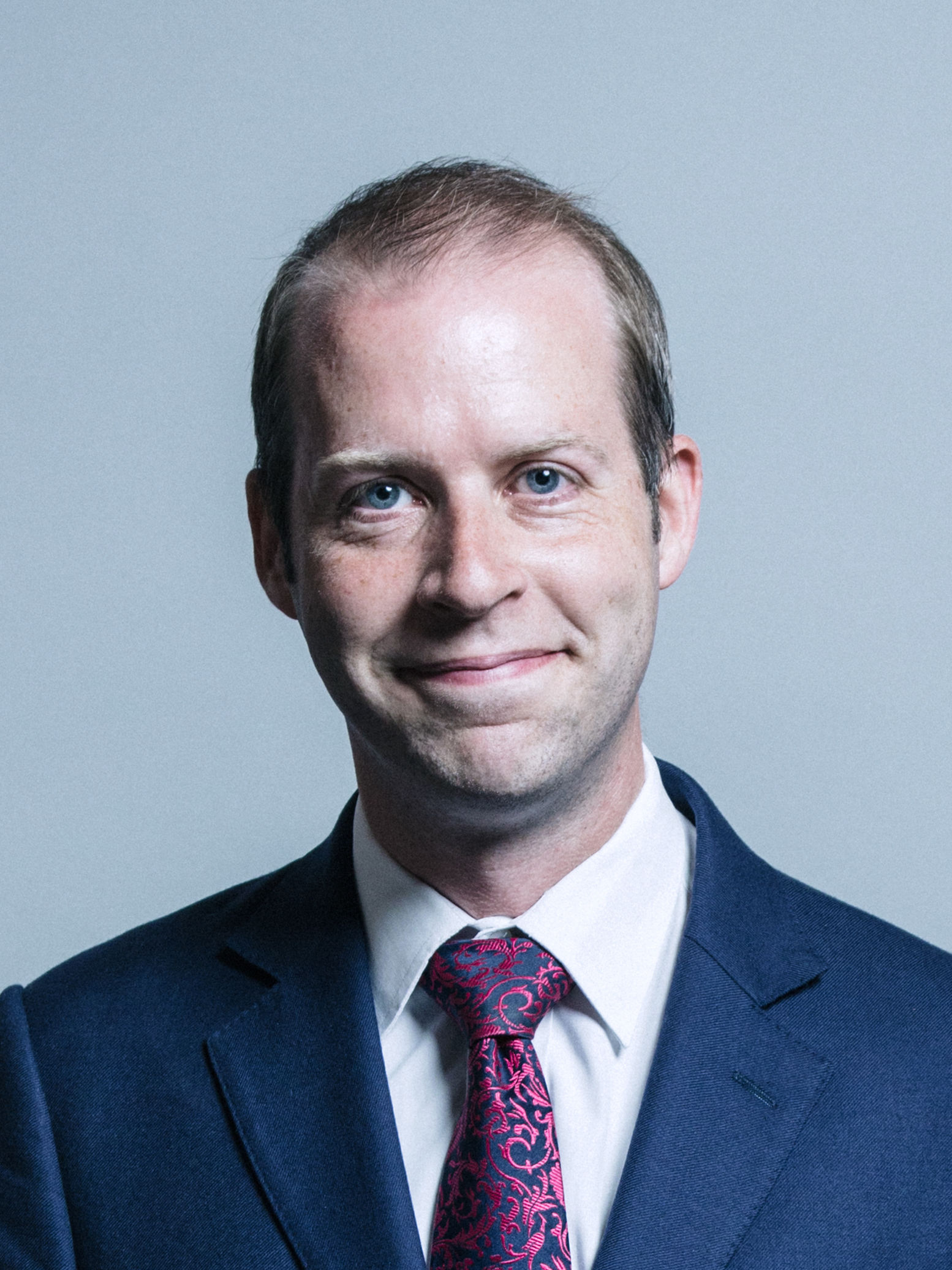
Shadow Ministers / Spokeperson
Liberal Democrat
Lord Fox (LD - Life peer)Liberal Democrat Lords Spokesperson (Business)
Victoria Collins (LD - Harpenden and Berkhamsted)
Liberal Democrat Spokesperson (Science, Innovation & Technology)
Clive Jones (LD - Wokingham)
Liberal Democrat Spokesperson (Trade)
Scottish National Party
Chris Law (SNP - Dundee Central)Shadow SNP Spokesperson (Business)
Chris Law (SNP - Dundee Central)
Shadow SNP Spokesperson (Trade)
Graham Leadbitter (SNP - Moray West, Nairn and Strathspey)
Shadow SNP Spokesperson (Science, Innovation and Technology)
Liberal Democrat
Sarah Olney (LD - Richmond Park)Liberal Democrat Spokesperson (Business)
Joshua Reynolds (LD - Maidenhead)
Liberal Democrat Spokesperson (Investment and Trade)
Green Party
Hannah Spencer (Green - Gorton and Denton)Green Spokesperson (Business, Innovation, Science and Trade)
Conservative
Claire Coutinho (Con - East Surrey)Shadow Secretary of State for Business, Innovation, Science and Trade
Junior Shadow Ministers / Deputy Spokesperson
Conservative
Lord Hunt of Wirral (Con - Life peer)Shadow Minister (Business, Innovation, Science and Trade)
Lord Sharpe of Epsom (Con - Life peer)
Shadow Minister (Business, Innovation, Science and Trade)
Mark Garnier (Con - Wyre Forest)
Shadow Minister (Business, Innovation, Science and Trade)
Julia Lopez (Con - Hornchurch and Upminster)
Shadow Minister (Business, Innovation, Science and Trade)
Junior Shadow Ministers / Deputy Spokesperson
Conservative
Bradley Thomas (Con - Bromsgrove)Shadow Parliamentary Under Secretary (Business, Innovation, Science and Trade)
Peter Fortune (Con - Bromley and Biggin Hill)
Shadow Parliamentary Under Secretary (Business, Innovation, Science and Trade)
Ministers of State
Chris McDonald (Lab - Stockton North)Minister of State (Department for Business, Innovation, Science and Trade)
Kate Dearden (LAB - Halifax)
Minister of State (Department for Business, Innovation, Science and Trade)
Lord Sarwar (Lab - Life peer)
Minister of State (Department for Business, Innovation, Science and Trade)
Parliamentary Under-Secretaries of State
Baroness Lloyd of Effra (Lab - Life peer)Parliamentary Under-Secretary of State (Department for Business, Innovation, Science and Trade)
Blair McDougall (Lab - East Renfrewshire)
Parliamentary Under-Secretary of State (Department for Business, Innovation, Science and Trade) (Jointly with the Department for Energy Security and Net Zero)
Lord Leong (Lab - Life peer)
Parliamentary Under-Secretary of State (Department for Business, Innovation, Science and Trade)
To ask His Majesty's Government what figures they have on the amount of illegal tobacco seized by trading standards offices …
These Regulations are made under the Steel Industry (Nationalisation) Act 2026 (c. 27). The British Steel Limited Property Transfer Regulations …
A Bill to Amend section 8(5) of the Industrial Development Act 1982 and section 6 of the Export and Investment …
14:00
Department for Business, Innovation, Science and Trade Commons Appearances
Oral Answers to Questions is a regularly scheduled appearance where the Secretary of State and junior minister will answer at the Dispatch Box questions from backbench MPs
Other Commons Chamber appearances can be:- Urgent Questions where the Speaker has selected a question to which a Minister must reply that day
- Adjornment Debates a 30 minute debate attended by a Minister that concludes the day in Parliament.
- Oral Statements informing the Commons of a significant development, where backbench MP's can then question the Minister making the statement.
Westminster Hall debates are performed in response to backbench MPs or e-petitions asking for a Minister to address a detailed issue
Written Statements are made when a current event is not sufficiently significant to require an Oral Statement, but the House is required to be informed.
Most Recent Commons Appearances by Category
Bills currently before Parliament
Department for Business, Innovation, Science and Trade does not have Bills currently before Parliament
Acts of Parliament created in the 2024 Parliament
A Bill to Amend section 8(5) of the Industrial Development Act 1982 and section 6 of the Export and Investment Guarantees Act 1991.
This Bill received Royal Assent on 18th March 2026 and was enacted into law.
A Bill to make provision to amend the law relating to employment rights; to make provision about procedure for handling redundancies; to make provision about the treatment of workers involved in the supply of services under certain public contracts; to provide for duties to be imposed on employers in relation to equality; to amend the definition of “employment business” in the Employment Agencies Act 1973; to provide for the establishment of the School Support Staff Negotiating Body and the Social Care Negotiating Bodies; to amend the Seafarers’ Wages Act 2023; to make provision for the implementation of international agreements relating to maritime employment; to make provision about trade unions, industrial action, employers’ associations and the functions of the Certification Officer; to make provision about the enforcement of legislation relating to the labour market; and for connected purposes.
This Bill received Royal Assent on 18th December 2025 and was enacted into law.
A Bill to make provision about the marketing or use of products in the United Kingdom; about units of measurement and the quantities in which goods are marketed in the United Kingdom; and for connected purposes.
This Bill received Royal Assent on 21st July 2025 and was enacted into law.
A Bill to make provision about powers to secure the continued and safe use of assets of a steel undertaking.
This Bill received Royal Assent on 12th April 2025 and was enacted into law.
Department for Business, Innovation, Science and Trade - Secondary Legislation
Petitions
e-Petitions are administered by Parliament and allow members of the public to express support for a particular issue.
If an e-petition reaches 10,000 signatures the Government will issue a written response.
If an e-petition reaches 100,000 signatures the petition becomes eligible for a Parliamentary debate (usually Monday 4.30pm in Westminster Hall).
(3,533 in the last 7 days)
(1,930 in the last 7 days)
(1,498 in the last 7 days)
(106 in the last 7 days)
(85 in the last 7 days)
(68 in the last 7 days)
(1,498 in the last 7 days)
(1,930 in the last 7 days)
(20 in the last 7 days)
(67 in the last 7 days)
Petition Closed
Limit the sale of fireworks to those running local council approved events only
Gov Responded - 18 Nov 2025 Debated on - 19 Jan 2026closed 7 months ago
Ban the sale of fireworks to the general public to minimise the harm caused to vulnerable people and animals. Defenceless animals can die from the distress caused by fireworks.
I believe that permitting unregulated use of fireworks is an act of wide-scale cruelty to animals.
c. 596 added daily
111,228
(Estimated)
Support the Ceramics Industry and protect British manufacturing jobs and skills
Sign this petition Gov Responded - 11 May 2026 Debated on - 6 Jul 2026closes in 3 weeks, 4 days
Apply energy intensive industry relief (Supercharger scheme) to the ceramics industry to help cut soaring industrial energy costs & support ceramics businesses, which are at the risk of imminent collapse without urgent intervention, as seen with Denby Pottery registering for administration support.
Petition Closed
Introduce Statutory Menstrual Leave for People with Endometriosis & Adenomyosis
Gov Responded - 20 Aug 2025 Debated on - 13 Apr 2026closed 7 months, 3 weeks ago
We call on the UK Government to introduce statutory paid menstrual leave of up to 3 days per month for people with conditions such as endometriosis and adenomyosis, following the model introduced in Portugal in 2025.
50 most recent Written Questions
(View all written questions)Acas do not collect data in a way that enables us to determine the average percentage attendance rate for our estate. 162 staff are assigned to the Manchester office at 3 Piccadilly Place. During the period 7 to 11 September 2026 Acas recorded 96 attendance instances, but we cannot verify how many individuals that equates to. The current Acas office attendance expectation is that employees attend an Acas office, or undertake qualifying off-site work e.g. delivering off site training, for an average of 20% of their working time, subject to any agreed workplace adjustments or flexible working arrangements.
Minister of State (Department for Business, Innovation, Science and Trade)
ProQure is our flagship programme to identify, grow and deploy world leading quantum computing capabilities to drive economic growth and social impact in the UK. Following the Contracts for Innovation framework, Innovate UK have designed and conducted the application process for phase 1 of the ProQure programme. The competition criteria were outlined in the competition brief, inviting applicants to submit proposals to deploy operational testbeds for quantum computers. The assessment process followed a standard IUK process, ensuring applications were assessed consistently, objectively and transparently.
Minister of State (Department of Health and Social Care)
We want to ensure the most promising quantum companies are motivated to start, grow and scale here in the UK. We have committed over £1bn to deliver an integrated support offer for scale ups that brings together R&D, skills and procurement to anchor manufacturing and R&D activity right here in the UK. We are also joining up with Public Finance institutions to promote UK quantum companies, with the BBB investing £40m in Quantum Motion and £100m in Oxford Quantum Circuits in Series C rounds earlier this year.
Minister of State (Department of Health and Social Care)
This Government would not issue or maintain an export licence where there is a clear risk the goods might be used to commit or facilitate a serious violation of Internal Humanitarian Law (IHL), including with respect to the treatment of detainees. Additionally, in light of the unlawful occupation, we will now refuse all licence applications to Israel for exports that materially contribute to the occupation.
We have also reviewed all extant licences for exports to Israel on the same basis. All licences are maintained under careful and continual review, and we can and will suspend or revoke licences where we assess them to be no longer compliant.
Parliamentary Under-Secretary of State (Department for Business, Innovation, Science and Trade) (Jointly with the Department for Energy Security and Net Zero)
HMRC publish information on enforcement activity through the Annual Outputs for tackling tobacco smuggling publication. The 25/26 publication shows Trading Standards seized over 35 million illicit cigarettes and more than 8,000kg of illicit hand-rolling tobacco in 2025/26, preventing revenue losses of over £25m. HMRC intend to continue publishing this information annually and previous publications also contain information on Trading Standards activity.
Parliamentary Under-Secretary of State (Department for Business, Innovation, Science and Trade)
The government is committed to ensuring the ethical, safe and responsible adoption of AI to improve public service outcomes and boost public sector productivity. Seizing this opportunity requires strengthening public trust.
That is why we are implementing a mandatory rollout of the Algorithmic Transparency Recording Standard across government departments and arm’s length bodies.
Alongside this, the Department for Business, Innovation, Science & Trade is taking steps to strengthen the UK’s AI assurance ecosystem, as set out in the Trusted Third-Party AI Assurance Roadmap.
Minister of State (Cabinet Office) (Jointly with the Department for Business, Innovation, Science and Technology)
The Government is closely monitoring the impact of disruption in the Middle East to key shipping routes. This includes regularly assessing the impact on UK supply chains, disruption to trade, including any rerouting of container ships, and of increases in prices of critical goods, shipping and energy. In doing so, we are actively drawing input from businesses on supply chain pressures and their own contingency planning. We also continue to work with businesses and our international partners to protect trade and investment across the Gulf region.
Parliamentary Under-Secretary of State (Department for Business, Innovation, Science and Trade) (Jointly with the Department for Energy Security and Net Zero)
I refer the hon. Member to the answer given on 28 August 2026 to Question UIN 20034 Written questions and answers - Written questions, answers and statements - UK Parliament
Minister of State (Department of Health and Social Care)
Official data on business vulnerability is not published by the Department.
Growth is this government’s number one mission and our plan is to make the UK the best place to start and grow a business, with a culture that supports entrepreneurship in every community and high street. The Small Business Plan was launched in July 2025 and contains 200 targeted actions which will make a real difference to the operations of small businesses and help them grow. With a £4bn finance boost to increase access to finance for entrepreneurs, the British Business Bank promotes the provision of better access-to-finance information for UK SMEs. The Growth Guarantee Scheme helps businesses access loans up to £2 million per business group to be used for any business purpose, including growth and investment or working capital.
On 14th July 2026, the Chancellor announced access-to-finance measures through supporting:
- SMEs through the Growth Guarantee Scheme (GGS)
- Communities through Community Development Finance Institutions (CDFIs)
- Building societies to lend more
- SMEs looking to export
- Lending to high-tech scale ups
Parliamentary Under-Secretary of State (Department for Business, Innovation, Science and Trade)
John Cooper
(Conservative - Dumfries and Galloway)
The occupancy rate of the Old Admiralty Building based on the proportion of the assigned workforce attending the building is 21.6% (April 2026 – July 2026).
Working days at other non-home locations including other government offices, visiting businesses and attending meetings are not included. In July, 67% of Department for Business and Trade staff worked at least 40% of their time from an office or other work-related location.
Note that staff assigned to the Old Admiralty Building have the option of working from Caxton House, London. Accurate daily usage figures for Caxton House are not available and are excluded.
Minister of State (Department for Business, Innovation, Science and Trade)
Our Plan to Make Work Pay is supporting good jobs and helping responsible businesses grow. We are phasing in reforms and rolling out an online resource offering practical guidance on what the changes mean so that uncertainty doesn’t hold back hiring.
Our analysis demonstrates that, by making work more attractive and accessible to a wider range of people, the Employment Rights Act is more likely to help more people into work than reduce employment.
Through the Business Growth Service and Business Academy, small businesses can access government-backed advice and free training resources to help them develop their workforce and grow.
Minister of State (Department for Business, Innovation, Science and Trade)
The Government recognises that the current parental leave and pay system could do more to support dads and partners who want to be more actively involved in supporting their partner and children.
We have already taken steps to make this easier. Through the Employment Rights Act, dads and partners are now eligible for Paternity Leave and Unpaid Parental Leave from their first day of employment.
We are also undertaking a Review of the Parental Leave and Pay system. All existing parental leave and pay entitlements are within scope, including paternity leave and pay. The Review will conclude in early 2027.
Parliamentary Under-Secretary of State (Department for Business, Innovation, Science and Trade)
Lord Gilbert of Panteg
(Conservative - Life peer)
I refer the Noble Lord to the answer given to UIN HL2203 on 29 July 2026.
Parliamentary Under-Secretary of State (Department for Business, Innovation, Science and Trade)
The Government continues to engage closely with the UK and European automotive industry to understand the potential impacts of the EU’s Industrial Accelerator Act and to make the case for an outcome that supports our shared automotive sector. The current proposal is still subject to changes whilst the file goes through the EU’s legislative process. We are also working with industry and EU counterparts to find potential solutions ahead of the Trade and Cooperation Agreement Electric Vehicle Rules of Origin rule change on 1 January 2027. Now is the time to work together as like-minded partners to boost Europe’s growth, resilience and economic security.
Parliamentary Under-Secretary of State (Department for Business, Innovation, Science and Trade)
Maintaining frictionless trade and a close, mutually beneficial relationship with the EU for the automotive sector and its wider supply chains is a top priority for this Government. This includes securing a workable outcome on Trade and Cooperation Agreement Electric Vehicle Rules of Origin and making the case for UK inclusion in the EU’s Industrial Accelerator Act. We continue to engage with the European Commission, EU Member States, MEPs and industry on these issues to secure an outcome that supports our closely integrated supply chain with the EU. This result will ultimately benefit businesses on both sides of the Channel.
Parliamentary Under-Secretary of State (Department for Business, Innovation, Science and Trade)
AI assurance helps to build justified trust and confidence in AI systems, support responsible AI adoption, and drive economic growth.
That is why the Department for Business, Innovation, Science & Trade is taking action to implement the Government’s AI assurance strategy, as set out in the Roadmap to Trusted Third-Party AI Assurance (2025). This includes establishing the Centre for AI Measurement, led by the National Physical Laboratory to develop the technical and scientific foundations of AI assurance and deliver the AI Assurance Innovation Fund. We are also convening a multi-stakeholder consortium, led by BCS, The Chartered Institute for IT, to support the development of a recognised AI assurance profession.
Minister of State (Cabinet Office) (Jointly with the Department for Business, Innovation, Science and Technology)
The Government is committed to supporting the sustainable growth of the UK's data centre sector reflecting their critical importance to the economy, public services and national security. A limited number of strategically important data centres may be supported through the Connections Accelerator Service (CAS) subject to the CAS Project Selection Process. The selection process includes due diligence from DBIST and an evaluation of the project alignment to government priorities including economic growth, jobs and net zero objectives. CAS provides enhanced engagement with network companies to identify opportunities to accelerate connections where possible, but it does not guarantee an earlier connection date.
Minister of State (Cabinet Office) (Jointly with the Department for Business, Innovation, Science and Technology)
The Government recognises that greater transparency about how AI developers train their models can support licensing, enforcement and creator control.
Our March report on AI and copyright committed to further work on input transparency. Since then, we have engaged extensively and continue to do so to understand what information is needed, what can feasibly be provided, and discuss best practice.
This will help establish what works and whether there is an appropriate role for government.
Minister of State (Cabinet Office) (Jointly with the Department for Business, Innovation, Science and Technology)
The Department for Business, Innovation, Science and Trade does not hold data on the total number of barbers or the qualifications they hold and therefore cannot determine the proportion holding recognised vocational qualifications, including NVQ Levels 2 and 3. However, published data by the Department for Education for England shows that there were 406 starts on the Barbering Professional apprenticeship in academic year 2023/24, 326 in 2024/25 and 196 so far in 2025/26 (from August 2025 to April 2026).
Minister of State (Department for Business, Innovation, Science and Trade)
The government has considered the relationship between ticket fraud and activity in the secondary ticketing market as part of its work on secondary ticketing reform on which the government made a clear manifesto commitment to strengthen protection for fans.
The government takes all forms of fraud seriously and is committed to working with law enforcement, industry and regulators to prevent fraud, pursue offenders and protect victims. We will continue to work with law enforcement and industry to raise awareness of how fans can protect themselves. Incidents of fraud should be reported to Report Fraud on 0300 123 2040 or through its website at: www.reportfraud.police.uk.
Minister of State (Department for Business, Innovation, Science and Trade)
Mike Wood
(Conservative - Kingswinford and South Staffordshire)
The Department holds a readout for the roundtable. The full list of attending companies has been published as part of the Department’s transparency returns on GOV.UK: https://www.gov.uk/csv-preview/68640020354985706f111bd4/ministers_january_march_2025_meetings.csv
Minister of State (Department for Business, Innovation, Science and Trade)
The Department for Business, Innovation, Science and Trade has not made a specific assessment of the impact of entry requirements in the barbering industry on apprenticeship uptake or professional training. The Department for Work and Pensions is responsible for adult skills and apprenticeship policy, while the Department for Education retains responsibility for under-19 skills and further education provider accountability. The Government continues to support professional training through the Level 2 Barbering Professional apprenticeship.
Minister of State (Department for Business, Innovation, Science and Trade)
I refer the member for Warrington North to the answer I gave to UIN 26653 on 10th September 2026.
Minister of State (Department of Health and Social Care)
The Government recognises the important role that small high street retailers play in supporting local economies and communities, including in Royal Sutton Coldfield.
We have introduced permanently lower business rates multipliers for eligible retail, hospitality and leisure properties, benefiting more than 750,000 premises.
Small businesses can access support through the Business Growth Service, Growth Hubs, the British Business Bank's Business Finance Hub, the Growth Guarantee Scheme, the Business Support Service and the Business Finance Finder.
More broadly, the Government remains committed to rejuvenating high streets and will bring forward a new High Streets Strategy to support businesses, local growth and thriving town centres.
Parliamentary Under-Secretary of State (Department for Business, Innovation, Science and Trade) (Jointly with the Department for Energy Security and Net Zero)
The Government has concluded that Israel's ongoing occupation of Palestinian territory is unlawful. We have already suspended licences for equipment that might be used by the IDF in Gaza. This suspension remains in place. Additionally, we will now refuse all applications for exports that materially contribute to the occupation.
We have also reviewed all extant licences for exports to Israel on the same basis. All licences are maintained under careful and continual review, and we can and will suspend or revoke any that we assess materially contribute to the occupation.
Parliamentary Under-Secretary of State (Department for Business, Innovation, Science and Trade) (Jointly with the Department for Energy Security and Net Zero)
We want to see all delivery companies provide a good level of service for customers and businesses and the government has been clear that some operators need to do more to meet the expectations of their customers.
Ofcom is the independent regulator for the parcel delivery sector, and it monitors the experiences of businesses and consumers of parcel delivery services. Ofcom’s last annual post monitoring report found that around eight in ten SMEs were satisfied overall with delivery services.
Ofcom has, however, recognised growing concerns about parcel operators’ delivery performance and is keeping the need for enforcement or additional regulation under review.
Minister of State (Department for Business, Innovation, Science and Trade)
We want to see all delivery companies provide a good level of service for customers and businesses and the government has been clear that some operators need to do more to meet the expectations of their customers.
Ofcom is the independent regulator for the parcel delivery sector, and it monitors the experiences of businesses and consumers of parcel delivery services. Ofcom’s last annual post monitoring report found that around eight in ten SMEs were satisfied overall with delivery services.
Ofcom has, however, recognised growing concerns about parcel operators’ delivery performance and is keeping the need for enforcement or additional regulation under review.
Minister of State (Department for Business, Innovation, Science and Trade)
The government remains committed to ensuring a reliable universal postal service for users across all parts of the United Kingdom.
We have been clear that Royal Mail’s quality of service has not been good enough. The government has discussed Royal Mail’s performance with the company and Ofcom, as the independent regulator, and they know there is more to do to improve stability and reliability for customers, but it is welcome that the most recently released quality of service figures, for Q1 26/27, show an improvement.
Ofcom is investigating Royal Mail’s quality of service performance for 2025-26, and Royal Mail has published a service improvement plan alongside a £500 million investment into frontline resourcing.
Minister of State (Department for Business, Innovation, Science and Trade)
UK Export Finance (UKEF) works in accordance with government policy over sanctions and export licences, wherever they apply. UKEF does not support transactions involving illegal Israeli settlements in the Occupied Palestinian Territories. UKEF’s support for transactions in Israel only extends to projects within its internationally recognised borders.
Parliamentary Under-Secretary of State (Department for Business, Innovation, Science and Trade) (Jointly with the Department for Energy Security and Net Zero)
Estimates by local authority and parliamentary constituency are not always available due to data reliability constraints.
Around 180,000 workers in Scotland were expected to benefit from a direct pay rise following National Minimum Wage (NMW) and National Living Wage (NLW) increases in April 2026. The 2026 NLW uplift is worth around £900 annually for a full-time worker, and over £1,500 for 18–20-year-olds on the NMW.
Further details can be found in the Impact Assessment The National Minimum Wage (Amendment) Regulations 2026.
Minister of State (Department for Business, Innovation, Science and Trade)
Small salon businesses will benefit from the new permanently lower multipliers for eligible retail, hospitality and leisure (RHL) properties. These new multipliers are worth nearly £1 billion per year and benefit over 750,000 properties.
The Government has also published a range of analytical documents covering the policies referenced, which set out their likely impacts on businesses of different sizes. Each Impact Assessment covering the Employment Rights Act 2025 and The National Minimum Wage (Amendment) Regulations 2026 includes a small and micro business assessment.
A Tax Information and Impact Note (TIIN) was also published alongside the changes to employer NICs, which sets out the impacts on the Exchequer, the economy, individuals and businesses. The Government is supporting smaller employers through the increased Employment Allowance of £10,500.
Minister of State (Department for Business, Innovation, Science and Trade)
The UK is clear that Israel's illegal settlements and decisions designed to further them are a flagrant violation of international law. The measures announced by the Foreign Secretary on 8 September will restrict the import of goods originating in illegal settlements into the UK. Furthermore, we are taking action on services, creating new designation powers to go after individuals and companies that support, facilitate or profit from illegal settlement activity. In addition, we will ban advertising or promotion of land and property in illegal settlements and strengthen our existing global human rights sanctions regime to go after those who defy international humanitarian law, in Palestine, and around the world.
Parliamentary Under-Secretary of State (Department for Business, Innovation, Science and Trade) (Jointly with the Department for Energy Security and Net Zero)
There is currently no planned review of the effectiveness of the voluntary register established under the Hairdressers Registration Act 1964. The Hairdressers Registration Act 1964 provides for a UK register of qualified hairdressers and barbers, although registration remains voluntary. Hairdressing salons and barbers are subject to a range of existing requirements, including health and safety and consumer protection legislation.
Minister of State (Department for Business, Innovation, Science and Trade)
The Government strongly supports the International Labour Organization’s work and values its role in upholding and enhancing workers’ rights globally. We also fully respect the independence of the International Court of Justice and its vital role in upholding the rule of law.
On 7 October 2025, the Government delivered its oral statement before the International Court of Justice in the oral proceedings concerning the right to strike under ILO Convention No. 87, the Freedom of Association and Protection of the Right to Organise Convention 1948.
Minister of State (Department for Business, Innovation, Science and Trade)
Major international subscriptions, including participation in world-leading facilities and collaborations, are being fully protected through Science and Technology Facilities Council (STFC)’s prioritisation decisions. This safeguards UK access, influence and leadership in international scientific partnerships. Science and Technology Facilities Council (STFC), as part of UK Research & Innovation (UKRI), completed an evidence-based prioritisation exercise to ensure its portfolio remains financially sustainable and focused on the highest-priority scientific opportunities. Options were assessed against scientific excellence, long-term research impact, strategic importance to the UK and international leadership. Prioritisation decisions relating to individual projects do not impact the UK’s overall commitment to membership of international research infrastructure like CERN and SKAO.
Minister of State (Department of Health and Social Care)
Science and Technology Facilities Council (STFC), as part of UK Research & Innovation (UKRI), completed an evidence-based prioritisation exercise to ensure its portfolio remains financially sustainable and focused on the highest-priority scientific opportunities. As part of this process, STFC grant funding for Particle Physics, Astronomy and Nuclear Physics postdoctoral researchers was maintained at 2025/26 levels, while PhD studentships and fellowships were also protected helping to sustain the UK's skills base, research expertise and long-term scientific capability.
STFC continues to invest in major research infrastructure that supports regional growth and high-skilled employment, including £327 million in the Square Kilometre Array Observatory (SKAO) between 2021 and 2030. Headquartered in the North West, SKAO is expected to unlock around £225 million of foreign direct investment and £280 million of additional UK economic value.
Minister of State (Department of Health and Social Care)
Through the UK Space Strategy, Government is investing £7.8 billion in the UK space sector to 2029/30, including £2.8 billion in satellite communications to strengthen and scale UK satellite manufacturing and capabilities. Programmes including ESA ARTES, Moonlight and C-LEO will support UK firms to develop and commercialise satellite technologies, strengthen supply chains and secure opportunities in future satellite constellations. The Government is also taking a more interventionist approach to the sector, using grants, procurement and other targeted interventions to support strategically important UK space companies and enhance the UK's ability to design, build and operate satellites, building on our successful heritage in this area.
Minister of State (Department of Health and Social Care)
The measures announced by the Foreign Secretary on 8 September will restrict the import of goods originating in illegal settlements into the UK.
The UK enforces sanctions through a coordinated cross-government approach, with specialist departments and agencies responsible for specific sanctions measures.
Our trade policies are designed to be as effective as possible - UK enforcement effort will be focused on ensuring that goods originating in illegal settlements are not allowed to be imported into the UK. This will be through a coordinated cross-government approach with specialist departments, and agencies responsible for specific sanctions measures.
Where breaches occur, bodies including OFSI (the Office of Financial Sanctions Implementation, within HMT), HMRC, DfT, the Home Office, OTSI (the Office of Trade Sanctions Implementation, within BIST) and the NCA can use civil and criminal powers, which range from warnings and civil penalties to prosecution in the most serious cases including powers to confiscate assets held to be the proceeds of crime.
Parliamentary Under-Secretary of State (Department for Business, Innovation, Science and Trade) (Jointly with the Department for Energy Security and Net Zero)
I refer the hon. Member to the answer given on 28 August 2026 to Question UIN 23680 Written questions and answers - Written questions, answers and statements - UK Parliament
Minister of State (Department of Health and Social Care)
The UK Government recognises that intellectual property (IP) enforcement is essential to supporting growth for UK creators, rights holders and businesses operating internationally to secure returns on investment in innovation and creativity.
While no specific assessment has been made of the potential impact of improving international IP enforcement for UK creative businesses, the OECD has estimated trade in goods infringing UK IP rights was worth £12.1 billion in 2021, with associated sales, jobs and public revenue impacts.
The Intellectual Property Office supports UK businesses protecting their rights overseas by working with international partners, law enforcement and industry to strengthen IP enforcement frameworks.
Minister of State (Department of Health and Social Care)
I refer the Hon Member to the answer provided on 15 July 2026 in response to Question 16739.
Minister of State (Department of Health and Social Care)
The UK needs domestic data centre capacity to support critical workloads that drive economic growth, deliver public services, and protect national security. That is why the Government has designated specific data centres as Critical National Infrastructure, recognising their importance to protecting essential workloads and national resilience. However, many data centres are co-location facilities that lease space to multiple tenants, or are cloud providers serving diverse customers. Developers often cannot confirm exact end uses when applying for relevant approvals, as these frequently change as tenants and workloads evolve.
Minister of State (Cabinet Office) (Jointly with the Department for Business, Innovation, Science and Technology)
The Department for Business, Innovation, Science and Trade, works with DEFRA, the Environment Agency and others to ensure data infrastructure growth does not compromise public water supply resilience. To that end, the Government supports the adoption of efficient cooling technologies (closed-loop systems) and alternative sources like rainwater harvesting. National planning policy embeds consideration of sustainable water use and resource efficiency in decision making. In 2025, a techUK–Environment Agency survey found that 51% of surveyed sites use closed loop cooling systems, and 64% use less than 10,000m³ of water per year. This is small compared to other sectors. Data centres in England are estimated to account for around 0.2% of non-household water use.
Parliamentary Under-Secretary of State (Department for Digital, Culture, Media and Sport)
The UK is one of the best places in the world to start and grow an AI company: in 2025 we produced the second most AI start-ups globally and attracted the third highest levels of AI private investment. The financial services sector is adopting AI faster than the economy as a whole; 21% of firms, against 16% across all sectors. Through our Sovereign AI Fund, backed by up to £500 million, we invest directly in high-potential British start-ups, give them access to compute through the AI Research Resource, and provide grants through Innovate UK's £130 million Growth Catalyst.
Parliamentary Under-Secretary of State (Department for Digital, Culture, Media and Sport)
The Government is working to build domestic capability in AI where the UK has strengths; collaborate with trusted partners where this increases UK access and influence; and secure access to frontier capabilities where this is essential. We have taken significant steps to build sovereign capability through establishing the £500m Sovereign AI Fund to support UK AI companies; provision of compute via the AI Research Resource; establishing AI Growth Zones to build data centres; and the £1.1bn AI Hardware Plan to build out critical capabilities in key parts of the AI value chain.
Parliamentary Under-Secretary of State (Department for Digital, Culture, Media and Sport)
The Government is supporting the use of artificial intelligence and human-based laboratory models in medicines development through the Replacing Animals in Science strategy and wider work to accelerate AI adoption across the UK life sciences sector. This includes investment in AI-enabled tools, organ-on-a-chip systems, advanced cell and tissue models, and other human-relevant approaches to predict the safety and effectiveness of new medicines. We have invested £20 million in the Pre-clinical Translational Models Hub and up to £2 million through Innovate UK to support innovative technologies, including AI tools and human tissue models. The Government has also appointed an AI Champion for the life sciences sector and is taking forward the AI Opportunities Action Plan to support the development, adoption and responsible use of AI technologies, alongside work to support their validation and regulatory uptake through the UK Centre for the Validation of Alternative Methods.
Parliamentary Under-Secretary of State (Department for Business, Innovation, Science and Trade)
Alex Mayer
(Labour - Dunstable and Leighton Buzzard)
I refer the hon. Member to the answer given on 08 September 2026 to Question UIN 23681 Written questions and answers - Written questions, answers and statements - UK Parliament
Minister of State (Department of Health and Social Care)
The Government has concluded that Israel’s ongoing occupation of Palestinian territory is unlawful.
We have already suspended licences for equipment that might be used by the IDF in Gaza. This suspension remains in place. Additionally, we will now refuse all applications for exports that materially contribute to the occupation.
We have also reviewed all extant licences for exports to Israel on the same basis. All licences are maintained under careful and continual review, and we can and will suspend or revoke any that we assess materially contribute to the occupation.
No additional licences have been revoked or suspended since 8 September 2026. This is largely because licences for items that might materially contribute to the occupation have already been suspended because of Israel’s conduct in the Gaza conflict. We now have in effect an additional lock on relevant licences.
Parliamentary Under-Secretary of State (Department for Business, Innovation, Science and Trade) (Jointly with the Department for Energy Security and Net Zero)
The Government has concluded that Israel’s ongoing occupation of Palestinian territory is unlawful.
We have already suspended licences for equipment that might be used by the IDF in Gaza. This suspension remains in place. Additionally, we will now refuse all applications for exports that materially contribute to the occupation.
We have also reviewed all extant licences for exports to Israel on the same basis. All licences are maintained under careful and continual review, and we can and will suspend or revoke any that we assess materially contribute to the occupation.
No additional licences have been revoked or suspended since 8 September 2026. This is largely because licences for items that might materially contribute to the occupation have already been suspended because of Israel’s conduct in the Gaza conflict. We now have in effect an additional lock on relevant licences.
Parliamentary Under-Secretary of State (Department for Business, Innovation, Science and Trade) (Jointly with the Department for Energy Security and Net Zero)