Scotland Office
The Office of the Secretary of State for Scotland supports the Secretary of State in promoting the best interests of Scotland within a stronger United Kingdom. It ensures Scottish interests are fully and effectively represented at the heart of the UK Government, and the UK Government’s responsibilities are fully and effectively represented in Scotland.
Secretary of State
Douglas Alexander
Secretary of State for Scotland
Shadow Ministers / Spokeperson
Liberal Democrat
Lord Bruce of Bennachie (LD - Life peer)Liberal Democrat Lords Spokesperson (Scotland)
Susan Murray (LD - Mid Dunbartonshire)
Liberal Democrat Spokesperson (Scotland)
Conservative
Harriet Cross (Con - Gordon and Buchan)Shadow Secretary of State for Scotland
Junior Shadow Ministers / Deputy Spokesperson
Conservative
Lord Cameron of Lochiel (Con - Life peer)Shadow Minister (Scotland)
Parliamentary Under-Secretaries of State
Baroness Smith of Cluny (Lab - Life peer)Advocate General for Scotland
Melanie Ward (Lab - Cowdenbeath and Kirkcaldy)
Parliamentary Under-Secretary (Scotland Office)
11:40
Formal Minutes
At its meeting on 9 September, the Committee agreed to inquire into the Electoral Commission's oversight of the funding and …
To ask the Secretary of State for Scotland, what discussions he has had with the Scottish Government and HMRC on …
The Order makes provision in consequence of the Criminal Justice (Scotland) Act 2016 (“the 2016 Act”).
16:29
Transparency
Scotland Office Commons Appearances
Oral Answers to Questions is a regularly scheduled appearance where the Secretary of State and junior minister will answer at the Dispatch Box questions from backbench MPs
Other Commons Chamber appearances can be:- Urgent Questions where the Speaker has selected a question to which a Minister must reply that day
- Adjornment Debates a 30 minute debate attended by a Minister that concludes the day in Parliament.
- Oral Statements informing the Commons of a significant development, where backbench MP's can then question the Minister making the statement.
Westminster Hall debates are performed in response to backbench MPs or e-petitions asking for a Minister to address a detailed issue
Written Statements are made when a current event is not sufficiently significant to require an Oral Statement, but the House is required to be informed.
Bills currently before Parliament
Scotland Office does not have Bills currently before Parliament
Acts of Parliament created in the 2024 Parliament
Scotland Office has not passed any Acts during the 2024 Parliament
Scotland Office - Secondary Legislation
Petitions
e-Petitions are administered by Parliament and allow members of the public to express support for a particular issue.
If an e-petition reaches 10,000 signatures the Government will issue a written response.
If an e-petition reaches 100,000 signatures the petition becomes eligible for a Parliamentary debate (usually Monday 4.30pm in Westminster Hall).
(501 in the last 7 days)
(9 in the last 7 days)
(501 in the last 7 days)
(9 in the last 7 days)
Petition Closed
Prohibit publishers irrevocably disabling video games they have already sold
Gov Responded - 3 Feb 2025 Debated on - 4 Nov 2025closed 1 year, 2 months ago
The government should update consumer law to prohibit publishers from disabling video games (and related game assets / features) they have already sold without recourse for customers to retain or repair them. We seek this as a statutory consumer right.
Departmental Select Committee
Scottish Affairs Committee
Commons Select Committees are a formally established cross-party group of backbench MPs tasked with holding a Government department to account.
At any time there will be number of ongoing investigations into the work of the Department, or issues which fall within the oversight of the Department. Witnesses can be summoned from within the Government and outside to assist in these inquiries.
Select Committee findings are reported to the Commons, printed, and published on the Parliament website. The government then usually has 60 days to reply to the committee's recommendations.
11 Members of the Scottish Affairs Committee
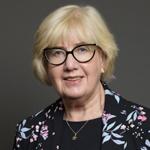
Scottish Affairs Committee Member since 12th September 2024

Scottish Affairs Committee Member since 21st October 2024
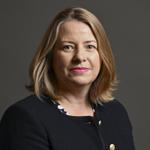
Scottish Affairs Committee Member since 28th October 2024

Scottish Affairs Committee Member since 28th October 2024

Scottish Affairs Committee Member since 28th October 2024
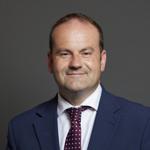
Scottish Affairs Committee Member since 28th October 2024
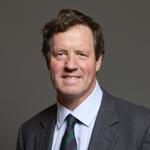
Scottish Affairs Committee Member since 28th October 2024
Scottish Affairs Committee Member since 28th October 2024
Scottish Affairs Committee Member since 28th October 2024
Scottish Affairs Committee Member since 16th June 2025
Scottish Affairs Committee Member since 6th July 2026
Scottish Affairs Committee: Upcoming Events
Connectivity in Scotland: Digital connectivity
14 Oct 2026, 9 a.m.
At 9:30am: Oral evidence
Simon Miller - Director of Public Affairs and Regional Affairs at Virgin Media O2
George Robinson - representative at VodafoneThree
Alex Towers - Director of Policy and Public Affairs at BT Group
Jonathan Freeman - Chief Strategy & Regulatory officer at Cellnex UK
At 10:30am: Oral evidence
Mrs Anna Gardiner - Senior Policy Adviser (Business & Property) at Scottish Land & Estates
Lorna Scott - Senior Policy Manager, Climate, Land and Business at NFU Scotland
View calendar - Save to Calendar
Scottish Affairs Committee: 4 Current Inquiries
Scottish Affairs Committee: Previous Inquiries
50 most recent Written Questions
(View all written questions)I am concerned about the prevalence of illegal tobacco sold in Scotland, and fully support efforts to limit its spread.
The enforcement of trading standards is a devolved matter. I understand that the Society of Chief Officers of Trading Standards in Scotland is currently engaging with the Scottish Government and Police Scotland to explore what more can be done to better empower Scottish Trading Standards Officers in dealing with criminality, specifically in ensuring that they have comparable powers to their counterparts in England and Wales in measures such as Closure Orders.
Parliamentary Under-Secretary (Scotland Office)
In its recent Programme for Government, the Scottish Government committed to the development of a Human Rights Bill on devolved matters, which it aims to introduce in year two of the new Scottish Parliament. The development of Scottish Parliament legislation is of course a matter for the Scottish Government, but the UK Government notes this is a complex policy area and will consider any requests for engagement in the usual way. To date, there have been no substantive policy discussions with the Scottish Government on the proposed legislation.
Lord in Waiting (HM Household) (Whip)
The Scotland Office occupies premises owned, leased, and managed by the Government Property Agency (GPA) and HM Revenue and Customs (HMRC) who are responsible for building assets, including the installation and use of rooftop solar panels.
Enquiries related to these buildings should be directed to the Government Property Agency (GPA) and HMRC.
Funding support for public bodies to install solar panels has been available through the Public Sector Decarbonisation Scheme (PSDS) with a total of over £3 billion made available up to 2028. Great British Energy (GBE) also supports public sector decarbonisation and the GBE Solar programme is investing £255 million to fund around 250 schools, around 260 NHS sites, and around 15 military sites to install solar panels across the country.
Parliamentary Under-Secretary (Scotland Office)
In 2014, there was agreement in the UK parliament and the Scottish parliament, across all political parties, and across civic society, that there should be a referendum. There is no such consensus now. In that referendum, the people of Scotland made clear their continued commitment to Scotland remaining part of the UK.
As set out in the manifesto which saw this government win a majority of UK parliamentary seats in Scotland, this Government does not support independence or another referendum.
Our focus now must be on delivery, not division. This UK Government is focused entirely on delivering in the national interest.
Parliamentary Under-Secretary (Scotland Office)
The Scotland Office does not monitor the amount of food waste generated by its offices each month. The Department's offices are located in buildings managed by the Government Property Agency and HM Revenue and Customs. Both the Government Property Agency and HMRC provide facilities management services, and are responsible for monitoring and recording food waste generated within those buildings.
Parliamentary Under-Secretary (Scotland Office)
The UK Government actively promotes Ayrshire’s world-class aerospace, advanced manufacturing, and engineering capabilities to global markets.
Key steps include:
Prestwick Aerospace: Supporting the development of the Aerospace and Space Innovation Centre at Prestwick through the Ayrshire Growth Deal, positioning the region as a premier hub for MRO (Maintenance, Repair, and Overhaul) and advanced manufacturing.
Global Trade Missions: Highlighting Scotland's sector strengths, including Ayrshire’s engineering heritage, in trade delegations and global investment summits to attract international capital.
Strengthening links with key markets: For example meeting with Florida Governor Ron DeSantis and an inward delegation to strengthen economic and cultural partnerships, with a focus on shared opportunities in space exploration, financial services, technology, and the export of goods
The Scotland Office continues to advocate for Ayrshire’s strategic industrial assets on both national and international stages.
Parliamentary Under-Secretary (Scotland Office)
The UK Government is committed to ensuring our policies reflect the views and barriers facing young people across Scotland. The Scotland Office maintains regular dialogue with youth organisations and charities, and officials have met with both Includem and Inspiring Scotland this year.
Young people’s experiences of mental health and employment support are directly informing our approach to delivering in Scotland, including extending the Youth Hubs initiative to another 18 areas, bringing the total in Scotland to 28.
This will help ensure even more young people have access to essential mental health support, housing advice, and career guidance, including CV advice so they can fulfil their potential.
Parliamentary Under-Secretary (Scotland Office)
The Edinburgh Festival Fringe, as the world’s largest performing arts festival and trade show, is a vital pillar of the United Kingdom’s creative ecosystem. Its success generates significant economic and cultural benefits across the entire UK, with artists from every nation showcasing work that often goes on to achieve broader national and international acclaim, as seen with productions like Fleabag, Six the Musical, and Baby Reindeer.
The UK government has delivered £7 million support for the Edinburgh Festival Fringe Society. This investment has delivered a new home for the Society - which officially opened this year - and has boosted the ‘Keep it Fringe’ fund to help widen participation and ensure that creative talent from across the UK can reach audiences at the Fringe.
Parliamentary Under-Secretary (Scotland Office)
The Scotland Office has spent nil on activities relating to Pride Month 2026.
Parliamentary Under-Secretary (Scotland Office)
Ministers and officials from the Scotland Office regularly engage with Scottish Government colleagues, local authorities, and economic development partners to drive inward investment and deliver regional economic growth across Scotland.
Recent discussions have focused on maximising the impact of the Ayrshire Growth Deal, including major milestones like the groundbreaking event at the Ayrshire Innovation Park last December and Ryanair’s expansion at Prestwick in March. The UK Government remains committed to working collaboratively with the Scottish Government and all Ayrshire local authorities to present a unified offer to international investors and secure high-value jobs for Ayrshire.
Parliamentary Under-Secretary (Scotland Office)
This Government was elected on a clear commitment not to support independence or another referendum. People need and want their governments focused on the big issues our country faces - economic growth, the cost of living, public services and security. That is what this Government is doing.
Parliamentary Under-Secretary (Scotland Office)
This Government was elected on a clear commitment not to support independence or another referendum. People need and want their governments focused on the big issues our country faces - economic growth, the cost of living, public services and security. That is what this Government is doing.
Parliamentary Under-Secretary (Scotland Office)
The Scotland Office incurred outturn spending on social media marketing in 2024-25 and 2025-26.
In the financial year 2024-25, the outturn spending by the department on social media marketing was £2,806.
In the financial year 2025-26, the outturn spending by the department on social media marketing was £6,964.
Parliamentary Under-Secretary (Scotland Office)
The Scotland Office has not incurred any costs for social media influencers since July 2024.
Parliamentary Under-Secretary (Scotland Office)
Charlie Dewhirst
(Conservative - Bridlington and The Wolds)
All communicators are members of the Government Communication Service.
Parliamentary Under-Secretary (Scotland Office)
It has been the practice of successive governments not to comment, on grounds of both national security and staff safety, on the physical capacity or staffing numbers for individual buildings of the government estate.
Parliamentary Under-Secretary (Scotland Office)
It is not possible to provide an estimate for hours spent preparing Ministers to respond to Westminster Hall Debates. There will be differences in the Civil Service, Special Adviser and Ministerial time depending on the policy matter and length of the debate. Debates can also be cross-cutting and require resources from multiple departments or engage departmental bodies.
Parliamentary Under-Secretary (Scotland Office)
This Government is fully committed to the protection of human rights, both domestically and internationally. It is for the Scottish Government to ensure their legislation is drafted within the parameters of the devolution settlement. The UK Government will consider any forthcoming legislation in the usual way.
Parliamentary Under-Secretary (Scotland Office)
The UK Government is providing substantial funding across Ayrshire to drive long-term economic growth, strengthen local infrastructure, and boost trade and investment.
Key direct investments and funding initiatives provided to the region include:
● Ayrshire Growth Deal: A £103 million UK Government investment supporting major economic projects across aerospace, life sciences, and digital infrastructure in Ayrshire.
● Local Regeneration Fund: Over £61 million in direct UK Government capital grants delivered to the region, including £37.45 million for commercial and low-carbon infrastructure across North and South Ayrshire, and £23.69 million for critical B714 transport upgrades.
● Pride in Place Funds: Over £40 million in direct 10-year endowment funding reconfirmed for Ayrshire towns, including Irvine, Kilmarnock, and Ayr North, to support community-led high street regeneration, housing, and local civic infrastructure.
● UK Shared Prosperity Fund (UKSPF): £17.35 million allocated across North, South, and East Ayrshire Councils to support local community projects, business development, skills, and adult numeracy programmes.
● Local Growth Fund: Delivering £11.8 million of funding directly to Ayrshire Regional Partnership to support regional economic development and local business growth.
Parliamentary Under-Secretary (Scotland Office)
The UK Government is committed to driving sustainable economic growth, creating high-quality jobs, and boosting trade across all parts of Scotland. While Scotland's designated Green Freeports, Inverness & Cromarty Firth and Forth Green Freeport, are geographically focused, they are expected to yield broader supply chain, trade, and investment benefits for regional economies right across Scotland, including Ayrshire.
Specifically, Scotland's two Green Freeports could potentially generate over 50,000 jobs, with advanced manufacturing hubs like Ayrshire positioned to absorb substantial supply chain, logistics, and spillover demand.
Alongside the national economic impact of Green Freeports, the UK Government is also directly investing in Ayrshire’s long-term economic prosperity through our £103 million commitment to the £251 million Ayrshire Growth Deal. This is complemented by targeted UK Government local funding streams, including £11.8 million via the Local Growth Fund and £40 million via Pride in Place initiatives, ensuring local leaders in Ayrshire have the direct backing needed to drive town centre regeneration, support local businesses, and maximise regional investment opportunities.
Parliamentary Under-Secretary (Scotland Office)
The Scotland Office has not spent any money on branded goods and merchandise since April 2025.
Parliamentary Under-Secretary (Scotland Office)
The Scotland Office has not appointed any delivery advisers to date.
Parliamentary Under-Secretary (Scotland Office)
Minister McNeill, Parliamentary Under Secretary of State in the Scotland Office, held two stakeholder receptions in 2025 to mark International Women’s Day and International Coming Out Day.
Parliamentary Under-Secretary (Scotland Office)
The Scotland Office does not have any data and reporting requirements to the European Commission and its agencies.
Parliamentary Under-Secretary (Scotland Office)
The Fast Stream Summer Internship Programme is the only internship scheme that the Scotland Office has participated in over the last 12 months.
Parliamentary Under-Secretary (Scotland Office)
There are no live industrial disputes within the Scotland Office.
Parliamentary Under-Secretary (Scotland Office)
The total cost to the Scotland Office of facility time in (a) 2023-24, (b) 2024-25 and (c) 2025-26 was nil, with no headcount number of facility staff time in either of the years requested. No funding was provided for trade union activities in any of those years.
Parliamentary Under-Secretary (Scotland Office)
The Scotland Office follows the civil service attendance expectation of 60% for all of the department’s offices. Attendance statistics are not collated for individual offices.
Parliamentary Under-Secretary (Scotland Office)
The Scotland Office does not manage any internship schemes.
Parliamentary Under-Secretary (Scotland Office)
The Scotland Office has had no departmental Senior Civil Service away days in 2026.
Parliamentary Under-Secretary (Scotland Office)
Ministers and officials from the Scotland Office regularly engage with Scottish local authorities, regional partnerships, and COSLA (Convention of Scottish Local Authorities) to discuss the design, delivery, and governance of UK Government-funded projects.
Recent discussions have focused on ensuring efficient delivery of programmes, including City Region and Growth Deals, the Pride in Place initiative, and the Local Growth Fund.
The Scotland Office works collaboratively with local authority leaders and the Scottish Government to ensure projects are tailored to local economic priorities, delivered transparently, and aligned with wider community needs.
Parliamentary Under-Secretary (Scotland Office)
The UK Government is committed to driving sustainable economic growth, creating high-skilled jobs, and delivering tangible benefits for communities right across Scotland.
Our direct investment programmes, including the £140 million Scottish Local Growth Fund, the Pride in Place programme, City Region and Growth Deals, Freeports, and Investment Zones, are targeted at unlocking economic potential, regenerating town and city centres, and improving local infrastructure. For example, the Glasgow City Region Deal, has attracted over £800 million in private and commercial investment since 2014, further strengthening Glasgow City Region’s position as a hub of Scotland’s economic growth. The Deal has supported 5,500 people into sustained employment, and has the potential to deliver 29,000 jobs over the Deal’s lifetime.
Assessments of investment programmes are conducted in partnership with local authorities, regional partnerships, and key stakeholders using robust economic frameworks. These measure long-term outcomes such as local job creation, private-sector leverage, productivity growth, and community revitalisation. My department continues to monitor these impacts closely to ensure UK Government funding delivers maximum value and lasting economic prosperity across Scotland.
Parliamentary Under-Secretary (Scotland Office)
The number of agency staff employed in the Scotland Office in each of the last five years is as follows:
Year | Agency Staff |
July 2021 - June 2022 | 3 |
July 2022 - June 2023 | 3 |
July 2023 - June 2024 | 0 |
July 2024 - June 2025 | 0 |
July 2025 - June 2026 | 0 |
Secretary of State for Scotland
Scotland Office Ministers meet regularly with Members of Parliament to discuss a wide range of issues relating to their departmental responsibilities.
For the purpose of this PQ, we have taken ‘surgeries’ to mean meetings or briefings with MPs where external stakeholders were not also present.
a) July 2024 to January 2025: 7
b) From January 2025 onwards: 37
Secretary of State for Scotland
Other than special advisers, the Scotland Office has made one appointment from outside the civil service since July 2024.
Gillian McGregor has been appointed to the Boundary Commission for Scotland, an advisory non-departmental public body funded by the Scotland Office. The appointment was made on a fixed term basis through open competition using the procedures laid down by the Commissioner for Public Appointments.
Secretary of State for Scotland
This Government is steadfast in its commitment to the steel industry, and that includes Scotland. On 1 July, we took bold steps to limit tariff-free steel imports, with the aim that half of the steel used in the UK is made here.
We are closely engaged on Dalzell - the UK's only heavy steel plate mill. The Parliamentary Under-Secretary of State for Scotland and I routinely engage with ministerial colleagues to ensure Scotland's specific circumstances are reflected in the Government's wider approach to supporting the domestic steel sector.
Secretary of State for Scotland
As my Honourable Friend will be well aware, earlier this year we unlocked £25 million of seed capital for the Forth Green Freeport to create tens of thousands of jobs in clean energy and manufacturing.
Already we are seeing the benefits in Edinburgh. The Port of Leith has transformed itself into an offshore wind hub, currently servicing the massive InchCape development. There is the potential for further investment by the wind turbine manufacturer Vestas, which could create up to 500 new jobs at the port.
Skills policy is devolved to the Scottish Government and it is up to them to ensure that the young people of Edinburgh are equipped to take advantage of these opportunities.
Secretary of State for Scotland
In an era of geopolitical uncertainty, we need to do all that we can to strengthen our energy security here at home. I am in regular contact with my Cabinet colleagues on a whole range of issues.
Secretary of State for Scotland
The wearing of the sgian dubh is permitted where it is being worn as part of a national costume. There are no plans to change this.
However, we are clear that if any bladed or pointed article is used to threaten or harm others, this will be met with the full force of the law.
This strikes the balance between protecting public safety and protecting freedoms.
Minister of State (Foreign, Commonwealth and Development Office)
Voluntary organisations are essential partners in the UK Government mission to build national and local pride.
While community development is a devolved matter, the Scotland Office works closely with all UK Government departments to ensure UK-wide funding structures empower Scotland's third sector.
Through our targeted £280 million Pride in Place Programme, the £12 million Pride in Place Impact Fund and the new £140 million Local Growth Fund, we are putting real spending power into the hands of communities, to protect vital assets and drive local growth across Scotland.
Minister of State (Foreign, Commonwealth and Development Office)
In reality, crises do not respect borders or boundaries. It is essential that resilience is a shared responsibility between individuals, communities, businesses, local, devolved and national government across the UK to ensure we can effectively respond to risks wherever they occur.
We work in close cooperation at both official and ministerial level on resilience, organising regular ‘four nations’ meetings on resilience. These aim to complement the everyday work teams across government do to collaborate with counterparts in the devolved governments on risk and resilience, most recently convening in June.
This group discusses how each government is developing its own strategies and frameworks to strengthen resilience and identify opportunities for greater collaboration.
Minister of State (Foreign, Commonwealth and Development Office)
The UK Government is firmly committed to empowering local leaders and communities across the whole of the United Kingdom.
I regularly meet with Scottish Government Ministers to discuss how our two governments can work together to drive economic growth and improve public services.
During these discussions, I have consistently championed the vital role that local government plays. The UK Government already works closely with Scottish local authorities through our joint delivery of City Region and Growth Deals, and the new Local Growth Fund, and we will continue to encourage the Scottish Government to ensure that local councils across Scotland have the appropriate powers and resources they need to deliver for their communities.
Minister of State (Foreign, Commonwealth and Development Office)
We have taken ‘political appointees’ to mean special advisers. A list of special advisers by department is published each year in the Annual Report on Special Advisers which is laid in parliament. The Annual Report on Special Advisers 2026 will be published in due course.
Minister of State (Foreign, Commonwealth and Development Office)
The Government is committed to adopting artificial intelligence in a way that is transparent, responsible and accountable to the public.
Information about algorithmic and AI tools used by government departments to support decisions that affect members of the public, or that have a significant influence on a decision-making process with public effect, is published through the Algorithmic Transparency Recording Standard (ATRS). The ATRS has been mandatory for central government departments since 2024, and records are published on GOV.UK at www.gov.uk/algorithmic-transparency-records. In addition, departments may use other internal tools which do not fall within the scope of the Standard.
In line with public procurement transparency requirements, departments publish contractual information for AI services and tools on Contracts Finder and, where above the relevant threshold, on the Find a Tender Service.
AI services and tools are accessed across government through a range of commercial routes. Departments may contract directly with AI providers, access AI products via intermediated routes such as reseller arrangements where the contractual relationship sits with a partner rather than the underlying provider, or use AI capabilities delivered as features within existing enterprise software and platform contracts (for example productivity, HR or service management tools).
Departments remain responsible in all cases for ensuring compliance with procurement legislation, securing value for money, and publishing relevant contractual information in line with transparency requirements.
The Scotland Office uses the information technology system provided and operated by the Cabinet Office, which has responsibility for all hardware and software procurement, administration, support maintenance, security, and integrity of the system. This includes artificial intelligence services and tools.
Minister of State (Foreign, Commonwealth and Development Office)
The information requested can be found at https://questions-statements.parliament.uk.
Minister of State (Foreign, Commonwealth and Development Office)
The Scotland Office has not hired any external public relations consultants since July 2024.
Minister of State (Foreign, Commonwealth and Development Office)
The UK Government continues to work constructively with the Scottish Government to increase living standards, improve public services, and drive economic growth.
The Prime Minister has spoken to the First Minister of Scotland following the recent Scottish Parliament elections and noted his desire for continued positive engagement between the governments.
The Secretary of State for Scotland has also written to the First Minister to discuss how we can work together in the interests of people in Scotland. The Chief Secretary to the Prime Minister will shortly attend the next meeting of the Interministerial Standing Committee, and ministers across the UK Government continue to work closely with the Scottish Government on matters of mutual interest.
UKG publishes an IGR engagement dashboard on gov.uk detailing the number of meetings between the governments. The last publication was in March 2026, covering the period from July 2024-September 2025. The compilation for the next IGR dashboard quarters is underway and will be published shortly.
Effective intergovernmental relations remain a priority, and we look forward to working constructively with the new ministers in both governments. Scotland benefits from being part of a strong and successful United Kingdom where we pool resources, share opportunities and tackle challenges together.
Parliamentary Under-Secretary of State (Department for Energy Security and Net Zero)
The Scotland Office does not permit civil servants employed in the UK to work from overseas on a regular basis.
Minister of State (Foreign, Commonwealth and Development Office)
The Scotland Office has conducted an extensive search of our own records, as well as the National Archive’s (TNA) search engine, Discovery, and has been unable to locate any documentation relating to Chinook ZD576.
My thoughts and sympathies remain with the families of those who lost their lives, and with all the communities affected by that devastating loss. I welcome the meeting that took place in December 2025 between representatives from the Chinook Justice Campaign and three Ministry of Defence Ministers and the Victims' Minister.
Minister of State (Foreign, Commonwealth and Development Office)