Attorney General
The Attorney General’s Office (AGO) provides legal advice and support to the Attorney General and the Solicitor General (the Law Officers) who give legal advice to government. The AGO helps the Law Officers perform other duties in the public interest, such as looking at sentences which may be too low.
Secretary of State
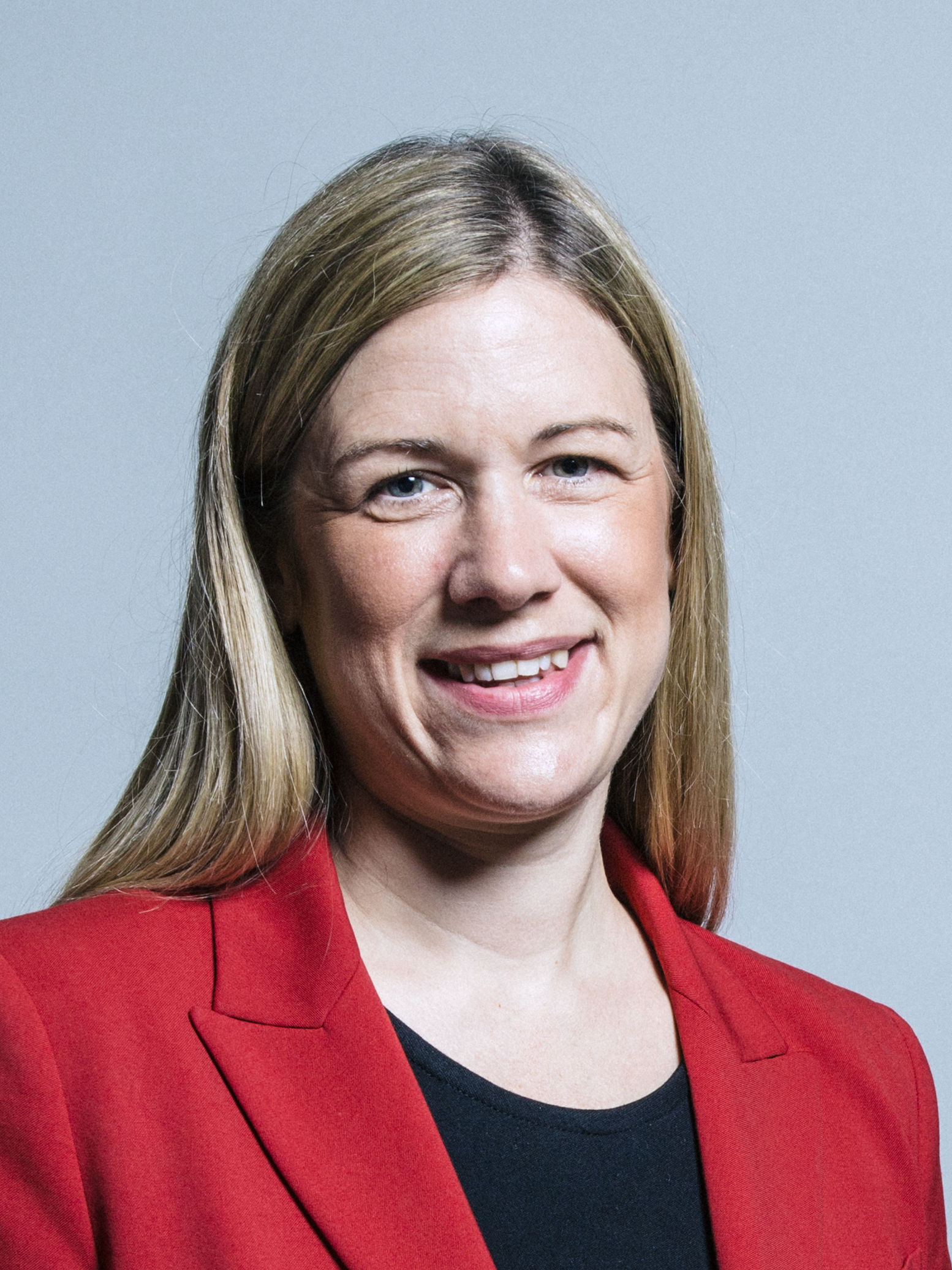
Ellie Reeves
Attorney General
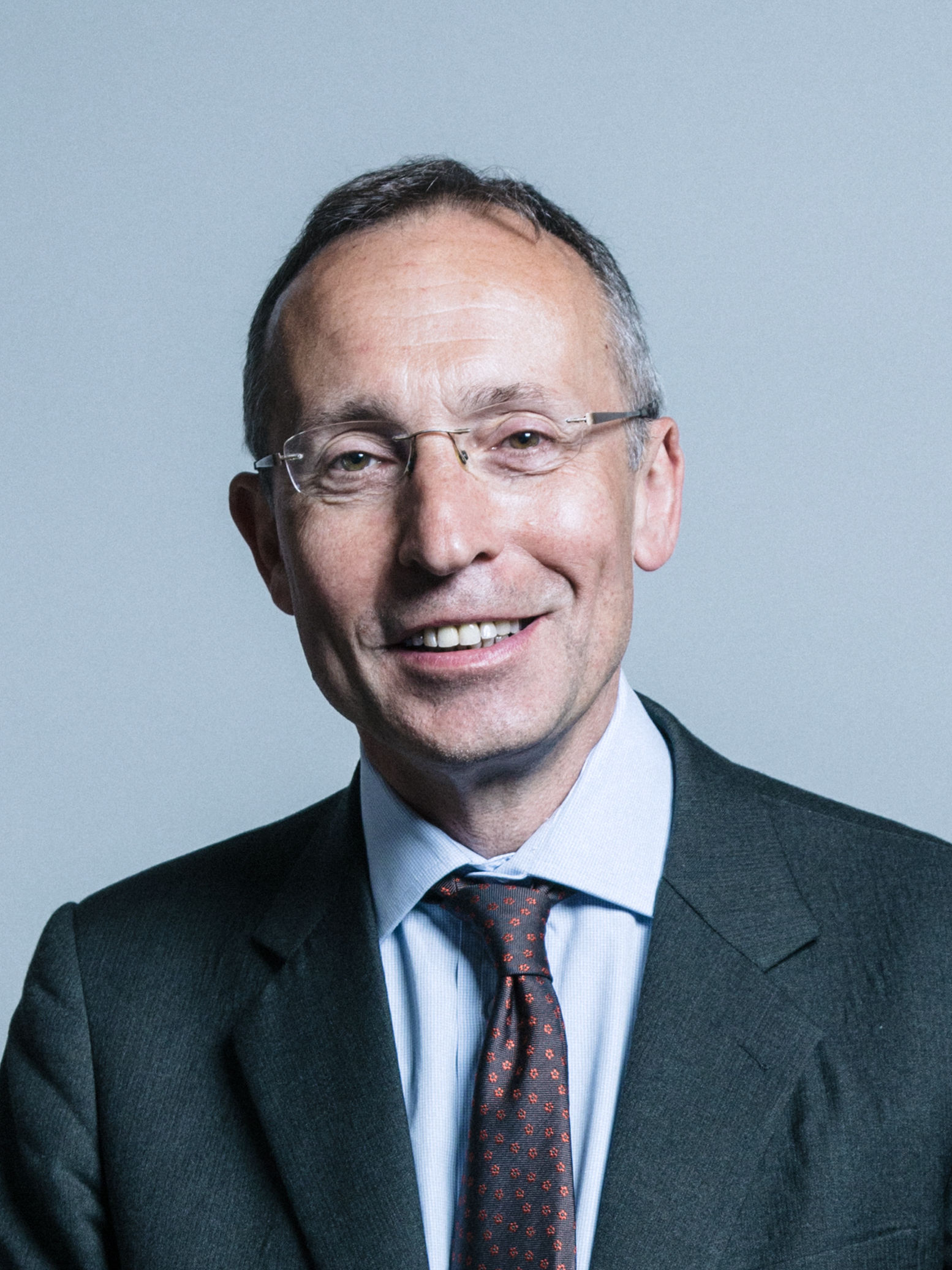
Andy Slaughter
Solicitor General (Attorney General's Office)
Shadow Ministers / Spokeperson
Liberal Democrat
Ben Maguire (LD - North Cornwall)Liberal Democrat Shadow Attorney General
To ask the Attorney General, pursuant to the Answer of 4 June 2026 to Question 4161, on Government departments: marketing, …
The Essex (Electoral Changes) Order 2024 (S.I. 2024/1180) gave effect to recommendations for changes to the electoral arrangements for the …
Attorney General Commons Appearances
Oral Answers to Questions is a regularly scheduled appearance where the Secretary of State and junior minister will answer at the Dispatch Box questions from backbench MPs
Other Commons Chamber appearances can be:- Urgent Questions where the Speaker has selected a question to which a Minister must reply that day
- Adjornment Debates a 30 minute debate attended by a Minister that concludes the day in Parliament.
- Oral Statements informing the Commons of a significant development, where backbench MP's can then question the Minister making the statement.
Westminster Hall debates are performed in response to backbench MPs or e-petitions asking for a Minister to address a detailed issue
Written Statements are made when a current event is not sufficiently significant to require an Oral Statement, but the House is required to be informed.
Bills currently before Parliament
Attorney General does not have Bills currently before Parliament
Acts of Parliament created in the 2024 Parliament
Attorney General has not passed any Acts during the 2024 Parliament
Attorney General - Secondary Legislation
Petitions
e-Petitions are administered by Parliament and allow members of the public to express support for a particular issue.
If an e-petition reaches 10,000 signatures the Government will issue a written response.
If an e-petition reaches 100,000 signatures the petition becomes eligible for a Parliamentary debate (usually Monday 4.30pm in Westminster Hall).
50 most recent Written Questions
(View all written questions)The table below contains data for the Attorney General's Office and each of its superintended departments relevant to the question.
Total Spend on branded goods and merchandise
|
Attorney General
Charlie Dewhirst
(Conservative - Bridlington and The Wolds)
The Attorney General’s Office and HM Crown Prosecution Service Inspectorate (HMCPSI) held no Senior Civil Service (SCS) away days in calendar year to date 2026.
The Serious Fraud Office (SFO) has held two SCS away days, held at the Civil Service Club. The total cost was £1,390.75. There were no associated social or team-building activity at public expense.
The Government Legal Department (GLD) has held two centrally organised SCS away days. They were held at Herbet Smith Freehills Kramer LLP, Exchange House and at the Foreign, Commonwealth & Development Office. There were no costs attached for the venue or associated social or team-building activity.
The Crown Prosecution Service has held one SCS away day, at the Manchester Marriott Hotel Picadilly. The total cost of this event was £37,367.60.
Attorney General
Preparation to recruit the next Director of the Serious Fraud Office is progressing as planned and the Attorney General intends to publish the job advert at the end of this month. This will be a rigorous recruitment exercise in line with the Civil Service Commissioners’ recruitment principles. It is designed to attract and test the strongest field of talent and the selection process is expected to last at least until the end of November. The Attorney General expects to appoint a permanent Director by the end of this year, to take up the post in 2027.
The SFO plays a critical role in prosecuting fraudsters, delivering justice for victims and ridding the economy of corruption, making Britain better off. It is vital that we take the time to find and appoint the correct candidate to lead the organisation for the next five years.
Advocate General for Scotland
Preparation to recruit the next Director of the Serious Fraud Office is progressing as planned and the Attorney General intends to publish the job advert at the end of this month. This will be a rigorous recruitment exercise in line with the Civil Service Commissioners’ recruitment principles. It is designed to attract and test the strongest field of talent and the selection process is expected to last at least until the end of November. The Attorney General expects to appoint a permanent Director by the end of this year, to take up the post in 2027.
The SFO plays a critical role in prosecuting fraudsters, delivering justice for victims and ridding the economy of corruption, making Britain better off. It is vital that we take the time to find and appoint the correct candidate to lead the organisation for the next five years.
Advocate General for Scotland
The starting point will be that requirements are in legislation by exception. Then going forward, formal consultation should only take place where there is still a statutory requirement to consult, where it would be conspicuously unfair not to consult, or where Ministers believe there is a good case for seeking external input and that the right vehicle for doing so is a formal consultation. Even where departments have historically consulted or previously promised to consult, it is expected that each individual instance to be considered afresh, thinking about what is fair in the particular circumstances.
Advocate General for Scotland
The Law Officers’ Convention applies to advice which may or may not have been given by the Law Officers, or requested of the Law Officers, and the Convention applies to your question.
The Law Officers’ Convention can be found at paragraph 21.27 of Erskine May:
“By long-standing convention, observed by successive Governments, the fact of, and substance of advice from, the law officers of the Crown is not disclosed outside government. This convention is referred to in paragraph [5.14] of the Ministerial Code [updated on 13 October 2025]. The purpose of this convention is to enable the Government to obtain frank and full legal advice in confidence.”
Solicitor General (Attorney General's Office)
The Law Officers’ Convention applies to advice which may or may not have been given by the Law Officers, or requested of the Law Officers, and the Convention applies to your question.
The Law Officers’ Convention can be found at paragraph 21.27 of Erskine May:
“By long-standing convention, observed by successive Governments, the fact of, and substance of advice from, the law officers of the Crown is not disclosed outside government. This convention is referred to in paragraph [5.14] of the Ministerial Code [updated on 13 October 2025]. The purpose of this convention is to enable the Government to obtain frank and full legal advice in confidence.”
Solicitor General (Attorney General's Office)
Solicitor General (Attorney General's Office)
Mike Wood
(Conservative - Kingswinford and South Staffordshire)
Since July 2026, no staff have been seconded to the Attorney General’s Office (AGO) from external organisations. During the same period, no AGO civil servants have been seconded to external organisations.
Solicitor General (Attorney General's Office)
The tables below contain data for the Attorney General's Office (AGO) and Crown Prosecution Service (CPS) relevant to the question.
AGO
Working Pattern | Headcount total | Headcount (%) |
Full Time | 68 | 88.3% |
Full Time - Compressed Hours | 8 | 10.4% |
Part Time | 1 | 1.3% |
Grand Total | 77 | 100% |
CPS
Working Pattern | Headcount total | Headcount (%) |
Full Time | 6102 | 71.41% |
Full Time - Compressed Hours | 704 | 8.24% |
Part Time | 1739 | 20.35% |
Grand Total | 8545 | 100.00% |
Solicitor General (Attorney General's Office)
Charlie Dewhirst
(Conservative - Bridlington and The Wolds)
The Government Communication Service (GCS) is the professional network of all communications staff across Government.
The table below contains the headcount for the Attorney General’s Office and each of its superintended departments who are communications professionals.
Department | Headcount | Member of GCS |
AGO | 8 | 8 |
CPS | 65 | 65 |
GLD | 14 | 14 |
SFO | 15 | 12 |
HMCPSI | 0 | 0 |
Solicitor General (Attorney General's Office)
Mike Wood
(Conservative - Kingswinford and South Staffordshire)
My updated Legal Risk guidance was published on GOV.UK on 8th September 2026. I have directed my officials to place a copy in the Library of the House.
Attorney General
Advocate General for Scotland
Corporate manslaughter cases are considered by the CPS Special Crime Division, which handles some of the CPS’s most complex and sensitive casework.
Our manual records confirm the number of prosecution cases in which there was a conviction for corporate manslaughter in each of the last five years is as follows:
2022 – 3
2023 – 3
2024 – 2
2025 – 1
2026 – 0
The CPS does not collect data that constitutes official statistics as defined in the Statistics and Registration Service Act 2007. Therefore, this update is based upon our collated manual records that may be subject to possible errors with data entry and processing. These figures are provisional and subject to change as more information is recorded by the CPS.
Advocate General for Scotland
The CPS does not provide specific guidance on the use of social media content as evidence in prosecutions for offences of (a) theft, (b) burglary, (c) vehicle crime and (d) dangerous driving.
However, prosecutors are required to use all available relevant and admissible evidence (including social media content) in prosecutions for all types of offence (including theft, burglary, vehicle crime and dangerous driving) in order to build the strongest possible cases.
Solicitor General (Attorney General's Office)
The PQ relates to whether the government plans to negotiate changes to the European Convention of Human Rights at a Council of Europe level. There are no current plans to do so. However, the response refers to the recent Chișinău Declaration which concerns the ECHR and migration and which was adopted by the full Council of Europe in May 2026.
Solicitor General (Attorney General's Office)
The Crown Prosecution Service (CPS) has assessed that modern digital technologies can enhance existing processes and support more efficient case handling. Through its Future Casework Tools programme, the CPS is modernising systems to improve the casework experience and reduce the time required to review case files. The CPS is also working with His Majesty's Courts and Tribunals Service on initiatives such as digital jury bundles, which aim to increase transparency, accessibility and efficiency in court proceedings.
The CPS has further assessed that artificial intelligence (AI) has the potential to deliver substantial efficiency gains by assisting with routine administrative tasks. This can enable prosecutors and other specialists to devote more time to complex legal work and decision-making. The CPS published its AI Vision in July 2025, setting out how AI can be used to drive efficiencies in a legal, safe and ethical manner, while ensuring responsible use, transparency and coordination across the criminal justice system.
Solicitor General (Attorney General's Office)
Charlie Dewhirst
(Conservative - Bridlington and The Wolds)
No delivery advisers have been appointed either by Direct Ministerial Appointment, as civil servants appointed by exception, or as permanent civil servants appointed through open competition. A list of special advisers is published each year in the Annual Report on Special Advisers.
Solicitor General (Attorney General's Office)
The Attorney General’s Office (AGO) does not individually monitor the amount of food waste. The AGO is located in a shared building where facilities management is overseen by the Ministry of Justice.
Solicitor General (Attorney General's Office)
The UK and EU share information and data as part of our broader cooperation on trade, economy, and security.
The Attorney General’s Office is a small ministerial department and does not maintain any databases for the purpose of reporting information directly to the European Commission or its agencies. Where information is provided in relation to international obligations, this would ordinarily be coordinated through the lead Government department responsible for the relevant policy area.
The Crown Prosecution Service does not have any formal direct reporting requirements to the EU Commission. For the Government Legal Department (GLD), any reporting obligations arising from policy or operational activity would generally sit with the relevant client department, rather than with GLD itself. The Serious Fraud Office does not provide any reporting to the European Commission. HMCPSI does not have any data and reporting requirements in relation to the European Commission and its agencies.
Solicitor General (Attorney General's Office)
The Attorney General’s Office has not operated or made available any internship schemes in the last 12 months.
The Crown Prosecution Service has not provided any internship schemes in the last 12 months.
In the last 12 months, the following internship schemes have been made available through the Government Legal Profession and the Government Legal Department, excluding the Fast Stream Summer Internship Programme: the Sutton Trust week-long internship, the GLP Diversity Summer Scheme, and the Government Legal Department Law Placement Scheme. These internship and placement schemes are offered to improve access to the legal profession.
The Serious Fraud Office do not have internship programmes in place.
HM Crown Prosecution Service Inspectorate has not made any internship schemes available.
Solicitor General (Attorney General's Office)
The Attorney General’s Office does not operate any internship schemes that are restricted to applicants on the basis of (i) ethnicity, (ii) social class, or (iii)both.
The CPS, SFO and HMCPSI do not offer internship schemes.
The Government Legal Department (GLD) supports three internship and placement schemes that aim to improve access to the legal profession: the Sutton Trust internship, the Government Legal Profession (GLP) Summer Diversity Scheme and the GLD Law Placement Scheme. None of these schemes restricts applicants on the basis of ethnicity. Eligibility criteria for some schemes are designed to support social mobility.
Solicitor General (Attorney General's Office)
Charlie Dewhirst
(Conservative - Bridlington and The Wolds)
The Attorney General’s Office (AGO) requires staff to attend the workplace for a minimum of 60% of their contracted working time, in line with the Civil Service office attendance expectation. The AGO operates from a single office location in London. Attendance data is collated at a departmental level.
As the Crown Prosecution Service (CPS) is a geographically dispersed organisation with staff working across offices, courts, police stations and other government departments' buildings, local leadership provide assurance of compliance with CPS’s hybrid working policy and conduct local monitoring, but attendance statistics are not specifically collated at a national level.
The Government Legal Department (GLD), irrespective of site, has a 60% attendance expectation, but we do not currently collect attendance statistics for each of our individual sites.
The Serious Fraud Office (SFO) requires 40% workplace attendance, which is an exception to the Cabinet Office guidance for 60% occupancy. This is due to the SFO having reduced its space at its current office (Canada House) based on 40% attendance and secured space in its new office (Cabot Square, Canary Wharf) based on the same. The SFO operates from a single office site, currently at Canada House and is set to move to Cabot Square before the end of the financial year. However, employees also work from other locations, including court or across the country when conducting executive action. Attendance is currently managed locally by line managers and statistics are not collated automatically.
For HM Crown Prosecution Service Inspectorate (HMCPSI), the nature of the work is such that inspectors are frequently “on-site” for inspection work in the offices of those they inspect. HMCPSI staff meet at both the London and York offices regularly for inspection and other meetings as per their inspection methodology as business need dictates. All staff are required to attend a mandated office day once a month as well as all staff days and all-inspector days, which are mandated, in addition to the above. Central attendance statistics are not collated for either office by HMCPSI as they share space in both locations with other departments.
Solicitor General (Attorney General's Office)
It is not routine to disclose correspondence between Ministers or Permanent Secretaries and any individual or organisation.
Solicitor General (Attorney General's Office)
Charlie Dewhirst
(Conservative - Bridlington and The Wolds)
It is not routine to disclose correspondence between Ministers or Permanent Secretaries and any individual or organisation.
Solicitor General (Attorney General's Office)
It is not possible to provide an estimate for hours spent preparing Ministers to respond to Westminster Hall Debates. There will be differences in the Civil Service, Special Adviser and Ministerial time depending on the policy matter and length of the debate. Debates can also be cross-cutting and require resources from multiple departments or engage departmental bodies.
Solicitor General (Attorney General's Office)
The Attorney General’s Office has not spent any money on social media influencers since July 2024.
The guidelines for influencer and content creator marketing were created by the Government Communication Service and first published internally in November 2023.
Solicitor General (Attorney General's Office)
The Attorney General’s Office (AGO) promotes awareness of diversity and inclusion through its Diversity and Inclusion Group and by highlighting relevant dates and initiatives throughout the year.
In 2025, AGO maintained a calendar of significant diversity and inclusion dates to support awareness and engagement across the department. As part of this, staff were invited to take part and contribute to monthly lunchtime sessions which focussed on any significant diversity and inclusion themes, including disability, religion, race, LGBTQ+, gender and wellbeing. In addition to this, the Attorney General hosted an event in April 2025 to celebrate Eid and AGO officials were invited to an event in December 2025 hosted by the CPS to celebrate Black History Month.
In 2025, the Crown Prosecution Service (CPS) recognised the following diversity and inclusion days: Holocaust Memorial Day (January), International Women’s Day (March), Social Mobility Day (June), World Prematurity Day (November) and International Days of Persons with Disabilities (IDPD). In 2026, CPS recognised the following diversity and inclusion weeks: Race Equality Week (February), Neurodiversity Celebration Week (March), World Autism Acceptance Week (April), Carers Week (June), National Inclusion Week (September) and Inter-faith Week (November).
In 2025, the Government Legal Department (GLD) recognised the following diversity and inclusion days: Holocaust Memorial Day (January), International Women's Day (March), Social Mobility Day (June), World Prematurity Day (November) and International Day of Persons with Disabilities (IDPD) (December). GLD recognised the following diversity and inclusion weeks: Race Equality Week (February), Carers Week (June), National Inclusion Week (September) and Inter-Faith Week (November). GLD recognised the following diversity and inclusion months: LGBT+ History Month (February), South Asian Heritage Month (July), Pride Month (July) and Black History Month (October).
In 2025, the Serious Fraud Office (SFO) recognised the following diversity and inclusion days: International Day against Homophobia, Biphobia, Intersex-phobia and Transphobia (May), Social Mobility Awareness Day (June), London Pride Parade (July), World Mental Health Day (October), Stress Awareness Day (November), International Day of Persons with Disabilities (December) and Christmas (December). The SFO recognised the following diversity and inclusion weeks: Eid (June), Carer’s Awareness Week (June), Baby loss awareness week (October), Diwali (October) and Hanukkah (December). The SFO recognised the following diversity and inclusion months: Pride Month (June), South Asian Heritage month (July), Black History Month (October), Men’s health awareness month (November), and Islamophobia awareness month (November).
HMCPSI marked International Women’s Day on LinkedIn, World Mental Health Day with an intranet post and Black History month with an intranet post.
Solicitor General (Attorney General's Office)
Charlie Dewhirst
(Conservative - Bridlington and The Wolds)
The Attorney General’s Office (AGO) did not incur any facility time costs in (a) 2023-24, (b) 2024-25 and (c) 2025-26. The department had no staff recorded as facility time representatives during those years and no staff spent 100% of their working time on facility time. The AGO did not provide funding for trade union activities during the periods in scope.
The Crown Prosecution Service do not have any representatives on 100% facility time and no funding has been provided for union activities in any of those years. The headcount number of facility time staff (a) 2023 – 24 was 74, (b) 2024-25 was 67 and (c) 2025-26 was 65. The total cost of facility time (a) 2023 – 24 was £347,237.00, (b) 2024-25 was £350,100.13 and (c) 2025 – 26 was £320,987.25.
For the Government Legal Department, the (a) 23-24 the headcount of reps was 31, the total cost was £114,000 and none of them were on 100% facility time, (b) 24-25 the headcount was 33, the total cost was £87,000 and none of them were on 100% facility time and for (c) no data was recorded.We have interpreted ‘funding’ for trade union activities as paid trade union facility time for activities. No funding was paid for TU activities in those years.
For the Serious Fraud Office, in (a) 2023-24 the total cost of facilities time was £5617, the headcount was 9, (b) 2024-25 the total cost of facilities time was £22,418, the headcount was 9, (c) the total cost of facilities time was £9908 and the headcount was 9. For all years no staff were on 100% facility time and no funding was provided for trade union activities in each of those years.
For HMCPSI, this question is not applicable.
Solicitor General (Attorney General's Office)
Information is released in regular transparency returns by the Department.
Without targeted campaigns, millions of citizens would miss out on services, rights, and support to which they are entitled.
Solicitor General (Attorney General's Office)
It has been the practice of successive governments not to comment, on grounds of both national security and staff safety, on the physical capacity or staffing numbers for individual buildings of the government estate.
Solicitor General (Attorney General's Office)
Securing our borders and tackling the exploitative criminal gangs that are illegally smuggling migrants to our shores is a core priority for this Government.
The government is taking bold action to tackle the unscrupulous criminal gangs who put vulnerable lives at risk for profit, with a number of new offences introduced under the Border Security, Asylum and Immigration Act (2025). This includes the offence to criminalise the creation of material advertising unlawful immigration services online, as well as the endangerment offence and seizure of electronic devices
With offences having commenced in January, the CPS now has further tools with which to prosecute organised immigration crime and people smugglers. Since the law change the CPS has charged more than 30 migrants with endangerment
In June we saw the first sentences for endangering lives during a channel crossing. The two defendants were jailed for two years and two years and three months respectively.
Solicitor General (Attorney General's Office)
The SFO investigates a small number of the most serious and complex cases of suspected fraud, bribery and corruption, often involving thousands of victims, multiple jurisdictions and international corporates.
Waste crime does not fall within this remit and therefore is not considered by the Attorney General’s Office in the course of superintending and sponsoring the work of the SFO.
These cases are typically investigated and prosecuted by the Environment Agency, sponsored by the Department for Environment, Food and Rural Affairs.
Solicitor General (Attorney General's Office)
This Government is committed to halving knife crime in the next decade through the Halving Knife Crime Plan.
The Crime and Policing Act 2026 has introduced measures to tackle knife crime including a new possession an offence, an increase in the maximum penalty from six months to two years imprisonment for some offences and new powers which enable the police to seize, retain and destroy dangerous knives.
Following a significant rise in knife-enabled robbery in the year to June 2024 across seven police forces, the Home Secretary established a dedicated police taskforce in October 2024. Taskforce data for the year ending March 2026 shows a 21% drop in KER offences.
The CPS is supporting the work of the taskforce and continues to improve joint working with the police. This includes ensuring the police are aware of the correct protocol for seeking Early Advice in complex knife crime cases and seeking earlier engagement with prosecutors to improve both timeliness and file quality.
Solicitor General (Attorney General's Office)
The CPS Counter Terrorism Division (CTD) is a specialist unit responsible for advising upon, and prosecuting some of the most sensitive, serious and high-profile casework in the CPS, including cases involving state threat activity.
The Counter Terrorism Division prosecuted six cases involving state threat activity under Official Secrets Act legislation between 2019 – 2025 and has separately concluded four prosecutions relating to state threat activity under the National Security Act since it came into force in 2023.
Solicitor General (Attorney General's Office)
Crown Prosecution Service (CPS) prosecutors make their decisions independently of the police, the government and other external parties. Their duty is to apply the criminal law of England & Wales as agreed by Parliament, to ensure the right person is prosecuted for the right offence and to bring offenders to justice wherever possible.
On 9 March 2026 the UK Government adopted its non-statutory definition of anti-Muslim hostility across all central government departments. The CPS is a non-ministerial department, and CPS employees are civil servants and subject to the same central rules and policies. They may have regard to the definition, alongside other sources of information, in understanding the experience of Muslim communities in this country.
Solicitor General (Attorney General's Office)
Charlie Dewhirst
(Conservative - Bridlington and The Wolds)
The Attorney General’s Office (AGO) has no live industrial disputes. Accordingly, there is no industrial action being taken within the department.
Solicitor General (Attorney General's Office)
The CPS’s focus on tackling violence against women and girls (VAWG) is driving an increase in charges across a range of offences, including rape and domestic abuse-flagged offences.
The CPS's Violence Against Women and Girls Strategy for 2025-2030 aims to ensure that prosecutors have the right skills and tools to prosecute VAWG offences effectively. It sets out the approach the CPS is taking to improve casework quality, increase public confidence, and support the Government’s ambition to halve violence against women and girls.
To improve the prosecution of rape and serious sexual offences, the CPS has delivered significant reforms, including the introduction of a National Operating Model for adult rape prosecution, strengthened joint working and governance with policing, updated prosecution guidance, and a Rape Action Plan focused on improving case quality and prosecutor capability.
The CPS has also introduced enhanced assurance activity through the Rape Case Strategy Improvement Programme to support high-quality and consistent legal decision-making. These measures are contributing to improved outcomes, with 3,754 suspects charged in adult rape-flagged cases in 2025 (the highest number since records began), alongside the highest ever volume of completed adult rape prosecutions.
Tackling VAWG demands coordinated action across government. The CPS works closely with policing and other criminal justice partners to strengthen the collective response to these offences and ensure that victims are protected. In collaboration with the National Police Chiefs’ Council (NPCC) and third sector partners, the CPS developed a national Domestic Abuse Joint Justice Plan (DA JJP) to strengthen the collective response to domestic abuse. Since the DA JJP launch in Q3 2024-25, referral volumes of DA flagged offences have seen quarter-on-quarter increases and the charge rate has remained above 80%.
Together with the Home Office and the NPCC, the CPS has hosted two national multi-agency ‘honour’-based abuse conferences and will host a further multi-agency conference on stalking on 10 September. These events bring together colleagues from across government, statutory partners, specialist organisations and those with lived experience to develop our understanding of and response to VAWG offending.
Joint protocols between the police and CPS help to establish a clear, shared understanding for police and prosecutors of how to recognise and respond to VAWG offending. The joint protocols on stalking, ‘honour’-based abuse and female genital mutilation (FGM) are being updated, to ensure they support the collective response to the evolving nature of these offences.
Effective training helps to ensure prosecutors are fully equipped to identify, charge and progress cases effectively, and refreshed training on strangulation or suffocation and ‘honour’-based abuse is currently in development. The CPS also recognises the growing role that technology plays in facilitating and amplifying VAWG offending, and a dedicated Technology-Facilitated VAWG Action Plan is being developed to strengthen the CPS response to this evolving form of offending (with publication expected by the end of the year).
Solicitor General (Attorney General's Office)
As set out in the Guide to Making Legislation, where a department proposes to include a provision that would be retrospective (whether formally retrospective or with retrospective effect), they must first seek the consent of the Law Officers.
Each case is considered by the Law Officers on its facts. In order to grant consent, the Law Officers need to be convinced that the general public interest in the law not being changed retrospectively is outweighed by the public interest of legislating retrospectively in that particular case.
Solicitor General (Attorney General's Office)
There are currently no specific criminal offences of engaging in conduct intended to change or suppress a person’s sexual orientation or transgender identity and the Crown Prosecution Service’s (CPS) Case Management System (CMS) does not have a flag or any other means to identify cases which involve this type of conduct. For these reasons, the CPS does not hold any central record of such cases referred for a charging decision or early advice. It follows, that if we do not hold a central record of such cases referred to CPS, we do not know how many may have resulted in charges, prosecutions, or convictions.
Solicitor General (Attorney General's Office)
The introduction of controlling or coercive behaviour as a criminal offence in 2015 marked a fundamental shift in the criminal justice response to abuse, from focusing on individual incidents to recognising patterns of behaviour that entrench control, isolate victims and inflict serious psychological harm.
Controlling or coercive behaviour cases often involve complex patterns of abuse that can be difficult to evidence, especially when victims are traumatised or unable to speak out.
The Crown Prosecution Service (CPS) continues to take action to improve outcomes in these cases, with the number of domestic abuse flagged controlling or coercive behaviour offences charged and reaching a first hearing in the magistrates' court increasing year on year, rising from 763 in 2017 to 6,510 in 2025.
CPS guidance makes clear that prosecutors should actively identify and consider controlling or coercive behaviour offences, recognising the cumulative impact of abusive conduct. Prosecutors are encouraged to charge controlling or coercive behaviour alongside individual incidents where appropriate, ensuring that the full extent of the alleged offending is placed before the court.
Solicitor General (Attorney General's Office)
The Attorney General’s Guidance on Legal Risk is regularly reviewed upon the appointment of the Attorney General. The Attorney General is reviewing the current version of the guidance. If she chooses to make any changes, they will be published in the usual way.
Advocate General for Scotland
Ministers in AGO have had 60 MP surgeries from July 2024 – July 2026 inclusive.
Attorney General
The number of agency staff employed by the Attorney General’s Office (AGO) in each of the last five years is shown in the table below.
Financial Year | Total Agency Staff |
2021–2022 | 4 |
2022–2023 | 2 |
2023–2024 | 0 |
2024–2025 | 0 |
2025–2026 | 0 |
Attorney General
Yes, The Attorney General’s Office has appointed a number of candidates who were external to the Civil Service into roles. This includes candidates who applied through standard recruitment campaigns on Civil Service Jobs and were successful after open and fair competition, as well as those who have joined on secondment and fixed term appointment.
Attorney General
Answer In relation to part (a) of the question, the number of staff employed in each earnings band is set out below.
|
Attorney General
The CPS holds information on the sentences imposed following convictions in cases included in the Joint Enterprise National Monitoring Scheme 2024–25. As the CPS is not the official record of sentencing the information requested could only be obtained through the manual inspection of individual case files and could therefore be provided only at disproportionate cost.
Attorney General
The CPS holds information on the sentences imposed following convictions in cases included in the Joint Enterprise National Monitoring Scheme 2024–25. However, the information requested could only be obtained through the manual inspection of individual case files and could therefore be provided only at disproportionate cost.
Attorney General
The Law Officers’ Convention applies to advice which may or may not have been given by the Law Officers, or requested of the Law Officers, and the Convention applies to your question.
The Law Officers’ Convention can be found at paragraph 21.27 of Erskine May:
“By long-standing convention, observed by successive Governments, the fact of, and substance of advice from, the law officers of the Crown is not disclosed outside government. This convention is referred to in paragraph [5.14] of the Ministerial Code [updated on 6 November 2024]. The purpose of this convention is to enable the Government to obtain frank and full legal advice in confidence.”
Attorney General