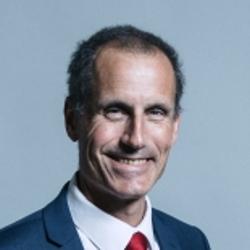
Bill Esterson
Labour - Sefton Central
18,282 (38.5%) majority - 2024 General ElectionFirst elected: 6th May 2010
3 APPG Officer Positions (as of 12 Oct 2026)
Adoption and Permanence, Manufacturing, Waterways26 APPG Memberships
Beer, Australia and New Zealand (ANZAC) and the Pacific Islands, Autism, Aviation, British Jews, Cats, Climate Change, Customer Service, Energy Studies, Environment, Fair Banking, Financial Education for Young People, Football Supporters, Freight and Logistics, Grid Networks, Hydrogen, Infrastructure, Internet, Communications and Technology, Investment Fraud and Fairer Financial Services, Liverpool City Region, Marine Energy, Mutuals, Net Zero, Ocean, Renewable and Sustainable Energy, Suicide and Self-Harm Prevention26 Former APPG Officer Positions
Assistive Technology, Britain-Pakistan Trade and Tourism, Canada, Carbon Capture, Utilisation and Storage, Children's Centres, Climate Change, Customer Service, Entrepreneurship, Fair Business Banking, Family Business, Foetal Alcohol Spectrum Disorder, Foetal Alcohol Spectrum Disorders, Foster Care Work, Gaps in Support, Hockey, Hydrogen, Inclusive Growth, Internet, Communications and Technology, Leasehold and Commonhold Reform, Looked After Children and Care Leavers, Management, Morocco, Nuclear Energy, Skills, Careers and Employment, Teaching Profession, Tenanted PubsDivision Voting information
Debates during the 2024 Parliament
Speeches made during Parliamentary debates are recorded in Hansard. For ease of browsing we have grouped debates into individual, departmental and legislative categories.
Sparring Partners
View All Sparring PartnersDepartment Debates
(49 debate contributions)
(22 debate contributions)
(19 debate contributions)
(17 debate contributions)
Legislation Debates
(678 words contributed)
Sefton Central Petitions
e-Petitions are administered by Parliament and allow members of the public to express support for a particular issue.
If an e-petition reaches 10,000 signatures the Government will issue a written response.
If an e-petition reaches 100,000 signatures the petition becomes eligible for a Parliamentary debate (usually Monday 4.30pm in Westminster Hall).
of 6,539 signatures (3.14%)
of 39,853 signatures (0.27%)
of 83,073 signatures (0.22%)
of 83,386 signatures (0.18%)
of 3,230 signatures (9.23%)
of 6,539 signatures (3.14%)
of 114,493 signatures (0.16%)
of 83,073 signatures (0.22%)
Latest EDMs signed by Bill Esterson
Hillsborough Law
Tabled by: Ian Byrne (Labour - Liverpool West Derby)That this House calls for the Public Office (Accountability) Bill, better known as the Hillsborough Law, to be passed in full as one of the first Acts of the new Parliamentary session; notes with concern the lack of progress on the Bill since the postponed Report Stage and Third Reading …
(Most recent: 20 May 2026)
Signatures by party:
Labour: 45
Green Party: 5
Liberal Democrat: 5
Plaid Cymru: 4
Social Democratic & Labour Party: 2
Your Party: 1
Alliance: 1
Democratic Unionist Party: 1
Scottish National Party: 1
Government policy on the Hillsborough Law
Tabled by: Ian Byrne (Labour - Liverpool West Derby)That this House notes the Prime Minister’s promise to introduce the Hillsborough Law to Parliament before the 36th anniversary of the disaster on 15 April 2025; deeply regrets that this commitment was not met and that the Government has yet to table the legislation; expresses grave concern at reports that …
(Most recent: 4 Sep 2025)
Signatures by party:
Labour: 43
Liberal Democrat: 22
Green Party: 4
Plaid Cymru: 4
Independent: 4
Democratic Unionist Party: 2
Alliance: 1
Your Party: 1
Scottish National Party: 1
Conservative: 1
Commons initiatives
These initiatives were driven by Bill Esterson, and are more likely to reflect personal policy preferences.
MPs who are act as Ministers or Shadow Ministers are generally restricted from performing Commons initiatives other than Urgent Questions.
Bill Esterson has not been granted any Urgent Questions
Bill Esterson has not been granted any Adjournment Debates
1 Bill introduced by Bill Esterson
Wednesday 7th January 2015
7 Bills co-sponsored by Bill Esterson
Banks (Financial Exclusion and Access to Finance) Bill 2024-26
Sponsor - Gareth Thomas (LAB)
Public Advocate (No. 2) Bill 2019-21
Sponsor - Maria Eagle (Lab)
Covid-19 Financial Assistance (Gaps in Support) Bill 2019-21
Sponsor - Tracy Brabin (LAB)
Tyres (Buses and Coaches) Bill 2017-19
Sponsor - Maria Eagle (Lab)
House of Lords (Exclusion of Hereditary Peers) Bill 2017-19
Sponsor - Lord Hanson of Flint (Lab)
Leasehold Reform Bill 2017-19
Sponsor - Justin Madders (Lab)
Public Authority (Accountability) Bill 2016-17
Sponsor - Andy Burnham (LAB)
Latest 8 Written Questions
(View all written questions)The DfT is not running a trial. As stated in the report entitled "BCP Council: Increased Penalty Charge Notice and Associated Charges Trial", the Department for Transport authorised BCP Council in July 2025 to trial increased PCN levels aligned with London rates.
Parliamentary Under-Secretary (Department for Transport)
Integrated care boards (ICBs) are expected to commission services for people with myalgic encephalomyelitis/chronic fatigue syndrome (ME/CFS) across all levels of severity, including those with severe and very severe ME/CFS, in line with national standards, service specifications, and clinical access policies set by NHS England. Prioritisation and funding remain at the discretion of ICBs.
Officials in the Department and NHS England are currently actively considering whether a specialised service for very severe ME/CFS should be commissioned by my Rt Hon. Friend, the Secretary of State for Health and Social Care. A final decision will not be made until after the abolition of NHS England is complete, in April 2027, when processes will be clearer. This is as a result of potential changes to the legislative process which may occur as a result of transformation in NHS England. Officials continue to progress this action as far as possible ahead of April 2027, so that work can continue at pace following the completion of transformation in NHS England. This could include convening the clinical committee ahead of time.
When the Energy Profits Levy comes to an end, either in March 2030 or earlier if the price floor triggers, it will be replaced by the permanent Oil and Gas Revenue Levy which will operate to ensure oil and gas companies continue to pay their fair share in times of high prices.
The Government recognises that domestic oil and gas will continue to have a role in the energy mix for decades to come, and we are committed to managing the transition in the North Sea in a way that is fair, strengthens our security, and supports the workforce for the future.
Financial Secretary to the Treasury and Paymaster General
At Budget 2024, the Government committed to a new independent review of the loan charge. The purpose of the review was to bring the matter to a close for people who have not settled and paid their Loan Charge liabilities.
The Government has accepted all but one of the Review’s recommendations, and in some areas has gone further. The Government has introduced legislation in the Finance Act to provide for a generous new settlement offer which it hopes maximises the opportunity for individuals to come forward and settle. I am committed to deliver the Government’s ambition to bring this matter to a close for as many customers as possible.
As outlined in the Tax Impact and Information Notice published in November 2025 about the recommendations from the independent loan charge review, there are approximately 32,000 individuals who have an outstanding loan charge liability.
HMRC began contacting customers to notify them of their eligibility for the new settlement opportunity from January 2026. When the new settlement opportunity is enacted, HMRC will contact customers again, in stages, to explain what it means for them based on their specific circumstances.
The Government’s response to the review represents a fair and proportionate attempt to provide a route to resolution for those who have not yet been able to settle with HMRC. In turn, this requires those individuals to now come forward and engage with HMRC in good faith.
Tax avoidance deprives the Exchequer of funds needed to deliver vital public services and it is right that resources are targeted to stop this. There are no plans to apply the review’s recommendations beyond those individuals and employers with outstanding liabilities that were the focus of the review.
Exchequer Secretary (Cabinet Office) (Jointly with HM Treasury)
At Budget 2024, the Government committed to a new independent review of the loan charge. The purpose of the review was to bring the matter to a close for people who have not settled and paid their Loan Charge liabilities.
The Government has accepted all but one of the Review’s recommendations, and in some areas has gone further. The Government has introduced legislation in the Finance Act to provide for a generous new settlement offer which it hopes maximises the opportunity for individuals to come forward and settle. I am committed to deliver the Government’s ambition to bring this matter to a close for as many customers as possible.
As outlined in the Tax Impact and Information Notice published in November 2025 about the recommendations from the independent loan charge review, there are approximately 32,000 individuals who have an outstanding loan charge liability.
HMRC began contacting customers to notify them of their eligibility for the new settlement opportunity from January 2026. When the new settlement opportunity is enacted, HMRC will contact customers again, in stages, to explain what it means for them based on their specific circumstances.
The Government’s response to the review represents a fair and proportionate attempt to provide a route to resolution for those who have not yet been able to settle with HMRC. In turn, this requires those individuals to now come forward and engage with HMRC in good faith.
Tax avoidance deprives the Exchequer of funds needed to deliver vital public services and it is right that resources are targeted to stop this. There are no plans to apply the review’s recommendations beyond those individuals and employers with outstanding liabilities that were the focus of the review.
Exchequer Secretary (Cabinet Office) (Jointly with HM Treasury)
HMRC does not routinely publish data on withheld tax repayments relating to Real Estate Investment Trust distributions, the specific figures requested are not readily available in a single dataset. Repayments are administered through a number of different systems and routes, and unfortunately collating the information required would exceed the cost threshold for responding to parliamentary questions.
We can confirm that HMRC operates compliance and assurance processes for repayments of withholding tax. These processes include checks on eligibility for relief, identification of the claimant, validation of the repayment calculation and verification that the non-UK resident is entitled to treaty benefits.
Exchequer Secretary (Cabinet Office) (Jointly with HM Treasury)
Financial Secretary to the Treasury and Paymaster General
Submariners undertake some of the most demanding duties in Defence and the Department recognises the unique demands placed upon them and their families.
A range of support measures are provided to submariners while on patrol and once they return home, including access to comprehensive medical care, pre- and post‑deployment health checks, comprehensive mental health support, alongside chaplaincy access and secure arrangements for receiving messages from family while deployed.
Families are supported through Royal Navy welfare organisations, including Royal Navy Family and People Support, which provides 24-hour support to Service personnel and their families. All arrangements remain under constant review and further information can be found at: Royal Navy Support
Parliamentary Under-Secretary (Ministry of Defence) (Minister for the Armed Forces)