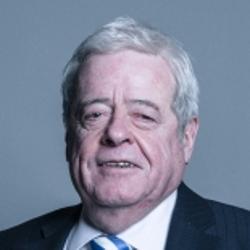
Lord Snape
Labour - Life peer
Joined House of Lords: 9th June 2004
Peter Snape was elected as an MP between 1974 and 2001. He served as Assistant Whip (HM Treasury) between 1975 and 1977 and as Lord Commissioner (HM Treasury) (Whip) between 1977 and 1979.
Left House: 13th August 2026 (Death)
3 APPG Memberships
Beer, Australia and New Zealand (ANZAC) and the Pacific Islands, Bus and Coach13 Former APPG Officer Positions
Australia and New Zealand, Bahrain, Bus and Coach, Business Travel, Governance and Inclusive Leadership, Heritage Rail, Levelling up Birmingham, Motorcycle Speedway, Rail, Road Passenger Transport, Road Passenger Transport - Recovery and Renewal, SME (Small and Medium-sized Enterprises) House Builders, VeteransDivision Voting information
Lord Snape voted Aye - against a party majority and against the House
One of 2 Labour Aye votes vs 58 Labour No votes
Tally: Ayes - 2 Noes - 127
Lord Snape voted Aye - against a party majority and against the House
One of 15 Labour Aye votes vs 133 Labour No votes
Tally: Ayes - 119 Noes - 314
Lord Snape voted No - against a party majority and in line with the House
One of 10 Labour No votes vs 38 Labour Aye votes
Tally: Ayes - 125 Noes - 162
Lord Snape voted Aye - against a party majority and in line with the House
One of 22 Labour Aye votes vs 44 Labour No votes
Tally: Ayes - 158 Noes - 124
All Debates
Speeches made during Parliamentary debates are recorded in Hansard. For ease of browsing we have grouped debates into individual, departmental and legislative categories.
Sparring Partners
(65 debate interactions)
(31 debate interactions)
(30 debate interactions)
Department Debates
(244 debate contributions)
(40 debate contributions)
(36 debate contributions)
(35 debate contributions)
Legislation Debates
(11,069 words contributed)
(10,064 words contributed)
(10,064 words contributed)
(10,064 words contributed)
Lords initiatives
These initiatives were driven by Lord Snape, and are more likely to reflect personal policy preferences.
Lord Snape has not introduced any legislation before Parliament
Lord Snape has not co-sponsored any Bills in the current parliamentary sitting
Latest 34 Written Questions
(View all written questions)Once Great British Railways (GBR) is established, it will retail online by consolidating individual train operators’ ticket websites. This will take place alongside a thriving private sector retail market, which will continue to play a key role in driving innovation and investment and encouraging more people to choose rail.
The Railways Bill consultation took place in the spring. As part of this process, the Government consulted closely with industry, the private sector, and wider stakeholders including in relation to the future of the rail retail market. A formal update will be provided in due course, and we will work closely with stakeholders to ensure transition plans are as smooth as possible.
Minister of State (Department for Transport)
Once Great British Railways (GBR) is established, it will retail online by consolidating individual train operators’ ticket websites. This will take place alongside a thriving private sector retail market, which will continue to play a key role in driving innovation and investment and encouraging more people to choose rail.
The Railways Bill consultation took place in the spring. As part of this process, the Government consulted closely with industry, the private sector, and wider stakeholders including in relation to the future of the rail retail market. A formal update will be provided in due course, and we will work closely with stakeholders to ensure transition plans are as smooth as possible.
Minister of State (Department for Transport)
Once Great British Railways (GBR) is established, it will retail online by consolidating individual train operators’ ticket websites. This will take place alongside a thriving private sector retail market, which will continue to play a key role in driving innovation and investment and encouraging more people to choose rail.
The Railways Bill consultation took place in the Spring. As part of this process, the Government consulted closely with the industry, the private sector, and wider stakeholders, including in relation to the future of the rail retail market. A formal update will be provided in due course.
Minister of State (Department for Transport)
Once Great British Railways (GBR) is established, it will retail online by consolidating individual train operators’ ticket websites. This will take place alongside a thriving private sector retail market, which will continue to play a key role in driving innovation and investment and encouraging more people to choose rail.
The Railways Bill consultation took place in the Spring. As part of this process, the Government consulted closely with the industry, the private sector, and wider stakeholders, including in relation to the future of the rail retail market. A formal update will be provided in due course.
Minister of State (Department for Transport)
(1) Detailed information on Strategic Road Network (SRN) schemes is available in the applications for planning consent, available on the Planning Inspectorate’s website. Benefit-cost ratio information for Major Road Network/Large Local Majors (MRN/LLM) schemes is part of the business case evidence and analysis which is provided by Local Authorities. This information is therefore available directly from them, once a scheme is approved at the Full Business Case (FBC) stage.
(2) Scheme costs for the SRN schemes will be confirmed as part of the setting of the third Road Investment Strategy, planned to be published by the end of March 2026. For MRN/LLM schemes, individual financial details cannot be provided ahead of assessing the Full Business Case, as doing so would jeopardise procurement exercises and contract negotiations.
(3) The Capital Review provided strategic advice to the Secretary of State. It did not appraise any specific projects, programmes or portfolios.
Minister of State (Department for Transport)
The Ely Area Capacity Enhancement was assessed as having a Benefit Cost Ratio of 4.89 against a cost estimate of £489m at Outline Business Case stage, at the point the programme was paused in 2022.
We are focused on prioritising the schemes that will make the greatest difference for passengers and support economic growth as quickly as possible. The previous government had committed to a number of projects that were unfunded, including the EACE scheme.
Minister of State (Department for Transport)
This Government has set out its ambition to simplify the ticketing system and drive innovation across the network. Affordability is one of our key objectives – so that prices are kept, wherever possible, at a point that works for both passengers and taxpayers.
Once established, I expect Great British Railways to consider the potential for loyalty schemes, as part of our intention to encourage the highest number of passengers to use our railways.
Minister of State (Department for Transport)
Fares, ticketing, and retail will continue to be the responsibility of train operators until Great British Railways is established. Through future legislation, we will set out the role we expect Great British Railways to play in relation to operational aspects of the railway.
Minister of State (Department for Transport)
Fares, ticketing, and retail will continue to be the responsibility of train operators until Great British Railways is established. Through future legislation, we will set out the role we expect Great British Railways to play in relation to operational aspects of the railway.
Minister of State (Department for Transport)
Fares, ticketing, and retail will continue to be the responsibility of train operators until Great British Railways is established. Through future legislation, we will set out the role we expect Great British Railways to play in relation to operational aspects of the railway.
Minister of State (Department for Transport)
We have been clear in the Plan for Rail White Paper that we want to simplify the current mass of complicated fares and tickets, whilst protecting affordable turn up and go tickets and season tickets.
We are engaging with wider industry, including independent rail retailers, as part of this work.
We have been clear in the Plan for Rail White Paper we want to simplify the current mass of complicated fares and tickets, whilst protecting affordable turn up and go tickets and season tickets.
We will continue to work with the sector to tackle the challenges Keith Williams set out in the Plan for Rail, including improving fares, ticketing and retail.
We continue to work through design and development phases of these schemes and have already commenced construction works for electrification of some sections of the routes. We expect rail operators to deliver passenger and freight services with rolling stock that makes the best use of the available infrastructure, while considering operational requirements and the need to reduce industry emissions.
As we decarbonise the railway, we will design the rollout of further electrification of the Midland Main Line and the TransPennine Route Upgrade in such a way to allow the switchover from diesel to electric as soon as possible, although some services will not be able to switch immediately if they use multiple lines.
The Government fully recognises business concerns around increasing electricity prices, and we have been regularly engaging with Freightliner, amongst other Freight Operating Companies, on this issue and will continue to do so. It is however a commercial decision for private sector freight operators to decide whether or not to pause their use of some electric trains and return to using diesel trains due to the increased price of electricity. Freightliner has stated that this is a temporary measure and will be kept under review.
Despite Freightliner deciding to revert to diesel locomotives, rail freight remains one of the most carbon efficient ways of moving goods over long distances. To reduce congestion and emissions from across the freight sector, the Government continues to support the modal shift of freight from road to rail, including through the £20m Mode Shift Revenue Support grant scheme (2021/22) that supports the carriage of freight by rail and water on routes where road haulage has a financial advantage.
This Government is committed to going further and faster to tackle climate change than ever before. In our recently published Transport Decarbonisation Plan – the first such plan in the world – the Government committed to delivering a net zero railway by 2050. We will continue to build on the strong, green credentials of the rail sector by electrifying more of the network. Additionally, we committed to incentivising the take up of low carbon traction by the Freight Operating Companies and will be working with the rail freight industry as we develop potential policy interventions.
Avanti West Coast is replacing its current diesel powered trains with a new electric and electric/diesel hybrid bimodal fleet which will start operating in 2022/23. With the ability to switch seamlessly between electric and diesel power, the new fleet will ensure that there is no longer diesel operation on electrified lines in support of a drive to a cleaner environment.
The Global Travel Taskforce has published its report, which contains a series of recommendations aimed at ensuring there are clear public health measures, increasing demand safely and that the UK is at the forefront in leading global standards.
As well as rolling out ‘Test to Release for International Travel’ from 15 December for arrivals into England, they include the continued development of potential pre-departure testing models.
The UK continues to explore pilots with partner countries on a bilateral basis, including exploring different possible models for pre-departure testing.
We will of course remain open to new testing technologies and other approaches that help people travel safely. As our knowledge and capacity for testing develops, so will our policy.
The Global Travel Taskforce has published its report, which contains a series of recommendations aimed at ensuring there are clear public health measures, increasing demand safely and that the UK is at the forefront in leading global standards.
The report sets out 14 recommendations for the Government to take forward to support the safe recovery of international travel. As well as rolling out the test to release regime, they include the continued development of pre-departure testing models, studying the feasibility of a short stay business exemption, and continuing to advocate for harmonization of global standards.
In addition to ‘Test to Release for International Travel’, we remain open to new testing technologies and other approaches that will help people travel. As our knowledge and capacity for testing develops, so will our policy.
There are three smart motorway schemes under construction currently on the M6. These are between Junction 2-4, Junctions 13-15, and Junctions 16-19.
The projected total cost for all three schemes is £752.7 million. The expected completion date for all the work is March 2022.
The Infrastructure and Projects Authority evaluates major schemes within the Government’s Major Projects Portfolio (GMPP) - those projects which are the largest, most innovative or contentious. The projects delivering the smart motorway work taking place on the M6 currently, and on other motorways, are not classified as such and, therefore, are not part of the GMPP. However, Highways England deploys appropriate project management governance and assurance in order to maintain effective delivery of its smart motorway projects.
Central and local government support for local bus services consists of payments for supported services, Bus Service Operators Grant (BSOG) and concessionary travel reimbursement (effectively a subsidy to concessionary passengers). In 2016/17, estimated total net support paid in England was £2.21 billion, of which £1.03 billion or 47% was for concessionary travel. In real terms, annual total net support for bus services since 2010/11 has averaged 23% more than in the 1996/97 to 2009/10 period.
Local authorities are best placed to decide how to provide supported bus services, reflecting local needs. The Government encourages local authorities, operators and local communities to work in partnership, and we have seen some excellent examples of how this can drive growth. For instance, bus usage in Bristol has increased by 42% since 2009/10 where there is a collaboration between the local authorities and the local bus operator First Bristol; whilst the Liverpool City Region Bus Alliance – between Merseytravel, Arriva and Stagecoach – has achieved impressive strong patronage growth, with the Alliance reporting that bus journeys made by all paying passengers went up by 16.2 per cent overall in the three years up to Autumn 2017.
The Secretary of State for Transport regularly meets with the Secretary of State for Housing, Communities and Local Government where a number of issues are discussed, including funding.
The Secretary of State for Transport’s direct powers in relation to Network Rail’s Board are the rights to appoint or remove the Chair and the Special Director. Decisions on both of these posts were announced on 25 June and have taken effect.
Other changes to Network Rail’s Board are a matter for Network Rail in consultation with the Secretary of State. As it said in its Annual Report, Network Rail is currently in the process of recruiting a new Non-Executive Director with railway experience.
The government has asked Sir Peter Hendy, Network Rail Chairman, to lead a review into Network Rail’s investment programme. This will be completed by Autumn 2015.
The government has also asked Nicola Shaw, Chief Executive of High Speed 1, to advise on the longer-term future shape and financing of Network Rail. This work will report in time for Budget 2016.
The government has asked Sir Peter Hendy, Network Rail Chairman, to lead a review into Network Rail’s investment programme. This will be completed by Autumn 2015.
The government has also asked Nicola Shaw, Chief Executive of High Speed 1, to advise on the longer-term future shape and financing of Network Rail. This work will report in time for Budget 2016.
As the Secretary of State for Transport said in his statement on 25 June, important aspects of Network Rail’s investment programme are costing more and taking longer.
The Transport Secretary has paused electrification work on Midland Main Line and preliminary electrification structure work on the North TransPennine Line east of Stalybridge. This will allow Network Rail to plan an integrated programme which delivers reduced journey times, improved performance and capacity, alongside electrification.
All other schemes will continue to be delivered while the new Chair reviews the programme delivery as a whole. He is due to report back to the Secretary of State in the autumn detailing his proposals for re-planning the rail enhancements portfolio.
By spring 2014, as Network Rail began to develop designs for its enhancements to a greater level of maturity, it identified increases in cost forecasts on some of the major electrification schemes and discussed these forecasts with the Department for Transport (DfT) and the Office of Rail and Road (ORR). Very few of the schemes had passed through the ORR’s regulatory process to ascertain their efficient price by this point in time, so the forecasts remained indicative.
In light of this emerging picture, last summer Secretary of State for Transport asked Network Rail as a matter of urgency to provide an update on forecast costs across the whole programme, working with the ORR and DfT officials.
FCDO travel advice related to COVID-19 is based on the country assessments of Public Health England and the National Travel Health Network and Centre (NaTHNaC), the organisation mandated to provide health advice to British nationals travelling overseas. They judge the risks of exposure to COVID-19 in each country/territory. All FCDO travel advice pages remain under constant review to ensure they reflect the latest threat assessment to British nationals and include up-to-date information and advice.
The Foreign, Commonwealth and Development Office (FCDO) advises against ocean cruising informed by public health risk assessments. This advice is kept under continuous review. The risk assessments to inform travel advice from Public Health England and the Department of Health and Social Care are not published separately.
The FCDO remains fully committed to working closely with the Department for Transport and key industry leaders, informed by the changing public health situation during this pandemic to agree on the steps required to restart cruises safely.
The Foreign, Commonwealth and Development Office (FCDO) advises against ocean cruising informed by public health risk assessments. This advice is kept under continuous review. The risk assessments to inform travel advice from Public Health England and the Department of Health and Social Care are not published separately.
The FCDO remains fully committed to working closely with the Department for Transport and key industry leaders, informed by the changing public health situation during this pandemic to agree on the steps required to restart cruises safely.
The Block Grant Transparency publication breaks down all changes in the devolved governments’ block grant funding from the 2015 Spending Review up to and including Main Estimates 2023-24. Where funding for the Lower Thames Crossing has been allocated at a fiscal event or Estimates, the publication will confirm the total Barnett consequentials received by the devolved governments. The most recent report was published in July 2023 [1]. An updated report will be published in due course.
At spending reviews, the Barnett formula is applied to the overall change in a department’s settlement using the department’s comparability factor. This means Barnett consequentials generated at spending reviews in relation to the Lower Thames Crossing specifically cannot be determined.
For any future spending on the Lower Thames Crossing, Barnett consequentials will be confirmed when UK Government departmental budgets change.
[1] You can access this report via the following link: https://www.gov.uk/government/publications/block-grant-transparency-july-2023
The Government remains committed to boosting trend growth as the route to raising living standards and delivering high quality public services across the whole of the UK. The Government is also committed to tackling climate change and delivering on our obligations to reduce emissions to net zero by 2050.
The Chancellor has announced the Autumn Statement will be delivered on 17 November. This will contain the UK’s medium-term fiscal plan, which will include an assessment of UK growth, and will be accompanied by an OBR Economic and Fiscal Outlook.
The Government recognises the rail network's important role in improving connectivity, empowering regional economies and driving growth. The Government is committed to maintaining, renewing and enhancing the rail network. In the Transport Decarbonisation Plan the Government committed to delivering a net zero rail network by 2050.
The freeze in fuel duty announced at Autumn Budget 2017 is forecast to cost the Exchequer £830 million in its first year. These costs continue in future years.
Freezes since 2011 have meant the Exchequer has not collected around £46 billion in revenues through to 2018-19, and a further £38 billion will be foregone over the Budget forecast period as a result of these previously announced freezes.
This information is not held centrally and can only be obtained at disproportionate cost.
Opposition Whip (Lords)