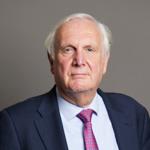
Lord Udny-Lister
Conservative - Life peer
Joined House of Lords: 6th November 2020
4 APPG Officer Positions (as of 1 Sep 2026)
Bahrain, Indonesia, Oman, Somaliland3 APPG Memberships
Commonwealth, India, Sepsis2 Former APPG Officer Positions
Local Resilience and Civil Contingencies, QatarDivision Voting information
Debates during the 2024 Parliament
Speeches made during Parliamentary debates are recorded in Hansard. For ease of browsing we have grouped debates into individual, departmental and legislative categories.
Sparring Partners
Parliamentary Under-Secretary (Department of Health and Social Care)
(5 debate interactions)
(5 debate interactions)
(3 debate interactions)
Department Debates
(24 debate contributions)
(12 debate contributions)
(3 debate contributions)
(2 debate contributions)
Legislation Debates
(5,273 words contributed)
(3,479 words contributed)
(1,168 words contributed)
Lords initiatives
These initiatives were driven by Lord Udny-Lister, and are more likely to reflect personal policy preferences.
Lord Udny-Lister has not introduced any legislation before Parliament
Lord Udny-Lister has not co-sponsored any Bills in the current parliamentary sitting
Latest 24 Written Questions
(View all written questions)4 Other Department Questions
The following is a breakdown of enforcement action taken by the Gambling Commission against unlicensed gambling websites from April 2024 to present. Data from before April 2024 is not available.
Between April 2026 – present:
Issued 290 Cease and Desists to advertisers and operators.
Reported 147,721 URLs to various search engines and saw 19,678 URLs removed as a result so far.
Referred 366 websites to the search engines for delisting.
Disrupted 361 websites meaning they have either been taken down or geo-blocked.
Between April 2025 and March 2026:
Issued 741 Cease and Desists to advertisers and operators.
Reported 397,527 URLs to various search engines and saw 266,667 URLs removed as a result.
Referred 1068 websites to the search engines for delisting.
Disrupted 1134 websites meaning they have either been taken down or geo-blocked.
Between April 2024 and March 2025
Issued 868 Cease and Desists to advertisers and operators.
Reported 143,683 to various search engines and seen 95,759 URLs removed as a result.
Referred 611 websites to the search engines for delisting.
Disrupted 496 websites meaning they have either been taken down or geo-blocked.
Parliamentary Under-Secretary of State (Department for Digital, Culture, Media and Sport)
An evaluation is underway to assess the impact of various measures that have been introduced as part of the 2023 Gambling White Paper. DCMS and the Gambling Commission commissioned the National Centre for Social Research to undertake this evaluation in January 2024.
The evaluation will seek to establish whether these measures are being delivered effectively, understand if there are any unintended consequences, and capture learning to inform future policy development. We expect the evaluation report to be published later this year.
However we will continue to consider further reforms where technology develops, consumer behaviour changes or risks arise. Any future regulatory changes will always be based on evidence.
Parliamentary Under-Secretary of State (Department for Digital, Culture, Media and Sport)
The Government is committed to supporting the implementation of key measures in the 2023 Gambling White Paper, including the introduction of Financial Risk Assessments (FRAs) for online gambling.
The Gambling Commission’s pilot demonstrated that Financial Risk Assessments can be undertaken without friction in 97% of cases. Given that less than 3% of accounts will meet the threshold for assessment, that means around 99.9% of all active accounts will either have no assessment or these checks will happen without friction.
The Government recognises that the threat of movement to the illegal market does exist, but this does not mean that we should avoid appropriate controls on licensed operators. The illegal market is best tackled by improving player safety and managing risk.
We are already taking wider action to tackle the illegal market. Key measures include an additional £26 million of funding over three years for the Gambling Commission to enable them to increase their activity to tackle the illegal market; a consultation on banning physical unlicensed gambling sponsorship and advertising; and the establishment of the Illegal Gambling Taskforce, which will consider what more can be done to tackle the threats posed by the illegal market.
Parliamentary Under-Secretary of State (Department for Digital, Culture, Media and Sport)
The Government is committed to supporting the implementation of key measures in the 2023 Gambling White Paper, including the introduction of Financial Risk Assessments (FRAs) for online gambling.
The Gambling Commission’s pilot demonstrated that Financial Risk Assessments can be undertaken without friction in 97% of cases. Given that less than 3% of accounts will meet the threshold for assessment, that means around 99.9% of all active accounts will either have no assessment or these checks will happen without friction.
The Government recognises that the threat of movement to the illegal market does exist, but this does not mean that we should avoid appropriate controls on licensed operators. The illegal market is best tackled by improving player safety and managing risk.
We are already taking wider action to tackle the illegal market. Key measures include an additional £26 million of funding over three years for the Gambling Commission to enable them to increase their activity to tackle the illegal market; a consultation on banning physical unlicensed gambling sponsorship and advertising; and the establishment of the Illegal Gambling Taskforce, which will consider what more can be done to tackle the threats posed by the illegal market.
Parliamentary Under-Secretary of State (Department for Digital, Culture, Media and Sport)
The publication of this data was suspended in line with pre-election guidance for the duration of the Pre-Election Period. We will provide an update on future publication plans in due course.
Parliamentary Secretary (Cabinet Office)
Departments are responsible for setting the terms and conditions of employment for their civil servants, in accordance with the rules of the Civil Service Management Code. Full time employees across the Civil Service generally work 42 hours gross (37 hours net) per week over 5 days. Some departments may have flexible working policies that allow employees to request compressed hours, where the same hours are worked, only compressed over a shorter period, with no change to pay. There are no flexible working arrangements that permit reduced hours or part time working in exchange for full time pay.
Parliamentary Secretary (Cabinet Office)
Current Civil Service guidance requires Civil Servants to attend the office or work face-to-face with colleagues at least 60% of the time. There are no plans to change those requirements.
Parliamentary Secretary (Cabinet Office)
This Government is committed to implementing its manifesto commitments to deliver real change over the course of the Parliament. The King's Speech takes place at the start of each session and sets out the policies which require legislation in the parliamentary session ahead.
Parliamentary Secretary (Cabinet Office)
There have been no changes to the Downing Street lectern since the general election.
Parliamentary Secretary (Cabinet Office)
6 Department for Business, Innovation, Science and Trade Questions
(View all Lord Udny-Lister's BIST questions)Local authorities across England, Scotland and Wales are independent from central government and are responsible for determining their resourcing priorities across a wide range of enforcement responsibilities in accordance with the needs of the local electorate.
The majority of Central Government funding is not ringfenced in recognition of local authorities being best placed to understand local priorities including those relating to consumer protection.
The Department for Business and Trade provides additional funding through the National Trading Standards Board (NTSB) and Trading Standards Scotland (TSS). These act as mechanisms to prioritise and coordinate national and regional consumer enforcement in England, Wales and Scotland respectively.
Parliamentary Under-Secretary of State (Department for Digital, Culture, Media and Sport)
Local authorities across England, Scotland and Wales are independent from central government and are responsible for determining their resourcing priorities across a wide range of enforcement responsibilities in accordance with the needs of the local electorate.
The majority of Central Government funding is not ringfenced in recognition of local authorities being best placed to understand local priorities including those relating to consumer protection.
The Department for Business and Trade provides additional funding through the National Trading Standards Board (NTSB) and Trading Standards Scotland (TSS). These act as mechanisms to prioritise and coordinate national and regional consumer enforcement in England, Wales and Scotland respectively.
Parliamentary Under-Secretary of State (Department for Digital, Culture, Media and Sport)
Local authorities across England, Scotland and Wales are independent from central government and are responsible for determining their resourcing priorities across a wide range of enforcement responsibilities in accordance with the needs of the local electorate.
The majority of Central Government funding is not ringfenced in recognition of local authorities being best placed to understand local priorities including those relating to consumer protection.
The Department for Business and Trade provides additional funding through the National Trading Standards Board (NTSB) and Trading Standards Scotland (TSS). These act as mechanisms to prioritise and coordinate national and regional consumer enforcement in England, Wales and Scotland respectively.
Parliamentary Under-Secretary of State (Department for Digital, Culture, Media and Sport)
Local authorities across England, Scotland and Wales are independent from central government and are responsible for determining their resourcing priorities across a wide range of enforcement responsibilities in accordance with the needs of the local electorate.
The majority of Central Government funding is not ringfenced in recognition of local authorities being best placed to understand local priorities including those relating to consumer protection.
The Department for Business and Trade provides additional funding through the National Trading Standards Board (NTSB) and Trading Standards Scotland (TSS). These act as mechanisms to prioritise and coordinate national and regional consumer enforcement in England, Wales and Scotland respectively.
Parliamentary Under-Secretary of State (Department for Digital, Culture, Media and Sport)
The UK-Morocco Association Agreement, which entered into force in January 2021, facilitates our trading relationship. HM Government is keen to strengthen trade ties with Morocco. In January 2025, Ben Coleman MP was appointed Trade Envoy for Morocco and Francophone West Africa. Total trade in goods and services (exports plus imports) between the UK and Morocco was £4.2 billion in 2024, up £0.6bn in current prices from 2023.
In March 2025, Gareth Thomas MP, Minister of State for Services, Small Business and Exports, visited Morocco with a delegation of businesses to showcase UK support for major infrastructure projects and signed a declaration of intent with the Head of the World Cup Committee to progress UK-Morocco collaboration on Morocco’s co-hosting of the Men’s Football World Cup in 2030. The UK looks forward to working with Morocco on this event and other infrastructure projects.
While TOs are responsible for delivering Accelerated Strategic Transmission Investment (ASTI) projects, Ofgem plays a key role in scrutinising delivery plans, setting the regulatory requirements and monitoring performance (including completion dates), against agreed outputs and milestones. As the independent regulator, Ofgem holds TOs accountable for the efficient and timely delivery of ASTI projects and can investigate potential non-compliance where delivery falls short of regulatory requirements. Government monitors the progress of transmission projects required to meet our goal of clean power through regular engagement with industry and regulators.
Parliamentary Under-Secretary of State (Department for Energy Security and Net Zero)
Early Construction Funding (ECF) is a regulatory mechanism established by Ofgem which allows network companies to access a limited proportion of approved project funding before all statutory consents have been secured. Under Ofgem's Accelerated Strategic Transmission Investment (ASTI) guidance, the normal limit for ECF is 20 per cent of project licence costs, although higher levels may be considered by Ofgem in exceptional circumstances. Decisions on the award of ECF are a matter for Ofgem as the independent energy regulator.
Parliamentary Under-Secretary of State (Department for Energy Security and Net Zero)
The Transmission Works Report (TWR) is being updated in light of revised connection offers issued as part of the connections reform process. All projects that accept a ‘Gate 2’ connection offer (confirmed connection location and date) will have a corresponding entry in the TWR, regardless of their connection date.
Parliamentary Under-Secretary of State (Department for Energy Security and Net Zero)
According to National Energy System Operator (NESO), as of 24 July, the Transmission Entry Capacity (TEC) Register included 81.7GW of generation capacity that has been built. 284.64GW of generation capacity has received revised ‘Gate 2’ connection offers (confirmed connection location and date) under the reformed connections process. The TEC Register will be updated by NESO as connection offers are accepted or declined.
Parliamentary Under-Secretary of State (Department for Energy Security and Net Zero)
According to National Energy System Operator (NESO), as of 24 July, the Transmission Entry Capacity (TEC) Register included 373 generation projects that have been built. 1,026 generation projects have received revised ‘Gate 2’ connection offers (confirmed connection location and date) under the reformed connections process. The TEC Register will be updated by NESO as connection offers are accepted or declined.
Parliamentary Under-Secretary of State (Department for Energy Security and Net Zero)
I refer the Noble Lord to the answer provided in the House of Commons on 2 September in response to Question 905377, which - for ease of reference - is reproduced below. Since then, we have continued to reaffirm our shared ambition to deepen cooperation, including at the ministerial meeting of the UK-Morocco Association Council on 12 November.
On 1 June, the Foreign Secretary co-hosted the UK-Morocco Strategic Dialogue in Rabat, where he signed agreements on education, healthcare, infrastructure and trade. This signalled a step change in the relationship. The Foreign Secretary also endorsed Morocco's autonomy proposal for Western Sahara and committed UK support to the parties and UN to reach a mutually acceptable resolution. We are taking this work forward together and remain in frequent contact.
The Government has taken no decisions on the Foreign, Commonwealth and Development Office (FCDO) estate since coming into office less than a month ago, on 5 July.
HMRC does not produce an estimate of the tax revenue foregone specifically as a result of UK consumers gambling with unlicensed operators.
The tax gap for betting and gaming duties is included within the “other excise duties” tax gap published in Measuring tax gaps 2026.
Limitations in the available data and methods mean that the tax gap for these components cannot be estimated individually. The average percentage revenue losses should therefore not be considered estimates of the true percentage losses from betting and gaming, as they are unknown.
Parliamentary Secretary (HM Treasury)