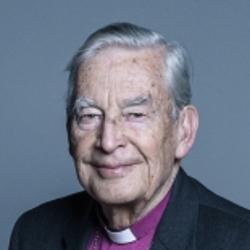
Lord Harries of Pentregarth
Crossbench - Life peer
Joined House of Lords: 30th June 2006
Left House: 29th April 2026 (Death)
3 APPG Memberships
Christians in Parliament, Faith and Society, Safeguarding in Faith Communities7 Former APPG Officer Positions
Dalits, Dalits and Adivasis (Tribals), Georgia, Inter-Faith, Interfaith, Religion in the Media, West PapuaDivision Voting information
All Debates
Speeches made during Parliamentary debates are recorded in Hansard. For ease of browsing we have grouped debates into individual, departmental and legislative categories.
Sparring Partners
(32 debate interactions)
(12 debate interactions)
(11 debate interactions)
Department Debates
(68 debate contributions)
(20 debate contributions)
(19 debate contributions)
(17 debate contributions)
Legislation Debates
(3,770 words contributed)
(2,474 words contributed)
(2,455 words contributed)
(2,250 words contributed)
Lords initiatives
These initiatives were driven by Lord Harries of Pentregarth, and are more likely to reflect personal policy preferences.
2 Bills introduced by Lord Harries of Pentregarth
A Bill to make provision about statements related to values of British citizenship in education in England and Wales; and for connected purposes.
A Bill to make provision about statements related to values of British citizenship in education in England and Wales.
Tuesday 7th May 2024
Lord Harries of Pentregarth has not co-sponsored any Bills in the current parliamentary sitting
Latest 42 Written Questions
(View all written questions)As stated in my response of 21 December 2016 (HL4016), the Public Interest Disclosure Act 1998 ensures that workers who raise concerns of wrongdoing to their employer or a relevant external body (by making what is known as a ‘protected disclosure’) and suffer detriment as a result may seek redress through an Employment Tribunal.
When a finding of unlawful practices has been made against the organisation at a Employment Tribunal, a public body may exclude that organisation from participation in a procurement procedure. This is laid out in the discretionary exclusion grounds of the Public Contracts Regulations 2015. Such a finding has not been made against PwC as a result of the LuxLeaks trials.
1 Department for Business, Energy and Industrial Strategy Questions
(View all Lord Harries of Pentregarth's BEIS questions)The Government has considered carefully the Tirkey v Chandhok judgment and its implications, including for the caste duty and the Equality Act, and has decided to issue a public consultation on this important and sensitive matter. The consultation will run for 12 weeks from its commencement date. One of the key aims of the consultation will be to obtain the views of stakeholders on the appropriate provision that should be made for caste in the Act.
We are especially keen to hear the public’s views on whether, in light of the Tirkey v Chandok judgment, additional measures are needed to ensure victims of caste discrimination have appropriate legal protection and effective remedies under the 2010 Equality Act.
We will then consider the responses to the consultation very carefully before deciding what further action is most appropriate.
4 Department for Environment, Food and Rural Affairs Questions
(View all Lord Harries of Pentregarth's Defra questions)The National Tree Planting Year of 1973, with its slogan of Plant a tree in ’73, was the Government-sponsored tree planting campaign initiated to compensate for the loss of trees caused by Dutch elm disease. The Forestry Commission donated some 90,000 trees to schools and a further 70,000 for joint projects with local authorities, as did other organisations including the Crown Estate Commissioners.
It also led to the founding of the Tree Council, with Government backing, as the umbrella body for organisations involved in tree planting, care and conservation.
The Forestry Commission has an ongoing programme of grants schemes available for planting, subject to specific criteria and subject to an obligation to manage woodlands with sound forestry practice.
English Elm (a form of Ulmus minor) is not a native tree and was likely introduced to Britain from Italy by the Romans. The most successful breeding programmes for resistant elms currently operate in Italy, Spain and North America. Resistant elm cultivars have been available for some time, including a series of cultivars of U. minor produced by the Spanish elm breeding programme which show high resistance to Dutch elm disease. Trials of resistant elms in the UK were initiated in Hampshire in 2000. The most recent report from these trials was produced by Butterfly Conservation this year.
Safeguarding plant health remains one of Defra’s top priorities. The full findings from Government funded research into the lessons learned from the UK Dutch elm disease outbreak were published by Imperial College in 2011 and an independent taskforce on Tree Health and Plant Biosecurity was convened after the arrival of ash dieback in 2012. The Government has implemented all of the recommendations of the taskforce, including appointment of the Chief Plant Health Officer, development of a prioritised risk register, strengthened border security, import regulations and governance arrangements.
The Tree Health Resilience Strategy - the first major publication to come out of the 25-Year Environment Plan sets out a new proactive approach to tree health, with landowners, charities, the public and government working together to take actions to build resilience against pests and diseases to protect the nation’s trees.
Decisions on the approval of pesticide active substances are made at European level. Since December 2013, three of the five neonicotinoids currently approved are not permitted for use on a wide range of crops considered “attractive to bees”. A number of other uses remain permitted under the EU approval. The restrictions currently in place for neonicotinoids are not time-limited.
2 Department for International Development Questions
(View all Lord Harries of Pentregarth's DFID questions)UK Official Development Assistance (ODA) is provided by official bodies only. In 2018, Department for International Development accounted for 74.9% of UK total ODA, other Government Departments and agencies for 20.4% and non-departmental ODA (such as Scottish and Welsh Government) for 4.8%.
UK official bodies can deliver ODA programmes using non-government agencies such as charities, and agencies such as the UN.
The UK is providing more than £33 million to the earthquake response in Nepal, making us the largest donor to the relief operation, and we are committed to ensuring that this assistance is available to those most in need. UK funding and technical expertise is supporting a central coordination mechanism, under the UN Office for the Coordination of Humanitarian Affairs (OCHA), which is gathering real time information and feedback from affected communities. This mechanism helps to ensure that aid efforts are not being duplicated and that the needs of the poorest and most vulnerable are understood and acted upon.
The UK has placed particular emphasis on reaching vulnerable groups; immediately after the earthquake, DFID identified the heightened risk of violence to displaced women and children. Examples of our assistance include: two UK-funded support centres, in Sindhupalchowk District, which ensure a safe and protected environment for around 500 women and girls; and the distribution of over 15,000 dignity kits to provide women with basic essentials, like clothing and hygiene products.
The Royal National Lifeboat Institution (RNLI) is an independent charity which declares a lifeboat service to Her Majesty’s Government (HMG) and has advised HMG of their decision to downgrade the New Quay Lifeboat based on the evidence they have collated. HMG has not been provided with copies of the RNLI’s evidence which remains their intellectual property.
The RNLI has also advised HMG of their continuous coastal safety reviews which they carry out to evaluate their own assets on a five-yearly basis. Again, as an independent charity, the RNLI are not required to provide HMG with the written evidence of such reviews and has not done so.
2 Department of Health and Social Care Questions
(View all Lord Harries of Pentregarth's DHSC questions)NHS Supply Chain has not changed supply of incontinence pads from Attends to Tena. Both these and other brands are available for purchase from NHS Supply Chain.
Patient transport service waiting time data is not collected centrally.
The provision of non-emergency patient transport services is a matter for local National Health Service commissioners, including setting performance standards, monitoring performance and taking improvement action where needed. This ensures that services are best adapted to local conditions, and where services fall short we expect commissioners to take swift action.
18 Foreign, Commonwealth & Development Office Questions
(View all Lord Harries of Pentregarth's FCDO questions)I refer the Noble Lord to the answer provided in the House of Commons on 16 September in response to Question 71565, which - for ease of reference - is reproduced below:
The UK Government is opposed to the death penalty, in all circumstances, as a matter of principle. We believe that the death penalty's use undermines human dignity, that there is no conclusive evidence of its deterrent value, and that any miscarriage of justice leading to its imposition is irreversible and irreparable.
The UK works with our international partners and with NGOs to: increase the number of abolitionist countries, or countries with a moratorium on the use of the death penalty; reduce the numbers of executions and restrict the use of the death penalty in retentionist countries; increase judicial capacity and legal reform through training and partnerships with UK legal expertise, and encourage greater transparency about the use of the death penalty in line with international standards.
The UK remains a strong supporter of the UN General Assembly Resolution for the moratorium on the use of the death penalty.
The UK strongly condemns violence against Christians in Pakistan. Protecting Freedom of Religion or Belief (FoRB), including for minority communities, remains central to the UK Government's human rights engagement in Pakistan. On 21 August I wrote to Pakistan's caretaker Foreign Minister Jalil Abbas Jilani, urging the government to ensure the safety of the Christian community following the attacks in Jaranwala. This was a point I also raised directly with Mr Jilani during our meeting in London on 13th September. I also welcome the recent public statements in Pakistan by political and religious leaders that perpetrators of these shocking attacks against Pakistan's religious minorities must be held to account and the need for all places of worship to be protected. Caretaker Foreign Minister Jilani publicly called for those responsible to be brought to justice and reiterated the UK's commitment to freedom of religion or belief for all.
We oppose the death penalty in all circumstances as a matter of principle, and have made that clear to the Government of Pakistan. We are deeply concerned at the misuse of blasphemy laws in Pakistan. We continue to press for speedy and fair trials for those accused of blasphemy, including cases such as Qaiser and Amoon Ayub, and urge the authorities to ensure the safety of those charged and those later released.
The UK fully respects the territorial integrity of Indonesia, which includes the provinces of Papua and West Papua. We regularly discuss Papua with our Indonesian counterparts and a team from the British Embassy Jakarta visited Papua in March 2022 where they met with government officials, law enforcement representatives, local businesses, young entrepreneurs, educators and religious leaders to discuss a wide range of issues including the security situation and economic development in the province.
The UK Government continues to support the efforts of the Indonesian authorities and civil society to address the needs and aspirations of the Papuan people, including strengthening human rights protections, providing humanitarian assistance and ensuring that all Papuans benefit from the sustainable and equitable development of their province. We support Indonesia's engagement with the UN, including the proposed visit on the UN High Commissioner for Human Rights to Papua and encourage both sides to agree on dates.
We are following former President of Georgia Mikheil Saakashvili's arrest and imprisonment closely. Her Majesty's Ambassador to Georgia discussed Mr Saakashvili's detention with the Speaker of the Georgian Parliament on 15 October, and our Deputy Head of Mission highlighted our concerns with the Deputy Minister for Foreign Affairs on 11 November. Senior Officials further raised Mr Saakashvili's treatment with the Georgian Ministry of Foreign Affairs on 1 December in Tbilisi. We were pleased that Mr Saakashvili ended his hunger strike on 20 November and agreed to receive medical treatment at a military hospital. It is important that Mr Saakashvili receives treatment in line with international human rights standards, and that any further hearings are in line with the rule of law and due process.
We will continue to monitor developments around Mr Saakashvili closely in the future.
Our Embassy in Tbilisi have reviewed the amendments to the Law on Electronic Communications, and discussed with other Embassies and NGOs in Georgia. The UK's view, and that of the stakeholders we have consulted, is that these amendments seek to address national security concerns, and have been put in place to protect Georgia's critical digital national infrastructure.
The case involving Caucasus Online is currently under arbitration, and therefore it is inappropriate for the UK Government to comment at this time. We will continue to monitor developments in this case closely.
We are aware of the concerns raised by some local telecoms companies and civil society organisations regarding the Georgian Parliament's recent amendment to the electronic communications law, giving more authority to the communications regulator, on Georgia's media and telecommunications sector. Through our Embassy in Tbilisi we are carrying out a full assessment of the amendment, including its implications for foreign investors. The UK and other international partners work to promote continued democratic and economic reforms in Georgia that support strong governance, media freedom and an open business environment.
As we are still assessing the amendment, it would not be appropriate for us to comment on reports speculating about its origins. Similarly on Georgia's membership of international bodies, it would be for the relevant organisations to review these developments in line with their membership rules.
The British Government regularly raises the situation in Papua with the Indonesian authorities and presses them to address the legitimate concerns regarding access. In January 2018, I raised my concern about this issue with the Indonesian ambassador to London, and our officials in Indonesia also raised this when they visited Papua in February this year. The Minister of State for Asia and the Pacific acknowledged at a Westminster Hall Debate on 8 May that transparency and media access are important. We continue to encourage Indonesian journalists to write openly and frankly about Papua to ensure that local perspectives are properly heard and are part of any debate, and will do so with the next President and their team when the election results are announced in due course.
Any allegation of human rights abuse is of conern and the FCO believe must be investigated thoroughly, promptly and transparently. The Government remains committed to promoting and defending human rights and we expect all countries to comply with their international legal obligations in this regard.
We have not raised this particular case with the Government of India, but we do raise concerns more broadly where necessary. The British High Commission in New Delhi and our network of Deputy High Commissions continue to monitor the human rights situation in India and work with civil society on projects that protect and promote human rights. For example, our officials in India helped create the first ever network of Dalit Women Human Rights Defenders trained as paralegals.
The FCO has not made an assessment. Nor has the FCO received any recent representation on this issue. The Government expects multinational enterprises to operate responsibly abroad, and encourages them to do so, in line with the domestic laws of the countries in which they operate, in the spirit of the Extractive Industries Transparency Initiative, and international standards including the UN Guiding Principles on Business and Human Rights and the OECD Guidelines for Multinational Enterprises.
We follow the situation in Papua with close interest, whilst respecting the territorial integrity of Indonesia. We recognise there are significant challenges in Papua and are concerned about the sporadic violence and restrictions on freedom of expression which continue to take place, such as the events in Nabire District between 29 June and 6 July. As a result, we have pressed the Indonesian authorities to address legitimate concerns and ensure the sustainable and equitable development of the province. Our Ambassador and Embassy officials visit Papua periodically. Officials most recently visited earlier this month and our Ambassador will visit again later this year. We will continue to raise our concerns with the Indonesian authorities. We also raised the issue of access to Papua for foreign journalists during Indonesia's Universal Periodic Review at the Human Rights Council in May 2017.
We welcome the Indonesian Government's commitment to improving the situation in Papua. President Widodo has visited a number of times since his election in 2014 and has granted clemency to some prisoners and lifted travel restrictions for foreign journalists and international organisations. These are welcome developments, which we support.
The UK supports the East African Community-led dialogue to find a peaceful solution to the crisis in Burundi. We continue to urge the Burundi government to engage with the East African Community.
At the recent Human Rights Council session on 20 June 2017, the UK called on the Burundi Government to end the violence and collaborate with the UN Commission of Inquiry on Burundi to ensure that individuals responsible for human rights abuses in Burundi are held to account. Our non-resident Ambassador and officials regularly visit for consultations with the Burundi Government; these discussions cover human rights and the importance of maintaining the principles of the 2000 Arusha Agreement, including the protection of minority groups in Burundi. In addition, the Foreign and Commonwealth Office is implementing projects in Burundi focused on human rights, sexual and gender based violence and security.
We welcome the Indonesian government’s commitment to improving the situation in the Indonesian provinces of Papua and West Papua. This includes President Joko Widodo’s visit in May, when he granted clemency to a number of prisoners and announced the lifting of travel restrictions for foreign journalists. Since May, a number of foreign journalists have successfully visited and reported from the region. Staff from our Embassy in Jakarta visit Indonesia's provinces regularly, discussing our concerns with relevant authorities. Our Ambassador visited Papua in May, where he discussed ways to ensure the sustainable and equitable development of the provinces with members of the police, and religious and community leaders. We will continue to raise concerns where we have them with the appropriate authorities across Indonesia.
We welcome the Indonesian government’s commitment to improving the situation in the Indonesian provinces of Papua and West Papua. This includes President Joko Widodo’s visit in May, when he granted clemency to a number of prisoners and announced the lifting of travel restrictions for foreign journalists. Since May, a number of foreign journalists have successfully visited and reported from Papua and West Papua.
In response to developments in the legal case concerning the Rustavi 2 TV station, the UK and other EU Member States' Missions released a joint written statement on 6 November with the Embassy of the United States of America in Georgia, which said:
"The Delegation of the European Union, in agreement with the Heads of Mission of the EU Member States in Georgia, and the Embassy of the United States of America express our concern related to the appointment of a new management to the Rustavi 2 TV company.
In light of the recent interim decision of the Constitutional Court and considering that the substantial judgment of the first instance court in the Rustavi 2 case does not envisage immediate enforcement, the preventive measures adopted on 5 November raise serious questions about the independence of the judiciary and the actual degree of freedom of the media in Georgia.
As our respective Missions have publicly stated many times, freedom of media and independence of the judiciary are essential foundations of a democracy, and diverse opinions should be encouraged in democratic societies. We call on all political actors to refrain from any step or statement that could prevent the Georgian judiciary from ruling dispassionately on this case.
The government and judicial institutions need to uphold the principles of media freedom and political pluralism that are an integral part of Georgia’s declared aspirations.
We will continue to monitor developments closely and raise concerns with all relevant parties as appropriate.”
Our Ambassador in Tbilisi has also held discussions with senior members of the Georgian government and will continue to engage on this issue, bilaterally as well as with EU and other concerned partners.
We are concerned by reports of a number of deaths in Paniai on 8 December, apparently following attempts to disperse a group of protesters. We support calls by the Office of the UN High Commissioner for Human Rights for the authorities to conduct an independent and thorough investigation into the incident.
We regularly discuss the situation in Papua province with the Indonesian authorities, raise concerns about access for international journalists and non-governmental organisations and encourage a greater focus on resolving disputes through peaceful dialogue. Most recently the Charge d’Affairs visited Papua province on 3-5 December.
The recent political resignations are a matter for the Georgian government. We look forward to developing good working relationships with the new incumbents. It is fact that a number of opposition United National Movement party members are currently under investigation. In our dealings with the Georgian government and relevant authorities we have been clear that all investigations should be transparent, evidenced-based and follow due legal process.
HM Revenue and Customs does not hold this information in a form which allows it to be provided without incurring disproportionate cost.
Shadow Minister (Treasury)
HM Revenue and Customs (HMRC) intends to publish Advanced Thin Capitalisation Agreement statistics in due course as part of a wider publication of data relating to HMRC’s work on collecting tax owed to the UK.
Shadow Minister (Treasury)
HM Revenue and Customs does not hold this information in a form which allows it to be provided without incurring disproportionate cost.
Shadow Minister (Treasury)
HM Revenue and Customs (HMRC) intends to publish Advanced Thin Capitalisation Agreement statistics in due course as part of a wider publication of data relating to HMRC’s work on collecting tax owed to the UK.
Shadow Minister (Treasury)
HM Revenue and Customs has not discontinued the publication of these statistics. The Department intends to publish the transfer pricing statistics shortly.
Shadow Minister (Treasury)
The Government believes that profits should be taxed where economic activities are performed. The UK has introduced the OECD model of country-by-country reporting. This will provide a clear overall picture of the global position on profit and tax of multinational groups to tax authorities, enabling them to make more informed assessments of where risks lie.
The Government has set out its objective for a comprehensive and effective model of public country-by-country reporting that is agreed on a multilateral basis, to improve transparency over businesses’ tax affairs and build public trust in the tax system. The UK will continue to work with international partners with a view to delivering on that objective. This includes our continued participation in the discussions on the European Commission’s proposal.
Shadow Minister (Treasury)
The Public Interest Disclosure Act 1998 ensures that workers who raise concerns of wrongdoing to their employer or a relevant external body (by making what is known as a ‘protected disclosure’) and suffer detriment as a result may seek redress through an Employment Tribunal.
With regards to information on tax avoidance and evasion HM Revenue and Customs (HMRC) gathers information from a number of sources including whistle-blowers. Any information which is provided to HMRC is treated as confidential and details of the individual providing the information will not be divulged, without consent, except where compelled by law.
HMRC does not offer immunity from prosecution within the UK or in a third country where that country’s legislation is at odds with UK Legislation.
It is important to note that the Crown Dependencies are self-governing jurisdictions with their own legislative assemblies, administrative, fiscal and legal systems and courts of law. They have confirmed they will develop public registers of company beneficial ownership once it has been established as a global norm.
In October 2018 the UK Government launched an international beneficial ownership transparency campaign to shift global norms by encouraging and supporting more countries to implement free to access and publicly available company beneficial ownership registers by 2023. In line with this campaign, the UK Government will encourage the Crown Dependencies to voluntarily introduce measures to improve the transparency of their company ownership.
Similarly, the Overseas Territories are self-governing jurisdictions. However, in accordance with the Sanctions and Anti-Money Laundering Act 2018, the UK Government will prepare an Order in Council by the end of 2020 requiring all Overseas Territories to have fully functioning publicly accessible registers in place by the end of 2023. The UK Government will work consensually with the Overseas Territories on introducing publicly accessible registers, which includes through technical workshops.
Shadow Chief Whip (Lords)
3 Ministry of Justice Questions
(View all Lord Harries of Pentregarth's ministry-of-justice questions)Every death in custody is a tragedy and we continue to do all we can to improve the safety of prisoners.
We know that relationships between staff and prisoners plays an important role in preventing self-inflicted deaths in prisons and that is why we have announced additional investment in our workforce. As of 30 September 2023, there were 23,058 Full Time Equivalent (FTE) Band 3-5 prison officers in post, an increase of 1,441 FTE since 30 September 2022. This means staff can provide more support for prisoners and better monitor the risk of harm. In addition to recruiting new officers, we are developing and phasing in a new safety training package for staff. It brings together information on related safety topics, including suicide and self-harm prevention, understanding risks, triggers and protective factors. This training is complemented by a revised version of the case management approach used in prisons to support people at risk of suicide or self-harm.
We will continue to fund the Samaritans (£625,000 each year until March 2025) to deliver the Listener scheme where prisoners are trained to provide emotional support to each other. We have also worked with the Samaritans to design an additional support service for prisons in the period following a self-inflicted death, with the aim of reducing the risk of further deaths.
The legislative reforms announced in A Smarter Approach to Sentencing White Paper will be brought forward in the Police, Crime, Sentencing and Courts (PCSC) Bill. This bill was introduced on 9 March and, as confirmed in the Queen’s Speech, has been carried forward to the next session.
For the first time, sentences over four years will be able to become spent, and rehabilitation periods will be reduced for community and custodial sentences of less than four years. These changes will come into effect once the PCSC Bill has received Royal Assent.
Work is also underway on the non-legislative reforms set out in the White Paper. We are on track to deliver the Pre-Sentence Report pilot on time, and the Community Sentence Treatment Requirement Programme is now operating in courts across 14 areas in England, with eight more to come online during 2021. The Call for Evidence on Neurodiversity also set out in the White Paper closed on 15 January 2021, and evidence from this is being reviewed with a full report due this Summer.
The Government publishes statistics on deaths in custody quarterly, and updated detailed tables annually. These figures cover only England and Wales. They can be viewed at:
In the twelve months to June 2017, there were 97 apparent self-inflicted deaths in custody.
Improving safety is a priority for this Government. We are investing £100m a year to strengthen the frontline by recruiting around 2,500 more prison officers by the end of 2018. We are rolling out improved training across the estate for staff on suicide and self-harm reduction and have put in place specialist roles - regional safer custody leads - in every region to provide advice to prisons and to spread good practice on identifying and supporting prisoners at risk. We are providing grant funding to the Samaritans to support the prisoner Listener scheme and are providing an additional funding in 2017-18 to fund a number of other projects, including a learning tool for staff and emotional resilience training for prisoners.
Shadow Minister (Justice)