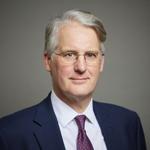
Lord Ashcombe
Conservative - Life peer
Joined House of Lords: 11th June 2026
Opposition Whip (Lords)
(since June 2026)1 APPG Officer Position (as of 1 Sep 2026)
Insurance and Financial Services2 APPG Memberships
Listed Properties, Energy Studies1 Former APPG Officer Position
Floating Offshore WindDivision Voting information
Debates during the 2024 Parliament
Speeches made during Parliamentary debates are recorded in Hansard. For ease of browsing we have grouped debates into individual, departmental and legislative categories.
Sparring Partners
(5 debate interactions)
(5 debate interactions)
(4 debate interactions)
Department Debates
(22 debate contributions)
(17 debate contributions)
(11 debate contributions)
(7 debate contributions)
Legislation Debates
(6,515 words contributed)
(4,506 words contributed)
(3,803 words contributed)
(2,795 words contributed)
Lords initiatives
These initiatives were driven by Lord Ashcombe, and are more likely to reflect personal policy preferences.
Lord Ashcombe has not introduced any legislation before Parliament
Lord Ashcombe has not co-sponsored any Bills in the current parliamentary sitting
Latest 13 Written Questions
(View all written questions)6 Department for Business, Innovation, Science and Trade Questions
(View all Lord Ashcombe's BIST questions)The capping of bus fares announced on 22 July 2026 will have no impact on financing or insurance support provided by UK Export Finance, including for its loan guarantee supporting Dints International’s contract to supply renewable energy and infrastructure work in Angola.
The Government is reprioritising £454 million from the Department for Energy Security and Net Zero’s budget, including by switching £400 million of grant funding set aside for future international climate finance projects into loans. The remaining £54 million savings are expected from underspends in the Department’s budget.
This will provide more flexible ways to meet the Government’s international climate objectives.
The Government remains committed to spending 0.3% of Gross National Income on Official Development Assistance.
Parliamentary Under-Secretary of State (Department for Business, Innovation, Science and Trade)
The capping of bus fares announced on 22 July 2026 will have no impact on financing or insurance support provided by UK Export Finance, including for its loan guarantee supporting Dints International’s contract to supply renewable energy and infrastructure work in Angola.
The Government is reprioritising £454 million from the Department for Energy Security and Net Zero’s budget, including by switching £400 million of grant funding set aside for future international climate finance projects into loans. The remaining £54 million savings are expected from underspends in the Department’s budget.
This will provide more flexible ways to meet the Government’s international climate objectives.
The Government remains committed to spending 0.3% of Gross National Income on Official Development Assistance.
Parliamentary Under-Secretary of State (Department for Business, Innovation, Science and Trade)
The government has committed to review the functioning of section 10 of the Employment Relations Act 1999 in its entirety. As part of this review, we will engage with relevant and interested stakeholders and publish our findings in Parliament. The review will start shortly and the government will write to interested parties in due course.
Parliamentary Under-Secretary of State (Department for Digital, Culture, Media and Sport)
The current legal framework on the right to be accompanied has been in place for a long time. The framework aims to keep disciplinary and grievance procedures internal to the workplace. Expanding the types of organisations that could be involved in representing workers at discipline and grievance meetings could lead to these meetings requiring legal representation for both the worker and employer. This would invariably increase the cost of holding a hearing, add complexity and delays, and decrease the chance of amicable resolution as both parties become entrenched in a dispute.
Parliamentary Under-Secretary of State (Department for Digital, Culture, Media and Sport)
The current legal framework on the right to be accompanied has been in place for a long time. The framework aims to keep disciplinary and grievance procedures internal to the workplace. Expanding the types of organisations that could be involved in representing workers at discipline and grievance meetings could lead to these meetings requiring legal representation for both the worker and employer. This would invariably increase the cost of holding a hearing, add complexity and delays, and decrease the chance of amicable resolution as both parties become entrenched in a dispute.
Parliamentary Under-Secretary of State (Department for Digital, Culture, Media and Sport)
No. The UK uses a combination of grants and other instruments, including loans, as most appropriate to deliver the intended outcomes and provide the best value for money. The majority of UK ICF will continue to be provided through grants. No existing ICF programmes have been switched from grants to loans linked with the recent announcement of £2 bus fares.
Parliamentary Under-Secretary of State (Department for Energy Security and Net Zero)
No. The UK uses a combination of grants and other instruments, including loans, as most appropriate to deliver the intended outcomes and provide the best value for money. The majority of UK ICF will continue to be provided through grants. No existing ICF programmes have been switched from grants to loans linked with the recent announcement of £2 bus fares.
Parliamentary Under-Secretary of State (Department for Energy Security and Net Zero)
The government aims to ensure our oil and gas workers and supply chain can take advantage of our energy transition, creating a global blueprint for a transition that supports prosperity, jobs, economic growth, communities and energy security.
In the North Sea Future Plan, the government committed to develop support for supply chain businesses, investors, and workers to help them benefit from a pipeline of projects across the North Sea and in the UK’s energy future. We are also developing a world-class North Sea Jobs Service to provide end-to-end support for oil and gas workers to move into growing industries.
The North Sea Transition Authority (NSTA) published analysis in September 2025 comparing the emissions intensity of domestically produced gas with imported liquefied natural gas. This analysis is available on the NSTA’s website. In 2024, domestic gas production made up 43% of gross supply, LNG imports accounted for 14%, with the remainder coming from pipeline imports – principally from Norway.
The North Sea Transition Authority (NSTA) published analysis in September 2025 comparing the emissions intensity of domestically produced gas with imported liquefied natural gas. This analysis is available on the NSTA’s website. In 2024, domestic gas production made up 43% of gross supply, LNG imports accounted for 14%, with the remainder coming from pipeline imports – principally from Norway.
Through its British Climate Partners (BCP) Initiative British International Investment (BII) will principally provide equity and mezzanine finance. BII does not anticipate providing funding through BCP in the form of grants. BII plans to invest over £1 billion through BCP over the next five years, with this in turn expected to unlock an additional £3.5 billion in private capital. The financial return BII targets on its investments depends on a range of factors - particularly the risk profile of the investment. The terms of BII's individual investments are commercially confidential.
Parliamentary Under-Secretary (Foreign, Commonwealth and Development Office)