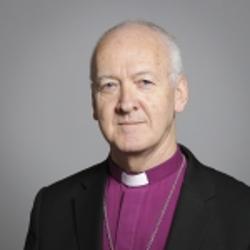
Lord Bishop of Leeds
Bishops - Bishops
Joined House of Lords: 3rd December 2014
Left House: 30th November 2025 (Retired)
2 APPG Memberships
Child of the North, Media2 Former APPG Officer Positions
Northern Culture, Sudan and South SudanDivision Voting information
Lord Bishop of Leeds voted Aye - against a party majority and against the House
One of 1 Bishops Aye votes vs 2 Bishops No votes
Tally: Ayes - 125 Noes - 323
Lord Bishop of Leeds voted Aye - against a party majority and in line with the House
One of 1 Bishops Aye votes vs 1 Bishops No votes
Tally: Ayes - 294 Noes - 244
Lord Bishop of Leeds voted Aye - against a party majority and in line with the House
One of 2 Bishops Aye votes vs 2 Bishops No votes
Tally: Ayes - 358 Noes - 256
All Debates
Speeches made during Parliamentary debates are recorded in Hansard. For ease of browsing we have grouped debates into individual, departmental and legislative categories.
Sparring Partners
(37 debate interactions)
(16 debate interactions)
Department Debates
(39 debate contributions)
(24 debate contributions)
(16 debate contributions)
(16 debate contributions)
Legislation Debates
(2,554 words contributed)
(2,113 words contributed)
(1,629 words contributed)
(1,374 words contributed)
Lords initiatives
These initiatives were driven by Lord Bishop of Leeds, and are more likely to reflect personal policy preferences.
Lord Bishop of Leeds has not introduced any legislation before Parliament
Lord Bishop of Leeds has not co-sponsored any Bills in the current parliamentary sitting
Latest 50 Written Questions
(View all written questions)Getting all children and young people back into school for the new academic year has been a national priority. As of 10 September, over 99% of schools were open to some or all of their pupils. Schools have been able to claim additional funding for exceptional costs incurred due to COVID-19 between March and July, such as additional cleaning required due to confirmed or suspected COVID-19 cases and increased premises costs to keep schools open for priority groups during the Easter and summer half term holidays.
Schools have also continued to receive their core funding allocations throughout the COVID-19 outbreak. Following last year’s Spending Round, school budgets are rising by £2.6 billion in 2020-21, £4.8 billion in 2021-22 and £7.1 billion in 2022-23, compared to 2019-20.
As stated in our guidance, schools should use their existing resources when welcoming all children back this autumn.
5 Department for International Development Questions
(View all Lord Bishop of Leeds's DFID questions)The UK Government is deeply concerned about the impacts of the COVID-19 pandemic on the public finances of low-income developing countries. During 2020, developing countries were projected to spend around $36 billion on servicing external debts to bilateral, multilateral and private sector creditors. In this time of crisis, it is vital that creditors work together to ensure that servicing debts does not prevent countries protecting their citizens and economies.
The UK, alongside the G20 and the Paris Club of official creditors, has committed to a temporary suspension of debt service repayments from the poorest countries. This official sector effort could provide up to $12 billion of additional fiscal space for eligible countries until the end of the year, allowing their governments to redirect finances towards mitigating the health and economic impacts of COVID-19. This initiative provides time to assess what further assistance these countries may need.
The G20 has called for the private sector creditors to participate on comparable terms and has asked the Multilateral Development Banks to explore whether there are options for them to participate, while maintaining their current credit ratings and low cost of funding which are important for supporting their client countries.
The UK Government is deeply concerned about the impacts of the COVID-19 pandemic on the public finances of low-income developing countries. The UK, alongside the G20 and the Paris Club of official creditors, has committed to a temporary suspension of debt service repayments from the poorest countries.
The UK, together with other G20 Finance Ministers, has asked the Multilateral Development Banks (MDBs) to explore options for them to participate in the G20 initiative, while maintaining their current credit ratings and low cost of funding which are important for supporting their client countries. The MDBs are currently conducting analysis and will report back to the G20.
During 2020, developing countries were projected to spend around $13 billion on servicing external debts to multilateral creditors. In response to COVID-19, the international financial institutions (including the World Bank and African Development Bank) have made over $300 billion of finance available for developing countries over the coming 15 months.
DFID has reviewed and assessed the Wilton Park Statement on assisting religious minorities in humanitarian crises. Policy Teams will investigate how to incorporate the recommendations into their policy plans.
DFID has reviewed and assessed the Wilton Park Statement on assisting religious minorities in humanitarian crises. The Wilton Park Conference brought together and found common ground between an unprecedented gathering of human rights activists, humanitarian organisations, representatives of governments and international organisations and faith groups. The statement illustrates how the different approaches can be complimentary. Whilst clearly recognising that humanitarian responses have to be guided by the principles of impartiality and assistance provided on the basis of need alone, the statement provides guidance to assist humanitarian practitioners determine whether vulnerable groups and religious minorities are most at risk and how to encourage and facilitate the participation and partnership of local and national religious communities in determining specific needs of vulnerable religious minority individuals and communities.
HMG, through DFID, follows the humanitarian situation closely and provides over 550 thousand vulnerable people in Sudan with humanitarian assistance each year. DFID supports Sudan’s most vulnerable people to meet their basic needs, sustain their livelihoods, and build their resilience to crises.
We welcome the temporary suspension of US bilateral economic sanctions on Sudan, which if lifted permanently will support progress towards inclusive economic development for Sudan’s people. We encourage the Government of Sudan to continue to make the required progress to enable permanent lifting of US sanctions. The UK continues to apply the United Nations’ arms embargo and targeted sanctions in Darfur, as well as the European Union arms embargo on Sudan.
The United Kingdom is at the forefront of global efforts to eradicate modern-day slavery, including forced labour. The UK’s approach to tackling forced labour in global supply chains is focused on transparency and companies with a turnover of £36m or more are required to publish modern slavery statements. The Government has concerns about allegations of forced labour in China and works with international partners to hold China to account for any violation of human rights. Import bans are one of a range of tools that could be used to tackle forced labour in global supply chains and we continue to keep this policy response under close review.
The US Treasury has re-imposed sanctions against Iran relating to financial institutions, and Iran’s energy, insurance and shipping sectors. There has been an impact on UK businesses, although it is too early to make a comprehensive assessment. Where necessary, UK companies should seek legal advice.
The Department for International Trade has a dedicated team working at the British Embassy in Tehran to support UK businesses active in the Iranian market. We continue to monitor any impact on UK-Iran trade caused by the re-imposition of US sanctions on Iran.
Government data on the value of exports does not differentiate sufficiently between military and non-military exports.
However, the Government publishes Official Statistics (on a quarterly and annual basis) of licences granted for military exports on GOV.UK. This data includes the value of exports licensed where this is known. Licensing data for 2015, 2016 and 2017 indicates the following values for military exports to Saudi Arabia:
2015: £2,856,814,952
2016: £680,288,434
2017: £1,120,427,691 (January-June)
The value of exports licensed each quarter is not necessarily a measure of actual exports shipped in a given period because licences are valid for between two and five years, and because exporters only declare values for a subsection of export licences (Standard Individual Export Licences). Additionally, some licences expire before they are fully used and in these circumstances exporters must apply for a new (duplicate) licence, which can result in a significant element of double counting in some reporting periods. Over the period 2015, 2016 and 2017 (January-June) at least £2.4 billion of the total value of military
exports licensed (£4.6 billion) is attributable to double counting because of duplicate licences.
It is unacceptable that infant mortality figures are rising, and that there are stark inequalities in outcomes for babies. The Government is committed to ensuring all mothers and babies received safe, personalised and compassionate care.
A key objective in NHS England’s Three year delivery plan for maternity and neonatal services is to reduce inequalities for all in maternity access, experience and outcomes, seeking to improve equity for mothers and babies. The plan includes the Saving Babies Lives Care Bundle which provides maternity units with guidance and interventions to reduce stillbirths, neonatal brain injury, neonatal death, and preterm birth and includes initiatives to reduce inequalities. The bundle has been rolled out across England to all trusts with full implementation by 104 out of 120 providers. All local maternity and neonatal systems have published Equity and Equality actions plans to tackle inequalities for women and babies from ethnic minorities and those living in the most deprived areas, tailored to the needs of the local area. A copy of the delivery plan is attached.
The Government is currently piloting a training programme to help avoid brain injury in childbirth to improve safety for mothers and their babies. If successful, national rollout is expected to commence next year.
Parliamentary Under-Secretary (Department of Health and Social Care)
In England, the UK Health Security Agency (UKHSA) works closely with NHS England, the Department and wider health system partners to improve uptake of the routine childhood immunisations and catch-up children who missed out.
UKHSA’s first childhood immunisation communication campaign ran from 4 March until mid-April 2024 and encouraged parents to ensure their child’s vaccinations were up to date which. The current campaign is running from 26 August until 4 October 2024.
UKHSA also provides public facing resources, including information leaflets in multiple languages and accessible formats, for example, easy read, BSL and braille, and clinical guidance, including e-learning programmes and training, for healthcare professionals.
To address inequalities NHS England continues to work with national and local partners to deliver faith-based community health engagement with Orthodox Jewish, Hindu, Sikh, Muslim, and other communities in areas with low rates of childhood immunisation uptake. This includes promoting health seeking behaviors, such as general practitioner registration, and designing locally led community health events to raise awareness of the benefits of childhood immunisations and challenge misinformation.
Parliamentary Under-Secretary (Department of Health and Social Care)
38 Foreign, Commonwealth & Development Office Questions
(View all Lord Bishop of Leeds's FCDO questions)His Majesty's Government has made no formal assessment of the Estonian Government's amendments to the Churches and Congregations Act, which has not yet received Presidential approval. The UK is committed to promoting freedom of religion or belief for all and we work closely with international partners, including through the Article 18 Alliance, of which Estonia is a member, to champion freedom of religion or belief around the world. Estonia consistently scores highly on measures of freedom of religion or belief in public rankings, such as those of Freedom House. We have made no representations to the government of Estonia on the law under consideration.
His Majesty's Government has made no formal assessment of the Estonian Government's amendments to the Churches and Congregations Act, which has not yet received Presidential approval. The UK is committed to promoting freedom of religion or belief for all and we work closely with international partners, including through the Article 18 Alliance, of which Estonia is a member, to champion freedom of religion or belief around the world. Estonia consistently scores highly on measures of freedom of religion or belief in public rankings, such as those of Freedom House. We have made no representations to the government of Estonia on the law under consideration.
The UK has condemned the offensives by M23 and the Rwandan Defence Force as an unacceptable violation of the Democratic Republic of the Congo's (DRC) sovereignty and territorial integrity, and a breach of the UN Charter. On 25 February, the UK issued a statement following the Foreign Secretary's visits to Kinshasa and Kigali announcing several measures impacting Rwanda. These included a suspension of future defence training assistance to Rwanda, revoking relevant extant licences for the armed forces in Rwanda, and a pause in direct bilateral financial aid to the Government of Rwanda, excluding support to the poorest and most vulnerable.
Parliamentary Under-Secretary (Home Office)
The UK has condemned the offensives by M23 and the Rwandan Defence Force as an unacceptable violation of the Democratic Republic of the Congo's (DRC) sovereignty and territorial integrity, and a breach of the UN Charter. On 25 February, the UK issued a statement following the Foreign Secretary's visits to Kinshasa and Kigali announcing several measures impacting Rwanda. These included a suspension of future defence training assistance to Rwanda, revoking relevant extant licences for the armed forces in Rwanda, and a pause in direct bilateral financial aid to the Government of Rwanda, excluding support to the poorest and most vulnerable.
Parliamentary Under-Secretary (Home Office)
The conflict in eastern Democratic Republic of the Congo (DRC) is deeply alarming. We have been clear that there can be no military solution and call for meaningful engagement in peace processes. We are in close contact with a range of partners globally on eastern DRC, including Qatar. Ministers and senior officials hold regular meetings to discuss foreign policy issues with their Qatari counterparts.
Parliamentary Under-Secretary (Home Office)
The Government takes international parental child abduction (IPCA) very seriously and we recognise the distress of all those affected. While we cannot comment on the details of specific cases publicly without consent, when a British child has been abducted and taken overseas, Foreign, Commonwealth and Development Office (FCDO) support can include signposting to partner organisations, providing help to families with contacting the relevant authorities abroad, expressing our interest in a case with the overseas government and asking about progress, where appropriate. The FCDO has also published guidance to assist parents affected by IPCA: https://www.gov.uk/guidance/international-parental-child-abduction
The Government takes international parental child abduction (IPCA) very seriously and we recognise the distress of all those affected. While we cannot comment on the details of specific cases publicly without consent, when a British child has been abducted and taken overseas, Foreign, Commonwealth and Development Office (FCDO) support can include signposting to partner organisations, providing help to families with contacting the relevant authorities abroad, expressing our interest in a case with the overseas government and asking about progress, where appropriate. The FCDO has also published guidance to assist parents affected by IPCA: https://www.gov.uk/guidance/international-parental-child-abduction
The UK strongly lobbied the Government of Iraq to pass the Yazidi Survivors' Law in March 2021. As a ground-breaking piece of legislation, this represented an important first step towards accountability and justice for survivors of Daesh violence. These survivors are predominantly minority women, who suffered from crimes such as conflict-related sexual violence and domestic servitude.
The UK is funding the General Directorate of Survivors' Affairs with £340,000 over three years (2022/23-2024/25), through the International Organization for Migration. This funding will support the law's full, and survivor-centred, implementation. It will also further develop capacity for Daesh accountability and help survivors access mental health and psychosocial support and rebuild their lives.
Furthermore, the UK will continue to work with Iraq and international partners to ensure that Daesh are held accountable for the crimes they have committed, following the closure in September 2024 of the United Nations investigative team to promote accountability for crimes committed by Daesh.
Parliamentary Under-Secretary (Home Office)
The UK is disappointed that minority communities in Iraq, including Christians and Yazidis, continue to report cases of discrimination, intimidation, and harassment by armed groups. These cases can be exacerbated by their political underrepresentation, limited routes for redress, and protracted displacement.
This is why our programmes, through the UK Integrated Security Fund, tackle the key drivers of instability and aim to support a more accountable, capable, and inclusive society, through effective governance structures.
For example, in 2023, we implemented a £15,000 programme in Bashiqa, in Nineveh Province (an area still recovering from the impacts of Daesh), to improve religious tolerance and social cohesion, through initiatives focussed on arts and culture. This was implemented by The Lotus Flower, a charity supporting women and girls impacted by conflict and displacement, with funding from the UK's John Bunyan Fund for Freedom of Religion and Belief.
Reducing the threat from Daesh and preventing a Daesh resurgence remains a top priority in our relationship with the Government of Iraq and the Kurdish Regional Government.
Parliamentary Under-Secretary (Home Office)
The UK continues to collaborate with the Government of Iraq, the Kurdistan Regional Government, and the international humanitarian community as we collectively seek durable solutions (led by the United Nations High Commissioner for Refugees) for those displaced and living in insecure conditions.
Through the International Organization for Migration, the UK is contributing to the immediate stabilisation of those who remain internally displaced by funding quick impact projects and livelihood support activities. For example, we have provided the UN funding facility for stabilisation with £32 million, to restore vital public services such as utilities and education across liberated areas of Iraq. The UK also provides funding to the office of the UN durable solutions adviser to lead the UN's strategic coordination efforts.
We will always strive to ensure that internally displaced persons in Iraq, including the Kurdistan Region of Iraq, are protected and that their returns can be safe, dignified, and voluntary.
Parliamentary Under-Secretary (Home Office)
The UK is committed to freedom of religion or belief (FoRB) for all. We demonstrate this through our engagement, both multilaterally and bilaterally. For example, earlier this month, UK Special Envoy for FoRB, David Smith MP, attended the 58th Session of the UN Human Rights Council and met with counterparts to discuss key issues.
In Iraq, we recognise that continued insecurity is challenging for its religious and ethnic minorities. Through our diplomatic presence, we regularly raise FoRB with the Government of Iraq and the Kurdistan Regional Government. We also support civil society groups to freely advocate on behalf of minority groups.
FoRB-specific goals are also threaded throughout British Embassy Baghdad's and British Consulate General Erbil's programme work. We are careful to ensure that these focus on local cohesion and minimise the risk of inadvertently exacerbating community divisions.
Parliamentary Under-Secretary (Home Office)
Countering the rollback of and promoting the rights of women and girls is a key focus of the UK's programming and policy work in Iraq and the Kurdistan Region of Iraq (KRI). Alongside Official Development Assistance (ODA), programmes are also delivered through the UK Integrated Security Fund (UKISF), which is funded through both ODA and non-ODA sources.
While the £2.7 million Women's Voices First programme completed in May 2024, its second phase will provide up to £5 million further over the next 3 years. This continued UKISF programme helps to strengthen grassroots Iraqi women's rights organisations and women-led organisations, advances locally led approaches, and contributes to inclusive peace and security in communities, across Federal Iraq and the KRI.
The UK is also funding the International Organisation for Migration to provide capacity building support to the General Directorate of Survivors Affairs, and to civil society organisations, to advance the Yazidi Survivors' Law and deliver mental health and psychosocial support for Yazidi and other minority survivors of conflict-related sexual violence.
In addition, the UK also helps to advance family planning and sexual and reproductive health initiatives through the £14 million Demographic Transition in Iraq project.
Parliamentary Under-Secretary (Home Office)
The UK continues to assess the implications for minorities', women's and children's rights following the amendment to Iraq's Personal Status Law was passed by Iraq's Parliament on 21 January. We have long emphasised the importance of any legislative change to be compatible with Iraq's international obligations.
We urge all our partners to uphold international norms, including the Universal Declaration of Human Rights (1948), the International Covenant on Civil and Political Rights (1966), the International Covenant on Economic, Social and Cultural Rights (1976) and the Convention on the Rights of the Child (1989).
Parliamentary Under-Secretary (Home Office)
The Foreign, Commonwealth and Development Office (FCDO) can support parliamentarians' visits overseas that support parliamentary business and the UK's objectives. An appropriate level of assistance from the FCDO is dependent on resource implications and capacity issues of individual missions, including the British Consulate General in Erbil.
Parliamentary Under-Secretary (Home Office)
The UK is committed to protecting women and girls' rights and supports projects that strengthen women-led organisations, support survivors of conflict-related sexual violence and increase women's participation in political life.
Through our diplomatic presence, we regularly encourage the Iraqi authorities' role in safeguarding the human rights for all. Countering the rollback of and promoting the rights of women and girls is a key focus of the UK's programming and policy work in Iraq. Following successful lobbying by the UK and our international partners, the amendment to the Personal Status Law maintained the same age of marriage as the current law (18, with 15 on exception).
We urge all our partners to uphold international norms, including the Universal Declaration of Human Rights (1948), the International Covenant on Civil and Political Rights (1966), the International Covenant on Economic, Social and Cultural Rights (1976) and the Convention on the Rights of the Child (1989).
Parliamentary Under-Secretary (Home Office)
The UK condemns the occupation of Goma and other territories in eastern Democratic Republic of the Congo (DRC) by M23 and Rwandan Defence Forces as an unacceptable breach of DRC's sovereignty and the UN Charter, which poses a fundamental risk to regional stability. The humanitarian situation is now critical, with hundreds of thousands of people re-displaced, acute food insecurity and an increased risk of violence against civilians, especially women and girls.
The Foreign Secretary has spoken with President Kagame and President Tshisekedi to call for immediate de-escalation and a return to diplomatic talks. The UK has been at the forefront of encouraging regionally-led peace efforts, including the Luanda and Nairobi Processes. The joint Southern African Development Community (SADC) and the East Africa Community (EAC) Summit in Dar es Salaam 7-8 February committed to resuming dialogue and negotiations with all state and non-state parties and supporting this with AU-appointed facilitators, as well as calling for improved humanitarian access.
In the UK's statement on the situation in eastern DRC, we called for the immediate withdrawal of all Rwandan Defence Forces from Congolese territory. We have been clear with Rwanda that an attack on Goma would provoke a strong response from the international community.
Parliamentary Under-Secretary (Home Office)
The UK condemns the occupation of Goma and other territories in eastern Democratic Republic of the Congo (DRC) by M23 and Rwandan Defence Forces as an unacceptable breach of DRC's sovereignty and the UN Charter, which poses a fundamental risk to regional stability. The humanitarian situation is now critical, with hundreds of thousands of people re-displaced, acute food insecurity and an increased risk of violence against civilians, especially women and girls.
The Foreign Secretary has spoken with President Kagame and President Tshisekedi to call for immediate de-escalation and a return to diplomatic talks. The UK has been at the forefront of encouraging regionally-led peace efforts, including the Luanda and Nairobi Processes. The joint Southern African Development Community (SADC) and the East Africa Community (EAC) Summit in Dar es Salaam 7-8 February committed to resuming dialogue and negotiations with all state and non-state parties and supporting this with AU-appointed facilitators, as well as calling for improved humanitarian access.
In the UK's statement on the situation in eastern DRC, we called for the immediate withdrawal of all Rwandan Defence Forces from Congolese territory. We have been clear with Rwanda that an attack on Goma would provoke a strong response from the international community.
Parliamentary Under-Secretary (Home Office)
The UK condemns the occupation of Goma and other territories in eastern Democratic Republic of the Congo (DRC) by M23 and Rwandan Defence Forces as an unacceptable breach of DRC's sovereignty and the UN Charter, which poses a fundamental risk to regional stability. The humanitarian situation is now critical, with hundreds of thousands of people re-displaced, acute food insecurity and an increased risk of violence against civilians, especially women and girls.
The Foreign Secretary has spoken with President Kagame and President Tshisekedi to call for immediate de-escalation and a return to diplomatic talks. The UK has been at the forefront of encouraging regionally-led peace efforts, including the Luanda and Nairobi Processes. The joint Southern African Development Community (SADC) and the East Africa Community (EAC) Summit in Dar es Salaam 7-8 February committed to resuming dialogue and negotiations with all state and non-state parties and supporting this with AU-appointed facilitators, as well as calling for improved humanitarian access.
In the UK's statement on the situation in eastern DRC, we called for the immediate withdrawal of all Rwandan Defence Forces from Congolese territory. We have been clear with Rwanda that an attack on Goma would provoke a strong response from the international community.
Parliamentary Under-Secretary (Home Office)
As announced by the Deputy Foreign Secretary during his visit at the end of March to the Chad/Sudan border to meet refugees from Sudan, this financial year the UK's official development assistance (ODA) will almost double to £89 million to Sudan with most of this going towards humanitarian aid including assistance to address food insecurity. Specifically, our ODA in Sudan will include support to UNICEF to provide emergency and life-saving food assistance to support people particularly in hard-to reach areas in Sudan, including nutrition, water and hygiene services for 500,000 children under 5. In addition, the UK will be working with the World Food Programme to provide assorted food commodities. The UK's ODA will also increase to £111 million to South Sudan, which will include provision for continued humanitarian support for new Sudanese refugees as well as vulnerable returnees and host communities in South Sudan. We will also continue to provide ODA assistance in Chad in 2024/2025, which will include support for the refugee crisis in eastern Chad such as food, shelter and other assistance by non-governmental organisations (NGOs) and through the World Food Programme.
Lord Chamberlain (HM Household)
The UK continues to speak out publicly and vigorously to press the warring parties to facilitate unhindered, crossline and cross-border humanitarian access. On 27 February, the UK called for the UN Security Council to convene for a closed consultation in response to the SAF's decision to withdraw permission for the movement of humanitarian personnel and supplies into Sudan from Chad via the Adré crossing. On 20 March, we made a UK intervention at the Security Council highlighting the OCHA White Note's clear warning that obstruction of humanitarian access by the SAF and RSF is resulting in people in Sudan starving. On 8 March, the UK led the Security Council to adopt a resolution calling for a ceasefire for Ramadan and for urgent humanitarian access.
Lord Chamberlain (HM Household)
The UK is working with a wide range of partners, including Gulf and African countries, the Intergovernmental Authority on Development, the African Union and the UN, to urge the parties to agree a permanent ceasefire, to allow unfettered humanitarian access, to protect civilians and to commit to a sustained and meaningful peace process. We welcome reported plans to restart talks in Jeddah, jointly led by the US and Saudi Arabia. The UK Special Envoy for the Horn of Africa and the Red Sea spends a significant amount of time on efforts to secure peace in Sudan, working closely with other envoys covering Sudan.
Lord Chamberlain (HM Household)
There is a UN Arms Embargo and Sanctions Regime on Darfur, which the UN renewed in March 2023. There is also a longstanding bilateral UK arms embargo in place for the whole of Sudan. In our engagement with all our international partners, the UK continues to emphasise the importance of refraining from actions that prolong the conflict.
Lord Chamberlain (HM Household)
The FCDO maintains a relationship with, and supports, the Sudanese diaspora in the UK, including through engagement with them at events and at the monthly meeting between the FCDO and the APPG for Sudan and South Sudan.
Lord Chamberlain (HM Household)
The Government has consistently condemned the politically motivated conviction of Vladimir Kara-Murza and called for his release. The conditions in the Omsk penal colony are threatening Mr Kara-Murza's life and his health is deteriorating. He must be released on humanitarian grounds for urgent medical treatment.
We continue to seek consular access to Mr Kara-Murza. Russia has repeatedly denied this, not recognising dual nationals as being in scope of our agreement on consular relations. Officials in London and Moscow continue to raise concerns for Mr Kara-Murza's health with the Russians. Mr Kara-Murza's family receive consular support.
We are deeply disturbed by the impact of Russia's illegal war on Freedom of Religion or Belief (FoRB) in Ukraine. This includes widespread destruction of religious sites, and the imposition of restrictive Russian laws in the temporarily controlled territories. The UK is tracking the development of Ukraine's draft law and continues to encourage our Ukrainian partners to ensure that the law is fully aligned with Ukraine's FoRB commitments. We are clear that the only way to restore the full enjoyment of FoRB in Ukraine is for Russia to end its invasion and withdraw its troops.
It has not proved possible to respond to this question in the time available before Prorogation. Ministers will correspond directly with the Member.
On 4 May the UK announced an initial £5 million allocation which will help to provide urgent assistance to tens of thousands of refugees and returnees in South Sudan and Chad fleeing violence in Sudan. We will share details about implementing agencies in due course. Via the UK's diplomatic presence across Africa, we are working to assess the needs of those displaced by the violence in Sudan and who have sought safety in neighbouring countries. The UK is a committed donor in Sudan, having spent over £250 million in humanitarian aid in the last five years.
Protecting minority communities is a key part of the UK Government's human rights engagement in Pakistan. I [Lord Ahmad] discussed the need to safeguard the rights of religious minorities during my meeting with Pakistan's Minister for Human Rights Mian Riaz Hussain Pirzada on 30 January, and raised proposed amendments to the blasphemy laws. I also discussed the importance of promoting respect for all religions during my meeting with Foreign Minister Bilawal Bhutto Zardari on 14 December 2022.
Protecting women's rights is central to the UK Government's human rights engagement in Pakistan. I [Lord Ahmad] raised forced conversions in my meeting with Pakistan's Minister for Human Rights, Mian Riaz Hussain Pirzada, on 14 October 2022. I also conducted a roundtable discussion in Pakistan with human rights stakeholders on 15 October, discussing gender-based violence. In December 2022, the UK announced sanctions against Mian Abdul Haq, a Pakistani cleric who is responsible for the forced religious conversions and forced marriages of non-Muslims and minors.
International Non-Government Organisations (INGOs) are important partners for the UK. They deliver relief to some of the poorest people in Pakistan. The UK government has raised the matter of forced closures of INGOs with the Government of Pakistan and continues to engage on this issue. We continue to urge a clear and transparent process to ensure INGOs can operate effectively in Pakistan.
Pakistan is one of the FCDO's human rights priority countries and protecting Freedom of Religion or Belief is an integral part of our engagement. On 14 October, I (Lord Ahmad) met with Human Rights Minister Mian Riaz Hussain Pirzada, where he specifically raised Freedom of Religion or Belief. I (Lord Ahmad) also conducted a roundtable discussion in Pakistan with human rights stakeholders and civil society leaders on 15 October to discuss freedom of expression and assembly. On 20 October, the High Commissioner met with the Minister of Religious Affairs, Mufti Abdul Shakoor, where he highlighted the UK's commitment to free and open societies, of which the freedom to hold and express views without censorship, intimidation or unnecessary restriction is crucial. The UK remains committed to working with Pakistan to protect these rights.
The UK is a leading donor in support of Ukraine, with support totalling approximately £3.8 billion. To date, that assistance includes £22 million of support in the energy sector: £7 million for over 850 generators to ensure vital facilities, such as hospitals, have power; £10 million to the Energy Community's support fund to help Ukraine's efforts to repair infrastructure and reconnect households and key facilities to electricity and gas supply; and £5 million for safety and security equipment for the civil nuclear sector.
The UK condemns Russia's intentional bombing of Ukraine's civilian energy infrastructure, which is causing widespread destruction. Russia's new wave of bombardments has deliberately targeted critical national infrastructure, leaving as much as thirty per cent of Ukraine's power stations damaged or destroyed. These Russian attacks are also killing innocent Ukrainian civilians, disproportionately affecting vulnerable groups, and could constitute a breach of international humanitarian law. They are further exacerbating the humanitarian crisis Putin's war has created, with over six million people displaced within Ukraine and over seven million Ukrainians registered as refugees in Europe.
The Prime Minister attended the inaugural Summit of European Leaders in Prague on 6 October. The Prime Minister secured commitments on UK priorities, including demonstrating European support for Ukraine, and energy and illegal migration. The Prime Minister was clear in her engagement ahead of the Summit, including with President Macron on 20 September, that it should not create or duplicate institutional structures (e.g. NATO or the G7), it should be entirely separate from the EU with a non-EU country hosting next, and maintain a wide membership.
The UK Government is deeply concerned by, and condemns, the violence and destruction of property in Kazakhstan in early January, particularly in the city of Almaty. The Government greatly regrets the loss of life and sends its condolences to families of the deceased. We have noted President Tokayev's speeches at the Collective Security Treaty Organisation (CSTO) Summit on 10 January and to the Kazakh parliament on 11 January, where he described the events in Almaty and other cities across Kazakhstan as an attempted coup. We continue to engage directly with the Kazakh authorities to gain further insights into the chain of events.
We have been clear that any international forces should have a clear mission, be time limited and proportionate in any use of force. It is also important that Kazakhstan's sovereignty is respected. President Tokayev informed the Kazakh parliament on 11 January that a phased withdrawal of the CSTO peacekeeping contingent would begin shortly. All of the Russian peacekeeping contingent are now reported to have left Kazakhstan and other CSTO forces are returning to their home countries.
I spoke with the Kazakh Ambassador to the UK on 6 January, with Deputy Foreign Minister Alimbayev on 7 January and with President Tokayev's Special Representative, Erzhan Kazykhan, on 14 January. During these meetings, I underlined the importance of law enforcement responses being proportionate, that due process is followed in the judicial system, and that freedom of speech and expression are respected in line with Kazakhstan's international commitments.
We regularly raise our concerns about Freedom of Religion or Belief at a senior level with the Government of Pakistan. During his visit to Pakistan on 23 and 24 June, Lord Ahmad of Wimbledon, Minister of State for South Asia and the Minister responsible for human rights, met Prime Minister Khan, as well as other senior government ministers including Foreign Minister Qureshi, and Human Rights Minister Mazari. During these meetings, Lord Ahmad highlighted the need to address persecution, promote respect for all religions and increase tolerance for religious minorities. Pakistan's receipt of Enhanced Framework trade preferences is subject to conditions, including ratification and effective implementation of 27 Conventions on human and labour rights, sustainability and good governance. This includes complying with those conventions' reporting and monitoring requirements.
The UK strongly condemns the forced marriage and forced conversion of women and girls in Pakistan. We regularly raise our concerns about Freedom of Religion or Belief, women and girls' rights and gender equality at a senior level with the Government of Pakistan. During his visit to Pakistan on 23 and 24 June, Lord Ahmad of Wimbledon, Minister of State for South Asia and the Minister responsible for human rights, met Prime Minister Khan, as well as other senior government ministers including Foreign Minister Qureshi, and Human Rights Minister Mazari. During these meetings, Lord Ahmad highlighted the need to address persecution, promote respect for all religions and increase tolerance for religious minorities. He met interfaith leaders to understand the situation of minorities in Pakistan, particularly the issue of forced conversion and marriage of young girls. In addition to our diplomatic engagement, the FCDO funds programmes in Pakistan that directly address early and forced marriages, gender-based violence and modern slavery.